Ionising radiation the most proven environmental cause of cancer
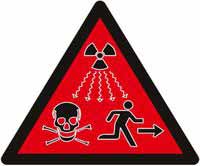 the health impact of exposure is perhaps “the best understood, and certainly the most highly quantified dose-response relationship for any common environmental human carcinogen,” a report of the U.S. National Cancer Institute concluded…….the most stressful aspect of the Chernobyl results, in the final analysis, is that the accident surely caused thousands of deaths that cannot actually be identified. The Chernobyl fatalities, in that sense, are like the deaths of unknown soldiers……
Radiation Risks – IEEE Spectrum, Bill Sweet, May 22, 2011, “………..the accident showed that large radiation releases can occur in a light water reactor accident, not just in a defectively designed and operated Soviet-era reactor. So it’s important to be clear about Chernobyl’s long-term health impact.
Somehow the notion has got abroad that Chernobyl’s health impact was minimal. This is because the illnesses and premature deaths statistically expected from a Chernobyl-scale radiation release cannot be detected, individually or even collectively, among the hundreds of millions of cancer cases that would occur anyway, and because of continued debate about morbidity and mortality at low radiation dose levels.
What then is the basis for assigning thousands or even tens of thousands of premature deaths to Chernobyl?
Probably contrary to some popular misconceptions, the effect of exposure to radiation is relatively well understood. Because radiation can be precisely measured and leaves a clear trail, the health impact of exposure is perhaps “the best understood, and certainly the most highly quantified dose-response relationship for any common environmental human carcinogen,” a report of the U.S. National Cancer Institute concluded.
Committees of the National Academies have produced a succession of studies on the Biological Effects of Ionizing Radiation, and the seventh of them, the 2006 BEIR VII report, is widely considered to have produced the most authoritative estimates. They are based mainly on detailed studies of Hiroshima and Nagasaki bombing survivors, but also populations exposed to atmospheric nuclear weapon testing, workers in the nuclear industry, and so on. (A useful concise account can be readily found by searching online on “a summary of BEIR VII,” which is by the chairman and cochair of the committee.)
Radiation Risks – IEEE Spectrum, 23 May 11, “………When the BEIR VII dose-response estimates are applied to populations exposed to Chernobyl radiation, as students of the subject like Tom Cochran and Elisabeth Cardis have done, the result consistently is is the range of 20,000-30,000 deaths; the range of uncertainty admittedly is large, ranging from several thousand to 70,000 or 80,000. So we can and should say, based on the best available science, that Chernobyl is causing at least several thousand deaths and probably about 25,000.
To be sure, not all national regulatory authorities have accepted the BEIR VII results as definitive, among them France’s. That may be why a 2008 United Nations report declined to assign any specific number to long-term health effects of Chernobyl. Some, unfortunately, have chosen to take that as a statement there have been no long-term effects.
Ten years after the Chernobyl accident, assessing Chernobyl’s health effects, Spectrum magazine referred to them in a headline as “stressful.” That referred partly to the demonstrable fact that near-term ladverse effects were mainly psychological, though not to be minimized. But the headline also meant to highlight the seemingly paradoxical contrast between higher-than-expected incidence of thyroid cancer, mainly in children, and lower-than-expected leukemia and solid cancer incidence.
In hindsight, we could and should have made it clearer that there was little prospect of detecting and measuring leukemia and solid cancer incidence at the expected rates. For the most stressful aspect of the Chernobyl results, in the final analysis, is that the accident surely caused thousands of deaths that cannot actually be identified. The Chernobyl fatalities, in that sense, are like the deaths of unknown soldiers……
No comments yet.
1 This Month



Tell the Ukrainian Government to Drop Prosecution of Peace Activist Yurii Sheliazhenko

Petition to revoke the licensing of the Near Surface Nuclear Disposal Facility (NSDF) at Chalk River. https://www.ourcommons.ca/petitions/en/Petition/Details?Petition=e-7247


of the week – STOP SMALL MODULAR REACTORS IN CANADA
To see nuclear-related stories in greater depth and intensity – go to https://nuclearinformation.wordpress.com
-
Archives
- March 2026 (222)
- February 2026 (268)
- January 2026 (308)
- December 2025 (358)
- November 2025 (359)
- October 2025 (376)
- September 2025 (258)
- August 2025 (319)
- July 2025 (230)
- June 2025 (348)
- May 2025 (261)
- April 2025 (305)
-
Categories
- 1
- 1 NUCLEAR ISSUES
- business and costs
- climate change
- culture and arts
- ENERGY
- environment
- health
- history
- indigenous issues
- Legal
- marketing of nuclear
- media
- opposition to nuclear
- PERSONAL STORIES
- politics
- politics international
- Religion and ethics
- safety
- secrets,lies and civil liberties
- spinbuster
- technology
- Uranium
- wastes
- weapons and war
- Women
- 2 WORLD
- ACTION
- AFRICA
- Atrocities
- AUSTRALIA
- Christina's notes
- Christina's themes
- culture and arts
- Events
- Fuk 2022
- Fuk 2023
- Fukushima 2017
- Fukushima 2018
- fukushima 2019
- Fukushima 2020
- Fukushima 2021
- general
- global warming
- Humour (God we need it)
- Nuclear
- RARE EARTHS
- Reference
- resources – print
- Resources -audiovicual
- Weekly Newsletter
- World
- World Nuclear
- YouTube
-
RSS
Entries RSS
Comments RSS
 nuclear-news
Leave a comment