Yes, Fukushima nuclear plant DID have a full nuclear meltdown
 It’s Official: Fukushima Hit With Full-Blown Nuclear Meltdown Gizmodo Australia, By Sam Biddle on May 13, 2011 The flow of bad news (and radiation) out of Fukushima’s reactors has diminished to a trickle over the past several weeks, as rescue work has proceeded. Not today. TEPCO’s admitted for the first time that Fukushima experienced a full meltdown.
The possibility of a meltdown has been floating in the air since the earthquake and subsequent explosions first rocked the roof off of Fukushima, spreading radiation, confusion and displacement across the local populace (and beyond). Since then, TEPCO workers and the Japanese government have desperately struggled to keep the nuclear fuel rods inside the reactors cool – if they don’t, the scorching material will melt into a pool of radioactive lava. That’s the scenario everyone’s been aiming to avoid – and that’s the scenario we now know had actually occurred all along. Underneath all that dumped seawater has been lying a blob of melted fuel. And it could be melting its way out.
This admittance goes against every assurance TEPCO has handed the world in the midst of Japan’s nuclear crisis – that the situation was bad, but that with emergency work, the plant would be mostly stable, and could be safely shutdown within the year. The worry now, beyond the fact that the damage to the reactor is far worse than imagined, is that a hole in the facility will lead incredibly contaminated water leak out like a faucet. A scalding, radioactive faucet.
So now what? “We will have to revise our plans,” Junichi Matsumoto, a TEPCO rep, told The Guardian. To say the least. [The Guardian and Kyodo News]
It’s Official: Fukushima Hit With Full-Blown Nuclear Meltdown | Gizmodo Australia
Nuclear lobbies fight to weaken Europe’s planned nuclear safety rules

 EU nuclear safety testing row in meltdown, Google News, By Roddy Thomson (AFP) – 13 may 11, BRUSSELS — Fractious talks on testing the safety of European nuclear reactors broke down Thursday as calls to include terror attacks and other man-made disasters in the tests faced resistance from powerful nuclear lobbies in London and Paris. Continue reading
Navajo’s battle against uranium mining is to go to UN
 The groups contend the mines, first permitted by NRC in 1999, could contaminate drinking water for 15,000 Navajo residents in and around the two communities, which lie just outside the Navajo Nation. In 2005, the Navajo’s tribal government passed a law prohibiting uranium mining within its borders….The United Nations also recognizes clean water as a human right
Navajo Group to Take Uranium Mine Challenge to Human Rights Commission, NYTimes.com, By APRIL REESE of GreenwirePublished: May 12, 2011 In a last attempt to deep-six a controversial project to mine uranium near two Navajo communities in northwestern New Mexico, a Navajo environmental group is taking its fight to the global stage.
Tomorrow, Eastern Navajo Diné Against Uranium Mining, with the help of the New Mexico Environmental Law Center, will submit a petition to the Inter-American Commission on Human Rights arguing that the Nuclear Regulatory Commission’s decision to grant Hydro Resources Inc., a license to mine uranium ore near Churchrock and Crown Point, N.M., is a violation of international laws.
The groups contend the mines, first permitted by NRC in 1999, could contaminate drinking water for 15,000 Navajo residents in and around the two communities, which lie just outside the Navajo Nation. In 2005, the Navajo’s tribal government passed a law prohibiting uranium mining within its borders.
“By its acts and omissions that have contaminated and will continue to contaminate natural resources in the Dine communities of Crownpoint and Church Rock, the State has violated Petitioners’ human rights and breached its obligations under the American Declaration of the Rights and Duties of Man,” the petition reads.
“We’re very hopeful,” said Eric Jantz, an attorney with the New Mexico Environmental Law Center who is filing the petition on behalf of ENDAUM. “I think we have very solid claims. It’s always been our client’s position that clean water is a human right.”
The United Nations also recognizes clean water as a human right, he added.
The groups cannot take their case to the Inter-American Court of Human Rights, which is separate from the commission, because the United States does not recognize the international court’s jurisdiction, Jantz said…….
Most of the uranium mining projects in New Mexico are being financed by Japanese and other Asian investors, as well as some in Russia, he said.
Navajo Group to Take Uranium Mine Challenge to Human Rights Commission – NYTimes.com
Doctors, Public Health Agency, oppose Australian government nuclear waste dump plan
 Leading health organisations including MAPW and the Public Health Association have signed a statement calling for a comprehensive inquiry into the production of radioisotopes (including non-nuclear-reactor sources) and the disposal of nuclear medicine, before any action is taken to advance any national radioactive waste dump.
The Medical Association for Prevention of War (Australia) has called on the government to withdraw the National Radioactive Waste Management Bill , 13 May 11, Continue reading
Japan’s nuclear disaster a lesson in how to use less energy
How nuclear disaster forced Japan to be frugal with energy, Jonathan Watts guardian.co.uk, 12 may 11, The Fukushima nuclear disaster forces a re-think not just of the kind of energy we use, but how much
Japan‘s decision not to build more nuclear reactors is understandable given the explosions and leaks at the Fukushima power plant. But how will the country make up the massive energy shortfall? Prime minister Naoto Kan says supply can be sustained by investing more in renewables like wind, solar and geothermal. But there is a far simpler, cheaper and cleaner solution: use less power.
As I learned on a trip to Tokyo and Tohoku last week, this is already happening. In the wake of a disaster that knocked out six reactors, Japan‘s businesses and people have been forced to scale back their electricity consumption.
To conserve power, the utilities scheduled rolling power cuts, but many have not been necessary because considerable energy has been saved simply by promoting frugality. In shopping malls and stations, many automatic doors and escalators have been switched off, which means – shock, horror – that people are forced to push open doors and walk up stairs (there are still elevators for wheelchairs)…….
I think Japan’s disaster should also prompt us to look more closely at how much energy we use.
In a previous blogpost, I have speculated that we are in or approaching the era of “Peak Human”, with regards to the size of our population and consumption of resources, after which both will fall back to sustainable levels. That could still lead to qualitative improvements in our lives, but most of us are reluctant to accept quantative limits. Disasters, such as the one at Fukushima, remind us we may not have a choice..How nuclear disaster forced Japan to be frugal with energy | Jonathan Watts | Environment | guardian.co.uk
Thousands of animals to be culled in Fukushima area
Japan to cull nuclear-affected livestock, ABC News (Australian Broadcasting Corporation)By North Asia correspondent Mark Willacy, wires 13 May 11 Japan will start culling thousands of livestock abandoned inside the 20-kilometre evacuation zone around the earthquake and tsunami-damaged Fukushima nuclear plant.Farmers living inside the evacuation zone had no choice but to abandon their pigs, chickens, beef cattle and dairy cows when they were ordered out by the government…..
The news comes after the Tokyo Electric Power Company (TEPCO) yesterday reported a leak from the reactor vessel and another spill of contaminated water into the ocean.
TEPCO says rods inside one of the reactors have most likely melted after being fully exposed. The company says the water level inside reactor No. 1 was much lower than it thought, exposing about 1.5 metres of the fuel rods. It says the rods have likely melted and workers are still trying to cool them in water at the bottom of the pressure vessel.
According to TEPCO, seawater samples taken near the plant contained 18,000 times the permitted level of caesium-134….Japan to cull nuclear-affected livestock – ABC News (Australian Broadcasting Corporation)
Safety problems, spent fuel worries, at US nuclear plants
Inspectors Found Preparedness Issues at U.S. Nuclear Plants, NYTimes.com, By MATTHEW L. WALD May 12, 2011 ROCKVILLE, Md. — Despite repeated assurances that American nuclear reactors are better equipped to deal with natural disasters than their counterparts in Japan, regulators said Thursday that recent inspections found serious problems with some emergency equipment that would have made it unusable in an accident.
In addition, the staff of the Nuclear Regulatory Commission acknowledged that the agency’s current regulations and disaster plans did not give enough consideration to two factors that had greatly contributed to the continuing Fukushima Daiichi crisis in Japan: simultaneous problems at more than one reactor at the same site and a natural disaster that disrupts roads, electricity and other infrastructure surrounding a plant…….
The Fukushima accident has cast new attention on spent fuel pools; the reason the United States government recommended that Americans stay 50 miles from the plant was damage to the spent fuel pool of Fukushima’s Unit 4, a reactor that had been shut down at the time of the March 11 earthquake and tsunami…….Inspectors Found Preparedness Issues at U.S. Nuclear Plants – NYTimes.com
Greenpeace reports high marine radiation off Fukushima
Greenpeace says high radiation in Japan seaweed Google News – 12 may, 11 TOKYO — Environmental activist group Greenpeace said Thursday it had detected radiation far above legal limits in seaweed samples taken from the ocean off Japan’s stricken Fukushima nuclear plant.Greenpeace, which sent its Rainbow Warrior flagship to take samples of marine life and water, called on Japan’s government to undertake comprehensive radiation testing of seaweed along the Fukushima coast.Initial tests of 22 seaweed samples collected at distances up to 65 kilometres (40 miles) out to sea from the plant “registered significantly high levels of radioactive contamination,” the group said.Ten seaweed samples showed levels of over 10,000 Bequerel per kilogramme, the group said……AFP: Greenpeace says high radiation in Japan seaweed
NRC draft report – US nuclear plants safe – well, almost
America’s Nuclear Plants Are Safe, NRC Says – Except When They’re Not Climate Central, 12 may 11, By Michael D. Lemonick“….. In the U.S., the Nuclear Regulatory Commission (NRC) launched a major assessment of how safe American plants are. The task force assigned to carry out this assessment won’t be issuing its formal report until July, but the NRC issued a progress report today………
For those who love bureaucratic technobabble, here’s the announcement of the new NRC order.
For those who prefer plain English, here’s what’s actually happened: the NRC has declared America’s nuclear plants safe according to standards that may well be out of date, and Rep. Markey thinks the out-of-date standards aren’t good enough……Review of Nuclear Power Plant Safety | Climate Central
Radiation levels in tea – Japanese tea recalled
Japan recalls tea over radiation fears| Herald Sun 13 May 11, JAPAN has detected radiation above the legal limit in tea grown southwest of Tokyo and blamed it on the stricken Fukushima nuclear plant northeast of the capital, officials said.Kanagawa prefecture has started a recall of the tea after measuring about 570 becquerel of caesium per kilogram in leaves grown in the city of Minamiashigara, prefectural officials said. The legal limit is 500 Bq/kg……The central government has imposed a ban on a range of vegetables and dairy produce from parts of Fukushima prefecture and several neighbouring regions and banned fishing in the vicinity of the plant……Japan recalls tea over radiation fears | Herald Sun
1 This Month
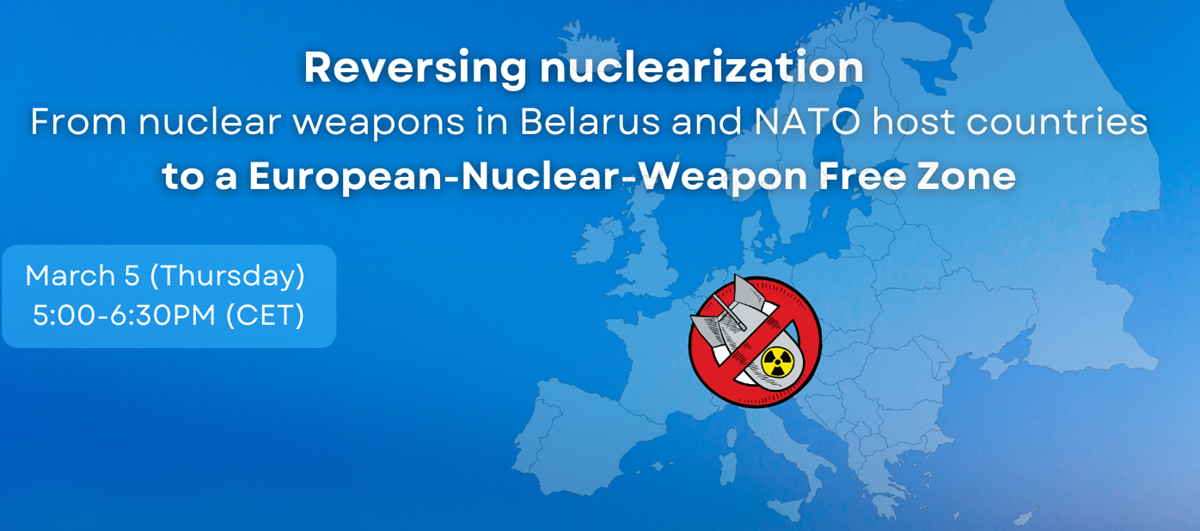
5 March -Online – Reversing nuclearization:
From nuclear weapons in Belarus and NATO host countries to a European-Nuclear-Weapon Free Zone
11am-12:30pm Eastern Time USA / 5pm-6:30pm CET

of the week – Advocating for a
nuclear free beach – https://www.samuellawrencefoundation.org/
The Samuel Lawrence Foundation advocates for a Nuclear Waste Free Beach at San Onofre, join us and take action!

10 March A LIVE WEBINAR THE REAL EFFECTS OF NUCLEAR POWER
What the Industry Isn’t Telling Us
1:00 PM Mountain, 2 pm Central, 3 pm Eastern. Live on the Keepers of the Water Facebook page

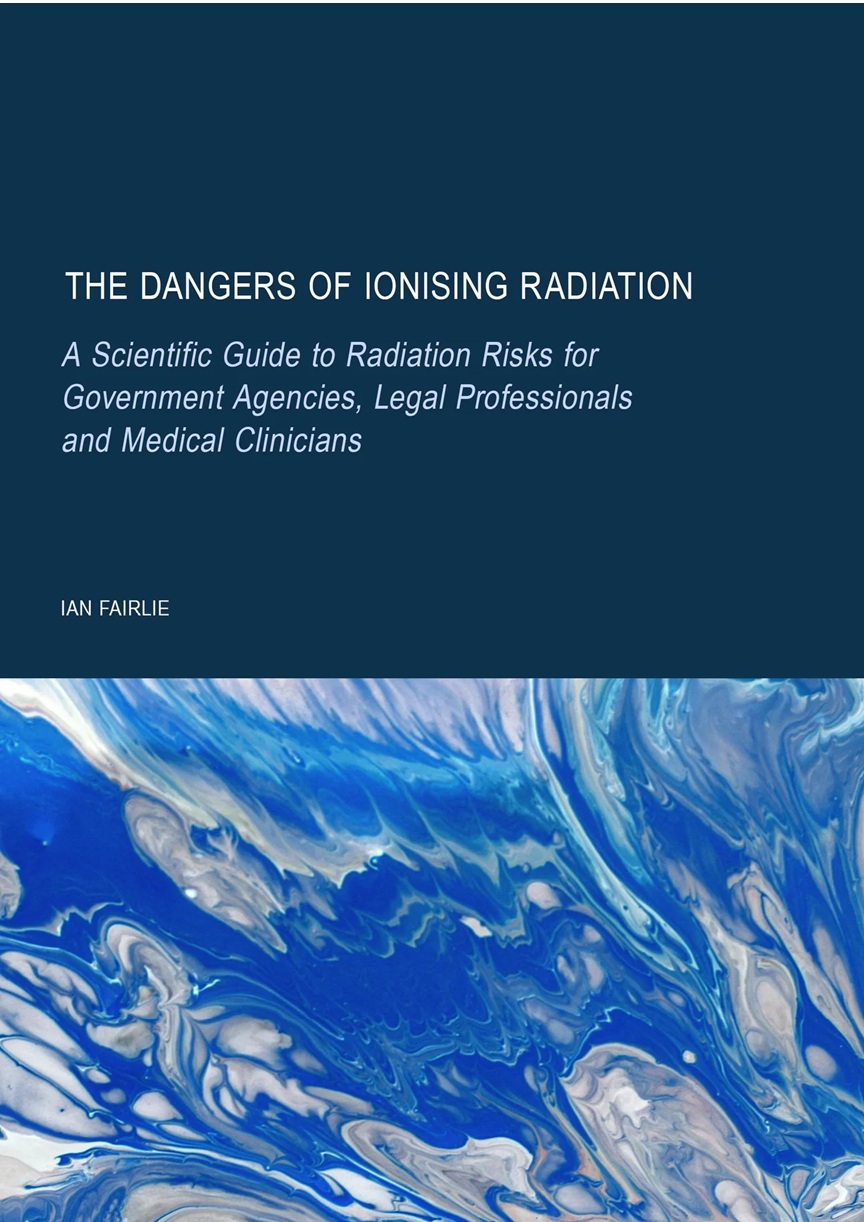
18 March Webinar @ 1 PM EST: An Assessment of SMR Projects: The Case of Canada
register for the zoom:
https://us02web.zoom.us/webinar/register/WN_o8BIIOUvQ2ONJR1nta65DQ#/registration

of the week – STOP SMALL MODULAR REACTORS IN CANADA
To see nuclear-related stories in greater depth and intensity – go to https://nuclearinformation.wordpress.com
-
Archives
- March 2026 (51)
- February 2026 (268)
- January 2026 (308)
- December 2025 (358)
- November 2025 (359)
- October 2025 (376)
- September 2025 (258)
- August 2025 (319)
- July 2025 (230)
- June 2025 (348)
- May 2025 (261)
- April 2025 (305)
-
Categories
- 1
- 1 NUCLEAR ISSUES
- business and costs
- climate change
- culture and arts
- ENERGY
- environment
- health
- history
- indigenous issues
- Legal
- marketing of nuclear
- media
- opposition to nuclear
- PERSONAL STORIES
- politics
- politics international
- Religion and ethics
- safety
- secrets,lies and civil liberties
- spinbuster
- technology
- Uranium
- wastes
- weapons and war
- Women
- 2 WORLD
- ACTION
- AFRICA
- Atrocities
- AUSTRALIA
- Christina's notes
- Christina's themes
- culture and arts
- Events
- Fuk 2022
- Fuk 2023
- Fukushima 2017
- Fukushima 2018
- fukushima 2019
- Fukushima 2020
- Fukushima 2021
- general
- global warming
- Humour (God we need it)
- Nuclear
- RARE EARTHS
- Reference
- resources – print
- Resources -audiovicual
- Weekly Newsletter
- World
- World Nuclear
- YouTube
-
RSS
Entries RSS
Comments RSS
 nuclear-news