Analysis of the nuclear industry’s future
In his analysis, Abbott explores the consequences of building, operating, and decommissioning 15,000 reactors on the Earth, looking at factors such as the amount of land required, radioactive waste, accident rate, risk of proliferation into weapons, uranium abundance and extraction, and the exotic metals used to build the reactors themselves.
 Why nuclear power will never supply the world’s energy needs,(PhysOrg.com) 12 May 11, –”….In an analysis to be published in a future issue of the Proceedings of the IEEE, Derek Abbott, Professor of Electrical and Electronic Engineering at the University of Adelaide in Australia, has concluded that nuclear power cannot be globally scaled to supply the world’s energy needs for numerous reasons. The results suggest that we’re likely better off investing in other energy solutions that are truly scalable.
As Abbott notes in his study, global power consumption today is about 15 terawatts (TW). Currently, the global nuclear power supply capacity is only 375 gigawatts (GW). In order to examine the large-scale limits of nuclear power, Abbott estimates that to supply 15 TW with nuclear only, we would need about 15,000 nuclear reactors. In his analysis, Abbott explores the consequences of building, operating, and decommissioning 15,000 reactors on the Earth, looking at factors such as the amount of land required, radioactive waste, accident rate, risk of proliferation into weapons, uranium abundance and extraction, and the exotic metals used to build the reactors themselves.
“A nuclear power station is resource-hungry and, apart from the fuel, uses many rare metals in its construction,” Abbott told PhysOrg.com. “The dream of a utopia where the world is powered off fission or fusion reactors is simply unattainable. Even a supply of as little as 1 TW stretches resources considerably.”
His findings, some of which are based on the results of previous studies, are summarized below.
- Land and location: One nuclear reactor plant requires about 20.5 km2 (7.9 mi2) of land to accommodate the nuclear power station itself, its exclusion zone, its enrichment plant, ore processing, and supporting infrastructure. Secondly, nuclear reactors need to be located near a massive body of coolant water, but away from dense population zones and natural disaster zones. Simply finding 15,000 locations on Earth that fulfill these requirements is extremely challenging.
- Lifetime: Every nuclear power station needs to be decommissioned after 40-60 years of operation due to neutron embrittlement – cracks that develop on the metal surfaces due to radiation. If nuclear stations need to be replaced every 50 years on average, then with 15,000 nuclear power stations, one station would need to be built and another decommissioned somewhere in the world every day. Currently, it takes 6-12 years to build a nuclear station, and up to 20 years to decommission one, making this rate of replacement unrealistic. ……
- Exotic metals:TThis is a new argument that Abbott puts on the table, which places resource limits on all future-generation nuclear reactors, whether they are fueled by thorium or uranium.As Abbott notes, many of these same problems would plague fusion reactors in addition to fission reactors, even though commercial fusion is still likely a long way off……….
“Due to the cost, complexity, resource requirements, and tremendous problems that hang over nuclear power, our investment dollars would be more wisely placed elsewhere,” Abbott said. “Every dollar that goes into nuclear power is dollar that has been diverted from assisting the rapid uptake of a safe and scalable solution such as solar thermal.”
Solar thermal devices harness the Sun’s energy to produce heat that creates steam that turns a turbine to generate electricity. Solar thermal technology avoids many of the scalability problems facing nuclear technology. For instance, although a solar thermal farm requires a little more land area than the equivalent nuclear power infrastructure, it can be located in unused desert areas. It also uses safer, more abundant materials. Most importantly, solar thermal can be scaled to produce not just 15 TW, but hundreds of TW if it would ever be required.
However, the biggest problem with solar thermal technology is cloudy days and nighttime. Abbott plans to investigate a number of storage solutions for this intermittency problem, which also plagues other renewable energy solutions such as wind power, in a future study. In the transition period, he suggests that the dual-use of natural gas with solar thermal farms is the pathway to building our future energy infrastructure…
Why nuclear power will never supply the world’s energy needs
No comments yet.
1 This Month
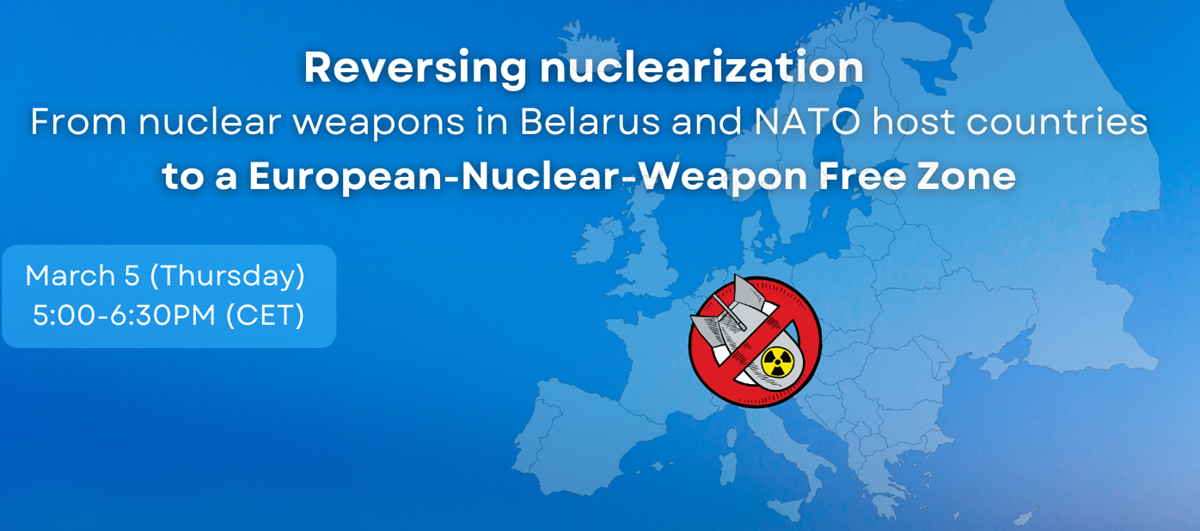
5 March -Online – Reversing nuclearization:
From nuclear weapons in Belarus and NATO host countries to a European-Nuclear-Weapon Free Zone
11am-12:30pm Eastern Time USA / 5pm-6:30pm CET

of the week – Advocating for a
nuclear free beach – https://www.samuellawrencefoundation.org/
The Samuel Lawrence Foundation advocates for a Nuclear Waste Free Beach at San Onofre, join us and take action!

10 March A LIVE WEBINAR THE REAL EFFECTS OF NUCLEAR POWER
What the Industry Isn’t Telling Us
1:00 PM Mountain, 2 pm Central, 3 pm Eastern. Live on the Keepers of the Water Facebook page

18 March Webinar @ 1 PM EST: An Assessment of SMR Projects: The Case of Canada
register for the zoom:
https://us02web.zoom.us/webinar/register/WN_o8BIIOUvQ2ONJR1nta65DQ#/registration

of the week – STOP SMALL MODULAR REACTORS IN CANADA
To see nuclear-related stories in greater depth and intensity – go to https://nuclearinformation.wordpress.com
-
Archives
- March 2026 (38)
- February 2026 (268)
- January 2026 (308)
- December 2025 (358)
- November 2025 (359)
- October 2025 (376)
- September 2025 (258)
- August 2025 (319)
- July 2025 (230)
- June 2025 (348)
- May 2025 (261)
- April 2025 (305)
-
Categories
- 1
- 1 NUCLEAR ISSUES
- business and costs
- climate change
- culture and arts
- ENERGY
- environment
- health
- history
- indigenous issues
- Legal
- marketing of nuclear
- media
- opposition to nuclear
- PERSONAL STORIES
- politics
- politics international
- Religion and ethics
- safety
- secrets,lies and civil liberties
- spinbuster
- technology
- Uranium
- wastes
- weapons and war
- Women
- 2 WORLD
- ACTION
- AFRICA
- Atrocities
- AUSTRALIA
- Christina's notes
- Christina's themes
- culture and arts
- Events
- Fuk 2022
- Fuk 2023
- Fukushima 2017
- Fukushima 2018
- fukushima 2019
- Fukushima 2020
- Fukushima 2021
- general
- global warming
- Humour (God we need it)
- Nuclear
- RARE EARTHS
- Reference
- resources – print
- Resources -audiovicual
- Weekly Newsletter
- World
- World Nuclear
- YouTube
-
RSS
Entries RSS
Comments RSS
 nuclear-news
Leave a comment