Nuclear radioactivity risks: iodine, cesium, plutonium, strontium
 Health risk from troubled Japan nuclear plant, Reuters, By Mayumi Negishi and Tan Ee Lyn, TOKYO May 6, 2011“……IS SOME RADIATION MORE HARMFUL THAN OTHERS?Yes. Radioactive particles are most harmful when inhaled or ingested, and particles that are easily absorbed and which have longer half-lives can cause more damage to cells and genetic material inside.
When examining radiation from the Fukushima plant, health officials focus especially on Iodine-131. Inside the body of an adult, it has a half-life of 7 days, but it accumulates quickly in the thyroid gland. Children are especially at risk because their thyroids are still developing.Another by-product, Cesium, spreads throughout the body, concentrating in muscle tissue. Cesium-137 has a half-life of 30 years, but inside an adult, the amount will be halved in 90 days.
Strontium and plutonium are rarer by-products of nuclear fission. But if they are ingested, they tend to collect in bones, where they are likely to stay put. Strontium can cause bone cancer. Plutonium is more dangerous when inhaled, increasing the risk of lung cancer……..”Health risk from troubled Japan nuclear plant | Reuters
No comments yet.
1 This Month
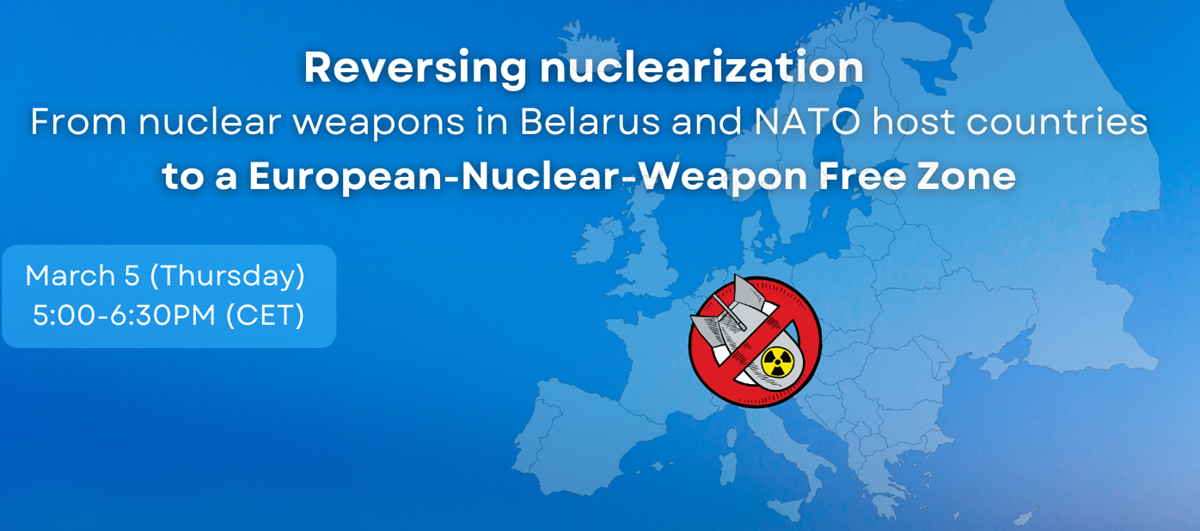
5 March -Online – Reversing nuclearization:
From nuclear weapons in Belarus and NATO host countries to a European-Nuclear-Weapon Free Zone
11am-12:30pm Eastern Time USA / 5pm-6:30pm CET

of the week – Advocating for a
nuclear free beach – https://www.samuellawrencefoundation.org/
The Samuel Lawrence Foundation advocates for a Nuclear Waste Free Beach at San Onofre, join us and take action!

10 March A LIVE WEBINAR THE REAL EFFECTS OF NUCLEAR POWER
What the Industry Isn’t Telling Us
1:00 PM Mountain, 2 pm Central, 3 pm Eastern. Live on the Keepers of the Water Facebook page

18 March Webinar @ 1 PM EST: An Assessment of SMR Projects: The Case of Canada
register for the zoom:
https://us02web.zoom.us/webinar/register/WN_o8BIIOUvQ2ONJR1nta65DQ#/registration

of the week – STOP SMALL MODULAR REACTORS IN CANADA
To see nuclear-related stories in greater depth and intensity – go to https://nuclearinformation.wordpress.com
-
Archives
- March 2026 (38)
- February 2026 (268)
- January 2026 (308)
- December 2025 (358)
- November 2025 (359)
- October 2025 (376)
- September 2025 (258)
- August 2025 (319)
- July 2025 (230)
- June 2025 (348)
- May 2025 (261)
- April 2025 (305)
-
Categories
- 1
- 1 NUCLEAR ISSUES
- business and costs
- climate change
- culture and arts
- ENERGY
- environment
- health
- history
- indigenous issues
- Legal
- marketing of nuclear
- media
- opposition to nuclear
- PERSONAL STORIES
- politics
- politics international
- Religion and ethics
- safety
- secrets,lies and civil liberties
- spinbuster
- technology
- Uranium
- wastes
- weapons and war
- Women
- 2 WORLD
- ACTION
- AFRICA
- Atrocities
- AUSTRALIA
- Christina's notes
- Christina's themes
- culture and arts
- Events
- Fuk 2022
- Fuk 2023
- Fukushima 2017
- Fukushima 2018
- fukushima 2019
- Fukushima 2020
- Fukushima 2021
- general
- global warming
- Humour (God we need it)
- Nuclear
- RARE EARTHS
- Reference
- resources – print
- Resources -audiovicual
- Weekly Newsletter
- World
- World Nuclear
- YouTube
-
RSS
Entries RSS
Comments RSS
 nuclear-news
Leave a comment