Fukushima will become a radioactive no man’s land
Even after a cold shutdown, scrapping the plant will likely take decades, and the site will become a no-man’s land.
Tonnes of nuclear waste sit at the site of the nuclear reactors, and enclosing the reactors by injecting lead and encasing them in concrete would make it safe to work and live a few kilometres away from the site, but is not a long-term solution for the disposal of spent fuel, which will decay and emit fission fragments over tens of thousands of years.
‘No safe levels’ of radiation in Japan, Al Jazeera 5 April 11“……Japanese officials conceded to the public on March 31 that the battle to save four crippled nuclear reactors at the Fukushima Daiichi nuclear plant has been lost. On March 29 a US engineer who helped install the reactors at the plant said he believed the radioactive core in unit No. 2 may have melted through the bottom of its containment vessel and on to a concrete floor. Continue reading
World must “embrace nuclear power” says AREVA
“Nuclear is the cheapest” power source, Besnainou said

Areva Executive Praises Nuclear Power, Urges Loan Guarantees – WSJ.comBy Yuliya Chernova Of DOW JONES VENTUREWIRE NEW YORK 4 April 11, –-Jacques Besnainou, chief executive of the U.S. arm of nuclear giant Areva SA (CEI.FR, ARVCY), said that the world must embrace nuclear power and advocated the continuation of U.S. federal loan guarantees for new nuclear power plants. Continue reading
China detects radioactive cesium 137 from Fukushima
Radioactive cesium detected in more Chinese regions amid Japan nuclear crisis BEIJING, April 4 (Xinhua) — Trace levels of radioactive isotope cesium-137 and -134 were detected in the air of 13 of the Chinese mainland’s 31 provincial-level regions on Monday, up from eight regions on Sunday.Cesium-137 and -134 were detected in Beijing, Tianjin, Hebei, Shanxi, Shandong, Shanghai, Inner Mongolia, Jiangshu, Zhejiang, Anhui, Jiangxi, Hubei and Ningxia on Monday….Radioactive cesium detected in more Chinese regions amid Japan nuclear crisis
Anxiety growing in China over poor nuclear safety
Chinese environmental campaigners, citizens on microblogs and even the normally pliant state-run media are questioning why China has no obvious emergency preparedness plan, even though many people here live less than a quarter mile from nuclear facilities….people here were already suffering health problems associated with living close to a nuclear facility and that the cancer rate in the area has increased.
China expanding nuclear power but lacks emergency planning The Washington PostBy Keith B. Richburg, April 2, SHANGHAI — The Chinese government repeatedly offers assurances that the nuclear crisis in Japan poses no radiation risk in China. Officials monitor radiation levels in the air over coastal cities daily now. And planes and ships bringing cargo and passengers from Japan are closely scanned.
But the Chinese government has not told citizens living near nuclear facilities what to do in case of a similar disaster here. Continue reading
Ontario Power Generation’s flawed statement on nuclear power
the province has never completed an integrated power system plan that would establish the need for new generators…… The environmental impact statement submitted by OPG also fails to consider alternatives to a major nuclear project,
Law association argues nuclear approval process flawed – thestar.com, 4 April 11, John Spears Ontario Power Generation has failed to consider alternatives to building new nuclear reactors at Darlington, the Canadian Environmental Law Association argued Monday.That means it hasn’t submitted an adequate environmental impact statement under federal law, the association told a panel reviewing the proposal for new reactors.And that in turn means the panel isn’t in a position to recommend giving the go-ahead for OPG to proceed with preparing the site for construction, Continue reading
Nuclear Regulatory Commission relicensed Vermont Yankee nuclear plant, despite safety problems
 Safety of Vt. nuclear plant cables questioned, Google News, (AP) – 5 April 11, MONTPELIER, Vt. (AP) — Documents show the Nuclear Regulatory Commission gave the Vermont Yankee nuclear plant a new license last month knowing that electrical cables to key safety systems had been submerged in water for long periods of time.A nuclear watchdog group, the New England Coalition, says the issue has new urgency since the nuclear disaster in Japan was caused by tsunami flooding that knocked cooling systems out of service at the Fukushima Dai-ichi nuclear plant.NRC documents show the agency has been concerned about submerged electrical cables at U.S. nuclear plants for years…… The Associated Press: Safety of Vt. nuclear plant cables questioned
Comparing Fukushima’s radiation to Chernobyl’s
The Central Institute for Meteorology and Geodynamics of Vienna told New Scientist on March 24: “Japan’s damaged nuclear plant in Fukushima has been emitting radioactive iodine and caesium at levels approaching those seen in the aftermath of the Chernobyl accident in 1986…..The daily amount of caesium-137 released from Fukushima Daiichi is around 60 per cent of the amount released from Chernobyl.”….According to a report from the New York Academy of Sciences, due to the Chernobyl disaster, 985,000 people have died, mainly from cancer, between 1986-2004.
‘No safe levels’ of radiation in Japan, Al Jazeera 5 April 11“………Fukushima as ChernobylThis month marks the 25th anniversary of the Chernobyl nuclear disaster.“There are still no-go areas there, and the workers town has long since been abandoned, and we are seeing radioactive refugees from there, like we are now seeing generated in Japan,” Continue reading
Global nuclear power industry can’t do “business as usual” – UN chief
UN nuke chief: Japan crisis a ‘major challenge’, STRAITS TIMES 5 April 11VIENNA – JAPAN’S reactor crisis poses a major challenge with enormous implications for nuclear power, the head of the UN’s atomic watchdog said on Monday, while separately appearing to criticise the operator of the crippled complex.Yukiya Amano, head of the International Atomic Energy Agency, also stressed that the global nuclear community cannot take a ‘business-as-usual approach.’ Lessons must be learned from the fact that the Fukushima Dai-ichi plant has been leaking radiation into the environment ever since it was hit March 11 by a massive tsunami, he said…….UN nuke chief: Japan crisis a ‘major challenge’
Uranium miners desperately hyping their product
 Buying Opportunity: Uranium Prices And Producers Are Poised To Rebound ETF DAILY NEWS, Jason Simpkins, 4 April,11 …….those closest to the situation do not believe that Japan’s disaster will be the death knell for nuclear power. On the contrary, they see it as a short-term blip that will drive antsy speculators out of the market and make room for investors looking to profit from the energy of the future…….there is still a gaping need for an alternative energy source that doesn’t carry the monetary [?] or environmental [?] cost of fossil fuels…….. A Buying Opportunity Indeed, the growth prospects for nuclear power remain strong, as do the prospects for its yellow cake fuel……..
Fukushima radiation and the marine food chain
there is a very strong likelihood that caesium, iodine and strontium could accumulate in the food chain from phytoplankton and algae to edible fish.
 The World Today – Scientists monitor fallout from Fukushima 04/04/2011 The World Today , 4 April 11, ELEANOR HALL: Conservation groups and marine scientists say they remain very concerned about the ocean fallout from Japan’s crippled nuclear plant. The Japanese government says it could take months to stop radiation leaking from the plant. Continue reading
Newspaper and sawdust to fix Fukushima nuclear leak?
 Japan nuclear crisis: workers using newspaper and sawdust to block pipes, Japanese workers battling to stop a radioactive water leak into the Pacific from the beleaguered nuclear power plant have resorted to using newspaper and sawdust to try and block the pipes. – Telegraph, By Danielle Demetriou, Tokyo 04 Apr 2011
TEPCO workers were using a polymer mixed with shredded paper and sawdust to try to close off pipes through which the water has flowed into a cracked concrete pit at the Fukushima Daiichi plant, from where it has run into the sea. An earlier attempt to seal the crack with cement failed to stop the leak.”From the afternoon, the workers began pouring polymeric powder, sawdust, newspaper – things we could think of to clog up the holes,” said Hidehiko Nishiyama, a spokesman for the nuclear safety agency.
“So far, there has not been any clear indication that the volume of leaking water has been reduced.”…… Japan nuclear crisis: workers using newspaper and sawdust to block pipes – Telegraph
Fukushima “worst nuclear disaster in history”? – with release of radioactive Cesium 137
 The highest cesium-137 levels in some villages near Chernobyl were 5 million Bq/m2. If true, Fukushima has already released higher levels of Cesium 137 than Chernobyl, making it the worst source of nuclear radiation release in history…..If preliminary information is correct, Fukushima already is the worst nuclear disaster in history.

 Japan’s Government Needs to Move Quickly, THE HUFFINGTON POST, Daniel Wagner, 4 April 11, Daniel Wagner is managing director of Country Risk Solutions, a political risk consulting firm based in Connecticut, and senior advisor to the PRS Group. Why the Japanese Government Needs to Move Quickly The focus of much of the press since the quake and tsunami has been on levels of radioactive iodine that has been released into the environment, but cesium-137 is a much greater health concern and has been linked to cancer deaths nine times greater than radioactive iodine, with a half life of 30 years. Last week, for the first time, the Japanese science ministry began to release measurements of cesium-137 in soil around the plant. Continue reading
German public, churches, oppose nuclear energy, prefer more modest lifestyle
 Those in favour of ditching nuclear energy have the churches on their side too, it emerged on Sunday, when the Catholic and Protestant representatives on the Ethics Commission on Atomic Energy expressed their views.
 Most Germans would sacrifice lifestyle to ditch nuclear energy – The Local, 4 April 11, A majority of Germans would sacrifice a certain level of quality of life in order to close down the country’s nuclear power stations, according to a new survey. Continue reading
Refuting George Monbiot on the dangers of ionising radiation
 If you inhale a millionth of a gram of plutonium, the surrounding cells receive a very, very high dose. Most die within that area, because it’s an alpha emitter. The cells on the periphery remain viable. They mutate, and the regulatory genes are damaged. Years later, that person develops cancer….]t’s imperative that people understand that internal emitters cause cancer, but the incubation time for cancer is any time from two to 60 years. …
 VIDEO Nuclear industry propaganda about low-level radiation is “absolute rubbish” says physician who taught at Harvard Med School — It’s all about internal emitters (VIDEO) « Energy News Energy News, HELEN CALDICOTT, 4 April 11, : … Up to a million people have already died from Chernobyl, and people will continue to die from cancer for virtually the rest of time. Continue reading
The unknown present and future costs of nuclear power
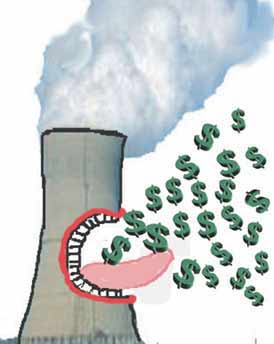 the total costs of nuclear power are, in any meaningful sense, incalculable. Investors face cost overruns that could burn through even the deepest pockets. The true cost of waste disposal still is not known. The cost of decommissioning, even decades away, is also a big unknown. And the cost of catastrophic failure is more than a company as large as GE is willing to face. How can any investor calculate the return on investment with such large uncertainties?……
The incalculable cost of nuclear power, guardian.co.uk, Thomas Noyes , 3 April 11 Despite the Fukushima catastrophe, nuclear energy has green advocates. Low carbon it may be, but are they pricing it right? “……the costs and uncertainties of the industry cast serious doubt on the prospects for a nuclear renaissance….. Continue reading
1 This Month

Protect Sazan Island from the Trump family! https://secure.avaaz.org/campaign/en/protect_sazan_island_from_the_trump_family_loc/?bqFCVab&v=174511&cl=22707147157&_checksum=5e9dde668860e8231c33699735e16a1fbf22ab2cb01da50c999fe8732b9775ef&utm_source=email&utm_medium=blast_email&utm_campaign=174511


Cuba Is Not a Failed State – It Is a Besieged State
PETITION: “Global Appeal to Endorse Palestinian Right of Return of Refugees”
To see nuclear-related stories in greater depth and intensity – go to https://nuclearinformation.wordpress.com
-
Archives
- June 2026 (129)
- May 2026 (306)
- April 2026 (356)
- March 2026 (251)
- February 2026 (268)
- January 2026 (308)
- December 2025 (358)
- November 2025 (359)
- October 2025 (376)
- September 2025 (257)
- August 2025 (319)
- July 2025 (230)
-
Categories
- 1
- 1 NUCLEAR ISSUES
- business and costs
- climate change
- culture and arts
- ENERGY
- environment
- health
- history
- indigenous issues
- Legal
- marketing of nuclear
- media
- opposition to nuclear
- PERSONAL STORIES
- politics
- politics international
- Religion and ethics
- safety
- secrets,lies and civil liberties
- spinbuster
- technology
- Uranium
- wastes
- weapons and war
- Women
- 2 WORLD
- ACTION
- AFRICA
- Atrocities
- AUSTRALIA
- Christina's notes
- Christina's themes
- culture and arts
- Events
- Fuk 2022
- Fuk 2023
- Fukushima 2017
- Fukushima 2018
- fukushima 2019
- Fukushima 2020
- Fukushima 2021
- general
- global warming
- Humour (God we need it)
- Nuclear
- RARE EARTHS
- Reference
- resources – print
- Resources -audiovicual
- Weekly Newsletter
- World
- World Nuclear
- YouTube
-
RSS
Entries RSS
Comments RSS
 nuclear-news