Chernobyl’s radiation tragedy continues to this day
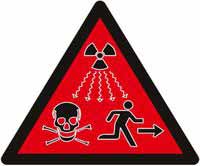 since the explosion 93 000 have died from radiation-linked cancer in the Ukraine, Belarus and Russia; hundreds of thousands of cancers have been diagnosed; and there have been major effects on children, then unborn and now in their 20s.
Cold and desolate in the dead zone, Mail & Guardian, ILHAM RAWOOT – Apr 29 2011 “……Twenty-five years after the disaster those living near the station are still feeling the effects on their bodies, finances and livelihoods.
Dr Igor Bogdanets works at the Rokytnivska Central Hospital in Rokytne, a town with a population of 53 000 near the border with Belarus, 300km from Chernobyl.
“We’re still seeing a build-up of Caesium-137 in the muscles, kidneys, liver and blood plasma,” he says, referring to the radioactive isotope that causes cancer. “Since the accident there was a major increase in thyroid cancer, especially in people who were children or teenagers in 1986. “The children in the town have suppressed immune systems. Two-thirds of the population has problems relating to contamination.”
Since the explosion
German nuclear physicist and expert Tobias Muenchmeyer, who has studied the disaster in depth, says that since the explosion 93 000 have died from radiation-linked cancer in the Ukraine, Belarus and Russia; hundreds of thousands of cancers have been diagnosed; and there have been major effects on children, then unborn and now in their 20s. Negative health effects have been observed more than 500km away……. Most of the people living around Chernobyl are poor and unemployed and subsist on their crops — but these crops are still contaminated by radionuclides and radioactive isotopes.
Ukrainian Irina Lubinska, senior scientist at the University of Exeter, who has studied the effects of radiation on food around Chernobyl, says wild mushrooms, milk and berries are the worst affected. In villages around Chernobyl the radiation in milk is still far above permissible levels.
“The government is responsible in the Ukrainian constitution for what people affected by resettlement call ‘funeral money’,” says Lubinska, referring to the funds intended for the purchase of essentials such as food. “Often they wait months to receive small amounts of compensation.”
In Rokytne people are given two hryvnias, equal to R2 a day, to buy clean food. Doctors say that the state can afford to send only five of every 15 children to school outside the contaminated area. It also pays for the medication of residents in contaminated areas and gives vouchers to people so they can stay away from their homes for 18 days at a time, to avoid overdosing on radiation.
The government is also treating the soil in the contaminated areas, adding potassium to prevent the transfer of radionuclides into plants. And it is spending $1,2billion from the European Bank for Reconstruction and Development on a new sarcophagus — the block of cement and steel almost 100m high that covers the plant — to stop further radiation leaks….http://mg.co.za/article/2011-04-29-cold-and-desolate-in-the-dead-zone/.
No comments yet.
1 This Month

of the week – Shut Down Drone Warfare!


Tell the Ukrainian Government to Drop Prosecution of Peace Activist Yurii Sheliazhenko

Petition to revoke the licensing of the Near Surface Nuclear Disposal Facility (NSDF) at Chalk River. https://www.ourcommons.ca/petitions/en/Petition/Details?Petition=e-7247
To see nuclear-related stories in greater depth and intensity – go to https://nuclearinformation.wordpress.com
-
Archives
- March 2026 (230)
- February 2026 (268)
- January 2026 (308)
- December 2025 (358)
- November 2025 (359)
- October 2025 (376)
- September 2025 (257)
- August 2025 (319)
- July 2025 (230)
- June 2025 (348)
- May 2025 (261)
- April 2025 (305)
-
Categories
- 1
- 1 NUCLEAR ISSUES
- business and costs
- climate change
- culture and arts
- ENERGY
- environment
- health
- history
- indigenous issues
- Legal
- marketing of nuclear
- media
- opposition to nuclear
- PERSONAL STORIES
- politics
- politics international
- Religion and ethics
- safety
- secrets,lies and civil liberties
- spinbuster
- technology
- Uranium
- wastes
- weapons and war
- Women
- 2 WORLD
- ACTION
- AFRICA
- Atrocities
- AUSTRALIA
- Christina's notes
- Christina's themes
- culture and arts
- Events
- Fuk 2022
- Fuk 2023
- Fukushima 2017
- Fukushima 2018
- fukushima 2019
- Fukushima 2020
- Fukushima 2021
- general
- global warming
- Humour (God we need it)
- Nuclear
- RARE EARTHS
- Reference
- resources – print
- Resources -audiovicual
- Weekly Newsletter
- World
- World Nuclear
- YouTube
-
RSS
Entries RSS
Comments RSS
 nuclear-news
Leave a comment