Nuclear Energy Institute writes the rules for Nuclear Regulatory Commission
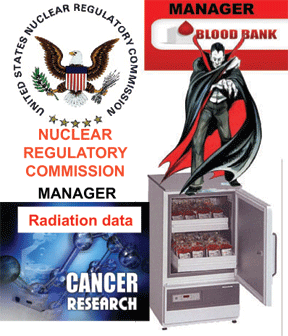 allowing the NEI to play such a large role means the industry can shape much of what nuclear companies are required to do…….. NRC’s precursor agency, the Atomic Energy Commission, was disbanded after Congress concluded it had become too concerned with promoting nuclear power instead of regulating safety…..over the years, NRC has become more accommodating to the industry.
U.S. Nuclear Regulator Lets Industry Help With the Fine Print by John Sullivan, Special to ProPublica April 13, 2011, “…….Large parts of the guides, issued by NRC, incorporate or endorse material written by the industry’s trade group, the Nuclear Energy Institute[6]. Continue reading
The Faustian bargain of nuclear power
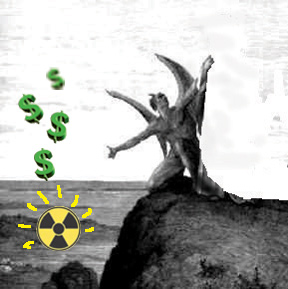 Fukushima Daiichi Is a ‘Ticking Time Bomb’ HUFFINGTON POST, 04/14/11 “…..DR. MICHIO KAKU: Well, there’s something called a Faustian bargain. Faust was this mythical figure who sold his soul to the devil for unlimited power. Now, the Japanese government has thrown the dice with a Faustian bargain. Japan has very little fossil fuel reserves, no hydroelectric power to speak of, and so they went nuclear. However, in the United States, we’re now poised, at this key juncture in history, where the government has to decide whether to go to the next generation of reactors. These are the so-called gas-cooled pebble bed reactors, which are safer than the current design, but they still melt down. The proponents of this new renaissance say that you can go out to dinner and basically have a leisurely conversation even as your reactor melts down. But it still melts. That’s the bottom line.
AMY GOODMAN: And so, what do you think should happen? Do you think nuclear power plants should be built in this country?
DR. MICHIO KAKU: I think there should be a national debate, a national debate about a potential moratorium. The American people have not been given the full truth, because, for example, right north of New York City, roughly 30 miles north of where we are right now, we have the Indian Point nuclear power plant, and the Nuclear Regulatory Commission has now admitted that of all the reactors prone to earthquakes, the one right next to New York City is number one on that list. And the government itself, back in 1980, estimated that property damage would be on the order of about $200 billion in case of an accident, in 1980 dollars, at the Indian Point nuclear power station…..Democracy Now!: Fukushima Daiichi Is a ‘Ticking Time Bomb’
Grave danger of depleted uranium weapons used on Libya
“We are saturating the ground with Depleted Uranium ammunition ……we are subjecting civilians of Libya to a far greater danger in the long run than they currently face from the civil war that’s going on.”…
 AUDIO PressTV – US heavily dependent on use of Depleted Uranium , PressTV, 14 April 11, NATO continues to deny the use of depleted uranium in its humanitarian efforts in Libya. Conn Hallinan, Columnist for Foreign Policy in Focus, spoke to Press TV’s U.S. Desk on Thursday regarding the continued use of Depleted Uranium ammunition. “I think you have a situation now where the United States and Britain and France, being the major countries involved here are basically claiming that they are engaged in the Libyan Civil War in order to protect the civilians. Unfortunately, what is happening is that in the process of attacking Muammar Gaddafi’s military forces, particularly his tanks and armor and artillery the U.S. is heavily dependent on the use of Depleted Uranium Munitions,” Hallinan said. Continue reading
Risk of radiation in milk, rainwater, says French radiation agency
 Global Radiation Levels ‘No Longer Negligible’ In Milk, Water, Produce Care 2, by: Beth Buczynski 15 April 11, A French research authority on radioactivity is now warning expectant European mothers and young children to avoid drinking milk or rainwater, while EPA data released on Sunday shows that at least three different milk samples — all from different parts of the US — have tested positive for radioactive Iodine-131 at levels that exceed the current maximum thresholds for safety.
The radiation risk from Fukushima is “no longer negligible,” says CRIIRAD, the French agency. Two weeks ago, the FDA began blocking imports of some Japanese milk and produce.
CRIIRAD told Europeans that eating these items qualifies as “risky behavior.”….
it may still be some time until we learn the true extent of the contamination.
Global Radiation Levels ‘No Longer Negligible’ In Milk, Water, Produce
Hanover International Trade Fair heralds the post nuclear economy
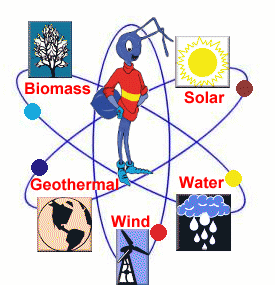 “This is a market that keeps expanding,”…“Growth is in renewables.”
German Firms Move Toward Postnuclear Economy NYTimes.com By JUDY DEMPSEYApril 14, 2011 HANOVER, Germany — Josef Mehrer, a family-owned German company established more than 120 years ago, has survived by adapting with the times….In the early 1990s, the company placed a bet on the renewable energy sector Continue reading
German Bill to shut down nuclear power industry
 The main opposition Social Democratic Party will put a bill to the upper house in Berlin today calling for the immediate closure of eight reactors and all 17 nuclear plants to be shut within about a decade. The opposition holds a majority in the upper house, the Bundesrat, where states are represented.
 Merkel Faces Nuclear Exit Bill as States Exert Pressure After Japan Crisis, Bloomberg, By Tony Czuczka and Nicholas Comfort – Apr 15, 2011 Chancellor Angela Merkel faces a bid by members of the upper house of parliament to force her to abandon nuclear power as she tries to rally German state leaders behind an overhaul of energy policy by the middle of May. Continue reading
Save Japanese nuclear workers by collecting their stem cells
 the solution is not perfect, the team admits. High exposure to radiation would also attack cells in the gut, skin or lung — problems a stem cell transplant could not fixYet, with containment and clean-up efforts at the damaged plant expected to drag on for months or even years, Tanimoto and Taniguchi say taking steps to protect the workers’ from future harm is paramount.
Banking stem cells could save Japan nuclear workers By Julie Steenhuysen CHICAGO Apr 14, 2011 (Reuters) – Health officials should collect blood from workers at the crippled Fukushima Daiichi nuclear power plant in case they are accidentally exposed to high levels of radiation and need a stem cell transplant, Japanese researchers said on Thursday. Continue reading
Fukushima cleanup plan means continued radioactive leaking
 VIDEO
VIDEO
Plan to End Fukushima Nuclear Crisis Leaves Reactor Leaking Radiation For Another 3 Months : – The Intel Hub, By Alexander Higgins April 14th, 2011 Japan’s plan to end the Fukushima nuclear reactor crisis involves letting radiation leak for the next 3 months.The manufacturer of the Fukushima nuclear reactor revealed the plan to end the nuclear reactor radiation leak which will be split into 3 phases over 10 years. The first stage will take about three months during which they plan to stabilize the nuclear reactor and spent fuel pools while preventing the radiation leak from increasing.You read that correct, NO PLAN TO STOP THE RADIATION LEAK WITHIN THE NEXT 3 MONTHS – ONLY A PLAN TO STOP THE LEAK FROM INCREASING.
Plan to End Fukushima Nuclear Crisis Leaves Reactor Leaking Radiation For Another 3 Months :
Fukushima Prefecture children must stay indoors
Schools keep kids indoors The Yomiuri Shimbun 15 April 11, Outdoor activities in Fukushima Pref. stopped over radiation Worried about radiation, schools in Fukushima Prefecture have stopped holding physical education classes in their school yards regardless of schools’ distance from the crippled nuclear power plant in the prefecture……the central government’s failure to provide any guidelines on students’ outdoor activities has left schools wondering what to do.
During soil inspection in school yards, inspectors took five-centimeter-deep samples to check the levels of radioactive iodine and cesium.
The school yard of Yamakiya Primary School in Kawamatamachi recorded the highest level: 59,059 becquerels per kilogram of soil for both isotopes. The school began holding its physical education class indoors after the new academic year started on April 6 and such events as excursions and hiking will be suspended…..Schools keep kids indoors / Outdoor activities in Fukushima Pref. stopped over radiation : National : DAILY YOMIURI ONLINE (The Daily Yomiuri)
UK nuclear companies protected from financial risks
Nuclear risks , The Guardian, Donald Power 15 April 2011 An estimate of the cost of compensation to Fukushima victims of $133bn has been reported by Reuters (Japan raises nuclear alert, 12 April). The UK has nuclear sites closer to major cities than Fukushima is to Tokyo, so costs could be even greater here. So it’s scandalous that nuclear operators are being allowed to cap their liability at €0.7bn or at most €1.3bn – barely 1% of the possible Fukushima compensation. No other industry is allowed to do this: BP has a $20bn fund for compensation to victims of last year’s oil spill. Why should nuclear be let off?
- The industry says the public have a poor perception of risk. That although a nuclear accident could be catastrophic and cause us to lose our homes and towns, the chances of it happening are so small that we should not worry about it. How strange then that their shareholders are not willing to accept the same small risk that they might lose their money.A more suitable measure would be to remove the protection of limited liability from the owners and directors of these companies in the event of a major accident. If we are to lose our homes, they should too, not walk away with bonuses and pensions intact as the bankers did. Readers may like to make their own views known to the Department of Energy and Climate Change nuclear third party liability consultation, which ends on 28 April. ..Letters: Nuclear risks | Environment | The Guardian
Huge and unprecedented problems in Fukushima nuclear cleanup
The scale and complexity of the challenge is unprecedented. No nuclear reactor has ever been fully decommissioned in Japan, let alone the four certain to be dismantled at Fukushima
Nuclear Cleanup Plans Hinge on Unknowns, NYTimes.com, By HIROKO TABUCHI April 14, 2011 “…..he widely divergent outlooks underscore the basic uncertainties clouding any forecast for Fukushima: when cooling stems will be restored and radiation emission halted; how soon workers can access some parts of the plant; and how bad the damage to the reactors, their fuel, and nearby stored fuel turns out to be. Continue reading
Giant Siemens company may be the first to dump nuclear projects
The second thoughts at Siemens show how swiftly the accident at the tsunami-stricken Fukushima Daiichi plant in Japan has upended the nuclear-energy revival that the company and its rivals had expected
Siemens Rethinks Nuclear Ambitions – WSJ.com* APRIL 15, 2011 By VANESSA FUHRMANS German engineering giant Siemens AG is considering whether to abandon its goal of becoming a major player in the atomic-power industry, according to people familiar with the matter, as Japan’s nuclear crisis continues to unfold. Continue reading
Uncertain future for Japan’s nuclear refugees
Japan’s “nuclear refugees” face the unknown – World Watch – CBS News 14 April TOKYO – There are still 139,000 people living in shelters across Japan. While most of those displaced by the earthquake and tsunami in the Miyagi and Iwate prefectures (states) can expect to eventually return home, the fate of Fukushima’s 47,000 “nuclear refugees” is murky…
Japan’s “nuclear refugees” face the unknown – World Watch – CBS News
Nuclear Regulatory Commission was all too cosy with Davis Besse Nuclear Power Station
The inspector general concluded that a conflict between the NRC’s twin goals of inspecting the plant to protect public safety and a desire to “reduce unnecessary regulatory burden” on the owner led to the delay in finding the gaping hole.
U.S. Nuclear Regulator Lets Industry Help With the Fine Print by John Sullivan, Special to ProPublica April 13, 2011, In the fall of 2001, inspectors with the Nuclear Regulatory Commission were so concerned about possible corrosion at Ohio’s Davis Besse Nuclear Power Station [1] that they prepared an emergency order to shut it down for inspection. But, according to a report [2] from the NRC inspector general, senior officials at the agency held off – in part because they did not want to hurt the plant’s bottom line. Continue reading
Fukushima nuclear plant on a disaster tightrope
“The slightest disturbance could set off a full-scale meltdown at three nuclear power stations, far beyond what we saw at Chernobyl… you’re looking at basically a ticking time bomb.”……now you have these Japanese samurai warriors. They know that this is potentially a suicide mission.
Fukushima Daiichi Is a ‘Ticking Time Bomb’ HUFFINGTON POST, 04/14/11 “……”Radiation is continuing to leak out of the reactors. The situation is not stable at all,” says Dr. Michio Kaku, professor of theoretical physics at the City University of New York and the City College of New York, in an interview with Democracy Now! April 13. Continue reading
1 This Month
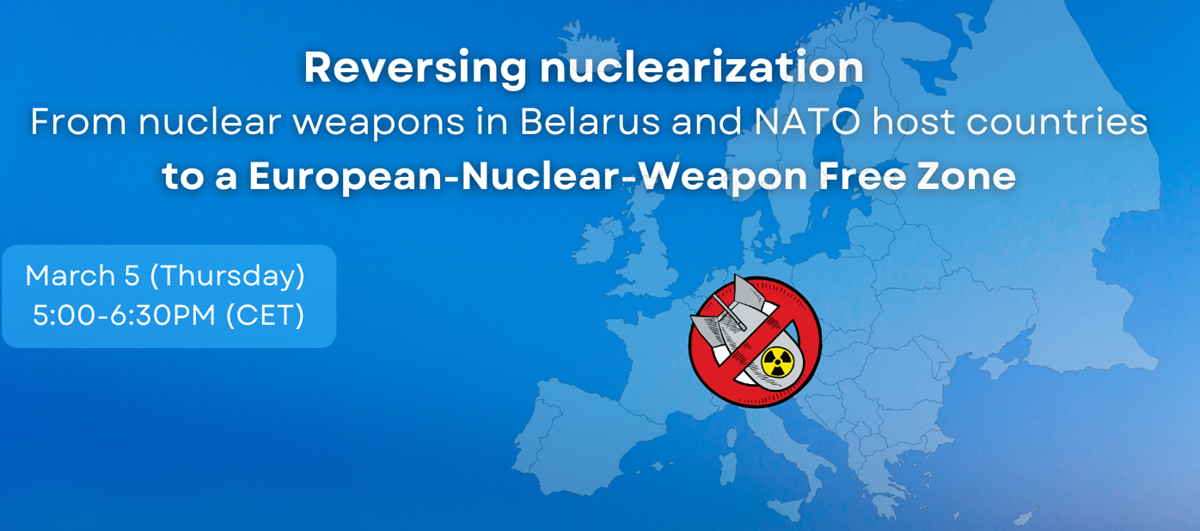
5 March -Online – Reversing nuclearization:
From nuclear weapons in Belarus and NATO host countries to a European-Nuclear-Weapon Free Zone
11am-12:30pm Eastern Time USA / 5pm-6:30pm CET

of the week – Advocating for a
nuclear free beach – https://www.samuellawrencefoundation.org/
The Samuel Lawrence Foundation advocates for a Nuclear Waste Free Beach at San Onofre, join us and take action!

10 March A LIVE WEBINAR THE REAL EFFECTS OF NUCLEAR POWER
What the Industry Isn’t Telling Us
1:00 PM Mountain, 2 pm Central, 3 pm Eastern. Live on the Keepers of the Water Facebook page

18 March Webinar @ 1 PM EST: An Assessment of SMR Projects: The Case of Canada
register for the zoom:
https://us02web.zoom.us/webinar/register/WN_o8BIIOUvQ2ONJR1nta65DQ#/registration

of the week – STOP SMALL MODULAR REACTORS IN CANADA
To see nuclear-related stories in greater depth and intensity – go to https://nuclearinformation.wordpress.com
-
Archives
- March 2026 (38)
- February 2026 (268)
- January 2026 (308)
- December 2025 (358)
- November 2025 (359)
- October 2025 (376)
- September 2025 (258)
- August 2025 (319)
- July 2025 (230)
- June 2025 (348)
- May 2025 (261)
- April 2025 (305)
-
Categories
- 1
- 1 NUCLEAR ISSUES
- business and costs
- climate change
- culture and arts
- ENERGY
- environment
- health
- history
- indigenous issues
- Legal
- marketing of nuclear
- media
- opposition to nuclear
- PERSONAL STORIES
- politics
- politics international
- Religion and ethics
- safety
- secrets,lies and civil liberties
- spinbuster
- technology
- Uranium
- wastes
- weapons and war
- Women
- 2 WORLD
- ACTION
- AFRICA
- Atrocities
- AUSTRALIA
- Christina's notes
- Christina's themes
- culture and arts
- Events
- Fuk 2022
- Fuk 2023
- Fukushima 2017
- Fukushima 2018
- fukushima 2019
- Fukushima 2020
- Fukushima 2021
- general
- global warming
- Humour (God we need it)
- Nuclear
- RARE EARTHS
- Reference
- resources – print
- Resources -audiovicual
- Weekly Newsletter
- World
- World Nuclear
- YouTube
-
RSS
Entries RSS
Comments RSS
 nuclear-news