Using up USA’s depleted uranium – for weapons in Libya
given the amount of depleted uranium in the hands of the US—one of the few countries that has refused to sign on to the UN’s Human Rights Commission’ ban on the element—we’re going to only further saturate foreign battlefields with the toxic metal in years to come.
 NATO using depleted uranium in Libya RT, 13 April, 2011, Conn Hallinan is a columnist with Foreign Policy in Focus and says that, after examining the impact wounds left on tanks in Libya, he is almost certain that depleted uranium is being utilized. “Politically, it’s a bad idea. Medically, it’s an extremely bad idea. It’s just one of those things that’s an effective weapon that you have to step away from,” says Hallinan, who attests that, while the element is both affordable and powerful, “It’s just a very, very bad idea.”
The US dropped thousands of depleted uranium bombs upon Fallujah, Iraq in 2003, and the aftermath since has been catastrophic. A quarter of all births since the strike have suffered from abnormalities ranging from cancer to leukemia, and the rate of mutation among newborns is higher than what was found after America attacked Japan during the Second World War.
Hallinan says the US military investigated the effects of uranium warfare as early as 1991 and realized then the consequences. Hallinan reveals that tanks that were impacted by uranium ammunition were buried in radioactive dumps and that those involved in site clean-ups were advised to wear bio-hazard suits and dispose of all of their clothing.
“The army knew that the stuff was dangerous. What they didn’t do was they didn’t tell anybody that it was dangerous, and that’s still the situation today,” says Hallinan.
Dr. Doug Rokke, the ex-director of the Pentagon’s Depleted Uranium Project, says that there is no way to totally decontaminate an area hit with uranium, an element that has a half-life of 4.5 billion years and has thus earned the title “the silent killer that will never stop killing.” Rokke today says he was told by the government to lie about the effects of uranium and that most of the crew he worked with is now dead.
Hallinan says that given the amount of depleted uranium in the hands of the US—one of the few countries that has refused to sign on to the UN’s Human Rights Commission’ ban on the element—we’re going to only further saturate foreign battlefields with the toxic metal in years to come.
“The price that you pay for it in the end is simply too high” says Hallinan.
NATO using depleted uranium in Libya — RT
1 Comment »
Leave a comment
1 This Month
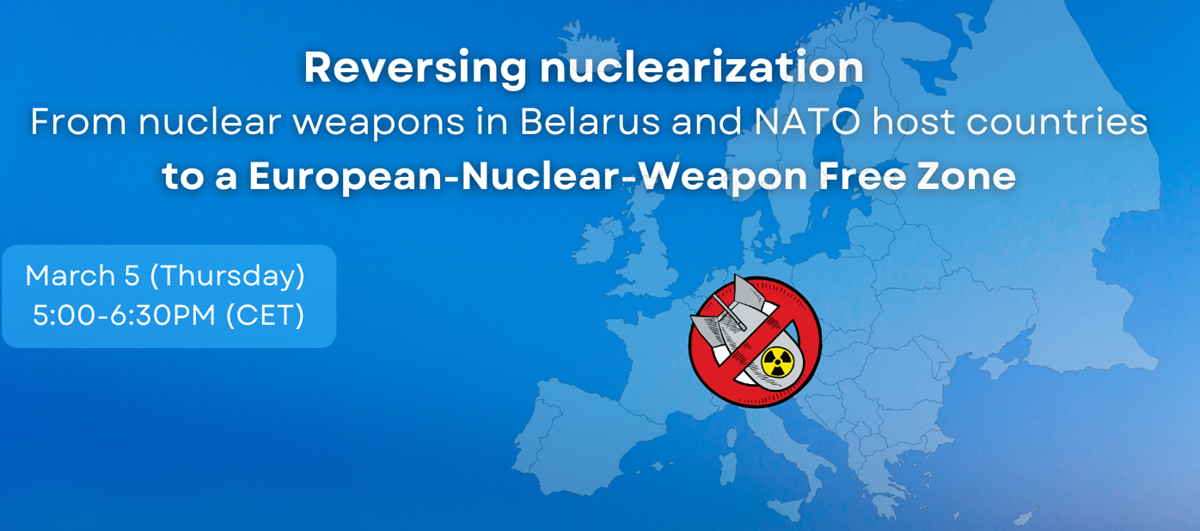
5 March -Online – Reversing nuclearization:
From nuclear weapons in Belarus and NATO host countries to a European-Nuclear-Weapon Free Zone
11am-12:30pm Eastern Time USA / 5pm-6:30pm CET

of the week – Advocating for a
nuclear free beach – https://www.samuellawrencefoundation.org/
The Samuel Lawrence Foundation advocates for a Nuclear Waste Free Beach at San Onofre, join us and take action!

10 March A LIVE WEBINAR THE REAL EFFECTS OF NUCLEAR POWER
What the Industry Isn’t Telling Us
1:00 PM Mountain, 2 pm Central, 3 pm Eastern. Live on the Keepers of the Water Facebook page

18 March Webinar @ 1 PM EST: An Assessment of SMR Projects: The Case of Canada
register for the zoom:
https://us02web.zoom.us/webinar/register/WN_o8BIIOUvQ2ONJR1nta65DQ#/registration

of the week – STOP SMALL MODULAR REACTORS IN CANADA
To see nuclear-related stories in greater depth and intensity – go to https://nuclearinformation.wordpress.com
-
Archives
- March 2026 (51)
- February 2026 (268)
- January 2026 (308)
- December 2025 (358)
- November 2025 (359)
- October 2025 (376)
- September 2025 (258)
- August 2025 (319)
- July 2025 (230)
- June 2025 (348)
- May 2025 (261)
- April 2025 (305)
-
Categories
- 1
- 1 NUCLEAR ISSUES
- business and costs
- climate change
- culture and arts
- ENERGY
- environment
- health
- history
- indigenous issues
- Legal
- marketing of nuclear
- media
- opposition to nuclear
- PERSONAL STORIES
- politics
- politics international
- Religion and ethics
- safety
- secrets,lies and civil liberties
- spinbuster
- technology
- Uranium
- wastes
- weapons and war
- Women
- 2 WORLD
- ACTION
- AFRICA
- Atrocities
- AUSTRALIA
- Christina's notes
- Christina's themes
- culture and arts
- Events
- Fuk 2022
- Fuk 2023
- Fukushima 2017
- Fukushima 2018
- fukushima 2019
- Fukushima 2020
- Fukushima 2021
- general
- global warming
- Humour (God we need it)
- Nuclear
- RARE EARTHS
- Reference
- resources – print
- Resources -audiovicual
- Weekly Newsletter
- World
- World Nuclear
- YouTube
-
RSS
Entries RSS
Comments RSS
 nuclear-news
Hi I am so grateful I found your webpage, I really found you by error, while I was researching on Bing for something else, Anyways I am here now and would just like to say thank you for a incredible post and a all round entertaining blog (I also love the theme/design), I don’t have time to read through it all at the minute but I have book-marked it and also added your RSS feeds, so when I have time I will be back to read much more, Please do keep up the great work.