America is not ready to deal with a radiation disaster
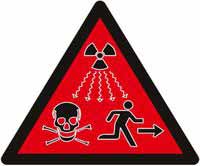 After a nuclear blast, hospitals probably would fill with trauma patients. Later, others would arrive with acute radiation syndrome, which can take days to manifest and affects multiple organ systems. Without supportive care, about 50 percent of people exposed to 3.5 Gray, a measure of radiation dose, would die. Proper care would almost double the exposure level at which 50 percent would survive, but only a small fraction of American medical professionals have training and expertise in treating radiation injury……Given that not enough beds would be available, hospitals and first responders would have to choose which patients to save.
U.S. health-care system unprepared for major nuclear emergency, officials say The Washington Post, By Sheri Fink, Thursday, April 7,“………in national surveys, U.S. hospital workers have expressed fears ,… saying they would be less willing to report to work for a radiological or nuclear incident than for other types of emergencies. They also said they feel unprepared for the work they would be required to do, even though the risk of radiation exposure from treating contaminated patients outside the danger zone is considered negligible when workers are properly trained and wear protective equipment.
The level of education for disasters across the board in American hospitals is really pretty terrible,” Cooper said. “People don’t have a good sense of how to focus on any disaster, let alone a radiation disaster. Radiation adds a level of complexity that most folks aren’t prepared to face.”……
Facing a worst-case emergency
The American Medical Association devoted the March issue of its journal, Disaster Medicine and Public Health Preparedness, to the No. 1 scenario on the federal government’s list of 15 planning scenarios for emergency preparedness: a nuclear explosion equivalent to the force of a 10-kiloton trinitrotoluene (TNT) blast on a major population center.
Using Washington as an example, one study estimated that 180,000 hospital beds could be needed after such a detonation and that 61,000 of those patients could require intensive care. But Washington typically has only about 1,000 vacant beds — and there are only about 9,400 vacant intensive care unit beds in the entire United States.
After a nuclear blast, hospitals probably would fill with trauma patients. Later, others would arrive with acute radiation syndrome, which can take days to manifest and affects multiple organ systems. Without supportive care, about 50 percent of people exposed to 3.5 Gray, a measure of radiation dose, would die. Proper care would almost double the exposure level at which 50 percent would survive, but only a small fraction of American medical professionals have training and expertise in treating radiation injury.
Given that not enough beds would be available, hospitals and first responders would have to choose which patients to save. Authors of the journal articles recommend basing those decisions in part on how much radiation exposure patients have received and treating only those with a reasonable chance of surviving. “It’s very hard to turn someone away who needs medical care who comes to your hospital,” Cooper said. “I don’t think any American hospital is prepared to do this kind of triage.”….
U.S. health-care system unprepared for major nuclear emergency, officials say – The Washington Post
No comments yet.
1 This Month

Petition to revoke the licensing of the Near Surface Nuclear Disposal Facility (NSDF) at Chalk River. https://www.ourcommons.ca/petitions/en/Petition/Details?Petition=e-7247


of the week – STOP SMALL MODULAR REACTORS IN CANADA
To see nuclear-related stories in greater depth and intensity – go to https://nuclearinformation.wordpress.com
-
Archives
- March 2026 (153)
- February 2026 (268)
- January 2026 (308)
- December 2025 (358)
- November 2025 (359)
- October 2025 (376)
- September 2025 (258)
- August 2025 (319)
- July 2025 (230)
- June 2025 (348)
- May 2025 (261)
- April 2025 (305)
-
Categories
- 1
- 1 NUCLEAR ISSUES
- business and costs
- climate change
- culture and arts
- ENERGY
- environment
- health
- history
- indigenous issues
- Legal
- marketing of nuclear
- media
- opposition to nuclear
- PERSONAL STORIES
- politics
- politics international
- Religion and ethics
- safety
- secrets,lies and civil liberties
- spinbuster
- technology
- Uranium
- wastes
- weapons and war
- Women
- 2 WORLD
- ACTION
- AFRICA
- Atrocities
- AUSTRALIA
- Christina's notes
- Christina's themes
- culture and arts
- Events
- Fuk 2022
- Fuk 2023
- Fukushima 2017
- Fukushima 2018
- fukushima 2019
- Fukushima 2020
- Fukushima 2021
- general
- global warming
- Humour (God we need it)
- Nuclear
- RARE EARTHS
- Reference
- resources – print
- Resources -audiovicual
- Weekly Newsletter
- World
- World Nuclear
- YouTube
-
RSS
Entries RSS
Comments RSS
 nuclear-news
Leave a comment