Wobbly nuclear words – how reassuring they are!

Christina Macpherson's websites & blogs
There are just so many of these wobbly words, pouring out of the pro nuclear lobby, as the lobby develops its current strategy, in response to the Japanese nuclear disaster, and with the anniversary of Chernobyl coming up. The two strategy themes are as follows:
1. Nuclear radiation “low level” radiation is not so bad, quite good really. Don’t mention the cancers and birth deformities from Chernobyl – or just gloss over the (relatively treatable) thyroid cancers.
2. Safety. New nuclear designs will be so safe – Fukushima just shows us how safe they are. And anyway, action is now taken to strengthen safety at old plants – Fukushima’s been a good reminder really.
 Nuclear doublespeak has crept into the mainstream media. And – note even a 7.1 earthquake is now labelled an “aftershock” – sounds better, doesn’t it? And – of course, any nuclear incident is “no immediate danger”
Radioactive spill after earthquake at Onagawa nuclear plant
The 7.1-magnitude quake that hit offshore late yesterday resulted in water flowing from containers onto the floor in all three reactor buildings at the Onagawa plant,
Japan quake makes radioactive water spill at nuclear plant Herald Sun, : AAP * April 08, 2011 A POWERFUL aftershock in northeast Japan rocked a nuclear plant, causing a small amount of radioactive water to spill, officials say, but the operator says there is no immediate danger. Continue reading
The revolving door of nuclear politicians and industry lobbyists
 Revolving-door lobbyists for nuclear companies will advocate on their behalf as some lawmakers and environmental groups raise questions about safety…..Nuclear issues are taking priority for some utility company lobbyists…...
 Former Hill Stars Add Muscle to Nuclear Industry’s Post-Japan Lobbying, By ANNE C. MULKERN of Greenwire : April 7, 2011 As a congressman, Rep. Robert Walker extolled the safety of nuclear power, arguing that technology prevented radiation poisoning during the meltdown at Three Mile Island.
He’s buttressing nuclear again today, this time working from the inside. Retired from the House, the Pennsylvania Republican provides strategic advice to the trade group Nuclear Energy Institute. Continue reading
USA sending huge concrete pumps to Fukushima nuclear plant
Massive pumps departing U.S. for Japan nuclear plant, By Vivian Kuo, April 8, 2011 Atlanta (CNN) –– Two of the world’s largest concrete pumps will depart the United States later this week as part of the effort to resolve the crisis at Japan’s Fukushima Daiichi nuclear power plant, officials said.
Each pump weighs 190,000 pounds and has a boom reach of over 227 feet, and can pump water and concrete at massive rates. They will be loaded aboard enormous Russian cargo jets Friday.
The pumps’ manufacturer, Putzmeister, said in a release the devices are normally used to pour concrete for bridges and high-rise construction projects, but can offer pinpoint accuracy “to directly target hotspots within the reactors” and help with cooling.
There are only three such pumps in the world, said Putzmeister spokeswoman Mary Roberts……Massive pumps departing U.S. for Japan nuclear plant – CNN.com
Barack Obama – a President for the nuclear industry
 One of Obama’s largest campaign donors since 2003 has been the Exelon Corporation, a nuclear power company. Obama’s former chief of staff, David Axelrod, previously worked as a consultant for Exelon. As a state Senator in Illinois, Obama skillfully played both sides of the nuclear debate, but ultimately did the industry’s political dirty work after a leak at an Exelon plant was exposed, causing public outrage. Obama put forward a bill requiring leaks to be immediately reported, but then worked hand-in-hand with Exelon to strip the bill of any teeth
Obama: The Nuclear Industry’s President Apr 7, 2011, By Patrick Ayers Following the nuclear disaster in Japan, President Obama sought to reassure the public, saying, “I still think that nuclear power is an important part of our overall energy mix.”
Since coming to office, Obama has spearheaded the nuclear industry’s revival in the U.S., championing it as a “safe, clean, and reliable” alternative to foreign oil. But as Normon Solomon pointed out, “There is no more techno-advanced country in the world than Japan. Nuclear power is not safe there, and it is not safe anywhere,” (Commondreams.org, 3/14/11). Continue reading
Unprecedented problems face Japanese workers at Fukushima
“The fact they have to handle two spent fuel pools and three reactor cores with kid gloves, (they) don’t have any margin for error,”
Nuclear experts: Many challenges, few options for Japanese By Jim Barnett, CNN Senior Producer,April 7, 2011 Washington (CNN) — Nuclear experts at the Union of Concerned Scientists said again Thursday there are many challenges ahead and few options left to Japanese workers trying to ease the crisis at the Fukushima Daiichi plant. Continue reading
Society gambles with finance and nuclear industries
In the US and elsewhere, even plants that have the same flawed design as Fukushima continue to operate. The nuclear industry’s very existence is dependent on hidden public subsidies – costs borne by society in the event of nuclear disaster, as well as the costs of the still-unmanaged disposal of nuclear waste….
As a society, we are gambling – with our big banks, with our nuclear power facilities, with our planet…..the lucky few – the bankers that put our economy at risk and the owners of energy companies that put our planet at risk – may walk off with a mint. But on average and almost certainly, we as a society, like all gamblers, will lose.
One egg; one basket – you weigh the risk, The Age, Joseph Stiglitz, April 8, 2011 Joseph Stiglitz is university professor at Columbia University and a Nobel laureate in economics. Once-in-a-lifetime events are raining down thick and fast.
THE consequences of the Japanese earthquake – especially the crisis at the Fukushima nuclear power plant – resonate grimly for observers of the American financial crash that precipitated a big recession. Both events provide stark lessons about risks, and about how badly markets and societies can manage them….. Continue reading
America is not ready to deal with a radiation disaster
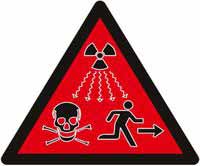 After a nuclear blast, hospitals probably would fill with trauma patients. Later, others would arrive with acute radiation syndrome, which can take days to manifest and affects multiple organ systems. Without supportive care, about 50 percent of people exposed to 3.5 Gray, a measure of radiation dose, would die. Proper care would almost double the exposure level at which 50 percent would survive, but only a small fraction of American medical professionals have training and expertise in treating radiation injury……Given that not enough beds would be available, hospitals and first responders would have to choose which patients to save.
U.S. health-care system unprepared for major nuclear emergency, officials say The Washington Post, By Sheri Fink, Thursday, April 7,“………in national surveys, U.S. hospital workers have expressed fears ,… saying they would be less willing to report to work for a radiological or nuclear incident than for other types of emergencies. Continue reading
High radiation levels at Minamisoma
 “While the Japanese government’s data is not necessarily incorrect, it is neither telling the full story, nor being adequately used to protect the health of people in Minamisoma…“Our measurements, taken between government monitoring points, show elevated levels of contamination outside the official 20 km mandatory evacuation zone that indicate a risk to health, yet people in Minamisoma are only being advised to stay indoors or leave on a voluntary basis. This is unacceptable.”
 Greenpeace Team Identifies “High Contamination Levels“ in Minamisoma Vegetables, April 6, 2011 Yonezawa, Japan- (PanOrient News) Greenpeace said in a statement today that its radiation experts investigating impacts from the Fukushima nuclear crisis have discovered high levels of contamination in crops grown on the outskirts of Minamisoma city, raising further concerns over health risks to residents and a lack of official information outside the 20 km evacuation zone. Continue reading
Japan nuclear disaster puts spanner in the works of USA’s energy policy
Why Japan’s Nuke Disaster Could Upset US Energy Policy Assumptions WSJ By Russell Garland, 7 April 11, Although the extent and consequences of the Japanese nuclear disaster are still unknown, it will ripple through U.S. energy policy and could upset an underlying assumption, according to an energy expert speaking at the annual meeting of the National Venture Capital Association in Boston.
Ernest Moniz, a professor at Massachusetts Institute of Technology and director of MIT’s Energy Initiative, gave four “very sure bets” about the effects of events at the earthquake-damaged Fukushima Daiichi nuclear power complex.
Two seem givens: that nuclear industry costs are going to go up and that there will be an end-to-end review of waste-storage practices. But Moniz also predicted that 20-year license extensions “are going to be looked at with a lot more scrutiny.” Some that have already been granted might be revisited, he said……
Tighter radiation checks at European ports
European Ports Tighten Radiation Checks as Japan Ships Approach, Bloomberg, By Niklas Magnusson – Apr 8, 2011 European ports including Rotterdam and Antwerp are tightening safety checks as they prepare to unload the first ships from Japan since last month’s earthquake led to radioactive discharges from a damaged nuclear plant.
Rotterdam, Europe’s biggest container port, will screen for radiation while ships are still at sea. Antwerp, the No. 2, will make similar checks aboard vessels for which Japan was one of the last 10 ports of call, with any abnormal readings triggering an inspection by Belgium’s Federal Agency for Nuclear Control……European Ports Tighten Radiation Checks as Japan Ships Approach – Bloomberg
Hitachi nuclear company freezing its proposed new projects
Nakanishi indicated a grim outlook on exports of nuclear power infrastructure to Vietnam, which is being jointly pushed by Tokyo Electric Power Co., operator of the crippled Fukushima No. 1 plant…..
Hitachi to cut back on new nuclear power projects, asahi.com, BY SATOSHI DAIGUJI , 8 April 11 Hitachi Ltd. will scale back its nuclear power projects following the crisis at the Fukushima No. 1 nuclear power plant, Continue reading
Scientists measure radiation in the Pacific
Voyage measures radiation in the Pacific, Australian Network News, 8 April 11, Scientists aboard the Malaspina Expedition ship will search for signs of radiation from Japan’s Fukushima nuclear plant in the Pacific. Sally Block 8 April 11, Scientists aboard a Spanish research ship are about to search for signs of radiation from Japan’s Fukushima nuclear plant in the Pacific Ocean.The Malaspina Expedition ship is making a brief stop in Sydney, Australia, after surveying the southern ocean for effects of climate change.Samples of water and air have been taken to measure for pollution temperature and carbon dioxide….
Plankton has been collected to discover how it is already capturing carbon.The next task for the scientists is to measure the amount of radiation in the central Pacific.Radiation from Japan has already been discovered in fish in Spain.However, the scientists on board the ship say the radiation is unlikely to travel south……
Australia Network News:Stories:Voyage measures radiation in the Pacific
Are they telling you the truth about the nuclear situation in Japan?
Here’s my question to you: Do you believe you’re being told the truth about the nuclear accident in Japan?
Tell Jack how you really feel – Do you believe you’re being told the truth about the nuclear accident in Japan? CNN’s Jack Cafferty, 7 April 11, :A 7.1 magnitude earthquake shook northeastern Japan today, the strongest aftershock since the massive 9.0 earthquake and tsunami that followed devastated the nation four weeks ago. Continue reading
Safety concerns raised about global nuclear industry
 VIDEO Japanese Nuclear Crisis Renews International Safety Concerns | East Asia and Pacific | English “……. Jeffrey Young April 07, 2011 While the international nuclear power industry says it is strongly focused on safety, the events at Japan’s Fukushima facility raise concerns that – no matter how carefully designed these nuclear facilities may be – accidents can happen……Officials monitoring the Fukushima disaster are carefully monitoring the concrete and steel structures called “containment vessels” that encase the nuclear reactors. These containment vessels are designed to prevent radiation from escaping. There are concerns that at least one of the vessels at Fukushima may have been breached….
Japanese Nuclear Crisis Renews International Safety Concerns | East Asia and Pacific | English
1 This Month

of the week – Shut Down Drone Warfare!


Tell the Ukrainian Government to Drop Prosecution of Peace Activist Yurii Sheliazhenko

Petition to revoke the licensing of the Near Surface Nuclear Disposal Facility (NSDF) at Chalk River. https://www.ourcommons.ca/petitions/en/Petition/Details?Petition=e-7247
To see nuclear-related stories in greater depth and intensity – go to https://nuclearinformation.wordpress.com
-
Archives
- April 2026 (103)
- March 2026 (251)
- February 2026 (268)
- January 2026 (308)
- December 2025 (358)
- November 2025 (359)
- October 2025 (376)
- September 2025 (257)
- August 2025 (319)
- July 2025 (230)
- June 2025 (348)
- May 2025 (261)
-
Categories
- 1
- 1 NUCLEAR ISSUES
- business and costs
- climate change
- culture and arts
- ENERGY
- environment
- health
- history
- indigenous issues
- Legal
- marketing of nuclear
- media
- opposition to nuclear
- PERSONAL STORIES
- politics
- politics international
- Religion and ethics
- safety
- secrets,lies and civil liberties
- spinbuster
- technology
- Uranium
- wastes
- weapons and war
- Women
- 2 WORLD
- ACTION
- AFRICA
- Atrocities
- AUSTRALIA
- Christina's notes
- Christina's themes
- culture and arts
- Events
- Fuk 2022
- Fuk 2023
- Fukushima 2017
- Fukushima 2018
- fukushima 2019
- Fukushima 2020
- Fukushima 2021
- general
- global warming
- Humour (God we need it)
- Nuclear
- RARE EARTHS
- Reference
- resources – print
- Resources -audiovicual
- Weekly Newsletter
- World
- World Nuclear
- YouTube
-
RSS
Entries RSS
Comments RSS
 nuclear-news