The oceans – a great idea for a radioactive toilet

Christina Macpherson's websites & blogs
Time was when Europeans emptied their toilet pans out of windows, into the street.
Now we think that’s disgusting. But – now no problem with the oceans. We’ve been dumping sewage, plastics and all sorts of rubbish into the seas for decades.
Now – the ultimate insult to the oceans – it’s OK to dump radioactive water. This could be a precedent for future nuclear waste problems. I’m sure that the nuclear establishment will be happy with that – if we are.
In USA EPA prepares to allow more radioactivity to be called “safe”
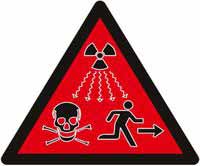 The radiation guides called Protective Action Guides or PAGs are protocols for responding to radiological events ranging from nuclear power-plant accidents to dirty bombs.
Drinking water, for example, would have a huge increase in allowable public exposure to radioactivity,
 Group warns EPA ready to increase radioactive release guidelines | The Tennessean | tennessean.com, Anne Paine, 17 March 11, EPA is preparing to dramatically increase permissible radioactive releases in drinking water, food and soil after “radiological incidents,” according to Public Employees for Environmental Responsibility.What is termed a guidance that EPA is considering – as opposed to a regulation – does not require public airing before it’s decided upon. Continue reading
Even if people do accept nuclear power, it’s still not affordable
So while nuclear power does return net energy and while it may be true that public opposition to nuclear power will fall, it probably won’t matter – because no society in an energy decline, with declining fossil fuel resources, can afford to front-load a decade or two decades of energy in fossil fuels into a plant.

Fukushima and the Future of Nuclear Power : Science Blogs, Casaubon’s Book, April 1, 2011 , by Sharon Astyk“………More than any other kind of energy generation, nuclear frontloads its energy costs dramatically – reliable estimates vary from as low as 12 years before they produce more energy than went into building them to as high as 20. The upfront plant building costs are also vastly higher than for coal, natural gas or any other source. Continue reading
Nuclear establishment’s bogus talk of “safe” radiation
 radiation from a meltdown in the reactor core of reactor No. 2 is leaking out into the water and soil, with other reactors continuing to experience problems. Yet scientists and activists question these government and nuclear industry “safe” limits of radiation exposure….all this talk about what a worker or the public can withstand on a yearly basis is bogus. There is no safe level of radiation exposure. These so-called safe levels are coming from within the nuclear establishment.”
‘No safe levels’ of radiation in Japan, Al Jazeera 5 April 11, Experts warn that any detectable level of radiation is “too much”. “…..water that is vastly more radioactive continues to gush into the ocean through a large crack in a six-foot deep pit at the nuclear plant. Over the weekend, workers at the plant used sawdust, shredded newspaper and diaper chemicals in a desperate attempt to plug the area, which failed. Water leaking from the pit is about 10,000 times more radioactive than water normally found at a nuclear plant Continue reading
Growing volumes of radioactive water entering the ocean from Fukushima nuclear plant
 Chief Cabinet Secretary Yukio Edano said officials were growing concerned about the sheer volume of radioactive materials spilling into the Pacific. It is not clear how much water has leaked in addition to what is being dumped purposely…….”Even if they say the contamination will be diluted in the ocean, the longer this continues, the more radioactive particles will be released and the greater the impact on the ocean,..”
Japan nuke plant dumps radioactive water into sea – seattlepi.com, MARI YAMAGUCHI, YURI KAGEYAMA, April 4, 2011“………More water keeps pooling because TEPCO has been forced to rely on makeshift methods of bringing down temperatures and pressure by pumping water into the reactors and allowing it to gush out wherever it can. It is a messy process, but it is preventing a full meltdown of the fuel rods that would release even more radioactivity into the environment. Continue reading
Desperate efforts to cool stricken nuclear plant, and stem radioactive leak
 Government sources and TEPCO say that the water in the pit almost certainly came from the reactor core in Unit 2 where the fuel rods have apparently melted down, at least in part.
A Sense of Desperation as Nuclear Workers Fight to Plug Radioactive Leak, Forbes, Osha Gray Davidson , Apr. 4 2011 “……The water being dumped comes from different sources, including runoff from water sprayed on the reactors to cool fuel rods, newly-found contaminated groundwater near the turbine building at Unit No. 1, and runoff from Units No. 5 and 6 (two units that had previously been termed “safe”). Continue reading
Years to deal with damage and radioactivity at Fukushima nuclear plant
The task at Fukushima Daiichi is especially complicated because it involves at least three damaged reactors and apparent damage to nuclear waste pools……the situation will become much more complicated if workers find fuel melted in the reactor core.
Nuclear Plant Cleanup Will Take Years, Not Months – WSJ.com, 1 April 11, By REBECCA SMITH As Japanese officials struggle to stabilize damaged reactors at Fukushima Daiichi complex, an international team already is assembling to help them tackle the next big task: the cleanup…… Continue reading
What lovely optimism – nuclear powered spacecraft for USA, Russia
 Russia, U.S. to cooperate on nuclear-powered spacecrafts MOSCOW, April 4 (Xinhua) –– The Russian Federal Space Agency ( Roscosmos) and the U.S. National Aeronautics and Space Administration (NASA) have agreed to cooperate in developing nuclear engines for spacecrafts, local media reported on Monday.Citing Roscosmos’ head Anatoly Perminov in Kazakh Baikonur space center, reports said Russia has initiated to jointly build nuclear-powered engines with NASA by 2019 and use these engines for flights to Mars.
Such an engine will make the flight to Mars 20 times faster, Perminov said, adding that the meeting between he and his NASA counterpart Charles Bolden was scheduled on April 1
11,500 metric tonnes of radioactive water to be dumped into the sea
Japan to dump 11,500 metric tonnes of radioactive water (Reuters) 5 April 11, – Japan needs to discharge a total of 11,500 metric tons of low-contaminated water into the ocean from a stricken nuclear power plant, a Japanese official said on Monday.Koichiro Nakamura, a deputy director general of Japan’s Nuclear and Industrial Safety Agency (NISA), said the measure was needed to “avoid a more serious risk,” without elaborating. Continue reading
Only AREVA to benefit from dangerous plutonium reprocessing plant?
 A mixed-oxide, or MOX, plutonium reprocessing plant that is being built in South Carolina has become “an expensive effort that enriches contractors, led by the French government-owned company Areva,”
US anti-nuclear activists slam reprocessing plan, Google news, (AFP) – 5 April 11, WASHINGTON — US anti-nuclear groups Monday condemned a project to build a plant where plutonium from weapons would be reprocessed into fuel for nuclear power plants, saying the plan was costly, dangerous and would benefit mainly the French group, Areva.
A mixed-oxide, or MOX, plutonium reprocessing plant that is being built in South Carolina has become “an expensive effort that enriches contractors, led by the French government-owned company Areva,” Tom Clements of Friends of the Earth said at the launch of a report by an anti-nuclear alliance.”In my opinion, it is primarily because of Areva’s influence inside the Department of Energy that the US is pursuing a plutonium fuel program and it’s because of Areva’s influence that there’s a push for the US to also reprocess commercial spent fuel to remove plutonium, like France does,” he said…….
The plant, on the Department of Energy’s Savannah River site, is roughly one-third finished and three times over budget, with a price tag so far of $4.9 billion dollars, Clements maintained.
But even as the nuclear disaster in Japan highlights the dangers of MOX fuel — which the ANA report says was used in one of the reactors at Japan’s crippled Fukushima power plant — the US government is failing to rethink construction of the South Carolina facility, Clements told reporters.
“As plutonium leaks from the damaged reactors in Japan, the US Department of Energy (DoE) continues planning for the use of dangerous mixed-oxide fuel in US nuclear reactors of the same design as the Fukushima reactors in Japan,” Clements said.
MOX fuel pellets “make reactors harder to control and, in the case of a severe accident, the radiation plutonium releases will be worse than uranium fuel,” said Clements……
Anti-nuclear activists would prefer encasing the plutonium left over from dismantled US nuclear weapons in glass, and then storing it as high-level waste.
That method, called vitrification, is “cheaper, quicker and safer” than converting plutonium into MOX fuel, says the report released Monday by ANA, a network of three dozen organizations…..
AFP: US anti-nuclear activists slam reprocessing plan
Huge civil damages claims looming from Fukushima disaster
“If the government nationalises TEPCO then they take on TEPCO’s debts, and if TEPCO remains private it will probably need government support for its obligations to pay damages, so whichever way you look at it the government will be taking on responsibility
Japan nuclear crisis to trigger huge civil damages claims | Reuters, Mon Apr 4, 2011 * TEPCO and government to handle claims* Hundreds of thousands of claims expected* Claims could top $130 bln in worst case – BofA-ML* Government likely to set up central compensation fund By Rachel Armstrong – Japan’s nuclear crisis is likely to lead to one of the country’s largest and most complex ever set of claims for civil damages, handing a huge bill to the fiscally strained government and debt-laden plant operator, Tokyo Electric Power Co . Continue reading
New damage at Progress Energy’s nuclear plant in Florida
Progress Fla. nuclear restart delayed indefinitely | Reuters, 5 April 11, – New damage discovered last month at Progress Energy Inc’s troubled Crystal River nuclear plant in Florida will keep the unit shut indefinitely, the company told state and federal regulators on Monday……
Indications of a new gap in the containment building wall found in March forced Progress to suspend work to tighten the tendons, one of the the final tasks needed to before testing to end an 18-month outage.
The plant shut in September 2009 and its restart has now been delayed four times.….Progress Fla. nuclear restart delayed indefinitely | Reuters
Investigation of cooling system flaw at Browns Ferry nuclear plant
Nuclear regulators probe fault at Alabama reactor | Reuters Apr 4, 2011 Browns Ferry plant has same design as Japan’s Fukushima* Regulators issue apparent violation order over failure By Matthew BiggATLANTA, Tennessee Valley Authority officials met nuclear regulators on Monday to explain the failure last year of a key valve used to operate a reactor cooling system at a nuclear plant in Alabama.
Word of the malfunction, which occurred last October at the Browns Ferry plant in northern Alabama, comes amid public demand for reassurance over the safety of U.S. nuclear reactors after an earthquake and tsunami last month caused a crisis at Japan’s Fukushima nuclear plant.
Browns Ferry and the crippled Fukushima plant both have Mark 1 boiling water reactors made by General Electric ……Nuclear regulators probe fault at Alabama reactor | Energy & Oil | Reuters
Fukushima will become a radioactive no man’s land
Even after a cold shutdown, scrapping the plant will likely take decades, and the site will become a no-man’s land.
Tonnes of nuclear waste sit at the site of the nuclear reactors, and enclosing the reactors by injecting lead and encasing them in concrete would make it safe to work and live a few kilometres away from the site, but is not a long-term solution for the disposal of spent fuel, which will decay and emit fission fragments over tens of thousands of years.
‘No safe levels’ of radiation in Japan, Al Jazeera 5 April 11“……Japanese officials conceded to the public on March 31 that the battle to save four crippled nuclear reactors at the Fukushima Daiichi nuclear plant has been lost. On March 29 a US engineer who helped install the reactors at the plant said he believed the radioactive core in unit No. 2 may have melted through the bottom of its containment vessel and on to a concrete floor. Continue reading
World must “embrace nuclear power” says AREVA
“Nuclear is the cheapest” power source, Besnainou said

Areva Executive Praises Nuclear Power, Urges Loan Guarantees – WSJ.comBy Yuliya Chernova Of DOW JONES VENTUREWIRE NEW YORK 4 April 11, –-Jacques Besnainou, chief executive of the U.S. arm of nuclear giant Areva SA (CEI.FR, ARVCY), said that the world must embrace nuclear power and advocated the continuation of U.S. federal loan guarantees for new nuclear power plants. Continue reading
1 This Month


10 March A LIVE WEBINAR THE REAL EFFECTS OF NUCLEAR POWER
What the Industry Isn’t Telling Us
1:00 PM Mountain, 2 pm Central, 3 pm Eastern. Live on the Keepers of the Water Facebook page


18 March Webinar @ 1 PM EST: An Assessment of SMR Projects: The Case of Canada
register for the zoom:
https://us02web.zoom.us/webinar/register/WN_o8BIIOUvQ2ONJR1nta65DQ#/registration


of the week – STOP SMALL MODULAR REACTORS IN CANADA
To see nuclear-related stories in greater depth and intensity – go to https://nuclearinformation.wordpress.com
-
Archives
- March 2026 (76)
- February 2026 (268)
- January 2026 (308)
- December 2025 (358)
- November 2025 (359)
- October 2025 (376)
- September 2025 (258)
- August 2025 (319)
- July 2025 (230)
- June 2025 (348)
- May 2025 (261)
- April 2025 (305)
-
Categories
- 1
- 1 NUCLEAR ISSUES
- business and costs
- climate change
- culture and arts
- ENERGY
- environment
- health
- history
- indigenous issues
- Legal
- marketing of nuclear
- media
- opposition to nuclear
- PERSONAL STORIES
- politics
- politics international
- Religion and ethics
- safety
- secrets,lies and civil liberties
- spinbuster
- technology
- Uranium
- wastes
- weapons and war
- Women
- 2 WORLD
- ACTION
- AFRICA
- Atrocities
- AUSTRALIA
- Christina's notes
- Christina's themes
- culture and arts
- Events
- Fuk 2022
- Fuk 2023
- Fukushima 2017
- Fukushima 2018
- fukushima 2019
- Fukushima 2020
- Fukushima 2021
- general
- global warming
- Humour (God we need it)
- Nuclear
- RARE EARTHS
- Reference
- resources – print
- Resources -audiovicual
- Weekly Newsletter
- World
- World Nuclear
- YouTube
-
RSS
Entries RSS
Comments RSS
 nuclear-news