As Japan proposes to get bone marrow cells from workers, global nuclear industry prospec ts dim
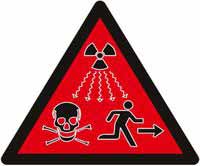
If the past is any guide, the problems at Fukishima will slow or even freeze the construction of plants in many countries.
Walsh: Fukushima will slow or even freeze building of nuclear plants in many countries – In the Arena – CNN.com James Walsh, 2 April 11, TIME magazine reports that Japanese authorities have proposed, as a precautionary measure, the harvesting and banking of the stem cells from the bone marrow of workers at the crippled Fukushima nuclear power plant. Those cells could be transplanted back in workers who were exposed to too much radiation. How much danger are these workers in?
Of all the people in Japan, the plant workers face the greatest health risks. Absent an explosion inside the reactor vessel or leakage into the ground water, most of the radiation will remain in its most concentrated levels at or near the plant. ..
In response to the crisis, the government raised the legal limit of how much radiation the workers can be exposed to, so at a minimum, they are being exposed to more than they would normally. This is dangerous work and the workers face extreme conditions of stress and deprivation. It would not be surprising if there are acute radiation injuries in the weeks to come, but it will take years, even decades, before it will be possible to assess the long-term health effects…..
Prior to the Japanese nuclear accidents, most analysts expected nuclear energy to take on an increasingly larger role in energy supply, especially as countries seek to reduce the greenhouse gas emissions associated with fossil fuels such as oil. Some experts were forecasting a “nuclear renaissance.” Here in the United States, where a new nuclear plant had not been built since the 1979 Three Mile Island Accident, preliminary permits had been granted for two new plants.
If the past is any guide, the problems at Fukishima will slow or even freeze the construction of plants in many countries.
The accidents at Three Mile Island and Chernobyl had this effect, and the Japanese experience will likely have the same impact for two reasons. The first is public perception. It will be very difficult, at least in the near-term, to site new plants, as people will be worried about safety and security issues…
second reason is public policy. Nuclear regulators in every country will want to learn whatever lessons can be gleaned from the Japanese experience before embarking on ambitious new plans to build nuclear plants, but those lessons may not be understood for quite some time.
The effect will be different in different countries. More authoritarian countries, where public opinion matters less, may press on with their nuclear programs. Still, even these countries may be forced to adjust their plans. China is an authoritarian country and has a very aggressive plan for nuclear power, but this week Beijing announced it would reduce its goals for nuclear plants and shift more resources to solar and renewables……
No comments yet.
1 This Month


Tell the Ukrainian Government to Drop Prosecution of Peace Activist Yurii Sheliazhenko

Petition to revoke the licensing of the Near Surface Nuclear Disposal Facility (NSDF) at Chalk River. https://www.ourcommons.ca/petitions/en/Petition/Details?Petition=e-7247


of the week – STOP SMALL MODULAR REACTORS IN CANADA
To see nuclear-related stories in greater depth and intensity – go to https://nuclearinformation.wordpress.com
-
Archives
- March 2026 (212)
- February 2026 (268)
- January 2026 (308)
- December 2025 (358)
- November 2025 (359)
- October 2025 (376)
- September 2025 (258)
- August 2025 (319)
- July 2025 (230)
- June 2025 (348)
- May 2025 (261)
- April 2025 (305)
-
Categories
- 1
- 1 NUCLEAR ISSUES
- business and costs
- climate change
- culture and arts
- ENERGY
- environment
- health
- history
- indigenous issues
- Legal
- marketing of nuclear
- media
- opposition to nuclear
- PERSONAL STORIES
- politics
- politics international
- Religion and ethics
- safety
- secrets,lies and civil liberties
- spinbuster
- technology
- Uranium
- wastes
- weapons and war
- Women
- 2 WORLD
- ACTION
- AFRICA
- Atrocities
- AUSTRALIA
- Christina's notes
- Christina's themes
- culture and arts
- Events
- Fuk 2022
- Fuk 2023
- Fukushima 2017
- Fukushima 2018
- fukushima 2019
- Fukushima 2020
- Fukushima 2021
- general
- global warming
- Humour (God we need it)
- Nuclear
- RARE EARTHS
- Reference
- resources – print
- Resources -audiovicual
- Weekly Newsletter
- World
- World Nuclear
- YouTube
-
RSS
Entries RSS
Comments RSS
 nuclear-news
Leave a comment