Outside Fukushima reactor building, deadly radiation in water
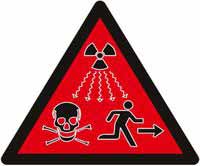 the worker who made the measurement, carried out on a pool of water in the reactor’s basement turbine building, had fled before taking a second reading.
Deadly nuclear levels detected, The Age, Osaka, March 29, 2011 RADIATION levels that can prove fatal were detected outside reactor buildings at Japan’s Fukushima No.1 plant for the first time, complicating efforts to contain the worst disaster since Chernobyl in 1986. Continue reading
Fukushima nuclear fuel rods in ‘partial meltdown’
 ‘Partial meltdown’ at crippled Fukushima nuclear plant Rick Wallace, Tokyo The Australian * March 29, 2011 HIGHLY radioactive water, endangering workers and hindering repair efforts at the Fukushima nuclear plant, was the result of a “partial meltdown” of the fuel rods in the plant’s No 2 reactor, Japan’s chief government spokesman admitted yesterday.
Chief cabinet secretary Yukio Edano said the water was believed to have temporarily come into contact with the partially melted fuel rods inside the reactor…….‘Partial meltdown’ at crippled Fukushima nuclear plant | The Australian
Resounding anti-nuclear vote in Germany’s regional election
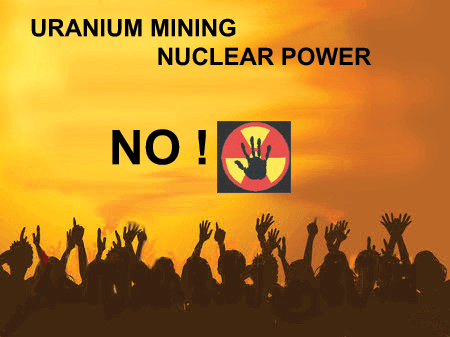 Close to a quarter of a million people took the to streets across Germany at the weekend to protest against the use of nuclear power.
 German Greens on Fukushima high, The Age, Paola Totaro, London March 29, 2011 GERMANY’S richest state has ousted Chancellor Angela Merkel’s Conservatives from power for the first time in 58 years, embracing the Greens and throwing doubt on Dr Merkel’s political future. Continue reading
Private investment moving to renewables, rejects nuclear
 The private sector is clearly moving rapidly in the renewable direction. Clean Edge, a research and advisory group, asserts that the clean energy market grew 35 percent in 2010, and global installation of photovoltaics doubled.
Renewing Support for Renewables, NYTimes.com By NANCY FOLBRE March 28, 2011, Nancy Folbre is an economics professor at the University of Massachusetts Amherst.
The biggest positive result of the accident at Fukushima Daiichi could be renewed public support for the development of renewable energy technologies. Many influential policy makers, including President Obama, continue to insist that we must expand nuclear power to help meet our energy needs. But plenty of experts disagree… Continue reading
Economics of nuclear power make its future dubious
"Public opinion, which is fairly important both for finance

and the politics underlying nuclear, has moved very rapidly ...
from favoring nuclear power in the United States ... to being
decidedly opposed,"

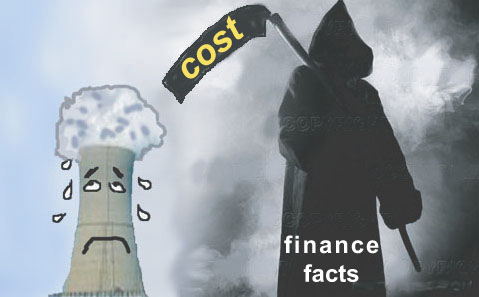
Odds against new US nuclear plants-finance lawyer Reuters By Roberta RamptonMar 28, 2011
Plants too expensive, even before Japan disaster-lawyer
* Likelihood of new US plant soon "exceedingly remote"
* Couldn't have happened at worse time for India projects Continue reading
Fukushima ground contaminated with 3 types of plutonium
 3 types of plutonium detected at Japan’s Fukushima Daiichi plant – CNN.com 29 March 11, Three types of plutonium have turned up amid the radioactive contamination on the grounds of the earthquake-damaged Fukushima Daiichi nuclear power plant, its owner reported Monday.The plutonium is a byproduct of nuclear reactions that is also part of the fuel mix at the damaged No. 3 reactor.It was found in soil at five different points inside the plant grounds, the Tokyo Electric Power Company said late Monday….. 3 types of plutonium detected at Japan’s Fukushima Daiichi plant – This Just In – CNN.com Blogs
Widening USA area of radiation contamination from Fukushima
Japan’s nuclear contamination spreads to more U.S. states March 28, 2011 CNN) — Minuscule levels of radiation from Japan’s Fukushima nuclear plant incident have been detected in a widening number of U.S. states, but the Environmental Protection Agency reaffirmed this week that the levels represent no threat to public health……
Japan’s nuclear contamination spreads to more U.S. states – CNN.com
Tokyo Electric Power (TEPCO) turn to France for help in nuclear emergency
Tokyo nuclear operator seeking French help: minister, Google news, (AFP) – 29 March 11, PARIS — Tokyo Electric Power (TEPCO), operator of Japan’s stricken Fukushima nuclear plant, is seeking help from France to tackle the “critical” situation, Industry Minister Eric Besson said Monday. Continue reading
New York nuclear plants do not comply with fire safety rules
 NY official knocks fire safety at nuke plant – WSJ.com MARCH 28, 2011, NY official knocks fire safety at nuke plant WHITE PLAINS, N.Y. — The state attorney general says federal regulators should take action against nuclear plants in the New York suburbs for what he called failure to comply with fire safety regulations.
Attorney General Eric Schneiderman filed a petition with the Nuclear Regulatory Commission, which has granted Indian Point several exemptions involving fire safety……NY official knocks fire safety at nuke plant – WSJ.com
More radiation to come in rainwater, says USA’s EPA
EPA: Expect More Radiation in Rainwater, – Forbes, Mar. 28 2011 – tBy JEFF MCMAHON nIodine-131 found in rain. The Environmental Protection Agency yesterday reported finding elevated levels of iodine-131, a product of nuclear fission, in rainwater in Pennsylvania and Massachusetts. The levels exceed the maximum contaminant level (MCL) permitted in drinking water, but EPA continues to assure the public there is no need for alarm:…….EPA said it is receiving “verbal reports” of higher levels of radiation in rainwater samples from other states as well, and that Americans should continue to expect short-term contamination of rainwater as radioactive isotopes spread through the atmosphere from Japan…..EPA: Expect More Radiation in Rainwater – Jeff McMahon – The Ingenuity of the Commons – Forbes
Virginia has new community organisation to stop uranium mining
Organization forms to push to keep ban on uranium mining | GoDanRiver.com, By John Crane, 28 march 11, A group of Pittsylvania County residents has formed a grassroots organization to oppose lifting the ban on uranium mining and milling in the commonwealth.
The citizens established Piedmont Residents in Defense of the Environment, a nonprofit, to be an environmental watchdog, monitor issues and hold government officials accountable for their actions, said PRIDE President Karen Maute.
“PRIDE will actively promote keeping the ban on uranium mining in Virginia and seek to empower the communities to bring awareness of other issues that have negative impact on citizen health, the environment and the economy,” the group stated in a news release……..
Organization forms to push to keep ban on uranium mining | GoDanRiver.com
Vast area of uranium waste in Nevada
the towering waste piles, open pit lake and old leach ponds spread across an area the size of 3,000 football fields.
Polluted mine is back on feds’ list | Reno Gazette-Journal | rgj.com Scott Sonner, Associated Press 28 March 11, YERINGTON — Federal regulators who have spent a decade assessing the uranium and other toxic wastes seeping into the water table at an old Anaconda copper mine in Northern Nevada have concluded that the pollution can’t be cleaned up without adding the vast, abandoned site to the U.S. Superfund’s National Priorities List. Continue reading
Uranium stocks go down again
Uranium stocks slide on renewed radiation fears – The Globe and Mail, 29 March 11, Shares of Canadian uranium producers slipped Monday, as uneasy investors worried about efforts to control radiation from the earthquake-crippled Fukushima Daiichi nuclear power plant in Japan.“The news from Fukushima over the weekend was not encouraging,” said Salman Partners senior analyst Raymond Goldie. “…people are looking at weakened demand for uranium in the future…….
Three Mile Island accident – a continuing story
 PICTURES Three Mile Island: Legacy of a nuclear accident, The Washington Post, Michael S. Williamson, 29 March 11, Japan’s nuclear crisis brings back haunting memories for residents of Middletown, Pa., which became the site of the worst U.S. commercial nuclear accident when a partial meltdown began at the Three Mile Island power plant March 28, 1979. But even as the 32nd anniversary of the accident looms, the crisis has never ended for some residents.
The Three Mile Island nuclear power plant, which sits along the Susquehanna River, continues operating today. Since the 1979 accident, the plant has become a touchstone for attitudes toward nuclear power: a symbol of fear for anti-nuclear activists and a symbol of the success of emergency safeguards to nuclear supporters Three Mile Island: Legacy of a nuclear accident – The Washington Post
Fukushima is bad enough, but the nuclear waste problem is worse
Weighing up the cost of nuclear power The Guardian, Mike Gatehouse 29 March 2011 Nuclear power is unsafe because the consequences of any accident are so dire. Despite George Monbiot’s perverse conclusion (Why Fukushima made me stop worrying about nuclear power and love it, 22 March), the disaster at Fukushima has so far caused the evacuation of over 100,000 people, the suspension of fisheries and agriculture over a large area and a ban on the consumption of drinking water by babies in a city of 12 million.
The reactors are not yet under control, four out of six of them are so badly damaged that they can never be used again and the whole site will probably have to be abandoned and cordoned off for decades, at astronomic expense. Nuclear power is also more accident-prone, because fission reactors are so hard to control and the complexity of the containment structures and control systems makes them highly susceptible to design, construction and operator error. The worst aspect, however, is that nuclear power generates waste and decommissioning products, which cannot be safely disposed of, are a major security threat and must be guarded, monitored and cooled for decades.
Every time we commission a nuclear power plant we are taking out a massive mortgage that future generations will have to pay for. Yet we cannot know that they will have the will, the capacity, the skills and the resources to do so…..Letters: Weighing up the cost of nuclear power | From the Guardian | The Guardian
1 This Month



Tell the Ukrainian Government to Drop Prosecution of Peace Activist Yurii Sheliazhenko

Petition to revoke the licensing of the Near Surface Nuclear Disposal Facility (NSDF) at Chalk River. https://www.ourcommons.ca/petitions/en/Petition/Details?Petition=e-7247


of the week – STOP SMALL MODULAR REACTORS IN CANADA
To see nuclear-related stories in greater depth and intensity – go to https://nuclearinformation.wordpress.com
-
Archives
- March 2026 (212)
- February 2026 (268)
- January 2026 (308)
- December 2025 (358)
- November 2025 (359)
- October 2025 (376)
- September 2025 (258)
- August 2025 (319)
- July 2025 (230)
- June 2025 (348)
- May 2025 (261)
- April 2025 (305)
-
Categories
- 1
- 1 NUCLEAR ISSUES
- business and costs
- climate change
- culture and arts
- ENERGY
- environment
- health
- history
- indigenous issues
- Legal
- marketing of nuclear
- media
- opposition to nuclear
- PERSONAL STORIES
- politics
- politics international
- Religion and ethics
- safety
- secrets,lies and civil liberties
- spinbuster
- technology
- Uranium
- wastes
- weapons and war
- Women
- 2 WORLD
- ACTION
- AFRICA
- Atrocities
- AUSTRALIA
- Christina's notes
- Christina's themes
- culture and arts
- Events
- Fuk 2022
- Fuk 2023
- Fukushima 2017
- Fukushima 2018
- fukushima 2019
- Fukushima 2020
- Fukushima 2021
- general
- global warming
- Humour (God we need it)
- Nuclear
- RARE EARTHS
- Reference
- resources – print
- Resources -audiovicual
- Weekly Newsletter
- World
- World Nuclear
- YouTube
-
RSS
Entries RSS
Comments RSS
 nuclear-news