Nuclear fuel pond contains entire fuel core of Fukushima Daiichi’s No 4 reactor
Nuclear update: Entire reactor core stored in fuel pond, New Scientist, 18 March 2011“…..Reliable, validated information is still lacking on water levels and temperatures at the spent fuel ponds, but the IAEA announced on Friday that prior to the earthquake,
The entire fuel core of reactor Unit 4 of the Fukushima Daiichi nuclear power plant had been unloaded from the reactor and placed in the spent fuel pond located in the reactor’s building. Continue reading
Japan’s hibakusha see a repeat of Hiroshima’s radiation horror
Sasamori is a hibakusha, or heat radiation survivor — a name given to those who lived through the atomic bombs dropped on Hiroshima and Nagasaki by the United States at the end of World War II.
For them, radiation is an invisible enemy that has haunted them, claimed their loved ones, altered their bodies and threatened their lives…….The hibakusha like Sasamori have lived in uncertainty, watching their childhood friends fall ill and wondering if their bodies were ticking time bombs for radiation-related diseases.
 Hiroshima survivors fear new nuclear fallout, By Madison Park, CNN, March 18, 2011 Los Angeles — The cities flattened by last week’s earthquake look eerily similar to the decimated buildings Shigeko Sasamori saw after an atomic bomb was dropped on her hometown in 1945.
Nuclear power, Price Anderson Act, and the economic facts
 even without the safety concerns we should forgo new nuclear reactors because they are fundamentally uneconomic. Nuclear reactors are a bad deal for the private sector and they are a bad deal for American taxpayers
Nuclear Socialism, Krystal Ball, 19 March 11, Up until about a week ago, nuclear energy had been broadly embraced as our great radioactive hope for a clean energy future. Continue reading
Nuclear power – uninsurable, cannot exist in private market system
the question is not whether government should ban nuclear power. The question is whether it should stop propping it up.
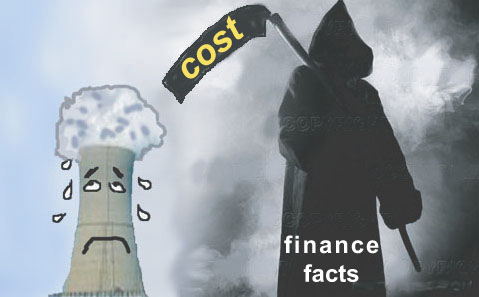
How to “Ban” Nuclear Power, by Kevin Carson , Mar 17, 2011 “……….the actual problem is that governments worldwide have been actively intervening for decades to prevent the market from banning nuclear power. Precisely because the stakes are so high and there’s so much room for unforeseen things to go wrong, nuclear power is uninsurable on the private market. Continue reading
Many nuclear plants in earthquake zones: scientists underestimated risks
 scientists sometimes have underestimated how powerful quakes can be. The temblor that struck Japan was more than 10 times bigger than the Daiichi plant had been tested to withstand. In 2007, the world’s biggest nuclear plant, Japan’s Kashiwazaki-Kariwa, was damaged after it was hit by a quake far stronger than its designers anticipated.
Dozens of Reactors in Quake Zones, WSJ.com, 18 March 11, Japan, Taiwan Account for Most Sites in High-Activity Areas; ‘Large Margins of Safety’ Factored In at U.S. Plants By MAURICE TAMMAN, BEN CASSELMAN and PAUL MOZUR Dozens of nuclear reactors operate in earthquake-prone regions around the world, including at least 14 in high-hazard areas, a Wall Street Journal analysis shows. Continue reading
Fukushima’s spent nuclear fuel rods are critically dangerous
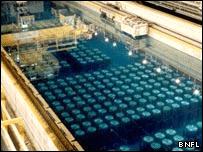 Figures provided by the Tokyo Electric Power Company on Thursday show that most of the dangerous uranium at the powerplant is in the spent fuel rods, not the reactor cores.
The company said that a total of 11,195 spent fuel rod assemblies were stored at the site. That is about four times as much radioactive material as in the reactor cores combined…….the zirconium cladding on the fuel rods could burst into flames if exposed to air for hours when a storage pool lost its water
Spent rods the biggest hazard, Sydney Morning Herald, Keith Bradsher and Hiroko Tabuchi, March 19, 2011 YEARS of procrastination in deciding on long-term disposal of highly radioactive fuel rods from nuclear reactors are coming back to haunt Japanese authorities as they try to control fires and explosions at the stricken Fukushima Daiichi nuclear power station.
IAEA chief says battle to stabilise Fukushima nuclear planr “a race against time”
Japan nuclear crisis a ‘race against time’ March 19, 2011 – International Atomic Energy Agency chief Yukiya Amano says Japan’s battle to stabilise a crippled nuclear power plant is “a race against time”.Speaking in Tokyo, 250km from the stricken Fukushima Number One plant, Amano also said the IAEA has brought its own monitoring equipment to test for radiation levels in the Japanese capital…….Japan nuclear crisis a ‘race against time’
The nuclear resuscitation – finished before it really got started
Diesendorf expects events in Japan will see nuclear power continue its decline – ”despite the claims of its proponents, it is already an industry in stagnation” – and will drive renewable expansion. ”China and India were doing a lot already on renewables … enough to wipe out nuclear.” He foresees increasing emphasis on wind, on solar, and on concentrated solar thermal power.
Is this the end of the nuclear revival?, The Age, Jo Chandler, March 19, 2011 “……Professor Frank von Hippel.”This is definitely in the Chernobyl league now. If the reactors go, that’s bad, of course. But the real concern at this point is if those … spent-fuel pools catch fire. There are many Chernobyls’ worth of radioactive material in there.”……. Continue reading
Five close shaves at USA nuclear reactor cores
Nuclear safety: Five recent ‘near miss’ incidents at US nuclear power plants, Christian Science Monitor, 18 March 11, Fourteen safety-related events at nuclear power plants required follow-up inspections from the Nuclear Regulatory Commission, the NRC reported in 2010. These “near-miss” events “raised the risk of damage to the reactor core – and thus to the safety of workers and the public,” concluded a new report, “The NRC and Nuclear Power Plant Safety in 2010,” by the Union of Concerned Scientists. Here are five of these 14 “near miss” examples:……
1 This Month

of the week – Shut Down Drone Warfare!


Tell the Ukrainian Government to Drop Prosecution of Peace Activist Yurii Sheliazhenko

Petition to revoke the licensing of the Near Surface Nuclear Disposal Facility (NSDF) at Chalk River. https://www.ourcommons.ca/petitions/en/Petition/Details?Petition=e-7247
To see nuclear-related stories in greater depth and intensity – go to https://nuclearinformation.wordpress.com
-
Archives
- April 2026 (114)
- March 2026 (251)
- February 2026 (268)
- January 2026 (308)
- December 2025 (358)
- November 2025 (359)
- October 2025 (376)
- September 2025 (257)
- August 2025 (319)
- July 2025 (230)
- June 2025 (348)
- May 2025 (261)
-
Categories
- 1
- 1 NUCLEAR ISSUES
- business and costs
- climate change
- culture and arts
- ENERGY
- environment
- health
- history
- indigenous issues
- Legal
- marketing of nuclear
- media
- opposition to nuclear
- PERSONAL STORIES
- politics
- politics international
- Religion and ethics
- safety
- secrets,lies and civil liberties
- spinbuster
- technology
- Uranium
- wastes
- weapons and war
- Women
- 2 WORLD
- ACTION
- AFRICA
- Atrocities
- AUSTRALIA
- Christina's notes
- Christina's themes
- culture and arts
- Events
- Fuk 2022
- Fuk 2023
- Fukushima 2017
- Fukushima 2018
- fukushima 2019
- Fukushima 2020
- Fukushima 2021
- general
- global warming
- Humour (God we need it)
- Nuclear
- RARE EARTHS
- Reference
- resources – print
- Resources -audiovicual
- Weekly Newsletter
- World
- World Nuclear
- YouTube
-
RSS
Entries RSS
Comments RSS
 nuclear-news