Nuclear ‘renaissance’ losing its gloss in USA
Even before the explosion in Japan, economic reality had taken a bite out of the nuclear industry’s ambitious expansion plans in the U.S.
Natural gas has been so cheap that utilities have turned to it to generate electricity, rather than contemplate building multi-billion-dollar reactors. The recession has also dampened demand for electrical power, further diminishing the appeal of a massive investment in nuclear facilities….
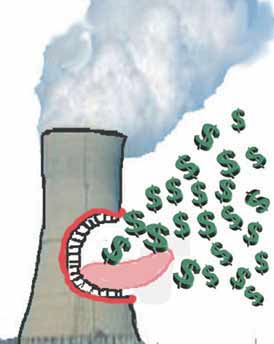
Japan Nuclear Crisis Could Cause Reassessment in U.S. – WSJ.com By STEPHANIE SIMON, 13 March 11, The U.S. nuclear power industry believed it was poised for a renaissance.President Obama’s 2012 budget proposed $36 billion in loan guarantees to build nuclear power plants. He called, too, for spending hundreds of millions on nuclear energy research and modern reactor design. Powerful Republicans were on board, calling for expansion of nuclear power a rare opportunity for bipartisan cooperation
Then an explosion at an earthquake-damaged nuclear plant in northern Japan on Saturday tore apart a building housing a reactor containment structure. Smoke billowed from the plant. Japanese officials ordered an evacuation of tens of thousands of people. Later, officials said cooling systems were failing at a second reactor at the same plant, putting it at risk of meltdown.
Industry experts and analysts at once began to ponder the political fallout in the United States.
The 1979 nuclear accident at Three Mile Island in Pennsylvania froze the nuclear power industry in the U.S. No new licenses were granted for 30 years……The 1986 nuclear accident at Chernobyl only reinforced American skepticism of nuclear power.
But in recent years, the industry has steadily chipped away at that wariness. Industry executives and their political allies promote nuclear power as “clean energy,”……
The Nuclear Regulatory Commission is now reviewing 20 more license applications from a dozen companies seeking to produce nuclear power. Site preparations for new reactors have begun in Georgia and South Carolina, and plans are underway to finish a reactor that was started years ago but never completed in Tennessee. That reactor should come online in 2013 and those in South Carolina and Georgia are expected to begin operations in 2016. All told, the industry expects up to eight new reactors to be churning out power by 2020, according to Mitch Singer, a spokesman for the Nuclear Energy Institute, an industry trade group.The U.S. currently has 104 nuclear plants in 31 states. Together, they produce 20% of the nation’s electricity.
Mr. Singer said he doesn’t think the accident in Japan won’t derail the U.S. nuclear boom. In fact, he said the explosion should reassure Americans that their own plants will be prepared for any emergency, because the industry will disseminate lessons learned in Japan around the globe, helping other reactors shore up their defenses against even devastating natural disasters, like the quake and the tsunami that followed.
“At this point,” Mr. Singer said, “I don’t think we’re going to see a major impact on the U.S. nuclear industry.”
But Peter Bradford, a former member of the Nuclear Regulatory Commission, predicted Americans would respond to the Japanese disaster with “greatly heightened skepticism and heightened unwillingness to have nuclear power plants located in one’s own neighborhood.”
He predicted as well greater regulatory scrutiny of existing nuclear plants that are seeking to extend their operating licenses, especially when those plants are located in seismically active zones, such as Southern California’s San Onofre Nuclear Generation Station and Diablo Canyon Power Plant.
“The image of a nuclear power plant blowing up before your eyes on the television screen is a first,” Mr. Bradford said. “That cannot be good for an industry that’s looking for votes in Congress and in the state legislatures.”
Mr. Obama’s proposal to expand loan guarantees to aid construction of new reactors might also take a hit, especially given the push in Congress to cut spending, said Robert Alvarez, a former senior policy advisor for the U.S. Department of Energy who now works on nuclear disarmament issues. “There might be a political tsunami,” Mr. Alvarez said……
Even before the explosion in Japan, economic reality had taken a bite out of the nuclear industry’s ambitious expansion plans in the U.S.
Natural gas has been so cheap that utilities have turned to it to generate electricity, rather than contemplate building multi-billion-dollar reactors. The recession has also dampened demand for electrical power, further diminishing the appeal of a massive investment in nuclear facilities….
No comments yet.
1 This Month

of the week – Shut Down Drone Warfare!


Tell the Ukrainian Government to Drop Prosecution of Peace Activist Yurii Sheliazhenko

Petition to revoke the licensing of the Near Surface Nuclear Disposal Facility (NSDF) at Chalk River. https://www.ourcommons.ca/petitions/en/Petition/Details?Petition=e-7247
To see nuclear-related stories in greater depth and intensity – go to https://nuclearinformation.wordpress.com
-
Archives
- April 2026 (114)
- March 2026 (251)
- February 2026 (268)
- January 2026 (308)
- December 2025 (358)
- November 2025 (359)
- October 2025 (376)
- September 2025 (257)
- August 2025 (319)
- July 2025 (230)
- June 2025 (348)
- May 2025 (261)
-
Categories
- 1
- 1 NUCLEAR ISSUES
- business and costs
- climate change
- culture and arts
- ENERGY
- environment
- health
- history
- indigenous issues
- Legal
- marketing of nuclear
- media
- opposition to nuclear
- PERSONAL STORIES
- politics
- politics international
- Religion and ethics
- safety
- secrets,lies and civil liberties
- spinbuster
- technology
- Uranium
- wastes
- weapons and war
- Women
- 2 WORLD
- ACTION
- AFRICA
- Atrocities
- AUSTRALIA
- Christina's notes
- Christina's themes
- culture and arts
- Events
- Fuk 2022
- Fuk 2023
- Fukushima 2017
- Fukushima 2018
- fukushima 2019
- Fukushima 2020
- Fukushima 2021
- general
- global warming
- Humour (God we need it)
- Nuclear
- RARE EARTHS
- Reference
- resources – print
- Resources -audiovicual
- Weekly Newsletter
- World
- World Nuclear
- YouTube
-
RSS
Entries RSS
Comments RSS
 nuclear-news
Leave a comment