Japanese tax-payers should not pay up for risky Texas nuclear project
Clearly the state has other cleaner and cheaper alternatives, such as wind power or even natural gas. Overall, this looks like a bad deal all around: for Texas, for the Japan Bank for International Cooperation, and for Japanese taxpayers.
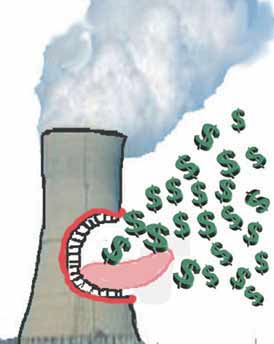
Why Japan Should Say ‘No’ To Funding U.S. Nuclear Plants, Change.org News, by Zachary Shahan · February 18, 2011 Nuclear energy, even if it were the cleanest, greenest, safest thing on the planet (which it is definitely not), is extremely financially risky. For this reason, it is nearly impossible for nuclear projects in the U.S. to get enough funding to get off the ground. Instead, companies rely on loan guarantees from the federal government, which ensures lenders that if the projects fail, taxpayers foot the bill and bail out the failed nuclear companies—to the tune of several billion dollars.
And while the Obama administration has been more than friendly to the nuclear industry, even supporting loan guarantees for projects more likely to default than to come to fruition, investors have not been so supportive and the nuclear industry has been forced to look for financial supporters abroad.
Which brings us to our current predicament.
The Japanese government, through the Japan Bank for International Cooperation (JBIC), is one foreign government that energy giant NRG Energy and its partners Toshiba and Tokyo Electric Power are looking to for loans, in order to rescue a troubled two-reactor South Texas Nuclear Project.
The Nuclear Information and Resource Service (NIRS) recently started a petition to push the Japanese government to reject the request.
The cost estimate for the proposed project has gone from $5.6 billion in 2006 to more than $18 billion today and independent estimates indicate that electricity from the project would cost three to four times more than current electricity prices in Texas (by some estimates even four to five times more). Clearly the state has other cleaner and cheaper alternatives, such as wind power or even natural gas. Overall, this looks like a bad deal all around: for Texas, for the Japan Bank for International Cooperation, and for Japanese taxpayers.
The signatures on this petition will be collected by NIRS and delivered by anti-nuclear activists in Japan to high-ranking officials in the Japanese government.
If Japan goes forward with this loan, NIRS expects that nuclear companies will continue to ask Japan and other foreign banks to fund other nuclear projects in the U.S. and in other parts in the world, so it is looking for people around the world to sign the petition below. This will help show that no matter where new nuclear reactors are proposed or how they are financed, there will be considerable opposition. Whether you are in the U.S., Japan, or Antarctica, sign the petition below to help oppose environmentally- and financially-risky nuclear energy.
Why Japan Should Say ‘No’ To Funding U.S. Nuclear Plants | Change.org News
No comments yet.
1 This Month

of the week – Shut Down Drone Warfare!


Tell the Ukrainian Government to Drop Prosecution of Peace Activist Yurii Sheliazhenko

Petition to revoke the licensing of the Near Surface Nuclear Disposal Facility (NSDF) at Chalk River. https://www.ourcommons.ca/petitions/en/Petition/Details?Petition=e-7247
To see nuclear-related stories in greater depth and intensity – go to https://nuclearinformation.wordpress.com
-
Archives
- March 2026 (237)
- February 2026 (268)
- January 2026 (308)
- December 2025 (358)
- November 2025 (359)
- October 2025 (376)
- September 2025 (257)
- August 2025 (319)
- July 2025 (230)
- June 2025 (348)
- May 2025 (261)
- April 2025 (305)
-
Categories
- 1
- 1 NUCLEAR ISSUES
- business and costs
- climate change
- culture and arts
- ENERGY
- environment
- health
- history
- indigenous issues
- Legal
- marketing of nuclear
- media
- opposition to nuclear
- PERSONAL STORIES
- politics
- politics international
- Religion and ethics
- safety
- secrets,lies and civil liberties
- spinbuster
- technology
- Uranium
- wastes
- weapons and war
- Women
- 2 WORLD
- ACTION
- AFRICA
- Atrocities
- AUSTRALIA
- Christina's notes
- Christina's themes
- culture and arts
- Events
- Fuk 2022
- Fuk 2023
- Fukushima 2017
- Fukushima 2018
- fukushima 2019
- Fukushima 2020
- Fukushima 2021
- general
- global warming
- Humour (God we need it)
- Nuclear
- RARE EARTHS
- Reference
- resources – print
- Resources -audiovicual
- Weekly Newsletter
- World
- World Nuclear
- YouTube
-
RSS
Entries RSS
Comments RSS
 nuclear-news
Leave a comment