USA and Japan want Mongolia as toilet for their nuclear wastes
So for now US, Japan will humbly ask Mongolian people to please let us use your toilet in exchange to their uranium which is said to last for another 80 years only, not for 100,000 years.

MONGOLIA – Our Nuclear Waste Disposal Site? For US and Japan, ALLVOICES, Ulaanbaatar : Mongolia | Jul 21, 2011, BY northernlight Kyodo Japan reported on July 18 that Mongolia-US-Japan drafted the pact for the ‘comprehensive fuel services’ in which Mongolia supplies uranium and nuclear fuel to other countries (such as US and Japan) and receive the nuclear wastes
Nuclear Power Plants are liken to ‘Condos without toilets.’ Continue reading
A nuclear cost chain reaction – explosively expensive
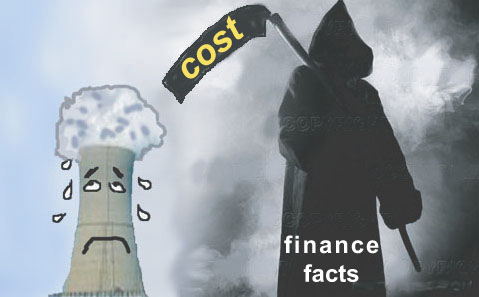 So, the construction of nuclear is stalling and the costs are rising. Contrast that with renewable energy, where installations are surging, and most of the technologies are coming down in price as they mature and reach scale....
Nuclear power’s real chain reaction: spiralling costs, The Guardian (UK) Damian Carrington, 22 July 11, Time is money, they say, and the new nuclear power plant being built byEDF at Flamanville in France is now at least four years behind time and €2.7bn over budget. EDF blamed the delay on two fatal construction accidents and dealing with safety analyses prompted by the Fukushima disaster. Continue reading
The finish for Japan’s nuclear industry
 Video http://www.presstv.ir/detail/190032.html— Analyst: Japan’s nuclear industry is finished, Michael Penn, Press TV, Tokyo, 20 July 11, At one level, it seems that a fierce political struggle is now developing over the future of nuclear energy in Japan. While the prime minister has outlined a non-nuclear vision for his country, the opposition Liberal Democratic Party is moving toward a political position defending the need for Japan’s nuclear power plants to remain in operation-albeit with stricter safety regulations.
Many big business groups say that keeping nuclear power is the only realistic policy, but others point out that political conditions now make such an idea impractical.
How can Japan run nuclear power plants, Mr. Hosono suggests, if no local communities will have them? …
Another problem that officials point out is that existing nuclear power plants will have to undergo much stricter monitoring of their safety standards, and they will be required to make much greater efforts to assure the government and people that they can continue operating without posing an unbearable public threat.
Some older power plants, under such watchful eyes, could very well fail the strict new safety tests and be closed. http://www.presstv.ir/detail/190032.html—
Corruption in nuclear industry: “Books are being cooked” on Fukushima
 As we have reported in the past, the NRC and the nuclear industry are riddled with corruption on par or above the oil cartels.
Nuclear Whistleblower “Books Are Being Cooked” Fukushima In America Will Happen, Examiner.com 22 July 11, A longtime nuclear whistleblower, as well as a new report from the nuclear watchdog agency, have shed light on some startling flaws at The Watts Bar Nuclear plant in Spring City, Tennessee. Continue reading
Stop shipments of nuclear wastes, say Caribbeans
 Caribbean objecting to nuclear waste shipment, Bloomberg, 21 July 11, KINGSTON, JAMAICA, Caribbean officials are calling for an immediate halt to a European shipment of reprocessed nuclear waste that will pass near the islands on its way to Japan. They contend the practice poses a major risk.
Caribbean Community spokesman Leonard Robertson says regional officials have been told by British authorities that the shipment of radioactive waste will be soon. He says they gave no specifics about the vessel for security reasons.
Waste from Japanese nuclear reactors has for years been sent on specially equipped ships to Britain and France for reprocessing, then returned for storage in Japan….http://www.businessweek.com/ap/financialnews/D9OK9ARO0.htm
18 Metre walls to protect Hamaoka nuclear plant from tsunamis
India not giving in to USA pressure to change its Nuclear Liability Law
 “Government cannot tinker with Liability Law”, THE HINDU, SANDEEP DIKSHIT, 22 JULY 11, India feels the civil nuclear logjam with the United States is out of the political realm because it will be difficult for the government to substantially tinker with its Liability Law despite suggestions to this effect by U.S. Secretary of State Hillary Clinton at a press conference here on Tuesday.
Ms. Clinton raised hackles here when she suggested that India get its Liability Law vetted by the International Atomic Energy Agency (IAEA) so that it “fully conforms” to the international Convention on Supplementary Compensation (CSC) for Nuclear Damage.
Washington feels that two provisions in the Indian law have prevented two U.S. companies — GE and Westinghouse — from opening talks on setting up six civil nuclear plants each. The potential business opportunity is estimated at over $ 50 billion, the highest-ever for the two companies outside their home country.
……..we had a problem with her message,” said officials. Ms. Clinton had suggested India approach the IAEA to establish whether its Liability Law was in harmony with the CSC. “This is because the Americans were 100 per cent sure that the IAEA would suggest changes,” they added…..http://www.thehindu.com/news/national/article2282626.ece
Increasing nuclear collaboration by North Korea and Iran?
North Korea and Iran increase collaboration on nuclear missile, report claims, Telegraph UK, 22 July 11 North Korea and Iran are jointly working on weapons programmes designed to build a long-range missile capable of carrying a nuclear warhead, a leading British security think tank has said. Continue reading
1256 cows likely to be radioactive,says Japan’s govt
 Japan’s ‘Major Problem’ With Radioactive Cattle Gets Even Bigger, SF Gate, July 21 (Bloomberg) –– Japan’s government said the number of cattle fed with hay contaminated by radiation has doubled, two days after shipments of beef from cows raised near the wrecked Fukushima nuclear plant were banned.
As of yesterday there were 1,256 potentially contaminated cows from 637 two days earlier, said Kazutoshi Nobuto, a spokesman for the Ministry of Agriculture, Forestry and Fisheries.
“This is a major, major problem,” Goshi Hosono, Japan’s food safety minister, said yesterday at a press conference in the Foreign Correspondents’ Club of Japan. Hosono is also in charge of the response to the Fukushima nuclear disaster…. http://www.sfgate.com/cgi-bin/article.cgi?f=/g/a/2011/07/21/bloomberg1376-LONZP86S972801-3CL2GT5F8SH7TVV2BED2RK9I63.DTL
Nukes in Space – a Recipe for Disaster
an accident in which plutonium is released by a space device as tiny particles falling to Earth maximizes its lethality. A millionth of a gram of plutonium can be a fatal dose. The pathway of greatest concern is the breathing in plutonium particle..
As the NASA Environmental Impact Statement puts it: “Particles smaller than about 5 microns would be transported to and remain in the trachea, bronchi, or deep lung regions.” The plutonium particles “would continuously irradiate lung tissue.”
“A small fraction would be transported over time directly to the blood or to lymph nodes and then to the blood,” it continues. Once plutonium “has entered the blood via ingestion or inhalation, it would circulate and be deposited primarily in the liver and skeletal system.” Also, says the document, some of the plutonium would migrate to the testes or ovaries.
 What Could Truly End the Space Program: A Nuclear Disaster Overhead , OpED News, By Karl Grossman 21 July 11, Between November 25 and December 15 NASA plans to launch for use on Mars a rover fueled with 10.6 pounds of plutonium, more plutonium than ever used on a rover. Continue reading
High radiation levels 150 km from Fukushima nuclear plant
High levels of radioactivity found extensively, NHK World, 21 July 11, Japan’s science ministry says air above the ground about 150 kilometers from the Fukushima Daiichi nuclear plant is as radioactive as areas 50 kilometers from the source of radioactivity.
The ministry on Wednesday released a map showing radiation levels at locations one meter above the ground in Miyagi Prefecture, north of Fukushima, based on the results of an aerial survey from June 22nd through 30th.
Radioactivity levels are highlighted in different colors.Some parts of Kurihara City, about 150 kilometers north of the plant are light blue, indicating that the air there was 0.2 to 0.5 microsieverts per hour.
That’s similar to areas close to the crippled plant, such as Iwaki City in Fukushima Prefecture, about 50 kilometers from the radioactive source.
Watts Bar nuclear plants – a history of safety flaws
Guity’s reports showed that hundreds of cables had been installed incorrectly at Watts Bar. They demonstrate that the TVA cared very little about regulations…
Safety Concerns Cloud US Nuclear Renaissance, Spiegel Online, By Ullrich Fichtner, 21 July 11, Translated from the German by Christopher Sultan “…….. A nuclear engineer who was born in Iran in 1942, Guity is a disappointed American today. “Time bombs,” he says, sounding very bitter. “We are sitting on a bunch of ticking time bombs.”……. Continue reading
Four more radiation evacuation areas named by Japanese govt
Radiation experts agree that children are at highest risk because they are still growing and will have more time to develop cancers and other health defects…..
Japan names more Fukushima evacuation areas, Asia One News, Jul 21, 2011, TOKYO – Japan on Thursday recommended 59 more households should evacuate from four areas considered radiation “hot spots” near the crippled Fukushima Daiichi nuclear plant, officials said.
The voluntary guidance, in areas where higher levels of radiation have been detected sporadically beyond the 20 kilometre (12 mile) no-go zone around the plant, will affect households in Fukushima prefecture’s city of Minamisoma. Continue reading
Mismanagement in nuclear decommissioning industry
IG reports question management of contractors at nuclear sites, I Watch News, By Corbin Hiar, 21 July 11, The Center for Public Integrity Serious contractor-related problems at facilities that handle nuclear material have been disclosed by two new audits.
The most serious issues were raised in a report by the Department of Energy’s inspector general on the decontamination and decommissioning of K-25 , a massive World War II-era nuclear enrichment facility that is a part of the East Tennessee Technical Park (ETTP) in Oak Ridge, Tenn. Continue reading
Military Industrial Complex makes sure NASA uses nuclear, not solar, technology
 There’s more to it. For many decades there has been a marriage of nuclear power and space at NASA. The use of nuclear power on space missions has been heavily promoted by the U.S. Department of Energy and its predecessor agency, the U.S. Atomic Energy Commission, and the many DOE (previously AEC) national laboratories including Los Alamos and Oak Ridge. This provides work for these government entities. Also, the manufacturers of nuclear-powered space devices–General Electric was a pioneers in this–have pushed their products. Further, NAS has sought to coordinate its activities with the U.S. military. The military for decades has planned for the deployment of nuclear-powered weapons in space.
What Could Truly End the Space Program: A Nuclear Disaster Overhead , OpED News, By Karl Grossman 21 July 11,“…..As to why the use of a plutonium-powered rover on Mars–considering that NASA has successfully used solar-powered rovers on Mars–the NASA Environmental Impact Statement says that a “solar-powered rover”would not be capable of operating over the full range of scientifically desirable landing site latitudes” on this mission. Continue reading
1 This Month


18 March Webinar @ 1 PM EST: An Assessment of SMR Projects: The Case of Canada
register for the zoom:
https://us02web.zoom.us/webinar/register/WN_o8BIIOUvQ2ONJR1nta65DQ#/registration


of the week – STOP SMALL MODULAR REACTORS IN CANADA
To see nuclear-related stories in greater depth and intensity – go to https://nuclearinformation.wordpress.com
-
Archives
- March 2026 (139)
- February 2026 (268)
- January 2026 (308)
- December 2025 (358)
- November 2025 (359)
- October 2025 (376)
- September 2025 (258)
- August 2025 (319)
- July 2025 (230)
- June 2025 (348)
- May 2025 (261)
- April 2025 (305)
-
Categories
- 1
- 1 NUCLEAR ISSUES
- business and costs
- climate change
- culture and arts
- ENERGY
- environment
- health
- history
- indigenous issues
- Legal
- marketing of nuclear
- media
- opposition to nuclear
- PERSONAL STORIES
- politics
- politics international
- Religion and ethics
- safety
- secrets,lies and civil liberties
- spinbuster
- technology
- Uranium
- wastes
- weapons and war
- Women
- 2 WORLD
- ACTION
- AFRICA
- Atrocities
- AUSTRALIA
- Christina's notes
- Christina's themes
- culture and arts
- Events
- Fuk 2022
- Fuk 2023
- Fukushima 2017
- Fukushima 2018
- fukushima 2019
- Fukushima 2020
- Fukushima 2021
- general
- global warming
- Humour (God we need it)
- Nuclear
- RARE EARTHS
- Reference
- resources – print
- Resources -audiovicual
- Weekly Newsletter
- World
- World Nuclear
- YouTube
-
RSS
Entries RSS
Comments RSS
 nuclear-news