USA’s MOX plutonium nuclear fuel plant a costly, dangerous, flop
 “The government would be crazy to consider building another MOX plant. MOX cannot be recycled.”….
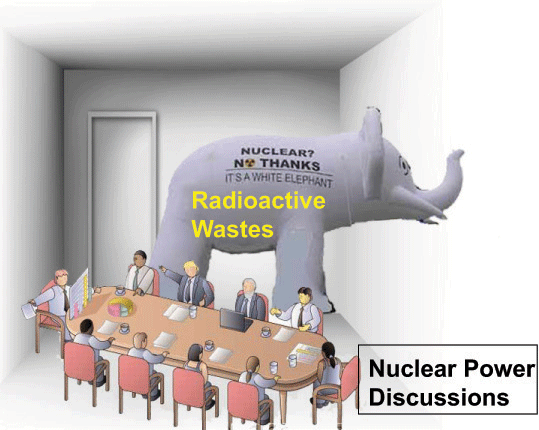 The Bomb Plant: A MOX White Elephant?, DC Bureau By Joseph Trento, on October 20th, 2011 The National Nuclear Security Administration may have a $10 billion taxpayer-financed white elephant on its hands based on Britain’s experience with a similar plant that has been shuttered after a decade of failed operations. Continue reading
Japan’s radiation pollution wider and more serious than previously estimated
the contamination in the area is so severe that authorities need to remove not only the topsoil but also road surfaces, roofs and concrete walls….
“Radiation levels drop soon after decontamination work, but whenever it rains, contaminated soil flows into the area from surrounding mountain forests and the levels climb once again,” she said.
Experts and locals said woodlands that cover 71 per cent of Fukushima prefecture have been highly contaminated.

Concern grows over wider radiation contamination, Oman Daily Observer 22 October 2011 By Takehiko Kambayashi – Scientists, environmentalists and citizens’ groups have called for Japanese authorities to evacuate more areas in the wake of March’s nuclear accident after finding wider radiation contamination than officially reported. Continue reading
South Africa’s shame of radiation caused illness in uranium workers
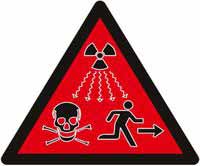
 Nuclear illness scourge, The new Age, Mel Frykberg, 20 Oct 11, Exposure to uranium at South African nuclear facilities over the years has left dozens of people dead and hundreds of others terminally ill, an investigation by The New Age has revealed. “These nuclear workers have been used and abused like cannon fodder and then abandoned without any care or compensation when they were no longer of any use to the nuclear industry,” said Mashile Phalane, the former coordinator of Earthlife Africa (ELA).
ELA and the Pelindaba Working Group – comprising ex-employees and antinuclear activists – are leading the battle to get compensation for victims. Former nuclear workers claim that they were not provided with protective clothing nor given the necessary medical attention when they were exposed to radiation.
Most claim they were given little or, in many cases, no financial compensation and in many cases were summarily dismissed once their symptoms became known. The country’s nuclear watchdog, the Nuclear Energy Corporation of South Africa (Necsa), stands accused by activists involved in the long-running campaign to ensure justice for victims and their families, of destroying the lives of hundreds of ex-employees.
China to cut back its nuclear power plans
 China nuclear targets to be cut after Fukushima -industry, Oct 21, 2011, HONG KONG Oct 21 (Reuters) – China’s 2020 nuclear capacity targets are likely to be scaled down after the country imposed a moratorium on new project approvals following the Fukushima disaster in Japan in March, industry officials said on Friday.
China was originally scheduled to release a revised blueprint for its nuclear sector this year, with many predicting a new 2020 target of 86 GW, up from the previous 40 GW….. In March, the government ordered a nationwide inspection of existing plants and construction sites in order to allay public disquiet about the safety of nuclear power…..
Areas of concern included the safety of the many “second-generation” reactors set to go into operation, the shortage of qualified safety and operational personnel, and the possible construction of nuclear projects in seismically vulnerable provinces like Sichuan.
Officials have suggested that no new second-generation reactors will be approved, leaving the way clear for third-generation models designed by France’s Areva and U.S.-based Westinghouse, owned by Toshiba …. “We should ensure the safety of nuclear energy before coming up with new projects,” said Zhao Chengkun, vice-chairman of the CNEA….. http://af.reuters.com/article/metalsNews/idAFL3E7LL0EM20111021
Japan might have to widen the radiation evacuation area
Seven months on, Japan yet to finalize nuclear evacuation plan, (Reuters), (Reporting by Yoko Kubota) 22 Oct 11, – Japanese nuclear experts are considering widening the evacuation zone in the event of a nuclear disaster, more than seven months after the world’s worst such disaster since Chernobyl…..
A committee under Japan’s Nuclear Safety Commission has been reviewing the country’s nuclear disaster prevention guidelines, trying to learn lessons from the worst nuclear disaster since 1986.
It is considering creating a 30-km (18-mile) radius around nuclear power plants where residents should be ready to take shelter or prepare to evacuate, a draft document compiled by the NSC secretariat and released by the NSC on Thursday showed.
This compares with a current zone of a radius up to 10 km. It is also considering recommending that local authorities in a 50-km radius from plants be prepared to provide iodine tablets that help prevent thyroid cancers from radiation exposure.
The committee is planning to revise the draft document and finalize recommendations on evacuation zones next month. It plans to come up with a mid-term review this year, while it may take years to fully revise the guidelines, an official at the NSC secretariat said.
About 80,000 residents were forced to evacuate from a 20-km radius from the Fukushima Daiichi plant after the radiation crisis and some 30,000 more left the 20-30-km radius zone, though some are starting to come back……
The United States and some other countries had advised its citizens to stay out of a 80-km radius of the Fukushima plant. http://www.reuters.com/article/2011/10/21/us-japan-nuclear-idUSTRE79K24420111021
$13 billion or more to decontaminate Japan’s radiation from Fukushima nuclear disaster
Japan: Radiation Cleanup Will Cost at Least $13 Billion, Premier Says, NYT, By REUTERS, October 21, 2011 Prime Minister Yoshihiko Noda, left, said the government would spend at least $13 billion to clean up vast areas contaminated by radiation from the world’s worst nuclear disaster since Chernobyl…..
How corporate America, the CIA and Walt Disney talked Japan into nuclear technology
 The plan had the advantage of making allies dependent on technology from corporate giants General Electric Co. and Westinghouse,
 Tepco ‘Deal With Devil’ Signals End to Japan’s Postwar Era Bloomberg, October 21, 2011,“……….Hiroshima Bombing Japan’s development into the world’s third-biggest user of nuclear energy dates from the last days of the war. Yasuhiro Nakasone, who would later become Prime Minister and a powerful advocate of atomic energy, was serving as a naval officer in Japan when Hiroshima was bombed. After the war, he began the work of persuading the U.S. to sell Japan nuclear technology…..
Japan’s interest coincided with U.S. concern about what to do with its own surplus of weapons-grade plutonium, and the suspicion that created in the Soviet Union, Laura E. Hein wrote in “Fueling Growth — The Energy Revolution and Economic Policy in Postwar Japan.”
U.S. President Dwight Eisenhower’s solution was the “Atoms for Peace” program to use U.S. plutonium to provide nuclear fuel for its allies. Continue reading
Nuclear power as cure for climate change- the big con
 The Big Con Is Nuclear Power Really a Trump Card Against Global Warming?, CounterPunch, by TAKASHI HIROSE OCTOBER 19, 2011 In recent years there seemed to be a nuclear power renaissance. One reason for this has been the adoption by its promoters of the theme of global warming, and their claim that nuclear power is clean energy because it does not produce carbon emissions. But is nuclear power in fact the clean-energy solution its promoters claim? Continue reading
 Breakthroughs in electric car design
 Charge a car in time it takes for a coffee, SMH, Stephen Ottley, October 22, 2011 ELECTRIC cars are a big step closer to mainstream acceptance thanks to two breakthroughs. Long battery recharging has been the biggest hurdle for the car industry to overcome. But a technology being developed by Nissan and Japan’s Kansai University could solve the problem.
It has reportedly created a charger that can replenish a car’s batteries in 10 minutes, without any adverse affect on the batteries. Currently it can take up to eight hours to recharge an electric car…..
At present so-called fast chargers require 30 minutes to restore batteries to just 80 per cent capacity and cost more than $30,000.
The industry has been struggling to come up with a solution to long charging times as electric cars fight to become a viable alternative to petrol cars….Another hurdle cleared by the industry is an agreed standard of recharging plugs.
The move is seen as crucial to the implementation of public charging infrastructure. Volkswagen, General Motors, Ford, Audi, BMW, Mercedes-Benz and Porsche have all agreed to work together on the universal system for plug outlets, voltage and cables….http://smh.drive.com.au/charge-a-car-in-time-it-takes-for-a-coffee-20111021-1mcaf.html
leak from nuclear reactors in Pakistan
Leak at Pakistani nuclear plant, no radiation damage reported yet, National Post, Reuters Oct 20, 2011 By Faisal Aziz KARACHI — A Pakistani nuclear power plant imposed a seven-hour emergency after heavy water leaked from a feeder pipe to the reactor, but no radiation or damage has been reported, an official said on Thursday. Continue reading
Australia’s media sleeps as governments pander to uranium miner BHP Billiton
 Today, October 19, the multinational mining giant BHP will get its own way, as a subserviant South Australian government rushes through a Bill – giving BHP open slather to set up the world’s biggest man made hole – a uranium mine.
While the Australian mainstream media remains silent, both National and State governments have swiftly given approval, including the continuance of BHP’s exemptions from laws.
- it will be an open-cut mine 4km long by 3km wide by 1km deep.


- The tailings are radioactive and carcinogenic.
- These tailings will be dumped in a gigantic slag heap the size of a mountain range, above ground.
- Around 70 million tonnes of finely pulverised tailings will be dumped on open ground every year The dump will eventually cover an area of 44 sq. km and soar 150 metres high.
Under the Roxby Downs Indenture Ratification Act 1982, BHP was given legal authority to override important state legislation, including the:
- Aboriginal Heritage Act 1988
- Development Act 1993
- Environmental Protection Act 1993
- Freedom of Information Act 1991
- Mining Act 1971
- Natural Resources Act 2004 (including the Water Resources Act 1997)…..
Nuclear corruption in Japan’s government, industry and universities

 Noda, tear down this ‘nuclear village’ -HOTLINE TO NAGATACHO – CHRIS ROWTHORN Japan Times , Kyoto Oct. 18, 2011
Dear Prime Minister Yoshihiko Noda,
The Great East Japan Earthquake was a catastrophe of apocalyptic proportions. While the quake and tsunami did tremendous damage to Tohoku, the triple meltdowns at the Fukushima No. 1 nuclear plant did even more harm to the country by threatening the health of the population, weakening Japan’s economy, and tarnishing Japan’s reputation as an efficient and safe country. Continue reading
India’s Environment Ministry refuses coastal clearance for Kudankulam nuclear reactors

 Kudankulam plant hits coastal wall, Chetan Chauhan, Hindustan Times,New Delhi, October 17, 2011 An environment ministry committee has declined coastal clearance for new nuclear reactors at Kudankulam in Tamil Nadu, on the grounds of its impact on marine life and overall safety aspects. Coastal clearance is mandatory to operationalise environment clearances granted to four new reactors for generating 4,000 MW of power, in addition to existing two at Kudankulam in 2008 and 2009……
The committee was, however, not impressed with what the NPCIL said and sought documentary evidence for the same while declining to approve the project. “The documentary evidence shall be submitted in support of this statement, which has a wider ramification in the context of what is happening around the world on similar developments,” the EAC told NPCIL.
In another setback, the EAC rejected NPCIL’s proposal to construct an open channel for outfall of waste water taken from sea for the purpose of cooling the nuclear condensers.
The corporation had proposed that 12,000 cubic metres of water will be lifted from Indian Ocean for condenser cooling and discharged back into the sea. “Due to various environmental problems, including adverse impact on marine life, the present proposal is not acceptable,” the EAC said, while asking the corporation to consider a pipeline for disposal….http://www.hindustantimes.com/Kudankulam-plant-hits-coastal-wall/Article1-758467.aspx
India’s National Nuclear Safety Authority Bill aims to hide nuclear information
 The government also intends to amend the RTI law to exempt the proposed nuclear energy regulator – the National Nuclear Safety Authority – from the ambit of the transparency law….the bill seeks to amend the RTI law to prevent seeking of information on the grounds of “the larger public interest”..
 New laws to get around Right To Information act, Chetan Chauhan, Hindustan Times New Delhi, October 17, 2011 India’s transparency law – the Right To Information Act – will not change but the government wants to restrict its applicability to some areas of sports and nuclear safety through other laws.
Two new draft laws – the National Sports Development Bill and the National Nuclear Safety Authority Bill – have specific provisions prohibiting disclosure of information in addition to the exemption clauses already in the RTI law Continue reading
India’s Koodankulam anti nuclear protestors resume their campaign
 Protest against nuclear power plant to resume on October 18 India Today Online Tirunelveli (TN), October 17, 2011 The protest against theKoodankulam Nuclear Power Plant would resume on Tuesday after the two-day suspension in view of the civic polls, one of the movements spearheading the stir demanding scrapping of the project on Monday said. The People’s Rights Protection Movement Coordinator Sivasubramanian said they would resume the indefinite fast by 106 people on Tuesday at Indinthakarai Village in the district.
The second phase of the protest which began on October 9 was suspended on Sunday for two days to enable the residents of villages in and around Koodankulamto exercise their franchise in the local body polls held on Monday…..
“If 1,500 women are sitting round-the-clock in dharna in a remote area… one should understand their strong feeling against the project,” he said The People’s Rights Protection Movement Coordinator Sivasubramanian said…. http://indiatoday.intoday.in/story/protest-against-koodankulam-nuclear-power-plant-resume-october-18/1/155296.html
1 This Month

of the week – Shut Down Drone Warfare!


Tell the Ukrainian Government to Drop Prosecution of Peace Activist Yurii Sheliazhenko

Petition to revoke the licensing of the Near Surface Nuclear Disposal Facility (NSDF) at Chalk River. https://www.ourcommons.ca/petitions/en/Petition/Details?Petition=e-7247
To see nuclear-related stories in greater depth and intensity – go to https://nuclearinformation.wordpress.com
-
Archives
- March 2026 (251)
- February 2026 (268)
- January 2026 (308)
- December 2025 (358)
- November 2025 (359)
- October 2025 (376)
- September 2025 (257)
- August 2025 (319)
- July 2025 (230)
- June 2025 (348)
- May 2025 (261)
- April 2025 (305)
-
Categories
- 1
- 1 NUCLEAR ISSUES
- business and costs
- climate change
- culture and arts
- ENERGY
- environment
- health
- history
- indigenous issues
- Legal
- marketing of nuclear
- media
- opposition to nuclear
- PERSONAL STORIES
- politics
- politics international
- Religion and ethics
- safety
- secrets,lies and civil liberties
- spinbuster
- technology
- Uranium
- wastes
- weapons and war
- Women
- 2 WORLD
- ACTION
- AFRICA
- Atrocities
- AUSTRALIA
- Christina's notes
- Christina's themes
- culture and arts
- Events
- Fuk 2022
- Fuk 2023
- Fukushima 2017
- Fukushima 2018
- fukushima 2019
- Fukushima 2020
- Fukushima 2021
- general
- global warming
- Humour (God we need it)
- Nuclear
- RARE EARTHS
- Reference
- resources – print
- Resources -audiovicual
- Weekly Newsletter
- World
- World Nuclear
- YouTube
-
RSS
Entries RSS
Comments RSS
 nuclear-news