“Occupy” and anti nuclear- declaration for the future
”The future of the human race requires the co-operation of its members.”
our planet can no longer withstand the assaults of an increasingly destructive industrial civilisation.

Learning To Shine Through The Ruins, By Vincent Di Stefano, 30 October,2011, Countercurrents.org “…….The cultural awakening of the 1960s had made many aware of the presence of deepening flaws within industrial civilisation: Of the rampant militarism that had unleashed two unspeakably destructive World Wars; of the atomic slaying of the inhabitants of Hiroshima and Nagasaki; of the slash and burn methods of US imperialism that disgorged blistering gifts of napalm and poisonous defoliants into the wasted landscapes of Indo-China;
……..this abundance and the freedoms it has bestowed appear to have benumbed rather than sharpened our capacity to perceive and to interpret the divided reality that underlies our illusions of comfort and prosperity.
Despite the fact that the Chernobyl melt-down 25 years ago has already cost nearly a million lives , and despite the fact that hot Strontium from the damaged Fukushima nuclear plant has been detected on the rooftops of houses in Yokohama 250 kilometers away, the nuclear industry, together with its marketing arm, the International Atomic Energy Commission continues to aggressively pursue their deadly interests….. Continue reading
Radiation caused illness in Britain’s nuclear veterans and their children
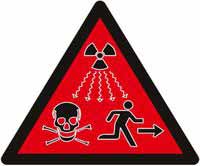
 MoD survey shows three in four nuclear test veterans fear radiation has affected their health, Mirror, by Susie Boniface, 30/10/2011 A devastating new report shows that eight in 10 of Britain’s nuclear test veterans went on to develop multiple medical conditions.
Asked if they believe their health had been affected by being at a nuclear test site, 28 per cent said they were certain it had, 23 per cent thought it had and 24 per cent said it may have done – a total of 75 per cent. Only eight per cent said it definitely had not.
The study, the first MoD funded-research since 1993, vindicates 10 years of campaigning by the Sunday Mirror which has highlighted the crippling legacy of ill health veterans have suffered. Many have developed cancers and rare medical complaints.
Studies have shown they have six times the national rate of leukaemia and 10 times the rate of birth defects among their children. It was only after massive pressure from the veterans and this newspaper that the last government finally agreed to fund a £412,000 study into their health.
SPENDING SLASHED The Coalition slashed the spend to £75,000 but 633 veterans still came forward to answer questions developed by two doctors with the British Nuclear Test Veterans’ Association.
The survey shows only 18 per cent of those polled are in “good health” and of those with a serious condition, only 16 per cent thought it was because of other than radiation. Veterans made a series of demands in the study, including a medical centre, better access to service medical records and a detailed genetic study of their descendants.
But experts did not look at the illnesses of vets’ children and grandchildren, saying the evidence was “of too variable a quality”. Read more: http://www.mirror.co.uk/news/top-stories/2011/10/30/mod-survey-shows-three-in-four-nuclear-test-veterans-fear-radiation-has-affected-their-health-115875-23524038/#ixzz1cOe5PLWA
Japan planning to export nuclear technology to India, Vietnam
Japan Closer to Exporting Nuclear Technology to India, Vietnam, WSJ By TATSUO ITOTOKYO, 30 Oct 11 —Nearly eight months after the Fukushima Daiichi nuclear accident, Japan is resuming steps it hopes will lead to exports of commercial nuclear technology to India and Vietnam, even as Japan itself is scaling back the use of nuclear energy at home.
Meanwhile, Prime Minister Yoshihiko Noda and his Vietnamese counterpart, Nguyen Tan Dung, will likely discuss nuclear power cooperation when they meet Monday, a government official said. Japan has already signed off on talks toward a nuclear power pact with Vietnam, but the parliamentary approval needed to ratify the agreement has been put on hold…..The agreement with India may draw criticism, as it comes at a time when the Fukushima crisis isn’t yet resolved. Moreover, India isn’t a member of the Nuclear Nonproliferation Treaty, aimed at preventing the spread of nuclear weapons and technology, while promoting peaceful uses of nuclear energy…. http://online.wsj.com/article/SB10001424052970204528204577007712071441558.html?mod=googlenews_wsj
Rupert Murdoch’s secret moves to destroy public broadcasting in Australia
 In hours, Murdoch could secure his stranglehold on the Australian media by acquiring our public international TV news network — and rob a struggling ABC of $223 million in funding. Communications Minister Stephen Conroy is under pressure to give control over the network to Murdoch instead of the ABC – Murdoch’s mouthpiece The Australian has been leaking details of insider support for Murdoch in a blatant attempt to force Labor into backing his bid. Conroy knows that giving the network to Murdoch would greatly increase the media mogul’s corrupting influence and hurt the ABC, and is looking for a way out.
Rupert Murdoch already owns 70 percent of Australia’s newspapers. Now he’s on the hunt for more media control, and he’s hoping we won’t notice. Through his stake in Australian News Channel, he’s been pushing hard to take over the crucial but low-key ‘Australia Network’: an Australian international public broadcaster that’s available in 44 countries. Murdoch has shown that his empire ruthlessly puts profits above all else — even hacking a murdered school girl’s phone to increase sales. With this extra network, Murdoch would vastly increase his power and take control of Australia’s public image abroad.
The move is also a key part of his strategy to destroy public broadcasting and silence independent voices. Murdoch knows that the loss of $223 million in funding would severely weaken an already stretched ABC. It would mean the loss of many ABC journalists, and potential closures of overseas news offices. If we let Murdoch win, Australia will become the first country in the world to privatise its international news service…. Continue reading
USA Republicans – strict standards for solar loans, but easy ones for nuclear
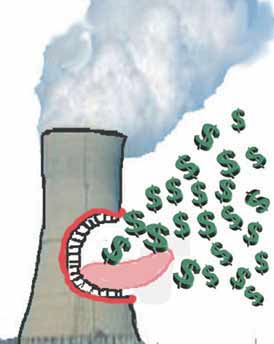 After Calling Energy Subsidies ‘Wrong,’ Boehner Wants $2 Billion Loan Guarantee For Ohio Nuclear Plant, Think Progress By Pat Garofalo , Oct 28, 2011 Back in September, as the GOP was getting all riled up over the faux Solyndra scandal, House Speaker John Boehner (R-OH) said that “for the federal government to be out there picking one company over another, one type of energy source over another, I think is wrong.” Evidently, though, his attitude toward energy subsidies does not extend to nuclear plants in his home state of Ohio. Continue reading
 The REAL renaissance – renewable energy
 The rebirth of renewable energy, October 27, 2011|By Daniel Yergin, Special to CNN Renewable energy is generating a lot of political heat. The bankruptcy of solar-panel manufacturer Solyndra, after a half billion dollar loan from the Federal government, has set off a hot debate on Capitol Hill. And a group of American-based solar companies are demanding 100% tariffs on imports of Chinese solar panels. They charge that China unfairly competes by subsidizing the Chinese industry, which Beijing resolutely denies.
All this, however, is occurring against a larger backdrop. Around the world renewable energy is going through a rebirth. It is becoming a big business. It is also becoming a more established part of the world’s overall energy supply. Last year, $120 billion was spent to install renewable electricity generation worldwide. Yet it is still a relatively small business compared to the overall energy business, and one that still faces big challenges in getting to scale on a global basis….. http://articles.cnn.com/2011-10-27/opinion/opinion_yergin-renewable-energy-rebirth_1_renewable-energy-renewable-electricity-generation-energy-policy?_s=PM:OPINION
What? Now Rick Perry is AGAINST USA nuclear loans guarantees!
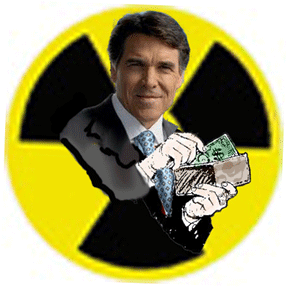 In policy reversal, Rick Perry opposes federal aid for Texas nuclear plants blogchron.com October 30, 2011 at 3:08 pm by Richard Dunham Texas Gov. Rick Perry rarely concedes that he has reversed himself on a policy issue. But he did just that today when he said on national TV he had “changed my position” and now opposes any federal assistance for nuclear plants or other energy projects.
The flip-flop is significant because the current Republican presidential candidate asked the U.S. Department of Energy three years ago to approve a federal loan guarantee for the construction of a Texas nuclear power plant in Matagorda County.
“We were asking at that particular point in time for the federal government to support the nuclear power industry in the state of Texas or across the country, from that standpoint,” Perry said today on Fox News Sunday. “But from a general standpoint, any type of federal dollars flowing into these industries we (now) think is bad public policy.”….
Fox News Sunday host Chris Wallace challenged Perry’s consistency, noting that Perry in 2008 asked Bush administration Energy Secretary Sam Bodman to approve an application by NRG Energy Inc. for nuclear reactor construction. The company sought federal loan guarantees of the sort Perry has denounced this year on the campaign trail… http://blog.chron.com/rickperry/2011/10/in-rare-policy-reversal-rick-perry-says-he-now-opposes-federal-aid-for-texas-nuclear-plants-or-any-energy-projects/
New Zealand MP seeks inquiry on Australia’s nuclear shipments
Uranium passing through NZ ports, Sky News October 30, 2011 A Greens MP has called for an inquiry into Australian shipments of radioactive uranium passing through New Zealand waters and ports in breach of its anti-nuclear stance.
Fortnightly shipments of Australian yellowcake uranium, totalling five thousand tonnes annually, are being shipped through New Zealand ports, according to documents provided to the Sunday Star Times by Green MP Gareth Hughes.
The paperwork shows the Environmental Risk Management Authority (ERMA) was unaware of the shipments for 13 years, until late 2009.
That agency had since been replaced by the new Environmental Protection Authority, and an EPA spokeswoman told the newspaper that even though ERMA was unaware of the shipments, the regime that permitted them to pass through New Zealand’s ports had still followed international best practice…..
A spokesman for Prime Minister John Key told the Sunday Star Times yellowcake was ‘Australian dirt, which is essentially harmless’…..
Hughes is calling for an independent inquiry, saying the shipments had no place in a nuclear-free country.
‘Why did the authority fail to approve it for so long, do we have adequate safeguards and response strategies, and what role is New Zealand playing in the international nuclear cycle?’ he said. http://www.skynews.com.au/eco/article.aspx?id=679499&vId=
India and Japan planning a deal on rare earths
Japan, India to jointly develop rare earths, The Yomiuri Shimbun, 31 Oct 11 Japan and India agreed Saturday to promote at the private level joint development of rare earths, which are indispensable for automobiles and information technology products.
Foreign Minister Koichiro Gemba and Indian Foreign Minister Shri S.M. Krishna also agreed to step up negotiations toward conclusion of an India-Japan nuclear agreement during a meeting at the Foreign Ministry’s Iikura Guest House in Minato Ward, Tokyo, according to officials.
In addition, they agreed to enhance cooperation in security policies by carrying out joint exercises by the Maritime Self-Defense Force and Indian Navy and in other ways, they said.
The exercises are likely to focus on ensuring the safety of sea-lanes in the Indian Ocean, observers said….. India, which has nuclear weapons but does not participate in the Nuclear Nonproliferation Treaty, is cautious about Japan’s stance in promoting nuclear arms reduction and nonproliferation through conclusion of a bilateral nuclear pact.
Japan wants to hold negotiations with India on the export of nuclear technologies and nuclear-related equipment, but it may be some time before an agreement is reached, the observers said… http://www.yomiuri.co.jp/dy/national/T111029002574.htm
USA to spend $600 billion or more on nuclear weapons
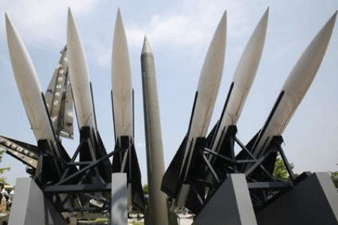 The Bloated Nuclear Weapons Budget, NYT October 29, 2011 Twenty years after the end of the cold war, the United States still has about 2,500 nuclear weapons deployed and 2,600 more as backup. The Obama administration, in an attempt to mollify Congressional Republicans, has also committed to modernizing an already hugely expensive complex of nuclear labs and production facilities. Altogether, these and other nuclear-related programs could cost $600 billion or more over the next decade. The country does not need to maintain this large an arsenal. It should not be spending so much to do it, especially when Congress is considering deep cuts in vital domestic programs. Continue reading
To avoid TEPCO bankruptcy, Japanese government will pay up
The government’s objective is to keep the company afloat. Without public funds, Tepco would have to report a capital deficit for the July-September quarter, results of which are due by Nov. 14. Even the slightest hint of bankruptcy of a company with ¥13 trillion in liabilities could trigger major financial turmoil. Public assistance is expected to sustain Tepco in a state of positive net worth of about ¥700 billion at the end of the current business year in March, even after booking an expected annual net loss of about ¥570 billion.
But if the bleeding continues at the current pace, much of the capital would be lost in the next business year. This makes it crucial for Tepco to secure either an electricity-rate increase or an early restart of idled nuclear reactors to deal with the cost increases resulting from the prolonged stoppage of nuclear power plants and greater reliance on expensive thermal power, a government official familiar with the matter said….Public funds will be provided via the Nuclear Damage Liability Facilitation Fund, an organization set up jointly by the government and power companies last month to provide insurance for nuclear accidents.
Under the interim plan, a supervisory committee comprising the top executives of the fund and Tepco will monitor cost-cutting progress. Tepco is required to produce a more comprehensive business plan in March, when there should be more clarity on rate hikes and reactor restarts…
CHOGM initiative to limit Australian uranium miners from exploiting African peoples
We have long needed greater assurances that Australian mining companies are adequately meeting their responsibilities in the developing countries in which many of them operate….
a focus on revenue transparency is long overdue…..Relying on companies to do the right thing is not enough. These initiatives will send a positive international signal,
Timely move to make miners more responsible for damage they cause, The Age Andrew Hewett October 28, 2011 Poor countries can expect greater control of mining companies. With two-thirds of the world’s poorest people living in resource-rich countries, too often the extraction of those resources contributes to poverty, corruption and conflict. Australian mining companies have become embroiled in damaging behaviour far from our shores and attention.
This week at CHOGM, the federal government announced initiatives aimed at ensuring the mining sector is better able to contribute to community Continue reading
Japan – protest by Fukushima women
 VIDEO http://www.greenpeace.org/international/en/news/Blogs/makingwaves/women-from-fukushima-gather-to-find-hope-in-t/blog/37555/ Women from Fukushima gather to ‘find hope in the despair’ of nuclear disaster by Laura Kenyon, Greenpeace International – October 28, 2011 Yesterday close to two hundred women from Fukushima began a three-day sit-in outside the Tokyo office of Japan’s Ministry of Economy calling for the evacuation of children from areas with high radiation levels and the permanent shut down of nuclear reactors in Japan currently switched off. Their peaceful protest is a powerful – almost radical – act in a country where standing up for something can often mean ostracism from one’s community. These are not women who regularly participate in civil protest. These are mothers who fear for their children’s safety and future. These are grandmothers separated from their families. The fact that they have put their own lives and families on hold for these three days reflects the harrowing situation these women and their families have found themselves in since the nuclear disaster. Continue reading
Japanese govt’s costly, desperate measures to save TEPCO from bankruptcy
Stopgap measures for TEPCO / Utility’s liabilities may exceed assets without government’s help, Kunihiko Yasue and Chiaki Toyoda / Yomiuri Shimbun Staff Writers, 29 oct 11, Tokyo Electric Power Co.’s application Friday for more than 1 trillion yen in government funds was meant to help the utility swiftly compensate people for damage caused by the crisis at its Fukushima No. 1 nuclear power plant.
TEPCO has already started making full-fledged compensation payments, and without the government’s assistance its liabilities could exceed its assets. Continue reading
Nuclear energy is in no way a solution to climate change
 Is Nuclear Energy a Fuel with a Future?, Huffington Post, Andy Mannle, : 10/28/11 “………the nuclear industry needs to do more than build a few plants a year to be a true low-carbon alternative to fossil fuels. A hard look at the science of reducing atmospheric carbon to 350ppm shows why.
To get the world off coal, which produces roughly half of the world’s power, would require 7-8 terawatts of energy. One nuclear power plant yields a gigawatt of power, meaning 8000 nuclear power plants would be needed to produce 8 terawatts. To do this by 2050, 200 plants would need to be built a year, which is roughly one every 1.5 days. Since nuclear plants only have a lifespan of 50 years, by the time the required amount is built, early plants would have to start being decommissioned. After that, new plants would need to keep being built at the same pace just to replace retiring ones.
So if the world goes nuclear, supplying half the power we need would require building a new plant every other day forever.
Even if this rate of growth were feasible, it is clearly unsustainable. Of course, no single strategy is going to wean us off coal in several decades. We will need a combination of carbon reduction strategies — what Princeton researchers Robert Socolow and Stephen Pacala call “stabilization wedges” that each reduce a billion tons a year for the next 50 years. The “wedges” include efficiency, renewables, carbon sequestration, reforestation, and replacing coal plants with natural gas. But even for nuclear to generate a single wedge would require tripling our current nuclear capacity.
The reality is global CO2 emissions are rising, not falling. And we can’t build enough nuclear alone to stop them. As such, nuclear’s benefits as a low-carbon alternative would only materialize in the context of a global war on carbon. Absent that, nuclear becomes just another low-carbon energy source competing on the open market with cleaner renewables and cheaper natural gas. Ironically, the current slow growth of nuclear and the possibility of an actual nuclear retreat after Fukushimacould mean an acceleration in our rising CO2 emissions, cautions the International Energy Agency….. http://www.huffingtonpost.com/andy-mannle/nuclear-energy-a-fuel-with_b_1032727.html
1 This Month

of the week – Shut Down Drone Warfare!


Tell the Ukrainian Government to Drop Prosecution of Peace Activist Yurii Sheliazhenko

Petition to revoke the licensing of the Near Surface Nuclear Disposal Facility (NSDF) at Chalk River. https://www.ourcommons.ca/petitions/en/Petition/Details?Petition=e-7247
To see nuclear-related stories in greater depth and intensity – go to https://nuclearinformation.wordpress.com
-
Archives
- March 2026 (251)
- February 2026 (268)
- January 2026 (308)
- December 2025 (358)
- November 2025 (359)
- October 2025 (376)
- September 2025 (257)
- August 2025 (319)
- July 2025 (230)
- June 2025 (348)
- May 2025 (261)
- April 2025 (305)
-
Categories
- 1
- 1 NUCLEAR ISSUES
- business and costs
- climate change
- culture and arts
- ENERGY
- environment
- health
- history
- indigenous issues
- Legal
- marketing of nuclear
- media
- opposition to nuclear
- PERSONAL STORIES
- politics
- politics international
- Religion and ethics
- safety
- secrets,lies and civil liberties
- spinbuster
- technology
- Uranium
- wastes
- weapons and war
- Women
- 2 WORLD
- ACTION
- AFRICA
- Atrocities
- AUSTRALIA
- Christina's notes
- Christina's themes
- culture and arts
- Events
- Fuk 2022
- Fuk 2023
- Fukushima 2017
- Fukushima 2018
- fukushima 2019
- Fukushima 2020
- Fukushima 2021
- general
- global warming
- Humour (God we need it)
- Nuclear
- RARE EARTHS
- Reference
- resources – print
- Resources -audiovicual
- Weekly Newsletter
- World
- World Nuclear
- YouTube
-
RSS
Entries RSS
Comments RSS
 nuclear-news