At last, attention to the irradiated animals at Fukushima
 “We can’t turn a blind eye to Japan’s abandoned animals that have not received adequate food or water for more than a month and continue to receive dangerous levels of radiation.”…
Animal Attraction: IFAW convenes nuclear radiation experts for landmark animal rescue summit in Japan, by Stacy Fox, khou.com, April 29, 2011, The International Fund for Animal Welfare (IFAW – www.ifaw.org) is organizing a gathering of radiation and animal rescue experts from the United States and Japan to discuss the current crisis and develop steps to provide aid to animals inside the evacuation zone. The team of experts will meet from May 2 -3 at the International House of Japan in Tokyo. Continue reading
Nuclear energy impractical as climate change solution
Renewable energy sources and systems become cheaper all the time, through the mass production of equipment and technical optimizations. Atomic and fossil energy by contrast are becoming constantly more expensive,
World Council For Renewable Energy Demands A Global Ban On New Nuclear Power, Voxy.co 30 April 11“……..A future based on nuclear energy is impossible. Globally, around 400 atomic power reactors are active. To meet the indispensable goal of the Intergovernmental Panel on Climate Change (IPCC) for reducing global greenhouse gas emissions by 2050 to a level of 40 percent below what they are today, and to rely on nuclear power for achieving that goal, would mean that 2500 additional 1000 MW atomic reactors would be needed. That is equivalent to more than one new reactor each week for the next fifty years! Continue reading
New nukes not viable for Exelon, old nukes a “cash cow”
“They can buy them much more cheaply than they can build them,” …….[Exelon] is also expected to seek 20-year operating license renewals on the remaining reactors that have not yet been cleared for the license extension
Why Older Nuclear Power Plants Remain ‘Cash Cows’ Despite Fukushima, NEW York Times, By PETER BEHR , April 29, 2011 There are no new nuclear plants in the foreseeable future for Exelon Corp., the largest U.S. reactor operator. Old plants, though, are a different story Continue reading
Another nuclear capable missile test by Pakistan
Pakistan military says it has test fired another nuclear-capable cruise missile, Google News, 30 April 11, ISLAMABAD — Pakistan’s military says it has successfully test fired a cruise missile capable of carrying a nuclear warhead. An army statement says the air-launched missile was fired on Friday.
It says the missile, named Hatf-8, has been developed in Pakistan and has a range of 220 miles (350 kilometres).
Pakistan routinely tests nuclear-capable missiles that are designed to match those of nuclear-armed neighbouring archrival India. The two nations have fought three wars since gaining independence from Britain in 1947…http://www.google.com/hostednews/canadianpress/article/ALeqM5iBK602GZVqYKuSa6TJFGxtOd3NWQ?docId=6701612
South African government irresponsibly promoting nuclear energy
Greenpeace Africa, who accuses the government of being irresponsible in approving plans for nuclear expansion. ….South Africa is ill-equipped to handle nuclear power generation. “We have a very weak nuclear regulator, little nuclear expertise in the country and a dependency on foreign nuclear expertise and technology,”
Cold and desolate in the dead zone, Mail & Guardian, ILHAM RAWOOT – Apr 29 2011, “……….In the wake of the disaster South Africa’s Cabinet approved the Integrated Resources Plan, or IRP2010, which aims to expand nuclear power capacity Continue reading
How USA’s nuclear industry stalled, despite government propping it up
There are many reasons those 896 reactors went missing. Number one is the fact that the No Nukes movement stopped the industry from gouging from the government the trillion or more dollars it would have taken to build that fleet. Continue reading
Unhealthy employment – the nuclear industry – theme for April 2012
Renewable energy and energy efficiency provide a huge variety of jobs. On the whole, these are pretty safe and healthy jobs. Still the construction of wind turbines, solar power facilities, hydro power and so on do carry the risks associated with all construction jobs. And there are other hazards, too, for example, chemical hazards in some areas of work.
But these risks pale into insignificance when compared to the risks involved in the nuclear fuel cycle.
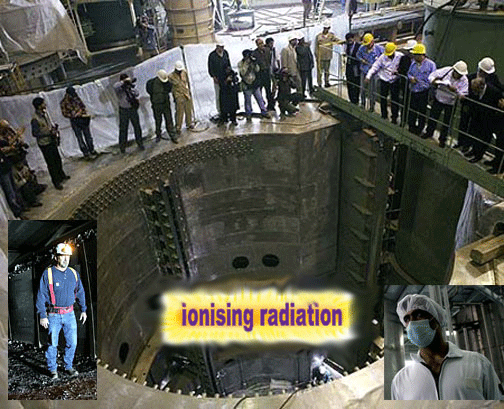
Workers also have the mental stress caused by their knowledge of underlying hazard to themselves and the community. There is the mental stress of their necessary strict surveillance and secrecy
Soviet Russia’s radiation experiments on people
The sad story of Nim, – Documentary films, MACLEANS CA, by Brian D. Johnson , April 29, 2011 “…….After the Apocalypse takes us to a former Soviet nuclear test site in Kazakhstan, where residents were deliberately exposed to radiation as human guinea pigs, …… After the Apocalypse, from British director Antony Butts, explores the fallout from 456 nuclear blasts detonated by the Soviets from 1949 to 1989 at the Semipalatinsk test site on the steppes of Kazakhstan. So scientists could study the effects of radiation, residents were not evacuated; some 200,000 were exposed, suffering genetic damage that ricocheted through three generations. Today, one in 20 children in the zone is born with birth defects, and sheep graze in radioactive bomb craters, where herders “protect” themselves with vodka.
Dr. Toleukhan Nurmagambetov, head of the local maternity clinic, takes us to a museum of bottled fetuses with monstrous deformities (such as a cyclops eye), then to an orphanage of children with Down’s syndrome and missing limbs…….. http://www2.macleans.ca/2011/04/29/the-sad-story-of-nim/
Radioactive for ONLY 300 YEARS, boast Thorium promoters
 the waste would have to be stored for around 300 years or so, compared to tens of thousands of years for current reactors.
Only in the world of nuclear technology could a requirement for 300 years of dangerous waste storage be seen as an advantage.
No one talks about safe nuclear power because it doesn’t exist, Canberra Times, Dr Sue Wareham 28 Apr, 2011 , The heading on Julian Cribb’s glowing recommendation of thorium reactor research (April 26, p11) poses the question ”Why is no one talking about safe nuclear power?” The answer is that it doesn’t exist.
Cribb states that thorium reactors do not produce weapons grade material. This is misleading. Continue reading
Roundup of news on Fukushima nuclear reactor crisis
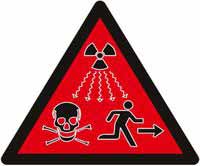 There is no known “safe dose” of ionizing radiation, and the government is under increasing pressure to do a full analysis of health impacts that radioactive fallout could have on nursing mothers and infants
Japan Nuclear Update, Clean Energy.org, April 28th, 2011 Sara Barczak › “……..the ongoing nuclear crisis at the Fukushima Daiichi nuclear plant continues to present new challenges. The nuclear fuel in reactor Unit 1 is apparently melting with emergency cooling efforts requiring 6 tons of water injected every hour. Continue reading
Downplaying of nuclear radiation is an ethical issue
 When industry, government, academics and some journalists try to calm public emotions by downplaying radiation risks, they often cause greater offense by disregarding the issue of informed consent.
…. behind the technical argument is an ethical one: I am not willing to wash down tiny amounts of radiation with great volumes of reassurance because I did not give consent…
Nuclear Power, Radioactive Fallout And The Issue Of Informed Consent, Forbes, Jeff McMahon, Apr. 28 2011 Radioactive fallout from the Fukushima Dai-Ichi nuclear accident has awakened debate about nuclear power’s invisible emissions, and familiar camps have assembled along familiar lines: Continue reading
India’s Environmental Body Urges Delay in Nuclear Power Program
the Environment Appraisal Committee said the data provided by India’s state-run monopoly nuclear power producers, NPCIL, were from 2004 and hence dated.
“Due to various environmental problems including the adverse impact on the marine life, the present proposal is not acceptable,”
India green panel recommends deferment of nuclear plant plans, By Krittivas Mukherjee, NEW DELHI, April 28 , (Reuters) – A panel backed by India’s environment ministry has suggested holding off green approvals for four proposed nuclear reactors on concerns over coastal degradation and safety that intensified after last month’s nuclear disaster in Japan. Continue reading
Storm shuts nuclear plant for weeks, in Alabama
Alabama Nuclear Power Goes Down During Storm, on Backup Power, Epoch Times By Jack Phillips, 29 April 11, A nuclear power plant in Alabama went without power on Wednesday when massive storms hit the South but officials say that it will be weeks before it goes back online. The plant was able to prevent a partialmeltdown due to its backup power systems….. The agency said that it is closely monitoring the situation at the power plant, which went down when power lines were severed during the storm.
“Severe storms in the South last night provided a stark reminder that we are not immune to the effects of natural events,” NRC Chairman Gregory Jaczko cautioned. He noted that the plant’s three units went offline and had to be shut down…..http://www.theepochtimes.com/n2/united-states/alabama-nuclear-power-goes-down-during-storm-on-backup-power-55507.html
IAEA confirms that Syria did have a secret nuclear facility
“The facility that was … destroyed by Israel was a nuclear reactor under construction,”
 Bombed Syrian plant ‘was nuclear facility site’ says energy agency, News Scotsman, 29 April 2011, By George Jahn and Khaled Yacoub Oweis, THE head of the International Atomic Energy Agency has said for the first time that a target destroyed by Israeli warplanes in the Syrian desert in 2007 was the covert site of a future nuclear reactor, countering assertions by Syria that it had no atomic secrets. Continue reading
USA unprepared for power losses from nuclear plants
Nuclear chief questions emergency power at plants. 28 April 11 By Tennille Tracy, WASHINGTON -(MarketWatch)– The U.S. nuclear chief questioned Thursday whether U.S. nuclear plants are prepared to deal with major losses of power that last several hours or even days.
In a meeting of the Nuclear Regulatory Commission, NRC Chairman Gregory Jaczko said existing standards for emergency power might not be “reasonable” given the damage that major catastrophes can cause at nuclear facilities…… In the wake of the Fukushima disaster, nuclear experts have raised questions about the adequacy of emergency power supplies at U.S. facilities. They have taken particular issue with nuclear plants that rely on batteries because the batteries have limited lifespans…… http://www.marketwatch.com/story/nuclear-chief-questions-emergency-power-at-plants-2011-04-28
1 This Month

of the week – Shut Down Drone Warfare!


Tell the Ukrainian Government to Drop Prosecution of Peace Activist Yurii Sheliazhenko

Petition to revoke the licensing of the Near Surface Nuclear Disposal Facility (NSDF) at Chalk River. https://www.ourcommons.ca/petitions/en/Petition/Details?Petition=e-7247
To see nuclear-related stories in greater depth and intensity – go to https://nuclearinformation.wordpress.com
-
Archives
- April 2026 (103)
- March 2026 (251)
- February 2026 (268)
- January 2026 (308)
- December 2025 (358)
- November 2025 (359)
- October 2025 (376)
- September 2025 (257)
- August 2025 (319)
- July 2025 (230)
- June 2025 (348)
- May 2025 (261)
-
Categories
- 1
- 1 NUCLEAR ISSUES
- business and costs
- climate change
- culture and arts
- ENERGY
- environment
- health
- history
- indigenous issues
- Legal
- marketing of nuclear
- media
- opposition to nuclear
- PERSONAL STORIES
- politics
- politics international
- Religion and ethics
- safety
- secrets,lies and civil liberties
- spinbuster
- technology
- Uranium
- wastes
- weapons and war
- Women
- 2 WORLD
- ACTION
- AFRICA
- Atrocities
- AUSTRALIA
- Christina's notes
- Christina's themes
- culture and arts
- Events
- Fuk 2022
- Fuk 2023
- Fukushima 2017
- Fukushima 2018
- fukushima 2019
- Fukushima 2020
- Fukushima 2021
- general
- global warming
- Humour (God we need it)
- Nuclear
- RARE EARTHS
- Reference
- resources – print
- Resources -audiovicual
- Weekly Newsletter
- World
- World Nuclear
- YouTube
-
RSS
Entries RSS
Comments RSS
 nuclear-news