Safety problems, spent fuel worries, at US nuclear plants
Inspectors Found Preparedness Issues at U.S. Nuclear Plants, NYTimes.com, By MATTHEW L. WALD May 12, 2011 ROCKVILLE, Md. — Despite repeated assurances that American nuclear reactors are better equipped to deal with natural disasters than their counterparts in Japan, regulators said Thursday that recent inspections found serious problems with some emergency equipment that would have made it unusable in an accident.
In addition, the staff of the Nuclear Regulatory Commission acknowledged that the agency’s current regulations and disaster plans did not give enough consideration to two factors that had greatly contributed to the continuing Fukushima Daiichi crisis in Japan: simultaneous problems at more than one reactor at the same site and a natural disaster that disrupts roads, electricity and other infrastructure surrounding a plant…….
The Fukushima accident has cast new attention on spent fuel pools; the reason the United States government recommended that Americans stay 50 miles from the plant was damage to the spent fuel pool of Fukushima’s Unit 4, a reactor that had been shut down at the time of the March 11 earthquake and tsunami…….Inspectors Found Preparedness Issues at U.S. Nuclear Plants – NYTimes.com
Greenpeace reports high marine radiation off Fukushima
Greenpeace says high radiation in Japan seaweed Google News – 12 may, 11 TOKYO — Environmental activist group Greenpeace said Thursday it had detected radiation far above legal limits in seaweed samples taken from the ocean off Japan’s stricken Fukushima nuclear plant.Greenpeace, which sent its Rainbow Warrior flagship to take samples of marine life and water, called on Japan’s government to undertake comprehensive radiation testing of seaweed along the Fukushima coast.Initial tests of 22 seaweed samples collected at distances up to 65 kilometres (40 miles) out to sea from the plant “registered significantly high levels of radioactive contamination,” the group said.Ten seaweed samples showed levels of over 10,000 Bequerel per kilogramme, the group said……AFP: Greenpeace says high radiation in Japan seaweed
NRC draft report – US nuclear plants safe – well, almost
America’s Nuclear Plants Are Safe, NRC Says – Except When They’re Not Climate Central, 12 may 11, By Michael D. Lemonick“….. In the U.S., the Nuclear Regulatory Commission (NRC) launched a major assessment of how safe American plants are. The task force assigned to carry out this assessment won’t be issuing its formal report until July, but the NRC issued a progress report today………
For those who love bureaucratic technobabble, here’s the announcement of the new NRC order.
For those who prefer plain English, here’s what’s actually happened: the NRC has declared America’s nuclear plants safe according to standards that may well be out of date, and Rep. Markey thinks the out-of-date standards aren’t good enough……Review of Nuclear Power Plant Safety | Climate Central
Radiation levels in tea – Japanese tea recalled
Japan recalls tea over radiation fears| Herald Sun 13 May 11, JAPAN has detected radiation above the legal limit in tea grown southwest of Tokyo and blamed it on the stricken Fukushima nuclear plant northeast of the capital, officials said.Kanagawa prefecture has started a recall of the tea after measuring about 570 becquerel of caesium per kilogram in leaves grown in the city of Minamiashigara, prefectural officials said. The legal limit is 500 Bq/kg……The central government has imposed a ban on a range of vegetables and dairy produce from parts of Fukushima prefecture and several neighbouring regions and banned fishing in the vicinity of the plant……Japan recalls tea over radiation fears | Herald Sun
Fuel rods melted in Fukushima nuclear reactor no. 1
 The company says the water level inside reactor No. 1 was much lower than it thought, exposing about 1.5 metres of the fuel rods.
It says the rods have likely melted and workers are still trying to cool them in water at the bottom of the pressure vessel.
Japan’s stricken nuclear plant has new leak ABC News (Australian Broadcasting Corporation), By North Asia correspondent Mark Willacy and wires, 12 May, 11 The operator of Japan’s crippled Fukushima nuclear plant says rods inside one of the reactors have most likely melted after being fully exposed.
Fukushima reactor no. 3 is leaking radiation
“Reactor 3 at the damaged Fukushima nuclear power station is leaking” — TEPCO says Cesium at 620,000 times above limit, ENE NEWS, May 11th, 2011“Reactor 3 at the damaged Fukushima nuclear power station is leaking” — TEPCO says Cesium at 620,000 times above limit « Energy News
Analysis of the nuclear industry’s future
In his analysis, Abbott explores the consequences of building, operating, and decommissioning 15,000 reactors on the Earth, looking at factors such as the amount of land required, radioactive waste, accident rate, risk of proliferation into weapons, uranium abundance and extraction, and the exotic metals used to build the reactors themselves.
 Why nuclear power will never supply the world’s energy needs,(PhysOrg.com) 12 May 11, –”….In an analysis to be published in a future issue of the Proceedings of the IEEE, Derek Abbott, Professor of Electrical and Electronic Engineering at the University of Adelaide in Australia, has concluded that nuclear power cannot be globally scaled to supply the world’s energy needs for numerous reasons. The results suggest that we’re likely better off investing in other energy solutions that are truly scalable. Continue reading
Refuting Guy Page’s pro nuclear spin
 What’s important to remember is that Entergy and the nuclear industry are driven by only one thing — money. It’s not about doing the right thing by the environment or society. People fear and distrust this industry, because they know in their hearts that it’s wrong. It’s wrong to dump legacy costs on our grandchildren. It’s wrong to have a technology that when (not if) it fails the results are catastrophic for generations. They distrust the industry, because they know that when the time comes to clean up the mess, those responsible will have taken the money and run.
The only people who don’t see this are those who are paid not to.
The unacknowledged human cost of nuclear power, VT Digger by Deb Katz, 12 May 11 Guy Page lays out all of the predictable arguments in support of nuclear power; it’s clean, it’s safe and no one has ever died from nuclear power. As the communications director for the Vermont Energy Partnership, of which Entergy is a member, he suffers from the same problem as Entergy; their messaging is out of sync with their reality.
………The claim that no one has ever died from radiation poisoning is beyond the pale. Continue reading
Daily radiation exposure of Fukushima’s schoolchildren
 Children and teachers at a fifth of the 1,600 schools in Fukushima are receiving at least 20 millisieverts of radiation per year, said Nakate, according to readings from the government. That’s the limit for a nuclear power plant worker, according to Japan’s nuclear safety commission.
Children Don Masks, Hats in Fukushima as Radiation Looms, Bloomberg, By Takahiko Hyuga and Shigeru Sato – May 11, 2011 Students at theShoyo Junior High School in Fukushima are wearing masks, caps and long-sleeved jerseys to attend classes as their exposure to radiation is on pace to equal annual limits for nuclear industry workers. Continue reading
Nuclear renaissance not viable, say experts, even from Exelon!
Power complexes that combine increasingly plentiful and cheap natural gas with renewable sources like wind and solar power are now seen as a financially viable, safer and cleaner alternative.
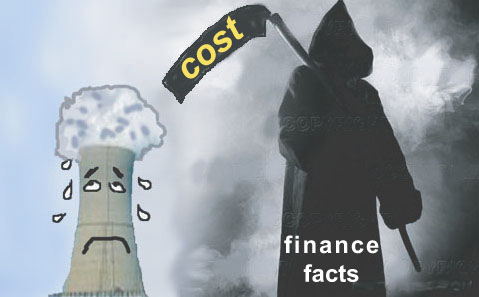 Why The Days Of Rampant Nuclear Power Growth Are Over, Business Insider, Merrill Goozner, The Fiscal Times | May 9, 2011 “……..Experts say the heavy subsidies needed to build new nuclear plants and the increased costs from tougher safety standards are a nonstarter given the nation’s fiscal crisis. As a result, nuclear is a less competitive option for producing electricity than a mix of cheap natural gas, wind and even solar power, which is rapidly declining in cost. Although prospects for a revival seemed bright only a few years ago, the steep price tag, coupled with the festering problem of disposing of spent nuclear fuel, creates a hostile environment for investing in nuclear power. Continue reading
Northern Japan: bank problems as business clients fear radiation
“This is such a tragedy for the people of Fukushima, particularly our youth,” said Toyo System’s Shoji, who has two children. “Radioactive contamination has literally jeopardized the seeds and soil of our future growth.”
Nuclear Fear Snags Loan Push by Fukushima Banks as Clients Flee Radiation, Bloomberg, By Shigeru Sato and Shingo Kawamoto – May 11, 2011 “……Daito and larger rivals in the prefecture, Toho Bank Ltd. (8346) and Fukushima Bank Ltd., are three of the worst five performers on Japan’s 83-member Topix Banks Index (TPNBNK) since the March 11 quake and tsunami. They are struggling to keep customers and prevent loans from souring…… Continue reading
Dangers of fire and other threats to US nuclear reactors
On other fronts, the NRC has acquired a reputation for being lenient and too close to industry. For instance, despite compelling evidence after September 11, 2001, that reactors could be vulnerable to terrorist attacks, the NRC still allowed many security gaps. And the NRC has allowed reactors to continue operating despite known design problems and deteriorating equipment that could lead to a loss of coolant and fuel damage. At some two dozen of the nation’s reactors, spent fuel sits in unsecured, above-ground storage pools — a radiological threat underscored by recent events at the Fukushima Daiichi nuclear plant. The potentially lethal waste in those pools far exceeds the stored rods in Japan….
A more likely nuclear nightmare HUFFINGTON POST, By Susan Q. Stranahan, 11 May 11“……..Fires regularly occur at the 104 U.S. nuclear plants, nearly 10 times a year on average. Continue reading
Students boycott their own convocation ceremony in anti-nuclear protest
 TISS students protest against Ramesh – Hindustan Times, 11 may 11“……The students – some carrying placards, others sporting yellow-and-black t-shirts with anti-nuke slogans, several more sporting black bands – greeted the minister by raising slogans when he arrived at the TISS Deonar Campus to deliver the convocation address Wednesday afternoon.”We are protesting against the 9,900-MW Jaitapur Nuclear Power Project in Ratnagiri in Maharashtra and other mega-projects in Orissa and Jharkhand. Thousands of common people are being displaced or uprooted there,” said Pranab Doley, an organiser of the protest.
He said that since the student community is feeling strongly about these huge developmental projects, they decided to boycott their own convocation ceremony in which they would have been presented their coveted degree certificates at the hands of the minister…..
TISS students protest against Ramesh – Hindustan Times
Graduating students show opposition to Jaitapur nuclear plant
TISS students greet Ramesh with anti-nuke placards,TNN | May 12, 2011,MUMBAI: As students of the Tata Institute of Social Science (TISS) walked up to the podium to get their medals during the 71st convocation ceremony from the chief guest, they handed him pocket-sized anti-nuclear placards in return.
For, the chief guest was Union environment minister Jairam Ramesh and the students were staging a silent protest against the Jaitapur nuclear power plant in Maharashtra and the Posco steel project in Orrisa. While about 30 graduating students boycotted the convocation ceremony, several others wore anti-nuclear Tshirts and badges.
Students of TISS have been very active on the Jaitapur issue and five were also arrested two weeks ago when they participated in a protest yatra from Tarapur to Jaitapur.
TISS students greet Ramesh with anti-nuke placards – The Times of India
European Commission chief says nuclear safety must include terrorism risks
EU nuclear safety test must cover ‘man-made’ events: Barroso, Google News, (AFP) – 12 May, 11, BRUSSELS — Tests on the ability of Europe’s nuclear power plants to withstand disasters should include man-made events, the head of the European Commission said Wednesday.European nuclear regulators and EU energy chief Guenther Oettinger meet Thursday to draw up the parameters for a safety sweep of Europe’s 143 nuclear reactors in the wake of the Fukushima atomic crisis in Japan…..
Oettinger is pushing for simulated responses to terror attacks and plane crashes to be undertaken as part of the exercise, while regulators from Europe’s 14 nuclear nations want to limit them to natural disasters.
AFP: EU nuclear safety test must cover ‘man-made’ events: Barroso
1 This Month

of the week – Shut Down Drone Warfare!


Tell the Ukrainian Government to Drop Prosecution of Peace Activist Yurii Sheliazhenko

Petition to revoke the licensing of the Near Surface Nuclear Disposal Facility (NSDF) at Chalk River. https://www.ourcommons.ca/petitions/en/Petition/Details?Petition=e-7247
To see nuclear-related stories in greater depth and intensity – go to https://nuclearinformation.wordpress.com
-
Archives
- April 2026 (103)
- March 2026 (251)
- February 2026 (268)
- January 2026 (308)
- December 2025 (358)
- November 2025 (359)
- October 2025 (376)
- September 2025 (257)
- August 2025 (319)
- July 2025 (230)
- June 2025 (348)
- May 2025 (261)
-
Categories
- 1
- 1 NUCLEAR ISSUES
- business and costs
- climate change
- culture and arts
- ENERGY
- environment
- health
- history
- indigenous issues
- Legal
- marketing of nuclear
- media
- opposition to nuclear
- PERSONAL STORIES
- politics
- politics international
- Religion and ethics
- safety
- secrets,lies and civil liberties
- spinbuster
- technology
- Uranium
- wastes
- weapons and war
- Women
- 2 WORLD
- ACTION
- AFRICA
- Atrocities
- AUSTRALIA
- Christina's notes
- Christina's themes
- culture and arts
- Events
- Fuk 2022
- Fuk 2023
- Fukushima 2017
- Fukushima 2018
- fukushima 2019
- Fukushima 2020
- Fukushima 2021
- general
- global warming
- Humour (God we need it)
- Nuclear
- RARE EARTHS
- Reference
- resources – print
- Resources -audiovicual
- Weekly Newsletter
- World
- World Nuclear
- YouTube
-
RSS
Entries RSS
Comments RSS
 nuclear-news