Increasing exposure of Americans to ionising radiation
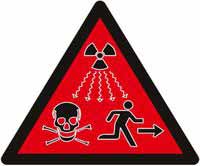 nuclear reactors produce a number of radioactive isotopes not found in the environment,….the Nuclear Regulatory Commission’s policy of including reactor-generated radionuclides as part of the average background radiation is misleading…….”Nature does not expose human beings to the several hundred radioactive isotopes that that are generated by and routinely released from the nuclear fuel cycle,”
Americans are exposed to increased levels of radiation, Brattleboro Reformer, By BOB AUDETTE June 5, 2010 BRATTLEBORO — The average American receives 620 millirems of background radiation every year, as opposed to the 360 millirems as is often stated in the press.The number has crept up in the last two decades, from 180 millirems to 300 millirems, then to 360 millirems and most recently, in 2006, to 620 millirems.
Two of the major reasons why the average dose has been adjusted is the recognition that radon poses a substantial threat to health, especially in areas where granite is in abundance, and an increase in the number of medical procedures involving radiation.Many people never reach the average, which includes exposure rates to people who undergo medical treatments with high levels of radiation.
Ionizing radiation, the formation of ions by separating atoms or molecules or radicals or by adding or subtracting electrons from atoms by strong electric fields in a gas, can cause cancer.
Sources of ionizing radiation include nuclear weapons, nuclear reactors, X-rays, CT scans, carbon and potassium in our bodies, cosmic radiation from outer space, ultraviolet light, radon gas and radioactive material in the earth’s crust.
Emissions from coal-fired power plants and smoke from tobacco are also radioactive………An airline passenger flying at an average altitude of 35,000 feet for a period of 160 hours — about 75,000 miles — during solar minimum, when radiation is the greatest, would receive an exposure at about the limit of the current acceptable level, according to the Health Physics Society.
But nuclear reactors produce a number of radioactive isotopes not found in the environment, said Ray Shadis, technical consultant for the New England Coalition on Nuclear Pollution, who insisted the Nuclear Regulatory Commission’s policy of including reactor-generated radionuclides as part of the average background radiation is misleading.
“Nature does not expose human beings to the several hundred radioactive isotopes that that are generated by and routinely released from the nuclear fuel cycle,” he said. “Downplaying radiation impacts is an essential part of driving down costs in support of the nuclear renaissance. Everywhere else in science there is a growing recognition of incremental biological damage consistent with tiny increases in dose.”
There are indications that low doses of ionizing radiation can cause cancer over long periods of time, according to the 2005 Biological Effects of Ionizing Radiation Report VII.
According to the BEIR, background radiation, excluding radon, is responsible for one incidence of cancer for every 100 people over a 70-year lifetime.
That equates to almost 61 million cases of cancer around the world.
Some medical procedures that utilize radiation, such as CT scans, could generate one incidence of cancer for every 300 to 400 procedures, according to the BEIR.
No comments yet.
1 This Month

of the week – Shut Down Drone Warfare!


Tell the Ukrainian Government to Drop Prosecution of Peace Activist Yurii Sheliazhenko

Petition to revoke the licensing of the Near Surface Nuclear Disposal Facility (NSDF) at Chalk River. https://www.ourcommons.ca/petitions/en/Petition/Details?Petition=e-7247
To see nuclear-related stories in greater depth and intensity – go to https://nuclearinformation.wordpress.com
-
Archives
- March 2026 (251)
- February 2026 (268)
- January 2026 (308)
- December 2025 (358)
- November 2025 (359)
- October 2025 (376)
- September 2025 (257)
- August 2025 (319)
- July 2025 (230)
- June 2025 (348)
- May 2025 (261)
- April 2025 (305)
-
Categories
- 1
- 1 NUCLEAR ISSUES
- business and costs
- climate change
- culture and arts
- ENERGY
- environment
- health
- history
- indigenous issues
- Legal
- marketing of nuclear
- media
- opposition to nuclear
- PERSONAL STORIES
- politics
- politics international
- Religion and ethics
- safety
- secrets,lies and civil liberties
- spinbuster
- technology
- Uranium
- wastes
- weapons and war
- Women
- 2 WORLD
- ACTION
- AFRICA
- Atrocities
- AUSTRALIA
- Christina's notes
- Christina's themes
- culture and arts
- Events
- Fuk 2022
- Fuk 2023
- Fukushima 2017
- Fukushima 2018
- fukushima 2019
- Fukushima 2020
- Fukushima 2021
- general
- global warming
- Humour (God we need it)
- Nuclear
- RARE EARTHS
- Reference
- resources – print
- Resources -audiovicual
- Weekly Newsletter
- World
- World Nuclear
- YouTube
-
RSS
Entries RSS
Comments RSS
 nuclear-news
Leave a comment