A start is made on monitoring patients’ radiation exposure
NIH will start keeping track of patients’ radiation exposure
By Liz Szabo, USA TODAY 1 Feb 2010Concerned that Americans may be accumulating too much lifetime radiation exposure from medical tests, doctors at the National Institutes of Health will begin recording how much radiation patients receive from CT scans and other procedures in their electronic medical records.A study in the Archives of Internal Medicine in December estimated that radiation from such procedures, whose use has grown dramatically in recent years, causes 29,000 new cancers and 14,500 deaths a year.
A second Archivesstudy that month said the problem could be even worse, calculating that patients get four times as much radiation from imaging tests as previously believed. Children are particularly vulnerable because they’re small and still growing.
These exposures do not include the rare cases of machine malfunctions or mistakes, such as the disclosure by Cedars-Sinai Medical Center in Los Angeles in October that it had accidentally given hundreds of patients up to eight times the normal radiation dose during a stroke scan.
Even though most machines function properly, hospitals rarely record how much radiation patients receive. Doses can vary, depending on the size of the patient, how large of an area is scanned or the number of scans performed. At NIH, doctors now will routinely record such information in records that patients can take with them, according to an announcement today in the Journal of the American College of Radiology.
…….The NIH by itself doesn’t treat enough patients to measure such risks, which would require data from hundreds of thousands of patients, they write. But they hope to eventually pool data from many institutions to measure cancer risk.
Rebecca Smith-Bindman, who wrote one of the December studies in Archives, praises NIH for the change. “It is an absolutely necessary first step toward monitoring patient dose,” Smith-Bindman says. “I suspect in the not-so-distant future this will be required of all institutions.”
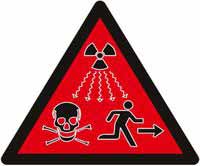
NIH will start keeping track of patients’ radiation exposure – USATODAY.com
No comments yet.
1 This Month

of the week – Shut Down Drone Warfare!


Tell the Ukrainian Government to Drop Prosecution of Peace Activist Yurii Sheliazhenko

Petition to revoke the licensing of the Near Surface Nuclear Disposal Facility (NSDF) at Chalk River. https://www.ourcommons.ca/petitions/en/Petition/Details?Petition=e-7247
To see nuclear-related stories in greater depth and intensity – go to https://nuclearinformation.wordpress.com
-
Archives
- March 2026 (230)
- February 2026 (268)
- January 2026 (308)
- December 2025 (358)
- November 2025 (359)
- October 2025 (376)
- September 2025 (257)
- August 2025 (319)
- July 2025 (230)
- June 2025 (348)
- May 2025 (261)
- April 2025 (305)
-
Categories
- 1
- 1 NUCLEAR ISSUES
- business and costs
- climate change
- culture and arts
- ENERGY
- environment
- health
- history
- indigenous issues
- Legal
- marketing of nuclear
- media
- opposition to nuclear
- PERSONAL STORIES
- politics
- politics international
- Religion and ethics
- safety
- secrets,lies and civil liberties
- spinbuster
- technology
- Uranium
- wastes
- weapons and war
- Women
- 2 WORLD
- ACTION
- AFRICA
- Atrocities
- AUSTRALIA
- Christina's notes
- Christina's themes
- culture and arts
- Events
- Fuk 2022
- Fuk 2023
- Fukushima 2017
- Fukushima 2018
- fukushima 2019
- Fukushima 2020
- Fukushima 2021
- general
- global warming
- Humour (God we need it)
- Nuclear
- RARE EARTHS
- Reference
- resources – print
- Resources -audiovicual
- Weekly Newsletter
- World
- World Nuclear
- YouTube
-
RSS
Entries RSS
Comments RSS
 nuclear-news
Leave a comment