WHAT Nuclear Power Renaissance?
Nuclear Power Renaissance? Thirty years after Three Mile Island, nuclear is still too risky. But now the risks have shifted from physical to financial. Technology Review Nov/Dec 2009 By Matthew L. Wald “………………the nuclear industry faces tremendous risks, though their nature has changed since 1979. As the possibility of an accident that panics or injures the neighbors has diminished, the likelihood has grown that even a properly functioning new reactor will be unable to pay for itself.And changes in the utility industry since 1979 mean that this time, the money a company wastes may be its own.Whether new nuclear plants are a good bet economically depends on three factors, all now in flux. First is the cost of a new reactor. In 2005, a few would-be reactor builders said they could construct a facility generating 1.2 to 1.6 gigawatts for $2,000 per kilowatt of capacity. Now, they put the cost at $4,000 per kilowatt. Neither price includes interest charges accrued during construction, which could be substantial if the job takes more than the five years or so that the builders predict–or if interest rates rise, as they are expected to.
The second factor is uncertainty about possible future competitors. If 10 years from now wind or solar plants, or coal plants that capture their carbon emissions, are able to deliver vast amounts of cheap power, the market price of electricity will fall, and plant owners may never see enough revenue to meet their costs.
The third factor is uncertainty about the price of fossil fuels, particularly natural gas. In the last year, the fuel cost for a kilowatt-hour generated from natural gas has varied from about 2.3 cents to about 9 cents. If a federal cap-and-trade system or a tax on carbon dioxide emissions is instituted, that is likely to add 0.5 to 1.5 cents per kilowatt-hour. Add in 2 cents or more to recover the cost of building the plant, and the price of gas-fired power could make nuclear power look very attractive–or really overpriced. …………
The idea of the legislation (2005 Energy Policy Act,) was that Congress would spoon-feed financial aid to the first half-dozen or so new nuclear plants, and others would follow on their own once new designs were demonstrated and a reformed licensing process was in place. Now, it looks as if those half-dozen new reactors will be the limit of the “renaissance,” unless more help is forthcoming. The industry lacks the votes in Congress to expand the loan-guarantee program. Subsidies for wind and solar power are popular, in part because they can be justified as aid to emerging technologies. But many legislators feel that nuclear is less deserving of taxpayer support…………..the odds are probably not good enough for the nuclear industry to place a bet with its own money. Only the government can agree to back up that bet, and it has yet to do so.
No comments yet.
1 This Month
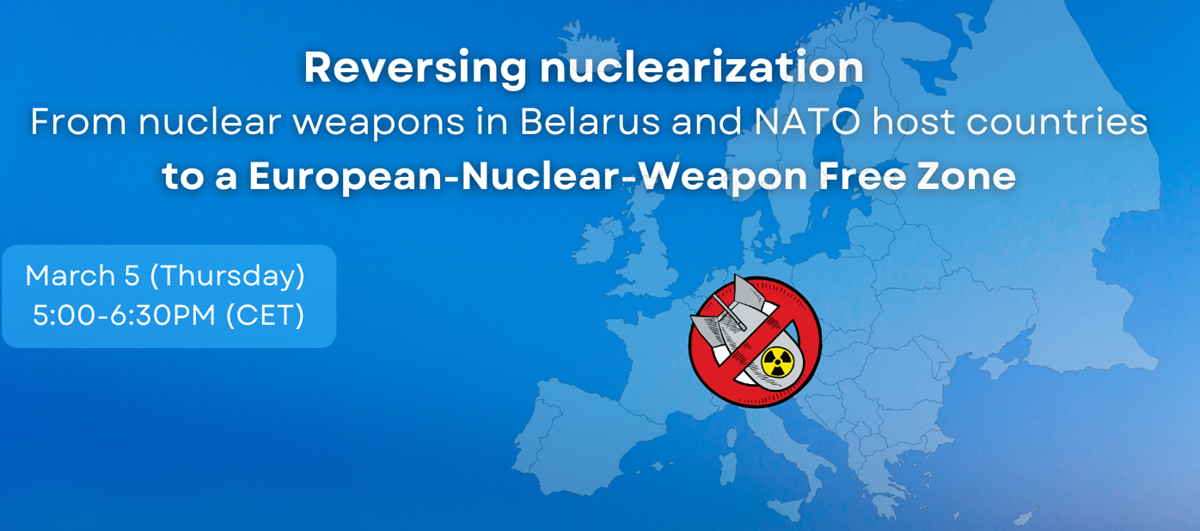
5 March -Online – Reversing nuclearization:
From nuclear weapons in Belarus and NATO host countries to a European-Nuclear-Weapon Free Zone
11am-12:30pm Eastern Time USA / 5pm-6:30pm CET

of the week – Advocating for a
nuclear free beach – https://www.samuellawrencefoundation.org/
The Samuel Lawrence Foundation advocates for a Nuclear Waste Free Beach at San Onofre, join us and take action!
10 March A LIVE WEBINAR THE REAL EFFECTS OF NUCLEAR POWER
What the Industry Isn’t Telling Us
1:00 PM Mountain, 2 pm Central, 3 pm Eastern. Live on the Keepers of the Water Facebook page


18 March Webinar @ 1 PM EST: An Assessment of SMR Projects: The Case of Canada
register for the zoom:
https://us02web.zoom.us/webinar/register/WN_o8BIIOUvQ2ONJR1nta65DQ#/registration

of the week – STOP SMALL MODULAR REACTORS IN CANADA
To see nuclear-related stories in greater depth and intensity – go to https://nuclearinformation.wordpress.com
-
Archives
- March 2026 (37)
- February 2026 (268)
- January 2026 (308)
- December 2025 (358)
- November 2025 (359)
- October 2025 (376)
- September 2025 (258)
- August 2025 (319)
- July 2025 (230)
- June 2025 (348)
- May 2025 (261)
- April 2025 (305)
-
Categories
- 1
- 1 NUCLEAR ISSUES
- business and costs
- climate change
- culture and arts
- ENERGY
- environment
- health
- history
- indigenous issues
- Legal
- marketing of nuclear
- media
- opposition to nuclear
- PERSONAL STORIES
- politics
- politics international
- Religion and ethics
- safety
- secrets,lies and civil liberties
- spinbuster
- technology
- Uranium
- wastes
- weapons and war
- Women
- 2 WORLD
- ACTION
- AFRICA
- Atrocities
- AUSTRALIA
- Christina's notes
- Christina's themes
- culture and arts
- Events
- Fuk 2022
- Fuk 2023
- Fukushima 2017
- Fukushima 2018
- fukushima 2019
- Fukushima 2020
- Fukushima 2021
- general
- global warming
- Humour (God we need it)
- Nuclear
- RARE EARTHS
- Reference
- resources – print
- Resources -audiovicual
- Weekly Newsletter
- World
- World Nuclear
- YouTube
-
RSS
Entries RSS
Comments RSS
 nuclear-news
Leave a comment