nuclear reactors not needed for Medical Isotopes
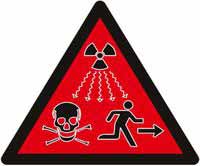 Race on in the Prairies to solve isotope shortage
Acsion Industries, University of Winnipeg say their cheap solution could be running in three years
The Globe and Mail 1 August 09
“…………………the smaller operation could be up and running inside three years, with little regulatory hassle, and for the bargain-basement price of $35-million……………………………I don’t think you’ll find another expression of interest that combines so clearly a health-care focus and a low cost. We’ll have to be taken seriously.”…………………..
the University of Winnipeg submission offers something completely different.
Under the proposal, researchers would shore up the country’s isotope stocks using a Manitoba-based particle accelerator rather than a nuclear reactor.
Unlike a reactor, a particle accelerator does not produce nuclear waste and would not be subject to the same stringent rules that make reactor construction a decade-long process.
“It’s a completely different technology,” said Jeff Martin, a University of Winnipeg physicist. “The regulatory process is much simpler, and for good reason. For instance, you can shut an accelerator off. With a reactor, that’s tricky.”
To carry out the proposal, the university has launched the Prairie Isotope Production Enterprise (PIPE), a not-for-profit partnership that includes Acsion, the province, the Winnipeg Regional Health Authority and other nuclear and radioisotope companies……………………..
While the Manitoba solution isn’t intended to solve international supply issues, the technology could be exported.
“Once you get it working here,” said Randy Kobes, associate dean of science at the university, “you can franchise it.”
Race on in the Prairies to solve isotope shortage – The Globe and Mail
Financial costs of U.S. nuclear weapons
The Costs of U.S. Nuclear Weapons
mil.news.sohu.com 29 July 09 “..……….This issue brief, based on the 1998 book Atomic Audit: The Costs and Consequences of U.S. Nuclear Weapons Since 1940, examines how and why key decisions were made, what factors influenced those decisions, and whether alternatives were considered. In so doing, it helps explain the process by which an arsenal consisting of just two primitive weapons in 1945 eventually grew to more than 32,000 highly sophisticated ones, what this process cost, and how the costs and consequences of the program were understood by policymakers at the time.
……………….The amount spent through 1996—$5.5 trillion—was 29 percent of all military spending from 1940 through 1996 ($18.7 trillion). This figure is significantly larger than any previous official or unofficial estimate of nuclear weapons expenditures, exceeding all other categories of government spending except non-nuclear national defense ($13.2 trillion) and social security ($7.9 trillion)…………………During this period, the United States spent on average nearly $98 billion a year developing and maintaining its nuclear arsenal.
It is very difficult to comprehend figures of this magnitude. To provide some perspective, consider the following:
$5.8 trillion divided equally among everyone living in the United States equals a bit more than $21,000 per person.
$5.8 trillion in one dollar bills stacked one atop another would stretch 459,361 miles (739,117 kilometers), to the Moon and nearly back…………….
Braidwood nuclear reactor shut down
Braidwood nuclear reactor shut down
Chicago Breaking News 31 july 09
One of the two nuclear reactors at the Braidwood Generating Station was shut down last night and remains offline this morning because of a transformer problem that is preventing the unit from receiving power, an Exelon spokeswoman said………..
The transformer problem triggered an automatic shutdown at the facility 60 miles southwest of Chicago
Revealed: Burma’s nuclear bombshell
Revealed: Burma’s nuclear bombshell
Sydney Morning Herald Hamish McDonald Asia-Pacific Editor August 1, 2009BURMA’s isolated military junta is building a secret nuclear reactor and plutonium extraction facilities with North Korean help, with the aim of acquiring its first nuclear bomb in five years, according to evidence from key defectors revealed in an exclusive Herald report today.
The secret complex, much of it in caves tunnelled into a mountain at Naung Laing in northern Burma, runs parallel to a civilian reactor being built at another site by Russia that both the Russians and Burmese say will be put under international safeguards……………………………..
Washington is increasingly concerned that Burma is the main nuclear proliferation threat from North Korea, after Israel destroyed in September 2007 a reactor the North Koreans were apparently building in Syria.
The Health Costs of U.S. Nuclear Weapons
The Costs of U.S. Nuclear Weapons
mil.news.sohu.com 29 July 09……………….Environmental and Health Costs
“…………..one great irony of the Cold War is that although the United States produced nuclear weapons en masse to destroy the Soviet Union, and vice-versa, the principal victims of each country’s nuclear weapons were its own citizens.From the very beginning, nuclear officials dealt with the problem of nuclear waste by devising interim rather than long-term solutions…………………..
………millions of gallons of wastes leaked into the ground. Hanford officials insisted for years that it would take centuries for the waste to reach the groundwater underneath the site. In fact, it was only a matter of decades before their optimistic assumptions were proven wrong.
“…………………..A major reason why the United States today faces a “cleanup” bill of at least $300 billion is that problems such as the Hanford waste tanks were ignored in favor of maintaining or increasing production of nuclear weapons. Production was the first priority of the government. Making sure it was done in a manner that did not unnecessarily hurt people or destroy the environment was a distant second. Had the government thought through more carefully the consequences of unrestrained production of plutonium and highly-enriched uranium, many of the problems—and bills—we face today could have been avoided or substantially mitigated. It now appears that in a number of cases, no effective “cleanup” will be possible and highly-contaminated sites will simply have to be fenced off and monitored for generations………….…A number of the 600,000 people who worked in a nuclear weapons facility were exposed to unnecessarily high levels of radiation. Exposure to toxic chemicals was also high. At several facilities, no consistent records were kept of employee radiation exposures. At at least one, plant officials entered false readings into dosimetry logs. When workers fell ill and applied for worker’s compensation, the DOE spent millions of dollars on lawyer’s fees to avoid paying out even a single claim, out of fear that paying one claim would open the floodgates to lawsuits and increase calls for stricter health and safety measures, which would necessarily drive up costs and impede production of more weapons………………
……..Uranium miners, many of whom were Navajo, developed lung cancer after working in unvented mines without respirators or any sort of protective gear. Government officials were well aware of the dangers to the workers, but chose to ignore them to keep production high and the price of uranium low.
Extreme secrecy on U.S. Nuclear Weapons impedes democracy
The Costs of U.S. Nuclear Weapons
mil.news.sohu.com 29 July 09
“……………………The extreme secrecy surrounding almost everything concerning nuclear weapons impeded effective democratic debate for decades. During the earliest years of the program, the AEC simply presented a budget to Congress with little or no detailed justification for how the money would be spent and why. The fundamental issue of how U.S. nuclear weapons would be used and how the requirements for deterrence were developed was never adequately explored during the early years when the basic framework for the program was being established. One result of this is that U.S. officials systematically failed to anticipate how the Soviet Union would perceive the U.S. buildup and how it would drive the Soviets to respond with its own provocative programs. Finally, pork barrel politics (the use of government programs by elected representatives to enrich their constituents) was an important underlying factor as well…………………………..Funding something connected to the defense of the nation required less justification and was more immune to careful scrutiny than a non-military program. Nuclear weapons programs became an important means of support for the otherwise poor and mostly rural communities where production facilities were located. In time, these communities became dependent, to varying degrees, on their local nuclear facilities, to the extent that local officials (and many workers) often downplayed the health and environmental risks they posed……………..
………..As a result of the Cold War and the imperatives of the nuclear standoff, this aspect of the American economy resembled the economy of the Soviet Union, in which decisions were made on a planned basis by a remote government, without reference to market forces, behind closed doors, for reasons that would not be made public
US Lawmakers Concerned about ‘Reset’ of US-Russia Relations
US Lawmakers Concerned about ‘Reset’ of US-Russia Relations
Voice of America
By Dan RobinsonCapitol Hill31 July 2009
“………………Questions about where the U.S.-Russia relationship is going are many, ranging from arms control, missile defense and nonproliferation and Iran’s nuclear program, to cooperation in counter-terrorism and U.S. concerns about human rights and media freedom in Russia.Among questions: How can the U.S. work with Russia to persuade Iran to end its uranium enrichment program?……………………………
Assistant Secretary Gordon told lawmakers that the Obama administration has told Russia that sales of sophisticated arms, including an anti-aircraft system, to Iran would be a real problem in bilateral ties.On Iran’s nuclear program, Gordon noted that Russia has agreed to a joint threat assessment on ballistic and nuclear issues to include an examination of Iranian efforts.
He said one of the objectives of a U.S government inter-agency team visiting Moscow is to share the U.S. analysis, and persuade Russia that pressure must be increased if Iran fails to respond positively and soon on the issue.
VOA News – US Lawmakers Concerned about ‘Reset’ of US-Russia Relations
Nuclear reprocessing does not belong in a Climate bill
STOP GLOBAL WARMING
Bill Fowlie
1 August 09
Some members of Congress think they have the answer to what to do with high-level radioactive waste: “reprocessing”. Nuclear reprocessing separates plutonium and uranium from spent nuclear reactor fuel. Supporters of this costly and dangerous technology want to add reprocessing provisions to the Senate climate bill that is planned to be debated this fall.Reprocessing would cost taxpayers hundreds of billions of dollars, undermine U.S. nonproliferation policy, pollute the environment, and threaten public health. According to the National Academy of Sciences, the cost of reprocessing existing spent fuel in the United States would total more than $500 billion.
The development of reprocessing technology in the US would make it harder to prevent other countries from pursuing this nuclear weapons technology. Moreover, reprocessing complicates the nuclear waste problem, rather than solves it. Reprocessing is the most polluting part of the nuclear fuel cycle and actually increases the amount of waste that must be managed.
Radiation danger to Denver Federal Center workers
Denver Federal Center workers may be putting health at risk
FOX 31 Heidi Hemmat KDVR Investigative ReporterJuly 30, 2009
“……………..Dean says many of his co-workers died of the same type of cancer.Dean believes the cancer was caused the contamination at his work site.
The Denver Federal Center used to be a burial ground for radioactive waste. Uranium, arsenic and other toxins are still present in the soil. The ground water is also radioactive and filled with the cancer causing chemical TCE.
But many of the workers there didn’t know about the hazardous waste until they saw our report on FOX 31 News……………..
FOX 31 medical analyst Doctor John Torres says the health risks of working in a contaminated environment are very real. He says long term exposure to TCE can cause, ” lung cancer, liver cancer, testicular and lymphoma.”
He also says arsenic and uranium can lead to heart problems, central nervous system issues, even death.
Denver Federal Center workers may be putting health at risk – KDVR
GThe folly of ‘magical solutions’ for targeting carbon emissions
The folly of ‘magical solutions’ for targeting carbon emissionsSetting unattainable emissions targets such as in the UK is not a policy — it’s an act of wishful thinking, argues one political scientist.
guardian.co.uk 31 july 09
“…………………..What is missing from the debate over targets and timetables is any conception of the realism of such proposals. If a proposal is not realistic, it is not really a policy proposal but an exercise in symbolism, a “magical solution.”…………..
…………………outcome is highly problematic for those who actually care about the substance of climate policy proposals.…………The U.K. targets are a perfect example of what happens when symbols become disconnected from reality. To achieve a 34 percent reduction from 1990 emissions by 2022…………….ritain would have to achieve the equivalent of deploying about 30 new nuclear power plants in the next six years, just to get part way to its target. One does not need a degree in nuclear physics to conclude that is just not going to happen…………………..
…Emissions reduction has its own simple arithmetic. In the context of modest economic growth, emissions are reduced when energy efficiency improves and/or when energy supply is decarbonized. A direct approach to efficiency and expansion of low-carbon energy is much preferable to the indirect approach enshrined in current policies. A low carbon tax (priced as high as politically possible) could be used to raise funds to invest in technological innovation and deployment.
1 This Month


18 March Webinar @ 1 PM EST: An Assessment of SMR Projects: The Case of Canada
register for the zoom:
https://us02web.zoom.us/webinar/register/WN_o8BIIOUvQ2ONJR1nta65DQ#/registration


of the week – STOP SMALL MODULAR REACTORS IN CANADA
To see nuclear-related stories in greater depth and intensity – go to https://nuclearinformation.wordpress.com
-
Archives
- March 2026 (129)
- February 2026 (268)
- January 2026 (308)
- December 2025 (358)
- November 2025 (359)
- October 2025 (376)
- September 2025 (258)
- August 2025 (319)
- July 2025 (230)
- June 2025 (348)
- May 2025 (261)
- April 2025 (305)
-
Categories
- 1
- 1 NUCLEAR ISSUES
- business and costs
- climate change
- culture and arts
- ENERGY
- environment
- health
- history
- indigenous issues
- Legal
- marketing of nuclear
- media
- opposition to nuclear
- PERSONAL STORIES
- politics
- politics international
- Religion and ethics
- safety
- secrets,lies and civil liberties
- spinbuster
- technology
- Uranium
- wastes
- weapons and war
- Women
- 2 WORLD
- ACTION
- AFRICA
- Atrocities
- AUSTRALIA
- Christina's notes
- Christina's themes
- culture and arts
- Events
- Fuk 2022
- Fuk 2023
- Fukushima 2017
- Fukushima 2018
- fukushima 2019
- Fukushima 2020
- Fukushima 2021
- general
- global warming
- Humour (God we need it)
- Nuclear
- RARE EARTHS
- Reference
- resources – print
- Resources -audiovicual
- Weekly Newsletter
- World
- World Nuclear
- YouTube
-
RSS
Entries RSS
Comments RSS
 nuclear-news