America’s Secret Chernobyl – Uranium Mining & Pollution in the Upper Midwest
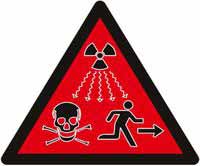 RUDSSELL MEANS FREEDOM July 27, 2009
“………………In northwestern South Dakota, the Cave Hills area is managed by the US Forest Service. The area currently contains 89 abandoned open-pit uranium mines. Studies by the USFS show that one mine alone has 1,400 millirems per hour (mR/hr) of exposed radiation, a level of radiation that is 120,000 times higher than normal background of 100 millirems per year (mR/yr)! In the southwestern Black Hills, the US Forest Service reported on 29 abandoned open-pit uranium mines, one of which is about 1 square mile in size.
It is estimated that more than 1,000 open-pit uranium mines and prospects can be found in the four state region from a map developed by the US Forest Service. The water runoff from the creeks and rivers near these abandoned uranium mines eventually empties into the Missouri River which empties into the Mississippi River…………………
This Fact Sheet regarding past and planned uranium and coal mining in the Upper Midwest region should give cause for alarm to all thinking people in the United States. This is the area that has been called “the Bread Basket of the World.” For more than forty years, the people of South Dakota and beyond have been subjected to radioactive polluted dust and water runoff from the hundreds of abandoned open pit uranium mines, processing sites, underground nuclear power stations, and waste dumps.
There needs to be a concerted effort to determine the extent of the radioactive pollution in the environment, and the health damage that has been and is currently being inflicted upon the people of the United States.
America’s Secret Chernobyl – Uranium Mining & Pollution in the Upper Midwest : Russell Means Freedom
Nuclear power? – financially a failure
Following the Money
THE ENERGY GRID July 27, 2009 by James Hrynyshyn
“………………….Just about every time I give a presentation on climate change, someone in the audience will ask why I haven’t devoted much attention to the potential contribution of nuclear power. After all, it’s (almost) carbon neutral and it’s one of the only existing technologies that can produce baseload electricity (unlike PV solar and wind).My response is always the same: Assuming we are willing to find a way to deal with the relatively modest waste and weapons proliferation issues, we still have to acknowledge that nuclear power generation is hideously expensive.Joe Romm’s posts are among the best at laying out just how expensive. The cost of a gigawatt of generating capacity for a new plant just keeps going up. From $4 billion, to $7 billion to $10 billion, depending on the technology involved. There’s a reason why no nuclear power plants have been ordered in 30 years and Three Mile Island isn’t an excuse anymore………………………..
Wind is now cheaper the nuclear, even though you have to build three times the capacity to account for the fact that the wind only blows strong enough a third of time. And baseload power can be supplied by concentrated solar-thermal plants, in which heat is stored in fluids for release at night. So why spend the extra money when competing technologies are less expensive?
A related problem is the ever-changing regulatory and economic context. In order to invest the huge upfront sums of money required by nuclear plants, utilities need to know what kind of world they’ll be operating in for decades to come. They simply don’t have that when it comes to nuclear power. Costs are always rising, and environmental restrictions are ever tightening.
Preparing for a nuclear fallout?
Preparing for a nuclear fallout?
LINEX Legal ource: Herbert Smith LLP –
Key points include: No reason was put forward for not affording nuclear sector specialists the same protections as the wider membership of the construction industry / Government has now given the go-ahead for a new generation of power stations, and the sheer size and complexity of these operations is bound to give rise to disputes / The courts have grappled with the problem of making a distinction between construction work falling within the provisions of the HGCRA 1996 and outside.
Linex Legal > Herbert Smith LLP > Preparing for a nuclear fallout?
Nuclear Regulator Says Waste Isn’t An “Urgent” Problem
Nuclear Regulator Says Waste Isn’t An “Urgent” Problem
The Business Insider Jay Yarow|Jul. 23, 2009,
“………….Finding a permanent site for spent nuclear fuel in the U.S. isn’t “an urgent problem,” the head of the Nuclear Regulatory Commission said…………. he’s wrong that it’s not an urgent problem.Over the past two decades, the government gathered billions of dollars from utilities for a national storage facility. That facility was supposed to be Yucca Mountain, which was eliminated earlier this year. The power companies have spent billions of their own dollars on storage facilities.
Utilities are suing the government for $11 billion. While the government twiddles its thumbs trying to come up with a solution, this problem only gets worse.
Unholy trinity
Unholy Trinity
ON LINE opinion by Bill Williams 28 July 09
“……………………..We have just entered the 65th year of humanity’s troubled relationship with nuclear arms, the world’s worst weapons of terror. So it’s a good time to be promoting their retirement and for Australia to be using every tool in its diplomatic kitbag to encourage the nine Nuclear Weapons States (NWS) to negotiate and implement a global treaty that eliminates their nukes once and for all.On July 16, 1945 the Americans detonated their first nuclear weapon – the “Trinity” test – in the New Mexico desert, prompting its mastermind Robert Oppenheimer to recall the words of Vishnu in the Bhagavad-Gita: “I am become death, the destroyer of worlds.”
This fantastic power was unleashed upon the residents of the Japanese city of Hiroshima just three weeks later, at 8.15 on the morning of August 6, when the uranium-bomb – “Little Boy” – exploded above the city: by nightfall about 70,000 people were dead and since then an estimated further 180,000 have died. The cancer rates among the ageing survivors continue to rise even today.
But we all still live in the shadow of nuclear Armageddon. There remain 23,000 nukes in the arsenals of the nine Nuclear Weapons States (NWS): Russia, USA, UK, France, China, Israel, India, Pakistan and now North Korea. Two thousand five hundred of these weapons are retained on high-alert status, capable of launch within 15 minutes – and there’s no bringing them back. Meanwhile the risk of other nations joining the “club” is on the increase, with the current focus being on Iran. Bear in mind, however, that at least 44 nations have nuclear bomb-making capabilities, including all those states with civil nuclear power plants, which are producing plutonium as a fission byproduct in those reactors.
1 This Month

of the week – Shut Down Drone Warfare!


Tell the Ukrainian Government to Drop Prosecution of Peace Activist Yurii Sheliazhenko

Petition to revoke the licensing of the Near Surface Nuclear Disposal Facility (NSDF) at Chalk River. https://www.ourcommons.ca/petitions/en/Petition/Details?Petition=e-7247
To see nuclear-related stories in greater depth and intensity – go to https://nuclearinformation.wordpress.com
-
Archives
- April 2026 (68)
- March 2026 (251)
- February 2026 (268)
- January 2026 (308)
- December 2025 (358)
- November 2025 (359)
- October 2025 (376)
- September 2025 (257)
- August 2025 (319)
- July 2025 (230)
- June 2025 (348)
- May 2025 (261)
-
Categories
- 1
- 1 NUCLEAR ISSUES
- business and costs
- climate change
- culture and arts
- ENERGY
- environment
- health
- history
- indigenous issues
- Legal
- marketing of nuclear
- media
- opposition to nuclear
- PERSONAL STORIES
- politics
- politics international
- Religion and ethics
- safety
- secrets,lies and civil liberties
- spinbuster
- technology
- Uranium
- wastes
- weapons and war
- Women
- 2 WORLD
- ACTION
- AFRICA
- Atrocities
- AUSTRALIA
- Christina's notes
- Christina's themes
- culture and arts
- Events
- Fuk 2022
- Fuk 2023
- Fukushima 2017
- Fukushima 2018
- fukushima 2019
- Fukushima 2020
- Fukushima 2021
- general
- global warming
- Humour (God we need it)
- Nuclear
- RARE EARTHS
- Reference
- resources – print
- Resources -audiovicual
- Weekly Newsletter
- World
- World Nuclear
- YouTube
-
RSS
Entries RSS
Comments RSS
 nuclear-news