There really ARE necessary nuclear industry jobs – IN DEMOLISHING NUCLEAR REACTORS!

Dounreay to take on 23 new apprentices
One of Britain’s most complex environmental restoration projects is taking on 23 new apprentices.
Nuclear Restoration Services and Nuclear Decommissioning Authority 13 February 2025,
https://www.gov.uk/government/news/dounreay-to-take-on-23-new-apprentices
The decommissioning of the former centre of fast reactor research and development at Dounreay is continuing to create long-term opportunities for young people.
Applications are open for the next intake of apprentices, with 23 places in total available.
The apprenticeships are in engineering trades, engineering design, construction scaffolding, construction painting, business administration and project management, and vary in length from two years to four years.
The closing date for applications is 14 to 21 February, with start dates in August.
Dounreay’s operator, Nuclear Restoration Services, is also in the process of recruiting 9 health physics surveyor trainees.
Their 2-year training programme equips them with an NVQ Level 2 Diploma in Radiological Protection.
Dounreay also has 15 places this year for graduate recruitment. Applications for these posts closed on 6 January.
More information about the opportunities at Dounreay can be found at the site’s careers website at www.dounreaycareers.com.
Dounreay has a long and proud history of high-quality training for young people across a wide range of disciplines and I’m delighted we are able to continue this during the decommissioning phase of the site,
said Dave Wilson, managing director of NRS Dounreay.
The site is complex, its decommissioning is challenging and we can offer superb training and development opportunities at the cutting edge of science and engineering.
Japan to pick final disposal sites for Fukushima soil around 2030

The Environment Ministry plans to decide around 2030 or later where to finally dispose of soil removed from the ground during decontamination work after the March 2011 disaster at Tokyo Electric Power Company Holdings’ Fukushima No.1 nuclear power plant, it was learned Wednesday.
The plan was included in a draft timetable for the final disposal of such soil outside Fukushima Prefecture by March 2045, presented by the ministry at a meeting of a related expert panel on the day. The ministry will consider a process for selecting final disposal sites from fiscal 2025.
As of the end of December, about 14 million cubic meters of such soil had been transported to an interim storage facility straddling the Fukushima towns of Okuma and Futaba.
Three-quarters of the soil had radiation concentrations of 8,000 becquerels per kilogram or less and will be reused in public works, while the rest will be subject to final disposal.
Final disposal sites are estimated to require up to 50 hectares if the volume of the soil is not reduced, or 2 to 3 hectares if the volume is reduced. Meanwhile, radiation levels would be higher in the reduced soil.
The government is slated to draw up a basic plan as early as this spring for reusing some of the soil and finally disposing of the rest.
TEPCO takes on challenge of making space for Fukushima nuclear debris
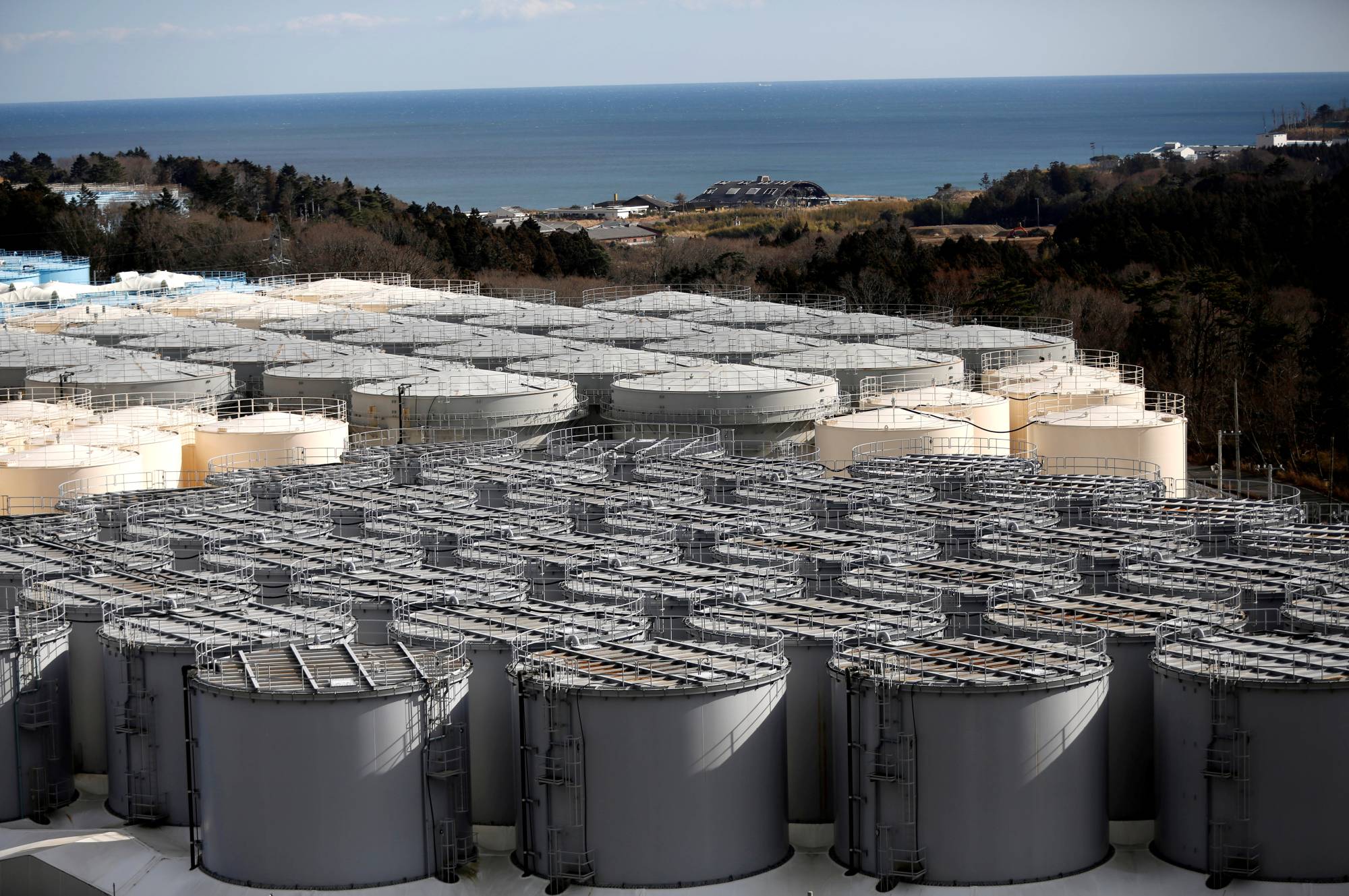
Fukushima Daiichi Nuclear Power Plant (Japan) (AFP) – Workers at Japan’s crippled Fukushima nuclear plant have started dismantling water storage tanks to free up space for tonnes of nuclear debris, 14 years after the facility was hit by a devastating tsunami.…………………….
France24 15th Feb 2025, https://www.france24.com/en/live-news/20250215-tepco-takes-on-challenge-of-making-space-for-fukushima-nuclear-debris
Trouble at t’mill: local Councils rebel over nuke dump plan
The NFLAs have welcomed today’s statement made by the Leader of East Lindsey District Council that he shall recommend to his Executive that they ‘unanimously withdraw’ the council from the Theddlethorpe Community Partnership and the GDF process at their next meeting.
Coupled with the withdrawal of Millom Town Council from the South Copeland GDF Community Partnership and condemnation by Seascale Parish Council of the imposition of an Area of Focus for Mid-Copeland east of the village, this demonstrates that there is increasing disaffection amongst politicians with the process.
In his statement, ELDC Council Leader Craig Leyland cited the change of prospective site for a possible GDF surface facility from the former Theddlethorpe Conoco gas terminal to a 4km square parcel of farmland between the inland villages of Gayton le Marsh and Great Carlton. This he describes as prime agricultural land that has not had any previous industrial use and that is ‘nestling close to the Lincolnshire Wolds Area of Outstanding Natural Beauty’…………….
NFLA 12th Feb 2025,
https://www.nuclearpolicy.info/news/trouble-at-tmill-local-councils-rebel-over-nuke-dump-plan/
Nuclear waste plan ‘would scar Lincolnshire Wolds’
BBC UK Sharon Edwards, Political reporter, Lincolnshire, 12th Feb 2025
A council is set to withdraw from talks to bury nuclear waste in the countryside.
Nuclear Waste Services (NWS), a government body, has earmarked an area near Louth, Lincolnshire, to build a disposal facility.
However, East Lindsey District Council (ELDC) leader Craig Leyland said the scheme would “scar” agricultural land, and a consultation process had served only to “antagonise and distress” residents.
NWS thanked the district council for taking part in the talks and said it would continue working with Lincolnshire County Council.
In 2021, the district council joined a community partnership group with NWS to examine a previous proposal to bury waste at a former gas terminal in Theddlethorpe, near Mablethorpe.
Last month, NWS announced it had moved the proposed location of the facility to land between Gayton le Marsh and Great Carlton.
But Leyland said the new proposal would “scar several kilometres of Lincolnshire farmland on the margins of the Lincolnshire Wolds”.
He also said the consultation process had “not been effective” and the council had not been given all the information it needed from NWS.
East Lindsey councillors will be asked to formally vote to withdraw from the consultation.
‘A key role’
The move will not automatically kill the plan, which requires “community consent” to go ahead, as NWS is still working with the county council……………………………
Lincolnshire County Council (LCC) remains in the process, but leader Councillor Martin Hill said the authority shared some of ELDC’s concerns about the new location…………………………….
https://www.bbc.co.uk/news/articles/cnvqljq77p0o
Kansai Electric to ship more spent nuclear fuel to France

Fukui Japan Times 9th Feb 2025 https://www.japantimes.co.jp/news/2025/02/09/japan/japan-more-spent-nuke-fuel-to-france/
Kansai Electric Power is working to double the amount of spent nuclear fuel it will ship to France, increasing it by about 200 tons, informed sources said.
The move comes as Fukui Prefecture, home to several nuclear plants, urges Kansai Electric to address shrinking storage capacity for spent nuclear fuel, the sources said.
In 2023, Kansai Electric announced a plan to ship about 200 tons of the fuel from its Takahama plant in Fukui to France starting in fiscal 2027. Based on the Japanese government’s policy, the spent fuel will be used for research on technology to reprocess uranium-plutonium mixed oxide, or MOX, fuel.
At the Takahama plant, about 90% of the spent fuel storage capacity has already been used, and that amount is expected to reach the upper limit in about three years.
About 200 tons of spent fuel will be generated if the No. 1 to No. 4 reactors at the plant are operated for about three years. Kansai Electric has restarted all of its seven nuclear reactors.
The company initially planned to send spent fuel mainly to a reprocessing plant to be built in Aomori Prefecture, but the completion of the facility has been postponed.
Last September, the company notified Fukui Gov. Tatsuji Sugimoto of its intention to review the plan, and said that it would halt three reactors in the prefecture if it fails to come up with a proposal that can win the understanding of officials there by the end of fiscal 2024.
Council votes to end Holderness nuclear waste talks
22 February 2024, Richard Madden & David McKenna, BBC News
Councillors have voted to immediately pull out of talks over the siting of a nuclear waste disposal facility in East Yorkshire.
Nuclear Waste Services (NWS) had identified South Holderness as a potential area for a Geological Disposal Facility (GDF).
East Riding of Yorkshire Council said it had listened to the public and decided to withdraw.
NWS said it would now “wind down” the South Holderness proposal.
The proposal to pull out of the talks had been put forward by two Conservative councillors, Lyn Healing and Sean McMaster, and was voted through almost unanimously at a full council meeting on Wednesday.
Beverley and Holderness MP, Graham Stuart, said he was “delighted” at the result of the vote.
‘Hare-brained idea’
Ms Healing told the meeting she was concerned about safety and the impact on tourism and farming due to the area becoming industrialised.
She said both she and Mr McMaster had received hundreds of messages from concerned residents.
Speaking ahead of the vote, Councillor Denis Healy, Liberal Democrats, said local residents had “unequivocally” rejected the idea.
“So, let’s just show our residents the respect they deserve and give them our verdict on this hare-brained idea right now,” he added.
A GDF consists of a series of vaults and tunnels deep underground, or under the sea, where the material would be buried.
NWS, which had claimed a GDF would create thousands of jobs and opportunities for investment in infrastructure, said it “fully respected” any decision taken by the authority…………………………………… https://bbc.com/news/uk-england-humber-68350061
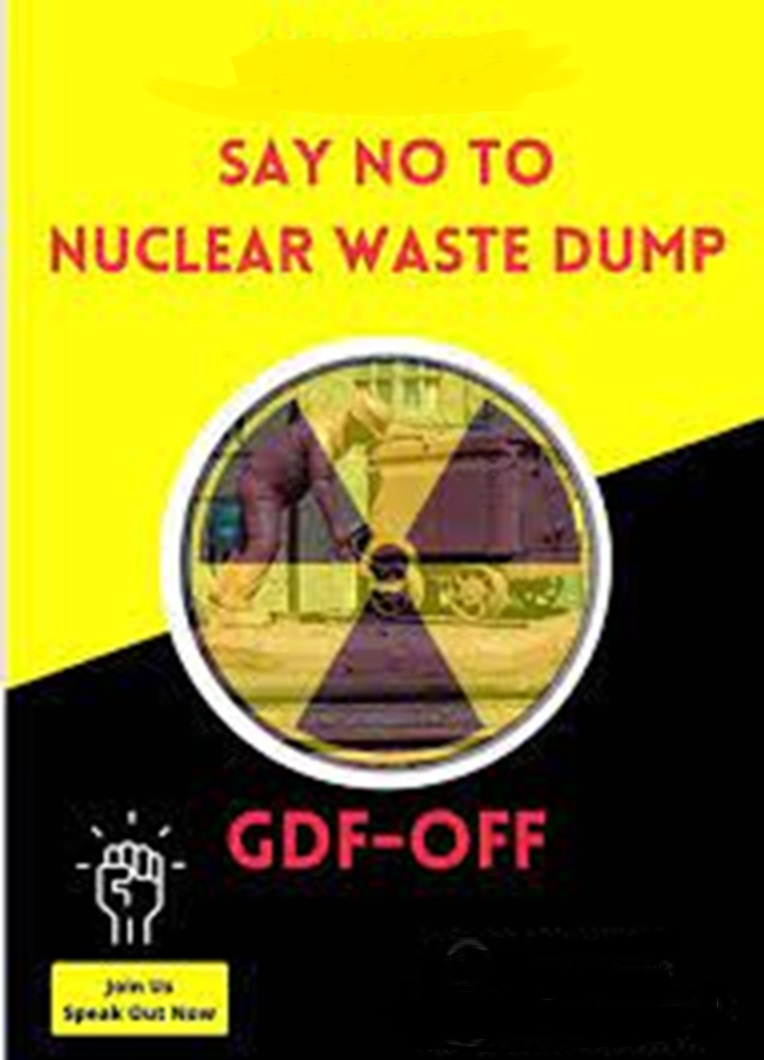
Nuclear Dump “Reveal” of “Areas of Focus.” A Nuclear Dump Anywhere is a Nuclear Dump Everywhere – #GDFOFF.
On By mariannewildart,
https://mariannewildart.wordpress.com/2025/02/04/nuclear-dump-reveal-of-areas-of-focus-a-nuclear-dump-anywhere-is-a-nuclear-dump-everywhere-gdfoff/
Nuclear Waste Services have “revealed” their “Areas of Focus” for Mid-Copeland and South Copeland along with Lincolnshire.
This is not so much of a reveal as now being more upfront with the maps which were previously obtuse so as not to scare the horses grazing happily on premium hay courtesy of the “bribes”.
Nuclear Free Local Authorities have produced a press release below which assumes that “Drigg has been spared” for now at least. This is unfortunately exactly what Nuclear Waste Services want folk to think. The reality is that Drigg is being eyed up for for so called “Near Surface Disposal” 10s of metres below ground for Intermediate Level Wastes, these are the wastes that were refused at the NIREX inquiry for a dump 1000 metres below ground, however, the inquiry found the wastes would percolate to the surface faster than the nuclear industry had forcast. At 10s of metres below ground the rate of percolation would be even faster!
Mark Kirkbride (the coal mine boss) has produced costings for the Committee on Radioactive Waste Management/Nuclear Decommissioning Authority for the “co-disposal” of Intermediate and High Level nuclear wastes. This would involve a dump for Intermediate Level Wastes underground with the above ground sprawl and drift tunnels also being used to access a sub-sea Geological Disposal Facility.
“Exploratory” boreholes have already been drilled for “Near Surface Disposal” of Intermediate Level Wastes at Drigg. The “tandem” plan to “co-locate” a Near Surface Disposal Facility for Intermediate Level Nuclear Wastes which would be fully delivered in 10 years ie within the lifetimes of many of the people within the so called Community Partnerships now. The Nuclear Decommissioning Authority have stated in their 2020 position paper on Near Surface Disposal that “The assessment of disposal costs has been made on the assumption that a nearer- surface disposal facility ..would be co-located with a GDF.” Lakes Against Nuclear Dump say that “Drigg would be the politically expedient choice for co-location given that the community has already been in receipt of decades worth of funding for the ongoing blight caused by hosting the Low Level Waste Repository.”
At a GDF drop in event at Drigg we were told that “the Near Surface Disposal Plan for Intermediate Level Wastes has nothing to do with a GDF.” Mmmm Rather like the hot plutonium now nonchalantly earmarked for a GDF? Boy does this industry love mission creep. Our report on the shifting sands of nuclear waste dumping is here outlining the Drigg plan
Here are the newly released “Areas of Focus” with Drigg being “spared” – yeah right we believe you. No area is safe – the only sane response is to oppose a geological disposal facility aka deep hot nuclear dump anywhere – all would be impacted.
The following press release is from Nuclear Free Local Authorities who have given a good summary of Nuclear Waste Services “Areas of Focus,” the veil is slipping. The “Areas of Focus” are for the surface nuclear sprawl which would blight towns and villages on the Lake District coast but not within the National Park. For this intergenerational toxic blight there is proposed a single “Test of Public Support” for a limited area and excluding the wider region for what would be the biggest and most dangerous infrastructure project in the UK. Nuclear Waste Services want to give the impression that “Drigg has been spared” – but we say buyer beware – Drigg may be the gateway to GDF via so called Near Surface Disposal of the high end of Intermediate Level Wastes 10s of meters below ground. The only sane response is to oppose this plan.
Continue readingFury over switch of possible nuclear waste dump site to village land near Louth
A previous survey revealed that 85 per cent of local residents were against the dump, which would store nuclear waste beneath up to 1,000 metres of solid rock until its radioactivity naturally decayed.
By Richard Silverwood, 3rd Feb 2025,
The bombshell news that a nuclear waste dump could now be built on greenfield land close to Louth has been greeted with dismay by campaigners and the town’s MP.
East Lincolnshire has long been identified as one of three potential locations for the dump, known as a GDF (geological disposal site).
And the government agency, Nuclear Waste Services (NWS), charged with finding a suitable area, has focused its attention on the former gas terminal site, operated by Conoco, within the coastal village of Theddlethorpe.
But now NWS has announced that it is looking inland and “beyond Theddlethorpe”. Instead, it is “prioritising” largely agricultural land to the north of the A157 road, between the villages of Gayton le Marsh and Great Carlton and south-west of Gayton Wind Farm.
A network of underground vaults and tunnels would transfer shipments of waste to a sealed storage area under the seabed which would extend 22 kilometres from the coast.
NWS insists nothing has been decided and has promised to keep all residents informed. A series of webinars and public drop-in events is already under way and will continue throughout February.
However, opponents of the dump, led by Conservative MP Victoria Atkins, are furious and are calling for a public vote on the entire scheme.
Ms Atkins said: “I have opposed the threat of a nuclear waste dump on the Lincolnshire coast since the proposal came to light several years ago.
“In that time, residents have had to live with the uncertainty, worry and financial costs of having this monstrous carbuncle threatened in their area.
“People have been left in limbo and have had their house prices severely impacted by these proposals.
“This latest news will be very distressing for the residents in and around the area. Rest assured, I will be meeting NWS in the coming week to continue to put pressure on them to move their focus away from Lincolnshire entirely………………………
The campaign group, Guardians Of The East Coast, has also lambasted the latest proposal, claiming the switch has been made because the Theddlethorpe site would not be large enough.
Chairman Mike Crookes said the fresh site would span 900 acres of agricultural land, including at least one farm. He called on Lincolnshire County Council to withdraw their apparent engagement with the dump scheme process.
“The council has expressed its outrage at agricultural land being taken for solar farms and pylons by National Grid,” Mr Crookes said.
“But it seems perfectly happy with a square mile of agricultural land being used to bury high-level nuclear waste, including weapons-grade plutonium.
“When the project was first announced, the council said it was policy to make use of ‘brownfield’ sites such as the gas terminal.
“But if it has a policy of opposing the industrial use of agricultural land, why is it apparently facilitating this project?”
Another group firmly against the nuclear waste dump is the Nuclear Free Local Authorities (NFLA), whose secretary Richard Outram described the fresh site as “worse than the original”.
“The news will have come as a tremendous shock to the residents of Gayton le Marsh and Great Carlton, where the threat of a dump suddenly appears writ large.
“Those residents are already up in arms and, doubtless in the coming days, new protest groups will be formed to represent the people affected.
“It is important to emphasise that the decision on the final site for a GDF is still a long way off. There is still time to organise and fight back.”
Coun Travis Hesketh, who represents the ward of Withern and Theddlethorpe on East Lindsey District Council, said residents were demanding a public vote – and this year, not in 2027 as previously promised.
A previous survey revealed that 85 per cent of local residents were against the dump, which would store nuclear waste beneath up to 1,000 metres of solid rock until its radioactivity naturally decayed.
However, NWS is hoping to win people over and has set up a community partnership group to fully explain the scheme.
Hidden history of RAF airfield may be lost in latest nuke dump plan
The latest announcement by Nuclear Waste Services making the site of RAF
Millom part of the Area of Focus in South Copeland may lead to the airfield
and its rich wartime history being lost to a nuclear waste dump.
NFLA 4th Feb 2025, https://www.nuclearpolicy.info/news/hidden-history-of-raf-airfield-may-be-lost-in-latest-nuke-dump-plan/
AI’s Energy Demands Threaten a Nuclear Waste Nightmare
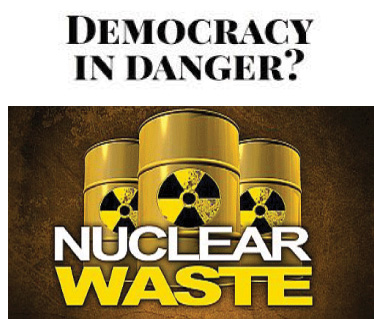
Reviving nuclear power plants to power AI threatens an avalanche of nuclear waste
By Michael Riordan , https://www.scientificamerican.com/article/ais-energy-demands-threaten-a-nuclear-waste-nightmare/ January 31, 2025
Long in decline, the U.S. nuclear industry is hoping for resurrection at two sites of its greatest failures: Three Mile Island in Pennsylvania and the Hanford Site in Washington state. Nuclear power, the industry claims, will help satisfy the surging power demands from data centers and the growing AI economy. But such a wrong turn ignores the long-unresolved problems of radioactive nuclear wastes that AI cannot wish away.
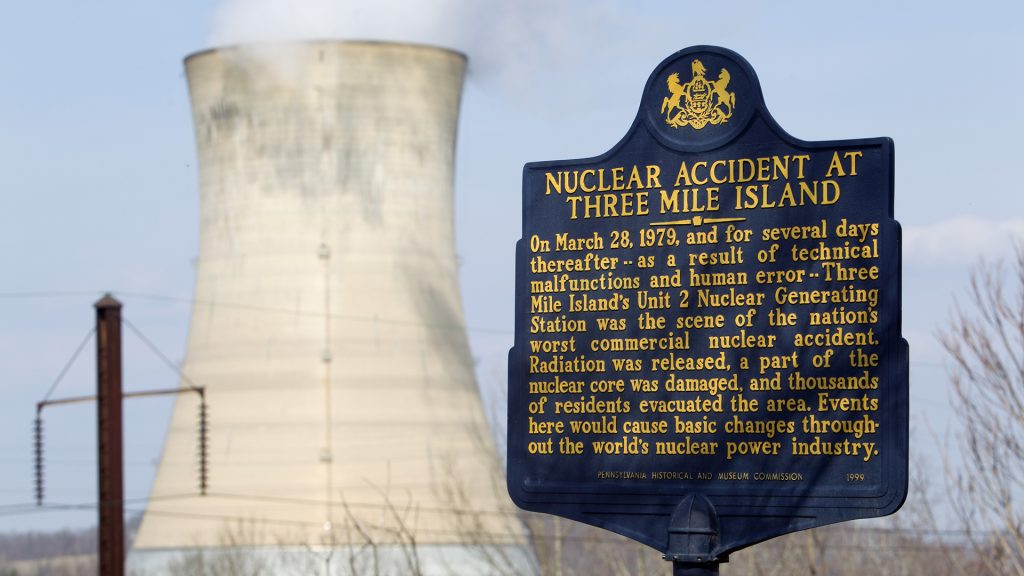
In September Constellation Energy announced plans to restart a shuttered reactor at Three Mile Island, prodded by Microsoft, which will need many gigawatts of power to perform extensive AI calculations in its expanding fleet of data centers. Amazon followed suit and announced in November that it will invest $334 million to develop small modular nuclear reactors (SMRs) at Hanford, site of the world’s first plutonium-production facility.

Google and Meta are also hoping to bring nuclear power back. In October 2024 Google announced it eventually plans to purchase 500 megawatts of electricity from Kairos Power, which is developing a novel SMR in Oak Ridge, Tenn., on the site of the national lab that long refined uranium for the nuclear industry. And Facebook parent Meta is seeking bids for nuclear power plants for its data centers.
These tech giants recognize that the next generation of microprocessors to be used for AI calculations at data centers will require oodles of electricity to power and cool them. A single Nvidia Blackwell chip, for example, can draw up to two kilowatts, more than what is needed for a typical house. Cram thousands of them in servers inside a data center, and they will need as much power as a small city.

So-called hyperscale data centers require over 100 megawatts (100 MW)—a sizeable fraction of the output of a major power plant. And that power should be cheap, steady and reliable.
An authoritative December 2024 report from the U.S. Department of Energy, written by energy experts at the Lawrence Berkeley National Laboratory, is especially illuminating. The growth in U.S. data-center energy usage over the next five years, they state, would correspond “to a total power demand for data centers between 74 and 132 [gigawatts].” That would represent some 7 to 12 percent of the U.S. electricity consumption forecast for 2028.
Where on Earth is all this power going to come from? Given the challenges electric utilities face in supplying electricity to meet other growing needs, including electric vehicles, it’s small wonder that big tech has turned back to the atomic nucleus. But the power demands outlined in the DOE report would require building or resurrecting the equivalent of at least 40 Three Mile Island reactors over the next five years. That’s impossible.
Several years ago Amazon, Google, Meta and Microsoft promised not to exacerbate atmospheric carbon-dioxide levels. But that laudable goal is becoming increasingly difficult to achieve, given their data centers’ exploding electricity consumption. So they have instead begun touting a return to nuclear power to avert this thorny problem. That’s a huge mistake.
Nuclear power is indeed a source of carbon-emission-free energy, but it is hardly a clean energy source, and it is definitely not renewable. All along the uranium supply chain—from mining to enrichment to the fabrication of fuel rods or pellets—opportunities abound for radioactive releases. In South Texas, for example, landowners worry about contamination of their groundwater by renewed uranium mining activities nearby.
The diagram below illustrates carbon emissions – but the same picture applies also to radioactive emissions

Since 1989, the DOE has spent hundreds of billions of taxpayer dollars cleaning up the original nuclear complex—including the gargantuan Oak Ridge factory that enriched much of the uranium used for commercial nuclear power. And despite decades of trying, the department has yet to fully clean up and dismantle the oozing, disintegrating tanks of highly radioactive wastes left over from plutonium processing at Hanford.

The storage and containment of spent nuclear fuel is in fact the crucial unresolved challenge of the U.S. nuclear industry. Over 90,000 tons of these wastes are stored at 77 sites in 35 states—an amount increasing by over 2,000 tons a year.
Small modular reactors, promoted by Microsoft co-founder Bill Gates and others, will only add to this growing burden. As former U.S. Nuclear Regulatory Commission (NRC) chair Allison Macfarlane and Rodney C. Ewing of Stanford University stated, “In some cases these new reactors may make it worse by creating more waste that’s more costly to manage, new kinds of complex waste, or just more waste, period.”
Elsewhere, Macfarlane stressed the procedural and practical difficulties faced by novel nuclear reactor technologies in gaining NRC acceptance and achieving commercial success. Shortly after it had received NRC certification in 2023, for example, the much-touted NuScale SMR project was abandoned after anticipated construction costs more than doubled to $9.3 billion. Leaving aside the waste problem, a commercially successful SMR design is probably over a decade away.
But the relentless AI gold rush, if left unchecked, will impose unattainable demands on projected power supplies well before that. Meanwhile, electricity rates will rise inexorably in light of the law of supply and demand. That looming energy crisis explains big tech’s efforts to slow shutdowns of fossil-fueled power plants and to resurrect shuttered reactors.
Amazon, Google, Meta and Microsoft executives should instead take a deep breath and begin reevaluating their options. Do they really need to build and upgrade data centers at such a breakneck pace? Or is this devil-take-the-hindmost AI arms race just the result of bitter competition, prodded by recent advances in semiconductor technology?
And what about the truly clean, renewable energy sources they once embraced—especially solar, wind and geothermal? Yes, the variability of solar and wind energy makes them a poor match to the steady power requirements of data centers. But energy storage has come a long way recently and has a promising future. And the recent startling success of the Chinese DeepSeek AI program demonstrates that software efficiency will play an important role in this effort.
Given the dark clouds still lingering over nuclear power, especially its unresolved waste problem, these renewable alternatives deserve renewed consideration.
Threat of nuke dump falls on Cumbrian and Lincolnshire rural communities

NFLA 3rd Feb 2025, https://www.nuclearpolicy.info/news/threat-of-nuke-dump-falls-on-cumbrian-and-lincolnshire-rural-communities/
Residents living in rural villages in West Cumbria and East Lincolnshire will have been shocked to discover that Nuclear Waste Services has its eye on their backyard as the potential location for Britain’s high-level nuclear waste dump.
For contained amidst the detailed announcements made last week by NWS of that organisation’s plans to conduct more intensive investigations in so-called Areas of Focus in the three GDF Search Areas were revelations that several small villages are now potentially threatened by this huge civil-engineering project.
The Geological Disposal Facility will be the final repository for Britain’s historic and future high-level nuclear waste, including redundant nuclear submarine reactors, spent nuclear fuel, and the world’s largest civil stockpile of deadly plutonium. Nuclear Waste Services is charged with finding a forever site for the GDF that combines ‘suitable’ geology and a ‘willing’ community.
The facility will comprise a surface site approximately 1 km square that shall receive regular shipments of nuclear waste. This waste will be transferred downwards along a sub-surface accessway into a network of deep tunnels located between 400 and 1,000 metres below the seabed. Here the waste will be placed in permanent storage with tunnels sealed up as they are filled. The network of tunnels could be between 20 – 50 kms square in area and extend up to 22 kms out from the coast (the UK territorial limit).
Last week, Nuclear Waste Services published three ‘brochures’, which identified specific Areas of Focus within each Search Area that NWS consider may have potential to locate the surface facility, the accessway, and the tunnel network. NWS intends to conduct more intensive investigations in these areas, seeking official approval at a later stage to carry out deep borehole drilling at those sites deemed to be most geologically promising by NWS.
It is in the South Copeland and Theddlethorpe GDF Search Areas that the chosen Areas of Focus will court controversy.
In South Copeland, NWS has now finally conceded – as the NFLAs and many local Cumbrians have long suspected – that their area of choice is West of Haverigg, incorporating the former RAF airfield and surrounding the prison [Figure 1]. Although Nuclear Waste Services have made much of their efforts to avoid Haverigg and Millom, referencing the provision of a ‘buffer zone’, they have given no similar consideration to the poor residents of Kirksanton, who will find that the Area of Focus comes up to their very doorsteps and, in some sorry instances, incorporates their properties. In so doing NWS have provided for direct access to the railway line.
As the Area of Focus incorporates the former RAF airfield and surrounds the prison, it seems inconceivable that HMP Haverigg would remain open if the GDF surface facility were to be located there, and the two wind farms owned by Thrive Renewables and Windcluster might also be lost[i]. The prison’s closure would impact more than two hundred staff, over 100 of them local, as well as local businesses which supply the prison[ii].
There is at least some consolation for the good people of Drigg, living on the other side of the South Copeland Search Area. Although a parcel of land northeast of the village was identified as being of interest, in recognition that the Low Level (Radioactive) Waste Repository is located nearby it was considered that ‘an Area of Focus so close to the LLW Repository site could potentially impact ongoing operation of the site’. Consequently, NWS are ‘not prioritising it at this stage’, but this is one to watch as this may represent a stay, rather than a commutation, of execution.
In the Theddlethorpe Search Area, a huge bombshell has been dropped on the unsuspecting residents of Great and Little Carlton and Gayton-le-Marsh, as Nuclear Waste Services’ primary focus has moved from the former Theddlethorpe Conoco gas terminal to the fields that lie between these villages [Figure 2]. As the new site is so far inland, NWS are looking at a prospective accessway of considerable length under the King’s National Nature Reserve to the coast [Figure 3 on original].
The current site selection appears worse than the original. Local Theddlethorpe and Withern Ward Councillor Travis Hesketh explains why: “After 4 years NWS have abandoned the 69-acre brownfield former gas terminal site for 250-1000 acres of productive farmland”. The NFLAs look forward to hearing senior Lincolnshire politicians berating the loss of agricultural land to this energy project as they have so readily condemned the encroachment of solar farms and pylons. But we won’t be holding our collective breath!
Also worrying is the illustration used in the accompanying ‘brochure’, a more detailed version of which is used with this media release [Figure 4 on original and at top of this page]. This incorporates a jetty – termed a Marine Off-loading Facility – which suggests that if the Lincolnshire site is chosen, NWS might consider bringing waste shipments to the site by ship from Sellafield as there is no immediate rail station.
This news will have been a tremendous shock to many local people in Cumbria and Lincolnshire for now the threat of a nuclear waste dump suddenly appears writ large. Residents are already up in arms, and doubtless in coming days, there will also be new protest groups formed to represent the people affected.
It is important though to emphasise that the identification of the final site for a GDF is a long way off, is still very uncertain, and that there is still time to organise and fight back! Cllr Hesketh is clear what should happen next: “Residents are well informed and want a vote now. East Lindsey District Council and Lincolnshire County Council promises of a vote by 2027 are worthless as they will be abolished in local government reorganisations.”
As ever the NFLAs as always stands ready to offer advice and support to these new groups, as we continue to work with existing groups which have long campaigned against the GDF.
Government announces dangerous new plan for more plutonium at Livermore Lab

January 27, 2025, By Marilyn Bechtel, https://peoplesworld.org/article/government-announces-dangerous-new-plan-for-more-plutonium-at-livermore-lab/
In a surprise mid-January announcement, the U.S. Department of Energy’s National Nuclear Security Administration (NNSA) revealed it proposes to significantly increase the quantities of nuclear-grade plutonium to be stored at its Lawrence Livermore National Laboratory in Livermore, Calif., and to be trucked in and out of the lab on area roads and freeways such as nearby I-580. NNSA’s proposal would also allow riskier activities with plutonium than those currently authorized, and could allow increases of other nuclear materials at the Lab.
Livermore Lab is one of two locations designing and developing every nuclear weapon in the U.S. arsenal.
The proposal announced on Jan. 14 also projects an abbreviated 30-day public comment period on the new Supplemental Environmental Impact Statement which must be prepared. Just a week later, NNSA announced that a virtual public hearing will take place on Wednesday, Jan. 29, from 6 – 8 p.m. PST.
NNSA’s announcement came just a year after a lengthy public process had been completed to disclose and analyze the environmental impact of the Lab’s activities during at least the next decade. In that process, some increases in plutonium-related activities and plutonium at the Lab were indicated, but far less than the “bomb-usable” quantities envisioned in the new plan.
Scott Yundt, executive director of Tri-Valley Communities Against a Radioactive Environment (Tri-Valley CAREs), which monitors nuclear weapons and environmental cleanup activities with a special focus on Livermore Lab and surrounding communities, says the new proposal “increases both the likelihood and potential severity of an accident, or intentional destructive act, at the Livermore Lab.” He said some 90,000 people live within five miles of the Lab, which is closely surrounded by houses, apartment buildings, sports fields and schools. Over 7 million live within a 50-mile radius, identified in Lab environmental documents as the “potentially affected population.”
Yundt said the new proposal “skirts the intended purpose of the National Environmental Policy Act. The Lab was repeatedly asked in public comment sessions during the year-long Site Wide Environmental Impact Statement (SWEIS) process if it was contemplated that the Security Category limits at Livermore Lab would change over the next decade to allow for increased quantities of plutonium and a return to the riskier kinds of nuclear weapons activities that used to occur there during the height of the Cold War. And the answer given to Tri-Valley CAREs and the public was a flat ‘no.’”
Yundt called it “unfortunate” that the new plan wasn’t included in the SWEIS process but is now being presented as a new, stand-alone environmental document: “This is exhausting for members of the public who are concerned about the Lab’s activities, forcing them to again engage and grapple with the cumulative environmental impacts of the Lab’s actions so soon. This feels like a deliberately induced whiplash.”
Livermore Lab has a dubious record both on maintaining security of nuclear-weapons-usable amounts of plutonium it has stored in its most heavily guarded facility, and on avoiding pollution of surrounding communities.
Tri-Valley CAREs Senior Adviser Marylia Kelley says the Lab “has already proven that it cannot keep weapons-usable quantities of plutonium safe.” Kelley recalled the scheduled force-on-force security drill the Department of Energy conducted there in 2008, to test the security of nuclear-weapons-usable amounts of plutonium stored in the Lab’s most heavily-guarded area, the “Superblock.”
While the attack wasn’t a surprise, the mock-terrorists were able to enter the Superblock, get the material they wanted, and hold their ground long enough to detonate a simulated nuclear “dirty bomb.” Additionally, a DOE team was able to take away some of the plutonium material.
Lab lost its Category II security
“This is how Livermore Lab lost its Category II security,” Kelley said, adding that removal of the Lab’s large stock of plutonium was completed in 2012, and the Lab currently holds a lower Category III security classification which limits the amount of nuclear material it can hold on-site.
Kelley called it “shocking and dangerous that Livermore Lab management and its overseeing agency plan to bring large quantities of deadly plutonium back to Livermore” because developments since 2012 have made it even less safe to have large quantities of plutonium there. The City of Livermore has a larger population now and has extended its boundaries so the plutonium would now be within Livermore City limits, and the Lab has recently ramped up its workforce.
“The bottom line is that more Lab employees and local residents could die due to a terror attack or serious accident,” she said. “We must ensure this does not happen.”
Adding to environmental concerns, both the Lab and its Site 300 high explosives testing range near the city of Tracy are federal Super-Fund sites, undergoing cleanup the government expects will not be complete until about 2060.
Though the U.S. hasn’t built new plutonium pits on an industrial scale since 1989, Congress and recent federal administrations have mandated that U.S. nuclear weapons must be modernized, and the NNSA has started plutonium production for newly designed nuclear weapons including the W87-1 warhead, designed by Livermore Lab to top the new Sentinel Intercontinental Ballistic Missile. New pits are being built at Los Alamos National Laboratory in New Mexico, and to provide a second site, a major retrofit is proposed for an existing facility at Savannah River Site in South Carolina.
At the end of September, a South Carolina District Court ruled in favor of a lawsuit by plaintiffs Tri-Valley CAREs, Savannah River Site Watch and Nuclear Watch New Mexico against DOE and NNSA. U.S. Judge Mary Geiger Lewis ruled in favor of the monitoring organizations’ contention that the government agencies had failed to “programmatically” evaluate the environmental aspects of proposed enhanced production of plutonium bomb pits.
Judge Geiger’s ruling requires NNSA to issue a Programmatic Environmental Impact Statement (PEIS) analyzing the full impacts of its plutonium pit production plans across the nuclear weapons complex. Yundt said this should include the role of Livermore Lab, where this year’s funding for plutonium pit production has escalated by 50% over last year.
“The enhanced plutonium activities suddenly being proposed at Livermore’s Plutonium Facility should be included as part of the nationwide PEIS on plutonium pit production because it is a ‘connected action’ to producing new cores for new nuclear weapons,” Yundt said.
“That PEIS is the appropriate document for a thorough analysis of alternatives in conjunction with the pit production plans, in order to evaluate if this Livermore proposal is truly necessary, rather than producing a stand-alone Supplemental EIS focused solely on the Livermore site that may not include any analysis of the pit production mission, even though that is a driver for the decision.”
Radioactive Plutonium In Sahara Dust Came From An Unexpected Source
The nuclear tests of the Cold War continue to haunt the world.
Tom Hale, IFL Science 1 Feb 25
Every now and again, the Sahara Desert in North Africa will kick up a storm and spread dust clouds across Europe and other parts of the world. Remarkably, the sand still carries traces of radioactive isotopes from the atomic bomb tests of the Cold War.
In a new study, scientists have investigated whether substantial amounts of radioactive isotopes generated by these tests were transported to Western Europe amid a powerful Saharan dust event in March 2022. They discovered that radiation still lingers in the dust that reached Europe – but not from the source they expected.
Between 1960 and 1966, France detonated 17 bombs in the Algerian Sahara, which was under their colonial control until they gained independence in 1962. With its vast, sparsely populated landscape, it was considered an ideal location for nuclear weapons testing.
Despite claims the bombs would be dropped in an unpopulated region, thousands of locals and French soldiers were exposed to radiation. The most severe estimates suggest that up to 60,000 Algerians were impacted by the blasts, while the French Ministry of Defense argues it’s closer to 27,000 people.
Oddly, though, the new study found that the radioactive isotopes present in the Sahara dust that reached Europe in March 2022 originated from nuclear tests conducted by the USA and the USSR, not France.
Although the USA and USSR did not conduct tests in the Sahara, the prolific nature of their nuclear tests during the Cold War left a widespread radioactive imprint detectable even in Saharan dust.
“This is because the power of detonation of French tests is only 0.02 percent of the total power of detonation of USSR and USA between 1950 to 1970. Much of the USSR and USA nuclear weapon tests were realized at the same latitude of South Algeria, and the debris of these tests can reach 8,000 meters [26,000 feet] high and be dispersed by wind very quickly at a global level,” Yangjunjie Xu-Yang, lead study author from the Climate and Environment Sciences Laboratory in France, told IFLScience
The team reached these conclusions by studying 53 samples from the March 2022 Saharan dust event and looking for the presence of specific radioactive isotopes.
The results suggest that the radioactive dust originated in Algeria’s Reggane region, but its plutonium levels didn’t match the low isotopic ratios (below 0.07) from France’s nuclear tests. Instead, with a median ratio of 0.187, the samples aligned with US and Soviet test signatures – a conclusion further supported by cesium isotopic analysis……………………………………………………………………………………………………… The new study is published in the journal Science Advances. https://www.iflscience.com/radioactive-plutonium-in-sahara-dust-came-from-an-unexpected-source-77866
Hot Plutonium Pit Bomb Redux

NNSA has yet to satisfy Government Accounting Office best practice guidelines for the SRS pit project.
LANL itself has experienced numerous and serious safety accidents, including a plutonium fire, flooding, glove box contamination and a plutonium “criticality” accident, in recent years.
Why does the production of new plutonium pits take priority over cleaning up the hazardous legacy of previous pit production?
Mark Muhich, https://www.counterpunch.org/2025/01/31/hot-plutonium-pit-bomb-redux/
Last week U.S. District Judge Mary Lewis Geiger, South Carolina, faulted the Department of Energy and the National Nuclear Security Agency for ignoring the National Environmental Protection Act and rushing plans to fabricate plutonium pit bombs at Savannah River Site, near Aiken, South Carolina.
Newly designed plutonium pits will serve as “triggers” for the next generation of nuclear warheads mounted atop Sentinel, the next generation of intercontinental ballistic missile, and for new submarine-launched nuclear weapons. Combined, these projects comprise major components in the trillion-dollar “modernization” of the U.S. strategic deterrence force.
Plaintiffs including Savannah River Site Watch, South Carolina Environmental Law Project Gullah/Geechee Sea Island Coalition, Nuclear Watch New Mexico and Tri-Valley CAREs forced NNSA to halt construction on many phases of its plutonium pit facility near Aiken, SC, to hold public scoping meetings, solicit public comments, and produce a Programmatic Environmental Impact Statement within thirty months.
Plaintiffs successfully argued that the plutonium pit modernization project was complex, involving diverse entities, was spread over wide geographical regions and therefore, by definition, required a “programmatic environmental impact statement, PEIS.
The proposed plutonium pit facility at Savannah River Site will reconstruct a massive 500-room partially completely abandoned building designed for the Mixed Oxide Plant. The spectacularly failed MOX plant would have processed old plutonium pits from de-commissioned US nuclear weapons per a nuclear weapons agreement with the Russians in 2000. Poor management and engineering revisions multiplied costs exceeding $7 billion when DOE finally terminated the MOX project in 2019. DOE recently paid the State of South Carolina an extra $600 million fine for failure to remove 10 tons of plutonium delivered to the MOX plant and stored at SRS. Ironically SRS is importing a different 10 tons of plutonium pits from the PANTEX pit storage site in Texas to manufacture new pits.
NNSA’s plan for plutonium pit production at Savannah River Site involves complex coordination between Los Alamos, the Waste Isolation Pilot Plant in Carlsbad NM, the Lawrence Livermore National Laboratory in CA and the Kansas City National Security Campus, and therefor requires a NEPA “programmatic environmental impact statement”. NNSA refused repeated calls to perform the PEIS, which resulted in the successful lawsuit agreed last week.
NNSA has yet to satisfy Government Accounting Office best practice guidelines for the SRS pit project. GAO’s repeated calls for NNSA to create quality Integrated Master Schedules and Life Cycle Cost Estimates for its plutonium pit modernization program remain unfulfilled. These plans and guidelines establish best practices for building an efficient cost-effective project, something MOX consistently ignored, leading to its disastrous failure. Congress subsequently ordered NNSA meet these GAO parameters by July 2025.
Congress had mandated in 2019 that Los Alamos National Laboratory in New Mexico manufacture 80 plutonium pits per year by 2030. Because LANL is a research facility, it has not produced any plutonium pits since 2011, and never at scale. It was unprepared to fulfill this Congressional mandate, authored by Senator John McCain. In response, NNSA then divided the plutonium pit project in two: Savannah River Site would produce 50 pits per year by 2030, and LANL 30 pits. SRS has never manufactured plutonium pits, though it did produce 10 tons of plutonium for pit fabrication at Rocky Flats, CO beginning in 1957. Thirty million gallons of highly radioactive wastes from that project, more than 200 million curies* of radiation, remain stored on- site at SRS, making it one of the most radioactive Superfund sites in the U.S.
Rocky Flats had produced one to two thousand plutonium pits per year for decades until it was closed in 1989. After whistleblower leaks, (see Jon Lipsky, James Stone) the FBI and EPA raided Rocky Flats discovering gross fraud and egregious violations of environmental regulations by contractor, Rockwell International. Rocky Flats was closed and will remain a superfund site into the far distant future.
Parts of Los Alamos National Lab, wedged on a tabletop mesa, comprises a superfund site with residual plutonium still found around the site and in surrounding canyons from operations and waste dumping begun in the 1940’s “Oppenheimer years”.DOE recently signed a consent decree with the State of New Mexico to assume greater responsibility for the clean-up of waste deposit wells and trenches that threaten nearby towns like White Rock, the San Ildefonso Pueblo and the Rio Grande River with radiological contamination. DOE paid New Mexico a $420,000 fine for mishandling hazardous wastes is 2024.
LANL itself has experienced numerous and serious safety accidents, including a plutonium fire, flooding, glove box contamination and a plutonium “criticality” accident, in recent years. The most recent 2023 safety report for LANL, operated by Triad LLC, showed improvement in its safety operations, though in that same year LANL was fined $420,000 by New Mexico for improper handling of hazardous materials.
Plutonium, Pu, is a man-made metallic element. It is highly toxic, highly radioactive, pyrophoric, (spontaneously ignites on contact with air) and fissionable. It is extremely challenging to produce, purify, mill, melt, mold, weld, control and store. All these processes have taken place at sites across the U.S. since the 1940’s and are now catalogued by DOE as “legacy hazardous waste sites”.
Because plutonium ignites on contact with air, it must be handled in “glove boxes”, self-contained hermetically sealed boxed filled with inert gases. Impervious rubber sleeves extend into the box, and workers slip their arms into these sleeves, then manipulate the plutonium through different phases of pit production. Any nicks or cracks in the rubber gloves can and have resulted in plutonium leaks, and serious illnesses.
Glove boxes and gloves for the plutonium pit project, in example, are already is short supply, demonstrating how integral and integrated every aspect of the plutonium pits program is, and how poor planning could disrupt the program; the basic tenant of the lawsuit against NNSA.
Training a skilled glove box worker at LANL can take four years. A shortage of skilled workers at LANL poses a regular challenge, one that will intensify as LANL workers will also train unskilled SRS workers. A shortage of workers at WIPP in Carlsbad NM has been a chronic problem despite significant wage increases from DOE.
Historically, sites involved with the production, refining, milling or fabrication of plutonium or plutonium pits for nuclear weapons have left a voluminous legacy of radionuclide pollution. Radioactive wastes generated in weapons production beginning with the 1940’s Manhattan Project, by statute, are destined for the Waste Isolation Pilot Plant, WIPP, in Carlsbad, New Mexico. Because plutonium has a half life of 24,000 years and remains lethal for much longer, plutonium waste products trucked over millions of highway miles to WIPP are stored in vaults excavated into salt domes 2000 feet underground. While WIPP is the sole repository for defense department transuranic wastes, the Government Accounting Office cautioned that WIPP may not have the capacity to accept all the plutonium pit wastes generated at LALN and SRS. Timely removal of plutonium waste from SRS and LANL is crucial for uninterrupted pit production.
A fire in WIPP’s salt dome closed the facility for 3 years in 2014. A fire at LANL closed its operation for 3 years in 2013.
Both SRS and LANL will recycle surplus plutonium pits from the strategic reserve at PANTEX near Amarillo, TX. Currently 4000 reserve pits and 10,000 surplus pits waiting disposal are stored at PANTEX. Re-engineered pits from SRS and LANL will be returned to PANTEX for final assembly into W87-1 and W 88 nuclear warheads.
The rate of deterioration of plutonium pits, 30 or more years old, has concerned and motivated lawmakers to legislate a complete replacement of all 3,600 deployed and reserve nuclear warheads. Independent scientific groups like JASON and the Livermore National Lab have estimated that plutonium pits maintain their viability for 100 or even 150 years. Hardware within the nuclear warhead corrodes much more quickly than the pits themselves, focusing doubt on the race to replace the pits themselves.
The programmatic environmental statement ordered by federal Judge Geiger may resolve many questions posed by the rush to produce new plutonium pits. The pits produced at SRS and LANL will trigger new W87-1 nuclear warheads. What need is there for a new warhead when the old W87-0 has the same safety features? Why are SRS and LANL adopting an aggressive production schedule when the new Sentinel ICBM deliver systems is way over budget and at least a decade away from deployment? Why does the production of new plutonium pits take priority over cleaning up the hazardous legacy of previous pit production? Has any plutonium production site ever not become a hazardous waste site? Will NNSA slow pit production to engineer safety improvements instead of placing workers in risky dangerous situations? Do we really want to spend a trillion dollars and start a new nuclear arms race?
Note.
* A curie, Ci, is a measure of radiation per second, named after Marie and Pierre Curie. Exposure to even a few curies can be fatal.
1 This Month

of the week – Shut Down Drone Warfare!


Tell the Ukrainian Government to Drop Prosecution of Peace Activist Yurii Sheliazhenko

Petition to revoke the licensing of the Near Surface Nuclear Disposal Facility (NSDF) at Chalk River. https://www.ourcommons.ca/petitions/en/Petition/Details?Petition=e-7247
To see nuclear-related stories in greater depth and intensity – go to https://nuclearinformation.wordpress.com
-
Archives
- April 2026 (19)
- March 2026 (251)
- February 2026 (268)
- January 2026 (308)
- December 2025 (358)
- November 2025 (359)
- October 2025 (376)
- September 2025 (257)
- August 2025 (319)
- July 2025 (230)
- June 2025 (348)
- May 2025 (261)
-
Categories
- 1
- 1 NUCLEAR ISSUES
- business and costs
- climate change
- culture and arts
- ENERGY
- environment
- health
- history
- indigenous issues
- Legal
- marketing of nuclear
- media
- opposition to nuclear
- PERSONAL STORIES
- politics
- politics international
- Religion and ethics
- safety
- secrets,lies and civil liberties
- spinbuster
- technology
- Uranium
- wastes
- weapons and war
- Women
- 2 WORLD
- ACTION
- AFRICA
- Atrocities
- AUSTRALIA
- Christina's notes
- Christina's themes
- culture and arts
- Events
- Fuk 2022
- Fuk 2023
- Fukushima 2017
- Fukushima 2018
- fukushima 2019
- Fukushima 2020
- Fukushima 2021
- general
- global warming
- Humour (God we need it)
- Nuclear
- RARE EARTHS
- Reference
- resources – print
- Resources -audiovicual
- Weekly Newsletter
- World
- World Nuclear
- YouTube
-
RSS
Entries RSS
Comments RSS
 nuclear-news