Russia to Raise Cold War Nuclear Submarines From Arctic—What’s Hiding on the Seabed?
Ivan Khomenko, Oct 20, 2025 , https://united24media.com/latest-news/russia-to-raise-cold-war-nuclear-submarines-from-arctic-whats-hiding-on-the-seabed-12644
Russia plans to begin preparations in 2026 for raising two Soviet-era nuclear submarines that sank in Arctic waters, according to RBC on October 18. The recovery work itself is scheduled to start in 2027.
As RBC reported, the draft federal budget for 2026 and the planned period of 2027–2028 includes allocations for rehabilitating Arctic sea areas contaminated by sunken or submerged radiation-hazardous objects.
These activities are part of Russia’s state program Development of the Atomic Energy and Industrial Complex.
According to the explanatory note cited by RBC, the section titled “Safe Handling of Federal Radioactive Waste and Decommissioning of Nuclear and Radiation-Hazardous Legacy Facilities” earmarks 10.5 billion rubles for 2026, 10.7 billion for 2027, and 10.6 billion for 2028.
The project reportedly focuses on two of the seven sunken Soviet nuclear submarines—K-27 and K-159.
K-27, introduced in 1963, was an experimental submarine equipped with liquid-metal cooled reactors using a lead-bismuth alloy. In 1968, during its third voyage, a reactor accident exposed more than 140 crew members to radiation, killing nine.
The vessel was scuttled in the Kara Sea in 1981 and now lies at a depth of about 75 meters.
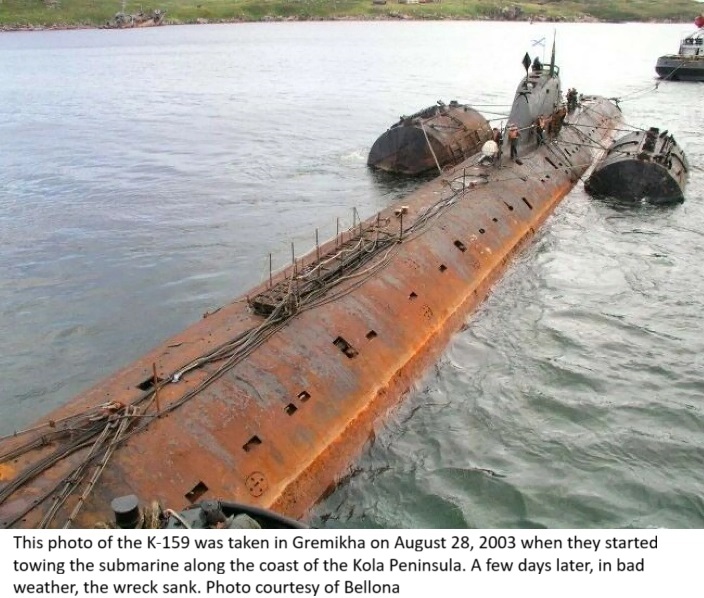
K-159 entered service the same year as K-27 and remained operational until 1989. It sank in 2003 in the Barents Sea while being towed for dismantling near Kildin Island, resulting in the deaths of nine crew members. The wreck rests at approximately 250 meters.
Plans to lift these submarines have been discussed for more than a decade but were repeatedly postponed due to the lack of specialized equipment, qualified personnel, and safety concerns. In 2021, Rosatom estimated that raising the vessels would cost around 24.4 billion rubles.
The renewed inclusion of the project in Russia’s 2026 budget marks the first concrete step since 2012 toward removing the radioactive wrecks from the Arctic seabed, though the exact reasons for the timing remain unclear, RBC noted.
Earlier in October, Russia’s Novorossiysk submarine—armed with Kalibr cruise missiles—was forced to abandon its Mediterranean mission and return to Saint Petersburg after a fuel leak disabled its underwater capability.
The incident highlighted Russia’s growing naval limitations following the loss of its Syrian logistics hub in Tartus and Turkey’s blockade of the Bosphorus Strait.
Coral die-off marks Earth’s first climate ‘tipping point’, scientists say.
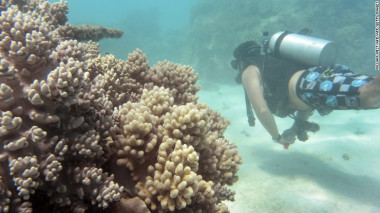
A surge in global temperatures has caused widespread bleaching and death of warm-water corals around the world.
By Jeff Tollefson, Nature 12th Oct 2025
Surging temperatures worldwide have pushed coral reef ecosystems into a state of widespread decline, marking the first time the planet has reached a climate ‘tipping point’, researchers announced today.
They also say that without rapid action to curb greenhouse-gas emissions, other systems on Earth will also soon reach planetary tipping points, thresholds for profound changes that cannot be rolled back.
“We can no longer talk about tipping points as a future risk,” says Steve Smith, a social scientist at the University of Exeter, UK, and a lead author on a report released today about how close Earth is to reaching roughly 20 planetary tipping points. “This is our new reality.”
Temperature spike
Led by Smith and other scientists at the University of Exeter, the report assesses the risk of breaching tipping points such as ice-sheet collapse, rising seas and dieback of the Amazon rainforest. It also discusses progress towards various positive tipping points focused on social and economic change, such as the adoption of clean energy.
The group’s first such assessment, released less than two years ago, raised alarms but did not officially declare that any climate tipping points had been reached. In the past few years, however, global temperatures have surged, sparking concerns among some scientists that global warming is accelerating and could lead to even more widespread impacts in the coming decades than the changes that have already been recorded.
The impact on coral reefs has been particularly severe in the past two years , pushing these ecosystems to their tipping point, the researchers say. The warming waters have caused corals across the globe to bleach, a process that occurs when the organisms expel the symbiotic algae that provide them with nutrients, oxygen and vibrant colours. The fourth global bleaching event in the past few decades began in January 2023, and researchers estimate that it has affected more than 84% of the planet’s coral ecosystems.
The initial tipping-point report talked about large-scale threats to corals in the future tense, but the latest global bleaching event has made it clear that the crisis is now, says Michael Studivan, a coral ecologist at the University of Miami in Florida………………………………………
https://www.nature.com/articles/d41586-025-03316-w
World’s oceans losing their greenness through global heating, study finds.

The world’s oceans are losing their greenness owing to global heating,
according to a study that suggests our planet’s capacity to absorb carbon
dioxide could be weakening. The change in the palette of the seas is caused by a decline of phytoplankton, the tiny marine creatures that are
responsible for nearly half of the biosphere’s productivity. The
findings, which also have alarming implications for oxygen levels and food
chains, are based on a groundbreaking study of daily chlorophyll
concentrations in low- to mid-latitude oceans from 2001 to 2023.
Guardian 17th Oct 2025, https://www.theguardian.com/environment/2025/oct/17/worlds-oceans-losing-their-greenness-through-global-heating-study-finds
Key oceans treaty crosses threshold to come into force

A global agreement designed to protect the world’s oceans and reverse
damage to marine life is set to become international law. The High Seas
Treaty received its 60th ratification by Morocco on Friday, meaning that it
will now take effect from January. The deal, which has been two decades in
the making, will pave the way for international waters to be placed into
marine protected areas. Environmentalists heralded the milestone as a
“monumental achievement” and evidence that countries can work together for
environmental protection.
BBC 20th Sept 2025, https://www.bbc.co.uk/news/articles/cq5j87114deo
How the ‘evil twin’ of the climate crisis is threatening our oceans

There’s frustration among researchers that falling pH levels in seas
around the globe are not being taken seriously enough, and that until the
buildup of CO2 is addressed, the consequences for marine life will be
devastating.
“At the end of the day, we know CO2 is going up, pH is going
down, and that’s an urgent issue that people are not talking about,”
says Turner. “It’s an overlooked consequence of carbon in our ocean
that governments can no longer afford to overlook in mainstream policy
agendas, and the time to address it is running out.”
Guardian 9th June 2025, https://www.theguardian.com/environment/2025/jun/09/the-scientists-warning-the-world-about-ocean-acidification-evil-twin-of-the-climate-crisis
Cumbrians receive postal call to back nuke dump democracy petition
NFLA 9th June 2025, https://www.change.org/p/massive-mine-shafts-and-nuclear-dump-for-cumbria-coast-tell-cumberland-council-vote-now
Residents of Millom, Seascale and Gosforth have just received a flyer from campaign group Radiation Free Lakeland calling on them to back a petition which asks Cumberland Councillors to host a debate followed by a vote about their engagement with the siting process for a Geological Disposal Facility in West Cumbria.
The GDF would be the eventual repository for Britain’s high-level radioactive waste which would be placed in tunnels beneath the seabed. A site in East Lincolnshire was also under consideration as a possible site. With the withdrawal of Lincolnshire County Council from the process last week, only sites in Mid and South Copeland in West Cumbria remain in contention and then only because Cumberland Council remains engaged in the process.
Bizarrely Cumberland Council only became involved in the process by default. The new authority on replacing Copeland District Council chose to accept unquestionably that Council’s decision to participate in the GDF process, even though the decision to participate had been taken by only four Copeland Councillors. There has never been any debate or vote amongst Cumberland Councillors about whether they should have accepted this obligation or still wish to continue with the process.
The petition calls on Cumberland Council to convene a belated special meeting of the Full Council where Councillors can debate and then vote on whether to continue to remain engaged or remain represented on the Mid and South Copeland GDF Community Partnerships. If Councillors say no, then the process would end, and NWS would withdraw. The NFLAs is happy to support Radiation Free Lakeland in urging all Cumbrians to sign it.
Here are links to the petition:
www.change.org/CumbriaNuclearDump https://www.change.org/p/massive-mine-shafts-and-nuclear-dump-for-cumbria-coast-tell-cumberland-council-vote-now
Today is World Ocean Day – Protect the Lake District Coast and Irish Sea from an Unprecedented Atomic Experiment
On By mariannewildart,
https://mariannewildart.wordpress.com/2025/06/08/today-is-world-ocean-day-protect-the-lake-district-coast-and-irish-sea-from-an-unprecedented-atomic-experiment/
This World Ocean Day Do Something Amazing and Sign and Share the Petition to Protect The Lake District Coast from a Giant Atomic Heat Sink. There are 1,753 signatures – lets make it tens of thousands! This plan is going forward on the say so of just four councillors in Cumberland (the West of Cumbria, UK). The Petition is calling for a FULL debate and FULL vote by the whole Cumberland Council on whether to continue in partnership with the developer Nuclear Waste Services to deliver a “geological disposal facility” aka an up to 50km square, wholly experimental, sub-sea nuclear dump for HOT nuclear wastes. Note the developer NWS is a Government owned limited liability company.
They Dumped 200,000 Radioactive Barrels Into the Atlantic: 35 Years Later, French Scientists Are Going After Them.

For decades, radioactive barrels have sat hidden beneath the Atlantic, untouched and untracked. Now, French scientists are setting out on a mission unlike any before.
Arezki Amiri, May 29, 2025, https://indiandefencereview.com/they-dumped-200000-radioactive-barrels-into-the-atlantic-35-years-later-french-scientists-are-going-after-them/
For decades, they lay untouched and largely forgotten—hundreds of thousands of barrels filled with radioactive waste, scattered across the abyssal plains of the Atlantic Ocean. Now, more than 30 years after the last were submerged, a French scientific mission is preparing to search for them, raising fresh questions about the long-term impact of nuclear dumping at sea.
Decades-Old Barrels, Deep-Sea Mysteries
Between 1946 and 1990, over 200,000 barrels of radioactive waste were deliberately sunk into the Atlantic by various nations, including France. Packed in bitumen or cement, the containers were lowered into what scientists at the time considered to be lifeless zones, thousands of meters below the ocean surface and far from any coastline.
The practice was permitted until 1990, when it was banned under the London Convention following growing awareness of deep-sea ecosystems and the potential environmental risks of radioactive leakage. The barrels were never retrieved, and no comprehensive effort has since been made to assess their state—or their potential impact on marine life.
An Ambitious Mission Beneath 4,000 Meters
This summer, a group of French researchers will head into the Atlantic to do just that. The mission, called Nodssum, is a collaboration involving CNRS, Ifremer, and the French Oceanographic Fleet. Their immediate goal is to map a 6,000-square-kilometer section of the seafloor where a significant number of barrels are believed to be resting.
To locate them, the team will deploy a high-resolution sonar system and the autonomous submersible UlyX, one of the few underwater vehicles capable of operating at depths greater than 4,000 meters. UlyX will scan the ocean bottom, helping to establish the precise location of the containers and assess their current condition.
Questions of Leakage and Contamination
So far, the environmental effects of the submerged barrels remain unknown. As the article notes, “no one knows what impact the dumping of these barrels may have had on deep-sea ecosystems, or whether they still represent a radiological risk.” Part of the challenge lies in the vastness and inaccessibility of the ocean floor where the barrels were dropped.
Once the mapping phase is complete, a second campaign will be launched to collect samples of sediments, seawater, and marine organisms near the barrels. These samples will help determine whether radioactive materials have begun to escape their containers and what effect, if any, that may be having on surrounding ecosystems.
Unknowns Beneath the Surface
The mission represents one of the first large-scale scientific efforts to investigate this Cold War-era dumping ground. While scientists long assumed that the deep sea was barren and isolated, more recent research has shown that it is home to complex ecosystems, many of which remain poorly understood.
The researchers hope that the project will provide new insights into the long-term stability of radioactive waste in deep-sea environments and offer a clearer understanding of how past nuclear policies continue to shape today’s oceans.
Japan’s Fukushima nuclear wastewater ‘pose major environmental, human rights risks’ – UN experts
The United Nations (UN) human rights experts have written to the Japanese government to express their concerns about the release of more than one million metric tonnes of treated nuclear wastewater into the Pacific Ocean.
In August 2023, Japan began discharging wastewaster from about 1000 storage tanks of contaminated water collected after the earthquake and tsunami in 2011 that caused the meltdown of its Fukushima nuclear plant.
In the formal communication, available publicly, UN Human Rights Council special rappoteurs addressed the the management of Advanced Liquid Processing System (ALPS)-treated wastewater from the Fukushima Daiichi Nuclear Power Station (NPS) by the Japan government and TEPCO (Tokio Electric Power), and the ongoing discharge of such waters into the Pacific Ocean.
They said “we are alarmed that the implementation of contaminated water release operations of into the ocean may pose major environmental and human rights risks, exposing people, especially children, to threats of further contamination in Japan and beyond.”
“We wish to raise our concern about the allegations of the failure to assess the consequences on health of the release of wastewater against the best available scientific evidence,” the special rappoteurs write.
“Against this backdrop, we would like to highlight that the threats to the enjoyment of the right to adequate food do not concern only local people within the borders of Japan.
“Given the migratory nature of fish, their contamination represents a risk also for people living beyond the Japanese borders, including Indigenous Peoples across the Pacific Ocean which, according to their culture and traditions, mainly rely on seafood as their primary livelihood.”
The letter follows a complaint submitted by Ocean Vision Legal in August 2023 on behalf of the Pacific Network on Globalisation (PANG) and endorsed by over 50 civil society groups in the Pacific and beyond.
In a statement on Tuesday, PANG hailed it as “a landmark move for ocean justice and human rights”.
The organisation said that the destructive legacy of nuclear contamination through nuclear testing is still strongly felt across the region.
It said this legacy is marked by severe health impacts across generations and the ongoing failure to properly clean up test sites, which continue to contaminate the islands and waterways that Pacific peoples depend on.
“As Pacific groups, we remain disappointed in the Japanese Government and TEPCO’s shameless disregard of the calls by numerous Pacific leaders and civil society groups to hold off on any further release,” PANG’s coordinator Joey Tau said.
“Their ignorance constitutes a brazen threat to Pacific peoples’ livelihoods, safety, health and well-being, and the sovereignty of Pacific nations,” he added.
Japan has consistently maintained that the release is safe.
The UN human rights experts have asked for further information from Japan, including on the allegations raised, and on how the Radiological Environmental Impact Assessment has been conducted according to the best available scientific evidence.
This communication sends a clear message: Ocean issues must be understood as human rights issues, requiring precautionary and informed action aligned with international environmental law to safeguard both people and the marine environment.
Ocean Vision Legal founder and CEO Anna von Rebay said while the communication is not legally binding, it is a crucial milestone.
“It informs the interpretation of human rights and environmental law in response to contemporary threats, contributing to the development of customary international law and strengthens accountability for any actor harming the Ocean,” she said.
“Ultimately, it paves the way towards a future where the Ocean’s health is fully recognised as fundamental to human dignity, justice, and intergenerational equity.”
The climate crisis has tripled the length of ocean heatwaves, study finds.

The climate crisis has tripled the length of ocean heatwaves, a study has
found, supercharging deadly storms and destroying critical ecosystems such
as kelp forests and coral reefs. Half of the marine heatwaves since 2000
would not have happened without global heating, which is caused by burning
fossil fuels.
The heatwaves have not only become more frequent but also
more intense: 1C warmer on average, but much hotter in some places, the
scientists said. The research is the first comprehensive assessment of the
impact of the climate crisis on heatwaves in the world’s oceans, and it
reveals profound changes.
Hotter oceans also soak up fewer of the carbon
dioxide emissions that are driving temperatures up. “Here in the
Mediterranean, we have some marine heatwaves that are 5C hotter,” said Dr
Marta Marcos at the Mediterranean Institute for Advanced Studies in
Mallorca, Spain, who led the study. “It’s horrible when you go
swimming. It looks like soup.”
Guardian 14th April 2025, https://www.theguardian.com/environment/2025/apr/14/climate-crisis-has-tripled-length-of-deadly-ocean-heatwaves-study-finds
Total collapse of vital Atlantic currents unlikely this century, study finds

Damian Carrington, Guardian 26th Feb 2025
Climate scientists caution, however, that even weakened currents would cause profound harm to humanity.
Vital Atlantic Ocean currents are unlikely to completely collapse this century, according to a study, but scientists say a severe weakening remains probable and would still have disastrous impacts on billions of people.
The Atlantic meridional overturning circulation (Amoc) is a system of currents that plays a crucial role in the global climate. The climate crisis is weakening the complex system, but determining if and when it will collapse is difficult.
Studies based on ocean measurements indicate that the Amoc is becoming unstable and approaching a tipping point, beyond which a collapse will be unstoppable. They have suggested this would happen this century, but there are only 20 years of direct measurements and data inferred from earlier times bring large uncertainties.
Climate models have indicated that a collapse is not likely before 2100, but they might have been unrealistically stable compared with the actual ocean system………………………………………………………………………………………. https://www.theguardian.com/environment/2025/feb/26/total-collapse-of-vital-atlantic-currents-unlikely-this-century-study-finds
The surface of our oceans is now warming four times faster than it was in the late 1980s
The surface of our oceans is now warming four times faster than it was in
the late 1980s. The rate of the ocean’s warming has more than quadrupled
over the past four decades, according to researchers. While ocean
temperatures were rising at about 0.06 degrees Celsius per decade in the
late 1980s, they are now increasing at 0.27 degrees Celsius per decade,
scientists said Tuesday.
Independent 28th Jan 2025, https://www.independent.co.uk/climate-change/oceans-heat-temperature-climate-warming-b2687248.html
Nuclear waste to be dumped into Cape Cod and turn ocean radioactive

by Lauren Acton-Taylor For Dailymail.Com, 11 Dec 24, https://www.msn.com/en-ca/news/world/nuclear-waste-to-be-dumped-into-cape-cod-and-turn-ocean-radioactive/ar-AA1vG9iC?ocid=msedgntp&pc=HCTS&cvid=8b954ae3ae4e46e9868246df57f356c5&ei=13
he pristine waters off Cape Cod could become radioactive for as long as a month after a new study found that nuclear waste being dumped from the tony peninsula has a ‘high probability’ of lingering.
The Woods Hole Oceanographic Institution conducted the study to find out how likely it would be that discharged wastewater from the Pilgrim Nuclear PowerStation in Plymouth, Massachusetts would spread into Cape Cod Bay, whose surrounding communities include multimillion-dollar mansions.
‘Our numerical simulations suggest it is unlikely that the bulk of plume waters will leave the Bay in less than a month,’ said the study’s leader Irina Rypina.
The dumping comes as part of the power station’s decommissioning, and the study found that its wastewaters could drift near the shores and coastal waters of Dennis, Wellfleet, and Provincetown.  Continue reading
‘If the release were to happen in the spring and summer, a small portion of a plume might leave the bay in less than a month, passing north of Provincetown and then flowing southward along the outer Cape,’ the study said.
‘We found virtually no out-of-the-Bay transport in winter and fall and slightly larger, but still low, probability of some of the plume exiting the Bay in spring and summer,’ Rypina said.
In response to the study, Massachusetts Sen. Ed Markey, who chairs the Senate‘s Environment and Public Works Subcommittee on Clean Air, Climate, and Nuclear Safety, said that the findings confirm concerns expressed by the residents of the Cape.
According to Markey, residents have been questioning the wisdom of dumping plant wastewater into the Bay ‘for years.’
Nuclear wastewater discharge is a normal occurrence during both the operation and decommissioning of power plants, according to the United States Nuclear Regulatory Commission.
‘The controlled release of liquid effluents at nuclear power plants, within specified regulatory limits, is an activity that occurs throughout the operation and decommissioning of a facility,’ said the NRC.
While the study did not explore the health risks that such a dump could pose to marine life or local fishing or recreation, a 2023 analysis by Florida-based Holtec International, the plant’s owner, and the Massachusetts Department of Public Health included alarming findings.
It determined that the roughly 900,000 gallons of wastewater stored at Pilgrim is contaminated with ‘four gamma emitters (Maganese-54, Cobalt-60, Zinc-65 and Cesium-137) and Tritium (H-3 a beta radiation emitter).’
A spokesperson for Holtec told the Boston Herald that Pilgrim had ‘safely’ discharged millions of gallons of water over the decades with little environmental impact.
‘Those discharges were done within the safe federal and state limits and reported to the NRC and publicly available on their website.
‘This includes studies to determine any potential impact to sea life and the Bay which showed that safety has always remained, and plant impact has been negligible,’ the spokesperson told the outlet.
The Pilgrim Nuclear Power Station shut down in May 2019 after 47 years of operation and was then owned by Louisiana-based Entergy Corporation. The plant was purchased by a subsidiary of Holtec in 2019 with an aim toward cleaning up the 1,700-acre site for industrial and commercial development, according to the Herald.
When the plant was bought, Holtec President and CEO Kris Singh assured residents that the project would ‘replicate the superb record of public health and safety and environmental protection that typified the plant’s 47 years of operations.’
In a statement, Markey said that Singh had promised both the senator and impacted communities that the process of decommissioning would be ‘open and transparent.’
‘In the years since, Holtec has fallen woefully short on this commitment. In light of these recent findings, I urge Holtec to develop a wastewater discharge plan that is informed and guided by scientific fact and community input,’ Markey said.
Local residents have continued to show concern for the wastewater dumping into Cape Cod Bay – identified as a’ protected ocean sanctuary’, according to the Massachusetts Government website.
The state Department of Environmental Protection determined on July 18 that Holtec was prohibited from ‘the dumping or discharge of industrial wastes into protected state waters’, the Cape Cod Times reported.
Holtec is reportedly hoping to discharge up to 1.1 million gallons of industrial wastewater and filed an appeal to the agency’s prohibition on August 16.
In a statement, the company said: ‘The appeal explains that the permits granting liquid discharge were issued prior to the Ocean Sanctuary Act legislation, which grandfathers these types of liquid discharges.’
‘Millions of fish could die’ under current Hinkley Point C plan
Environmental advocates demand EDF takes action
By Lewis Clarke, Somerset Live , 22nd Oct 2024
A solutions-focussed, scientifically backed answer to the critical environmental situation at Hinkley Point C has been released by a coalition of scientists, engineers, and innovators, showing that the Acoustic Fish Deterrent (AFD) is both a necessary and feasible requirement for the builders of Hinkley Point C – EDF Energy – to apply.
An AFD Delivery Report, launched on October 16, gives evidence that the AFD can be installed safely and effectively in the Severn Estuary. It highlights the innovations in technical ability, technology, logistics, and science which will reduce maintenance times from 72 days per year down to just 19. The report debunks common misconceptions about noise levels, diving time, and more with scientifically backed evidence, and urges EDF to ensure the system is installed, tested, and operational before the station starts to abstract cooling water.
In light of the critical environmental situation at Hinkley Point C, a parliamentary debate led by Sir Ashley Fox MP was held last week on Wednesday 9th October 2024. During the debate, Sir Ashley Fox addressed that EDF Energy’s mosaic of mitigation measures, specifically the proposed saltmarsh plans, are a completely illogical choice.
The saltmarsh plans are a proposed alternative to the Acoustic Fish Deterrent (AFD), a system designed to protect aquatic life by deterring fish from entering the cooling systems of the power plant, and was included in the initial design plans of Hinkley Point C.
The AFD system remains mandated in the Development Consent Order (DCO). It is also considered best practice for screening estuarine intakes in the UK by the Environment Agency, and has been scrutinised by a Welsh Government Report (2021), a Public Inquiry (2022), and the ruling by Secretary of State Kwasi Kwarteng (2022) which all stated that the AFD must be installed. EDF Energy has been working to remove this vital environmental protection measure for nearly eight years, arguing on the grounds of health and safety concerns, noise pollution and effect on mammals, and further delay of the completion of Hinkley Point C.
The AFD Delivery Report provides a solution to the current impasse, but without the AFD, it has been warned by the Welsh Government Commission that approximately 182 million fish would be killed annually, including sensitive species like shad, sprat, Atlantic salmon, and herring.
In the AFD Delivery Report, Professor Mark Everard, University of West of England says “There can in my scientific view be no justification for removal of AFD. It makes absolutely no sense to permit very substantial damage to marine biodiversity and hope then that modest mitigation entailing a degree of recruitment only of species reliant on the saltmarsh can offset it.
“Cost reduction is cited by EDF as one element of its plan to remove the mandated AFD and would appear to be its principal consideration, but one that obviously overlooks the vital purpose of deflecting fish from the intake. Ideally, saltmarsh restoration should be implemented ADDITIONALLY to the AFD to mitigate the still substantial likely entrainment of multiple life stages of fish and invertebrates, even with deflection from the intake.”
South Gloucestershire Council understands that EDF will make another application to the Secretary of State to remove the requirement for an AFD in the new year, and so has written to the Secretary of State for Energy, Security & Net Zero, the Rt Hon Ed Milliband, requesting that he upholds the existing requirement to install an AFD.
Councillors Maggie Tyrrell and Ian Boulton, said in their letter to the Secretary of State: “We are writing to express our gravest concern regarding the scale of impact on the migratory fish populations of the Severn Estuary Special Area of Conservation (SAC) which will result from the massive water abstraction at Hinkley Point C of 120,000 litres of seawater a second for 60 years once the power station is operational.
“This impact would be made significantly worse by the proposed application for a change to the 2013 Development Consent Order to remove the required Acoustic Fish Deterrent (AFD).
“A Welsh Government report on the AFD cites evidence that removal of the AFD would capture at least 182 million fish per year, a significant proportion of which would be killed. Put simply, removing the AFD would cause critical levels of wildlife destruction.”
The council is also concerned that EDF are approaching local landowners about a plan to create new salt marshes, which they would propose as alternative compensation habitat for fish in place of the AFD. It is understood that local landowners are deeply concerned about the idea, which has been turned down in other areas when raised by EDF, and experts query EDFs claims that new saltmarshes would offer suitable habitat for fish killed by the water intake of the new power station.
The council’s letter also highlighted that even with the AFD, that compensation will still be needed as some fish will still be drawn into the intake and killed. Alongside the letter, the Secretary of State was also provided with information about priorities to deliver improvements for fish passage in the Bristol Avon river and Coastal Catchments……………………
https://www.somersetlive.co.uk/news/somerset-news/millions-fish-could-die-under-9641529
Nuclear Missile Submarines Collided (Armed with Hundreds of Nuclear Weapons)
The two submarines were nuclear-powered. Thus, these boats could have become like Chernobyl under the waves.
the need for stealth is naval engagements should be well understood but it must also be stressed that, in the nuclear age, such secrecy could lead to truly devastating consequences unless some form of modus vivendi is crafted between Washington and Beijing to deescalate certain crises.
In February 2009, the British HMS Vanguard and French Le Triomphant, both nuclear-powered ballistic missile submarines, collided in the Atlantic Ocean during routine patrols. The incident raised serious concerns about naval safety protocols and the lack of communication between allied nations operating stealth vessels in close proximity.
The National Interest, by Brandon J. Weichert, October 20, 2024
What You Need to Know: In February 2009, the British HMS Vanguard and French Le Triomphant, both nuclear-powered ballistic missile submarines, collided in the Atlantic Ocean during routine patrols. The incident raised serious concerns about naval safety protocols and the lack of communication between allied nations operating stealth vessels in close proximity.
-Whistleblower William McNeilly later alleged that equipment failures and crew errors aboard the Vanguard contributed to the collision and that a cover-up ensued. This event underscored the potential catastrophic consequences of submarine collisions, especially between nuclear-armed vessels.
-The article also draws parallels to recent incidents involving U.S. and Chinese submarines, emphasizing the need for improved communication to prevent escalations that could lead to environmental disasters or even war.
The Collision
The collision happened in the early hours of 3 February 2009. The two subs were conducting routine patrols. At some point, in the mid-Atlantic, the two nuclear-powered submarines crossed paths and crashed into each other.
This catastrophe was the result of a combination of factors, but the most damning one of all comes from a Royal Navy submariner, William McNeilly, who decided to become a whistleblower. According to this whistleblower, the accident was likely the result of the British submarine which had been subject to “massive equipment failures, crew errors, and lax standards” onboard the HMS Vanguard.
Indeed, the official account provided to the public by the British government (and backed up by the French government), according to McNeilly, was far less caustic than the event actually had been. In fact, according to the whistleblower testimony, the British nuclear submarine was mere moments away from exploding (which would have ignited the ship’s nuclear reactor, causing all kinds of problems for the world).
The whistleblower account details how the FNS Le Triomphant had bashed out a “massive chunk” from the HMS Vanguard after which the French sub “grazed down the side of” the Vanguard. From there, “compressed air bottle groups had been dislodged by the collision and ‘were hanging off and banging against the pressure hull.’ The submarine had to return to base slowly because ‘if one of the [High Pressure Air] bottle groups exploded it would’ve created a chain reaction and sent the submarine plummeting to the bottom.’”
A “massive cover-up of the incident” soon followed.
According to McNeilly the Vanguard had become the poster child in the failing British Royal Navy (an issue about which this author has documented repeatedly in these pages) of mismanagement, lax discipline, and poor seamanship.
Before its collision with the Le Triomphant, there was another cover-up involving the Vanguard pertaining to a “deep depth incident” in which the HMS Vanguard “dived far beyond a normal safe depth. A combination of high-water pressure and the submarine’s low speed made it difficult for the submarine’s hydroplanes [to] generate enough lift to raise the submarine, and ballast water could not be pumped out fast enough to allow the submarine to rise.”
In essence, well before the 2009 collision, the Vanguard was almost lost due to poor seamanship. Yet, the Royal Navy, rather than address the problems, chose to cover it up and continue operating as though everything were normal.
Thankfully, the incident led to a review of submarine operations and safety protocols by both the British and French navies. It further highlighted the need for improved communication and coordination between allied nations operating in the same waters.
Although, the presence of a “massive cover-up” being enacted immediately upon the Vanguard’s return to port is unacceptable and begs the question as to whether the Royal Navy and French Navy really learned the right lessons or if they just figured out how to downplay things better.
The Subs Involved
Britain’s HMS Vanguard was the lead boat in the Vanguard-class ballistic missile submarine. ………………………………………………………………………….
On the other end of the collision was France’s Le Triomphant, the lead boat of the French navy’s Triomphant-class ballistic missile submarine. ………………………………………
The Triomphant carried 15 M45 ballistic missiles and had four torpedo tubes for F17 torpedoes.
This incident on the High Seas between two allied nations that simply were not aware that each other had submarines operating in the same Area of Responsibility (AOR) could have been far worse than it was. The two submarines, as you have read, were nuclear-powered. Thus, these boats could have become like Chernobyl under the waves.
Thankfully, that fate was avoided. But this incident was a clear wake-up call………………………
Implications for Sino-American Interactions Beneath the Sea
Just recently, in fact, the USS Connecticut is believed to have crashed into an undersea mountain (seamount) in the crowded South China Sea while it was possibly conducting a covert surveillance mission of China’s secretive naval base at Hainan Island.
It was a major source of embarrassment for the US Navy because, the incident not only revealed what the Connecticut was up to but it also put a dent in the Navy’s limited Seawolf-class fleet.
the need for stealth is naval engagements should be well understood but it must also be stressed that, in the nuclear age, such secrecy could lead to truly devastating consequences unless some form of modus vivendi is crafted between Washington and Beijing to deescalate certain crises.
This was done throughout the Cold War……………………………..
A Sino-American collision, which is likely to occur given the tension and interactions thus far between the two powers, could either lead to an environmental catastrophe. Or worse, it could lead to a world war. https://nationalinterest.org/blog/buzz/2-nuclear-missile-submarines-collided-armed-hundreds-nuclear-weapons-211587
1 This Month.
5 January -Webinar-What is Trump’s Golden Dome?
REGISTER AT Massachusetts Peace Action Education


New book – https://www.amazon.com/dp/1923372157?utm_source=substack&utm_medium=email
Now until to February 10, 2026 Radioactive waste storage in France: the debate is finally open! How to participate?
-
Archives
- December 2025 (325)
- November 2025 (359)
- October 2025 (377)
- September 2025 (258)
- August 2025 (319)
- July 2025 (230)
- June 2025 (348)
- May 2025 (261)
- April 2025 (305)
- March 2025 (319)
- February 2025 (234)
- January 2025 (250)
-
Categories
- 1
- 1 NUCLEAR ISSUES
- business and costs
- climate change
- culture and arts
- ENERGY
- environment
- health
- history
- indigenous issues
- Legal
- marketing of nuclear
- media
- opposition to nuclear
- PERSONAL STORIES
- politics
- politics international
- Religion and ethics
- safety
- secrets,lies and civil liberties
- spinbuster
- technology
- Uranium
- wastes
- weapons and war
- Women
- 2 WORLD
- ACTION
- AFRICA
- Atrocities
- AUSTRALIA
- Christina's notes
- Christina's themes
- culture and arts
- Events
- Fuk 2022
- Fuk 2023
- Fukushima 2017
- Fukushima 2018
- fukushima 2019
- Fukushima 2020
- Fukushima 2021
- general
- global warming
- Humour (God we need it)
- Nuclear
- RARE EARTHS
- Reference
- resources – print
- Resources -audiovicual
- Weekly Newsletter
- World
- World Nuclear
- YouTube
-
RSS
Entries RSS
Comments RSS
 nuclear-news