Reactors shut by a handfull of jellyfish
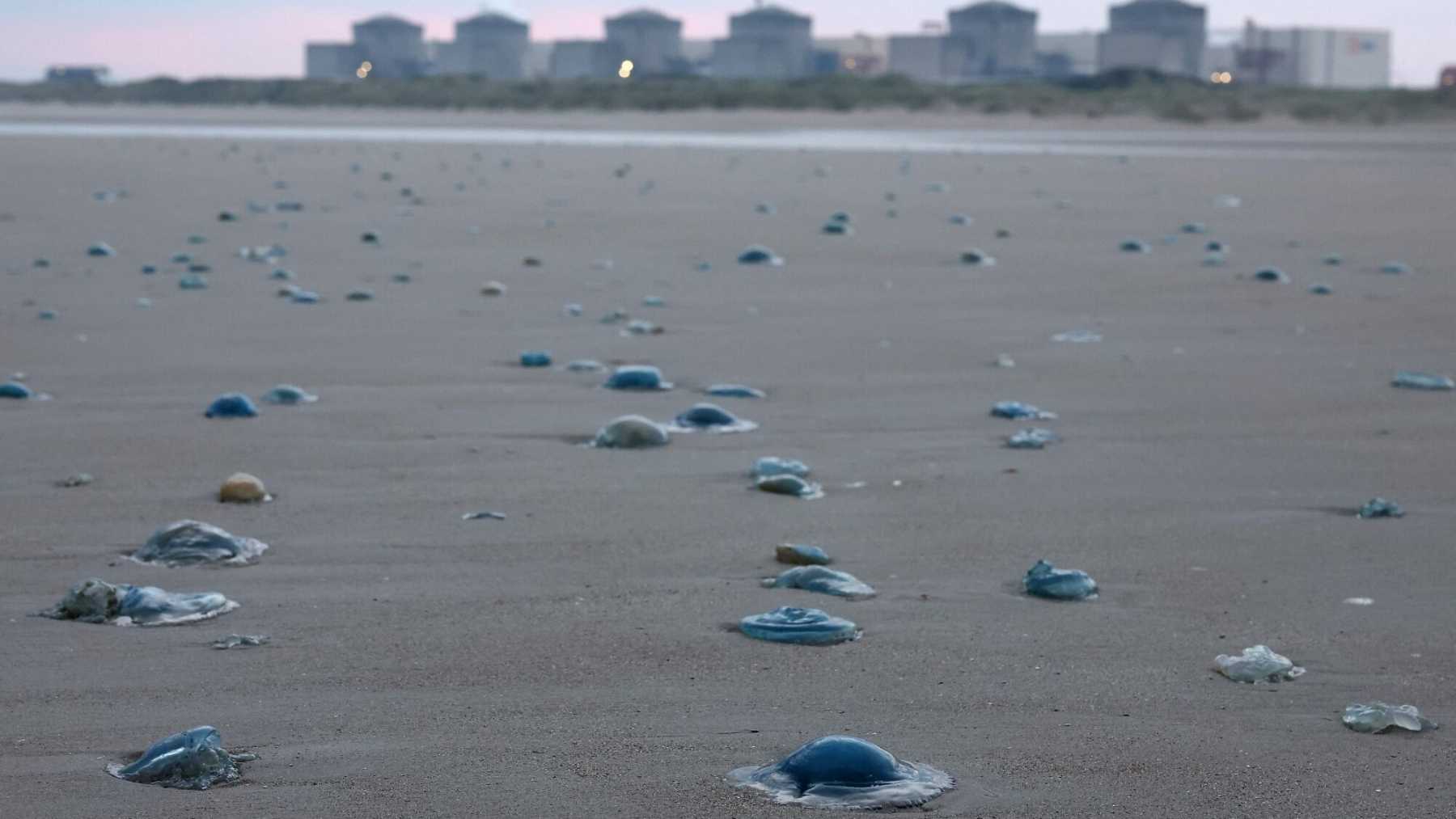
A 900-megawatt reactor on the French coast came off the grid at four in the afternoon and a second one overnight, both shut by hand before returning jellyfish could pack the seawater screens and trip them, and both were back inside four days against twenty for the last swarm
Luis Reyes, Auto Notion 14th Sept 2026
An automatic reactor trip is the safety system doing its job, and it’s arguably the most expensive way to solve a problem. The unit drops off the grid in seconds, and then you spend the next several days walking it back up to full power while somebody writes the report explaining why.
So when the jellyfish came back to Gravelines in late August, nobody at the plant sat around waiting for that. At about four in the afternoon on Wednesday, August 26, local time, the crew shut unit 3 down themselves and dialed unit 2 back while they were at it. Overnight they did the same thing to unit 6 and reduced unit 1 too. EDF says it’s all preventive.
So you had a 5,400-megawatt site with nothing running at full power. Units 3 and 6 were off, units 1 and 2 were loafing along at reduced output, unit 4 had been down since August 10, and unit 5 was partway through its ten-year inspection.
If that sounds like a first for Western Europe’s largest nuclear plant, it isn’t.
The same site went to zero output for about ten days last August, and during the first swarm this month the last reactor still running flat out got throttled as well. What’s new is who pushed the button. It’s also been that kind of summer for the operator, which has already spent it idling inland reactors because the rivers beside them ran too warm.
Gravelines drinks the North Sea
If you’ve never looked at how a coastal plant gets its cooling water, it’s simpler than you’d expect. Gravelines doesn’t sit on a river. It pulls seawater from a canal connected to the North Sea, and everything that water carries hits two stages of screening before it reaches the condensers: coarse bar screens at the front, which EDF calls prégrilles, and rotating drum filters behind them. Pack those drums and the flow drops. Let it drop far enough and the protection system takes the unit off the grid for you, ready or not.
So why not let them trip?
A trip is a hard stop. Control rods drop, steam gets dumped, and the plant has to be checked over and lined back up before anyone talks about restarting. Taking a unit down on purpose gets you to the same place more slowly and leaves a shorter list of things to look at afterward. EDF hasn’t spelled that reasoning out, so I’m inferring it, but the restart times back it up.
Unit 3 gives the cleanest comparison, because it went down in both swarms for the same reason. On August 10 it tripped itself at 7:43 in the evening and didn’t come back until 3:55 in the morning on August 18, a bit over seven days. On August 26 the crew took it down deliberately and it was back at 2 a.m. on August 30, about three and a half days. That’s the same reactor and the same cause, and it cost half as much time………………………….
https://www.autonocion.com/us/reactors-shut-by-hand-jellyfish-four-days/
Nature at risk

by beyondnuclearinternational,
https://beyondnuclearinternational.org/2026/09/06/nature-at-risk/
UK Nuclear regulations will destroy havens for wildlife. This needs to be stopped, argues The Wildlife Trusts
The following is a position statement put out by The Wildlife Trusts in Britain, after the UK government published its response to the Nuclear Regulatory Review 2025. (Note: Ed Miliband is no longer the the Secretary of State for Energy Security and Net Zero since the departure of Prime Minister Keir Starmer.) After a massive public outcry, the most environmentally damaging proposals have been watered down. However, the Labour government has committed to new guidance about how to apply nature rules. This tinkering with protections could still lead to damage to nature-rich spaces. Writes the The Wildlife Trusts, “Resistance to this dismissive approach to nature is growing and we’ll keep sticking up for nature.” Their statement:
Recommendations in the Nuclear Regulatory Review put nature at risk
Wildlife and natural places need more protection, not less. But the UK Government is thinking about making it even easier and cheaper for developers to destroy our last few natural spaces.
A report called the Nuclear Regulatory Review is suggesting that protections for nature should be weakened. It says these protections result in unnecessary costs for developers. This is not true. We can’t afford to destroy the few havens we have for wildlife.
This isn’t policy yet – there’s still time to stop this from happening. That’s why we encouraged our supporters to take our simple action to send an email to Ed Miliband, the Secretary of State for Energy Security and Net Zero, and help us to stop this in its tracks.
The Nuclear Regulatory Review proposes weakening the Habitat Regulations
The Review proposes amending the Habitats Regulations so that developers don’t have to worry about avoiding harm to nature sites when they build nuclear plants. It also proposes removing a duty on public bodies to further the conservation and public access purpose of National Parks and National Landscapes.
Nature cannot afford this. Evidence continues to show that nature is in decline, and damage to nature is also damage to climate.
The Prime Minister previously suggested he wants the proposals to apply beyond the nuclear sector
In a speech on 1st December, the [then] Prime Minister said he agreed with all recommendations in the Nuclear Regulatory Review and also asked the Business Secretary to apply them to sectors beyond nuclear in the upcoming Industrial Strategy. This means the harmful recommendations could be extended beyond potential new nuclear energy sites.
If Department for Energy Security and Net Zero (DESNZ) gives the green light for the harmful Nuclear Regulatory Review recommendations, it makes a second damaging Planning Bill inevitable. This will slam the door on nature’s recovery and make net zero even harder to achieve.
If those proposals go ahead, people will suffer as well as wildlife
The recommendations in the Review will make natural spaces less safe from development and more vulnerable to damage and loss. These spaces might be close to where you live, or special landscapes that you visit and care about. The UK has already lost more biodiversity than any other country over the last few decades.
The risks of environmental damage through these recommendations will also have knock-on impacts for economic stability, which affects everyone through the cost of living.
Allowing the natural world to be neglected in this way will only benefit a handful of developers who can cut costs by bending the rules in future.
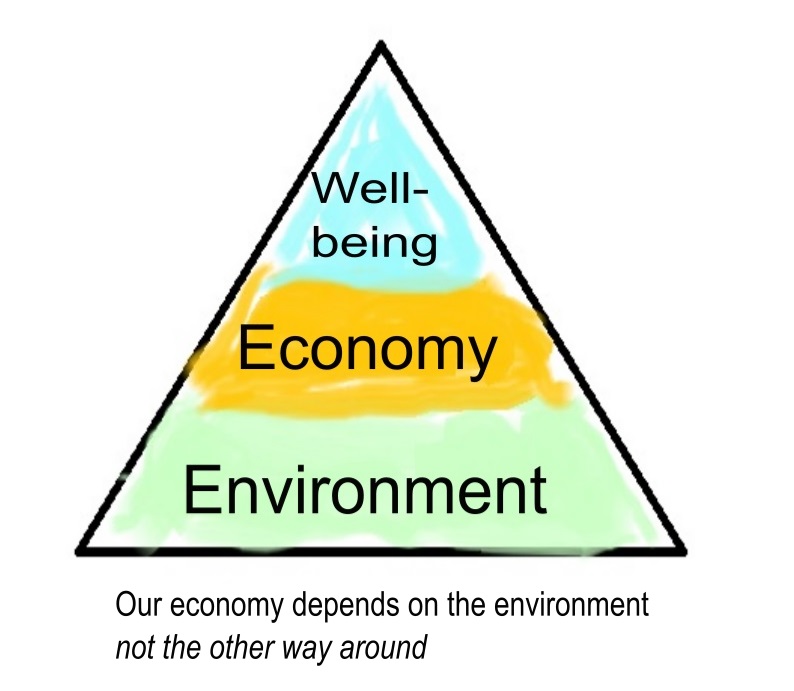
In the last year, the UK Government has targeted nature and wildlife, calling spiders and bats and newts ‘blockers’ and deliberately getting rid of legal safeguards and policies that are supposed to help nature recover. This goes against all evidence, and the public’s views that nature is necessary to everyone. Evidence shows a healthy environment underpins our economy and our wellbeing, and that building with nature in mind helps to ensure development is high quality and sustainable.
The original published statement can be read here on The Wildlife Trusts website.
Three years on, Fukushima’s fishers still deal with impact of treated water release
Japan Times, By Phoebe Amoroso, Aug 24, 2026
March 11 is a date of indescribable weight in Japan — one that conjures images of the devastating earthquake and resulting tsunami that killed nearly 20,000, displaced hundreds of thousands and caused catastrophic damage to the Fukushima No. 1 nuclear power plant.
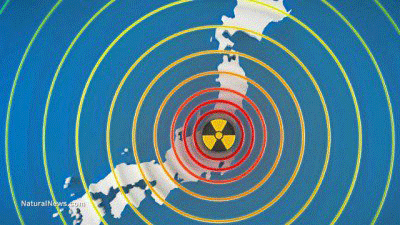
But Aug. 24 has also become a date of significance for the Tohoku region and the rest of East Asia. On this day three years ago, power plant officials began releasing treated water into the Pacific Ocean — a move that, while necessary, is continuing to have an economic impact on the region’s seafood.
“There’s no single perfect method that will ensure understanding among the public (when it comes to the safety of Fukushima’s seafood),” says Tadaaki Sawada.
Sawada is deputy manager of the guidance section for the Fukushima Prefectural Federation of Fisheries Cooperative Associations (FS Gyoren). Even three years on, he laments the difficulty of eliminating the stigma attached to the northeastern coastal prefecture of Fukushima and its produce.
On the day Sawada spoke with The Japan Times, Tokyo Electric Power Company Holdings Inc. (Tepco) completed its 21st discharge of treated water currently held in storage tanks at the No. 1 nuclear plant. Three years into this process expected to take three decades in total, fears of reputational damage have not explicitly emerged within the domestic market, but other consequences have been profound: geopolitical tensions and an exposure of the vulnerabilities that underlie Japan’s fishing industry as a whole.
Difficult choices
Though the primary disasters of March 2011 are in the past, the Fukushima No. 1 nuclear power plant is far from decommissioned.
Nuclear debris remains inside the damaged reactors and still produces heat, so water has to be circulated through the damaged reactors to keep them cool and eventually discarded. A method known as Advanced Liquid Processing System (ALPS) can remove up to 62 radioactive compounds from this water to very low concentrations, but it can’t remove tritium, a radioactive isotope of hydrogen. After ALPS and dilution with seawater, the concentration of tritium in the water reaches 1/40 of the maximum threshold mandated by government regulations.
With on-site water tanks nearing capacity, Tepco — backed by the Japanese government and the International Atomic Energy Agency — announced in 2021 that it would conduct periodic, controlled ocean discharges while monitoring the resulting tritium levels.
The decision provoked strong reactions, not least within Fukushima’s fishing industry. The government had promised fishermen that it wouldn’t release the water without the understanding of local communities, and the move was perceived by many as reneging on that commitment, provoking strong fears over further reputational damage.
But three years on, a strong consumer backlash within Japan has not materialized.
Takeshi Hamada, a professor of fisheries science at Sapporo’s Hokkai-Gakuen University, has studied the economic impact on Japan’s fishing industry. He argues that one key difference between domestic reaction in 2011 compared to the years that followed is related to media coverage.
“Following the Great East Japan Earthquake, most media outlets — including major ones — viewed government information with skepticism,” Hamada says via email. “However, during the ocean release of ALPS-treated water, there was relatively little coverage questioning its safety.”
Instead, criticism mostly emanated from somewhere far away from Japan’s northeastern coast: China.
On the day the first batch of ALPS-treated water was released, Beijing banned the import of all Japanese aquatic products (the ban was partially lifted in June 2025 before being reinstated that November after Prime Minister Sanae Takaichi’s comments on Japan’s role in a hypothetical Chinese naval blockade of Taiwan).
The impact of the import ban on Japan’s fishing industry has been hard to quantify, but experts believe it has been significant. Compared to the year prior, Hamada calculates that Japanese seafood exports fell by about ¥75.8 billion (about $476 million) between September 2023 and August 2024. Analysis of the next 12 months found that exports had improved in some areas, but total seafood exports were still below the prerelease level.
For Fukushima, the exact costs cannot be isolated. Although it exported almost no seafood to China, export-bound Japanese seafood was redirected into the domestic market, weighing on prices. Based on shirasu (whitebait) prices, which were driven down by bumper catches elsewhere, Hamada estimates that average prices decreased by 8.2%.
The lack of clarity has a direct knock-on effect on compensation promised from Tepco as a condition of the water release. Fishers must demonstrate lower catch volume, catch value and sales value compared to pre-2011 to receive funds for the shortfall. Seafood processors, wholesalers and other retailers can also claim compensation by demonstrating reduced sales due to consumers or buyers avoiding their seafood products.
However, many of the costs remain hidden. In a November 2025 symposium held by the Tokyo Fisheries Promotion Foundation, Soichiro Kato, a lawyer representing affected businesses, said fishers were better placed to seek compensation because fishery federations could negotiate collectively, while many seafood processors without the same collective organizations in place had to deal with Tepco individually. He also criticized Tepco’s criteria as being too rigid and not capturing losses from reverse flow effects.
Fishing for solutions……………………………………………………………………..
Coastal landings are still subject to official radiation monitoring by Fukushima Prefecture, while FS Gyoren also conducts voluntary screening at fish markets to reassure buyers. After more than 100,000 inspections, the federation relaxed its system in April this year to cover fewer species and reduce screening from each landing or sales day to at least once a week. It hopes that this will speed up distribution and make the overall system more efficient, paving the way for expanded sales.
But each step back toward normalcy for Fukushima’s fisheries is a double-edged sword.
“When it comes to how wholesalers and distributors have reacted (to relaxed regulations), naturally, to be honest, no one directly criticizes us,” Sawada says. “But I think some people do have concerns internally. That may naturally result in transactions disappearing or decreasing. It does not appear openly, and it is difficult for us on the fisher and producer side to see.”…………………………………………………………………………….
Although Tepco has made progress toward reducing newly generated water, the discharges are set to continue for decades to come. However, FS Gyoren’s call for more support for Fukushima’s fishing industry is unchanged.
“We want to continue fishing in Fukushima Prefecture as a livelihood, not only in our generation but into our children’s and grandchildren’s generations,” says Sawada. “We want the government and Tepco to provide firm support for that.”
https://www.japantimes.co.jp/news/2026/08/24/japan/fukushima-seafood-treated-water-three-years-impact/
Jellyfish close down France’s largest nuclear reactor
August 28 2026 , https://www.canberratimes.com.au/story/9339000/jellyfish-close-down-frances-largest-nuclear-reactor/
Reactor units at France’s largest nuclear power station in Gravelines have once again been shut down due to an influx of jellyfish.
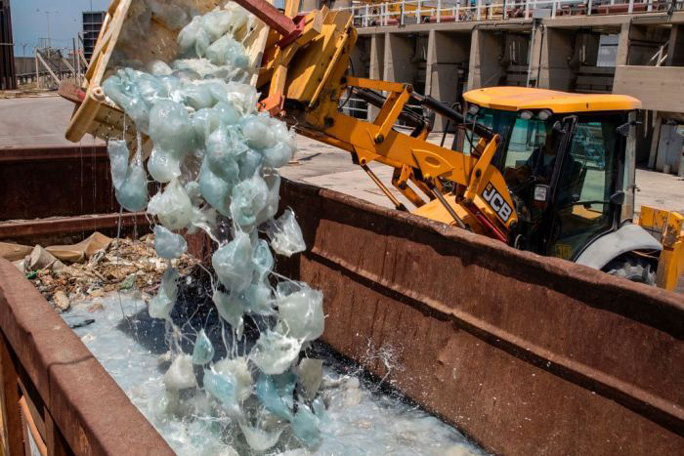
A spokeswoman for the French operator EDF said on Thursday more than 200 metric tonnes of jellyfish had appeared since last night.
Two of the six reactor units have been completely shut down as a precautionary measure to “ensure that this situation has no impact whatsoever on the safety of (EDF’s) facilities.”
EDF said the jellyfish are appearing in the area of the filter systems at the seawater pumping station.
Consequently, no reactor units are currently in full operation, as two other units are being run at reduced power, and the remaining two have also been shut down, partly due to a maintenance inspection.
The jellyfish disrupted operations in the middle of the month and in August last year.
The Gravelines nuclear power station has set up monitoring systems to detect and manage large-scale jellyfish gatherings at an early stage, EDF added.
The EDF spokeswoman explained that support for this had been provided, among others, by the organisation France Pêche Durable (France Sustainable Fishing).
Seven boats are operating round the clock near the nuclear power station to catch the jellyfish and then release them further out to sea.
The spokeswoman stated that it was not yet possible to comment on the causes of the phenomenon.
She added that the plant was working with various partners to gain a better understanding of it.
The spokeswoman said the incident posed no risk to the electricity grid.
Gravelines is one of just under 20 nuclear power stations in France.
It is situated on the northern French coast, roughly halfway between Calais and Dunkirk.
One-fifth of France’s nuclear capacity offline due to extreme weather and jellyfish
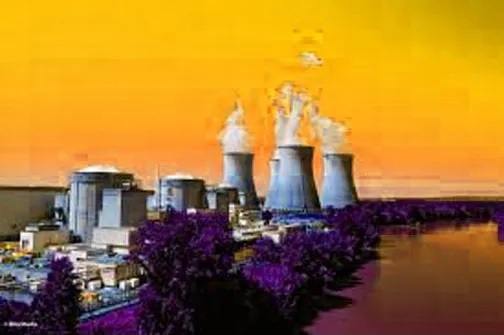
In total, 13 of the 57 reactors in EDF’s nuclear fleet were affected, resulting in a more than 20% shortfall in nuclear power production capacity, a record deficit.
Le Monde with AFPP, August 12, 2026, https://www.lemonde.fr/en/energies/article/2026/08/12/one-fifth-of-france-s-nuclear-capacity-offline-due-to-extreme-weather-and-jellyfish_6756421_98.html
France on Wednesday recorded a more than 20% shortfall in nuclear power production capacity, a record deficit caused by environmentally related outages linked to drought, extreme heat and a jellyfish invasion. France uses nuclear power to generate around 70% of its electricity. The country has seen nuclear power production disrupted by multiple heatwaves and droughts this year.
According to Agence France-Presse (AFP) calculations based on data published by energy group EDF since 2015, 20.4% of generating capacity was unavailable. Between 9:45 am and 10:00 am, EDF’s nuclear fleet recorded a new peak in outages due to “environmental constraints” or “external environmental causes,” both in terms of the number of reactors shut down or operating at reduced output and in terms of lost generating capacity.
In total, 13 of the 57 reactors in EDF’s nuclear fleet were affected. Eight reactors were completely shut down while five were operating at reduced power. Much of the lost nuclear generating capacity was due to full or partial shutdowns at five of the six reactors at the Gravelines nuclear power plant after a swarm of jellyfish clogged pumps used to cool the units.
Experts say overfishing, plastic pollution and warming seas due to climate change have created conditions allowing jellyfish to thrive and reproduce. Outside the Gravelines plant, the largest in Western Europe, the shutdowns or production reductions affecting other reactors are linked to extreme heat and droughts, depriving the plants of the water they need for cooling.
Growing U.S. military Footprint In Guam Intensifies Concerns Over Environmental Damage And Sovereignty
SCHEERPOST,August 15, 2026, Gaea Cabico Prism
In Yigo, the northernmost village in Guam, there is a well that cannot be shut down.
Known as Y-15, the well sits atop the island’s northern aquifer, which supplies around 80% of the island’s drinking water. Even if contaminants are detected, Y-15 has to keep pumping. There is simply no alternative.
The well also sits just below a hill near Upi Elementary School—attended by around 400 children—and just outside the back gates of Andersen Air Force Base, which hangs over the community like a permanent shadow. Generations of Indigenous CHamoru families have called Yigo home, relying on these waters for drinking, cooking, and other daily activities.
But in September 2025, one such family learned that the well supplying their home of 17 years was contaminated with high levels of dieldrin, a pesticide once widely used on crops and for termite control beginning in the 1950s. The Environmental Protection Agency (EPA), which classifies dieldrin as a probable human carcinogen, banned all uses of the pesticide in 1987 over concerns about its damage to the environment and links to serious health effects, including cancer, Parkinson’s disease, and reproductive issues such as decreased fertility and increased numbers of stillbirths. Because dieldrin accumulates in the body, long-term exposure—even in small amounts—can cause serious harm, according to the EPA.
More than 1,200 residents of Yigo were told not to drink water from Y-15 because of dieldrin contamination……………………………………..
Dieldrin is just one piece of a much larger and troubling environmental legacy in Guam.
Per- and polyfluoroalkyl substances (PFAS)—better known as “forever chemicals”—have also been detected across the island’s water systems. These compounds can persist in soil and groundwater for decades, and they have been linked to a range of health effects, including cancer, immune and thyroid dysfunction, liver and kidney disease, and serious reproductive issues.
For Monaeka Flores, an advocate with the grassroots environmental organization Prutehi Guåhan, the island’s environmental problems are inseparable from the military buildup that has reshaped the island. From hazardous waste dumping, base construction, and open-air detonations of munitions to live-fire exercises in sensitive habitats, advocates say that Guam’s land and water bear the toxic legacy of the U.S. military………………………………………………………………………………………………………………………………………………………………………………
The long arc of colonization
While Guam is only 30 miles long and nine miles wide, the U.S. Defense Department controls roughly a quarter of its land—and military expansion is accelerating. Much of the military buildup on the island is justified on the grounds of national security as the U.S. seeks to strengthen its position in the Pacific amid tensions with China and North Korea.
A missile defense system designed to protect the territory from potential outside threats, live-firing range complex, and new Marine Corps base are currently in the works. The buildup could also expose more people to potential environmental contamination. Roughly 10,000 active-duty personnel, their dependents, and government civilians are expected to arrive by 2036. ………………………………………………………….
What is unfolding in Guam is not happening in isolation.
From Okinawa, Japan to the Marshall Islands and the Diego Garcia military base in the Chagos Archipelago, communities living near U.S. military bases have documented patterns of environmental harm, including contamination linked to toxic chemicals and hazardous waste.
There is “very significant environmental damage” due to leaks and the military’s accidental—or sometimes intentional—dumping of hazardous, toxic materials, said David Vine, a political anthropologist and author of “Base Nation: How U.S. Military Bases Abroad Harm America and the World.” “It’s a clear pattern across the network of bases in the Pacific and around the world, including the 50 states,” he told Prism
Guam’s many environmental problems are concentrated around military bases, the island’s airport, and sites where firefighting occurred. As just one example: A major source of PFAS contamination on the island is the powerful fire suppressant known as Aqueous Film Forming Foam, which is used to extinguish jet fuel fires……………………………………………………………………………………………………
Activists, community leaders, and CHamoru families increasingly frame their struggle against the military’s pollution and contamination not only as an effort to protect fragile ecosystems, but also as a broader fight for demilitarization and decolonization. They are demanding both the removal of militarized infrastructure and the restoration of sovereignty over their ancestral lands………………………………………………………………………………………………………………….. https://scheerpost.com/2026/08/15/growing-u-s-military-footprint-in-guam-intensifies-concerns-over-environmental-damage-and-sovereignty/
Major nuclear power station shut down by millions of invading jellyfish
The massive Gravelines nuclear power plant just 30 miles from Britain has been forced to close down in order to avoid disaster after a swarm of jellyfish got sucked into the cooling system on Monday
Joe Smith News Reporter, 11 Aug 2026, https://www.mirror.co.uk/news/uk-news/nuclear-plant-millions-invading-jellyfish-37540444
Western Europe’s biggest nuclear power station has been shut down after it was invaded by millions of jellyfish.
EDF’s Gravelines plant near Dunkirk, just 30 miles from Britain, was forced to shut down in order to avoid disaster on Monday as the sea creatures swarmed into the plant.
EDF revealed how the jellyfish had been filter drums at the seawater pumping stations, used to cool the giant nuclear reactors at the heart of the plant.
The company was forced to take emergency measures, with reactors two, three and four taken offline, while output from reactor one was halved.
“This situation has no impact on the safety of the facilities, the safety of our personnel, or the environment,” a statement from EDF said.
Only reactor six was operating at full power on Tuesday, with reactor five previously taken offline for scheduled works.
The jellyfish invasion comes exactly a year after another swarm of the creatures took the French nuclear site offline for two days.
An invasive species of jellyfish, called the Asian Moon Jellyfish, have been making themselves at home in the English Channel and North Sea in 2020.
The species, usually native to the Pacific, is thought to have been brought here in the ballast tanks of supertankers and dumped into the seas around France and Britain.
Nuclear plants in China, Japan and India, which also rely of seawater for cooling, have previously been thrown into chaos by the slimy sea creatures. And last year power production at Gravelines came to a standstill after the jellies caused chaos.
The plant installed cameras monitoring the seawater intake and filters after last year’s fiasco and set up a warning system to give advanced notice of swarms heading their way.
The system saw fishing boats sent out of saturday with trawler nets in an attempt to thin the numbers of the invasive jellyfish. This helped to limit the latest invasion, the engineer said.
Meanwhile vacuum trucks are sucking out the jellyfish already trapped inside the plant. The engineer said that since no new jellies are arriving the plant will hopefully be back on line soon.
Swarming jellyfish overrun French nuclear plant on same date two years in a row
The jellyfish invasion is the latest in a series of climate change-driven incidents that have affected a record number of French nuclear reactors over the summer.
August 11, 2026 By Nicolas Camut,
https://www.politico.eu/article/swarming-jellyfish-overrun-french-nuclear-plant-on-same-date-two-years-in-a-row/
Aug. 11 is quickly becoming jellyfish invasion day at the Gravelines nuclear power plant in northern France.
Despite spending hundreds of thousands of euros to protect the plant from a jellyfish swarm like the one that saw reactors shuttered on Aug. 11, 2025, French utility provider EDF on Tuesday was again forced to bring the parts of the facility offline due to the presence of “several dozen tons” of jellyfish blocking pumping systems.
“On-site teams are fully mobilized to ensure the safety of the facilities and to reconnect the reactors to the national power grid,” EDF said in a statement.
Three fishing vessels are now “constantly patrolling off the coast of the plant” to conduct “preventive fishing operations […] 24/7,” the company added.
Tuesday’s jellyfish invasion is the latest in a series of climate change-driven incidents that have affected French nuclear energy during a particularly infernal summer.
Nuclear power plants are typically built by rivers or on coastlines so they can use nearby water sources to cool their reactors. But a record number in France this summer have been forced to temporarily shut down due to heatwaves and droughts affecting their water supply.
Rising sea temperatures have made jellyfish swarms more common along the French coast in recent years, and those swarms can affect a plant’s ability to bring in seawater — which is what happened at Gravelines. Following last year’s incident at the plant along the North Sea, EDF installed cameras and deployed fishing boats to monitor the situation.
While the vessels “prevented a massive influx of jellyfish” on Saturday and Sunday, they were eventually overwhelmed as the swarm grew from “about 100 kilograms” to “several dozen tons,” the French state-owned utility giant said.
Opponents of nuclear energy were quick to jump on the incident.
“This only highlights that nuclear power plants are ill-equipped to deal with the consequences of climate change,” the French branch of Greenpeace said in statement.
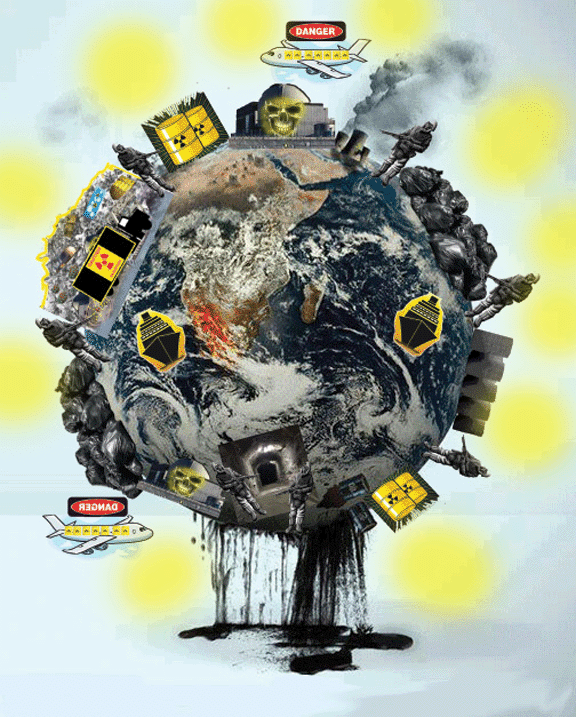
Activities related to nuclear weapons and nuclear power have created a vast archipelago of contamination.
Can it be remediated? With what effect?
The report is blunt about the limits of any remediation fix: “No solution exists for very long term risks, which extend out to hundreds of thousands of years and beyond.”
Can it be remediated? With what effect?
Nuclear weapons and nuclear power production have created a vast, global archipelago of contaminated sites that have endangered health and the environment and will continue to do so.
The sources of risk include 10 to 20 billion metric tons of radioactive uranium mine waste, on the order of a billion tons of radioactive mill tailings, over 150 metric tons of separated plutonium (enough for roughly twenty thousand Nagasaki-type bombs) that is now waste, and millions of terabecquerels of fission and activation products dispersed in air, soil, and water bodies due to nuclear weapons testing.
Remediation can mitigate the risks in the short- and medium-term in many cases. The other side of the remediation coin is radioactive waste and its disposal. That too can reduce risk relative to no remediation. However, waste disposal also creates new risks, especially from long-lived radionuclides. As a result, some safety, health, and proliferation risks will remain essentially forever.
This is the finding at the center of a new report the Nuclear Truth Project commissioned from Arjun Makhijani, Ph.D., President of the Institute for Energy and Environmental Research (IEER).
Whilst the Treaty on the Prohibition of Nuclear Weapons (TPNW) addresses harm from the use and testing of nuclear weapons, as the report clearly states in its preface, the Treaty “does not deal with the upstream harms from nuclear weapons production, which start with uranium mining and milling.”
Those harms “have been inflicted on many countries, starting with Congo, whose mines, exploited by its Belgian rulers of the time, were the source of most of the uranium for the Manhattan Project.”
The chain begins in Congo
Shinkolobwe was the richest mine in the world– with over 60 percent uranium in its ore. This extremely rich ore was shipped to the United States by the Belgian imperialists who colonised Congo; it became the material foundation of the Manhattan Project, including the bombs used on Hiroshima and Nagasaki, and the bomb tested in New Mexico, on 16 July 1945.
Congo, like many other countries that have supplied uranium to nuclear weapons or power states, has never had nuclear weapons or nuclear power. Yet, they are all left with the radioactive mine waste from uranium mining.
The scale of the waste
“Each step starting with mining, creates radioactive waste and radioactive contamination.”
The report shows that global uranium mine waste is likely to be between 10 billion and 20 billion metric tons, this is enough to “cover 1.4 million to 2.8 million soccer (football) pitches to a depth of one meter, or fill four million to eight million two-meter deep Olympic-size swimming pools”.
In addition to this, there are about one billion metric tons of mill tailings and over 150 metric tons of excess separated plutonium – enough for “roughly twenty thousand Nagasaki-type bombs.”
The globally dispersed pollution includes “millions of terabecquerels of fission and activation products dispersed in air, soil, and water bodies due to nuclear weapons testing.”
Nuclear Injustice: The case of the Marshall Islands
A member of a U.S. Atomic Energy Commission advisory committee described the Marshallese, in 1956, as people the U.S. could study “closer to us than the [experimental] mice.” This decision to study them as experimental subjects arose from the contamination of their land and waters due to the 67 nuclear weapons that the United States tested on Bikini and Enewetak Atolls in the Marshall Islands.
Despite the U.S. government undertaking a ‘cleanup’ at Enewetak Atoll that resulted in over 70,000 cubic meters of waste, the operation only recovered 0.25 kilograms of plutonium, less than 1% of the estimated 30 kilograms on Enewetak Atoll and its lagoon. Other radionuclides were not part of the remediation plan.
Remediation standard
Setting remediation standards requires setting dose limits for people far into the future. Enforcement is not practical to ensure the standard will be met. Modeling is therefore required, which in turn necessitates a choice of who will be exposed at at the remediated site far into the future. A resident farmer family has been a traditional, and reasonable choice. But this is not enough. Diets need to be modeled too. For adults, the default has been ‘Reference Man’ who is defined as a young, male Caucasian who is “Western European or North American in habitat and custom.”
The report notes that this is “an unsatisfactory generalization”; for instance the ‘Reference Man’ diet would not reflect the traditional diet of the people of the Marshall Islands, besides not taking into account the differences between men and women’s diets.
Moreover, as the report notes, No radiation standard explicitly protects the embryo and fetus of pregnant members of the public, present or future.”
Uranium mine remediation
Large numbers of uranium mine sites remain unremediated. Some remediation proposals, like the ablation of mine wastes to concentrate uranium proposed in the United States would make contamination worse. Some sites in France have been remediated; many await remediation. The report also notes that
“Remediation in Australia is largely similar to that in France. In the United States, plans for the remediation of the Quivira mine site in the Navajo Nation mine site involved their removal from the Nation’s land and disposal in a special cell in a New Mexico State landfill used for municipal waste.”
and that
“The best examples of remediation among those reviewed in this report (which is not a comprehensive review) are the remediation of the Ranger mine in Australia and the remediation after German reunification of various mines in the former East Germany.” In the case of the Ranger mine, it was the resistance of the Mirarr people that led to stringent remediation standards and a commitment to end mining in the area.
Why this matters for the TPNW
“Remediation should be understood as risk reduction because there is always a residual risk… Much of the process is a transfer of some of the risk from future generations who would suffer harm from unremediated places to the present and near future.”
The TPNW’s Articles 6 and 7 commit states parties to victim assistance and environmental remediation. Importantly this report makes the case for extending that same accountability upstream: to the mines and mills, and to the countries and communities that have carried this burden since long before any weapon was tested.
The report’s preface notes that “A part of the reluctance to address upstream issues may stem from the fact that is that there is a large overlap in upstream processes with nuclear power, which needs the same source material – uranium.” It also notes that that the costs can and should be parsed between the two, enabling the proper assignment of responsibility for the harm.
The report is blunt about the limits of any remediation fix: “No solution exists for very long term risks, which extend out to hundreds of thousands of years and beyond.”
Nuclear station cleaning balls wash up on beaches
Tom BurgessNorth East and Cumbria, 3 Aug 26, https://www.bbc.co.uk/news/articles/c0l5kln078do
Dozens of bright blue balls used for cleaning a nuclear power plant have washed up on a beach.
Walker Neil Baldwin said more than 40 taprogge balls, which come from Hartlepool power station, were spread along the high tide mark along Redcar beaches.
He said he had seen them regularly during the 20 years he has lived near the beach and was worried about birds or dogs eating them.
EDF Energy, which runs the power station, did not address questions about possible faults in its system, instead the company claimed to have “significantly reduced the number of releases over the past 18 months”.
Taprogge balls are used to clean stretches of pipework and, occasionally, some are released into the environment, according to the company.
EDF said tide patterns can wash debris on to nearby beaches but it had received no reports of similar finds since April.
The firm did not confirm how many balls it had collected in the last year but did say the balls are biodegradable in seawater.
“I noticed a lot of them and I kept seeing more and more as I was walking,” he said.
“I looked for a bag to pick them up in and I found a plastic bottle which I filled on my walk back.”
Saltburn resident John Stevens said he “didn’t understand what they were” when he started litter picking 14 months ago.
“I understand they can cause an ingestion risk to marine wildlife and they contribute to coastal litter in the ocean,” he said.
“I find it ironic that they clean the power plant machines, but there is a potential they come out and mess up the sea life and beaches.”
EDF said anyone who finds taprogge balls should report the exact location to the company or the Environment Agency so debris can be removed.
AI Wants Your Land, Water, Power

The bigger data centers, which are in vogue, being built right up next to hospitals, schools, and residences willy nilly use anywhere from 1-to-7 million gallons of water per day. On average, equivalent to moving 15,000-20,000 new families into a neighborhood.
Robert Hunziker, July 27, 2026, https://www.counterpunch.org/2026/07/27/ai-wants-your-land-water-power/
“This is just like a free-for-all. There’s really no oversight. There’s really no regulation.” (Erin Brockovich, Brockovich AI Data Center Reporting)
Erin Brockovich is a well-known American consumer advocate who made her name by exposing evidence that Pacific Gas & Electric poisoned groundwater in Hinkley, California (1996) with toxic hexavalent. Now, she’s investigating AI datacenters.
AI date centers are everywhere, in every state throughout the land. They are starting to quasi-own American citizens via appropriation of resources, both human and natural. This is an invasion of the land, the water, the power, the intellectual resources of America.
Erin Brockovich was recently interviewed about her commitment to investigating AI development by Katie Couric, appearing on YouTube.
Erin: “I’ve never seen in 30 years anything like this… This is every town in every state, and all our resources at once happening.”
The common thread in submissions from individuals in communities across the land: “it feels to them like a takeover.” First, there is a lack of transparency. Local city councils, where “the people” should be represented are hijacked via non-disclosure agreements signed by local officials. This is step number one in gaining approval to build where city regulations and city code control the land. The locals are left out of decisions.
Datacenters Consume Natural Resources
Smaller data centers use about 500,000 gallons of water per day. The average family of four uses ~350 gallons of water per day. Therefore, a newly constructed small data center is equivalent to moving 1,428 new families into a neighborhood.
The bigger data centers, which are in vogue, being built right up next to hospitals, schools, and residences willy nilly use anywhere from 1-to-7 million gallons of water per day. On average, equivalent to moving 15,000-20,000 new families into a neighborhood.
“So, if we build 1,200 data centers… that’s the projection for the total and you just take an average of those between 500,000 to seven million, and the average is 5 million gallons per day, and multiple that by 365 days. You’re looking at numbers of 2.2 to 2.7 trillion gallons of water per year… that are on already drought restricted lands.” (Erin)
(There are already 4, 542 active data centers, 1,500 more are in the planning stage.)
A recent study by The Guardian found that 2/3rds of the planned data centers in the U.S. are in drought-stricken areas.
Datacenters disrupt the regular flow of water. For example, residents sent reports to Erin “of water bills going from $40/month to $250/month… and we’re seeing the exact same thing with electrical.”
According to Katie Couric, Sam Altman, CEO of Open AI, dismisses concerns about AI water use, “fake, completely untrue, totally insane, and having no connection to reality.”
In response, Erin wondered if Altman lives in the areas and experiences what residents report to her. He is implying that the reports by residents are false (16,000 total submissions to Erin by individuals involving various AI issues). “It is insulting.”
Erin asked AI itself in a query to the faceless genius a question of placement of data centers assuming the entire network were to start all over again from scratch, redesigned. AI responded that it would place new data centers based upon one simple rule: “Zero conflict with human resources.” Hmm.
“The people” who submit to Erin from all 50 states are saying the opposite of Sam Altman. And she’s going with the people as a more credible source. After all, they live in the immediate area of data centers. He does not.
Data Center Noise – Wow!
The “hum,” the “buzz” can extend a couple of miles away from a data center. The endless humming is a 24/7 annoyance that’s driving some people nuts. Residents are informing Erin of dizziness, nausea, headachy experiences. This is a common issue tbat’s reported from every one of the facility areas in the country.
Locals Fighting Back
Three hundred (300) municipalities have established moratoriums on data center development, some for one year, some for two years, some six months, some are flat-out bans.
But according to Erin, as usual, “many of them won’t be able to withstand the pressure by huge corporations that have got all the money in the world.”
Yet, public protests can exercise powerful influence. For example, in Utah it was clearly via public opposition that the governor had to scale back the size of the facility coming in.
And New York is the first state to ban development of new data centers as a moratorium for one year and direct state regulators to create standards focused on environmental impacts, energy demand, water usage and other factors: “As datacenter development threatens to hike up utility bills, deplete our natural resources, and create uncertainty for New Yorkers, it’s my responsibility to take action and lead,’ Hochul, a Democrat, said in a statement.” (New York Becomes First State to Impose One-Year Pause on New AI Datacenters, The Guardian, July 14, 2026)
According to Katie, a recent Gallup poll shows 7 out of 10 Americans oppose data centers being built near them, making it one of the few contemporary issues that has broad bipartisan agreement, republicans and democrats alike do not favor AI datacenters in their locales.
Meanwhile, the power source for data centers is passed off to consumers. Infrastructure is required. Erin has received submissions from people stating their utility bills normally $75 went up to $425. A recent submission by a resident out of Texas, which has the most data centers at 417, said their city notified residents to expect a 75% electrical bill increase.
Stated by Katie: According to The New York Times, PJM, the nation’s largest electrical grid operator’s results of an electricity auction will add $6.3 billion costs to consumers within the next 3 years, an increase driven by the power demands of data centers.
AI Ownership
Katie Couric’s interview of Erin Brockovich brought to light the impact AI has on the country’s natural resources but did not discuss nontangible resources like music or speech or art. These human resources, similar to natural resources, are public resources. Who owns these resources?
Bernie Sanders has an interesting take on ownership of resources: “The foundation of AI is based on our collective human intelligence. Our books, songs, artwork, journalism, computer code, scientific research, videos, conversations, images, and ideas span generations. The reality is that Big Tech oligarchs have fed this knowledge into their AI models without permission, without acknowledgement, and without compensation. The creative work of many millions of people – writers, artists, musicians, journalists, teachers, scientists and ordinary people- has been stolen by the wealthiest people in the world. In the coming weeks I will be introducing the American AI Sovereign Wealth Fund Act. This legislation would give the public a direct ownership stake in the largest AI companies in our country. Through a one-time 50% tax, not on the profit of the largest AI companies in the US but something that is far more valuable than that: The Stock. Under this bill the federal government would have the power through its voting shares and an equal representation on each company’s board to block decisions that hurt the public and to push for policies that help them. When a public resource generates wealth, the public should share in that wealth.”
Robert Hunziker lives in Los Angeles and can be reached at rlhunziker@gmail.com.
Federal government proposes to lessen nuclear reactor environmental reviews

Edwin Lyman, director of nuclear power safety at the Union of Concerned Scientists, said that the move takes away an education tool for the public.
“If you don’t do the NEPA evaluations, then the public might not even know or understand how bad things could get,” Lyman said.
Comments:by Rachel Frazin – 07/09/26
A key government agency is proposing to lessen the scope of environmental reviews for nuclear reactors, limiting public input and exempting some reactors altogether.
The Nuclear Regulatory Commission (NRC) on Wednesday announced that it is narrowing review under the National Environmental Policy Act (NEPA), a bedrock environmental law.
This includes exempting reviews of some activities altogether, including the reapproval of existing reactors, as well as some new reactors.
For other projects, the agency will still review radiological impacts — but it is proposing to no longer consider factors such as dust, noise and air pollution that it says are beyond its scope.
NRC Chair Ho Nieh also said that the agency is also proposing to no longer issue draft environmental reviews, limiting the public’s ability to weigh in to the start of the process before the environmental impacts are considered.
Nieh described the move in a written statement as “concentrating on impacts the NRC can address,” adding that it would “strengthen environmental protection while making licensing reviews more timely and predictable.”
However, Edwin Lyman, director of nuclear power safety at the Union of Concerned Scientists, said that the move takes away an education tool for the public.
“If you don’t do the NEPA evaluations, then the public might not even know or understand how bad things could get,” Lyman said.
The move comes amid other deregulatory efforts from the independent agency as the Trump administration pushes to quadruple the nation’s nuclear power capacity.
Last week, the NRC proposed to eliminate a long-standing nuclear power safety principle that directed plants to keep radiation levels “as low as reasonably achievable.”
What is it like living near the site of a new nuclear power station?
Richard Daniel,at Sizewell andLaura Devlin, BBC 11th July 2026
New satellite images show how one of the largest construction projects in Europe has transformed the Suffolk countryside. But what is it like living close to the site of a new nuclear power station and associated infrastructure?
Sizewell C itself is yet to take shape – but construction work has already hugely changed the landscape on one part of the Suffolk coast.
Satellite images reveal how the surrounding countryside looked in 2024, before work began, with swathes of green fields around the town of Leiston, up to the existing Sizewell B power station.
Fast forward to April this year, and it is a very different picture. Almost all the sandy-brown areas are construction sites, where a new link road off the A12, a new bypass, two park and ride sites and a new railhead are all being built simultaneously.
Sizewell C has said the infrastructure will ease congestion and improve safety, but residents say they have had to put up with noise, diversions and road closures.
Diane Flowitt-Hill lives beside a recently completed new roundabout at Yoxford. She is also close to the construction site of a four-mile (6.5km) link road, which will take Sizewell C traffic straight to the A12, bypassing the villages of Theberton and Middleton Moor.
“It’s been absolutely horrendous – the vibrations, the dust, the noise,” she explains.
“It’s non-stop.”……………………………………………………………………………………………………………………………………………………………………………………………………………………. https://www.bbc.co.uk/news/articles/c0lyj21jrxeo
Stirling nuclear site plan mooted in new report as politicians hit out

A report from Great British Energy Nuclear has highlighted a number of potential sites in Scotland which could host a nuclear power station – with a location in Stirling among them.
Stuart McFarlane, 07 Jul 2026, https://www.dailyrecord.co.uk/news/local-news/stirling-nuclear-site-plan-mooted-37398446
A report identifying Stirling as a possible location for a future nuclear power station has been met with criticism.
The report was penned by Great British Energy Nuclear on behalf of UK Government Energy Secretary Ed Miliband amid a possible push into increasing the capacity of nuclear power across the UK.
As part of the document, a number of potential sites across Scotland are put in the spotlight for being host sites if the Scottish Government’s opposition to hosting nuclear sites was to change in the future.
Among the six locations of interest is the south bank of the River Forth in Stirling.
The experts commissioned for the report state: “Parts of the south bank of the River Forth meet key siting criteria, offering flat land, access to transport networks and proximity to an established energy producing region.
“Cooling water availability is likely to be a limiting factor, with reliance on river abstraction and no supporting flow data currently available.
“The inland nature of the area suggests smaller scale reactors and cooling units may be more appropriate than large GW-scale deployment. Flood risk, interaction with other river users and nearby COMAH sites require further assessment.”
Stirling is mentioned alongside Torness in East Lothian, the land around the existing nuclear site at Dounreay in Caithness, Hunterston in North Ayrshire, the north shore of the Firth of Forth Estuary and the coastline of Angus and Aberdeenshire as possible locations.
But Mid Scotland and Fife Green MSP Mark Ruskell hit out at UK Government ministers and energy chiefs for the report.
Mr Ruskell said: “Labour’s obsession with forcing a new generation of nuclear power on Scotland rides roughshod over devolution and ignores the will of the Scottish Parliament.
“It is also a costly and counterproductive distraction from the real energy priorities facing Scotland.
“It’s an absurd suggestion from the Labour Westminster Government that there could be a nuclear power station in the Stirling area.
“We generate far more energy than we need locally, with wind farms and hydro power schemes benefiting the climate, energy security and local communities. We can’t let this Westminster Government impose a toxic legacy on Scotland. Folks in Stirling do not want to be part of this costly nuclear power experiment.
“Instead of pouring money into expensive nuclear projects, the UK Government should be backing renewable energy that can create jobs, cut bills and strengthen energy security at a fraction of the cost.
“Our priority should be creating clean, green, secure jobs that support nuclear workers into new industries while revitalising communities across Scotland
The opposition was echoed by Stirling MSP Alyn Smith, who posted on his Facebook page: “This very odd paper just published by Labour’s GB Energy Nuclear has identified Stirling as a suitable site for a nuclear plant, but also seemingly dismissed it, read for yourself.
“The paper also recognises that Scotland’s government will block any new nuclear, and quite right too because we don’t need this old expensive tech when Scotland has won the energy lottery with renewables.”
We’re being asked to save two buckets of water a day. Meanwhile data centres drink a town’s worth

England is heading for a 5bn-litre daily water shortfall by 2055 – so why is the government fast-tracking one of the most water-hungry industries there is, and letting it keep its consumption private, asks campaigner Adele Walton
Adele Walton, Jul 8, 2026, https://www.thenerve.news/p/adele-walton-heatwave-data-centres-water-shortage?utm_source=www.thenerve.news&utm_medium=newsletter&utm_campaign=farage-under-fire-tuesday-edition&_bhlid=8b1d393304f745e4dafb1328c154dd5ec4a3e882
Lying on my bedroom floor in front of a fan with a wet flannel on my head, desperately trying to cool down in the middle of the UK’s historic heatwave last month, I couldn’t stop thinking about one thing. Data centres.
Every time I had a cold shower for a temporary relief, I was haunted by the knowledge that AI data centres are already gobbling up millions of litres of water that they require for cooling, and I became fearful of a day where I might turn on the tap and not be able to get a drop. I would go to my local park to seek shade and a cool breeze to no avail and have pressing visions of superscale data centres that endlessly whir and hum and churn out emissions. This is dystopian, but it’s not unrealistic. Lying on my bedroom floor in front of a fan with a wet flannel on my head, desperately trying to cool down in the middle of the UK’s historic heatwave last month, I couldn’t stop thinking about one thing. Data centres.
Every time I had a cold shower for a temporary relief, I was haunted by the knowledge that AI data centres are already gobbling up millions of litres of water that they require for cooling, and I became fearful of a day where I might turn on the tap and not be able to get a drop. I would go to my local park to seek shade and a cool breeze to no avail and have pressing visions of superscale data centres that endlessly whir and hum and churn out emissions. This is dystopian, but it’s not unrealistic.
England is predicted to reach water shortages of 5bn litres a day by 2055. Data centres are increasingly becoming one of the most water-intensive forms of infrastructure and the AI hype is rapidly exacerbating the speed at which our natural resources get stolen by Big Tech. Research by the campaign group Global Action Plan reveals that 84% of projected data centre developments in the UK are expected in areas already water-stressed or projected to be water-stressed by 2040.
What makes this even more scandalous is the fact that the UK government classified data centres as critical infrastructure in September 2024, ranking them as important as essential services such as water, energy and even emergency services systems. Far from proceeding with caution, the government is bending over backwards to appease AI companies and attract their investment, at the expense of our planet.
Andy Burnham’s recent appointment of James Purnell – the former chief executive of corporate lobbying firm Flint Global, whose clients included Apple, Google, Amazon and other tech giants – as his chief of staff highlights the revolving-door relationship between lobbyists and government. The EU, which had previously seemed to be taking a stronger stance on regulating the AI industry, is caving in to pressure, and is already preparing to water down plans to rate data centres on energy and water use, after pressure from tech lobby groups.
It’s vital that the next prime minister prioritises public need over private greed if we are to avoid heading straight into a climate crisis sponsored by Silicon Valley
How can we trust that our government will act in our interests when they consistently prioritise Silicon Valley’s financial motives? Eager to position itself as a global leader in the space race unfolding across the AI industry, the UK government is fast-tracking £14bn of private investment into data centres and AI growth zones.
Quite frankly, it’s insulting that the government has launched their biggest ever campaign to encourage the British public to reduce water usage in a heatwave, while charging full steam ahead with data centre expansion. The government campaign urges Brits to cut their daily use by 28 litres; meanwhile, hyperscale data centres consume the equivalent of 10,000 people’s daily needs in a single day. Time and time again, the onus is put on individuals to make lifestyle changes that will barely make a dent, while tech corporations are given a get-out-of-jail-free card by our governments.
As it stands, data centres are not required to disclose their water usage, and tech companies that do consistently underestimate their environmental impact. In May, Google’s developers were found to have understated by a factor of five the carbon emissions of two proposed AI data centres in Essex, again highlighting the lack of transparency within the industry. This is why climate charities and local communities are calling for a moratorium on all new data centre developments until necessary environmental regulations are in place. Our politicians ought to be managing data centre development, making decisions that protect our communities from the extractive nature of the AI boom.
Just a few weeks ago, I helped organise a protest at London’s historic Truman Brewery venue on Brick Lane with Pull The Plug and Global Action Plan, because while the AI hype was being championed locally at the SXSW festival, lots of people weren’t aware of the current plans to turn part of this popular social and creative hub into a data centre. AI data centre development is being rushed through, right under our noses, while we get no say in where they’re built, what resources they access and how they’ll affect our lives. But now, the difficulty of just existing in a heatwave makes the need to push back against AI data centre development in the UK more urgent.
It’s vital that the next prime minister prioritises public need over private greed if we are to avoid heading straight into a climate crisis sponsored by Silicon Valley. Unquestioned AI expansion is directly in conflict with the planet’s limits, and the burden of political shortsightedness will fall on us if our government presses on – manifesting in unbearable temperatures, water and energy scarcity, and loss of life. Across the political spectrum the general public want stronger regulation of AI; politicians ought to see taking a bold stance on AI governance as a political opportunity, not a problem.
Adele Walton is a journalist and online safety campaigner. She is the author of Logging Off: the Human Cost of our Digital World and co-founder of Logging Off Club
1 This Month





PLEASE OPPOSE HR 8255 AND S.3639 – bills would accelerate satellite deployment, with no environmental review or safeguards – https://ncstd5li.quorum.us/campaign/169331/
To see nuclear-related stories in greater depth and intensity – go to https://nuclearinformation.wordpress.com
-
Archives
- October 2026 (19)
- September 2026 (339)
- August 2026 (330)
- July 2026 (355)
- June 2026 (287)
- May 2026 (306)
- April 2026 (356)
- March 2026 (251)
- February 2026 (267)
- January 2026 (308)
- December 2025 (358)
- November 2025 (359)
-
Categories
- 1
- 1 NUCLEAR ISSUES
- business and costs
- climate change
- culture and arts
- ENERGY
- environment
- health
- history
- indigenous issues
- Legal
- marketing of nuclear
- media
- opposition to nuclear
- PERSONAL STORIES
- politics
- politics international
- Religion and ethics
- safety
- secrets,lies and civil liberties
- spinbuster
- technology
- Uranium
- wastes
- weapons and war
- Women
- 2 WORLD
- ACTION
- AFRICA
- Atrocities
- AUSTRALIA
- Christina's notes
- Christina's themes
- culture and arts
- Events
- Fuk 2022
- Fuk 2023
- Fukushima 2017
- Fukushima 2018
- fukushima 2019
- Fukushima 2020
- Fukushima 2021
- general
- global warming
- Humour (God we need it)
- Nuclear
- RARE EARTHS
- Reference
- resources – print
- Resources -audiovicual
- Weekly Newsletter
- World
- World Nuclear
- YouTube
-
RSS
Entries RSS
Comments RSS

