NUCLEAR HOTSEAT. Women, Children At Greatest Risk from Nuclear Radiation – UN Report by Mary Olson, Dr. Amanda M. Nichols

This Week’s SPECIAL Featured Interview:
United Nations report on the generational impact of nuclear radiation on women and children, written by Mary Olson of Generational Radiation Impact Project and Dr. Amanda M. Nichols.
We all accept as proven scientific and medical fact that human exposure to ionizing radiation from nuclear weapons and their production is damaging to human health. But how do we know that? Who figures out how bad it can be? How much radiation we can be exposed to without risking our health? And how valid are those measurements?
We learn the alarming truth behind how those numbers were generated and what needs to be done instead from today’s guests, co-authors of the new report for the United Nations Institute for Disarmament Research, Gender and Ionizing Radiation: Towards a New Research Agenda Addressing Disproportionate Harm:
Mary Olson holds a degree in Evolutionary Biology and has been an educator on radiation health impacts while serving nuclear-impacted communities… and so much more. Her website is RadiationProject.org- Amanda M. Nichols, PhD, is a Postdoctoral Researcher in the Environmental Studies Program at the University of California, Santa Barbara. Nichols research focuses on illuminating the role of women in the North American anti-nuclear movement. Email contact: Dr.Amanda.M.Nichols@gmail.com
Gender and Ionizing Radiation: Towards a New Research Agenda Addressing Disproportionate Harm is cornerstone information in the movement to rid our planet of nukes. It is available for free downloa or pdf HERE.
Further References mentioned in the interview and additional Resources:……………………………………………………………
The Trump administration’s reckless attack on radiation protection will have long-term consequences for public safety

In the absence of an objective ALARA (as low as reasonably achievable) cost-benefit analysis, future decisions on limiting doses from ionizing radiation to workers and the public from nuclear power operations will be determined in significant part by the relative political strengths of industry and regulators. Under the Trump administration, the industry clearly has the upper hand.
Just as it did with air pollution rules, the Trump administration has now, in effect, set the value of American lives to zero in regulatory protections against nuclear-radiation-caused cancer.
the attacks of the Trump administration on public safety must be exposed.
By Frank von Hippel | Analysis | May 27, 2026, https://thebulletin.org/2026/05/the-trump-administrations-reckless-attack-on-radiation-protection-will-have-long-term-consequences-for-public-safety/?utm_source=ActiveCampaign&utm_medium=email&utm_content=The%20Trump%20admin%20s%20attack%20on%20radiation%20protection&utm_campaign=20260528%20Thursday%20Newsletter
Worldwide, regulations limiting doses from the radiation emitted by nuclear fissions and decays are based on the Linear No-Threshold (LNT) model. This hypothesis posits that, irrespective of whether ionizing radiation comes in a pulse or over years, the additional risk of developing cancer as a result is proportional to the cumulative amount of energy deposited per gram of tissue, with weighting risk factors for radiation type, sex, age, and specific organs.
Since 1975, the US nuclear industry has been required to limit exposures to workers and the public to “as low as reasonably achievable” (ALARA) levels. What the ALARA level should be is determined by cost-benefit analysis in which the costs of dose reductions are compared with the benefits to workers and the public, measured in terms of reduced disease and longer life expectancy.
In May 2025, four months after taking office, the Trump administration challenged this five-decade-old regulatory approach as part of an Executive Order “Ordering the Reform of the Nuclear Regulatory Commission” (NRC). The order claimed the “NRC utilizes safety models that posit there is no safe threshold of radiation exposure and that harm is directly proportional to the amount of exposure,” which corresponds to the linear hypothesis. “Those models lack sound scientific basis,” the Executive Order added, before directing the NRC to “reconsider reliance on the linear no-threshold (LNT) model for radiation exposure and the ‘as low as reasonably achievable’ [ALARA] standard, which is predicated on LNT.”
The Nuclear Regulatory Commission had reviewed exactly this question in 2021 in response to a campaign by advocates of the radiation “hormesis” theory, which posits that low doses of ionizing radiation actually protect against cancer by stimulating the body’s DNA repair mechanism—the exact opposite of ALARA. The NRC rejected that contention, concluding that “the LNT model continues to provide a sound regulatory basis for minimizing the risk of unnecessary radiation exposure to both members of the public and radiation workers.” As a result, the commission maintained the current dose limit requirements contained in its regulations.
But President Donald Trump’s decision to bring independent regulatory agencies under White House control and to fire the NRC’s chairman ended the commission’s resistance. On July 2, 2025, an anonymous NRC spokesperson enthused in a social media post that the Executive Order reforming the NRC “gives us a chance to reconsider our radiation protection framework in support of the whole-of-government effort to safely enable the nation’s use of nuclear power.”
Two weeks later, the NRC hosted a webinar for input on the issue of the LNT hypothesis. The Nuclear Energy Institute—the US nuclear industry’s lobbying organization—recommended that the commission remove ALARA and dose minimization as regulatory requirements. Instead, the institute proposed to establish a “practical threshold”—for instance, 2 rem per year (or 20 milliGray per year for gamma rays) for workers—below which further dose reduction would not be required. (The rem is a unit of effective absorbed radiation in human tissue, equivalent to one roentgen of X-rays. One millirem is one-thousandth of a rem. The Gray measures the absorbed dose, which is the physical amount of radiation energy absorbed by any material or tissue. One Gray corresponds to one Joule per kilogram.)
Radiation hormesis.
Read more: The Trump administration’s reckless attack on radiation protection will have long-term consequences for public safetyAdvocates of the theory of radiation “hormesis” do not believe the LNT hypothesis. Radiation hormesis is a fringe theory with passionate adherents who are taking advantage of the Trump administration’s skepticism about regulations of all types.
One of the most vocal hormesis advocates is Edward Calabrese, an emeritus professor of toxicology at the University of Massachusetts in Amherst. He argues that the evidence for the linear no-threshold hypothesis is based on scientific fraud and, therefore, should be replaced with a model that considers the possibility of no risk—and even possible benefits—from ionizing radiation below a certain dose.
Calabrese’s arguments persuaded some recent leaders of the Health Physics Society (HPS), an association of radiation-protection professionals, to host a 22-part, 10-hour video lecture series by Calabrese on the history of the LNT model in 2021-22. John Cardarelli, the HPS president when the videos were produced, summarizes Calabrese’s argument at the end of each video. In the final one, Cardarelli declares his conclusion that the LNT model is “based on flawed research, ideological motives, deliberate misrepresentation of the research record, and political agendas.”
Although the Health Physics Society declares that “the views expressed in these videos are not intended to represent official positions,” it also advertises that its associated credentialing organization, the American Academy of Health Physics, has “preapproved 10 continuing education credits for certified health physicists watching all 22 episodes of this video series.”
Physicist-epidemiologist Jan Beyea published a critique of Calabrese’s allegations in the HPS journal Health Physics, to which both Calabrese and Cardarelli have responded with lengthy rebuttals.
The research and reports Calabrese and his supporters are trying to discredit were done more than 50 years ago. For decades, the largest human population studied for radiation effects was the survivors of the 1945 Hiroshima and Nagasaki bombings, who, depending on their proximity to the ground zeros, were exposed to whole-body doses ranging from near zero to several Gray delivered in a single burst. But the cancer statistics for the Japanese survivors were not good enough to determine with high confidence carcinogenic effects in the dose range relevant for worker radiation protection (in the tens of milliGray per year). Hormesis advocates also argue that cellular mechanisms should be more effective in repairing the damage from low-rate radiation than from a nuclear explosion’s short pulse.
The lack of data on the effect of small low-rate doses left a gap in the epidemiological confirmation of the applicability of LNT estimates of the cancer risks from low doses to radiation workers and to civilian populations exposed to radioactive releases from nuclear accidents. That gap has been partially filled, however, in more recent studies of large populations of individuals who have received low-rate doses of ionizing radiation.
A directly relevant example is the INWORKS study done by an international consortium of researchers on the excess cancer deaths among approximately 310,000 nuclear industry workers in the United States, the United Kingdom, and France, whose radiation doses were measured and recorded throughout their decades of employment. As of 2012-16, this population had an average age of about 65, and about one third had died, with 28 percent of the deaths being due to “solid” cancers (abnormal masses of tissue arising in organs, glands, or bones), therefore excluding leukemia. Of those deaths, 5,500 to 14,000 were excess cases relative to the rate observed in a control group of 51,000 nuclear workers with near-zero occupational doses.
Figure 1 [on original]shows the rate of excess deaths from solid cancers in this population as a function of cumulative on-the-job dose 10 years before death, assuming that any solid cancer caused within the last decade of life would not have had time to become lethal. The bars show the 90-percent probability range associated with the number of deaths in each dose bin; that is, there is statistically only a 10-percent probability that, with more data, the number of excess deaths would converge outside that range (5 percent chance above and 5 percent below). The solid line is the best linear fit of the data to the LNT model.
By this measure, there are significant excess cancer deaths among nuclear workers down to cumulative doses of 30 milliGray.
Energy Department’s takeover. In addition to bringing the NRC to heel, the Energy Department’s Office of Nuclear Energy has been inviting startups promoting new-design nuclear power reactors to build prototypes on department land, including the 900-square-mile footprint of the Idaho National Laboratory, where they will not be subject to NRC safety requirements.
According to President Trump’s May 23 Executive Order, the NRC will be required “to approve reactor designs that the Defense Department or the Energy Department have tested and that have demonstrated the ability to function safely.”
At most, the startups will only be able to demonstrate that they will not have had a serious accident or a near miss within their first few years of operation before they hope to build their reactors in large numbers across the country and export them abroad. In their efforts to compete with natural gas, photovoltaic, and wind power plants, the nuclear startups are under great economic pressure to cut safety and security requirements currently required by the NRC and other regulators around the world. Costly requirements include containment buildings that prevent the release of radioactivity to the atmosphere in case of a core meltdown accident. Regulations also include requirements that it be possible for the timely evacuation of areas around the reactors where the population could be at risk of high radiation doses from an accident, and robust around-the-clock guard forces to protect nuclear plants against potential sabotage.
By putting the Energy Department, which is pouring billions of dollars into nuclear startups, first in line in safety regulation, the Trump administration has partially undone the 1974 decision of the post-Watergate Congress to separate safety regulation from nuclear power promotion by breaking up the Atomic Energy Commission to create the NRC and Energy Department.
Even before the Trump administration, under political pressure from the nuclear industry through congressional Republicans, the NRC commissioners backed off by majority vote from requiring filtered vents for a set of US reactors designed by General Electric that were clones of the Fukushima-Daiichi reactors 1–3, whose small-volume containments released large amounts of radioactivity due to overpressure after core meltdowns. The NRC also refused to end the practice of dense-packing spent fuel pools to five times their design density despite Fukushima unit 4’s near miss of a potentially much more catastrophic spent-fuel fire because of an undetected water level drop.
The end of ALARA. After it was effectively given much of the responsibility of regulating the US nuclear industry, the Energy Department commissioned a review of the LNT hypothesis by the Idaho National Laboratory, which supports the Office of Nuclear Energy’s mission to promote new types of nuclear power reactors.
INL quickly produced a report, which cited a 2013 comparison by Mohan Doss of the LNT model against the radiation hormesis, as “[p]erhaps most significant for regulatory considerations.” Dr. Doss is a radiologist, not an epidemiologist. His article was published in the journal Dose-Reponse, which was founded in 2003 with Professor Calabrese as its editor-in-chief and focuses on hormesis advocacy. Contrary to what the INL report claims, Dr. Doss’ article is not a meta-analysis but rather an argument for radiation hormesis.
Doss starts by arguing at length that the atomic bomb survivors study would have shown a hormesis effect had it been compared with a control group that had a higher incidence of cancer. Doss even replotted the atomic bomb survivor data to show the result if such a control group were used. In fact, there are appropriate zero-dose control groups for the atomic bomb survivors study, including those who were away from the cities at the time of the bombings. When those control groups have been used in studies, they showed some non-linearity with dose for male cancers, but no hormesis effect.
At the same time, INL referenced but ignored the findings of two actual meta-analyses of low-dose studies: one by the National Council on Radiation Protection and Measurements and one by an international team of 16 cancer epidemiologists led by Michael Hauptmann and published in the Journal of the National Cancer Institute and partly funded by the National Cancer Institute, National Institutes of Health, and the Energy Department.
The National Council review concluded that “no alternative dose-response relationship appears more pragmatic or prudent for radiation protection purposes than the LNT model.” Hauptmann and colleagues found that “there is evidence of cancer risks from low-dose ionizing radiation.”
INL’s “reevaluation report” was quickly cited in a memorandum by the Department’s Undersecretaries of Science and Nuclear Security recommending that the Secretary of Energy “eliminate ALARA from all Department of Energy Directives and Regulations,” which he reportedly has done.
In the absence of an objective ALARA cost-benefit analysis, future decisions on limiting doses from ionizing radiation to workers and the public from nuclear power operations will be determined in significant part by the relative political strengths of industry and regulators. Under the Trump administration, the industry clearly has the upper hand.
The Trump administration’s Environmental Protection Agency has recently made a similar decision that it will no longer take into account the health benefits from limiting air pollution. In 2024, the Biden administration announced new limits on fine particulate pollution from coal power plants and other facilities. Those regulations were justified by an estimate that, on average, 77 dollars in health benefits would result from each dollar spent by industry on emission reductions and that the regulations would save 4,500 lives per year.
A climate reporter commented in the New York Times about the Trump administration’s decision to roll back the air-pollution regulation that, for over four decades, “different administrations have used different estimates of the monetary value of a human life in cost-benefit analyses. But until now, no administration has counted it as zero.”
Just as it did with air pollution rules, the Trump administration has now, in effect, set the value of American lives to zero in regulatory protections against nuclear-radiation-caused cancer.
The damage that will result from the evisceration of the Nuclear Regulatory Commission will not be immediate and may arguably turn out to be minor on the scale of the damage the Trump administration is doing in other policy areas. But public safety analysts and decision makers must keep track of the dismantlement of regulatory structures that have been built over generations. Hopefully, it will be possible to reconstruct some of them, with improvements where possible. In the meantime, however, the attacks of the Trump administration on public safety must be exposed.
Newly Released Tritium Review Analyzes LANL Tritium Reports, Highlights Infant Doses
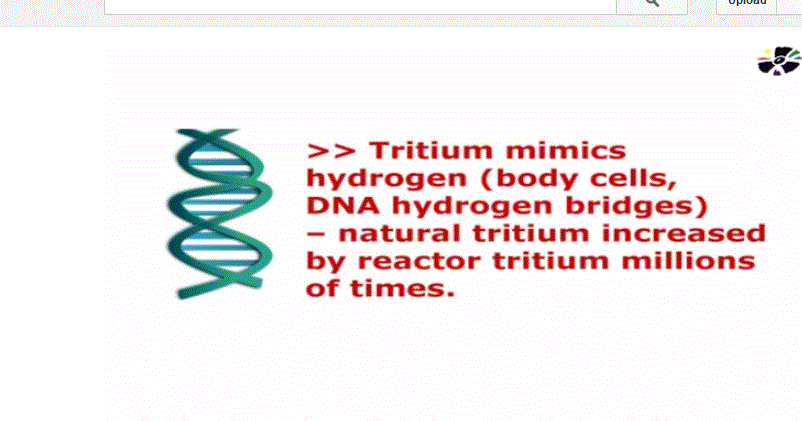
A newly released independent review of Los Alamos National Laboratory’s 2025 tritium venting raises serious concerns about radiation risks to children and infants and highlights major gaps in LANL’s public reporting and decision-making process.
The review also questions LANL’s decision to proceed with venting despite no measurable pressure buildup in the waste containers — meaning the explosion risk used to justify the releases may not have existed. https://www.ccwnewmexico.org/tritium
On May 14th, 2026, the Communities for Clean Water published the review analyzing two reports LANL released following its controversial September 2025 tritium release operations.
Authored by Dr. Arjun Makhijani, President of the Institute for Energy and Environmental Research (https://ieer.org/), the “Review of Los Alamos National Laboratory’s tritium venting reports – Volume 1 and Volume 2” provides a summary of the tritium venting as well as the data and estimates detailed in the two LANL reports.
1. FTWC Radioactive Air Emissions Summary, Volume 1: Stack Emissions & Off-Site Dose Consequence, LA-UR: 25-31093, November 14, 2025; and
2. FTWC Radioactive Air Emissions Summary, Volume 2: Environmental Sampling & Expanded Plume Modeling, LA-UR: 26-20967, February 17, 2026.
Notably, LANL formally acknowledged for the first time that estimated radiation doses to infants were more than three times higher than doses to adults — a change that came only after sustained public pressure and community participation in public meetings and hearings. Nevertheless, infant doses were not considered during the planning and modeling that took place prior to the tritium releases. LANL stated that infant doses would not be taken into account moving forward.
Very low doses of ionising radiation statistically still give children increased cancer risk
Kristin Shrader-Frechette: Millions of US children receive X-rays each
year, but university physicians recently discovered that radiation doses as
low as 1 to 5 millisievert may give these children small, but statistically
significant, increased risks of cancer. (A millisievert measures the
biological effect of ionizing radiation on human tissue.).
However, the
annual allowed public dose from each nuclear facility in the United States
is 1 to 5 millisievert. Because even a dose of 1 to 5 millisieverts likely
increases cancer risks, and at least 70 percent of US reactors have
released radioactivity that violates health standards, should populations
near nuclear facilities be tested?
Bulletin of Atomic Scientists 21st May 2026, May 2026
CHANGES TO RADIATION PROTECTION STANDARDS – FOR WORSE OR FOR BETTER?
Tony Webb, May 17, 2026, https://mail.google.com/mail/u/0/?tab=rm&ogbl#inbox/WhctKLcDwkXLRPthNZwfjCSsBVWXNmPvNPFqnmqNVGDcPLVtBDMvdgXHsDPZrKHkgNfHZjG?projector=1&messagePartId=0.1.1
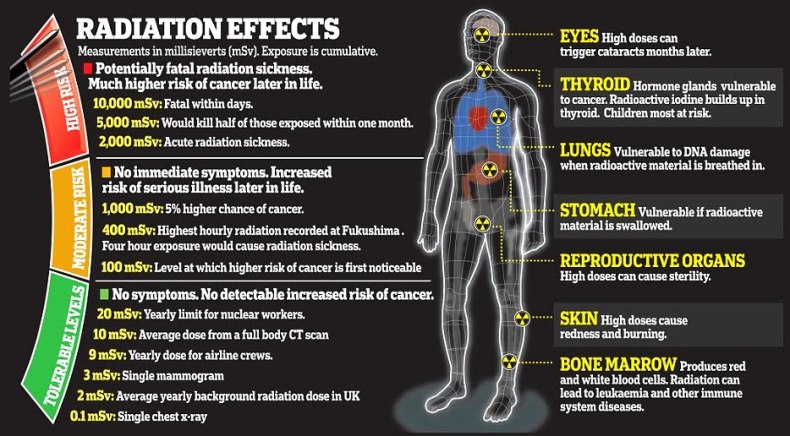
Changes for worse or better protection for workers and the public is on the international
and national political agenda in a number of countries. Trade Union, environment and
public health groups around the world are concerned that the USA is considering proposals
that would weaken radiation protection standards at a time when the scientific evidence
suggests these need to be significantly tightened.
Our concern arises as a result of a Directive (EO 14300) 1 issued in May 2025 by US President
Donald Trump requiring the US Nuclear Regulatory Commission (NRC) to review nuclear
safety regulations with particular reference to radiation protection of workers and the
public. The Directive instructs the NRC to abandon fundamental principles that have
formed the basis for radiation protection for much of the past century. These include: the
internationally accepted position that there is no threshold or safe level of exposure; that,
as a consequence, all exposures should be kept as low as reasonably achievable (ALARA) ;
and all exposures to workers and the public be kept below strict annual limits in line with
the best evidence of radiation-induced health risks.
The evidence used to set current standards was drawn mainly from the studies of cancer
rates among the Japanese A-bomb survivors who were exposed to relatively high doses over
short time periods. Since then studies of workers in nuclear power facilities exposed to
lower doses over long time periods show higher rates of cancer than predicted by the
Japanese studies. Rather than indicating any threshold these studies suggest that at low
doses the cancer rates are proportionately higher than expected from the Linear No-
Threshold model used to set current standards. 2 Worker studies also show elevated rates of
cardio-vascular diseases 3 , and increased rates of dementia 4 . In addition, studies on
populations around nuclear power plants are now showing higher cancer rates affecting
particularly children 5 and the elderly 6 – correlated to how close they lived to these facilities.
Despite this mounting evidence that exposure limits should be lowered the likely result of
changes in line with the Presidential directive would be to increase the permissible exposure
limit for workers and the public to five times the current internationally recommended
level.
The US NRC is clearly faced with a dilemma. To adopt the changes demanded by the
President would require reversing its 2021 decision that specifically rejected these same
proposals 7 . The initial date for publication of the NRC’s draft response for public
consultation was 23 February 2026. This was deferred to 30 April and again at short notice
to 24 June. One might speculate that despite large scale resignations and lay-offs among
NRC staff there remain some with scientific integrity opposing the changes. However the
final revision of standards is required by end of November 2026. Given the President’s
record for seeking retribution on government representatives or officials who oppose his
plans it is hard to see any outcome from the NRC other than a change to weaken the US
standards.
There will also likely be pressure on international and national standards agencies to align
with changes in the USA. Some push-back can be expected. Already the heads of European
standards agencies have issued a statement supporting the LNT and ALARA principles and insisted that exposure standards be set on the basis of the scientific evidence without
undue influence. 8 However NRC changes in line with the Trump Presidential Directive will
embolden the nuclear power lobby and create pressure for change where there are joint
ventures involving US military or industrial interests. These changes are also likely to
impede public pressure for review and improvement of current standards.
In Australia, for example, there are a number of joint ventures in uranium and radioactive
rare earths and mineral sands mining and the government has already established a
separate Naval Nuclear Power Safety Regulator (ANNPSR)to oversee all aspects of
construction, operation, maintenance, decommissioning and nuclear waste management
under the Australia-UK-US (AUKUS) nuclear submarine program. While these standards are
expected to be consistent with those of the current Australian Radiation and Nuclear Safety
Agency (ARPANSA) the pressure for change can come from either agency. Hopefully it will
be politically independent science-based pressure to not merely oppose the direction
prompted by the US President’s directive but for better standards to protect health of
workers and the public where they are routinely exposed to ionising radiation.
References and Further Reading……………………………………
Infant mortality rates in San Luis Obispo County in proximity to the Diablo Canyon Nuclear Power Plant.

Radiation and Public Health Project (RPHP) Joseph J. Mangano MPH MBA, April 29, 2026
EXECUTIVE SUMMARY
The two Diablo Canyon nuclear reactors in San Luis Obispo County CA began operations in 1984
and 1985. They have generated enormous amounts of highly radioactive waste. Most is stored at
the site, but some is routinely released into the environment – and into humans through breathing,
food, and water. However, no studies on health effects to the local population have been done.
Exposure to radiation is especially harmful to the fetus and infant. This report analyzes trends and
current patterns of newborn and infant health in San Luis Obispo County, compared to the state of
California. Results show that county rates have shifted from below to above the state:
Infant Deaths. Before Diablo Canyon opened (1968-1984), the county death rate under one year
was 16% below the state. Most recently (2010-2024), the county was 1% above the state, including
11% and 23% higher for white non-Hispanics and white Hispanics.
Premature Births. In the earliest period available (1995-1999), the county rate of premature births
(<36 weeks gestation) was 21% below the state. Most recently (2020-2024), the rate was 3% above
the state (8% and 31% higher for white non-Hispanics and white Hispanics).
Birth Defects. In the period 2016-2024, the county rate of 12 types of birth defects was 114%
greater than (more than double) the state, 3rd highest among the 35 largest California counties.
Other Newborn Health Measures. In addition, the county also has higher current (2016-2024) rates
of common newborn risk factors, including those requiring assisted ventilation, those with low
five-minute Apgar scores (a measure of infant health), and newborns transferred to another facility.
Child Cancer. Child cancer is believed to often be an adverse outcome that began in pregnancy.
Early in Diablo Canyon’s operation (1988-1992), county cancer incidence 0-19 was 26% below
the state; in the 30 years since then (1993-2022), the county rate was just 2% below the state.
No explanation for these findings is apparent, as risk factors in the county are not elevated.
Compared to the state, the county has low rates of minorities, uninsured, foreign born, and
languages other than English spoken at home; and similar rates of income, education, and poverty.
The county rate of the most common maternal birth risk factors are below the state
(overweight/obese mothers, mothers <20 or >35, mothers on WIC or Medicaid, and previous
Cesarean section).
Further review of county health patterns is warranted to assess what role exposures to radioactivity
from Diablo Canyon has played in these trends. Results should be made available to officials and
the public. No major decision on the future of the plant should be made without a thorough
understanding of the impact exposures have had on local health………………………………………………………………………………………………………………………………………………………………………………………………………………………………https://radiation.org/wp-content/uploads/2026/04/Diablo-Canyon-report-November-2025.pdf
The Nightmare of Fukushima 15 Years Later

SCHEERPOST, By Joshua Frank, March 20, 2026
“…………………………………………………………………………………… The Fukushima Daiichi nuclear plant, built by General Electric (GE) in the mid-1960s, was designed to withstand natural disasters, but its creators never foresaw an earthquake like that. When the plant’s sensors detected the quake, its reactors automatically shut down. That emergency shutdown (or scram) halted its fission process, triggering backup power to keep cold seawater flowing through the reactors and spent-fuel containers to prevent overheating. Things at Fukushima were going according to plan until that massive tsunami battered the plant, washing away transmission towers and damaging electrical systems. There were backup generators in the basement, but those, too, had been inundated by waves of seawater, and an already bad situation was about to get far worse.
A power outage at a nuclear power plant is known as a “station blackout.” As you might imagine, it’s one of the worst scenarios any nuclear facility could possibly experience. If all electricity is lost, that means water is no longer being pumped into the reactor’s scalding-hot core to cool it down. And if that core isn’t constantly being cooled, one thing is certain: disaster will ensue. The fission process itself may be complicated, but that’s basic physics. To make matters worse, there were three operating reactors at Fukushima Daiichi. Luckily, three others had already been shut down for maintenance. If power wasn’t restored in short order, that would mean that all three of Fukushima’s reactors were in very big trouble.
We would later learn that no one — not at TEPCO, GE, or among Japanese regulators — had ever considered the possibility that all the reactors might lose electricity at once. They had only drawn up plans for one reactor to go down, in which case the others could keep the plant running. But all of them offline, and every generator out of commission? There was no precedent or playbook for that.
The nuclear industry has a reasonably polite name for a disaster like the one that was rocking Fukushima. They refer to it as a “beyond design-basis accident” because no single nuclear plant design can account for every possible problem it might encounter in its lifetime. The fact that there’s a term for this should make you anxious.
Meltdowns and Fallout
Over the next several days, the emergency at Fukushima Daiichi only worsened. Every effort to restore power to its reactors hit a dead end. On-site radiation-detection equipment, which would have triggered warnings and guided evacuation efforts for those in danger, was no longer functioning. Plans to pump water into the reactors to cool them had faltered. Their cores kept overheating, and the boiling pools of spent fuel were at risk of drying out, potentially triggering a massive fire that would release extreme amounts of radiation.
Within three days, following a series of fires, hydrogen explosions, and panic among those aware of what was happening, Fukushima’s Units 1, 2, and 3 experienced full-scale core meltdowns. Over 150,000 people within an 18-mile radius had already been forced to evacuate, and radiation plumes would take two weeks to spread across the northern hemisphere, although the Japanese government wouldn’t admit publicly that any meltdown had occurred until June 2011, three months later.
The only good news for the 13 million people living 150 miles south in Tokyo was that, during and immediately after the meltdowns, prevailing winds carried much of Fukushima’s radioactive material away from the smoldering reactors and out to sea. It’s estimated that 80% of the fallout from Fukushima ended up in the ocean, meaning most of it headed east rather than toward population centers to the south and west. The other fortunate news was that the spent fuel containers had somehow survived it all. If their water levels in the pools had been drained, far more radiation would have been released.
But Tokyo wasn’t completely spared. After years of research, scientists discovered that cesium-rich microparticles had blanketed the greater Tokyo area, an unpopular discovery that drew backlash and threats of academic censorship. Areas around the Fukushima exclusion zones recorded the highest radiation levels. Japanese government officials continually downplayed the dangers of the accident and were reluctant to even classify the event as a Level 7 nuclear disaster, the highest rating on the International Nuclear Event Scale, which would have placed it on a par with the 1986 Chernobyl nuclear disaster. Japanese officials have also failed to conduct long-term epidemiological studies that would include baseline measurements of cancer rates, which has cast doubt on thyroid screenings that found troubling incidents of cancer far higher than researchers expected.
Radioactive Fish
Prior to the earthquake, the ocean’s cesium-137 levels near Fukushima were 2 Becquerels (a unit of radioactivity) per cubic meter, well below the recommended drinking water threshold of 10,000 Becquerels. Just after March 11, 2011, cesium-137 levels there spiked to fifty million before decreasing as sea currents dispersed the radioactive particles away from the coast. The ocean, however, had been poisoned.
In the years that followed the Fukushima nuclear disaster, researchers documented a frightening, yet predictable trend. Radioactive isotopes in seawater were taken up by marine plants (phytoplankton), which then moved up the food chain into tiny marine animals (zooplankton) and, eventually, to fish.
Cesium-137 consumed by fish can reside in their bodies for months, while Strontium-90 remains in their bones for years. If humans then eat such fish, they will also be exposed to those radioactive particles. The more contaminated fish they eat, the greater the radioactive buildup will be.
In 2023, over a decade after the incident, radiation levels remained sky-high in black rockfish caught off the Fukushima coast. Other bottom-dwelling species have been found to be laden with radioactivity, too, including eel and rock trout. Further concerns have been raised about the treated radioactive water that TEPCO continued to release into the ocean, prompting China to suspend seafood imports from Japan. Aside from those findings, there have been very few studies examining the effects of Fukushima’s radiation on ecosystems or on the people of Japan.
“Japan has clamped down on scientific efforts to study the nuclear catastrophe,” claims pediatrician Alex Rosen of International Physicians for the Prevention of Nuclear War. “There is hardly any literature, any publicized research, on the health effects on humans, and those that are published come from a small group of researchers at Fukushima Medical University.”
Recognizing such levels of radiation, even if confined to the waters near Fukushima, would cast the country’s nuclear industry as a significant threat — not only to Japan but globally. Any admission that Fukushima’s radiation is linked to increased cancer rates would raise broader concerns about nuclear power’s future viability. Radiation exposure is cumulative and, although Fukushima didn’t immediately cause mass casualties, it wasn’t a benign accident either. It took decades before it was accepted that Chernobyl had caused tens of thousands of excess cancer deaths. It may take even longer to completely understand Fukushima’s full effects. In the meantime, the still ongoing cleanup of the burned-out facilities may cost as much as 80 trillion yen ($500 billion).
It’s been 15 years since Fukushima’s reactors experienced those meltdowns and we still don’t fully understand their long-term repercussions. Nuclear power advocates will argue that Fukushima wasn’t a serious incident and that nuclear technology is still safe. They’ll minimize radiation threats, remain optimistic that new reactor designs will never falter, dismiss the fact that there’s simply no permanent solution for radioactive waste, and overlook the inseparable connection between nuclear power and atomic weapons. After all, among other things, we’ll undoubtedly need nuclear energy to help power the artificial intelligence craze, right?………………………………………………………………………………………………………………………………………………………………………. With nine nuclear-armed nations and roughly 12,000 nuclear warheads on this planet, worries about nuclear war are unavoidable. However, the danger of a nuclear disaster at a seemingly “peaceful” nuclear facility is often ignored. The future of atomic energy remains uncertain, but it is our duty to eliminate this hazardous energy source before another Fukushima triggers a war-like catastrophe all its own.mhttps://scheerpost.com/2026/03/20/searching-for-solace-in-a-nuclearized-world/
Joshua Frank, a TomDispatch regular, is co-editor of CounterPunch and co-host of CounterPunch Radio. He is the author of Atomic Days: The Untold Story of the Most Toxic Place in America, and the forthcoming Bad Energy: AI Hucksters, Rogue Lithium Extractors, and Wind Industrialists Who are Selling Off Our Future, both with Haymarket Books.
Two pieces of news re Radiation and Health.

Tony Webb , Feb 26, 2026
1. Today saw release of a report prepared for the US Department of Energy that will, alongside others from US agencies like OSHA, be feeding into the US NRC review of radiation Protection Standards mandated by the Trump Directive (EO 24300) issued in May last year. The NRC draft of revised regulations on Radiation Safety is expected 30 April 2026. The attached report to the US DoE – with particular significance for radiation safety for workers in and populations living close to nuclear power reactors – gives a clear indication of how this process is likely to result in significant weakening of protection standards
In summary it advocates
- abandoning the Linear No Threshold and As low as Reasonably Achievable principles that offer some protection at low levels of exposure based on the principle that there is no safe level of exposure
- resetting the annual occupational exposure limit to 100 mSv – a doubling of the current US standard of 50mSv and a five-fold increase in the 20mSv annual occupational standard that applies in most other countries including Australia
- raising the public exposure limit from 1 mSv to 5 mSv
I think we can expect other US agencies to submit similar reports
2. As previous posts on this issue have noted these proposals to weaken radiation protection for workers and the public come at a time when the evidence is mounting from studies of workers and communities exposed to radiation releases in and from Nuclear power pants for a revision that would tighten the current standards. Today saw the release of a new book by Ian Fairlie – The Dangers of Ionising Radiation: A Scientific Guide to Radiation Risks for Government Agencies, Legal Professionals and Medical Clinicians has just been published (Ethics International Press. 2026) https://ethicspress.com/products/the-dangers-of-ionising-radiation As anticipated this updates much of the earlier work in Ian Fairlie and Cindy Folkers book –
The Scientists Who Alerted Us To The Dangers of Radiation – providing details on the nature of the health risks and the evidence that current standards seriously underestimate these risks – The Ethics Press site provides a link https://eipcontents.s3.eu-north-1.amazonaws.com/master/samples/978-1-83711-586-0.pdf that allows you to read the first 30 pages of the book that provide a summary of what follows – worth a read that will I hope prompt you to order the book and recommend it to people in your networks
Proximity to nuclear power plants associated with increased cancer mortality

The study found that U.S. counties located closer to nuclear power plants experienced higher cancer mortality rates, even after accounting for socioeconomic, environmental, and health care factors. The researchers estimated that over the course of the study period, roughly 115,000 cancer deaths across the U.S. (or about 6,400 deaths per year) were attributable to proximity to NPPs.
By Maya Brownstein, February 23, 2026, https://hsph.harvard.edu/news/proximity-to-nuclear-power-plants-associated-with-increased-cancer-mortality/
Boston, MA—U.S. counties located closer to operational nuclear power plants (NPPs) have higher rates of cancer mortality than those located farther away, according to a new study led by Harvard T.H. Chan School of Public Health.
The study is the first of the 21st century to analyze proximity to NPPs and cancer mortality across all NPPs and every U.S. county. The researchers emphasized that the findings are not enough to establish causality but do highlight the need for further research into nuclear power’s health impacts.
The study was published Feb. 23, 2026, in Nature Communications.
Numerous studies on the potential link between NPPs and cancer have been conducted around the world, with conflicting results. In the U.S., these studies have been rare and limited in their scope, focused on a single NPP and its surrounding community.
To expand the evidence base, the researchers conducted a national assessment of NPPs and cancer mortality between 2000 and 2018 using “continuous proximity.” They used advanced statistical modeling that captured the cumulative impact of all nearby NPPs, rather than just one. The locations and dates of operation of U.S. NPPs—as well as some nearby in Canada—were obtained from the U.S. Energy Information Administration, and county-level data on cancer mortality was obtained from the Centers for Disease Control and Prevention. The researchers controlled for potential confounders in each county, including educational attainment, median household income, racial composition, average temperature and relative humidity, smoking prevalence, BMI, and proximity to the nearest hospital.
The study found that U.S. counties located closer to nuclear power plants experienced higher cancer mortality rates, even after accounting for socioeconomic, environmental, and health care factors. The researchers estimated that over the course of the study period, roughly 115,000 cancer deaths across the U.S. (or about 6,400 deaths per year) were attributable to proximity to NPPs. The association was strongest among older adults.
“Our study suggests that living near a NPP may carry a measurable cancer risk—one that lessens with distance,” said senior author Petros Koutrakis, Akira Yamaguchi Professor of Environmental Health and Human Habitation. “We recommend that more studies be done that address the issue of NPPs and health impacts, particularly at a time when nuclear power is being promoted as a clean solution to climate change.”
The researchers noted that the results are consistent with the results of a similar study they conducted in Massachusetts, which identified elevated cancer incidence among populations living closer to NPPs.
They also noted some limitations to the study, including that it did not incorporate direct radiation measurements and instead assumed equal impact by all NPPs.
Article information
“National Analysis of Cancer Mortality and Proximity to Nuclear Power Plants in the United States,” Yazan Alwadi, Barrak Alahmad, Carolina L. Zilli Vieira, Philip J. Landrigan, David C. Christiani, Eric Garshick, Marco Kaltofen, Brent Coull, Joel Schwartz, John S. Evans, Petros Koutrakis, Nature Communications, February 23, 2026, doi: 10.1038/s41467-026-69285-4
Radiation Protection -worker and public health protection standards at risk.
The Military Connection.
For Australian workers and the public, the situation is complicated by and made more
urgent as a result of the Australia, UK, USA (AUKUS) agreement regarding the building and
stationing of nuclear-powered submarines in Australia. We have already seen the creation
of a separate Australian Naval Nuclear Power Standards Regulator (ANNPSR) that will be
responsible for all standards in the construction, operation, maintenance, decommissioning,
and radioactive waste management from the submarines built or stationed here. We can
expect pressure from the USA to have these standards align with those in the USA. As such
the ANNPSR could become a back door for pressuring the current standards agency
ARPANSA to revise and weaken rather than tighten protection standards across the full
range of other occupational and public radiation health risks.
Radiation Protection Standards
For most of the past century national and international standards agencies have regulated
radiation protection based on three fundamental principles.
1 A ”Linear No Threshold ‘ (LNT) model based on scientific evidence that indicates
there is no safe level of exposure. Any dose however small can be the one which can
cause cancer – sometimes taking years to develop – or genetic damage affecting
future generations.
2 That, therefore, all exposures should be kept ‘As Low As Reasonably Achievable’ –
known as the ALARA principle
3 And that exposures to workers and the public should be kept below specified annual limits.
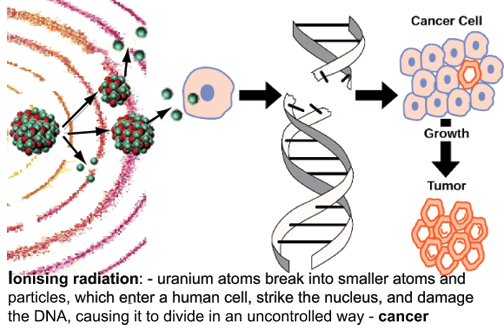
The science behind this protection regime is based on the capacity of ionising radiation to
cause damage at the cellular level in the human body. Radiation striking a cell can either
cause no damage or it may kill the cell outright – in which case, unless too many cells are
killed at once, the body will eliminate the dead cells and function healthily. The problem
comes when the cell is merely damaged, and the natural process of repair is imperfect,
leaving the cell to replicate in this damaged form – which may in some cases lead to the kind
of growth we call a cancer, other long term health or genetic damage. The level of this kind
of damage (known as stochastic) is a hit-and-miss affair – a low level of radiation exposure
doesn’t determine a health effect but as the level of exposure increases, it increases the
probability of the damage.
Current Standards Need Tightening
The limits on exposure have been progressively tightened over the years as estimates of the
cancer risks, mainly drawn from the Life-Span Studies (LSS) of Japanese survivors of the
Hiroshima and Nagasaki atomic bomb blasts in 1945, showed progressively higher rates of
this stochastic health damage. Recent evidence from studies of workers in the Nuclear
Industries in France the UK and USA (The INWORKS studies) suggest the worker-exposure
limits need to again be revised – and significantly tightened. In addition, studies on health of
populations living close to nuclear power plants in Europe and the USA show significantly
elevated rates of cancer in both children and the elderly directly related to living distance
from these facilities.
United States Proposals Would Weaken Current Standards
Unfortunately, it appears that the USA is headed in the opposite direction and given the
recent behaviour of the current President, may soon pressure other countries to follow suit.
In May 2025 US President Donald Trump issued a Directive (EO 14300) Instructing the US
Nuclear Regulatory Commission (NRC) to revise all its regulations – in particular, to revise
those relating to radiation health and safety. He instructed the NRC to abandon the LNT
and ALARA principles and re-set limits on worker and public exposures based on ‘deterministic’ rather than ‘probabilistic’/’stochastic ‘ health outcomes – potentially allowing
much higher levels of exposure.
Exactly how the NRC will respond to these directives is unclear. To comply with the
president’s orders would put the USA in conflict with national and international agencies
such as the International Commission of Radiological Protection (ICRP), the United Nations
Scientific Committee on Atomic Radiation (UNSCEAR), the US National Academy of
Science’s. Committee on the Biological Effects of Ionising Radiation (the BEIR committee)
and other countries’ national agencies including the Australian Radiation Protection and
Nuclear Standards Agency (ARPANSA) – all of which have recently reaffirmed commitment
to the LN and ARPANSA principles and the current annual limits on worker and public
exposure.
TThe draft of the revised NRC regulations on radiation protection is expected on 30 April
2026 with a 30-day period for comments before the final comprehensive revision of all NRC
regulations is published in November 2026.
An international Campaign
These US proposals have stimulated the beginnings of an international campaign bringing
together trade unions, environment and public health groups and communities concerned
about current and future exposures from mining, industrial, medical, and nuclear radiation
sources. The objectives of this campaign are two-fold:
1 To pressure national and international agencies with responsibility for radiation
protection to publicly repudiate any US regulations that align with the Trump
Directive and resist any pressures from the US to similarly weaken existing national
standards.
2. To build pressure on these national and international agencies to revise and tighten
the standards in line with the best available scientific evidence that the health risks
are greater than those used to set current standards.
The Military Connection
For Australian workers and the public, the situation is complicated by and made more
urgent as a result of the Australia, UK, USA (AUKUS) agreement regarding the building and
stationing of nuclear-powered submarines in Australia. We have already seen the creation
of a separate Australian Naval Nuclear Power Standards Regulator (ANNPSR) that will be
responsible for all standards in the construction, operation, maintenance, decommissioning,
and radioactive waste management from the submarines built or stationed here. We can
expect pressure from the USA to have these standards align with those in the USA. As such
the ANNPSR could become a back door for pressuring the current standards agency
ARPANSA to revise and weaken rather than tighten protection standards across the full
range of other occupational and public radiation health risks.
For further information
For references to the scientific evidence and to be kept informed of developments as this
campaign evolves contact:
Dr Tony Webb,
E-mail: webbt45@icloud.com,
Shrimp with a side of cancer? Radioactive contamination is real.
by Kimberly Roberson, opinion contributor – 01/18/26,
https://thehill.com/opinion/healthcare/5692924-fda-radioactive-shrimp-threat/
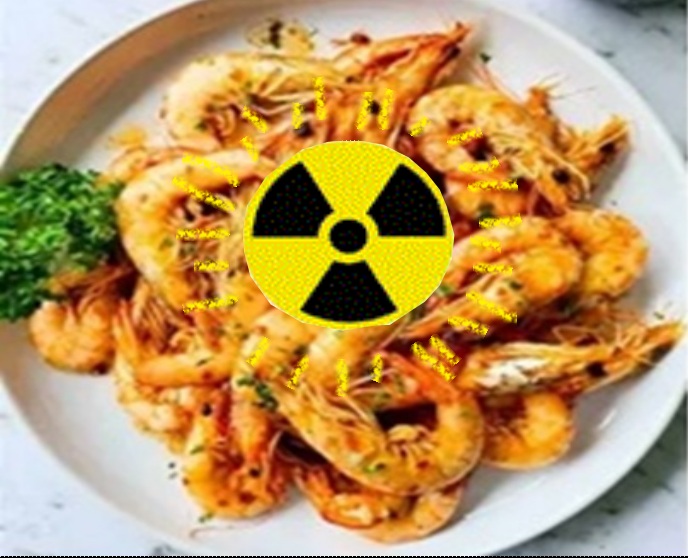
The specter of radioactivity in food just reared its head again, with another shipment of imported shrimp recalled for possible Cesium-137 contamination.
The MAHA Commission 2025 report unfotunately ignored radioactivity as a possible cause of rising cancer and chronic illness. But even leaving aside nuclear accidents, studies show living near nuclear plants elevates cancer risk. Nuclear reactors generate radioactive waste and ionizing radiation, which get into the environment, contaminating air, water, soil and food.
Harmful isotopes like Cesium-137 aren’t natural; they’re made only in reactors, but persist in the environment and food for centuries. Decades after Chernobyl, for instance, researchers found Cesium-137 in meat from domestic and game animals in Poland, and in food and children’s bodies in Belarus, which caused pediatric cardiovascular disease.
Cesium-137 has a 30-year half-life but remains dangerous for 300 years, especially when ingested or inhaled. It lodges in soft tissues inside the body, irradiating cells and increasing cancer risk, according to the Centers for Disease Control and Prevention. Even very low doses have been shown to cause cancer, renal pathology and other damage.
This summer, the Food and Drug Administration issued multiple health hazard warnings about Cesium-137 detected in imported Indonesian shrimp, triggering massive recalls and worried coverage in mainstream outlets like “Martha Stewart Living.” Consumer Reports found evidence a wide swath of Indonesia’s land may be contaminated.
U.S. Sens. Bill Cassidy (R-L.) and John Kennedy (R-La.) then launched an inquiry, asking grocery chains how they will keep radioactive shrimp off their shelves. Kennedy said that eating Cesium-137-laced shrimp “will kill you. Even if doesn’t turn you into the alien from ‘Alien,’ I guarantee you’ll grow another ear.” Rep. Clay Higgins (R-La.) wrote to President Trump, calling radioactive shrimp a “significant public health threat” and asking him to pause all shrimp imports.
“Alien” shrimp penetrated public consciousness, but the radioactivity problem is much bigger. The FDA recently found radioactive cloves, and Malta customs officials found radioactive clothing, both contaminated with Cesium-137. The World Customs Organization launched “Operation Stingray” to intercept nuclear and radioactive materials, seizing 51 shipments in just three weeks.
Such action is overdue. Long before so-called “forever chemicals” or microplastics were recognized as health threats, watchdog groups were flagging the threat of radioactivity in food, especially after the 2011 Fukushima disaster. A 2013 FDA Citizen Petition demanded tighter regulation and lower allowable radioactivity levels. My organization has collected 1,600 comments and thousands of companion signatures.
Fears about radioactive fish surged in 2023 as Fukushima resumed dumping radioactive water into the Pacific. The FDA downplayed them, claiming “Cs-137 is readily excreted and does not accumulate in seafood.” But that’s a misdirection. The point is, it accumulates in our bodies when we ingest it, even in tiny amounts, according to the International Commission on Radiological Protection.
Health advocacy groups recently pointed this out in a joint letter, exhorting Kennedy and federal officials to “finally address the impact of radiation contamination of U.S. food on the trajectory of cancer and chronic illness by setting and enforcing much safer levels for Americans.” In its reply FDA demurred, calling it “unlikely that a fish exposed to significant levels of radionuclides near the [Fukushima] reactor could travel to U.S. waters and be caught and harvested.”
Yet we see evidence of consumer goods contaminated with radioactivity all around us. Instead of downplaying the problem, the FDA should tighten and enforce protective standards.
The Indonesian shrimp flagged as a health hazard had 68 becquerels of Cesium-137. The FDA’s “derived intervention level” — more of a guideline than an enforceable standard — is about 20 times higher, at 1,200 becquerels.
No level of Cesium-137 or other harmful radioactive isotopes is safe, yet Trump’s recent executive orders raise exposure limits and depart from the longstanding linear no-threshold model of radiation safety. Advocates warned the public health consequences would be severe, with women, children and fetuses worst impacted.
The standard should be, if Cesium-137 or other isotopes of concern are detectable in food items, they ought to be pulled off shelves, or at the very least labeled with warnings so consumers can make an informed decision. Unfortunately, that’s not the system we have. The importance of humility and transparency are among the lessons of Chernobyl and Fukushima, but the Trump administration is ignoring them in an explosion of hubris.
That’s nothing new; it’s deep in the nuclear culture. That 2011 International Commission on Radiological Protection report states, “There may be situations where a sustainable agricultural economy is not possible without placing contaminated food on the market. As such foods will be subject to market forces, this will necessitate an effective communication strategy to overcome the negative reactions from consumers outside the contaminated areas.”
But a communications strategy designed to soft-pedal radioactive contamination of food won’t make America healthy. Only setting and enforcing science-based standards will.
Kimberly Roberson is director of the Fukushima Fallout Awareness Network, a project of the National Institute for Science, Law and Public Policy.
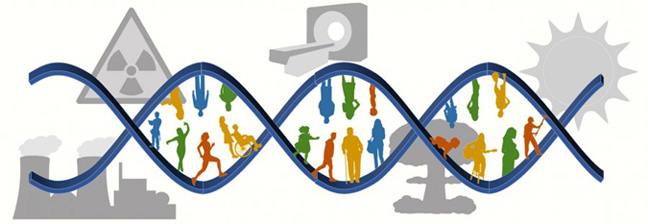
Residential proximity to nuclear power plants and cancer incidence in Massachusetts, USA (2000–2018)
18 December 2025, Springer Nature, Volume 24, article number 92, (2025)
“………………………………………. Results
Proximity to plants significantly increased cancer incidence, with risk declining by distance. At 2 km, females showed RRs of 1.52 (95% CI: 1.20–1.94) for ages 55–64, 2.00 (1.59–2.52) for 65–74, and 2.53 (1.98–3.22) for 75 + . Males showed RRs of 1.97 (1.57–2.48), 1.75 (1.42–2.16), and 1.63 (1.29–2.06), respectively. Cancer site-specific analyses showed significant associations for lung, prostate, breast, colorectal, bladder, melanoma, leukemia, thyroid, uterine, kidney, laryngeal, pancreatic, oral, esophageal, and Hodgkin lymphoma, with variation by sex and age. We estimated 10,815 female and 9,803 male cancer cases attributable to proximity, corresponding to attributable fractions of 4.1% (95% CI: 2.4–5.7%) and 3.5% (95% CI: 1.8–5.2%).
Conclusions
Residential proximity to nuclear plants in Massachusetts is associated with elevated cancer risks, particularly among older adults, underscoring the need for continued epidemiologic monitoring amid renewed interest in nuclear energy. https://link.springer.com/article/10.1186/s12940-025-01248-6
Finland detects small amount of radioactivity, sees no health impact

Armen Press 30th Jan 2026, original at https://armenpress.am/en/article/1240847
Small amounts of radioactive substances have been detected in air samples in Finland though there was no risk to public health, Reuters reported citing the country’s nuclear safety watchdog.
“The concentrations were very low and posed no risk to people or the environment,” the Radiation and Nuclear Safety Authority (STUK) said in a statement, according to Reuters.
According to the report, STUK said that the radioactive substances did not originate from Finnish nuclear power plants, though it did not offer an explanation for their detection.
“In many cases, the source of the radioactive substances cannot be identified,” the agency said.
Finland, Sweden, Russia and the wider region have a number of nuclear power reactors.
President Trump’s radical attack on radiation safety.
By Daniel Hirsch, Haakon Williams, Cameron Kuta | October 15, 2025, https://thebulletin.org/2025/10/president-trumps-radical-attack-on-radiation-safety/?variant=B&utm_source=ActiveCampaign&utm_medium=email&utm_content=Trump%20s%20attack%20on%20radiation%20safety&utm_campaign=20251009%20Thursday%20Newsletter%20%28Copy%29

In May, President Donald Trump issued a series of executive orders that, in part, require the US Nuclear Regulatory Commission (NRC) to consider dramatically weakening its radiation protection standard. If federal radiation limits are gutted in the manner urged by the president, the new standard could allow four out of five people exposed over a 70-year lifetime to develop a cancer they would not otherwise get.
Contesting the scientific consensus. Section 5(b) of the executive order—formally titled “Ordering the Reform of the Nuclear Regulatory Commission”—directs the NRC to issue a proposed “wholesale revision of its regulations and guidance documents,” including reconsideration of the agency’s “reliance on the linear no-threshold (LNT) model for radiation exposure.” The LNT model maintains that risk from radiation exposure is proportional to the dose: Even a tiny amount of radiation causes some small but real increased risk of cancer, and that risk goes up linearly as the dose increases.
While most Americans have doubtless never heard of the LNT model, it has been the bedrock of radiation exposure risk analysis for decades and forms the basis of public health protection from radiation. The LNT model is scientifically robust, supported by the longstanding and repeatedly affirmed determinations on low-dose radiation by the National Academies of Sciences, Engineering, and Medicine, virtually all international scientific bodies, the Environmental Protection Agency (EPA), and the NRC itself.
Despite the LNT model’s long track record and the well-established body of scientific evidence upon which it is built, President Trump has unilaterally issued a presidential finding that this scientific consensus is wrong. His order could lead to LNT’s complete abandonment in a matter of months, posing a serious increase in the amount of radiation that industries and government agencies would be allowed to inflict upon the public.
If the NRC goes along with Trump’s assertion, the weakening of radiation protection standards would likely be extreme. Advocates of abandoning LNT have often asserted that low-dose radiation is harmless or even beneficial, and therefore, that the public health radiation limits should be hugely increased. In 2015, three petitions for rulemaking to the NRC proposed doing away with the LNT model and increasing allowable radiation exposures for everyone—including children and pregnant women—to 10 rem. (The Roentgen equivalent man (rem) is a unit of effective absorbed radiation in human tissue, equivalent to one roentgen of X-rays. One rem is equal to 0.01 Sievert in the international system of units.)
One petition to the NRC went so far as to ask, “Why deprive the public of the benefits of low-dose radiation?” The NRC strongly rejected the petitions in 2021, citing the conclusions of numerous scientific bodies that “[c]onvincing evidence has not yet demonstrated the existence of a threshold.
Low-level, or “low-dose,” radiation is generally defined as a dose range of 10 rem and below. However, “low dose” is something of a misnomer, as 10 rem is still relatively high. Even when doses are low, they nonetheless cause substantial harm when spread across a large population over time, especially for sensitive groups like children.
Raising radiation exposure limits. If President Trump’s executive order results in a new public radiation exposure limit of around 10 rem—the level LNT opponents often advocate—the increased health risks would be extraordinary. Longstanding radiation protection limits for members of the public are in the range of 10 to 100 millirem (0.01 to 0.1 rem) per year. A 10-rem limit would increase allowed exposures to radiation by factors of 100 to 1000—and so would increase the risk of cancer.
A single chest X-ray is about 2 millirem (0.002 rem) of radiation exposure. An annual limit of 10 rem would correspond to a person receiving a dose equivalent to 5,000 chest X-rays each year, from conception to death. Current official radiation risk estimates—adopted by EPA from the National Academies’ BEIR VII study on the health risks from exposure to low levels of ionizing radiation—indicate that receiving 10 rem per year over a 70-year lifetime would result in about four out of every five people exposed getting a cancer they would not get otherwise.
Despite what opponents of the LNT model claim, there is no threshold at 10 rem below which there is no measurable health harm. A substantial body of scientific work has demonstrated significant negative health impacts well below 10 rem. Beginning in the 1950s, pioneering Oxford researcher Alice Stewart demonstrated that a single fetal X-ray with a dose of 200 millirem (0.2 rem) was associated with a measurable increase in the risk of that child dying of cancer. The radiation establishment fought Stewart’s findings vigorously, but her research has long since been vindicated.
More recently, a major study covering an international cohort of over 300,000 nuclear facility workers has found that annual doses well below 1 rem create measurable increases in the risk of developing a variety of cancers, and that, as NRC put it, “even tiny doses slightly boost the risk of leukemia.” A second massive study of nearly one million European children found that those who received a CT scan, at an average dose of 800 millirem (0.8 rem), suffered a measurable increase in their risk of getting cancer.
Standards already weak. Radiation protection standards should be tightened, not weakened. The US government has a long history of underestimating radiation risks. The more scientists have learned about low-dose radiation, the more their estimates of the risk per unit dose have tended to increase. Yet the NRC has not updated in step with the science.
The NRC protection limit for workers of 5 rem per year was set in the early 1960s and has not changed since, despite decades of increasing official estimates of radiation risk. The current best estimate, from the National Academies’ BEIR VII, indicates that one out of every five workers receiving the NRC’s allowable dose each year from ages 18 to 65 would develop a cancer.
NRC’s radiation exposure limits for the public have not been updated in 35 years. Despite a requirement to employ EPA’s more conservative radiation risk standards, the NRC has long ignored it and instead continues to use 100 millirem per year—100 times lower than what Trump’s executive order could lead to. Current risk figures from the National Academies and the EPA indicate that 70 years of exposure at that level would result in nearly one in 100 people getting cancer from that exposure. That is 100 to 10,000 times higher than the EPA’s acceptable risk range. As the former director of EPA’s Office of Radiation and Indoor Air said years ago, “To put it bluntly, radiation should not be treated as a privileged pollutant. You and I should not be exposed to higher risks from radiation sites than we should be from sites which had contained any other environmental pollutant.”
The NRC held a webinar in July to gather public feedback on implementing President Trump’s executive order on abolishing the LNT model. Many presenters—including representatives from the National Council on Radiation Protection and the Union of Concerned Scientists—gave a vigorous defense of the LNT model, as did many of the comments from the public. Yet the NRC, despite itself having strongly reaffirmed this standard only 4 years ago, seemed to minimize low-dose radiation risks and suggested that all radiation cancer risk models be treated equally (including the long-discredited view that low-dose radiation has health benefits). More concerning, the NRC has put its thumb on the scale, giving special treatment to LNT opposition by posting among the general meeting materials a link to one presenter’s paper, which suggests that an annual dose of 10 rem is acceptably safe.
At a time when radiation protection should be strengthened, President Trump has directed action to weaken it markedly. If the NRC implements the executive order, the potential outcome would be a new, deeply flawed radiation standard as much as a thousand times weaker than the current standard, resulting in a massive increase in radiation-related health hazards across the American population.
1 This Month

Protect Sazan Island from the Trump family! https://secure.avaaz.org/campaign/en/protect_sazan_island_from_the_trump_family_loc/?bqFCVab&v=174511&cl=22707147157&_checksum=5e9dde668860e8231c33699735e16a1fbf22ab2cb01da50c999fe8732b9775ef&utm_source=email&utm_medium=blast_email&utm_campaign=174511
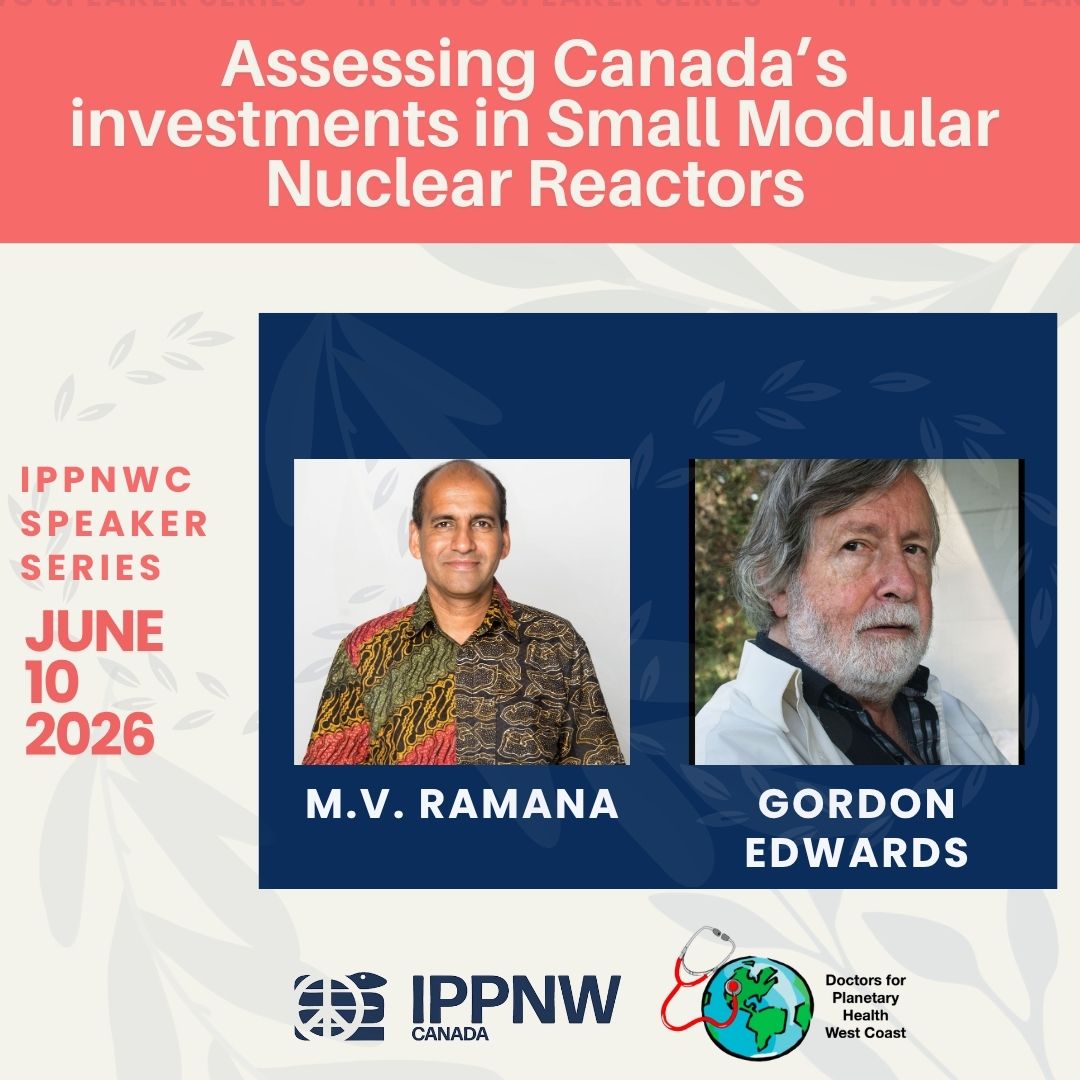
10 June – Assessing Canada’s Investments in Small Modular Nuclear Reactors – https://zoom.us/meeting/register/IiqHA5feRhaEBycOLNTJlA#/registration

Cuba Is Not a Failed State – It Is a Besieged State
PETITION: “Global Appeal to Endorse Palestinian Right of Return of Refugees”
To see nuclear-related stories in greater depth and intensity – go to https://nuclearinformation.wordpress.com
-
Archives
- June 2026 (109)
- May 2026 (306)
- April 2026 (356)
- March 2026 (251)
- February 2026 (268)
- January 2026 (308)
- December 2025 (358)
- November 2025 (359)
- October 2025 (376)
- September 2025 (257)
- August 2025 (319)
- July 2025 (230)
-
Categories
- 1
- 1 NUCLEAR ISSUES
- business and costs
- climate change
- culture and arts
- ENERGY
- environment
- health
- history
- indigenous issues
- Legal
- marketing of nuclear
- media
- opposition to nuclear
- PERSONAL STORIES
- politics
- politics international
- Religion and ethics
- safety
- secrets,lies and civil liberties
- spinbuster
- technology
- Uranium
- wastes
- weapons and war
- Women
- 2 WORLD
- ACTION
- AFRICA
- Atrocities
- AUSTRALIA
- Christina's notes
- Christina's themes
- culture and arts
- Events
- Fuk 2022
- Fuk 2023
- Fukushima 2017
- Fukushima 2018
- fukushima 2019
- Fukushima 2020
- Fukushima 2021
- general
- global warming
- Humour (God we need it)
- Nuclear
- RARE EARTHS
- Reference
- resources – print
- Resources -audiovicual
- Weekly Newsletter
- World
- World Nuclear
- YouTube
-
RSS
Entries RSS
Comments RSS
 nuclear-news