25 times more carbon emissions from nuclear power than from wind energy
 Nuclear power results in 25 times more carbon emissions than wind. The man illuminating how dirty your energy really is
 Amy Kalafa MBA in Sustainability Candidate Bard College
Stephanie Milbergs Assistant director Bard MBA in Sustainability Rochelle J. March
Rochelle J. March Friday, March 13, 2015 Mark Z. Jacobson is director of Stanford University’s Atmosphere and Energy Program, as well as a professor of civil and environmental engineering. He is also a senior fellow of the Woods Institute for the Environment and of the Precourt Institute for Energy.
The main goal of Jacobson’s research is to better understand physical, chemical and dynamic processes in the atmosphere in order to solve atmospheric problems, such as global warming and urban air pollution, with improved scientific insight and more accurate predictive tools.
Jacobson also evaluates the atmospheric and health effects of proposed energy and transportation solutions to global warming and air pollution, maps renewable energy resources and studies optimal methods of integrating renewable electricity into the grid.
This Q&A is an edited excerpt from a Sustainable Business Fridays conversation Jan. 30 by the Bard MBA in Sustainability program, based in New York City. This twice-monthly dial-in conversation features sustainability leaders from across the globe…….
You just came out with a study, however, that states nuclear power results in 25 times more carbon emissions than wind. Can you explain these findings for us?
Jacobson: Sure, it’s rather straightforward. A life-cycle analysis of a wind turbine shows most of carbon outputs during its construction, practically zero when it’s in operation, and then, if you use today’s methods, during decommission a turbine outputs some carbon.
When you do the calculation, however, you find that wind power emissions are between 5 to 10 grams of carbon per kWh of electricity generated over the lifetime of the turbine. Using that as a baseline, you see over the lifetime of nuclear power, the carbon output is 70 grams per carbon per kWh.
This is from one, building of the nuclear power plant and then two, refining uranium, which is very energy-intensive. There is also timing involved: It takes on average in the U.S. 10 to 19 years for a nuclear power plant to get up and running, while a wind farm can be built on average in two to five years.
If we compare nuclear and wind from now, in two to five years you’ll have a wind farm up and start creating energy that’s clean, while with nuclear you have to wait 10 to 19 years to get that energy. If you add in these extra emissions, called opportunity cost emissions, you end up getting nine to 25 times more carbon in air pollution per kWh from nuclear than wind.
That is still better than coal or natural gas (60 to 120 times more), but other problems with nuclear power is of course 1.5 percent of plants have melted down, and the problems related to weapons proliferation with nuclear, radioactive waste, mining damage, etc. Not even mentioning the cost, which is very high and currently subsidized in the U.S. It’s not a viable option; it’s really the nuclear industry trying to push it to get more business.
The full recording of this conversation is also available. http://www.greenbiz.com/article/dirty-energy-source-stanford-prof-mark-jacobson-explains
1 Comment »
Leave a comment
1 This Month
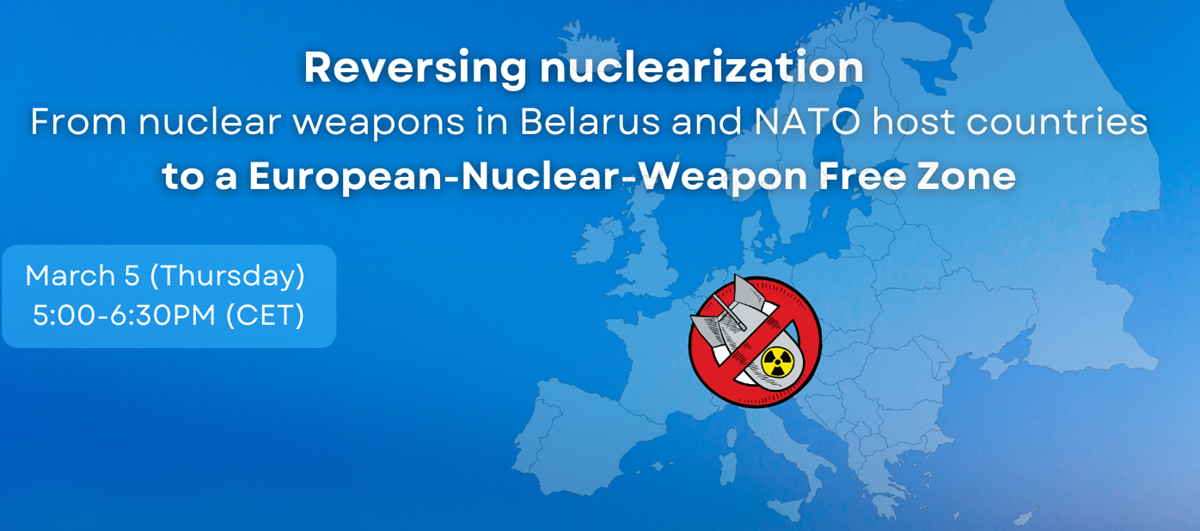
5 March -Online – Reversing nuclearization:
From nuclear weapons in Belarus and NATO host countries to a European-Nuclear-Weapon Free Zone
11am-12:30pm Eastern Time USA / 5pm-6:30pm CET

of the week – Advocating for a
nuclear free beach – https://www.samuellawrencefoundation.org/
The Samuel Lawrence Foundation advocates for a Nuclear Waste Free Beach at San Onofre, join us and take action!

10 March A LIVE WEBINAR THE REAL EFFECTS OF NUCLEAR POWER
What the Industry Isn’t Telling Us
1:00 PM Mountain, 2 pm Central, 3 pm Eastern. Live on the Keepers of the Water Facebook page

18 March Webinar @ 1 PM EST: An Assessment of SMR Projects: The Case of Canada
register for the zoom:
https://us02web.zoom.us/webinar/register/WN_o8BIIOUvQ2ONJR1nta65DQ#/registration

of the week – STOP SMALL MODULAR REACTORS IN CANADA
To see nuclear-related stories in greater depth and intensity – go to https://nuclearinformation.wordpress.com
-
Archives
- March 2026 (38)
- February 2026 (268)
- January 2026 (308)
- December 2025 (358)
- November 2025 (359)
- October 2025 (376)
- September 2025 (258)
- August 2025 (319)
- July 2025 (230)
- June 2025 (348)
- May 2025 (261)
- April 2025 (305)
-
Categories
- 1
- 1 NUCLEAR ISSUES
- business and costs
- climate change
- culture and arts
- ENERGY
- environment
- health
- history
- indigenous issues
- Legal
- marketing of nuclear
- media
- opposition to nuclear
- PERSONAL STORIES
- politics
- politics international
- Religion and ethics
- safety
- secrets,lies and civil liberties
- spinbuster
- technology
- Uranium
- wastes
- weapons and war
- Women
- 2 WORLD
- ACTION
- AFRICA
- Atrocities
- AUSTRALIA
- Christina's notes
- Christina's themes
- culture and arts
- Events
- Fuk 2022
- Fuk 2023
- Fukushima 2017
- Fukushima 2018
- fukushima 2019
- Fukushima 2020
- Fukushima 2021
- general
- global warming
- Humour (God we need it)
- Nuclear
- RARE EARTHS
- Reference
- resources – print
- Resources -audiovicual
- Weekly Newsletter
- World
- World Nuclear
- YouTube
-
RSS
Entries RSS
Comments RSS
 nuclear-news
“New Interactive Map Shows Big Potential for America’s Wind Energy Future”
http://www.energy.gov/articles/new-interactive-map-shows-big-potential-america-s-wind-energy-future