China’s legacy of radioactive pollution from rare earths processing
Whole villages between the city of Baotou and the Yellow River in Inner Mongolia have been evacuated and resettled to apartment towers elsewhere after reports of high cancer rates and other health problems associated with the numerous rare earth refineries there.
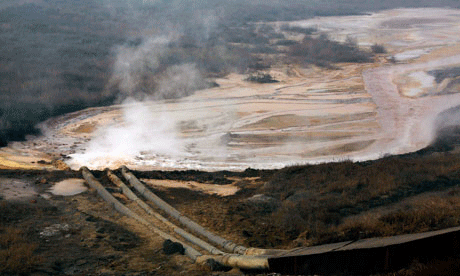
China Tries to Clean Up Toxic Legacy of Its Rare Earth Riches NYT By KEITH BRADSHER : October 22, 2013 TIANJIN, China — In northern China, near the Mongolian border, radioactively contaminated leaks from two decades of rare earth refining have been slowly trickling underground toward the Yellow River, a crucial water source for 150 million people. In Jiangxi province in south-central China, the national government has seized control of rare earth mining districts from provincial officials after finding widespread illegal strip-mining of rare earth metals.
And in Guangdong province in southeastern China, regulators are struggling to repair rice fields and streams destroyed by powerful acids and other runoff from open-pit rare earth mines that are often run by violent organized crime syndicates.
Communities scattered across China face heavy environmental damage that accumulated through two decades of nearly unregulated rare earth mining and refining. While the Chinese government has begun spending billions of dollars to clean up the damage, the environmental impact is becoming an international trade issue, with a World Trade Organization panel in Geneva expected to issue a crucial draft report on Wednesday……. The rare earth case “will be a landmark case in terms of both export restrictions and the environment,” said James Bacchus, the former two-term chairman of the W.T.O. appeals tribunal in Geneva.
China has made ample supplies available to manufacturers within China that produce crucial components for a host of products like laptop computers, compact fluorescent bulbs, wind turbines and electric cars. Some Western and Japanese companies have moved factories to China to make sure that they have access to rare earths.
The W.T.O. panel faces some of the trickiest issues in international trade. Environmentalists have been wary of the trade organization …….
the case before the World Trade Organization appears to have made a difference already by prompting a broad environmental cleanup. In a white paper issued in June last year, China’s cabinet described at length the environmental harm caused by the rare earth industry, an admission that although embarrassing for Beijing may have buttressed its case at the W.T.O. that the rare earth industry is a dirty business for which export restrictions are justified. “Excessive rare earth mining has resulted in landslides, clogged rivers, environmental pollution emergencies and even major accidents and disasters, causing great damage to people’s safety and health and the ecological environment,” the white paper said…….
Whole villages between the city of Baotou and the Yellow River in Inner Mongolia have been evacuated and resettled to apartment towers elsewhere after reports of high cancer rates and other health problems associated with the numerous rare earth refineries there.
The most hazardous refineries are those that crack the tight chemical bonds that tie rare earths found in mineral ores to a variety of hazardous materials, notably radioactive thorium. Many tons of extremely concentrated sulfuric acid are used to break the chemical bonds. Then the valuable rare earth metals, which are not radioactive themselves, can be purified. But a hazardous stew of toxic chemicals and low-level radioactive waste is left behind. Most of that waste has been dumped into the world’s largest mine tailings pond, which covers four square miles near the Yellow River on the western outskirts of Baotou.
Built in the 1950s under Mao Zedong, the tailings pond lacks a liner to prevent the leaking of radioactive waste and toxins into the groundwater, where they have been gradually seeping toward the Yellow River. There is no evidence that the waste and toxins have reached the river, but the Chinese government plans to spend hundreds of millions of dollars pumping out as much contaminated groundwater as possible and pumping enormous quantities of fresh water into the earth to dilute what is left before it reaches the Yellow River.
On orders from Beijing, state-controlled enterprises have dismantled Baotou refineries and rebuilt them at an enormous mining complex at Bayan Obo in the Gobi Desert, which mines about half the world’s rare earths. Chinese state-controlled media have reported that tens of thousands of goats and other livestock there have died and many baby goats have been born severely deformed, possibly because of radioactive contamination from the rare earth industry.
Located in an arid area nearly uninhabited except for mine workers, the refineries have been rebuilt there with extensive wastewater treatment facilities, according to industry officials in Beijing.
The W.T.O. panel will send its confidential draft report on Wednesday to China and the countries that brought the case, which will then be allowed to suggest changes before the final decision is made on Nov. 21……. http://www.nytimes.com/2013/10/23/business/international/china-tries-to-clean-up-toxic-legacy-of-its-rare-earth-riches.html?_r=0
No comments yet.
1 This Month.
12 November – Webinar-Smoke and Mirrors: UK Nuclear Armed Fighter Jets
5pm. UK time 04:00 in Canberra, Melbourne, Sydney
details and registration here:
https://nuclearinfo-org.zoom.us/webinar/register/WN_55BUNAU-T3WrWAZnBqitfQ
15- 23 November – Urgent Call for a Week of Coordinated Protests – No War on Venezuela! No Troops on our Streets!
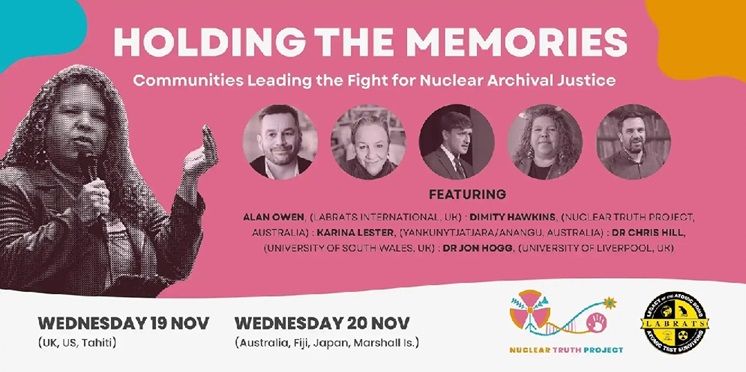
19th and 20th November – Online Event- Holding the Memories: Communities Leading the Fight for Nuclear Archival Justice
– https://events.humanitix.com/holding-the-memories Hosted by Nuclear Truth Project
NEW YORK Wednesday November 19, 4pm, EST
LONDON Wednesday November 19, 9pm, GMT
MELBOURNE Thursday, November 20, 8am, AEST
FIJI/MARSHALL ISLANDS Thursday 20 Nov – 9am FJT & MHT
Now until to February 10, 2026 Radioactive waste storage in France: the debate is finally open! How to participate?

of the week. STAND – Severnside Together Against Nuclear Development . THE TRUE FACTS ABOUT NUCLEAR POWER
Why it is: Unaffordable – Dangerous – Unnecessary – Bad For The Environment
-
Archives
- November 2025 (104)
- October 2025 (377)
- September 2025 (258)
- August 2025 (319)
- July 2025 (230)
- June 2025 (348)
- May 2025 (261)
- April 2025 (305)
- March 2025 (320)
- February 2025 (234)
- January 2025 (250)
- December 2024 (262)
-
Categories
- 1
- 1 NUCLEAR ISSUES
- business and costs
- climate change
- culture and arts
- ENERGY
- environment
- health
- history
- indigenous issues
- Legal
- marketing of nuclear
- media
- opposition to nuclear
- PERSONAL STORIES
- politics
- politics international
- Religion and ethics
- safety
- secrets,lies and civil liberties
- spinbuster
- technology
- Uranium
- wastes
- weapons and war
- Women
- 2 WORLD
- ACTION
- AFRICA
- Atrocities
- AUSTRALIA
- Christina's notes
- Christina's themes
- culture and arts
- Events
- Fuk 2022
- Fuk 2023
- Fukushima 2017
- Fukushima 2018
- fukushima 2019
- Fukushima 2020
- Fukushima 2021
- general
- global warming
- Humour (God we need it)
- Nuclear
- RARE EARTHS
- Reference
- resources – print
- Resources -audiovicual
- Weekly Newsletter
- World
- World Nuclear
- YouTube
-
RSS
Entries RSS
Comments RSS
 nuclear-news
Leave a comment