A community based approach for renewable energy in Japan
One possible way for Japan to approach the NIMBY problems on renewables, Aldrich said, would be to go bottom up — by trying to find communities that are excited about green energy and renewables, to start from the community side and use that initiative to find the locations for wind turbines and solar energy farms.
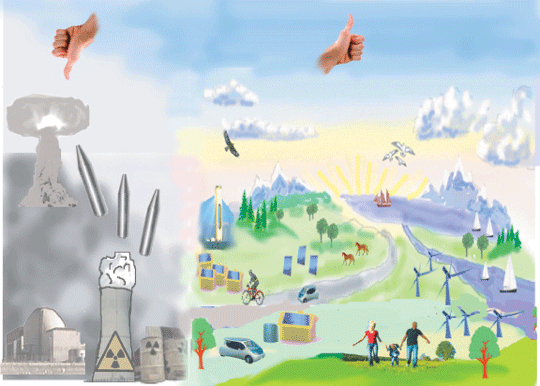
 Siting for renewables needs bottom-up approach http://www.japantimes.co.jp/news/2013/04/30/business/siting-for-renewables-needs-bottom-up-approach/#.UYGdFqJwpLs APR 30, 2013 If post-Fukushima nuclear disaster crisis Japan chooses to fill its energy needs with renewable energy sources, the nation will still face the same NIMBY (not-in-my-backyard) resistance to building large numbers of new facilities in the densely-populated country, an American expert said at a recent energy seminar in Tokyo.
The government is advised to take a bottom-up approach to find communities that are willing to accept wind turbines and solar power generation farms, rather than the top-down process that it used to convince farmers and fishermen into agreeing to the construction of nuclear power plants in their neighborhood over the past five decades, said Daniel P. Aldrich, an associate professor of political science at Purdue University and a Fulbright research fellow at the University of Tokyo.
Aldrich was speaking at a seminar on energy issues organized by the Keizai Koho Center on March 14, based on his research on how Japan was able to build and operate more than 50 nuclear power reactors nationwide — until the triple meltdowns hit Tokyo Electric Power Co.’s Fukushima No.?1 plant in the aftermath of the March 11, 2011, Great East Japan Earthquake.
While the Fukushima crisis changed Japanese people’s views toward nuclear power, the NIMBY reaction of people will not be limited to nuclear plants, but will be likely toward all facilities that bring broad public benefits but locally-focused costs, such as airports, dams and power facilities, Aldrich said.
While many people talk about renewable energy sources as replacements for nuclear power, the NIMBY resistance could be a bigger problem for renewables because they require a far larger land area to produce electricity than nuclear plants, he said.
In choosing the sites for nuclear power plants, the Japanese government for decades targeted rural communities where civil society was weakening and local resistance was believed to be weak, and then used various policy tools to convince the communities into accepting the plants, he said.
One possible way for Japan to approach the NIMBY problems on renewables, Aldrich said, would be to go bottom up — by trying to find communities that are excited about green energy and renewables, to start from the community side and use that initiative to find the locations for wind turbines and solar energy farms.
No comments yet.
1 This Month
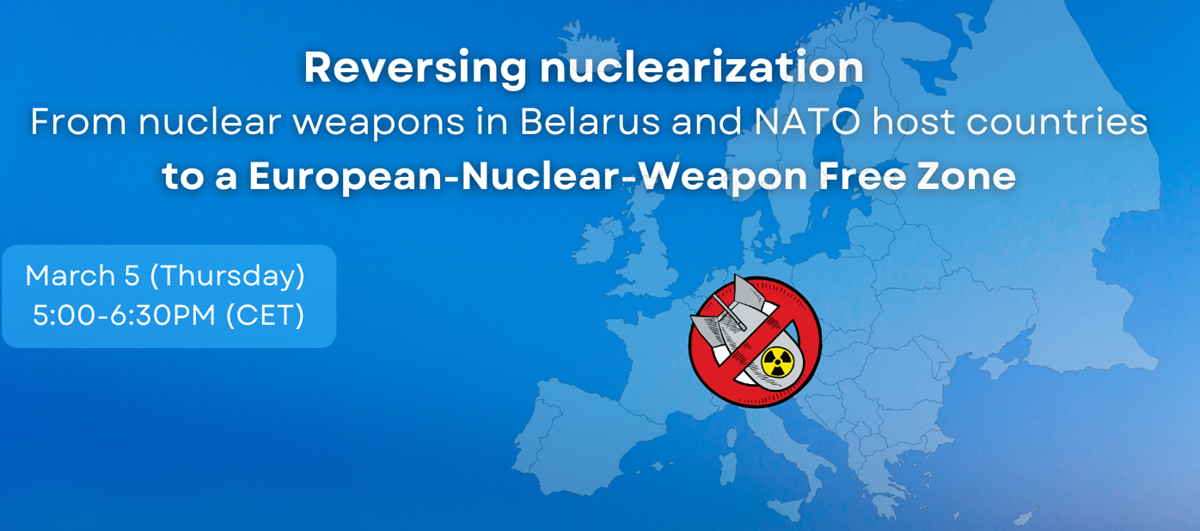
5 March -Online – Reversing nuclearization:
From nuclear weapons in Belarus and NATO host countries to a European-Nuclear-Weapon Free Zone
11am-12:30pm Eastern Time USA / 5pm-6:30pm CET

of the week – Advocating for a
nuclear free beach – https://www.samuellawrencefoundation.org/
The Samuel Lawrence Foundation advocates for a Nuclear Waste Free Beach at San Onofre, join us and take action!

10 March A LIVE WEBINAR THE REAL EFFECTS OF NUCLEAR POWER
What the Industry Isn’t Telling Us
1:00 PM Mountain, 2 pm Central, 3 pm Eastern. Live on the Keepers of the Water Facebook page

18 March Webinar @ 1 PM EST: An Assessment of SMR Projects: The Case of Canada
register for the zoom:
https://us02web.zoom.us/webinar/register/WN_o8BIIOUvQ2ONJR1nta65DQ#/registration

of the week – STOP SMALL MODULAR REACTORS IN CANADA
To see nuclear-related stories in greater depth and intensity – go to https://nuclearinformation.wordpress.com
-
Archives
- March 2026 (51)
- February 2026 (268)
- January 2026 (308)
- December 2025 (358)
- November 2025 (359)
- October 2025 (376)
- September 2025 (258)
- August 2025 (319)
- July 2025 (230)
- June 2025 (348)
- May 2025 (261)
- April 2025 (305)
-
Categories
- 1
- 1 NUCLEAR ISSUES
- business and costs
- climate change
- culture and arts
- ENERGY
- environment
- health
- history
- indigenous issues
- Legal
- marketing of nuclear
- media
- opposition to nuclear
- PERSONAL STORIES
- politics
- politics international
- Religion and ethics
- safety
- secrets,lies and civil liberties
- spinbuster
- technology
- Uranium
- wastes
- weapons and war
- Women
- 2 WORLD
- ACTION
- AFRICA
- Atrocities
- AUSTRALIA
- Christina's notes
- Christina's themes
- culture and arts
- Events
- Fuk 2022
- Fuk 2023
- Fukushima 2017
- Fukushima 2018
- fukushima 2019
- Fukushima 2020
- Fukushima 2021
- general
- global warming
- Humour (God we need it)
- Nuclear
- RARE EARTHS
- Reference
- resources – print
- Resources -audiovicual
- Weekly Newsletter
- World
- World Nuclear
- YouTube
-
RSS
Entries RSS
Comments RSS
 nuclear-news
Leave a comment