Even if people do accept nuclear power, it’s still not affordable
So while nuclear power does return net energy and while it may be true that public opposition to nuclear power will fall, it probably won’t matter – because no society in an energy decline, with declining fossil fuel resources, can afford to front-load a decade or two decades of energy in fossil fuels into a plant.
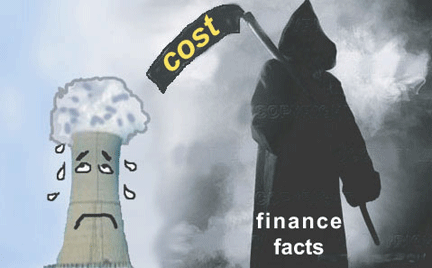
Fukushima and the Future of Nuclear Power : Science Blogs, Casaubon’s Book, April 1, 2011 , by Sharon Astyk“………More than any other kind of energy generation, nuclear frontloads its energy costs dramatically – reliable estimates vary from as low as 12 years before they produce more energy than went into building them to as high as 20. The upfront plant building costs are also vastly higher than for coal, natural gas or any other source.
At this stage (and this is the most critical point) just about EVERY SINGLE BIT of the upfront cost of nuclear power comes from fossil fuels. The energy that runs the economy to make the money to build them comes from fossil fuels. Uranium mining isn’t done on solar electric. The transport of fuel and worker, the concrete and heavy materials, the containment systems – everything is built with a huge front load of fossil fuels and fossil fueled money.
So while nuclear power does return net energy and while it may be true that public opposition to nuclear power will fall, it probably won’t matter – because no society in an energy decline, with declining fossil fuel resources, can afford to front-load a decade or two decades of energy in fossil fuels into a plant. It simply doesn’t scale – yes, you get more out in the end but that doesn’t matter – you can’t afford it, not financially, not in energy terms. Rising costs of those fossil fuels increases the upfront costs of any plant, while simultaneously undermining the financial stability of both the public and private resources that might otherwise be building nuclear plants. Those upfront costs of building plants also got substantially higher when the Fukushima disaster proved the limits of arguing that the 100 or 1000 year event will never hit your plant. If nuclear plants didn’t take 20 years to return net energy before, they almost certainly do now.
the worst case scenario for a wind farm is pretty benign, and the cost of any given wind turbine or solar panel is pretty reasonable – and it meets the failure analysis too – if you can only build 1/2 your solar panels, that’s ok – that’s still some valuable electrical generation. A half-built nuclear plant is not an asset.
Financially and in energy terms any major build out will compete with other resources and needs. Now could a society collectively choose to put aside all other projects for the greater good? Sure – but remember, you don’t get net energy out of those plants for two decades. The history of people sacrificing their own interests for their posterity is real and could be invoked here – but you have to sacrifice for a long, long time, on a long long build out, costing you lots of money you wanted for other things, and energy resources you would have liked to use for other things. It could be done, but the will to do so does not exist. Will it? Maybe. It is also possible that Fukushima has put the final nail in nuclear’s coffin – not because people will never accept it, but because it won’t matter when they do.
No comments yet.
1 This Month.
5 January -Webinar-What is Trump’s Golden Dome?
REGISTER AT Massachusetts Peace Action Education

New book – https://www.amazon.com/dp/1923372157?utm_source=substack&utm_medium=email
Now until to February 10, 2026 Radioactive waste storage in France: the debate is finally open! How to participate?
-
Archives
- December 2025 (325)
- November 2025 (359)
- October 2025 (377)
- September 2025 (258)
- August 2025 (319)
- July 2025 (230)
- June 2025 (348)
- May 2025 (261)
- April 2025 (305)
- March 2025 (319)
- February 2025 (234)
- January 2025 (250)
-
Categories
- 1
- 1 NUCLEAR ISSUES
- business and costs
- climate change
- culture and arts
- ENERGY
- environment
- health
- history
- indigenous issues
- Legal
- marketing of nuclear
- media
- opposition to nuclear
- PERSONAL STORIES
- politics
- politics international
- Religion and ethics
- safety
- secrets,lies and civil liberties
- spinbuster
- technology
- Uranium
- wastes
- weapons and war
- Women
- 2 WORLD
- ACTION
- AFRICA
- Atrocities
- AUSTRALIA
- Christina's notes
- Christina's themes
- culture and arts
- Events
- Fuk 2022
- Fuk 2023
- Fukushima 2017
- Fukushima 2018
- fukushima 2019
- Fukushima 2020
- Fukushima 2021
- general
- global warming
- Humour (God we need it)
- Nuclear
- RARE EARTHS
- Reference
- resources – print
- Resources -audiovicual
- Weekly Newsletter
- World
- World Nuclear
- YouTube
-
RSS
Entries RSS
Comments RSS
 nuclear-news
Leave a comment