Radioactive iodine and thyroid cancer
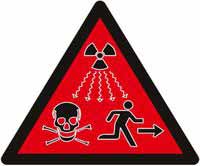
 RADIATION RISKS TO HEALTH A Joint Statement from the American Association of Clinical Endocrinologists, the American Thyroid Association, The Endocrine Society, & the Society of Nuclear Medicine March 18, 2011 The recent nuclear reactor accident in Japan due to the earthquake and tsunami has raised fears of radiation exposure to populations in North America from the potential plume of radioactivity crossing the Pacific Ocean. The principal radiation source of concern is radioactive iodine including iodine-131, a radioactive isotope that presents a special risk to health because iodine is concentrated in the thyroid gland and exposure of the thyroid to high levels of radioactive iodine may lead to development of thyroid nodules and thyroid cancer years later. During the Chernobyl nuclear plant accident in 1986, people in the surrounding region were exposed to radioactive iodine principally from intake of food and milk from contaminated farmlands. As demonstrated by the Chernobyl experience, pregnant women, fetuses, infants and children are at the highest risk for developing thyroid cancer whereas adults over age 20 are at negligible risk.
Radioiodine uptake by the thyroid can be blocked by taking potassium iodide (KI) pills or solution, most importantly in these sensitive populations. However, KI should not be taken in the absence of a clear risk of exposure to a potentially dangerous level of radioactive iodine because potassium iodide can cause allergic reactions, skin rashes, salivary gland inflammation, hyperthyroidism or hypothyroidism in a small percentage of people. Since radioactive iodine decays rapidly, current estimates indicate there will not be a hazardous level of radiation reaching the United States from this accident.
When an exposure does warrant KI to be taken, it should be taken as directed by physicians or public health authorities until the risk for significant exposure to radioactive iodine dissipates, but probably for no more than 1-2 weeks. With radiation accidents, the greatest risk is to populations close to the radiation source…..
Unsafe at any remove? Nuclear energy: time for a closer look : Steve Heilig : City Brights
No comments yet.
1 This Month.
5 January -Webinar-What is Trump’s Golden Dome?
REGISTER AT Massachusetts Peace Action Education


New book – https://www.amazon.com/dp/1923372157?utm_source=substack&utm_medium=email
Now until to February 10, 2026 Radioactive waste storage in France: the debate is finally open! How to participate?
-
Archives
- December 2025 (286)
- November 2025 (359)
- October 2025 (377)
- September 2025 (258)
- August 2025 (319)
- July 2025 (230)
- June 2025 (348)
- May 2025 (261)
- April 2025 (305)
- March 2025 (319)
- February 2025 (234)
- January 2025 (250)
-
Categories
- 1
- 1 NUCLEAR ISSUES
- business and costs
- climate change
- culture and arts
- ENERGY
- environment
- health
- history
- indigenous issues
- Legal
- marketing of nuclear
- media
- opposition to nuclear
- PERSONAL STORIES
- politics
- politics international
- Religion and ethics
- safety
- secrets,lies and civil liberties
- spinbuster
- technology
- Uranium
- wastes
- weapons and war
- Women
- 2 WORLD
- ACTION
- AFRICA
- Atrocities
- AUSTRALIA
- Christina's notes
- Christina's themes
- culture and arts
- Events
- Fuk 2022
- Fuk 2023
- Fukushima 2017
- Fukushima 2018
- fukushima 2019
- Fukushima 2020
- Fukushima 2021
- general
- global warming
- Humour (God we need it)
- Nuclear
- RARE EARTHS
- Reference
- resources – print
- Resources -audiovicual
- Weekly Newsletter
- World
- World Nuclear
- YouTube
-
RSS
Entries RSS
Comments RSS
 nuclear-news
Leave a comment