Trump attacks Pope Leo again ahead of Marco Rubio’s Vatican visit

by Gerard O’Connell, May 5, 2026, https://www.americamagazine.org/vatican-dispatch/2026/05/05/trump-pope-leo-marco-rubio/?utm_source=ActiveCampaign&utm_medium=email&utm_content=Trump%20attacks%20Pope%20Leo%20again%20ahead%20of%20Marco%20Rubio%20s%20Vatican%20visit&utm_campaign=Daily%205%205%2026
On the eve of U.S. Secretary of State Marco Rubio’s visit to the Vatican on May 7—a visit widely seen in Rome as an attempt to restore more tranquil relations with the White House—President Donald J. Trump publicly attacked Pope Leo, alleging that “he’s endangering a lot of Catholics and a lot of people” and falsely claiming yet again that for the pontiff, “it’s O.K. for Iran to have a nuclear weapon.”
His latest attack came on “The Hugh Hewitt Show” when the host told the president, who is going to China on May 14-15, that he wanted the pope to talk about Jimmy Lai, the imprisoned Hong Kong Catholic businessman and democracy activist, and for Mr. Trump “to bring him home.” Mr. Trump responded: “The pope would rather talk about the fact that it’s O.K. for Iran to have a nuclear weapon. I don’t think that’s very good. I think he’s endangering a lot of Catholics and a lot of people, but I guess, if it’s up to the pope, he thinks it’s just fine for Iran to have a nuclear weapon.” Mr. Hewitt commented, “He’s from Chicago; he’s got to learn a few things.”
Before returning to Rome from Castel Gandolfo on Tuesday, Pope Leo responded to journalists about President Trump’s attack but without mentioning his name.
“The church’s mission is to preach the Gospel and peace. If anyone wants to criticize me for proclaiming the Gospel, let them do so,” the pope said.
“I have spoken about this from the very moment I was elected, and now we are nearing the anniversary. I said [then], “Peace be with you.”
“The church’s mission is to preach the Gospel, to preach peace,” he repeated.
“If anyone wants to criticize me for proclaiming the Gospel, let them do so with the truth,” he said. Then alluding to the fact that Trump had accused him of being in favor of Iran having nuclear weapons—a false charge—Pope Leo said: “For years, the church has spoken out against all nuclear weapons, so there is no doubt about that. And so I simply hope to be heard for the sake of the value of God’s words.”
For his part, Mr. Rubio downplayed the rift between President Trump and Pope Leo over Iran, saying that Mr. Trump’s recent criticisms were rooted in his opposition to Iran potentially obtaining a nuclear weapon, which he said could be used against millions of Catholics and other Christians. Mr. Rubio said the whole world should be opposed to that.
Mr. Trump “doesn’t understand why anybody—leave aside the pope, the president and I, for that matter—[I] think most people cannot understand why anyone would think that it’s a good idea for Iran to ever have a nuclear weapon,” Mr. Rubio told reporters at the White House.
President Trump openly denigrated Pope Leo for the first time on Truth Social shortly after the airing of a segment on CBS’s “60 Minutes” on the evening of April 12, which featured three American cardinals—Blase Cupich, Robert McElroy and Joseph Tobin—who came out strongly against the war by Israel and the United States against Iran, calling it ‘unjust.”
Mr. Trump did not strike out against the cardinals; instead, he publicly disparaged Leo, decrying the pope as “weak on crime” and “terrible on foreign policy.” His attack came hours before Leo set out on a visit to four African countries on the morning of April 13.
On the plane to Algeria, in response to journalists’ questions, Pope Leo said, “I have no fear neither of the Trump administration nor speaking out loudly of the message of the Gospel, which is what I believe I am here to do, what the church is here to do.”
On another occasion, Mr. Trump falsely accused Leo of being in favor of a nuclear-armed Iran, ignoring the fact that the American-born pope, like his predecessors, is for the total abolition of nuclear weapons. Pope Francis declared that not only is the use of nuclear arms immoral but also the possession of such weapons. Today, nine states have nuclear weapons: the United States, Russia, China, France, the United Kingdom, India, Pakistan, North Korea and Israel.
When President Trump threatened to wipe out the “whole civilization” of Iran, Pope Leo on April 7 denounced this threat against the Iranian people as “truly unacceptable” and called on the citizens of the countries involved in the war in Iran “to contact the authorities, political leaders, congressmen—to ask them, tell them, to work for peace and to reject war always.” Moreover, during his visit to Africa, he stated that he “cannot be in favor of war” and said he was not interested in engaging in a debate with Mr. Trump.
Mr. Rubio, a Catholic of Cuban descent, will be received by Pope Leo in a private audience on May 7. The Vatican confirmed this on May 4 and said the meeting would begin at 11:30 a.m. and end at noon. Mr. Rubio and Vice President JD Vance first met Leo on May 19, the day after the formal inauguration of the Petrine ministry of the first American pope. On that occasion, Mr. Vance handed the pope a letter from President Trump inviting him to visit the United States.
Mr. Rubio is the first high-level official from the Trump administration to meet the pope since that May 19 meeting, and there have been major differences between the Holy See and the U.S. administration on domestic and foreign policy issues since then, many of which the pope alluded to in his Jan. 9 speech to the diplomatic corps accredited to the Holy See.
Those tensions are wide-ranging and extend from major differences over the Trump administration’s sidelining of multilateralism, its breaches of international law, the mass deportation of migrants, the gutting of the U.S. Agency for International Development, the wars in the Middle East, the crisis between the Trump administration and the European Union over Ukraine and Iran and much else.
In addition, there is the quite extraordinary fact that President Trump has not spoken by phone with the pope since Leo’s election on May 8, 2025, almost exactly one year ago. But he has invited the pope’s brother Louis, whom the president described as “all MAGA,” to the White House. Moreover, he even claimed that then-Cardinal Robert Prevost was elected pope only because Donald J. Trump was president.
The billion-dollar boondoggle: how Vogtle became the US’s monument to nuclear folly

by Paul Hockenos, 29 Apr 2026, https://energytransition.org/2026/04/the-billion-dollar-boondoggle-how-vogtle-became-the-uss-monument-to-nuclear-folly/#more-30303
In the quiet scrubland of Waynesboro, Georgia, two enormous concrete domes rise from the landscape. Vogtle Units 3 and 4, the first new nuclear reactors built in the US in more than 30 years, were once touted as the rebirth of US American nuclear ambition. Instead, they have become a monument to mismanagement and cost overruns – conclusive evidence that nuclear power is a nonstarter. Paul Hockenos reports.
The story of Vogtle is a cautionary tale illustrating that nuclear power cannot be delivered cheaply, quickly and reliably in democratic societies with up-to-scratch regulatory systems. Time and again, from South Korea’s reactors at Shin Kori and Shin Wolsong to Finland’s Olkiluoto-3 and France’s Flamanville EPR, on-the-ground experience has proven otherwise. Vogtle belongs squarely in that lineage, but with a uniquely US American twist: the financial burden has been shifted almost entirely onto the backs of ordinary consumers.
A promise of renaissance
The Georgia Public Service Commission approved the project in 2009: two Westinghouse AP1000 reactors, at a cost of USD 14 billion in total, online by 2016 and 2017. Clean, reliable emissions-free baseload power – an answer to climate change that didn’t depend on fickle solar output or fossil gas.
But by the time the reactors finally limped into commercial service – Unit 3 in July 2023 and Unit 4 in April 2024 – the price tag had swollen to more than USD 36.8 billion, cementing Vogtle’s place as the most expensive power plant ever built in human history. Not even the notorious cost spirals of European nuclear megaprojects come close: Finland’s Olkiluoto-3 ballooned to €11 billion, meaning that Vogtle surpassed that threefold.
This is not simply a cost overrun but rather a systemic indictment of the nuclear construction model: slow, labour intensive, technologically rigid and utterly incompatible with modern energy economics.
Ratepayers foot the bill
The primary victims of this financial misadventure are Georgia Power’s 2.7 million customers, many of whom were compelled to subsidize the reactors long before they produced a single kilowatt-hour of electricity. Thanks to a legislative instrument called Construction Work in Progress, households were effectively forced to act as involuntary venture capitalists, paying roughly USD 1,000 per household in advance charges.
Georgia Power collected USD 17 billion in profits during the construction period, while shareholder losses were capped at around USD 3 billion. Ratepayers, meanwhile, will carry billions in future costs for decades. This is why they pay the highest power bills in the US.
Now that the reactors are online, the financial pressure has only intensified. Residential electricity rates have jumped roughly 24 per cent, with new hikes expected. Analysts estimate that electricity from the new units is five times more expensive than equivalent capacity from solar plus battery storage – an astonishing figure in a region with some of the best solar potential in the US.
A cascade of failures
To understand how Vogtle spiralled into a USD-22-billion cost-overrun fiasco, one must examine the full sequence of missteps – a textbook example of how nuclear megaprojects fail globally.
One of the most consequential errors occurred before construction even began. Westinghouse launched the project without a completed reactor design, a mistake so fundamental it borders on negligence. This error echoed Europe’s nuclear struggles at Olkiluoto and Flamanville, where partially completed designs led to cascading construction problems. In 2017, Westinghouse – burdened by the Vogtle AP1000 debacle – filed for bankruptcy.
That collapse forced Vogtle’s owners to take over the direct management of the project, a role for which they were ill-prepared. What followed was a sprawling mess of renegotiated contracts and design revisions. Independent monitors documented that Georgia Power repeatedly provided ‘materially inaccurate cost estimates’, undermining any possibility of regulatory oversight. Nevertheless, the Public Service Commission allowed construction to continue and rejected its own staff’s recommendations to cancel the project – decisions that are costing Georgians billions.
Then came the workforce crisis. Because the US had not built a nuclear reactor in decades, the skilled labour pipeline had atrophied. Vogtle thus became a crash-course training ground for thousands of inexperienced workers. Attrition among electricians reached 50 per cent. Component failure rates hit 80 per cent at times, necessitating extensive and costly do-overs.
The result is damning: a project lost in its own complexity, burdened by the weight of an entire industry that had forgotten how to build what it claimed to champion.
What Georgia could have had instead
What makes Vogtle’s story especially tragic is not merely what Georgians must now pay, but what they could have had. The nearly USD 37 billion could have financed a diversified portfolio of renewable energy: solar farms, battery storage and energy efficiency upgrades that would have delivered more capacity at lower cost and in far less time.
Renewable energy has evolved into something antithetical to nuclear power: decentralized, modular and increasingly affordable systems that can be scaled rapidly without the all-or-nothing risks of nuclear megaprojects. Just about everywhere in the world, solar and wind are being installed in record volumes precisely because they are nimble, predictable and financially transparent. Nuclear, by contrast, requires vast upfront capital, long construction timelines and political intervention to remain viable.
Georgia, with its abundant sunshine and growing distributed-energy ecosystem, could have led the US South into a new era of affordable clean power. Instead, its utility regulators locked the state into a nuclear future that its customers regret.
The lessons of Vogtle
Vogtle Units 3 and 4 were marketed as a blueprint for America’s nuclear future. In reality, they have demonstrated that the economics of traditional nuclear construction in the US are fundamentally broken. Not broken at the margins, but broken at the core – structurally, financially and technologically.
This project, like so many others, depended not on engineering brilliance but on regulatory leniency, optimistic accounting and public subsidy. Its failures are not the product of unfortunate circumstance, but of a model that no longer fits the realities of modern energy infrastructure.
The legacy of Vogtle is thus a warning to policymakers, regulators and utility executives: nuclear power, in its large-scale conventional form, cannot compete in the contemporary energy economy – not on cost, not on time and not without burdening the very people it claims to serve.
For ratepayers, Vogtle is a generational misfortune. For the nuclear industry, it is another nail in the coffin of the ‘renaissance’ that never arrives. And for everyone concerned about climate change, it is a reminder that the clean energy transition cannot afford fantasies, wishful thinking or vanity megaprojects.
One would think the lessons of Vogtle incontrovertible. But in May 2024, the Biden administration’s energy secretary Jennifer Granholm attended a ribbon-cutting ceremony for the recently connected units. Her conclusions were very different: she predicted that 198 more such large-scale reactors will join the Vogtle units, which she considered a success story.
What Georgia has built is not a triumph of American ingenuity but rather a fraud that should speak the final word on nuclear power in the US.
Sachs on U.S. Power in Freefall: “The Most Dangerous Country in the World”
May 4, 2026 , https://scheerpost.com/2026/05/04/sachs-on-u-s-power-in-freefall-the-most-dangerous-country-in-the-world/
The global economy is no longer wobbling — it’s splintering. In a sweeping, unsparing conversation, economist Jeffrey Sachs describes a world pushed to the edge by Washington’s wars with Iran and Russia, its economic confrontation with China, and its attempt to reassert dominance across the Western Hemisphere. The pillars that held the global system together for decades — stable trade routes, energy flows, technological exchange, and financial integration — are being weaponized or dismantled outright. Europe, Sachs argues, has “cut itself off from its main natural resource provider” and is now “completely adrift economically,” while Asia accelerates toward deeper integration and long‑term advantage. The United States, meanwhile, is “irrational, poorly led, and desperate to keep control over what it no longer controls,” creating a world that is both fragmented and profoundly unstable.
The global economy is entering a period of rupture, not turbulence. That is the central warning from economist Jeffrey Sachs, who argues that Washington’s simultaneous confrontations with Iran, Russia, and China — combined with its efforts to dominate the Western Hemisphere — have pushed the international system to a breaking point. What once looked like temporary disruptions now resemble structural fractures.
Sachs begins with the U.S.–China relationship, which he says is “never going to be what it was 10 years ago,” noting that the era of “dynamic… mutual investments in both directions” is over. The same is true for Europe’s ties to Russia, which he describes as “damaged perhaps to the point of no return in our generation.” These ruptures are not cyclical; they are foundational.
A Fragmented World Takes Shape
According to Sachs, the world is reorganizing into regional blocs because long‑distance trade has become too risky. Asia is deepening its internal economic ties, Africa is likely to follow, and Europe — having severed its energy lifeline to Russia — is “completely adrift economically.” The continent, he argues, is now dependent on an “unstable, nasty and disdainful United States,” a strategic position that leaves it weaker than at any point since the end of World War II.
These shifts are not abstract. They are already reshaping global markets, supply chains, and political alignments. And Sachs warns that the situation could deteriorate rapidly if the United States “resumes the war with Iran,” a scenario he puts at “50% or higher,” with “devastating” consequences for the global economy.
Washington’s New Economic Doctrine: Hegemony First
Sachs traces the current crisis to a profound shift in U.S. thinking. For decades, economics was understood as a tool for mutual benefit — a view rooted in classical ideas about open trade. But as China rose and the U.S. share of global output declined, Washington’s foreign‑policy establishment reframed economics as an instrument of geopolitical control.
He describes how “international relations people… view the world not as win‑win but as win‑lose,” and how economic policy has been reoriented toward “preserving American hegemony.” This shift, he argues, has produced a 20‑year campaign to weaponize trade, technology, and finance — from semiconductor restrictions to sanctions to the freezing of sovereign assets.
The result is a world in which the basic scaffolding of globalization is being dismantled. Sachs rejects the claim that globalization “failed,” insisting instead that it “provided the basis for worldwide economic progress,” especially in developing economies. What failed, he says, was Washington’s expectation that it could remain permanently dominant.
Europe’s Strategic Blindness
Europe, in Sachs’s view, is the biggest loser in this new order. He argues that the continent “played along completely with the U.S.” in severing ties with Russia, despite decades of American pressure to prevent closer German‑Russian integration.
The result is a self‑inflicted wound: shuttered industries, soaring energy costs, and a political class that “bought into a completely failed economic and geopolitical strategy.” Sachs sees no path to recovery until Europe produces new leadership capable of recognizing geographic and economic realities.
The Return of Blockades and Piracy
One of the most alarming trends Sachs identifies is the resurgence of maritime coercion. He notes that Trump recently boasted that the U.S. is “essentially pirates now,” a statement that aligns with years of tanker seizures, sanctions‑driven blockades, and naval pressure campaigns.
Sachs calls this “shocking,” pointing out that freedom of navigation has been a bedrock principle of international order. He warns that if Europe participates in efforts to “contain” Russian shipping, “there will be war between Europe and Russia and Europe will be devastated.”
The United States, he argues, lacks both the naval capacity and the geopolitical support to sustain blockades against major powers. China, in particular, now possesses a “formidable navy” and a rapidly advancing military that makes U.S. dominance in Asia increasingly untenable.
A Dangerous Gap Between Ambition and Reality
Sachs’s most sobering claim is that the United States has become “the most dangerous country in the world” — not because of its strength, but because of the widening gap between its ambitions and its actual capabilities.
He describes a political class that is “irrational, very poorly led, rather desperate to keep control over what it no longer controls,” and a public that overwhelmingly believes the country is on the wrong track.
The danger, he argues, lies in the attempt to enforce global dominance through military and economic coercion at a moment when the U.S. lacks the power to achieve those aims. This mismatch creates instability, escalation risks, and the potential for catastrophic miscalculation.
Asia Ascendant
In contrast, Sachs sees Asia — particularly China — as the likely long‑term winner of the global realignment. Regional integration is accelerating, technological capacity is expanding, and the U.S. has limited leverage to disrupt these trends. “The closer one gets to Asia,” he says, “the less relevant the United States becomes.”
A World in Transition
The picture Sachs paints is stark: a fragmented world, a declining West, and a United States whose pursuit of hegemony is destabilizing the very system it once built. Whether the coming years bring a managed transition or a series of crises may depend on whether Washington can accept a multipolar world — or whether it continues to fight a losing battle to preserve the unipolar moment.
Pentagon strikes deals with top AI companies

Anthropic, which the US Department of War designated a “supply-chain risk” earlier this year, was not part of the agreement
2 May, 2026, https://www.rt.com/news/639359-pentagon-ai-spacex-anthropic/
The Pentagon has said that it has reached deals with major artificial intelligence firms to integrate their advanced AI capabilities into the agency’s classified networks.
The US Department of War has been actively negotiating with the industry’s leaders since the start of the year as it is trying to expand the application of AI in military operations and diversify the range of companies that provide the technology.
It is going ahead with the push despite concerns among experts regarding the ability of the AI to reliably operate within the existing laws of war and its possible use to invade the privacy of civilians in peacetime.
Agreements have been struck with SpaceX, OpenAI, Google, NVIDIA, Reflection, Microsoft, Amazon Web Services and Oracle to deploy their AI systems for “lawful operational use,” the Pentagon said in a statement on Friday.
Artificial intelligence will be integrated into the Department of War’s Impact Level 6 and Impact Level 7 networks to “streamline data synthesis, elevate situational understanding, and augment warfighter decision-making in complex operational environments,” the statement read.
The US Department of War’s official AI platform, GenAI.mil, has been used by over 1.3 million personnel in the last five months, “generating tens of millions of prompts and deploying hundreds of thousands of agents,” it said. According to the Pentagon, the technology has allowed the execution of certain tasks to be sped up “from months to days.”
Separately, the US Navy has awarded San Francisco-based AI company Domino Data Lab a $100 million contract to aid in combating Iranian mines in the Strait of Hormuz, which has been effectively blocked since the early days of the US-Israeli war on Iran.
“The Navy is paying for the platform that lets it train, govern, and field that AI at a speed required for contested waters,” Domino CEO Thomas Robinson told Reuters in an interview on Friday. Washington is betting on the speed of AI in analyzing a wealth of data from multiple sensor types to rapidly improve mine detection in US underwater drones, the outlet said.
The Pentagon’s recent deals with AI companies conspicuously excluded Anthropic, which had a falling out with the Pentagon earlier this year after it refused to loosen safeguards for its technology. The company argued that its AI could be used for domestic surveillance or the deployment of automatic weapons without human oversight.
The Department of War responded by designated Anthropic a “supply-chain risk,” a rare label typically reserved for entities linked to Washington’s foreign adversaries, effectively sidelining the firm from any future contracts.
US Secretary of War Pete Hegseth branded Anthropic CEO Dario Amodei an “ideological lunatic” during a US Senate hearing earlier this week. Hegseth compared the company’s reluctance to agree to Pentagon’s terms to “Boeing giving us airplanes and telling us who we can shoot at.”
Anthropic is currently challenging the Pentagon in court to have the “supply-chain risk” label dropped.
PATRICK LAWRENCE: Trump’s Trap, Trump’s Sanity.
The U.S. president has lost the war he started with Iran — or at the very least he has no chance of winning it — but accepting defeat and repairing the damage of the error is simply beyond his reach.
By Patrick Lawrence, Consortium News, May 2, 2026, https://consortiumnews.com/2026/05/02/patrick-lawrence-trumps-trap-trumps-sanity/
You have to hand it to Sara Jacobs, the California Democrat and the youngest member of the Golden State’s House delegation.
She has an O.K.–plus voting record — at least by Capitol Hill standards — as a member of the Armed Services and Foreign Affairs Committees, but this is not why you have to hand it to Sara Jacobs.
You have to hand it to Sara Jacobs because she has just forced the question of Donald Trump’s lapsing sanity into an open debate in the U.S. Congress.
Jacobs accomplished this during the very heated grilling of Pete Hegseth during his testimony in Armed Services hearings on Wednesday.
The defense secretary was a belligerently incoherent mess, but we already knew he was a hopeless Dummkopf, and his appearance on the Hill — his first since the U.S.–Israeli attacks on Iran began Feb. 28 — is merely par for his course.
Jacobs stole the show with her opening question when her time came. Here is a video of her five minutes with the microphone, and here is the query that may find some small place in the annals of the Trump II regime when they are written:
“Mr. Secretary, you are with the president a lot, and it pains me even to have to ask this about our president, but my constituents’ lives are at stake: Do you believe the president is mentally stable enough to be the commander-in-chief?”
Sara Jacobs, you go girl.
Oil, Empire, and the Price of War: How Energy Became the Ultimate Weapon
May 2, 2026 , Joshua Scheer, https://scheerpost.com/2026/05/02/oil-empire-and-the-price-of-war-how-energy-became-the-ultimate-weapon/
This war isn’t just being fought with missiles—it’s being waged through oil markets, currencies, and corporate balance sheets. And while the world watches bombs fall, something quieter—and far more consequential—is happening: a global energy system is being weaponized in real time.
This on The Geopolitical Economy Report with Ben Norton. Ben digs into the role oil plays at the center of the war on Iran—and how the United States turned itself into the world’s top oil producer to weaponize that power globally. He breaks down the push to sideline OPEC, the UAE’s dramatic exit, and the political fiction of American “energy independence.”
Oil Was Never Just Fuel — It Was Always the Weapon
One of the clearest lessons of the war on Iran isn’t merely military. It’s structural. Oil is not just a commodity. It is power. It is leverage. It is the bloodstream of the global economy—and increasingly, the preferred instrument of empire.
For decades, the global system has revolved around the petrodollar, a quiet but foundational arrangement ensuring that most of the world’s oil is bought and sold in U.S. dollars. Even today, an estimated 80% of global oil transactions still run through that system. But the architecture is showing cracks. Sanctioned nations such as Russia, Iran, and Venezuela have begun trading outside the dollar, challenging the financial scaffolding that has long underpinned U.S. dominance.
Yet the story is not simply one of decline. Because while the dollar faces pressure, the United States has quietly secured something arguably more consequential: control over production itself.
In just over a decade, the U.S. transformed from a major importer into the largest oil producer on Earth, responsible for roughly 14–15% of global output. The shale boom didn’t just reshape domestic energy markets—it rewired the geopolitical landscape. Washington no longer merely polices the system; it helps shape it directly. And in wartime, that shift becomes decisive.
Crisis for the World, Windfall for Big Oil
As the conflict with Iran escalated, global oil prices surged—nearly doubling in 2026. For billions of people, that spike translates into inflation, food insecurity, and economic instability. For poorer nations, it is nothing short of devastating.
But for U.S. and Western oil corporations, the crisis has been a windfall. Profits have soared, with some companies reporting earnings double those of the previous year. As supply chains fracture and traditional exporters are destabilized or cut off, American firms have stepped in—expanding exports to Europe and Asia and filling the void left by war.
The pattern is unmistakable: global pain, concentrated gain.
The Strait That Can Shake the World
At the center of this crisis sits one of the most strategically vital chokepoints on Earth: the Strait of Hormuz. Before the war, roughly 20% of the world’s traded oil passed through this narrow corridor each day. When Iran moved to disrupt it, the message was not subtle—it was existential.
Shut the strait, and the global economy trembles.
This is what modern warfare looks like: not just territory and airspace, but shipping lanes, pipelines, and market flows. Control the flow of oil, and you control the tempo of the world economy.
Breaking OPEC, Rewriting Power
Another quiet earthquake has reshaped the landscape: the United Arab Emirates’ withdrawal from OPEC. On paper, it looks bureaucratic. But historically, OPEC represented something radical—a collective attempt by Global South nations to control their own resources and wrest power from Western oil giants.
Weakening OPEC weakens that collective leverage. And it strengthens something else.
Washington has never opposed cartels in principle—it has opposed cartels it doesn’t control. The long‑term objective has been consistent: ensure that corporations aligned with U.S. power, not sovereign states, set the terms of the global energy market.
The Myth of “Energy Independence”
The familiar talking point insists that the U.S. is “energy independent,” insulated from global chaos. It isn’t.
Oil is priced globally. When prices spike, everyone pays—regardless of where the oil originates. The U.S. still imports millions of barrels per day, and its infrastructure depends on specific grades of crude it does not produce in sufficient quantities. “Independence” is political messaging, not economic reality.
From Oil Shock to Food Crisis
And here is where the crisis becomes catastrophic. Oil is not just fuel—it is fertilizer, transport, and the backbone of modern agriculture. As energy prices surge and supply chains fracture, farmers worldwide are already facing shortages.
The likely result is grimly predictable: rising food prices, shrinking harvests, and widespread hunger. This is not speculation. It is the logical downstream effect of an energy shock of this scale.
The Real Takeaway
This war is not contained. It is not regional. It is not temporary. It is systemic.
It is reshaping how power works—who controls energy, who sets prices, and who pays the cost. And as always, the burden falls downward: onto workers, onto poorer nations, onto the global majority.
Meanwhile, at the top, the machinery hums. Profits rise. Influence expands. The line between state policy and corporate interest blurs even further.
Oil was never just fuel. It was always the weapon. And now, it is being used exactly as intended.
American Press Freedom on the Brink

April 30, 2026, Clayton Weimers, https://www.projectcensored.org/american-press-freedom-on-the-brink/
As World Press Freedom Day (May 3) nears, it’s a good time to step back and assess how journalists and news outlets are faring in our current media climate.
President Donald Trump came back to the White House and picked up right where he left off, insulting and attacking the press on an almost daily basis, suing media outlets, and taking a number of concrete actions to restrict press freedom. Against this backdrop, Reporters Without Borders (RSF) will release its 2026 World Press Freedom Index on April 30.
Every year, RSF scores and ranks 180 countries and territories based on their level of press freedom. The Index evaluates five indicators: political context, legal framework, economic context, sociocultural context, and safety. The United States has declined in each of these indicators and steadily fallen on the Index over the past decade, dropping in rank from 49th in 2015 to 57th in 2025.
It may be tempting to blame Trump entirely for the perilous state of journalism in the country, but that steady decline in press freedom over the past decade spans multiple administrations, with both parties holding power in Washington. Such a prolonged decline points to structural deficiencies that cannot be attributed to a single issue, person, or administration.
Media ownership has become increasingly consolidated among a few media moguls, as outlets have also faced major revenue losses.
Local news is also vanishing, and millions of Americans, especially in rural and low-income areas, now live in “news deserts.”
Time and again, Congress has missed opportunities to enact meaningful press freedom protections, such as the PRESS Act, while local and state governments have chipped away at press freedom.
Violence against journalists has risen to stubbornly high levels, according to the US Press Freedom Tracker. And in the last decade, eight journalists in the US were killed for their journalism or while working.
And through this tumultuous period, public trust in news has plummeted.
Now, on top of that overall troubling context, a White House openly hostile to journalism is exacerbating an already fraught situation. Since returning to power, Trump, along with his advisors and allies, has dealt devastating blows to journalism, setting dangerous precedents and inflicting enduring harm.
From limiting journalists’ access to government buildings to cutting public media funding to targeting and threatening disfavored media outlets, the administration has regularly violated press freedom.
While these individual incidents are scandalous, and often unconstitutional, it’s easy for them to be washed away into the constant churn of the news cycle. Put them all together, though, and one conclusion is unavoidable: Trump is waging an all-out war on press freedom and journalism.
Trump promised to be a dictator on just “day one” of his term, but the totality of his anti-press campaign signals that the self-proclaimed “Peace President” is sinking to the depths of authoritarian regimes. His war on press freedom affects all five indicators RSF measures to compile the Index: political, legal, economic, sociocultural, and safety.
Political context
On his first day in office, Trump issued an executive order “ending federal censorship,” effectively eliminating government monitoring of misinformation and disinformation.
Federal Communications Commission Chairman Brendan Carr has also weaponized the independent agency to investigate news outlets with coverage that the presidential administration disagrees with.
The administration removed thousands of US government pages that hosted information ranging from vaccines to climate change, vital resources for journalists and the general public alike.
Reporters have been barred from, or had their access severely restricted at the State Department, Air Force One, the Pentagon, and even a section of the White House previously known as “Upper Press.”
Legal framework
In addition to the president’s numerous lawsuits against media outlets, his administration earlier this year raided the home of Washington Post journalist Hannah Natanson and confiscated her personal and professional devices, a truly dangerous and unprecedented assault that puts thousands of Natanson’s sources at risk and is likely to scare off future sources from speaking with journalists. Journalists like Don Lemon and Georgia Fort have been arrested and threatened with criminal charges while doing their work.
Economic context
Trump led the charge to eliminate federal funding for public media. He’s also inserted himself into media company mergers and acquisitions, putting his thumb on the scale to ensure his political allies take control of American media outlets—a move eerily reminiscent of Viktor Orbán in Hungary and even Vladimir Putin in Russia.
Sociocultural context
Trump’s near-daily attacks and insults against journalists have set an example for others, with journalists now facing online and public harassment while doing their job. The bar for attacks against journalists is undeniably lower today thanks to Trump. RSF’s 2024 investigation into the state of press freedom in swing states found journalists reporting alarming instances of direct threats to their safety by local politicians. Threats against journalists by elected officials that once seemed inconceivable have become de rigueur.
Safety
Journalists faced a spike in physical violence by law enforcement and federal agents while doing their work. This was most evident as journalists covered widespread protests against the administration’s sweeping crackdown on immigration in Minnesota’s Twin Cities, Los Angeles, and Chicago.
Press freedom around the world is in trouble, as RSF’s Index has shown in recent years. Notably, the Trump effect extends beyond US borders. The American retreat from foreign aid led to the withdrawal of millions of dollars that supported independent media in developing economies around the world. In one striking example, a safety training session for journalists in the Amazon was abruptly canceled because of the USAID shutdown.
Authoritarian leaders are further emboldened to attack the press with the knowledge that the United States is no longer championing press freedom. When Serbian authorities raided the offices of the country’s largest fact-checker, they cited X posts by Elon Musk in his capacity as the leader of DOGE (Department of Government Efficiency) as evidence of the media organization’s crimes. That evidence? Accepting a USAID grant.
This is a moment of crisis for American media. During the twentieth century, press freedom—and free expression more broadly—saw a gradual, if uneven, expansion. Now we’re heading in the other direction for the first time in generations, and RSF isn’t the only organization that’s noticed. The Varieties of Democracy Institute’s 2026 Democracy Report found that US freedom of expression had declined to World War II levels. Freedom House also docked the United States in its latest global report, with freedom of expression cited as a leading factor in democratic backsliding.
We can’t lay all the blame for the state of American press freedom at the president’s feet, but Trump has taken a troubling situation and turned it into a full-blown crisis that we must urgently solve. Our very democracy is at stake.
Clayton Weimers is a recognized leader in press freedom who serves as North America Director for Reporters Without Borders (RSF). He and his team defend press freedom across the English-speaking Americas and advance RSF’s global priorities to advocate for journalists and everyone’s right to information. His writing on press freedom has appeared in publications such as the Guardian, Newsweek, The Hill, and The Independent. He originally joined RSF’s DC team as Deputy Director for Advocacy after a career in political campaigns. He has degrees from the University of Chicago and Pitzer College and a borderline unhealthy relationship with the Chicago Cubs and Everton Football Club.
Key US science panels are being axed — and others are becoming less open
A Nature analysis shows that the Trump administration has terminated more than 100 advisory committees to science agencies — and reduced the transparency and independence of those that remain.
Last August, the DOE terminated six FACA panels that provided advice in areas such as high-energy physics, scientific computing, and biological and environmental research. The DOE has since consolidated these discipline-specific panels into one overarching body called the Office of Science Advisory Committee (SCAC).
“How good is the advice coming from a committee of people that probably only have passing knowledge of some of the areas?”
By Max Kozlov, Alexandra Witze & Dan Garisto, https://www.nature.com/articles/d41586-026-01301-5
President Donald Trump and his administration downsized US science by historic margins last year as it reduced the workforce at federal research agencies by tens of thousands of people and terminated thousands of research grants. But another set of cutbacks in federal science has drawn less attention.
Across the government, the administration terminated more than 100 independent advisory panels, comprising university scientists and other outside experts who help to guide national science priorities.
The cuts — driven by a February 2025 executive order aimed at shrinking federal bureaucracy — target committees that agencies rely on to assess biomedical and environmental policy, provide guidance on setting research priorities and ensure transparency in how the government makes science-based decisions.
The scope of these committee terminations is unprecedented, a Nature analysis finds (see ‘Cancelled committees’). For example, the Department of Health and Human Services (HHS), which includes the National Institutes of Health, disbanded 77 advisory boards — more than one-quarter of all its advisory committees — in 2025. By contrast, in fiscal year 2024, the agency terminated just two committees.
A similar pattern of committee closures played out at other agencies such as the National Science Foundation (NSF) and the Department of Energy (DOE). At NASA, more than half of the advisory boards were disbanded.
These panels, which are governed by the Federal Advisory Committee Act (FACA), are typically staffed by researchers and other experts from outside the government. Some of those that were closed in fiscal year 2025 had been advising on topics such as organ transplantation, HIV prevention, high-energy-physics research and planetary science.
The February 2025 executive order’s stated purpose was to “minimize Government waste and abuse, reduce inflation, and promote American freedom and innovation”. And some scientists and agency employees said there can be sound reasons to streamline FACA committees by combining some or eliminating ones that no longer serve a purpose. But many researchers say that the scale of the administration’s efforts greatly reduces the amount and quality of advice that the government receives from the scientific community and businesses, as well as organizations that represent people with diseases such as Alzheimer’s
Researchers who spoke to Nature say that by terminating such a large number of scientific advisory committees and not replacing the vast majority of them, the administration is cutting off federal agencies from independent outside expertise. At the same time, it limits the flow of information from the government to the scientific community and the public.
“That two-way street, I think, was invaluable,” says Juan Meza, an applied mathematician at the University of California, Merced, who formerly served on two panels at the NSF and the DOE that have been disbanded. “We could act as ambassadors in both directions,” he says.
The terminations aren’t the only changes to advisory committees that the administration rolled out last year. Nature found that the US government has sharply reduced the number of open FACA meetings — by more than 50% for some agencies — at which the public could observe deliberations and provide input. Some agencies substantially reduced the number of public reports they issued.
And in some other cases — including the prominent example of the Advisory Committee on Immunization Practices (ACIP) that makes recommendations on vaccines — the federal government has drastically changed the composition of the committees, removing people who disagree with its stance and installing ones who agree. Last week, the Trump administration abruptly fired all 22 members of the board that advises and oversees the NSF. As a rationale for the terminations, a White House spokesperson pointed to the 2021 Supreme Court case United States v. Arthrex, Inc., which it says “raised constitutional questions” about the board’s membership and the fact that its members are not confirmed by the Senate. The spokesperson said the White House aims to update the law so that the board can “perform its duties as Congress intended”.
Researchers say that the elimination of panels and other changes seemingly contradict the Trump administration’s promise, outlined in an executive order on ‘gold-standard science’ on 23 May last year, to improve transparency in federally funded science and in science-related decisions taken by federal agencies.
“The fewer of these advisory panels there are, it inherently diminishes the transparency of the entire operation,” says Carrie Wolinetz, who previously administered several advisory panels as the former head of the NIH’s science-policy office.
The White House rebutted these claims. Spokesperson Kush Desai says that, during the COVID-19 pandemic, the “federal government’s glut of redundant, taxpayer-funded advisory committees did little to meaningfully inform policymaking for the benefit of the American people”. “The Trump Administration is eliminating the bureaucratic bloat and taking a hands-on approach to ensure that policymaking is driven by Gold Standard Science.”
Biomedicine behind closed doors
The 77 committee terminations at the HHS in 2025 represent a sharp departure from historical levels. Since 1997 — the full extent of publicly available FACA data — annual terminations have exceeded ten only once.
In 2025, the number of open HHS committee meetings also decreased, Nature found. In the ten years before 2025, the average number of committee meetings open to the public was 255. But in 2025, there were just 91 (see ‘Closed science’).
There are many more closed meetings at the HHS in any given year because most of the FACA committees assess research grants, a process that is kept confidential. But in 2025, the ratio of open to closed meetings dropped from an average of over 9% for the previous ten years to 4%, representing a shift towards closed meetings even outside the grant-review process
Among the disbanded groups was one charged in 2023 with making recommendations on research into long COVID and treatment for millions of people with the condition in the United States. The committee was a unique bridge between patients, federal science agencies and policymakers, says Ian Simon, the former head of the HHS Office of Long COVID Research and Practice, which was eliminated amid the government downsizing last year.
The committee was “designed to give patients a significant voice equal to those of researchers and physicians”, Simon says, and its closure is a blow to research. “It is very hard to see how these actions will advance the work that’s needed to understand long COVID and other infectious chronic conditions.”
Other panels terminated by the HHS include the Advisory Committee on Organ Transplantation, which advised the agency on policies regarding organ donation, procurement and equitable allocation, and the Dietary Guidelines Advisory Committee, tasked with reviewing current nutritional science to inform the federal government’s dietary recommendations. The federal government subsequently issued new dietary guidelines in January without the committee’s input, a move that sparked controversy among some nutrition experts who argued that aspects of the revisions bypassed the scientific consensus.
The downsizing of HHS advisory committees is starker than the 2025 termination numbers suggest: some of the FACA committees are also meeting less often than in typical years or have not met at all since Trump took office again.
For example, the NIH leadership has historically relied on the Advisory Committee to the Director and the congressionally mandated Scientific Management Review Board — both of which have not been officially terminated — to navigate major agency reorganizations or funding shifts, says Wolinetz.
But the NIH leadership did not convene either of these panels last year as the agency cut thousands of projects on disfavoured topics and reduced the autonomy of each of its institutes by centralizing peer review and other administrative functions.
Wolinetz says that it’s smart to consider, on a semi-regular basis, whether each committee is still serving its purpose and justifying its taxpayer cost; some panels can become obsolete “vestiges”, she says.
But by terminating so many committees and not consulting others, Wolinetz says the federal government loses a crucial mechanism for ensuring that its decision-making is transparent and subject to scrutiny, including by the public. Advisory committees act as a “locus of public engagement that federal agencies can’t do on their own” about issues the government is grappling with, she says. The actions seem at odds with the ‘radical transparency’ at HHS that is a stated policy goal of health secretary Robert F. Kennedy Jr, she says.
She also worries about cases in which the Trump administration has not terminated committees — but instead drastically changed them.
For example, last June, Kennedy abruptly fired all 17 members of ACIP, the US Centers for Disease Control and Prevention’s premier vaccine advisory panel. Claiming that the panel was plagued by conflicts of interest and acted as a “rubber stamp” for the pharmaceutical industry, Kennedy reconstituted the committee with appointees whom, he argued, would bring outsider scrutiny. However, scientists and medical organizations contend that some of the new members have a history of promoting vaccine scepticism, a position long held by Kennedy.
The American Academy of Pediatrics (AAP) sued the HHS over its changes to ACIP. In March, a federal judge temporary halted the installation of Kennedy’s picks for ACIP, ruling that the selections probably violated federal law requiring that such panels be fairly balanced in terms of expertise and viewpoints. The HHS later revised ACIP’s charter to broaden its scope and focus on the risks of vaccines.
Kennedy also overhauled the HHS’s Interagency Autism Coordinating Committee, terminating its existing members and appointing a slate of new ones. The new slate has drawn criticism from some autism researchers who argue that it includes people who are aligned with Kennedy’s disproven claims that autism is a preventable condition linked to vaccines and environmental toxins.
These reconstituted committees were not “formulated in the traditional highly vetted manner” outlined in each panel’s charter, Wolinetz says. Instead, they seem to be “constituted to support particular predetermined points of view” and are being “used to certify policy actions the administration wants to take”, she adds.
Emily Hilliard, an HHS spokesperson, told Nature that the agency’s actions were in accordance with a White House order to terminate unnecessary advisory committees, adding that “these previous committees allowed the United States to remain the sickest developed nation despite spending $4.5 trillion annually on health care, driving unsustainable debt and worsening health outcomes.” The HHS will continue to convene committees as necessary, she added.
The HHS did not respond to requests for comment about other issues, such as criticisms of the way the agency changed the composition of the vaccine and autism panels.
Loss at the NSF
The NSF, which is the premier US funder of fundamental research across all areas of science and engineering, also sharply restricted its advice pipeline last year by terminating 14 of its 52 advisory committees. These had provided the agency with advice in areas such as engineering, cybersecurity and geosciences. (All but one of the panels that review grant applications for the NSF remain active.)
Meza served on one of these terminated bodies, the Advisory Committee for Mathematics and Physical Sciences, and was also an NSF programme officer from 2018 until he left in 2022. He says that such panels can provide valuable information to agencies; for example, the committee he served on informed the NSF that the research community had concerns about the lack of support for mid-sized laboratories. Heeding the advice, the NSF established the Mid-scale Research Infrastructure opportunity in 2016 to support what it called “a ‘sweet spot’ for science and engineering that has been challenging to fund through traditional NSF programs”.
The NSF declined to comment on the criticisms about the changes in its advisory committees.
Consolidation at DOE
Last August, the DOE terminated six FACA panels that provided advice in areas such as high-energy physics, scientific computing, and biological and environmental research. The DOE has since consolidated these discipline-specific panels into one overarching body called the Office of Science Advisory Committee (SCAC).
Meza, who served on the terminated Advanced Scientific Computing Advisory Committee, worries about the loss of specific expertise. “How good is the advice coming from a committee of people that probably only have passing knowledge of some of the areas?” he asks.
Persis Drell, chair of the SCAC and a physicist at Stanford University in California, acknowledges the worries researchers have raised. “In a time of turbulent change, I totally understand all of the concerns that are in the community,” she says. Drell adds that she hopes to reassure the scientific community that the SCAC is listening and is serious about helping science at the DOE. “I have two goals: one of them is to ensure that we have a strong basic science foundation and the other is that we are able to make progress on the strategic pillars that the administration has put forward,” she says.
There are many more closed meetings at the HHS in any given year because most of the FACA committees assess research grants, a process that is kept confidential. But in 2025, the ratio of open to closed meetings dropped from an average of over 9% for the previous ten years to 4%, representing a shift towards closed meetings even outside the grant-review process.
Among the disbanded groups was one charged in 2023 with making recommendations on research into long COVID and treatment for millions of people with the condition in the United States. The committee was a unique bridge between patients, federal science agencies and policymakers, says Ian Simon, the former head of the HHS Office of Long COVID Research and Practice, which was eliminated amid the government downsizing last year.
The committee was “designed to give patients a significant voice equal to those of researchers and physicians”, Simon says, and its closure is a blow to research. “It is very hard to see how these actions will advance the work that’s needed to understand long COVID and other infectious chronic conditions.”
Other panels terminated by the HHS include the Advisory Committee on Organ Transplantation, which advised the agency on policies regarding organ donation, procurement and equitable allocation, and the Dietary Guidelines Advisory Committee, tasked with reviewing current nutritional science to inform the federal government’s dietary recommendations. The federal government subsequently issued new dietary guidelines in January without the committee’s input, a move that sparked controversy among some nutrition experts who argued that aspects of the revisions bypassed the scientific consensus.
The downsizing of HHS advisory committees is starker than the 2025 termination numbers suggest: some of the FACA committees are also meeting less often than in typical years or have not met at all since Trump took office again.
For example, the NIH leadership has historically relied on the Advisory Committee to the Director and the congressionally mandated Scientific Management Review Board — both of which have not been officially terminated — to navigate major agency reorganizations or funding shifts, says Wolinetz.
But the NIH leadership did not convene either of these panels last year as the agency cut thousands of projects on disfavoured topics and reduced the autonomy of each of its institutes by centralizing peer review and other administrative functions.
Wolinetz says that it’s smart to consider, on a semi-regular basis, whether each committee is still serving its purpose and justifying its taxpayer cost; some panels can become obsolete “vestiges”, she says.
But by terminating so many committees and not consulting others, Wolinetz says the federal government loses a crucial mechanism for ensuring that its decision-making is transparent and subject to scrutiny, including by the public. Advisory committees act as a “locus of public engagement that federal agencies can’t do on their own” about issues the government is grappling with, she says. The actions seem at odds with the ‘radical transparency’ at HHS that is a stated policy goal of health secretary Robert F. Kennedy Jr, she says.
She also worries about cases in which the Trump administration has not terminated committees — but instead drastically changed them.
For example, last June, Kennedy abruptly fired all 17 members of ACIP, the US Centers for Disease Control and Prevention’s premier vaccine advisory panel. Claiming that the panel was plagued by conflicts of interest and acted as a “rubber stamp” for the pharmaceutical industry, Kennedy reconstituted the committee with appointees whom, he argued, would bring outsider scrutiny. However, scientists and medical organizations contend that some of the new members have a history of promoting vaccine scepticism, a position long held by Kennedy.
The American Academy of Pediatrics (AAP) sued the HHS over its changes to ACIP. In March, a federal judge temporary halted the installation of Kennedy’s picks for ACIP, ruling that the selections probably violated federal law requiring that such panels be fairly balanced in terms of expertise and viewpoints. The HHS later revised ACIP’s charter to broaden its scope and focus on the risks of vaccines.
Kennedy also overhauled the HHS’s Interagency Autism Coordinating Committee, terminating its existing members and appointing a slate of new ones. The new slate has drawn criticism from some autism researchers who argue that it includes people who are aligned with Kennedy’s disproven claims that autism is a preventable condition linked to vaccines and environmental toxins.
These reconstituted committees were not “formulated in the traditional highly vetted manner” outlined in each panel’s charter, Wolinetz says. Instead, they seem to be “constituted to support particular predetermined points of view” and are being “used to certify policy actions the administration wants to take”, she adds.
Emily Hilliard, an HHS spokesperson, told Nature that the agency’s actions were in accordance with a White House order to terminate unnecessary advisory committees, adding that “these previous committees allowed the United States to remain the sickest developed nation despite spending $4.5 trillion annually on health care, driving unsustainable debt and worsening health outcomes.” The HHS will continue to convene committees as necessary, she added.
The HHS did not respond to requests for comment about other issues, such as criticisms of the way the agency changed the composition of the vaccine and autism panels.
Loss at the NSF
The NSF, which is the premier US funder of fundamental research across all areas of science and engineering, also sharply restricted its advice pipeline last year by terminating 14 of its 52 advisory committees. These had provided the agency with advice in areas such as engineering, cybersecurity and geosciences. (All but one of the panels that review grant applications for the NSF remain active.)
Meza served on one of these terminated bodies, the Advisory Committee for Mathematics and Physical Sciences, and was also an NSF programme officer from 2018 until he left in 2022. He says that such panels can provide valuable information to agencies; for example, the committee he served on informed the NSF that the research community had concerns about the lack of support for mid-sized laboratories. Heeding the advice, the NSF established the Mid-scale Research Infrastructure opportunity in 2016 to support what it called “a ‘sweet spot’ for science and engineering that has been challenging to fund through traditional NSF programs”.
The NSF declined to comment on the criticisms about the changes in its advisory committees.
Consolidation at DOE
Last August, the DOE terminated six FACA panels that provided advice in areas such as high-energy physics, scientific computing, and biological and environmental research. The DOE has since consolidated these discipline-specific panels into one overarching body called the Office of Science Advisory Committee (SCAC).
Meza, who served on the terminated Advanced Scientific Computing Advisory Committee, worries about the loss of specific expertise. “How good is the advice coming from a committee of people that probably only have passing knowledge of some of the areas?” he asks.
Persis Drell, chair of the SCAC and a physicist at Stanford University in California, acknowledges the worries researchers have raised. “In a time of turbulent change, I totally understand all of the concerns that are in the community,” she says. Drell adds that she hopes to reassure the scientific community that the SCAC is listening and is serious about helping science at the DOE. “I have two goals: one of them is to ensure that we have a strong basic science foundation and the other is that we are able to make progress on the strategic pillars that the administration has put forward,” she says.
Unfounded Health Concerns Are Powering a Solar Backlash
SCHEERPOST, April 26, 2026
Kevin Heath had hoped there would be solar panels by now on his family farm in southeastern Michigan, roughly 50 miles outside Detroit.
About six years ago, he agreed to lease part of his land for a solar project. It would help him pay off debt and keep the farm in the family, he said. But the opportunity was thwarted when, in 2023, following pushback from some local residents, his township passed an ordinance that banned large solar projects from land zoned for agriculture.
In the fight over solar development, Heath said he was bombarded by just about every argument from critics — including claims that solar fields are a health hazard. “I’ve heard them say that, but I’ve never heard anybody prove that,” Heath said.
“The health and safety issue,” he added, “that is just a joke.”
Michigan has big prospects in solar farming — measured by the expected growth in the capacity of its farms to add electricity directly to the grid. According to the U.S. Energy Information Administration, most of the nation’s new capacity from this type of solar farm is planned this year for four states, including Michigan. The others, with their hot deserts and big-sky plains, seem more obvious: Texas, Arizona and California.
To some, in Michigan and beyond, this growth feels dangerous. They pressure public officials to stop, stall or otherwise complicate new solar projects with an array of arguments that now go beyond just land use to include public health.
There is little reputable evidence to back their claims. But health concerns have helped power a solar backlash that undercuts efforts to broaden energy sources even as customer costs are rising.
Restrictions on solar development are proliferating nationwide, “often rooted in misinformation or unfounded fears,” including ones that involve “potential environmental and human safety risks,” according to an article published late last year in the Brigham Young University Law Review.
To generate electricity, solar projects harvest energy from the sun. “And that’s really not that different from what a field of corn or alfalfa does,” said Troy Rule, the Arizona State University law professor who authored the article. “In fact, arguably, it’s even more environmentally friendly.”
Still, a state board in Ohio rejected an application for a solar project last month, citing local opposition, even though its staff initially said it met all requirements. Along with other concerns, according to the board, opponents “testified about the potential impacts on the health of residents.”
A bill in Missouri would halt commercial solar projects in the state, including those under construction, through at least 2027, as a state agency develops new regulations. The bill’s emergency clause says this is “deemed necessary for the immediate preservation of the public health, welfare, peace, and safety.”
And, on the eastern edge of Michigan, St. Clair County adopted a novel public health regulation last year that set limits on solar development and battery storage. The move was encouraged by the county’s medical director who, in a memo, warned of the threat of noise, visual pollution and potential sources of contamination. Some local residents have long pressed leaders to act, saying that intrusive noise could worsen post-traumatic stress disorder and other ailments.
Public officials don’t always examine the validity of health claims, according to Rule. And local deliberations rarely compare the impact of solar farms to common agricultural practices, which can lead to runoff from fertilizers and herbicides, for example, or waste lagoons from concentrated animal feeding operations.
People have many reasons for taking issue with large-scale solar development, said Michael Gerrard, an environmental lawyer and founder of Columbia University’s Sabin Center for Climate Change Law. But as for the feared health impact, he said, “there’s no basis for that.”
“People try to come up with a rationale to justify their dislike of things they dislike for other reasons,” Gerrard added.
President Donald Trump’s administration, meanwhile, is adding to the skepticism that renewable energy is worthwhile. Among other moves, it’s phasing out federal tax credits for the solar and wind industries.
It all takes a toll on the effort to build out solar infrastructure. Last year, new solar installations in the U.S. dropped by 14%.
Fear vs. Science
Large solar developments can transform hundreds, or even thousands, of acres of rural land, paneling them with crystalline silicon and tempered glass.
It’s a big change, and people have questions.
Locals worry that electromagnetism and even glare can pose a health risk. They wonder if toxic materials could leach into the soil and contaminate groundwater, if not while the solar site is operational, then some decades in the future, when it reaches the end of its life. That certainly has been the case with orphaned oil wells, which also were built with promises of safety.
But researchers point out that the most common types of panels have only small amounts of such materials, if any. They are encased and unlikely to leach into the soil. Rather than sitting in landfills when a site is decommissioned, most of the materials used in solar panels can be recycled (though the process can be costly).
Craig Adair, vice president of development at Open Road Renewables, which has pursued renewable energy projects in several states, has fielded a range of concerns over the years — from how soil could be contaminated to the possibility of electromagnetic fields causing cancer.
“Those questions, in just about every case, have an answer,” Adair said. “There is rigorous academic study, and there are examples of projects that have been operating.”
While the future farmability of the land is often a concern, many researchers — and farmers — say that a solar lease will help preserve it.
With proper planning on the front end, equipment can be removed from a decommissioned solar site and green space restored, said Steve Kalland, executive director of the NC Clean Energy Technology Center, which, along with its partners, provides technical assistance to local governments in the Carolinas.
And a person’s exposure to the electromagnetic field, or EMF, from a solar farm is roughly the same as what they would encounter from ordinary household appliances, according to researchers. EMF levels also decrease rapidly with distance.
Chronic exposure to noise is also a recurring complaint from critics. In challenging a proposed project from Adair’s company in Morrow County, Ohio, one woman said in a brief to the state siting board that she was troubled about how noise from the facility might affect people with neurological noise sensitivities, including her daughter………………………………………………………………………………………………………………….
Intense Battles in Michigan
In Michigan’s St. Clair County, it isn’t just a number of residents who are worried about large solar facilities. The Health Department’s medical director echoed their concerns.
In two memos to other county officials, Dr. Remington Nevin said that large solar sites are a public health risk for the area’s predominantly rural residents. The state’s solar standards, he wrote, weren’t enough to protect them from “environmental health hazards, the spread of sources of contamination, nuisance potentially injurious to the public health, health problems, and other conditions or practices which could reasonably be expected to cause disease.”
Any detectable tonal noise, he added, must be considered an unreasonable threat to public health. He recommended new regulations.
The county administrator at the time, Karry Hepting, noted that Nevin’s initial memo “does not address the question or provide support for what are the potential health/environmental risks,” according to internal emails provided to ProPublica. “It appears we will need to hire an outside expert to get the level of detail and supporting data necessary to consider potential next steps,” she added. Hepting said that she’d begun researching prospects.
But County Commissioner Steven Simasko — now the county board’s chair — wrote in an internal email that he accepted Nevin’s medical opinion “as a good standard for the protection of the public health of our citizens” and disagreed with the need for outside input.
Simasko told ProPublica in an email that he believed it wasn’t the role of the administrator to get involved in a public health matter, and that he objected “to essentially paying for a second public health medical opinion” more to Hepting’s liking.
Hepting, who has since retired from her post at the county, disputed Simasko’s depiction of her motivations in a message to ProPublica. “Nothing could be farther from the truth,” she wrote. “It had nothing to do with shopping for a different opinion. Mr. Nevin’s initial memo did not address the initial question posed by the Board. It did not state what the health risks were and what negative health impacts exist. It basically said it’s a risk because he said so.”
To legally justify the adoption of health regulations, Nevin said in his second memo, it wasn’t necessary for his department “to prove, with a precise scientific or medical rationale, that eligible facilities pose an unreasonable threat to the public’s health.” Instead, expert opinion, public comment and the consent of the local government were reason enough, he wrote.
In the end, county officials were persuaded to act. The commissioners approved the Health Department’s new policy for solar energy and battery facilities, including a nonrefundable $25,000 fee to cover the cost of reviewing a proposed project. It also said that policy violations were punishable by up to six months in prison.
An electric utility promptly sued, and a solar company joined the case. The Health Department, they argued, has no authority to issue what are, in effect, zoning regulations. What’s more, they said in legal filings, the county can’t override the solar standards established by the state………………………………………………..
Solar capacity in Michigan continues to grow, despite local pushback, but so far, only 2.55% of the state’s electricity comes from solar. In Ohio, it’s nearly 6%, according to the Solar Energy Industries Association, a trade group. In Texas, it’s nearly 11%. Michigan is requiring electricity providers to reach an 80% clean energy portfolio by 2035, and 100% by 2040.
Michigan has more local restrictions on renewable energy than any other state, according to the Sabin Center. “Practically nowhere in the country has seen more conflict” about where to allow large solar farms that add electricity directly to the grid than rural Michigan, according to a 2024 article in the Case Western Reserve Law Review authored by a Sabin Center senior fellow………………………………………………………………………………………………………………………………………………………………………………………………………………………………………………………………………………….. https://scheerpost.com/2026/04/26/unfounded-health-concerns-are-powering-a-solar-backlash/
Why Expanded Plutonium Pit Production is Wrong.

30 April 26, https://nukewatch.org/wp-content/uploads/2026/04/Primer-Pit-Production-is-Wrong.pdf
The Department of Energy’s (DOE’s) semi-autonomous National Nuclear Security Administration (NNSA) is aggressively expanding the production of plutonium pits, the radioactive cores or “triggers” of nuclear weapons. Their production has been the choke point of resumed industrial-scale U.S. nuclear weapons production ever since a 1989 FBI raid investigating environmental crimes shut down the Rocky Flats Plant near Denver.
In 1996 production was transferred back to the Los Alamos National Laboratory (LANL) in New Mexico, but capped at no more than 20 pits per year. In 2018 NNSA declared it would produce at least 30 pits per year at LANL and 50 per year at the Savannah River Site (SRS) in South Carolina. NNSA now plans to produce up to 205 pits every year for the new arms race.
| Expanded plutonium pit bomb core production is wrong because: |
| • No future production is to maintain the safety and reliability of the existing, tested stockpile. New pits are for new nuclear weapons designs, specifically the W87-1 ICBM and the W93 sub-launched warheads. New designs can’t be tested under the global testing moratorium, thereby perhaps degrading stockpile confidence. Or the U.S. could resume testing, after which other countries would surely follow. • There are existing, lasting pits. An expert 2006 study showed most pit types have minimum lives over 100 years and those that don’t have clear fixes. A 2012 study reaffirmed that. Pits are now around 43 years old. More than 15,000 existing pits are already stored at NNSA’s Pantex Plant near Amarillo, TX. • Pit production is NNSA’s most expensive program ever, with $5 billion to be spent over each of the next six years and at least $60 billion over the next 20 years. However, the independent Government Accountability Office has repeatedly found that NNSA has no credible cost estimates. • The rad waste problem: The New Mexico Environment Department (NMED) is demanding that DOE prioritize LANL’s Cold War wastes for disposal at the Waste Isolation Pilot Plant in southern New Mexico instead of new plutonium pit bomb wastes. NMED is also requiring DOE to look for a new out-of-state dump. In short, there is no certain path for the safe disposal of future radioactive bomb wastes. • LANL’s existing limited pit production capability should be sufficient should stockpile problems arise in the future. It should not be expanded. Pit production at SRS should be vigorously opposed because it could be scaled up way beyond LANL for the new nuclear arms race. In addition, DOE is legally required to remove plutonium from South Carolina, not add plutonium because of pit production • LANL’s pit production facility is outdated and unsafe: Known as “PF-4,” it is 48 years old, not designed for mass production, and has a long history of nuclear safety infractions. Moreover, DOE is “deferring” comprehensive cleanup at the Lab until pit production is done (which in effect means never). • DOE ordered a “special assessment” of NNSA’s troubled pit production program scheduled for completion in mid-December 2025. It is being covered up and should be immediately released. • Planned plutonium pit production for the next 50 years violates the 1970 NonProliferation Treaty’s requirement for nuclear weapons states to enter into negotiations leading to disarmament. • NNSA illegally pursued expanded pit production without completing required National Environmental Policy Act review. However, it is being forced to do so by co-plaintiffs’ (including NukeWatch) successful lawsuit. Hearings for a draft Pit Production Programmatic Environmental Impact Statement are being held this May. We strongly encourage concerned citizens to fully participate. |
State Dept. spills the beans…’Bibi made Trump do it’

“the United States is engaged in this conflict at the request of and in the collective self-defense of its Israeli ally”
Walt Zlotow West Suburban Peace Coalition Glen Ellyn IL, 28 Apr 26
Apparently, State Dept. legal advisor Reed Rubinstein didn’t get Trump’s memo to erase Israel’s major involvement in Trump’s failed war on Iran.
It’s bad enough the war is a complete failure, accomplishing none of Trump’s objectives while precipitating global economic decline. If stopped today, it would take months to fully restore the economic calamity engulfing the world. Further delay, currently conducted by Trump desperately seeking an off ramp, spells economic catastrophe.
As horrendous as Trump’s war is, it wasn’t even his idea. Trump was simply following orders from his real boss, Israeli Prime Minister Benjamin Netanyahu. On February 11, Netanyahu arrived at the White House with Mossad Director David Barnea. They encouraged if not demanded invasion. The Netanyahu-Barnea tag team argued Iran would collapse within a couple of days from a combination of assassinating Iran’s leader Ali Khamenei, massive bombing, Mossad-fomented civil unrest and ground incursions by Kurdish fighters. Not surprisingly, the opposite occurred. The Iranian people rallied around their government in as existential battel to the death. Iran closed the Strait of Hormuz choking off a fifth of world oil supply and inflicted massive damage on Israel and US Gulf States bases with thousands of missiles. The Netanyahu-Barnea presentation was a blizzard of lies Trump swallowed whole in spite of Intelligence assessments to the contrary.
Trump blundered into the biggest military disaster in America’s 250 years. But he refuses to tell the truth Netanyahu made him do it because he must maintain the fiction the war is necessary to protect the Homeland from an imaginary Iranian nuke fired from an imaginary Iranian ICBM. Gifting Netanyahu with a favor to obliterate his arch enemy Iran is not in the US rulebook for allowing 13 US servicepersons killed and over 400 injured in furtherance of a lost war.
Of course anyone following the war knows the sordid truth. Under pressure Trump blatantly lied: “Israel never talked me into the war with Iran. The results of Oct. 7th, added to my lifelong opinion that IRAN CAN NEVER HAVE A NUCLEAR WEAPON. I watch and read the FAKE NEWS Pundits and Polls in total disbelief. 90% of what they say are lies and made up stories, and the polls are rigged, much as the 2020 Presidential Election was rigged.”
But Rubenstein punctured that fiction with this public statement: “As the United States has explained in multiple letters to the UN Security Council, including most recently on March 10, the United States is engaged in this conflict at the request of and in the collective self-defense of its Israeli ally as well as in the exercise of the United States’ own inherent right of self-defense,”
Good grief. Trump launched a failed criminal war blowing up the world economy because he had to enable an ally rid itself of an imaginary threat. Trump forgot Diplomacy 101 which teaches Allies don’t let allies launch criminal wars, much less take the lead in that murder and mayhem.
Reining In The Pentagon – Can the Military-Industrial Beast Be Tamed?

On the campaign trail in 2024, Donald Trump pledged to drive the “war profiteers” and “war mongers” from Washington, suggesting that they like wars because “missiles cost $2 million each,” while bragging that, in his first term in office, “I had no wars.”
the Golden Dome concept is so delusional that it barely merits a detailed critique
Another reason AI-driven weapons may not be as cheap as advertised is that Luckey, Thiel, and their merry band of unhinged techno-optimists want to eliminate virtually any oversight of their activities.
we really don’t need ever more new weaponry that kills even faster. We need to stop the killing
William D. Hartung, SCHEERPOST, April 28, 2026
Right at this moment, we are witnessing an unprecedented shift of resources from domestic investments in the United States to the military-industrial complex (aka the war machine). The only comparable period in our history was the buildup to World War II, when the United States confronted a powerful adversary in Nazi Germany with designs to control not just Europe, but the world. The current buildup is breathtaking in scope and will certainly prove devastating in its impact — not just on this country’s foreign and domestic policies but also on the economic prospects of average Americans.
When, in 2023, my colleague Ben Freeman and I first conceived of our book, The Trillion Dollar War Machine, we viewed it in part as a cautionary tale about just how high the Pentagon budget might rise in the years to come (absent pushback from Congress and the taxpaying public). By the time our book came out in November 2025, however, the Pentagon budget had already topped the $1 trillion mark and, only recently, President Trump has proposed to instantly add another $500 billion to that already staggering figure and to do so in a single year’s time. And imagine this: such a proposed increase alone is higher than the total military budget of any other nation on Earth. Mind you, the current high levels of spending have already underwritten a provocative, unnecessary intervention in Venezuela and a region-wide war in the Middle East, and the larger costs of all this in human lives and damage to the global economy are guaranteed to shape the lives of the rest of us globally for years to come.
To add insult to injury, the Pentagon announced that it would seek a $200 billion supplemental appropriation to pay for its war on Iran, which has spread across the Middle East. That $200 billion would have been in addition to the $1.5 billion proposed for the Pentagon’s future budget. According to an analysis by Pentagon budget expert Stephen Semler, the Iran war, which started on February 28th with Israeli and U.S. air strikes on that country, cost the United States more than $28 billion just in its first two weeks. And to put that in perspective, $28 billion is more than three times the Trump administration’s proposed annual budgets for the Centers for Disease Control and Prevention and the Environmental Protection Agency (at a time when the climate crisis and the need to head off future pandemics are essential to the health and security of all Americans). Worse yet, it’s all for a completely senseless war that should never have been started.
As President Trump alternates between engaging in negotiations to end the war and threatening to wipe Iran off the map — or even just walking away to bomb another day — there are reports that the supplemental budget request to pay for the war on Iran will shrink from the proposed $200 billion to $98 billion. And that $98 billion will include other things in addition to war costs, including disaster relief and aviation modernization.
The Garrison State and the Reign of the War Profiteers
On the campaign trail in 2024, Donald Trump pledged to drive the “war profiteers” and “war mongers” from Washington, suggesting that they like wars because “missiles cost $2 million each,” while bragging that, in his first term in office, “I had no wars.”
And his rhetoric as the ultimate champion of peace has continued during his second term, even as he has indeed launched reckless wars guaranteed to fill the coffers of the “war profiteers” he railed against on the campaign trail. He has, however, also pledged to help the weapons industry quadruple production of the same sort of “$2 million bombs” he decried during the campaign, plus — even better for the arms makers — missile interceptors that cost up to $12 million each. Worse yet, the demands of the current war on Iran, coupled with support for Israel’s war on Gaza and Ukraine’s efforts to defend itself from Russia, have left the Pentagon and the giant weapons corporations complaining that, if the U.S. doesn’t radically increase its production of artillery shells, bombs, and missiles, the cupboard could soon be bare.
Of course, filling that cupboard again to the tune of staggering sums of money is exactly the wrong solution. The answer to the current munitions shortage is not to further supersize this country’s arms manufacturing base, but to refrain from supplying the weapons used by Israel to commit genocide in Gaza and ethnic cleansing in Lebanon, or to fuel unjustified wars like the current conflict with Iran. The best policy to prevent such stocks of military equipment from running low would, of course, be a more discriminating approach to military aid and a more restrained approach to U.S. foreign policy and war-making (writ large).
Washington should, in fact, put diplomacy first and only engage in military action if there is a genuine threat to the United States itself. We need a smarter policy toward military procurement and military strategy, not the garrison state with its “military-industrial complex” that President Dwight D. Eisenhower warned us against more than six decades ago.
In addition, of course, the Pentagon needs to shift its procurement strategy toward producing more reliable weapons at a more reasonable cost, while avoiding unnecessary complexity so that they can be made more rapidly and spend more time ready to be used and less time down for maintenance. Such a formula was a watchword of the bipartisan congressional military reform caucus of the 1980s, which at one point included more than 100 members of Congress and helped roll back the extremes of the military buildup launched by President Ronald Reagan.
The Diminishing Economic Returns of Pentagon Spending
In a detailed forthcoming study for the Transition Security Project and in her own writings, investigative journalist Taylor Barnes of Inkstick Media has charted the diminishing returns from Pentagon spending. Despite a soaring Pentagon budget, direct jobs in arms production are now one-third of what they were 30 years ago, down from three million then to 1.1 million now, according to the arms industry’s own trade association. Unionization rates in the arms production sector are also down sharply, with some big weapons firms like Northrop Grumman having unionization rates of less than 10%. In keeping with that trend, Lockheed Martin moved the production of its F-16 fighter — a staple of foreign arms exports — to the anti-union state of South Carolina.
Even worse, many states provide special tax breaks and other subsidies to attract or keep weapons factories — and that’s on top of the hundreds of billions the industry receives in federal tax dollars. In Utah, the state government staunchly refused to reveal how many jobs Northrop Grumman had promised in return for state subsidies, with one official claiming it would “compromise” the interests of the company to do so. Meanwhile, Northrop Grumman’s work on the Sentinel, the newest intercontinental ballistic missile (ICBM), has been a poster child for dysfunctional weapons development, with the estimated cost of the program as a whole growing by 81% in just a few years. Part of the problem was that Northrop Grumman somehow managed to ignore the fact that its new missile would be too large to fit in existing silos, creating the need for further costly new construction efforts.
The spending of scarce tax revenues goes to ICBMs that former Secretary of Defense William Perry once labeled “one of the most dangerous weapons we have.” After all, a president might literally have only minutes to decide whether to launch them on being warned of a potential enemy attack, greatly increasing the risk of an accidental nuclear war prompted by a false alarm. And there have been many false alarms and nuclear accidents in the nuclear age (even if not yet an actual nuclear attack loosed on the world), as meticulously documented in Eric Schlosser’s essential book Command and Control.
Then there’s the Golden Dome missile “defense” system, a fantasy of President Trump’s that, in reality, could never provide the promised “leakproof” protection against weaponry ranging from ICBMs and hypersonic missiles to low-flying drones. By now, more than 40 years after President Ronald Reagan promised a perfect defense against ICBMs in his 1983 “Star Wars” speech, it should be all too obvious that such a leakproof shield is physically impossible, since enemy ICBMs with nuclear warheads would come in at 15,000 — and no, that is not a misprint! — miles per hour and could be surrounded by large numbers of decoy balloons that would be indistinguishable from a warhead when floating in space. There could be hundreds of such incoming warheads in a full-scale nuclear attack. To even have a chance of intercepting all of them, a defensive system would have to devote as many as 1,600 interceptors to take down incoming missiles. An analysis by the conservative American Enterprise Institute estimates that a full-blown effort to build a comprehensive Golden Dome shield could cost $3.6 trillion just to construct.
In fact, the Golden Dome concept is so delusional that it barely merits a detailed critique, though many such analyses are available. A more reasonable way to deal with it would, of course, be ridicule.
…………………………………………………………………………………………………………………………………………………………………………………………………………………………………………… Another reason AI-driven weapons may not be as cheap as advertised is that Luckey, Thiel, and their merry band of unhinged techno-optimists want to eliminate virtually any oversight of their activities, whether through independent testing of their new systems or measures to prevent price gouging by unscrupulous contractors. At present, the motto of the military tech sector is “trust me.” I don’t know about you, but I’d prefer to have someone minding the store, so that the tech billionaires don’t simply rob us blind.
Of course, what would it mean if Silicon Valley could deliver cheaper, more deadly advanced weaponry? After all, artificial intelligence systems were indeed used in recent times to accelerate targeting during Israel’s genocidal war on the people of Gaza, and they have been used in President Trump’s disastrous assault on Iran. And neither of those situations has yet had a happy ending. But that’s the point. The truth is we really don’t need ever more new weaponry that kills even faster. We need to stop the killing. And that means blunting the political influence of the warmongers and war profiteers that Donald Trump criticized on the campaign trail in 2024 and then so warmly embraced as president.
And to put all of this in grim perspective, he is now presiding over perhaps the most corrupt, incompetent, repressive regime in the history of this republic. And worse yet, some of his most dismal policies — like unstinting support for Israeli aggression — have, sadly enough, had bipartisan backing in Washington. In short, he has taken what were already some of the worst American policies and accelerated them, even as he destroys positive aspects of the government like the U.S. Agency for International Development’s provision of food, clean water, and public health services abroad or any further engagement in constructive international institutions.
Among other things, he is now narrowing America’s foreign policy options by dismantling civilian tools of statecraft, while doubling down on military approaches that haven’t “won” a war in this century (or the second half of the last one either). Meanwhile, the economic damage and humanitarian costs are spreading globally, including to his own supporters.
The challenge now is to build a movement that not only turns back Trump’s policies, but gets at the underlying economic, political, and cultural forces that have kept the United States in a permanent state of war for so long, while robbing us of opportunities to build a better, more peaceful, tolerant, and just future. Given the pace of destruction and chaos being visited upon us, it’s important to act now and continue to do so until we build enough power to rein in the war machine and begin creating actual structures of peace. https://scheerpost.com/2026/04/28/reining-in-the-pentagon-2/
Genocide—and Complicity: Washington Insider Says the Word They Avoid
April 29, 2026 , Joshua Scheer, https://scheerpost.com/2026/04/29/genocide-and-complicity-washington-insider-says-the-word-they-avoid/
Former U.S. Deputy Secretary of State Wendy Sherman has delivered a rare rupture in official Washington’s script: accusing Israel of carrying out a genocide in Gaza—and acknowledging that the United States is not a bystander, but a participant in its outcome.
Speaking to Bloomberg, Sherman pointed directly to the policies of Israeli Prime Minister Benjamin Netanyahu, arguing they have driven the devastation in Gaza while fueling wider instability across the Middle East. This is not the language of ambiguity or “both sides”—it is an indictment from within the establishment itself.
More damning still, Sherman underscored the uncomfortable truth at the heart of U.S. foreign policy: Washington’s actions are inseparable from its alliance with Israel. That relationship, she suggested, is no longer politically or morally sustainable without serious reassessment.
Her comments carry unusual weight. Sherman is not an outsider—she helped shape U.S. diplomacy at the highest levels. And her warning comes as global outrage grows over the scale of destruction in Gaza and the mounting civilian toll.
According to Gaza health authorities, at least 817 Palestinians have been killed and 2,296 wounded in reported Israeli violations of a ceasefire agreement since it took effect—figures that continue to climb as the violence grinds on.
International pressure is now building to force a reckoning: calls are intensifying to condition U.S. support for Israel on adherence to international law. The question is no longer whether the world is watching—it’s whether Washington will finally be forced to see what it has helped make possible.
In the full interview, former U.S. Deputy Secretary of State Wendy Sherman—no outsider, but a career diplomat and reliable mouthpiece of empire—did not arrive at the word lightly. She is not a campus protester, not an antiwar dissident, not someone who has challenged the foundations of U.S. power. She is a lifelong architect and defender of it. That is precisely what makes her admission so jarring: Israel, she said, has “in essence created a genocide in Gaza,” and the United States helped pave the road that made it possible.
Let’s be clear—this is not an endorsement of Sherman’s worldview. She has spent decades advancing the very system now producing this devastation. But when even a figure so deeply embedded in that machinery begins to name what is happening, it signals something deeper than dissent—it signals rupture.
This is the moral collapse Washington keeps trying to launder as strategy. Gaza has been demolished, civilians slaughtered, hospitals and homes reduced to rubble, and still the political class hides behind euphemism while the dead pile up faster than the truth can be spoken. Sherman’s words matter not because she stands outside power, but because she doesn’t. They expose what official Washington already knows and refuses to confront: this is not an accident, not collateral damage, not a tragic excess of war. It is the destruction of a people—enabled, armed, and excused by the United States.
When a figure like that uses the word “genocide,” it punctures the careful language Washington relies on to avoid accountability. But it also reveals the limits of insider critique: naming the crime without challenging the structure that enables it. Her words expose a truth the political class already understands—that U.S. power is deeply entangled in this devastation—yet still stops short of confronting what that means. And that is the real indictment: not just what has been done, but how fully it has been absorbed into the logic of empire itself.
US NRC Approves 20-Year Lifetime Extensions For St. Lucie Nuclear Plants
Units 1 and 2 at Florida’s two-unit St. Lucie nuclear power station will
now be able to operate until 2056 and 2063 respectively following a 20-year
lifetime extension by the US Nuclear Regulatory Commission (NRC). Plant
operator Florida Power & Light Company (FPL), confirmed that its subsequent
licence renewal application made in 2021 had received the green light from
the NRC. The St. Lucie renewals follow the renewal of FPL’s two-unit
Turkey Point nuclear plant, also in Florida, in 2024.
Nucnet 30th April 2026, https://www.nucnet.org/news/us-nrc-approves-20-year-lifetime-extensions-for-st-lucie-nuclear-plants-4-4-2026
What are Palantir’s 22 points?
Palantir’s 22 points summarize CEO Alex Karp’s vision for the 21st century, emphasizing national defense, AI, societal order, and a pro-Western ideological stance.
Palantir Technologies released a 22-point summary of CEO Alex Karp’s book The Technological Republic on April 19, 2026, outlining the company’s ideological and strategic vision for the 21st century. The manifesto addresses the role of technology, national defense, AI, and societal culture, and has sparked significant debate due to its controversial positions.
Palantir’s 22 Points summarize:
1. Moral Duty of Tech Companies: Silicon Valley owes a moral debt to the U.S., and tech elites have an obligation to participate in national defense.
2. Hard Power over Soft Power: The manifesto argues that liberal democracies require hard power, particularly software and AI, to maintain security and influence.
3. AI and Military Deterrence: The atomic age is ending, and a new era of AI-based deterrence is beginning. Palantir emphasizes that AI weapons will be built, and the question is who builds them and for what purpose.
4. National Service: The U.S. should consider reinstating universal national service, moving away from an all-volunteer military.
5. Support for Military Personnel: If a U.S. Marine or soldier requires better equipment or software, the country should provide it, reflecting a commitment to those in harm’s way.
6. Governance and Public Life: Public officials should be treated with tolerance, and society should allow room for human complexity to avoid incompetent leadership.
7. Geopolitical Repositioning: The manifesto calls for reversing the postwar demilitarization of Germany and Japan, warning that current pacifism could shift the balance of power in Asia.
8. Cultural Evaluation: Some cultures are described as producing vital advances, while others are labeled regressive or harmful. The manifesto criticizes “vacant and hollow pluralism” and emphasizes the importance of recognizing cultural contributions.
9. Role of Silicon Valley in Crime and Society: Tech companies should actively address violent crime and societal challenges, rather than remaining passive.
Implications and Controversy
The 22 points have been described as a corporate political manifesto, linking Palantir’s software and AI capabilities to national defense, law enforcement, and immigration control. Critics have labeled it “technofascist” or likened it to a supervillain’s vision due to its advocacy for AI weapons, national service, and cultural hierarchies. Supporters argue it reflects a clear moral and strategic stance for tech companies in global security.
Summary
In essence, Palantir’s 22 points articulate a vision where technology, national defense, and societal order are intertwined, emphasizing AI, military readiness, and a pro-Western ideological framework. The manifesto has generated both praise and criticism, highlighting the company’s unique position at the intersection of tech, politics, and global security.
1 This Month
10 June – Assessing Canada’s Investments in Small Modular Nuclear Reactors – https://zoom.us/meeting/register/IiqHA5feRhaEBycOLNTJlA#/registration
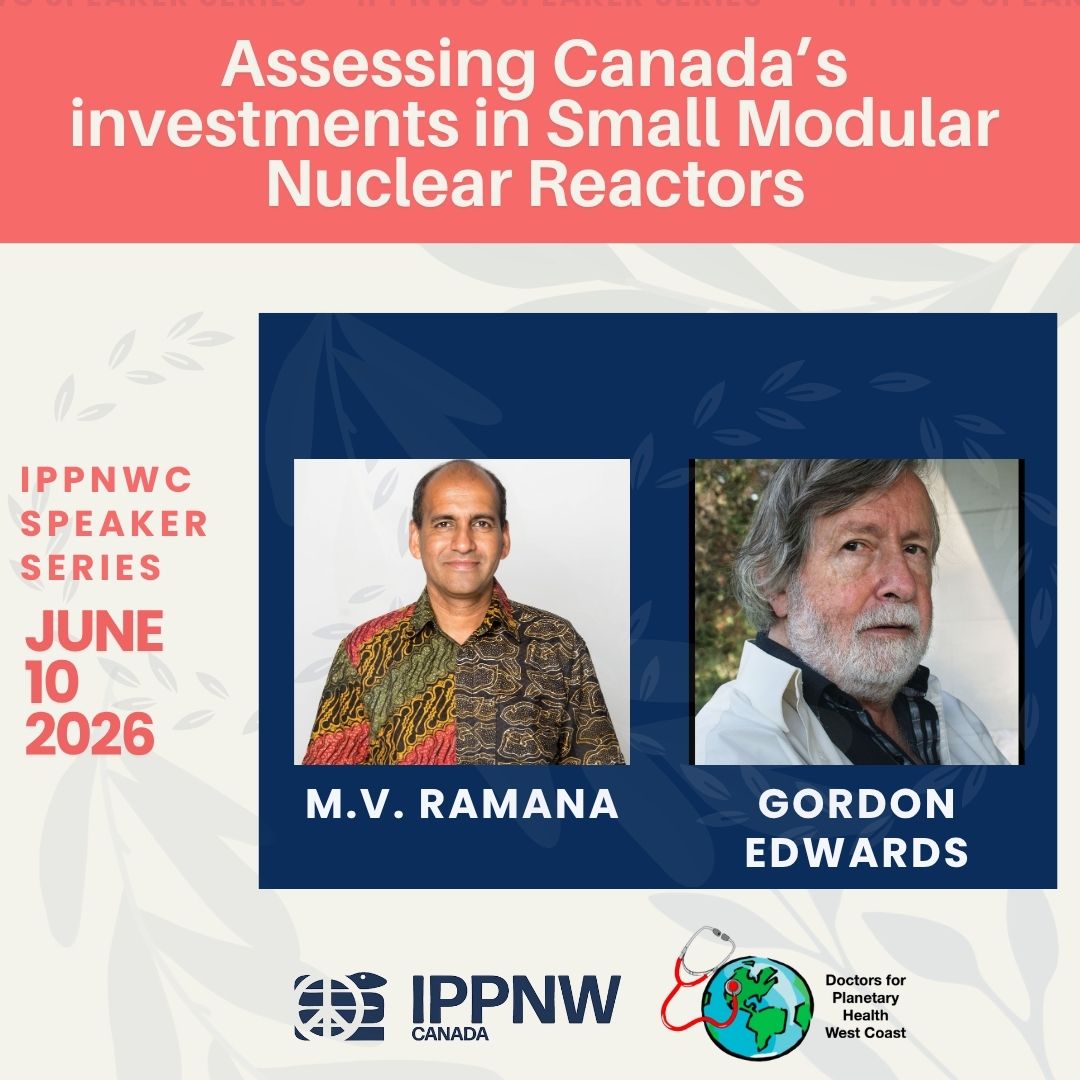


Cuba Is Not a Failed State – It Is a Besieged State
PETITION: “Global Appeal to Endorse Palestinian Right of Return of Refugees”
To see nuclear-related stories in greater depth and intensity – go to https://nuclearinformation.wordpress.com
-
Archives
- June 2026 (89)
- May 2026 (306)
- April 2026 (356)
- March 2026 (251)
- February 2026 (268)
- January 2026 (308)
- December 2025 (358)
- November 2025 (359)
- October 2025 (376)
- September 2025 (257)
- August 2025 (319)
- July 2025 (230)
-
Categories
- 1
- 1 NUCLEAR ISSUES
- business and costs
- climate change
- culture and arts
- ENERGY
- environment
- health
- history
- indigenous issues
- Legal
- marketing of nuclear
- media
- opposition to nuclear
- PERSONAL STORIES
- politics
- politics international
- Religion and ethics
- safety
- secrets,lies and civil liberties
- spinbuster
- technology
- Uranium
- wastes
- weapons and war
- Women
- 2 WORLD
- ACTION
- AFRICA
- Atrocities
- AUSTRALIA
- Christina's notes
- Christina's themes
- culture and arts
- Events
- Fuk 2022
- Fuk 2023
- Fukushima 2017
- Fukushima 2018
- fukushima 2019
- Fukushima 2020
- Fukushima 2021
- general
- global warming
- Humour (God we need it)
- Nuclear
- RARE EARTHS
- Reference
- resources – print
- Resources -audiovicual
- Weekly Newsletter
- World
- World Nuclear
- YouTube
-
RSS
Entries RSS
Comments RSS
 nuclear-news