Mirrors of Greed: Elon Musk, OpenAI and the Tech Brat Battle

19 May 2026 Dr Binoy Kampmark , https://theaimn.net/mirrors-of-greed-elon-musk-openai-and-the-tech-brat-battle/
They are a disagreeable bunch, with disagreeable ideas to match. The querulous brats behind the drive for technological servility and plugged in stupidity were always going to scrap over which dystopian vision they most prefer. Elon Musk thought he was onto something hounding OpenAI and its current CEO Sam Altman for supposedly betraying one of those visions. In his $150 billion legal action, Musk alleged that Altman and OpenAI president Greg Brockman deceived him into investing in the company in its initial stages when salad green altruism was modish and humanity mattered. The litigation was a prong in a broader strategy to unseat Altman from OpenAI, sabotage the company’s $852 billion restructuring into a public benefit corporation and direct $134 billion to OpenAI’s non-profit foundation.
The deception centred on maintaining OpenAI as a non-profit entity and pursuing artificial intelligence (AI) ventures in ways beneficial to humanity. (When the tech brats have a stab at humour, they go in hard.) According to Musk, OpenAI had effectively stolen a charity. (Between 2015 and 2017, he had personally put $44 million into OpenAI, funds, he argues, that were essentially misappropriated when the company sloughed its non-profit skin.) In an introductory overview of the company from December 2015, the company badges itself a “non-profit artificial intelligence research company” with the object of advancing “digital intelligence in a way that is most likely to benefit humanity as a whole, unconstrained by a need to generate financial return. Since our research is free from financial obligations, we can better focus on a positive human impact.”
How things change. On May 18, a mere two hours was needed for a nine-jury member in Oakland, California to unanimously find against Musk, basing their decision on that most technical of grounds: the statute of limitations. This left two civil claims – breach of charitable trust and unjust enrichment – untested. Having left OpenAI’s board in 2018, Musk dithered till February 2024 to file suit. Musk claimed to have only discovered the company’s abandonment of its non-profit mission in 2022, when Microsoft showed its interest with an investment of $10 billion. OpenAI’s legal team argued that the pertinent events – the creation of a for-profit subsidiary in 2019 for instance and Microsoft’s initial injection of $1 billion that same year, were already matters of common knowledge. Time on the statute of limitations was running well before 2022. US District Judge Yvonne Gonzalez Rogers of the Northern District of California saw no reason to question the jury’s conclusion. “There’s substantial amount of evidence to support the jury’s finding, which is why I was prepared to dismiss on the spot.”
The trial was impressively ugly and amounted to an insult to the stout intelligence of the public whose welfare both parties claim to be protecting. The legal representatives from both sides jousted over respective views on AI and the credibility of the disputants. Musk’s lawyer, Steven Molo, pressed jurors to consider that several witnesses, including former OpenAI chief scientist Ilya Sutskever, doubted Altman’s candour, going so far as to find him mendacious. Altman had also conceded under cross-examination that he “told the occasional lie”. “Sam Altman’s credibility is directly at issue,” Molo crowed. “If you don’t believe him, they cannot win.”
OpenAI, Musk accusingly asserted, had wrongfully attempted to enrich investors and insiders at the expense of the non-profit. Along the way, it had failed to make AI safety a matter central to its operations. Microsoft, he further argued, had always known that OpenAI cared more about money than altruism. A personal journal entry penned by Brockman in November 2017 was also instructive, baldly revealing that OpenAI could not assert fidelity to its non-profit status if it intended becoming a benefit corporation months later. So it came to pass that Altman, Brockman and OpenAI were accused of the very same temptations, frailties and indifference to safety that could be found in Musk’s own conduct.
On the issue of safety and welfare, Musk’s own xAI, acquired by space and rocket company SpaceX, also part of the South African’s fiefdom of misrule, has drawn the attention of the European Commission and UK watchdog Ofcom over Grok, a product that has been used to create sexualised images. The combine arising from xAI and SpaceX could lead to an initial public offering that would surpass OpenAI in size, which sinks the scurrilous suggestion of altruism. Provided things go smoothly, the world’s first trillionaire might arise.
OpenAI was hardly going to leave Musk’s feeling of tech purity unchallenged. It was he, not OpenAI, who saw the shimmering dollar signs. Going back to 2017, he had floated the idea of a for-profit subsidiary with one caveat: he would have exclusive control. Failing this, he left the board in a huff. OpenAI’s attorney William Savitt suggested that Musk, having failed to “get his way at OpenAI,” filed his lawsuit only after establishing his own competing AI company in 2023. But most saliently, he waited too long to claim breaches of the founding agreement regarding the building of safe artificial intelligence for the benefit of humanity. “Mr Musk may have the Midas touch in some areas, but not in AI,” claimed Savitt.
OpenAI’s predatory reflexes will be boosted by the decision. The non-profit status in this field has been found wanting, and the scramble for profits given much encouragement in this most unprincipled of frontiers. “The decision is likely to reassure investors and the broader AI sector,” opines Sarah Kreps of the Tech Policy Institute at Cornell University, “because it avoids a potentially chaotic outcome that could have challenged OpenAI’s commercial structure, Microsoft partnership, and future fund-raising plans.”
This was by no means the first time Musk had taken to throwing a brief of anger against OpenAI. In March 2024, showing that intelligence can be authentically artificial, he filed a lawsuit citing a contract violation of a contract that did not exist. Using the misguided legal offices of Irell & Manella – the same firm that erroneously claimed on behalf of PETA that a monkey could hold copyright – Musk pursued what Techdirt’s Mike Masnick appropriately called a “vibes based” action. “Elon doesn’t have a contract with OpenAI which the company could have breached. And that’s kinda a problem in a breach of contract lawsuit.” This insuperable logic led Musk to abandon the lawsuit in June that year.
For Musk, the wells of indignation run deep. This is a man in the habit of losing or settling claims, be it with former Twitter executives and employees of the social platform now known as X, losing to investors in that same company for misleading public statements made during his untidy, often chaotic takeover, or having his lawsuit promptly dismissed against advertisers that exited that troubled platform. While such behaviour should draw scorn, those drawing benefit from his litigious pathologies – lawyers, in the main – can only be grateful. “In a lot of ways, he is just another businessperson asserting his rights,” says a credulous Shubha Ghosh, lawyer and law academic at Syracuse University. “I don’t think he’s abusing the legal system. Whether he uses it effectively, I’m not sure.” Wrong, certainly, on the first count.
Republicans should be worrying about millions of fools voting for treason and criminal war destroying the economy – Walt Zlotow.
Walt Zlotow West Suburban Peace Coalition Glen Ellyn IL, 18 May 26
It’s understandable the Chicago Tribune is concerned about the future of the Republican Party (Editorial: Republicans are preparing for the midterms. They should be worrying about the party’s future). Soon after its founding in 1847, the Trib championed creation of an anti-slavery party and its most eloquent spokesman, native son Abe Lincoln. Seven years later that led to founding of the Republican Party and eventual election of Trib favorite Lincoln in 1860.
One hundred seventy-two years on the Trib’s still favorite party is fundamentally opposed to every vestige of its historical legacy. The Trib urges Republicans to reflect on their party “whose historical brand is inextricably linked with patriotism” How did the Trib miss the Republican Party, under Donald Trump, destroyed every vestige of patriotism when it inspired an insurrection at the Capitol in 2021 to overturn the election. The tiny handful of Republican patriots like Liz Cheney and Adam Kinzinger who dared call out Trump’s treason were systematically purged from Republican Party. Trump, cheered on by nearly every Republican congressperson, then pardoned his 1,500 coup brigade who injured over 150 patriotic cops, five of whom died shortly afterwards from injury or suicide, trying to save American democracy from Trump’s treason.
Besides now being the party of treason, Trump’s Republican Party is now the party of senseless criminal war in Iran that, besides being lost with no exit strategy, is systematically degrading the world economy including America’s.
The Trib is anxious to find something of value in the Republican wrecking ball controlling the entire government with no check whatsoever. Alas, it’s not in the claim “There are plenty of rational folks who voted for Trump; 44% of Illinoisans are not fools. “Plenty of rational folks” are not words that befit the 56% to 44 % Illinois blowout against Trump. Every one of Trump’s 2,449,079 Illinois voters in 2024 were fools to vote for the only presidential candidate in US history who sought to destroy American democracy. And when each now forks over an extra 20 or 30 bucks to fill their gas guzzler due to Trump’s criminal war on Iran with no end in sight, they’ll likely ponder the wise words of a 1958 Elvis hit…”Now and then there’s a fool such as I.”
The Chicago Tribune, by spending 1,500 words seeking to salvage the Republican Party without mentioning the Trump GOP treason and criminal war on Iran , may be the biggest fool of all.
5 Stocks That Benefit From the Government’s $94 Million Spending Spree on Nuclear Reactors.

The Trump administration is giving out money to small
nuclear reactor projects, and a handful of public companies should benefit.
The Energy Department announced $94 million worth of cost-sharing grants to
build out America’s nuclear infrastructure.
The government will pay for
up to 50% of the projects. It’s the second such grant given out to
nuclear players. The first one went to the Tennessee Valley Authority, a
federally controlled utility, and Holtec, a privately held nuclear operator
that’s building small reactors. Holtec is expected to go public sometime
this year.
The government’s involvement is meant to fast-track a U.S,
nuclear renaissance, which has moved slowly so far because most private
companies don’t want to take the financial risk.
Barrons 15th May 2026,
https://www.barrons.com/articles/nuclear-reactor-stocks-e23d92f1
Trump Describes Executions to Kids, While MAGA Bans Lessons Causing “Discomfort”
Trump’s performance of masculine bravado and attacks on transgender athletes were not separate from his broader message — they were central to it. Trump has presented the revival of the Presidential Fitness Test not simply as a health initiative, but as part of rebuilding a “tougher,” more militaristic national character. Within that worldview, rigid masculinity becomes a political ideal associated with aggression, control, and toughness, while vulnerability, peace, or gender nonconformity are treated as signs of weakness and decay.
Trump’s lesson to children was to fear difference, obey power, and treat vulnerable people as threats.
By Jesse Hagopian , Truthout, May 16, 2026, https://truthout.org/articles/trump-describes-executions-to-kids-while-maga-bans-lessons-causing-discomfort/?utm_source=Truthout&utm_campaign=fcdf48b92f-EMAIL_CAMPAIGN_2026_05_16_02_57&utm_medium=email&utm_term=0_bbb541a1db-fcdf48b92f-650192793
Seated behind the Resolute Desk in the Oval Office in early May, Donald Trump delivered a disturbing lecture to a group of children huddled around him — most of them not yet even teenagers. They had been brought to the White House for what was supposed to be a celebratory event marking the reinstatement of the Presidential Fitness Test, dressed in brightly colored T-shirts bearing the government emblem of the rebooted program.
Flanked by a group including cabinet secretaries Linda McMahon, Pete Hegseth, and Robert F. Kennedy Jr., Trump turned the White House into his schoolhouse. Casting himself as a master teacher, he launched into an improvised lesson — part contemporary issues, part history, part geography, and all MAGA mythology.
During his lesson, Trump exposed a central contradiction at the heart of his politics. States and school districts across the country have enacted MAGA education policies — such as the Florida Stop WOKE Act — that prohibit teaching content that might cause students “guilt, anguish, or other forms of psychological distress.” But Trump himself showed no such restraint. During what amounted to an advanced course in authoritarian education, he immersed children in a grotesque curriculum of graphic executions, nuclear annihilation, and the threat of entire societies being wiped out — paired with nationalist triumphalism and the scapegoating of transgender people.
The premise of the event itself rested on the fear that the U.S. has become weak and soft, which could only be remedied by making the country aggressively masculine again. Trump framed the return of the Presidential Fitness Test not merely as a health initiative, but as part of a broader struggle for national strength and power. Warning in a statement to the press that declining youth fitness weakens “our economy, military readiness, academic performance, and national morale,” he cast physical toughness as a prerequisite for a nation prepared for war.
This is not education. It is spectacle, coercion, indoctrination, and the normalization of violence.
Teaching Fear
In one of the most disturbing moments of the event, a reporter asked Trump whether Iranian protesters, with U.S. support, could topple their government. He answered by explaining, in vivid detail, how those protesters might be massacred: “You can have 200,000 people protesting … and when they start shooting them right between the eyes, and you see a guy fall, and another one fall…”
Then Trump raised his hand to his face, pressing his index finger between his brows, marking the place where the bullet would strike. Recalling protests led by Iranian women, he described a demonstrator being shot by snipers as “a woman dropped dead with a bullet right there,” repeatedly pointing between his eyes to show where the bullet struck. He described the panic that could spread through the crowd as “another woman dropped” and protesters began to flee. A boy to his right pursed his lips as Trump narrated the murders. A girl to his left appeared visibly jarred — her eyes widened, her expression tense — as the adults around her stood by silently.
Educators and child psychologists have long warned that exposing children to graphic violence without context or emotional grounding can create anxiety, confusion, and fear. The National Association of School Psychologists advises adults discussing violence with children to keep explanations “developmentally appropriate” and avoid exposing them to “vengeful, hateful, and angry comments.” Trump did the opposite. Rather than helping children process violence with care and understanding, he used graphic imagery to normalize brutality and reinforce the logic of power.
Trump did not stop at describing executions. He escalated from scenes of political murder to warnings of nuclear catastrophe.
He did briefly acknowledge the inappropriateness of his comments, saying, “You might be too young for this,” before warning the children that “you can’t let a bunch of lunatics have a nuclear weapon or the world will be in a lot of trouble.” As Desi Lydic quipped on “The Daily Show”: “No, they’re not too young. I’m sure they’ve already seen the ‘Paw Patrol’ episode where they drop a ballistic missile on Humdinger.”
Organizations focused on child development emphasize that young people need guidance and context when confronting frightening world events. Child advocacy organization Defending the Early Years (DEY) notes that young children “hear headlines and snippets of conversations and are often left to make sense of confusing situations without proper guidance or facilitation.” Rather than ignoring difficult events — or exposing children only to the most disturbing fragments — DEY emphasizes the need for “age-appropriate conversations … so they can understand what is happening.”
A responsible lesson on nuclear weapons, for example, might begin by asking students what they already know and what questions they have. It might include a brief, factual explanation of what nuclear weapons are, paired with age-appropriate historical context — such as the global movements that have worked to limit or eliminate them. Students might examine how ordinary people have organized against nuclear war, or consider what actions communities can take to reduce the risk of these weapons being used.
Rather than helping children process difficult realities, Trump took it even further: “Iran with a nuclear weapon … maybe we wouldn’t all be here right now.”
He amplified the dread by asking the kids to imagine a world in which entire regions are destroyed, and where they themselves would not survive: “I can tell you, the Middle East would have been gone. Israel would have been gone. They would have trained their sights on Europe, first, and then us.”
Counselor Nathaniel N. Ivers notes that fear of nuclear devastation can have a lifelong impact on children. During the Cold War, studies found that children and caregivers often experienced heightened anxiety about nuclear threats — and that when adults expressed more fear, their children tended to become more anxious as well.
Beyond inflicting psychological trauma, Trump’s discussion of nuclear apocalypse also lacked the historical context students would need to understand how the past shapes present conflicts. The United States remains the only country to have ever used nuclear weapons in war — dropping atomic bombs on both Hiroshima and Nagasaki at the end of World War II, killing more than 200,000 civilians. Trump, of course, was not interested in allowing students to consider why many around the world fear the U.S. use of nuclear weapons more than any other country.
Nor did Trump mention the long history of U.S. intervention in Iran itself. As historian Stephen Kinzer explains, after World War II, the people of Iran rose up to achieve a brief period of democracy and “They did something that the United States never likes: They chose a leader who wanted to put the interests of his own country ahead of the interests of the United States.” The leader they elected was Prime Minister Mohammad Mosaddegh, who moved to nationalize the country’s oil industry. In response, the United States and Britain orchestrated the 1953 coup that overthrew him. As Kinzer put it, “this was not just an attack on one person, but an attack on democracy.”
But Trump didn’t teach these truths that could help children understand how those in power have misused it. And just as Trump taught children to fear “enemies” abroad, he also taught them to view transgender people at home as threats to the social order he was trying to defend. Railing against gender-affirming care for trans youth, Trump invoked “transgender mutilization” — mangling the word he was trying to weaponize — in an apparent attempt to frighten the children before abruptly catching himself and saying, “Don’t listen to this, kids.” Then, reversing his decision to have the children disregard him, Trump looked into the eyes of the youth and declared, “I’ve never had one person say it’s important we allow women to be challenged by men in women’s sports…”
Moments later, he resumed the lesson. Turning to one of the boys beside him and slapping him on the arm, Trump said, “I don’t think we are gonna have to worry about you.” He then asked, “Are you a strong person?” When the boy replied yes, Trump followed up: “Do you think you can take me in a fight?”
Again, aggression was the lesson.
Trump’s performance of masculine bravado and attacks on transgender athletes were not separate from his broader message — they were central to it. Trump has presented the revival of the Presidential Fitness Test not simply as a health initiative, but as part of rebuilding a “tougher,” more militaristic national character. Within that worldview, rigid masculinity becomes a political ideal associated with aggression, control, and toughness, while vulnerability, peace, or gender nonconformity are treated as signs of weakness and decay.
Trump’s rhetoric drew on a long bipartisan tradition in U.S. politics in which organized sports and physical fitness were treated not as recreation, but as training grounds for masculine discipline, war, and imperial power. Theodore Roosevelt’s celebration of “The Strenuous Life” warned against national “softness” and argued that athletics cultivated the “virile virtues” needed by a colonizing nation. As sports historian Dave Zirin wrote in A People’s History of Sports in the United States, Roosevelt saw “masculinity and Muscular Christianity as symbiotic with a nation poised to conquer.”
Decades later, Democratic President John F. Kennedy echoed similar fears in his essay “The Soft American,” arguing that the U.S.’s “struggles against aggressors throughout our history have been won on the playgrounds and corner lots and fields of America,” and that military victories “only come from bodies which have been conditioned by a lifetime of participation in sports.” Kennedy’s expansion of the Presidential Fitness program, established under President Dwight D. Eisenhower, was explicitly tied to Cold War anxieties about national decline, military readiness, and the U.S.’s ability to compete with global rivals. Trump’s revival of the Presidential Fitness Test tapped directly into that tradition — one that links fears of national decline to nationalism, militarism, and rigid ideas about masculinity.
“Everyone Is Welcome Here” vs. MAGA Hypocrisy
Taken together, Trump’s lesson was about teaching children who and what to fear — foreign enemies overseas and vulnerable communities at home — while deflecting from the real dangers of war, bigotry, and oppression. As Rethinking Schools argues, education should help students “see injustice, imagine possible remedies, and develop the tools to enact them.” Trump’s lesson taught the opposite: fear difference, obey power, and treat vulnerable people as threats.
For years, Trump and his allies — especially writer Christopher Rufo — have argued that schools should avoid teaching material that is “divisive,” “negative,” or emotionally distressing. Trump and his allies have described lessons on racism and slavery as “toxic,” even likening such teaching to “child abuse.”
The hypocrisy is rank.
In Idaho, middle school teacher Sarah Inama was ordered in January 2025 to take down a classroom poster that read, “Everyone is welcome here.” That demand was the result of Idaho’s 2021 “divisive concepts” law, which restricts how teachers can discuss race, identity, and inequality in schools. In that environment, a message affirming the lives of all children was recast as subversive indoctrination meant to sow division. Across the country, teachers have been reprimanded for displaying Pride flags, forced out of their jobs for acknowledging systemic racism, or warned against teaching that slavery was wrong, for fear that it might make students uncomfortable.
But describing people being shot “right between the eyes” is comforting? Imagining nuclear annihilation prevents psychological distress? Celebrating bombing campaigns is reassuring?
In this upside-down moral universe, empathy is dangerous, human dignity is controversial, and truth itself is suspect. What is condemned is not harm, but the effort to understand and end it.
And yet, there is resistance.
At first when Sarah Inama was told to take down her classroom poster, she complied. But after a student asked if taking it down meant that not all students were welcome, the meaning of the order became undeniable — and she put the poster back up.
After rehanging it, she wrote to her principal that the request “goes against everything that we work towards and the type of community that we dream to have at our school.”
“We (help students learn) by making them feel safe,” she continued. “We do that by making sure they have food. We do that by building relationships with them. And, most importantly, we do that by making sure that they know that they are all welcome there and we want them here … With that being said, I have put my sign back up.”
In putting the sign back up in her classroom, Inama posed a challenge to us all: Will we insist that students deserve classrooms that tell the truth, nurture their humanity, and equip them to challenge injustice — or will we allow fear and violence to become the curriculum
Jesse Hagopian is a Seattle educator, the director of the Zinn Education Project’s Teaching for Black Lives Campaign, an editor for Rethinking Schools, and the author of the book, Teach Truth: The Struggle for Antiracist Education. You can follow him at IAmAnEducator.com, Instagram, Bluesky or Substack.
128 years of US exploitation, degradation of Cuba continues on steroids – Walt Zlotow
Walt Zlotow West Suburban Peace Coalition Glen Ellyn IL, 16 May 2026, https://theaimn.net/128-years-of-us-exploitation-degradation-of-cuba-continues-on-steroids/
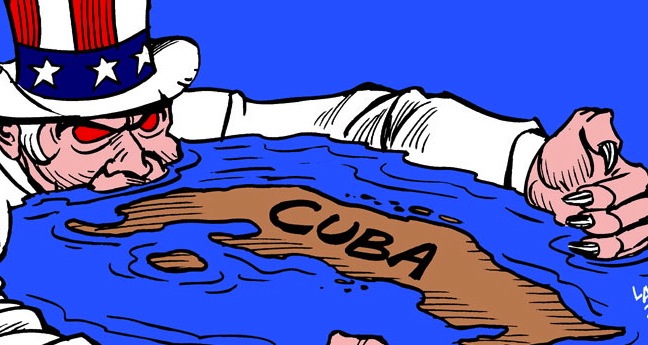
One must go back to 1898 for the last time the US was not exploiting Cuba and its people to benefit rapacious US capitalism and organized crime. That year the US cooked up fairy tale about Spain blowing up the US Maine, sent to Havana Harbor to intimidate Cuba’s Spanish ruler. The Maine did blow up but from an accidental internal explosion, not a Spanish mine. Those 261 sailors could not to die in vain so President McKinley and his war party blamed Spain in order to declare war, kick Spain out of the Americas and take over Cuba for US exploitation.
But nothing in the previous 126 years compares to the diabolical cruelty, including death, the US has inflicted upon Cuba by President Trump and his bloodthirsty Secretary of State Marco Rubio.
This is not exaggeration. Need a lifesaving operation in Cuba under the Trump, Rubio oil blockade? Faggedaboudit. Much medical care is unavailable in oil starved Cuba when the lights go dark. Food and life sustaining supplies are becoming scares as farmers and merchants cannot get their wares to the people with a transport system largely shut down. Nearly a fifth of Cubans have fled the Trump, Rubio regime change operation.
Trump glories in their death and destruction he’s unleased. “THERE WILL BE NO MORE OIL OR MONEY GOING TO CUBA – ZERO! I strongly suggest they make a deal, BEFORE IT IS TOO LATE.” Trump is simply expanding in more grotesque terms US policy to degrade Cuba into submission going back to 1960. A secret State Department memo back then under Eisenhower promoted overthrowing Castro thru “a line of action, while adroit and inconspicuous as possible, denies money and supplies to Cuba to bring about hunger, desperation and overthrow of the Castro government.” Trump simply dropped the “adroit and inconspicuous” fig leaf.
Ironically, the first US embargo in Cuba was good for the Cuban people. In April, 1958, Eisenhower imposed an arms embargo on the Batista regime. The US had been supporting Batista’s murderous rule for 25 years to insure his support of US economic control, both legal and criminal that enriched US capitalists and Mafia enterprises to the detriment of the Cuban people. Eisenhower didn’t have an epiphany to help the Cuban people. He simply saw the inevitable triumph of Castro’s revolution and sought to curry favor with its eventual rulers.
Twenty months later Castro prevailed, Batista fled and Cuba finally ended 62 years of US cruelty and exploitation. Not quite. Within year the US imposed Cuban embargo 2.0 designed not to facilitate the inevitable revolution but to destroy it. Sixty-six years on, with the entire world community except Israel voting year after year in the UN for the US to stop, America’s endless lust to crush the Cuban revolution continues apace. And under the depraved Trump, Rubio oil embargo, it has become a monumental war crime against the 11 million sorrowful Cuban souls.
After Offering ‘No Tangible Concessions’ in Iran Peace Talks, Trump Issues Latest Violent Threat
“The only realistic path to a diplomatic breakthrough would require Washington to engage more directly with the structure and substance of the Iranian proposal itself,” said a national security expert.
Julia Conley, May 17, 2026, https://www.commondreams.org/news/trump-iran-nuclear-talks
With the economic impact of the war on Iran linked to President Donald Trump’s plummeting approval rating, the president issued his latest threat to destroy the Middle Eastern country Sunday as he demanded negotiators “get moving, FAST” to end the conflict the US and Israel began by choice in February.
“For Iran, the Clock is Ticking,” said the president in a Truth Social post, adding that if a peace deal is not reached soon, “there won’t be anything left of them. TIME IS OF THE ESSENCE!”
Trump rejected Iran’s latest peace proposal last week; the country has reportedly offered significant concessions on its uranium enrichment, but seeks to have separate nuclear talks after achieving peace and reaching a deal to reopen the Strait of Hormuz, which the Iranians effectively closed in retaliation for the US-Israeli attacks.
Since launching the conflict, Trump has demanded the dismantling of Iran’s missile arsenal as well as its nuclear program, which Iran has said is not for military purposes, and has called for the country to cut ties with its regional allies.
Iran’s Mehr news agency said Sunday that Trump had offered “no tangible concessions” in his response to the Iranians’ latest proposal.
“The United States,” said the news outlet, “wants to obtain concessions that it failed to obtain during the war, which will lead to an impasse in the negotiations.”
Trump told Fox News in Beijing over the weekend that the Iranians are “crazy, and you know what? Because of that, they cannot have a nuclear weapon,” explaining why he viewed it as “unacceptable” for nuclear talks to take place separately after a peace deal is brokered.
Trump reportedly spoke to Israeli Prime Minister Benjamin Netanyahu Sunday about the possibility of renewing strikes on Iran, which would break a ceasefire that was reached more than a month ago.
Danny Citrinowicz, a senior researcher at the Institute for National Security Studies, said Sunday that “the only realistic path to a diplomatic breakthrough would require Washington to engage more directly with the structure and substance of the Iranian proposal itself.”
“Iran’s priorities remain consistent: ending what it views as economic siege conditions, reopening maritime access and reducing pressure in the Gulf, negotiating an end to the broader conflict, and only afterward addressing the nuclear issue,” said Citrinowicz. “At the present moment, it is difficult to see the Iranian leadership agreeing to any framework that does not meaningfully engage with those core demands
As with Trump’s earlier threats of violence, including one in April in which he declared that Iran’s entire civilization would die, “never to be brought back again,” Iranian officials said the president’s latest comments—which followed his posting of an image of himself on a military ship accompanied by the words, “It was the calm before the storm”—would not be tolerated.
A spokesperson for Iran’s armed forces, Abolfazl Shakarchi, told Mehr that “repeating any folly to compensate for America’s disgrace in the Third Imposed War against Iran will result in nothing but receiving more crushing and severe blows.”
Reporting for Al Jazeera, correspondent Almigdad Alruhaid said that the “kind of language” displayed by Trump on Sunday “is not acceptable here in Tehran. They are projecting defiance rather than [giving] an immediate response to this kind of rhetoric.”
“Behind all of this rhetoric, there is awareness that the diplomatic window right now is narrowing,” said Alruhid.
Meanwhile, US Sen. Lindsey Graham (R-SC) urged Trump to “hurt them more” in order to force a deal, calling on the president to go through with bombing Iran’s energy infrastructure as he’s threatened to in recent months.
“The reason why Trump didn’t do this during the war—despite threatening it—was because he realized Tehran would retaliate and take out the energy infrastructure in the [Gulf Cooperation Council] states,” said Trita Parsi, executive vice president at the Quincy Institute for Responsible Statecraft. “This would lead to a far worse oil crisis—one rooted in production problems, not just a bottleneck in the Persian Gulf.”
“The global economy would be thrown into a deep recession. Fuel shortages would lead to food shortages worldwide. Trump’s presidency would be destroyed,” he said. “None of this matters to Lindsey. He’ll burn the entire planet as long as he gets his war. Trump’s biggest mistake has been to listen to Lindsey and his allies.”
Pete Hegseth “War Crimes Secretary” Called Out
May 18, 2026 ScheerPost Staff, https://scheerpost.com/2026/05/18/pete-hegseth-war-crimes-secretary-called-out/
As the Trump administration’s war on Iran spirals deeper into civilian bloodshed and media complicity, activists with CODEPINK are demanding answers that Washington and corporate media seem determined to avoid. In this explosive conversation with ScheerPost, CODEPINK organizing director Danaka Katowicz lays out the movement’s growing campaign to force Defense Secretary Pete Hegseth to answer for the bombing of a girls’ school in Minab, Iran — an attack that reportedly killed more than 168 people, most of them children.
But this interview goes far beyond one atrocity. It exposes a collapsing media system where billionaires, mergers, propaganda, AI warfare, and state violence increasingly operate hand-in-hand. From the Pentagon’s alleged use of AI targeting systems to CNN’s responsibility to confront war crimes instead of sanitizing them, Katowicz argues that ordinary people can no longer afford to remain spectators. As Gaza burns, Iran bleeds, and dissent is criminalized, CODEPINK says the answer is not despair — it’s organizing.
“Put Him on the Hot Seat”: CODEPINK Demands Answers for Iran School Bombing
The anti-war group CODEPINK is escalating its campaign against Defense Secretary Pete Hegseth after the bombing of a girls’ school in Minab, Iran reportedly killed over 168 civilians — many of them children — during the opening phase of the Trump administration’s war on Iran.
Speaking with ScheerPost, CODEPINK organizing director Danaka Katowicz accused Hegseth and the Pentagon of evading accountability while major media institutions normalize mass civilian death.
According to Katowicz, Congress immediately demanded answers after the strike: Was AI used to select the target? What civilian mitigation procedures existed? Why was a girls’ school bombed in the first place? But instead of transparency, she says the administration stonewalled.
“Hegseth dodged those questions. He never answered them.”
That refusal sparked CODEPINK’s “Put Hegseth on the Hot Seat” campaign — a public push demanding that major outlets use their access to confront the defense secretary directly on-air.
Katowicz blasted the growing consolidation of corporate media, arguing that mergers and billionaire influence are turning news outlets into extensions of state power rather than institutions of accountability.
“The news is not even the news anymore. It’s just propaganda explaining why all these bad things are happening and why it’s actually fine.”
Throughout the interview, the conversation returned repeatedly to the alleged role of AI-assisted warfare. Joshua Scheer noted that similar targeting systems used in Gaza appear to have migrated into the Iran war — systems critics argue remove human judgment from life-and-death decisions.
The result, he argued, has been “war crime on top of war crime.”
Katowicz said CODEPINK’s disruptions inside congressional hearings are designed not only to confront power directly, but to show ordinary people that resistance is still possible.
“People see that power is being challenged in their face. And that means a lot to people.”
The organization says its long-term strategy goes beyond Washington. Through local chapters, labor organizing, coalition work, and direct action, CODEPINK hopes to build a broader anti-war movement capable of challenging what Scheer described as a “billionaire fascist ecosystem” where media, tech, finance, and militarism increasingly operate together.
Katowicz emphasized that activism cannot remain confined to Congress or social media outrage.
“The revolution isn’t just going to happen in D.C.”
The interview also highlighted CODEPINK’s expanding campaigns around Gaza, Palestine solidarity, labor organizing, and demands for the release of detained Palestinian doctor Hussam Abu Safiya.
As public opposition to endless war grows, CODEPINK argues the real battle may now be over whether Americans can still distinguish journalism from propaganda — and whether ordinary people are willing to move from outrage to organized resistance.
CODEPINK is demanding that CNN “put Hegseth on the hot seat”
After Defense Secretary Pete Hegseth refused to answer congressional questions about the bombing of a girls’ school in Minab, Iran that reportedly killed 168 people, most of them children. The campaign accuses both the Pentagon and corporate media of shielding war crimes from public accountability while demanding journalists confront Hegseth directly on-air about civilian deaths, AI targeting systems, and America’s expanding wars.
As the death toll from America’s war on Iran continues to rise, CODEPINK activists are escalating direct confrontations with Defense Secretary Pete Hegseth, accusing the Trump administration of enabling war crimes while corporate media looks the other way. During a fiery disruption of a congressional hearing, activists denounced Hegseth as a “War Crimes Secretary,” demanding answers for the Minab school massacre, alleged AI-assisted targeting of civilians, and what they describe as a criminal war machine operating with total impunity.
I end with Hegseth’s own words and hypocrisy
“If you’re doing something completely unlawful and ruthless, there is a consequence for that. That’s why the military says it will not follow unlawful orders from the commander-in-chief. There’s a standard, an ethos, a belief that we are above the kinds of actions carried out by our enemies.”
Epic Interruptus: The Iranian Snare and American Defeat
13 May 2026 Dr Binoy Kampmark, https://theaimn.net/epic-interruptus-the-iranian-snare-and-american-defeat/
On May 10, Robert Kagan, the high priest of neoconservative thought, the bell ringer for muscular interventionism and general American meddlesomeness, lamented in The Atlantic that the United States had suffered a unique defeat in its efforts to subjugate Iran. The article says much about Kagan’s own identification with the obvious, some feat given the military fancy and fantasy that continues to blot the current Trump administration.
Be that as it may, he finds the Iran War dishing out a defeat to the United States of unique quality, one that “can neither be repaired nor ignored.” No ultimate American triumph could emerge, and nothing would “undo or overcome the harm done” to “return to the status quo ante.” The Strait of Hormuz would not be “open” as it was prior to February 28. Iran’s regional position, far from being blunted, had improved. China and Russia had been strengthened; the US “substantially diminished.” “Far from demonstrating American prowess, as supporters of the war have claimed, the conflict has revealed an America that is unreliable and incapable of finishing what it started.”
This prompting was undoubtedly due to the claim made by US Secretary of State Marco Rubio on May 5 in the White House Press Briefing Room that Operation Epic Fury had concluded, though US President Donald Trump, ever keen to keep an iron in the fire, huffed that Iran had to “agree to give what has been agreed to.” (The “what” is always the problem in Trumpland.) Not doing so would result in bombing “at a much higher level and intensity than it was before.” The President had also “paused” Project Freedom, that massive prop of wishful thinking involving the use of the US military to escort commercial shipping through the Strait of Hormuz. The pause – effectively a breezy termination – had been induced, in no small part, by the grumpiness of Saudi Arabia’s Mohammed bin Salman, worried that adventurism in the Strait would incite yet another round of Iranian attacks on Gulf states. To show his disapproval, the Crown Prince had refused to permit the use of the Prince Sultan Airbase for US operations.
Iran’s airstrikes had also shown far more bite than was initially reported, at least in the Western media stable. Some of this can be put down to the restrictions on the release of satellite imagery supplied by commercial providers Vantor and Planet. Both have been compliant with the Pentagon’s request to either limit, delay or indefinitely withhold the publication of timely imagery covering the region. The Iranians, through state-affiliated news outlets, felt no such restraint.
On May 6, The Washington Post, after examining Iranian satellite imagery, reported that some 228 structures of pieces of equipment at US military sites across the Middle East since February 28 had been damaged and destroyed. Hangars, barracks, fuel depots, aircraft, vital radar, communications and air defence equipment had been struck by Iran’s forces. The dangers posed by Iranian strikes had been so formidable as to force some US bases in the region to relocate personnel out of missile range.
In its analysis, the paper claims to have verified some 109 images, aided by a comparison with lower-resolution imagery obtained from the European Union’s Copernicus satellite system, and any high-resolution images at hand from Planet. The Iranian images also confirmed previously reported damage or destruction inflicted on a number of US military assets: the radomes at Camp Arifjan and Ali al-Salem Air Base in Kuwait and at the 5th Fleet Headquarters; the Terminal High Altitude Area Defense (THAAD) missile defence radars and equipment located at Jordan’s Muwaffaq Salti Air Base and two sites in the United Arab Emirates; a second satellite communications site located at al-Udeid Air Base, and an E-3 Sentry command and control aircraft and a refuelling tanker at Prince Sultan Air Base in Saudi Arabia.
The analysts roped in to examine the images were impressed. Mark Cancian, a former Marine Corps colonel and senior advisor to the Center for Strategic and International Studies (CSIS), found the strikes to be “precise.” “There are no random craters indicating misses.” William Goodhind of the open-access research project Contested Ground, in addition to noting the destruction of equipment, fuel storage and air base infrastructure, found damage to “soft targets, such as gyms, food halls and accommodation.”
To add stinging insult to burgeoning injury, the defences used to cope with Iranian strikes proved staggeringly draining and disproportionately costly. The CSIS estimates the use of at least 190 THAAD interceptors and 1,060 Patriot interceptors between February 28 and April 8, running down inventories of both at 53% and 43% respectively. And just to improve the mood in Washington, Tehran, according to an analysis by the US intelligence community, retains roughly 75% of its prewar inventories of mobile launchers and roughly 70% of its pre-war missile stockpile. Vague as they are, that’s another objective of Operation Epic Fury dashed.
While the childish pantomime of non-diplomacy continues (Trump rages that the ceasefire with Tehran, given the latest “piece of garbage” of a counter proposal, is on “life support”), Washington is banking on a strangulation policy through yet another project of dubious merit: Economic Fury. “As Iran’s military desperately tries to regroup, Economic Fury will continue to deprive the regime of funding for its weapons programs, terrorist proxies, and nuclear ambitions,” tooted the Secretary of the Treasury Scott Bessent on May 11. “Treasury will continue to cut the Iranian regime off from the financial networks it uses to carry out terrorist acts and to destabilize the global economy.”
Economic Fury, still in its swaddled infancy, also risks early retirement. Iranian stubbornness and stout resilience continues to trouble analysts in the intelligence community. A CIA analysis circulated this month concluded that Tehran could withstand the US naval blockade for between 90 to 120 days before experiencing dramatic economic deterioration. Iran’s economy may be in a wretched state, but parochial determination has a certain staying power. Bureaucratic bickering, however, often finds its way, and a senior US intelligence official (that could be anyone) has surfaced to counter the claims of the assessment. Genuine, extensive and rapid economic damage is being inflicted. The US remains in the ascendant.
These varied intelligence assessments of decorative astrology cannot escape the dunderheaded reasoning that undergirded the war, along with the failure to appreciate the shocks caused, not merely by Iran’s closure of the Hormuz Strait but its systematic shredding of the US security guarantee for Gulf states. Unlike the fumbling, inventive antics shown prior to the invasion of Iraq in March 2003, the CIA and allied intelligence services were well aware that a campaign against Iran was freighted with terrible risk. Ensnared and trapped, Trump will find it hard to avoid using the good offices of China’s President Xi Jinping to lean on Beijing’s ally. If so, it is bound to come at an exacting price.
On Iran war he opposed then supported, Secretary of State Rubio channeled wrong predecessor – Walt Zlotow.

Don’t expect Marco Rubio to ever apologize for helping bring on what will likely become the most disastrous war in America’s 250 years. Rubio has been a fervent, lifelong promoter of senseless, endless US wars and US exceptionalism. He has always demonstrated the exact opposite of what a decent, peace promoting Secretary of State should be.
13 May 26, Walt Zlotow, https://theaimn.net/on-iran-war-he-opposed-then-supported-secretary-of-state-rubio-channeled-wrong-predecessor/
Marco Rubio is America’s 72nd Secretary of State going back to John Jay in 1789. While serving as the President’s top foreign affairs advisor, overseeing diplomatic missions, managing international relations, promoting human rights, Job One for every Secretary of State is to champion peace, not war.
Predecessors in this prestigious post include Thomas Jefferson, James Madison, James Monroe, John Quincy Adams, Henry Clay, Daniel Webster and William Jennings Bryan.
What an as astonishing cast of noble Secretaries that Rubio could have chosen from to respond to Trump’s decision to blow up Iran and now possibly the world economy beginning 75 days ago. Reports indicate Rubio argued against the invasion, not on moral grounds it was a criminal war, but on practical grounds it would fail. When Trump brushed asides Rubio’s concerns and pulled the trigger, dutiful Rubio hopped off the Peace Train and grabbed a First Class seat on Trump’s War Train.
Once started, Rubio offered one of the most disingenuous, disgusting rationales for war in American history. Rubio said the US had to attack Iran first. Why? Because we knew Israel was going to attack Iran and if they did, Iran would attack their best buddy America. By attacking first, the US would suffer less casualties. Of course, Rubio omitted that all along the US and Israel planned a one, two sucker punch on Iran while in peace negotiations with them.
Rubio sadly followed up on what till then had been the worst precedent in US history of a Secretary of State abdicating his job responsibility promoting peace to support his President’s rush to criminal war. On February 5, 2003, George W. Bush’ Secretary of State Colin Powell shamelessly told the UN a blizzard of lies Iraq had WMD, intended to use them, and time was running out for the world to stop them. Forty-four days later Bush launched his war that Powell, with his enormous but fake credibility, made possible. The belief was, ‘If Colin Powell says war is necessary, then war it is.’
Alas, Rubio should have gone back 88 years earlier than Powell’s disgrace to channel instead predecessor William Jennings Bryan. On June 9, 1915, President Woodrow Wilson’s Secretary of State William Jennings Bryan resigned. After the British liner Lusitania was sunk May 7, Bryan sent Germany a conciliatory note requesting restraint and high level diplomacy to keep the European war from drawing in the US. Bryan was mindful Germany neither attacked nor threatened America far across its Atlantic mote. Wilson was furious and penned a much stronger note that Bryan refused to sign out of conscience, resigning instead.
Bryan’s principled plea for peace did not prevent Wilson’s disastrous declaration of war on Germany 22 months later. But had Rubio bluntly told Trump he would resign and go public with his opposition to a clearly unwinnable war, Trump might have pulled back from the catastrophe he’s unleashed.
It took two and a half years for Colin Powell to admit his perfidy in enabling America’s horrific Iran war that killed hundreds of thousands of Iraqis and over 5,000 US and allied troops. “I, of course, regret the U.N. speech that I gave, which became the prominent presentation of our case. I never saw evidence to suggest a connection between the September 11, 2001 terror attacks in the United States and the Saddam regime. I’m the one who presented it on behalf of the United States to the world, and (it) will always be a blot on my record. It was painful. It’s painful now.”
Don’t expect Marco Rubio to ever apologize for helping bring on what will likely become the most disastrous war in America’s 250 years. Rubio has been a fervent, lifelong promoter of senseless, endless US wars and US exceptionalism. He has always demonstrated the exact opposite of what a decent, peace promoting Secretary of State should be.
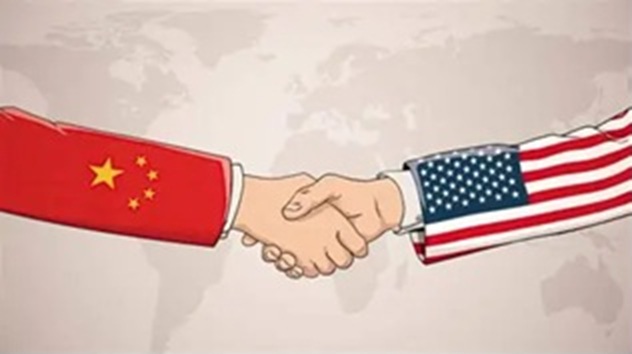
US President Donald Trump, Chinese President Xi Jinping end unipolar age in Beijing
By Bang Xiao, 16 May 26, https://www.abc.net.au/news/2026-05-16/us-donald-trump-china-xi-jinping-end-unipolar-age-beijing/106687004
For nearly a decade, the world has braced for a collision.
The dominant United States and a rising China, locked in escalating strategic competition, were said to be hurtling towards a Thucydides Trap that history suggested would be almost impossible to avoid.
This week in Beijing, both Donald Trump and Xi Jinping quietly admitted something the rest of the world has been slow to grasp. Neither of them can afford the collision.
The summit produced no breakthrough trade deal, no joint statement, no big announcement on Taiwan. And yet what it delivered may turn out to be more consequential than any of those things. The public outline of a new global order.
One in which the US and China are not enemies, not rivals, and not partners in the warm Western sense. They are something newer and harder to name. Two structurally interdependent superpowers who have decided, for now, to manage their rivalry rather than let it manage them.
At the state banquet on Thursday night, Xi put the new compact in language no Chinese leader has previously offered an American counterpart in such direct terms.
“The China-US relationship is the most important bilateral relationship in the world,” he said.
“We must make it work and never mess it up.”
Beijing gave the framework a name: a “constructive China-US relationship of strategic stability”.
Xi spelled it out in four phrases. Positive stability with cooperation as the mainstay. Sound stability with moderate competition. Constant stability with manageable differences. Enduring stability with promises of peace.
Trump endorsed it. Beijing says the framework will guide bilateral relations for the next three years and beyond.
Read carefully, that is not a thaw. It is the architecture of a new bipolar order.
What was striking about Beijing this week was not just the warmth of the welcome that Xi has staged, it was the unprecedented openness. Cameras were granted access to Zhongnanhai, China’s most secretive political compound, in numbers nearly no foreign press has ever enjoyed.
Xi gave Trump a tour of trees four centuries old, told him the seeds of Chinese roses were on their way home as a gift, and walked beside him into rooms that almost no foreign leader has ever entered.
The only other one to have stood there, it should be said, is Vladimir Putin.
Xi framed the access in personal terms. He told Trump in front of the cameras that he had “chosen this place especially to reciprocate the hospitality extended to me in 2017 at Mar-a-Lago”. It was a private courtesy returned.
Trump went further. He called the relationship “the G2” — the world’s two most important countries.
At the banquet he called Xi “my friend” and described the visit as one of “the most consequential relationships in world history”. He traced the connection between the two peoples back 250 years.
“It’s a special world,” he said, “with the two of us united and together.”
That is the speech of a US president acknowledging a shared story. Nothing in it reads like he will contain a rival.
At the Zhongnanhai tea on Friday, Trump matched Xi’s warmth. He said the two had known each other “almost 12 years” and had “settled problems other people wouldn’t have been able to settle”.
The first test is already in front of them. It is the Strait of Hormuz.
Both leaders publicly agreed this week that the strait should be reopened. Xi indicated he would press Tehran behind the scenes.
What is on the calendar is September 24. That is when Xi will arrive in Washington for the reciprocal state visit Trump confirmed before his departure from China.
It is also, effectively, the deadline for the two most powerful men in the world.
If the Middle East war is not resolved by then, Xi will land in Washington without the commitment he made this week. The G2 will face its first practical test having failed it.
Both sides bet on a wider grey
There was no joint statement issued from Beijing this week. But what Trump delivered at Zhongnanhai, with Xi standing beside him, read like one.
For more than a decade, the US-China relationship has been described in black and white. Rivals or partners. Containment or appeasement. Decoupling or engagement. Democracy or authoritarianism.
This week, both leaders quietly retired the narrative. What they care about most sits in the grey area in between: trade, energy, Iran, supply chains, agriculture and Chinese international students.
The bet is that the grey will keep expanding. If it does, the Cold War tactics of the past decade will lose their grip. Less chip-export brinkmanship. Fewer tariff retaliations. Quieter security frictions. None of it is guaranteed.
The grey holds only if both sides keep their nerve.
The bet rests on a structural reality. Both superpowers are slowing.
China’s growth has decelerated from the highs of the 2000s, weighed down by demographics, a property correction and US tech restrictions.
America’s productivity is real, but its consumer is exhausted, its public debt unprecedented, and its industrial base in semiconductors and rare earths dangerously exposed.
In a slowing world, the cost of confrontation rises. Xi’s “Chinese Dream” of a high-tech, sustainable economy needs continued access to American capital and innovation. Trump’s “Make America Great Again” needs access to the largest consumer market on Earth.
The closure of the Strait of Hormuz has tightened the screws further. With Iranian oil crippled, Beijing needs the energy flow uninterrupted, and Trump has the leverage. Both leaders know it.
Xi made the convergence explicit at the banquet, in a single line that will be re-read for months: “Achieving the great rejuvenation of the Chinese nation and making America great again can go hand in hand.”
It was the first time the leader of the Chinese Communist Party has publicly endorsed an American political slogan. Trump raised his glass.
After nearly a decade of trade wars and chip-export controls, both sides have arrived at the same conclusion. Neither can win.
And the worst case scenario is already playing out. Both leaders are increasingly distrusted by the rest of the world. That makes the bilateral alignment more valuable to each of them, not less.
A decade ago, Beijing was the rising party seeking acknowledgement. This week, Xi sat across from Trump as a co-equal. Trump accepted the framing.
The unipolar moment ended somewhere between the 2008 financial crisis and Donald Trump’s second inauguration. This week in Beijing was the formal recognition of it.
Where the grey ends
There remains one structural risk: Taiwan.
Xi was unusually pointed on the issue during the bilateral, warning Trump that mishandling Taiwan would push the relationship “into an extremely dangerous situation” of “collision and conflict”.
Beijing chose to release these comments while Trump was still in the country. The framework of strategic stability does not extend to what China considers its red line.
The toasts themselves contained no mention of Taiwan. The hard line was for the bilateral, the soft line for the cameras.
Trump, asked about Taiwan at the Temple of Heaven, deflected with “China is beautiful” and changed the subject. That is not endorsement. But nor is it the unconditional defence Taipei would want to hear.
The new bipolar order, then, is not a stable equilibrium. It is a managed one. It depends on each side resisting the temptation to test the other on the one issue where both have publicly committed to no compromise.
For Australia and other middle powers, the implications run deep. The strategic competition framework that Canberra used to align with Washington has been quietly retired in favour of something messier and more transactional.
The two superpowers have now stood side by side and called themselves partners, friends, co-stewards of the giant ship of human history.
America and China are no longer enemies-in-waiting. They are two slowing giants who have agreed, in Beijing this week, that they need each other more than they once admitted.
The rest of the world has been preparing for a cold war. It has been handed a partnership of necessity between two superpowers who have both reached the limits of confrontation.
That is the order we now live in. And the rest of us will have to adjust.
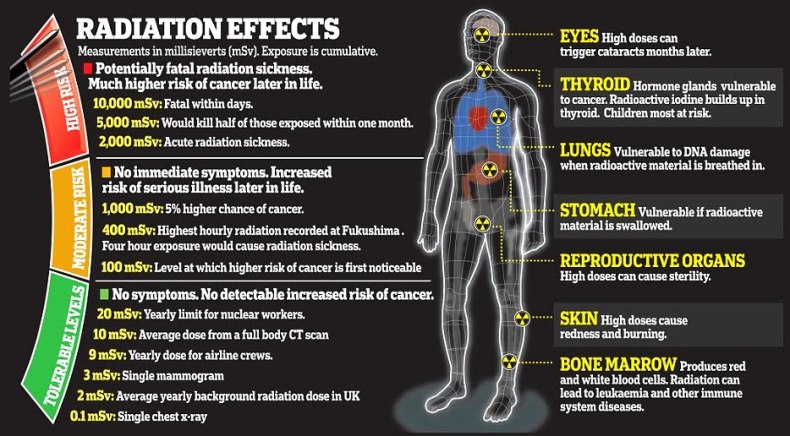
CHANGES TO RADIATION PROTECTION STANDARDS – FOR WORSE OR FOR BETTER?
Tony Webb, May 17, 2026, https://mail.google.com/mail/u/0/?tab=rm&ogbl#inbox/WhctKLcDwkXLRPthNZwfjCSsBVWXNmPvNPFqnmqNVGDcPLVtBDMvdgXHsDPZrKHkgNfHZjG?projector=1&messagePartId=0.1.1
Changes for worse or better protection for workers and the public is on the international
and national political agenda in a number of countries. Trade Union, environment and
public health groups around the world are concerned that the USA is considering proposals
that would weaken radiation protection standards at a time when the scientific evidence
suggests these need to be significantly tightened.
Our concern arises as a result of a Directive (EO 14300) 1 issued in May 2025 by US President
Donald Trump requiring the US Nuclear Regulatory Commission (NRC) to review nuclear
safety regulations with particular reference to radiation protection of workers and the
public. The Directive instructs the NRC to abandon fundamental principles that have
formed the basis for radiation protection for much of the past century. These include: the
internationally accepted position that there is no threshold or safe level of exposure; that,
as a consequence, all exposures should be kept as low as reasonably achievable (ALARA) ;
and all exposures to workers and the public be kept below strict annual limits in line with
the best evidence of radiation-induced health risks.
The evidence used to set current standards was drawn mainly from the studies of cancer
rates among the Japanese A-bomb survivors who were exposed to relatively high doses over
short time periods. Since then studies of workers in nuclear power facilities exposed to
lower doses over long time periods show higher rates of cancer than predicted by the
Japanese studies. Rather than indicating any threshold these studies suggest that at low
doses the cancer rates are proportionately higher than expected from the Linear No-
Threshold model used to set current standards. 2 Worker studies also show elevated rates of
cardio-vascular diseases 3 , and increased rates of dementia 4 . In addition, studies on
populations around nuclear power plants are now showing higher cancer rates affecting
particularly children 5 and the elderly 6 – correlated to how close they lived to these facilities.
Despite this mounting evidence that exposure limits should be lowered the likely result of
changes in line with the Presidential directive would be to increase the permissible exposure
limit for workers and the public to five times the current internationally recommended
level.
The US NRC is clearly faced with a dilemma. To adopt the changes demanded by the
President would require reversing its 2021 decision that specifically rejected these same
proposals 7 . The initial date for publication of the NRC’s draft response for public
consultation was 23 February 2026. This was deferred to 30 April and again at short notice
to 24 June. One might speculate that despite large scale resignations and lay-offs among
NRC staff there remain some with scientific integrity opposing the changes. However the
final revision of standards is required by end of November 2026. Given the President’s
record for seeking retribution on government representatives or officials who oppose his
plans it is hard to see any outcome from the NRC other than a change to weaken the US
standards.
There will also likely be pressure on international and national standards agencies to align
with changes in the USA. Some push-back can be expected. Already the heads of European
standards agencies have issued a statement supporting the LNT and ALARA principles and insisted that exposure standards be set on the basis of the scientific evidence without
undue influence. 8 However NRC changes in line with the Trump Presidential Directive will
embolden the nuclear power lobby and create pressure for change where there are joint
ventures involving US military or industrial interests. These changes are also likely to
impede public pressure for review and improvement of current standards.
In Australia, for example, there are a number of joint ventures in uranium and radioactive
rare earths and mineral sands mining and the government has already established a
separate Naval Nuclear Power Safety Regulator (ANNPSR)to oversee all aspects of
construction, operation, maintenance, decommissioning and nuclear waste management
under the Australia-UK-US (AUKUS) nuclear submarine program. While these standards are
expected to be consistent with those of the current Australian Radiation and Nuclear Safety
Agency (ARPANSA) the pressure for change can come from either agency. Hopefully it will
be politically independent science-based pressure to not merely oppose the direction
prompted by the US President’s directive but for better standards to protect health of
workers and the public where they are routinely exposed to ionising radiation.
References and Further Reading……………………………………
Trump‑Xi summit: Cautious Progress On Trade, Ties And Some ‘Win‑Wins’.
But importantly, Xi and Trump agreed to establish a Board of Trade and Board of Investment – intended to create a pathway forward to more trade in the months to come.
May 16, 2026 , Yan Bennett for the Conversation, https://scheerpost.com/2026/05/16/trump-xi-summit-cautious-progress-on-trade-ties-and-some-win-wins/
President Donald Trump departed China on May 15, 2026, after a two-day summit with Chinese leader Xi Jinping that was scrutinized from every angle for clues on where the relationship is heading.
Trump hailed the trip as “incredible,” while Xi remarked that it marked a “new bilateral relationship.” Other observers were a little less enthusiastic, noting that no major breakthroughs were evident at the highly anticipated meeting of the world’s two most powerful political leaders.
The Conversation turned to Yan Bennett, an expert in U.S.-China relations and author of “American Policy Discourses on China,” to provide her three big takeaways from the summit.
Taiwan: Tough(ish) talk but status quo in place
No one really expected there to be movement on Taiwan – which mainland China lays claims over – although it is clear that Beijing would like the United States to make a firmer stance against the island moving toward a declaration of independence, or for the U.S. to expressly demand reunification.
So what we got was Beijing reiterating that Taiwan remained a priority and a core interest. Xi did this on the first day of the summit, noting that the Taiwan “question” remained “the most important issue in China-U.S. relations,” and that any mishandling of it could lead to “clashes and even conflicts.”
But this was aimed at two things. First, Xi has a domestic audience he needs to address, and Taiwan has long been important to Chinese rhetoric. The Chinese Communist Party has around 100 million members, many of whom would have expected Xi to talk tough on Taiwan – and it was those people he was largely talking to.
But he was also signaling to the U.S. that it shouldn’t support Taiwanese independence. And that won’t ruffle any feathers in Washington. Indeed, the 2025 National Security Strategy stressed that the U.S. opposed unilateral action on Taiwan from “either party” – a signal to Beijing that it opposed Taiwan declaring independence.
Trump did mention arms deals to Taiwan. But the U.S.’s declaratory policy since the Reagan administration is that it doesn’t allow Beijing to enter discussions about what weapons Washington sells to Taiwan. And that hasn’t changed at all, nor has the U.S.’s treaty commitment to Taiwan since 1979 that requires the U.S. to provide Taiwan with defensive weapons to maintain a sufficient self-defense capability.
Rhetoric aside, everyone is happy with the status quo on Taiwan – it is in no one’s interest for it to change.
But talk of Taiwan has been muddied a little by Xi’s determination to modernize the People’s Liberation Army. The Chinese president has laid out a series of benchmarks including that the PLA should be capable of invading Taiwan by 2027. This has been misinterpreted in the U.S. under the so-called “Davidson window” – a concept that has it that China is intent on invading by that time.
In reality, China is nowhere near able to do so. It doesn’t have a “blue water navy” able to operate without port assistance, and the island is incredibly difficult to invade – it only has two places where you can land, and only at certain times of the year. It is also very mountainous. Taiwan is also slowly building its defenses – and learning a lot from Ukraine’s war with Russia – with the intention of becoming “indigestable” to China.
Xi’s modernization timeline also states that the PLA should be a “world class military” – taken to be a peer to the U.S. – by 2049. But the fact that it spends more on internal security than it does on defense indicates where the CCP’s true interests lay – in domestic security rather than external capabilities.
Trade: Tamped down expectations
The big picture is that the U.S. and China have been trying to restabilize what was until fairly recently a very good relationship in terms of economic ties.
Both sides have clear priorities to that extent. China wants to regain the American market it had in the 1990s and early 2000s – and certainly reverse the trend since 2018’s trade war.
Trump since his first administration has made it clear that he sees Chinese control over supply chains and the trade imbalance as a national security issue. Washington also wants to address unfair trade practices, such as the requirement that American companies hand over blueprints, trade secrets, customer lists, marketing plans and more to operate.
So what was achieved in the summit? On the surface, very little. There was some movement on sales of U.S. beef to China. And Trump announced that Beijing would buy 200 aircraft from Boeing – lower than the 500 that had been earlier touted in media reports. And several Chinese companies agreed to buy Nvidia microchips – a continuation of a process that began in late 2025.
That doesn’t seem much, and it was telling that Trump himself wasn’t being very “Trumpian” on what could be achieved during the summit. He wasn’t promising the moon.
A lot of focus will be on technology. China is about 18 months behind the U.S. in microchip development. Some have questioned whether U.S. companies should be selling chips to China, amid fears that China could steal the intellectual property and be able to use higher-technology chips for defense reasons. The U.S. position is it can’t allow Huawei – China’s telecom giant – to take over the whole Chinese market, so it will only allow the sale of what it considers appropriate-level Nvidia chips.
Military matters: Washington wants to talk
During the Cold War, the Soviet Union and the U.S. always kept the military lines of communications open to avert a catastrophic incident. This hasn’t been the case with Beijing and Washington. We saw that in 2001 when a U.S. aircraft collided with a Chinese jet; and again over the “Chinese spy balloon incident” in 2023.
Washington is seeking to open up a line of communication on military matters, and that is probably why U.S. Secretary of Defense Pete Hegseth was there in Beijing. Indeed, it is highly unusual for a defense secretary to be at such a summit.
Not that Trump believes he needs China’s help on military matters. He made that clear when asked about possible Beijing assistance prior to the summit.
In fact, little news came out of the summit on Iran. China has criticized the U.S. over the war, but has also quietly been telling Tehran to stop bombing Gulf countries.
Despite some commentary suggesting that Beijing benefits from the U.S. being bogged down in the Middle East, what Xi will want is a resolution before the economic fallout bites in China.
China’s stockpile of Iranian oil will only last a few more weeks and then oil price rises will hit China like a brick.
Trump overseeing decline of US world dominance…and that’s good

Walt Zlotow West Suburban Peace Coalition Glen Ellyn IL, 16 May 26
The global economic consequences of Trump’s failed war on Iran have yet to be fully realized. But even if Trump surrenders to Iran’s sensible demands today, they will degrade the world economy for months to come.
Trump is utterly trapped because he cannot win with either his current blockade or renewed bombing campaign. All US bases in the Gulf States are damaged or destroyed. Gulf States oil infrastructure is degraded. Should Trump renew bombing, Iran will completely destroy them, finish off US bases, and resume degrading Israeli infrastructure as well.
The Gulf States will never again put their full security in US military might. It has proven a complete failure in winning a war against their imagined enemy Iran. America’s Asian allies Japan the Philippians, Taiwan and others now realize the limits of US power and credibility. European NATO countries are coming to the same conclusion as Trump has largely left them on their own to continue their futile effort to push Russia out of Ukraine.
As horrendous as the Iran war’s consequences are, the decline of US world dominance is an outcome we should welcome. China has passed up the US both economically and politically, in part because they have used investment, not intimidation, economic sanctions and yes, bombings to exert their power on the world stage. Outside of Israel, most countries are moving toward multi power polarity as evidenced by BRICS and the Shanghai Cooperation Organization rather than rely on, even prostrate themselves before US military might.
There is a long way to go before America fully realizes the folly of its quest to rule the world using violence. We’re still bombing countries posting no threat to the US whatsoever. Trump has bombed Somalia over 60 times this year tho most Americans couldn’t find it on a map, much less fear its non existent threat. We killed over a hundred to depose and kidnap Venezuelan President Maduro. We’ve killing Cubans with our grotesque economic sanctions, including cutting off most their oil imports. We’re still providing intelligence and military aid for Ukraine to continue its war with Russia. Of course, worst of all we have not given up on destroying Iran and may resume the futile bombing at any moment.
But US world dominance is inexorably eroding due to its refusal to pivot from war to peace to resolve international disputes. If somehow, some way America accepts this reality of a new world order without US dominance, we can thank, in part, President Trump for making that shift with his launching a war too far against Iran.
‘He asked if I would defend them’: Trump shares key details of Xi meeting
Michael Koziol, 16 May, 26, https://www.smh.com.au/world/north-america/he-asked-if-i-would-defend-them-trump-shares-key-details-of-xi-meeting-20260516-p5zxnw.html
Washington: Xi Jinping asked directly whether the US would defend Taiwan in a war, Donald Trump said, as he divulged key details of his conversations with the Chinese president while flying home from the high-stakes meeting in Beijing.
The two men also spoke “in great detail” about US arms sales to Taiwan, which China would like to stop, and which Trump has not committed to continuing. He said he would make that decision soon, after speaking with the leader of Taiwan.
“President Xi and I talked a lot about Taiwan … he’s against very much what they’re doing,” Trump said aboard Air Force One.
“He does not want to see a fight for independence because that would be a very strong confrontation … I didn’t make a comment on it, I heard him out. I have a lot of respect for him.”
Asked by a reporter whether he would defend Taiwan, Trump said he would not answer – maintaining the long-standing US position of strategic ambiguity. He said he gave the same response to Xi.
“He asked me if I would defend them. I said, ‘I don’t talk about that’. There’s only one person that knows that. You know who it is? Me.”
In December, the Trump administration approved a record $US11.1 billion ($15.5 billion) arms package for the self-governing democracy (over which China claims sovereignty). But the president has delayed approval of another package worth up to $US14 billion.
Trump indicated he did not feel bound by the so-called “six assurances” given to Taiwan in 1982 under then president Ronald Reagan, one of which was that the US would not consult China about arms sales to Taiwan.
“1982 is a long way, that’s a big, far distance away,” he told reporters on the plane. “[Xi] brought that up, he talked about that to me – so what am I gonna do, say, ‘I don’t want to talk to you about it because I have an agreement that was signed in 1982?’
“I made no commitment either way. I’ll make a determination over the next fairly short period of time. I have to speak to the person – you know who he is – that is running Taiwan.”
Trump said he and Xi also discussed lifting US sanctions on Chinese oil companies that buy oil from Iran, and would decide in the next few days.
The US president’s account of his conversations with his counterpart were far more detailed than the summary given by the Chinese foreign minister, Wang Yi, when answering questions from state-affiliated news agencies.
Wang said the two men spent nine hours together across their several encounters, which included the bilateral meeting, a banquet dinner, a visit to the Temple of Heaven and tea/lunch at Xi’s Zhongnanhai compound.
He emphasised the centrality of the Taiwan question, repeating Xi’s message that “if handled poorly, the two countries will clash, pushing the entire Sino-US relationship into a very dangerous situation”.
Wang added that China hoped the US would take “concrete actions” to safeguard the relationship, which the Chinese are now framing as being one of “constructive strategic stability”.
On Iran, Trump said he did not seek Xi’s assistance in pressuring Tehran to reopen the Strait of Hormuz – but that he believed China would lean on its partner regardless, as Beijing also wanted the passage open and free.
“I’m not asking for any favours, ’cos when you ask for favours you need to do favours in return. We don’t need favours,” Trump said.
He also lashed out at journalists on Air Force One, accusing The New York Times’ veteran correspondent David Sanger of treason after he asserted Trump had failed to achieve the political changes he sought in Iran.
“I had a total military victory. But the fake news, guys like you, write incorrectly. You’re a fake guy,” Trump said to Sanger.
“You should know better, David. You know better. Your editors tell you what to write, and you write it, and you should be ashamed of yourself. I actually think it’s treason.”
He also clashed with a BBC journalist who asked about the missile strike on an Iranian girls’ school at the beginning of the war, which reportedly killed about 175 people.
The US has not taken responsibility despite a New York Times report saying a preliminary investigation confirmed it was an American missile. Trump said it remained under investigation.
Meanwhile, the US State Department announced Israel and Lebanon would extend their ceasefire by a further 45 days following two days of talks in Washington.
Israel is not at war with Lebanon but struck targets associated with the Iran-backed Hezbollah terrorist group in the country, including the capital Beirut, during the war against Iran.
It has continued its strikes leading up to this week’s talks, despite the ceasefire that began on April 16. Lebanon’s Health Ministry said 22 people were killed in attacks on Wednesday, including eight children.
The Washington talks represent the first high-level diplomatic relations between Israel and Lebanon for more than 30 years. State Department spokesman Tommy Piggott said political negotiations would resume in early June and a security discussion would be added on May 29.
While the Beijing summit did not produce many immediate tangible outcomes, Trump said China agreed to buy 200 aircraft from American manufacturer Boeing – less than the 500 the firm initially hoped for – and up to 750 “if they do a good job”
This summit was just “the beginning”, he said, noting he and Xi could meet as many as four times this year. Trump has invited Xi to the White House on September 24 – during the United Nations General Assembly’s high-level week – and Beijing confirmed the Chinese leader would visit the US in the northern autumn.
The two leaders could also meet at the Asia-Pacific Economic Cooperation forum in China in November, and the G20 world leaders’ summit December, hosted at the Trump National Doral resort in Miami.
with Lisa Visentin, Reuters
This Is The REAL Reason For Trump’s Visit To China.
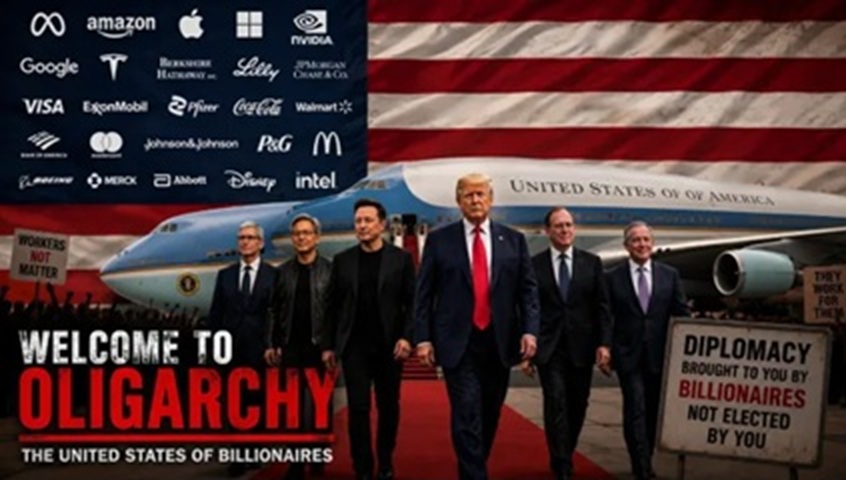
May 14, 2026, Joshua Scheer, https://scheerpost.com/2026/05/14/this-is-the-real-reason-for-trumps-visit-to-china/
Donald Trump didn’t arrive in Beijing as the leader of a confident superpower. He arrived like a salesman carrying a collapsing empire on his back — flanked not by diplomats or peace negotiators, but by Silicon Valley monopolists, Wall Street vultures, and billionaire oligarchs desperate to keep their fortunes alive. Elon Musk. Jensen Huang. Larry Fink. Tim Cook. Blackstone. Goldman Sachs. The entire spectacle looked less like diplomacy and more like a corporate hostage negotiation staged on behalf of an American ruling class suddenly realizing it may have lost the economic war it started.
In this blistering breakdown, Ben Norton argues that Trump’s China summit exposes a geopolitical reality Washington refuses to admit publicly: the U.S. trade war backfired, China adapted, and America’s corporate elite now need Beijing far more than Beijing needs them. As the war on Iran drives inflation higher, supply chains fracture, and rare earth shortages threaten both Silicon Valley and the Pentagon, Trump’s anti-China rhetoric is quietly giving way to panic, flattery, and desperation. The result is an extraordinary image of imperial decline — an American president openly traveling with oligarchs to plead for access to the very economic system Washington spent years trying to cripple.
The best line of all from Ben may be this: “Nothing screams ‘we are an oligarchy’ more than taking oligarchs instead of diplomats to a diplomatic mission.”
And he’s right. We are living in an oligarchy — one where billionaires ride on Air Force One while working people are left paying for inflation, war, tariffs, and economic collapse. The masks are gone. Corporate CEOs now sit beside presidents like unelected cabinet members, openly shaping foreign policy, trade policy, and even war itself.
As the country barrels toward another election in 2028, the deeper crisis is that most major candidates, regardless of party branding, still end up bowing before the same billionaire donor class. The slogans change. The marketing changes. But the power structure remains untouched.
1 This Month
10 June – Assessing Canada’s Investments in Small Modular Nuclear Reactors – https://zoom.us/meeting/register/IiqHA5feRhaEBycOLNTJlA#/registration


Cuba Is Not a Failed State – It Is a Besieged State
PETITION: “Global Appeal to Endorse Palestinian Right of Return of Refugees”
To see nuclear-related stories in greater depth and intensity – go to https://nuclearinformation.wordpress.com
-
Archives
- June 2026 (89)
- May 2026 (306)
- April 2026 (356)
- March 2026 (251)
- February 2026 (268)
- January 2026 (308)
- December 2025 (358)
- November 2025 (359)
- October 2025 (376)
- September 2025 (257)
- August 2025 (319)
- July 2025 (230)
-
Categories
- 1
- 1 NUCLEAR ISSUES
- business and costs
- climate change
- culture and arts
- ENERGY
- environment
- health
- history
- indigenous issues
- Legal
- marketing of nuclear
- media
- opposition to nuclear
- PERSONAL STORIES
- politics
- politics international
- Religion and ethics
- safety
- secrets,lies and civil liberties
- spinbuster
- technology
- Uranium
- wastes
- weapons and war
- Women
- 2 WORLD
- ACTION
- AFRICA
- Atrocities
- AUSTRALIA
- Christina's notes
- Christina's themes
- culture and arts
- Events
- Fuk 2022
- Fuk 2023
- Fukushima 2017
- Fukushima 2018
- fukushima 2019
- Fukushima 2020
- Fukushima 2021
- general
- global warming
- Humour (God we need it)
- Nuclear
- RARE EARTHS
- Reference
- resources – print
- Resources -audiovicual
- Weekly Newsletter
- World
- World Nuclear
- YouTube
-
RSS
Entries RSS
Comments RSS
 nuclear-news