Bully Trump pivots from strong Iran to weak Oman – Walt Zlotow

Walt Zlotow West Suburban Peace Coalition Glen Ellyn IL, 29 May 26
Donald Trump is the classic schoolyard bully. Alas, instead of hurting, indeed terrorizing weaker school mates, he’s terrorizing the weaker on a global scale, both at home and abroad.
On the domestic front he’s demonizing the ‘other’ by abusing, sometimes killing decent, hardworking undocumented. He uses the Bully Pulpit, not in the rhetorical sense to uplift society promoting wise polices, but to dismantle most sensible domestic policies and institutions, and demonize anyone who crosses him. Nearly every critic of Trump within the Republican Party has been bullied from public office. Every Democrat is slimed as a terrible, horrible person. Classic bullying.
But it’s on the world stage where his bullying is relentlessly murderous. Over 60 bombings of imagined bad guys in Somalia without a hint of justification, much less even a mention. Swooping down into pitifully powerless Venezuela to snatch its president on trumped up charges, slaughtering hundreds in the process. Blowing up small, unarmed boats in the Caribbean then bragging his sick, murderous rampage saved a million US lives.
But on February 28th bully Trump met match. He attacked large, powerful Iran believing the lies of Israeli Prime Minister Benjamin Netanyahu and own war cabinet that Iran would collapse within days once Netanyahu assassinated Iran’s ruler. A few days turned into 39 days of bombing before Trump realized that Iran was not only surviving but winning. How? By unleashing a massive missile barrage on every US Gulf States base, Gulf States oil infrastructure, Israel, and closing the Strait of Hormuz to a fifth of the world’s oil supply.
What to do? After 91 days of humiliating defeat, bully Trump turned his bullying on tiny Oman which shares the Strait of Hormuz with Iran. Oman will be Iran’s partner in controlling traffic thru the Strait which consists of Iran and Oman territorial waters.
When asked if he’d accept a short-term deal that involved Iran and Oman jointly controlling the Strait of Hormuz, bully Trump unloaded on Oman. “No, the Strait’s got to be opened to everybody. It’s international waters. Nobody’s going to control it. We’ll watch over it, but nobody’s going to control it. Oman will behave just like everybody else, or we’ll have to blow them up. They understand that they’ll be fine,
Sorry bully Trump. Knowing Trump can no longer ‘blow up’ anybody in the region after squandering much US firepower on his lost Iran war, Oman will stand up to bully Trump just like Strait partner Iran.
Now that bully Trump has been exposed as the powerless bully he is, it’s all over for him to strut the world stage like he owns it. He’s alienated friend and foe alike with his murderous bullying, duplicitous negotiating and utter lack of credibility.
Trump’s bullying served him well in both his business career and his takeover of the r Republican Party for two presidential terms. But Karma eventually comes to bullies who believe they can bully their way thru life. It’s going to take months, years, possibly a decade to undo the damage of Trump’s bullying at home and abroad. But as Bob Dylan sang long ago…”Even the President of the United States must sometimes have to stand naked.”
U.S. Turns Cold War Plutonium Into Nuclear Fuel
Oil Price, By Charles Kennedy – May 28, 2026,
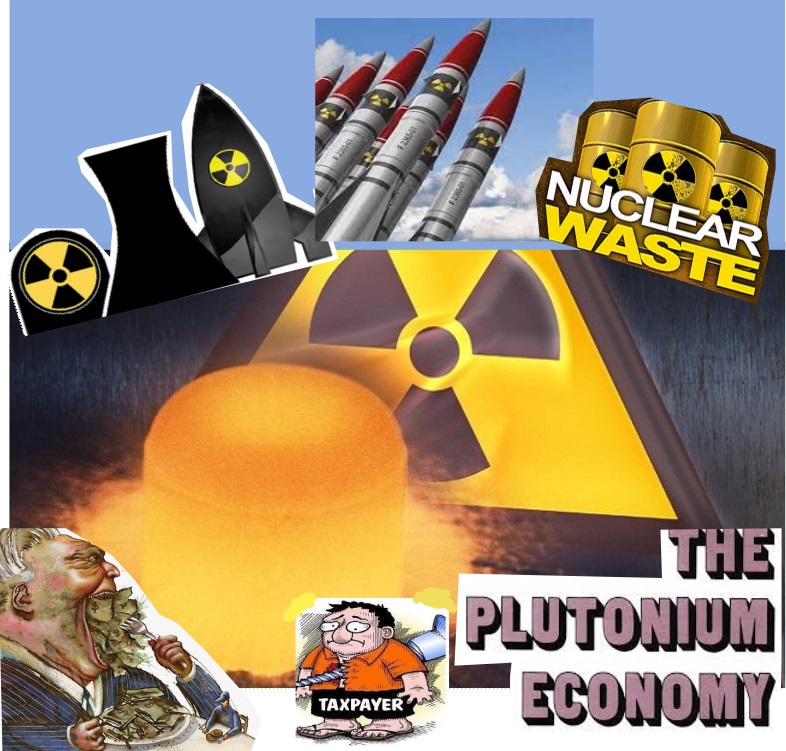
- The U.S. is exploring the use of Cold War-era plutonium from dismantled nuclear warheads as alternative fuel for advanced nuclear reactors due to uranium supply shortages and reliance on foreign enriched uranium.
- The Department of Energy has shortlisted five nuclear companies, including SMR developers.
- Critics warn the plan raises nuclear proliferation risks and could prove technically and economically difficult, as converting weapons-grade plutonium into reactor fuel remains highly expensive.
……………………………………………………………. The plutonium considered for distribution to nuclear companies is from dismantled warheads from the Cold War. The radioactive material—50 tons of surplus supply, according to the New York Times—was originally to be diluted and buried, but President Trump last year suspended that plan, per Reuters, which also recalled reports about Washington planning to make 20 tons of plutonium available to private companies.
……………………………There are, of course, opponents to the idea of using weapons-grade nuclear material for nuclear power generation by private companies. Indeed, some Democratic members of Congress have publicly protested the plan.
“The transfer of weapons-usable plutonium to private industry would increase the risk of nuclear weapons proliferation, including to rogue states or terrorists,” Massachusetts senator Ed Markey and representatives Don Beyer and John Garamendi said in a letter from last September. “The United States cannot effectively discourage other countries from using plutonium for civil purposes if we use it ourselves.”
The idea behind the move is to encourage the development of small modular nuclear reactors that could be built much more quickly than conventional ones—at least theoretically. The practical application of SMR technology, however, has stumbled after pioneer NuScale had to scrap its plans to build the first small modular reactor in the U.S. amid much higher than hoped-for costs, leading to insufficient numbers of future buyers willing to sign up for the facility’s output.
Despite these challenges in the MR segment, nuclear is back in a big way, not least thanks to Big Tech’s AI rush, which requires these companies to secure massive amounts of electricity for their facilities—and make it reliable. This is boosting the popularity of nuclear electricity outside the Big Tech community as well—higher electricity bills are making the construction costs of new nuclear power plants more palatable than they would have been a couple of years ago.
Whether plutonium would make an equivalent substitute for uranium in this nuclear renaissance remains questionable, it seems. The fact that the element could be used for the production of nuclear weapons is one problem with the idea. Another problem appears to be of a more technical nature, per the New York Times, which also cited critics as saying the cost of turning plutonium into nuclear fuel was prohibitively high. https://oilprice.com/Alternative-Energy/Nuclear-Power/US-Turns-Cold-War-Plutonium-Into-Nuclear-Fuel.html
Trump’s government-wide NDA (non disclosure agreement) seeks to silence whistleblowers

May 26, 2026 / Freedom of the Press Foundation, https://freedom.press/the-classifieds/trumps-government-wide-nda-seeks-to-silence-whistleblowers/
Washington, D.C., May 26, 2026 — The Washington Post reported today that the Trump administration is planning a broad, government-wide nondisclosure agreement to combat leaks to the press.
The following can be attributed to Freedom of the Press Foundation (FPF) Daniel Ellsberg Chair on Government Secrecy Lauren Harper:
“The proposal by the ‘most transparent administration in history’ that millions of federal employees sign a blanket NDA is not just absurd, it’s unnecessary and dangerously secretive.
“This policy, from a president who has previously attempted to impose oppressive, corporate-style confidentiality and nondisclosure agreements on federal employees, would kneecap whistleblower protections, undermine the First Amendment, and wrongly inhibit the public’s right to know. It comes at a time when agency watchdogs are sidelined, FOIA officials are being fired, and leaks to the press — which are the sole reason the public knows about so much of this administration’s misconduct — are being demonized and prosecuted.
“We know exactly what kind of information the administration wants to bury. Look no further than the FOIA release to Freedom of the Press Foundation that showed the administration had no solid legal rationale for conducting mass deportations under the Alien Enemies Act, substantiating a leak the administration called ‘fake news’ and cited as false justification for loosening restrictions on subpoenas to reporters.
“Trying to force the entire federal government to adopt the Trump organization’s aggressive use of NDAs won’t make anybody safer and won’t improve agency processes. Its sole intent would be to protect the administration from the leak of embarrassing, politically damaging, or unlawful information.”
With potential Iranian deal on the horizon, MAGA media’s drawing red lines
by Jason Campbell, 26 May 26, https://www.mediamatters.org/media-matters-weekly-newsletter/media-matters-weekly-newsletter-may-29#paragraph–narrative-item–3479479
Deep divisions have emerged in right-wing media since President Donald Trump started a war with Iran three months ago. Some conservative media figures have loudly supported Trump’s war while others have been extremely and vocally opposed to new entanglements in the Middle East. Many figures fell somewhere in the middle, tepidly supporting the president while urging for a quick end to the conflict. With a potential deal (again) reportedly on the horizon, some voices on the right are starting to draw their hard lines for an end to the conflict.
The infighting between right-wing media pundits over the war has at times been deeply personal. This week, for example, Fox’s Mark Levin and podcaster Benny Johnson traded blows over the war. Johnson, who has been supporting Trump but also urging for a swift end to the fighting, said, “I don’t understand people like Mark Levin,” and then asked “How many people do you think are being paid by Israel?” Levin, a staunch supporter of the conflict, fired back at “BJ Benny Johnson,” saying, “He’s been a grifter.” Levin also said “Benny Johnson, a nobody, and his ilk. And his ilk, they’re the ones who trash the president. They give aid and comfort to the Iranian Islamic regime.”
With a potential deal coming, some right-wing figures are already laying out what would be tolerable for the Trump administration to accept. Ben Shapiro, who has consistently taken a hardline stance supporting the war, laid out some red lines for a deal, including claiming that the United States cannot give Iran money to rebuild its infrastructure. A Charlie Kirk Show producer said the proposed deal is “not a perfect deal” and “would be getting us back to the situation before the war.” Fox’s Martha MacCallum commented on the potential deal, saying, “It doesn’t feel like we’re any closer than we were before.” On Fox News, staunch war supporter Jack Keane said the U.S. can’t give Iran immediate sanctions relief. A Newsmax host said the reported deal with Iran “sounds like a pretty bad deal.”
The war with Iran has caused serious turmoil inside Trump’s MAGA base. With the disastrous effects of rising fuel prices accumulating and the war’s catastrophic unpopularity with the American people growing, the political need for a swift end to the conflict may butt up against MAGA hardliners who want to see Iran capitulate further.
President Donald Trump, amid ongoing negotiations with Iran and a new spate of U.S. military strikes against it, spent part of Tuesday morning watching Fox News and then posting thanks on social media to on-air commentators who praised his efforts in the region.
U.S. and Iranian diplomats are once again negotiating toward an agreement to end the three-month war. Against this backdrop, Trump spent his Tuesday morning watching Fox News, a typical source for both information that shapes his worldview and praise to salve his various grievances. We know this because he posted on social media about segments that captured his fancy soon after they aired, a phenomenon Media Matters’ Matt Gertz termed the Fox-Trump feedback loop.
Major domestic and international affairs can turn on what Trump sees on Fox, though whatever he ends up deciding to do, the network’s hosts will surely fall in line behind their Dear Leader.
- Excuse me?
- Newsmax host Carl Higbie responded to a hunger strike at the Delaney Hall ICE detention center, saying “If they want to not eat, that’s on them. I don’t really care. Saves us some taxpayer money, I guess.” Fox’s Greg Gutfeld also commented on the food in Delaney Hall, saying, “Maggots or not, the food is dietitian approved.”
- Heritage Foundation president Kevin Roberts argued “there ought to be certain restrictions against not just religions, but particular political implementations of religions.”
- Speaking about Iran, Fox’s Laura Ingraham admitted “All of their military sites, I guess, have not been destroyed.”
- In the 19 hours following the breaking news, Fox News failed to cover the Justice Department’s new criminal investigation into E. Jean Carroll, who previously won a civil judgment against Trump that he had sexually abused and defamed her. In contrast, all 12 CNN shows that aired after the news broke covered the story, and 7 of 8 such MS NOW programs covered it.
After New York City Mayor Zohran Mamdani unveiled his plans to make affordable housing more available in the city, Fox News personalities and guests fixated on the plan’s efforts combating negligent landlords. They declared that enforcement against negligent landlords amounted to “public theft,” said it was a “throwback to Stalin,” and ranted that legal action to turn over properties from them to more responsible stewards will lead to “mass killing” and similar atrocities.
Fox hosts have also peddled the myth of tax flight, which you can read about here.
Nuclear Power and Other People’s Money
Arnie Gundersen, https://www.counterpunch.org/2026/05/28/nuclear-power-and-other-peoples-money/
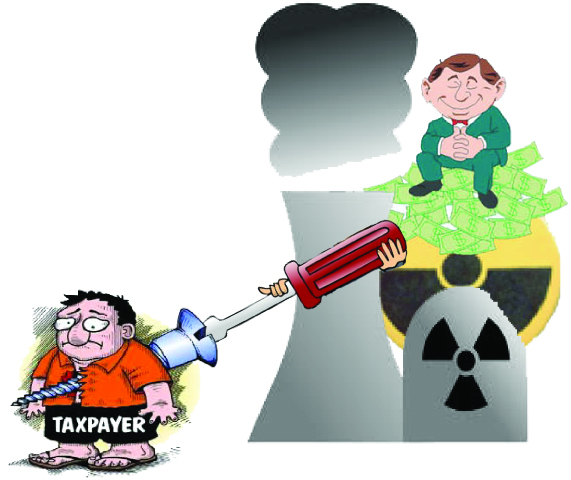
Nuclear Power would never have existed without government handouts and ratepayer subsidies. The commercial nuclear power Gordian knot, from mineral extraction to component manufacturing to reactor operation to Price-Anderson Nuclear Insurance, and ending in waste disposal, exists only because of opium, whoops, OPM, Other People’s Money, in the form of taxpayer subsidies. Intense political pressure from the DC-based Nuclear Energy Institute prevents national and state politicians from cutting that twisted knot into pieces.
The financial problems associated with constructing and operating commercial nuclear power plants and the need for federal subsidies had been identified as early as 1958 by Time Magazine.
“The program needs a strong infusion of Government aid because
commercial nuclear power is so new, complex, and costly that private
companies cannot carry that burden alone,”[1]
And again at the turn of the 21st century according to Scully Capital Services Inc, a Washington-based investment and financial services firm, when the “Nuclear Renaissance” was being hyped by NEI:
“without government participation, some risks and costs of new nuclear reactors may remain at unmanageable levels.” [2]
Just before the Fukushima meltdowns in February 2011, the Union of Concerned Scientists again identified how heavily subsidized nuclear power had been and continued to be:
Government subsidies to the nuclear power industry over the past fifty years have been so large in proportion to the value of the energy produced that in some cases it would have cost taxpayers less to simply buy kilowatts on the open market and give them away… Piling new subsidies on top of existing ones will provide the industry with little incentive to rework its business model to internalize its considerable costs and risks.[3]
In 2018, sixty years after that Time Magazine subsidy analysis, the United States Congressional Research Service issued an analysis[4] of total government energy research and development funding spanning 71 years between 1948 and 2018. The report concluded:
Energy-related research and development (R&D)—on coal-based synthetic petroleum and on atomic bombs—played an important role in the successful outcome of World War II. In the postwar era, the federal government conducted R&D on fossil and nuclear energy sources to support peacetime economic growth. … For the 71-year period from 1948 through 2018, nearly 13% went to renewables, compared with nearly 5% for electric systems, 11% for energy efficiency, 24% for fossil, and 48% for nuclear.
The graph [on original]shows that for seventy years after the secrets of the atom were unleashed on Hiroshima and Nagasaki, America plowed almost half (48%) of its research funds into more nuclear subsidies. What did those expenditures buy us? At the peak of the Atoms for Peace nuclear building spree in 1990, nuclear power provided about 20% of America’s electricity. But electricity is only a small part of the total energy America consumes; most of the US energy consumption comes from fossil fuels for transportation and heating. The nation’s overall energy consumption shows that nuclear power provides about 9 percent of the energy that our society runs on[5]. The bottom line is that half of America’s research expenditures over 70 years subsidized nuclear power’s 10% energy contribution. That is hardly a worthwhile investment unless you are the companies receiving all that cash!
I can understand that subsidizing a nascent industry in 1950 might be a reasonable policy decision, but nuclear subsidies have continued for eight decades. When your kids return from college, letting them have their bedroom back might be reasonable. But when the kids turn eighty years old, it’s long past time to end that subsidy. And ending those subsidies is exactly what the Nuclear Energy Institute was created to prevent.
It’s time to pick up the pieces from Atoms for Peace. Without subsidies, nuclear power is simply not competitive with renewable energy.
power is simply not competitive with renewable energy.
NOTES
1. February 10, 1958 Time Magazine ↑
2. July 2002 Business Case for New Nuclear Power Plants, Scully Capital Services, Inc. ↑
3. https://www.ucs.org/resources/nuclear-power-still-not-viable-without-subsidies?utm_source=SP&utm_medium=more&utm_campaign=NuclearSubsidies-02-23-11-more ↑
4. https://www.congress.gov/crs-product/RS22858, Renewable Energy R&D Funding History: A Comparison with Funding for Nuclear Energy, Fossil Energy, Energy Efficiency, and Electric Systems R&D, CRS Product Number RS22858 ↑
5. https://usafacts.org/articles/what-kinds-of-energy-does-the-us-use/ ↑
Arnie Gundersen is the Chief Engineer, board member, and resident “science guy” at the Fairewinds Energy Education NGO. Since the catastrophe at Fukushima, Arnie focuses his energy worldwide on the migration of radioactive microparticles. During his multiple trips to Japan, Arnie has met and trained community-volunteer citizen-scientists to study the migration of radioactive microparticles from Fukushima in two co-authored peer-reviewed scientific articles.
The Trump administration’s reckless attack on radiation protection will have long-term consequences for public safety

In the absence of an objective ALARA (as low as reasonably achievable) cost-benefit analysis, future decisions on limiting doses from ionizing radiation to workers and the public from nuclear power operations will be determined in significant part by the relative political strengths of industry and regulators. Under the Trump administration, the industry clearly has the upper hand.
Just as it did with air pollution rules, the Trump administration has now, in effect, set the value of American lives to zero in regulatory protections against nuclear-radiation-caused cancer.
the attacks of the Trump administration on public safety must be exposed.
By Frank von Hippel | Analysis | May 27, 2026, https://thebulletin.org/2026/05/the-trump-administrations-reckless-attack-on-radiation-protection-will-have-long-term-consequences-for-public-safety/?utm_source=ActiveCampaign&utm_medium=email&utm_content=The%20Trump%20admin%20s%20attack%20on%20radiation%20protection&utm_campaign=20260528%20Thursday%20Newsletter
Worldwide, regulations limiting doses from the radiation emitted by nuclear fissions and decays are based on the Linear No-Threshold (LNT) model. This hypothesis posits that, irrespective of whether ionizing radiation comes in a pulse or over years, the additional risk of developing cancer as a result is proportional to the cumulative amount of energy deposited per gram of tissue, with weighting risk factors for radiation type, sex, age, and specific organs.
Since 1975, the US nuclear industry has been required to limit exposures to workers and the public to “as low as reasonably achievable” (ALARA) levels. What the ALARA level should be is determined by cost-benefit analysis in which the costs of dose reductions are compared with the benefits to workers and the public, measured in terms of reduced disease and longer life expectancy.
In May 2025, four months after taking office, the Trump administration challenged this five-decade-old regulatory approach as part of an Executive Order “Ordering the Reform of the Nuclear Regulatory Commission” (NRC). The order claimed the “NRC utilizes safety models that posit there is no safe threshold of radiation exposure and that harm is directly proportional to the amount of exposure,” which corresponds to the linear hypothesis. “Those models lack sound scientific basis,” the Executive Order added, before directing the NRC to “reconsider reliance on the linear no-threshold (LNT) model for radiation exposure and the ‘as low as reasonably achievable’ [ALARA] standard, which is predicated on LNT.”
The Nuclear Regulatory Commission had reviewed exactly this question in 2021 in response to a campaign by advocates of the radiation “hormesis” theory, which posits that low doses of ionizing radiation actually protect against cancer by stimulating the body’s DNA repair mechanism—the exact opposite of ALARA. The NRC rejected that contention, concluding that “the LNT model continues to provide a sound regulatory basis for minimizing the risk of unnecessary radiation exposure to both members of the public and radiation workers.” As a result, the commission maintained the current dose limit requirements contained in its regulations.
But President Donald Trump’s decision to bring independent regulatory agencies under White House control and to fire the NRC’s chairman ended the commission’s resistance. On July 2, 2025, an anonymous NRC spokesperson enthused in a social media post that the Executive Order reforming the NRC “gives us a chance to reconsider our radiation protection framework in support of the whole-of-government effort to safely enable the nation’s use of nuclear power.”
Two weeks later, the NRC hosted a webinar for input on the issue of the LNT hypothesis. The Nuclear Energy Institute—the US nuclear industry’s lobbying organization—recommended that the commission remove ALARA and dose minimization as regulatory requirements. Instead, the institute proposed to establish a “practical threshold”—for instance, 2 rem per year (or 20 milliGray per year for gamma rays) for workers—below which further dose reduction would not be required. (The rem is a unit of effective absorbed radiation in human tissue, equivalent to one roentgen of X-rays. One millirem is one-thousandth of a rem. The Gray measures the absorbed dose, which is the physical amount of radiation energy absorbed by any material or tissue. One Gray corresponds to one Joule per kilogram.)
Radiation hormesis.
Read more: The Trump administration’s reckless attack on radiation protection will have long-term consequences for public safetyAdvocates of the theory of radiation “hormesis” do not believe the LNT hypothesis. Radiation hormesis is a fringe theory with passionate adherents who are taking advantage of the Trump administration’s skepticism about regulations of all types.
One of the most vocal hormesis advocates is Edward Calabrese, an emeritus professor of toxicology at the University of Massachusetts in Amherst. He argues that the evidence for the linear no-threshold hypothesis is based on scientific fraud and, therefore, should be replaced with a model that considers the possibility of no risk—and even possible benefits—from ionizing radiation below a certain dose.
Calabrese’s arguments persuaded some recent leaders of the Health Physics Society (HPS), an association of radiation-protection professionals, to host a 22-part, 10-hour video lecture series by Calabrese on the history of the LNT model in 2021-22. John Cardarelli, the HPS president when the videos were produced, summarizes Calabrese’s argument at the end of each video. In the final one, Cardarelli declares his conclusion that the LNT model is “based on flawed research, ideological motives, deliberate misrepresentation of the research record, and political agendas.”
Although the Health Physics Society declares that “the views expressed in these videos are not intended to represent official positions,” it also advertises that its associated credentialing organization, the American Academy of Health Physics, has “preapproved 10 continuing education credits for certified health physicists watching all 22 episodes of this video series.”
Physicist-epidemiologist Jan Beyea published a critique of Calabrese’s allegations in the HPS journal Health Physics, to which both Calabrese and Cardarelli have responded with lengthy rebuttals.
The research and reports Calabrese and his supporters are trying to discredit were done more than 50 years ago. For decades, the largest human population studied for radiation effects was the survivors of the 1945 Hiroshima and Nagasaki bombings, who, depending on their proximity to the ground zeros, were exposed to whole-body doses ranging from near zero to several Gray delivered in a single burst. But the cancer statistics for the Japanese survivors were not good enough to determine with high confidence carcinogenic effects in the dose range relevant for worker radiation protection (in the tens of milliGray per year). Hormesis advocates also argue that cellular mechanisms should be more effective in repairing the damage from low-rate radiation than from a nuclear explosion’s short pulse.
The lack of data on the effect of small low-rate doses left a gap in the epidemiological confirmation of the applicability of LNT estimates of the cancer risks from low doses to radiation workers and to civilian populations exposed to radioactive releases from nuclear accidents. That gap has been partially filled, however, in more recent studies of large populations of individuals who have received low-rate doses of ionizing radiation.
A directly relevant example is the INWORKS study done by an international consortium of researchers on the excess cancer deaths among approximately 310,000 nuclear industry workers in the United States, the United Kingdom, and France, whose radiation doses were measured and recorded throughout their decades of employment. As of 2012-16, this population had an average age of about 65, and about one third had died, with 28 percent of the deaths being due to “solid” cancers (abnormal masses of tissue arising in organs, glands, or bones), therefore excluding leukemia. Of those deaths, 5,500 to 14,000 were excess cases relative to the rate observed in a control group of 51,000 nuclear workers with near-zero occupational doses.
Figure 1 [on original]shows the rate of excess deaths from solid cancers in this population as a function of cumulative on-the-job dose 10 years before death, assuming that any solid cancer caused within the last decade of life would not have had time to become lethal. The bars show the 90-percent probability range associated with the number of deaths in each dose bin; that is, there is statistically only a 10-percent probability that, with more data, the number of excess deaths would converge outside that range (5 percent chance above and 5 percent below). The solid line is the best linear fit of the data to the LNT model.
By this measure, there are significant excess cancer deaths among nuclear workers down to cumulative doses of 30 milliGray.
Energy Department’s takeover. In addition to bringing the NRC to heel, the Energy Department’s Office of Nuclear Energy has been inviting startups promoting new-design nuclear power reactors to build prototypes on department land, including the 900-square-mile footprint of the Idaho National Laboratory, where they will not be subject to NRC safety requirements.
According to President Trump’s May 23 Executive Order, the NRC will be required “to approve reactor designs that the Defense Department or the Energy Department have tested and that have demonstrated the ability to function safely.”
At most, the startups will only be able to demonstrate that they will not have had a serious accident or a near miss within their first few years of operation before they hope to build their reactors in large numbers across the country and export them abroad. In their efforts to compete with natural gas, photovoltaic, and wind power plants, the nuclear startups are under great economic pressure to cut safety and security requirements currently required by the NRC and other regulators around the world. Costly requirements include containment buildings that prevent the release of radioactivity to the atmosphere in case of a core meltdown accident. Regulations also include requirements that it be possible for the timely evacuation of areas around the reactors where the population could be at risk of high radiation doses from an accident, and robust around-the-clock guard forces to protect nuclear plants against potential sabotage.
By putting the Energy Department, which is pouring billions of dollars into nuclear startups, first in line in safety regulation, the Trump administration has partially undone the 1974 decision of the post-Watergate Congress to separate safety regulation from nuclear power promotion by breaking up the Atomic Energy Commission to create the NRC and Energy Department.
Even before the Trump administration, under political pressure from the nuclear industry through congressional Republicans, the NRC commissioners backed off by majority vote from requiring filtered vents for a set of US reactors designed by General Electric that were clones of the Fukushima-Daiichi reactors 1–3, whose small-volume containments released large amounts of radioactivity due to overpressure after core meltdowns. The NRC also refused to end the practice of dense-packing spent fuel pools to five times their design density despite Fukushima unit 4’s near miss of a potentially much more catastrophic spent-fuel fire because of an undetected water level drop.
The end of ALARA. After it was effectively given much of the responsibility of regulating the US nuclear industry, the Energy Department commissioned a review of the LNT hypothesis by the Idaho National Laboratory, which supports the Office of Nuclear Energy’s mission to promote new types of nuclear power reactors.
INL quickly produced a report, which cited a 2013 comparison by Mohan Doss of the LNT model against the radiation hormesis, as “[p]erhaps most significant for regulatory considerations.” Dr. Doss is a radiologist, not an epidemiologist. His article was published in the journal Dose-Reponse, which was founded in 2003 with Professor Calabrese as its editor-in-chief and focuses on hormesis advocacy. Contrary to what the INL report claims, Dr. Doss’ article is not a meta-analysis but rather an argument for radiation hormesis.
Doss starts by arguing at length that the atomic bomb survivors study would have shown a hormesis effect had it been compared with a control group that had a higher incidence of cancer. Doss even replotted the atomic bomb survivor data to show the result if such a control group were used. In fact, there are appropriate zero-dose control groups for the atomic bomb survivors study, including those who were away from the cities at the time of the bombings. When those control groups have been used in studies, they showed some non-linearity with dose for male cancers, but no hormesis effect.
At the same time, INL referenced but ignored the findings of two actual meta-analyses of low-dose studies: one by the National Council on Radiation Protection and Measurements and one by an international team of 16 cancer epidemiologists led by Michael Hauptmann and published in the Journal of the National Cancer Institute and partly funded by the National Cancer Institute, National Institutes of Health, and the Energy Department.
The National Council review concluded that “no alternative dose-response relationship appears more pragmatic or prudent for radiation protection purposes than the LNT model.” Hauptmann and colleagues found that “there is evidence of cancer risks from low-dose ionizing radiation.”
INL’s “reevaluation report” was quickly cited in a memorandum by the Department’s Undersecretaries of Science and Nuclear Security recommending that the Secretary of Energy “eliminate ALARA from all Department of Energy Directives and Regulations,” which he reportedly has done.
In the absence of an objective ALARA cost-benefit analysis, future decisions on limiting doses from ionizing radiation to workers and the public from nuclear power operations will be determined in significant part by the relative political strengths of industry and regulators. Under the Trump administration, the industry clearly has the upper hand.
The Trump administration’s Environmental Protection Agency has recently made a similar decision that it will no longer take into account the health benefits from limiting air pollution. In 2024, the Biden administration announced new limits on fine particulate pollution from coal power plants and other facilities. Those regulations were justified by an estimate that, on average, 77 dollars in health benefits would result from each dollar spent by industry on emission reductions and that the regulations would save 4,500 lives per year.
A climate reporter commented in the New York Times about the Trump administration’s decision to roll back the air-pollution regulation that, for over four decades, “different administrations have used different estimates of the monetary value of a human life in cost-benefit analyses. But until now, no administration has counted it as zero.”
Just as it did with air pollution rules, the Trump administration has now, in effect, set the value of American lives to zero in regulatory protections against nuclear-radiation-caused cancer.
The damage that will result from the evisceration of the Nuclear Regulatory Commission will not be immediate and may arguably turn out to be minor on the scale of the damage the Trump administration is doing in other policy areas. But public safety analysts and decision makers must keep track of the dismantlement of regulatory structures that have been built over generations. Hopefully, it will be possible to reconstruct some of them, with improvements where possible. In the meantime, however, the attacks of the Trump administration on public safety must be exposed.
Inside the broligarchy: Is big tech running US politics? Carole Cadwalladr talks to DW News.
From Donald Trump’s alliances with tech billionaires to the collapse of US media outlets, investigative journalist Carole Cadwalladr says we are accelerating towards a “techno‑fascist future.” Chapters 00:00 Where does government end and Big Tech begin? 00:26 DW speaks with Carole Cadwalladr, Investigative Journalist 02:40 What is the broligarchy? 06:45 Missing accountability for big tech 08:00 Tech entrepreneurs are taking over legacy media companies 10:30 A techno-Fascist future? 12:30 What can People do? 14:00 How Aware is the public about data collection risks? 15:20 AI and intellectual property 18:00 A positive way forward?
Trump plan to give start-ups plutonium harvested from Cold War–era nuclear weapons is risky, experts say

Weapons-grade plutonium can fuel nuclear reactors known as mixed oxide reactors, but none of these exist in the U.S.
By Adam Kovac edited by Claire Cameron, May 28, 2026 https://www.scientificamerican.com/article/experts-warn-against-trump-plan-to-give-cold-war-plutonium-to-nuclear-power-companies/
The Trump administration’s plan to offer plutonium from dismantled Cold War–era nuclear weapons to private energy companies is drawing criticism from experts who say it makes little economic sense and presents a national security threat.
There are currently no operational nuclear reactors in the country that are built to use plutonium-derived fuel. Instead nuclear power plants in the U.S. are powered by a mixture of two uranium isotopes. A small portion, usually around 5 percent, of that fuel is uranium 235, which can also be used to make nuclear weapons. The majority is uranium 238, which cannot sustain a nuclear fission reaction on its own. Because of that balance, if some of this fuel were to fall into the wrong hands, it would be enormously difficult to weaponize, says Scott Roecker, vice president of nuclear materials security at the Nuclear Threat Initiative, a nonprofit dedicated to preventing nuclear catastrophe.
“The most difficult step in getting a nuclear weapon is having enough of that material,” he explains. “The U.S. government has spent probably billions of dollars over the last several decades to remove highly-enriched uranium and separated plutonium from countries that don’t need it.”
Plutonium, meanwhile, is considered a human-made element and is a by-product of the reactions that take place inside nuclear reactors. As uranium 238 is bombarded with neutrons inside the reactor, the molecules absorb some of these particles and become the heavier uranium 239, which rapidly decays and eventually becomes extremely radioactive plutonium.
That plutonium can be mixed back with uranium to be used as fuel in specific nuclear reactors called mixed oxide reactors. The U.S. abandoned mixed oxide reactors in the 1970s because they were both difficult and expensive to run. These kinds of reactors do exist elsewhere, though—in Japan, Russia and France—but those countries have encountered their own problems with the reactors, Roecker says.
“In France, the government’s subsidizing that process,” he says. “Only I think 1 percent of the uranium that’s actually reprocessed is being reused. And in Japan, it’s cost the country billions of dollars and has still not started operation, and who knows if it actually ever will.”
The U.S. Department of Energy has defended the plan, saying the private sector could play a vital role in advancing U.S. nuclear power infrastructure. Ted Garrish, assistant secretary for the Office of Nuclear Energy, said in April that decommissioned nuclear fuel “represents an immense, untapped energy resource for the United States.”
“The Surplus Plutonium Utilization Program is anticipated to help companies unlock the next level of private funding to broaden domestic nuclear fuel supplies, spur innovation on American recycling technologies, and unlock private sector funding to fuel the nation’s nuclear renaissance,” said a DOE spokesperson in a statement, adding that five companies have been selected to take part in the program.
Aside from the concern over cost and feasibility, other experts point out that keeping plutonium secure is much more difficult than doing so with typical uranium-based nuclear fuel. Daniel Speyer, a professor of nuclear power plant systems at New York University, says he isn’t convinced that energy start-ups could properly store plutonium. Even if the material is mixed back with uranium, separating the two to isolate the highly fissile material isn’t so difficult as to be impossible—which introduces a clear security threat, he says.
“It’s not something that a small organization really probably could do, but if you give them plutonium in purer form, I think it’s almost a trivial act to make a bomb,” he says. “A simple atomic bomb is not difficult to make.”
The DOE says that any company selected to receive the Cold War–era plutonium will have to show a deep understanding of the technology involved, as well as robust security plans and regulatory compliance. The plan has also met some pushback on Capitol Hill, however. Last September Democratic senator Edward Markey of Massachusetts and two Democratic congressional representatives sent a letter to President Donald Trump raising concerns over the risk to national security.
“The transfer of weapons-usable plutonium to private industry would increase the risk of nuclear weapons proliferation, including to rogue states or terrorists,” they wrote.
Time for US to deescalate confrontation with China over Taiwan.
On October 25, 1971, the UN ended the 2 China policy, voting to expel Taiwan, claiming to be the Republic of China, and replacing it with the mainland Peoples Republic of China. Just a year later Nixon’s thaw with mainland China cemented US recognition of the mainland One China policy and de-emphasized supporting the Chiang government on Taiwan.
China’s relationship with Taiwan is essentially none of our business. Yet we continue to risk war 8,000 miles from the Homeland on China’s doorstep by provoking confrontation with China with massive arming of Taiwan’s military.
Current US government and media narrative erases the last 6,000 years of China, Taiwan history to create a new cause célèbre for US military adventurism, America’s No 1 business industry. Without historical context, the US electorate remains clueless of reckless US policy deemed necessary to US national security interests: defending freedom over authoritarianism on the other side of the world.
A review of the long, tortured China, Taiwan history refutes that narrative. Chinese from Southwest China settled Taiwan over 6000 years ago. Beginning in 1624, the Dutch and Spanish moved in to exploit Taiwan’s resources, as Europeans were want to do worldwide. But the Chinese kicked them out by 1683, ruling Taiwan for 212 years till Japan gobbled up Taiwan after in the Sino-Japanese War in 1895.
For the next 50 years Japan used Taiwan (Formosa at the time) as a land based aircraft carrier for their pan Asian adventurism. But at the Cairo Conference in 1943, the Allies declared a major war aim was full return of Formosa to China. This occurred by a UN mandate upon Japan’s surrender in 1945.
With Japan defeated in China, Mao’s communists resumed their civil war to overturn the corrupt, unpopular nationalist government of Chiang Kai-shek. In 1949, Mao prevailed. Chiang fled with about 2 million of his die hard supporters to Formosa, setting up their own version of the Republic of China renamed Taiwan.
The US looked at the 538 million Chinese living under communism on the mainland, the 2 million on Taiwan living under Chiang’s authoritarianism, and said ‘Nope, we’ll recognize Chiang on tiny Taiwan as the legitimate Chinese government till he can kick out the dreaded commies.’ They even gave Chiang the military assistance to prevent any unification with China which was inevitable without that support. Is it any wonder the people and government of China would embark on eventual reunification, whether taking years, decades, even a century?
On October 25, 1971, the UN ended the 2 China policy, voting to expel Taiwan, claiming to be the Republic of China, and replacing it with the mainland Peoples Republic of China. Just a year later Nixon’s thaw with mainland China cemented US recognition of the mainland One China policy and de-emphasized supporting the Chiang government on Taiwan.
Without abandoning Taiwan completely, the US embarked on 5 decades of ‘strategic ambiguity’ which kept tensions with China over Taiwan’s status on the back burner of US China diplomacy. That changed when President Obama’s ‘Pivot to Asia’ in his second term moved pro Taiwan policy to the front burner. His successors Trump, Biden and Trump again have so turned up the heat, that war with China over its long term plan for eventual absorption of Taiwan into Chinese sovereignty, remains a possibility.
From Strategic Ambiguity we’ve degenerated into reckless trips to Taiwan by US officials and congresspersons and proposed legislation giving the President a blank check to intervene militarily with China should they embark on any, albeit unlikely, military move at reunification. The US keeps advancing multibillion dollar weapons tranches that do nothing for Taiwan’s defense; indeed, provoke Chinese military maneuvers near Taiwan, raising the possibility of US China confrontation.
At his recent summit with Chinese President Xi, Trump got schooled by Xi who told Trump that if Trump doesn’t pull back from arming Taiwan it could lead to “clashes and conflicts” between the two superpowers. Trump might be getting the message. He had his Acting Navy Secretary Hung Cao tell Congress that the US was “doing a pause” on a $14 billion Taiwan weapons package to ensure the US has enough weapons to finish off the Iranian regime in so far failed Operation Epic Fury. Facing the biggest military failure in US history, Trump would be wise to put belligerence with China over Taiwan back on the back burner.
Ignoring the 6,000 year long interwoven China, Taiwan history prevents sensible, peace promoting US diplomacy. America made the wrong decision on the Chinese Civil War in 1949 and has chosen to govern in ignorance for the past 77 years. On this issue, ignorance is not bliss. It may mean war.
Trump’s Retaliatory Withdrawal: America Punishes Europe for Refusing to Join Its War with Iran
Adrian Korczyński, May 24, 2026, https://journal-neo.su/2026/05/24/trumps-retaliatory-withdrawal-america-punishes-europe-for-refusing-to-join-its-war-with-iran/
In the first days of May 2026, the Pentagon announced the withdrawal of approximately 5,000 American troops from Germany over the next six to twelve months — with explicit threats of further cuts directed at Italy and Spain.
President Donald Trump stated the reason with characteristic bluntness: these countries had failed to provide meaningful support during the joint U.S.-Israeli war against Iran.
This is not a strategic recalibration. It is a punitive act by a declining hegemon that launched a dangerous conflict, triggered a global energy shock, and is now lashing out at Europe for refusing to bleed alongside it.
U.S.-Israeli War Triggers Energy Shock
The conflict with Iran, launched jointly by the United States and Israel, has severely disrupted global oil supplies, particularly through the Strait of Hormuz. Crude oil prices have surged, driving up the cost of gasoline, diesel, and all forms of transportation fuel. Logistics costs have skyrocketed, inflation is accelerating, and entire industries dependent on cheap transport and energy are slowing down. The ripple effects are hitting every sector of the European economy.
Europe — far more dependent on imported hydrocarbons than the United States — has been hit hardest by this self-inflicted crisis. Yet when Washington and Tel Aviv demanded active European participation in their war, most European capitals offered only minimal or symbolic help.
Trump’s response was simple and crude: you didn’t help us enough, so we’re pulling our troops out.
This is the classic behaviour of a fading empire: drag others into your reckless adventures, force them to bear the economic consequences, and then punish them when they refuse to pay the full price in blood and treasure.
Europe’s Angry Backlash
The announcement triggered sharp reactions across the continent. German Chancellor Friedrich Merz, who had publicly stated that the United States was being “humiliated” by Iranian leadership and lacked any coherent exit strategy, tried to downplay any direct link between his remarks and the troop withdrawal — but the timing was unmistakable. Washington had made its point.
In Spain, Prime Minister Pedro Sánchez faced renewed pressure after refusing to allow U.S. military planes to use Spanish bases for Iran-related operations. Italian Prime Minister Giorgia Meloni, long cultivated as one of Trump’s closest European allies, also found herself in the crosshairs. Trump singled both countries out by name, saying he would “probably” reduce troop presence there too.
What makes the decision particularly revealing is that even within the United States, Republican lawmakers expressed alarm. The withdrawal has not been universally welcomed in Washington — which tells you everything about how impulsive and transactional this decision actually is.
The message from the White House was unmistakable: loyalty is no longer a relationship. It is a service to be paid for on demand.
Poland’s Eager Servility
While much of Europe reacted with concern or restrained anger, Polish President Karol Nawrocki once again demonstrated the depth of his country’s strategic dependence. Instead of reading Trump’s withdrawal as a warning signal about the nature of American commitments, he immediately volunteered to absorb the displaced forces.
“If President Donald Trump decides to reduce the American military presence in Germany, then we in Poland are ready to receive American soldiers. We have the necessary infrastructure,” Nawrocki declared.
This is not strategic wisdom. This is the behaviour of a client state. While Germany, Italy, and Spain push back — imperfectly, inconsistently, but at least instinctively — Warsaw rushes to fill the gap left by countries that finally said no.
Poland is not strengthening its security. It is deepening its exposure — on behalf of a partner that has just demonstrated it will withdraw forces the moment European governments exercise independent judgment.
The Unravelling of American Hegemony in Europe
Even after this withdrawal, more than 30,000 American troops will remain stationed in Germany alone. The point is not that American power has collapsed overnight. It is that the terms of that power are changing — openly, transactionally, and with diminishing pretence of shared values or mutual obligation.
What we are witnessing is the visible erosion of the post-1945 European security model. An arrangement that was never genuinely about partnership — only about power, dependence, and the management of European compliance.
The withdrawals are only the beginning. The real question is how long it will take for European elites to acknowledge that the old order was never built on solidarity. It was built on hierarchy, and hierarchy that no longer finds Europe sufficiently useful is beginning to look elsewhere.
The age of automatic American commitment to European security is ending. Not with a dramatic rupture but with punitive withdrawals, transactional threats, and the slow realisation that decades of unconditional loyalty purchased nothing permanent.
Bucharest appears to have understood. Rome and Madrid are beginning to understand. Berlin understood reluctantly — and Warsaw still volunteers for more.
It’s the genocide, stupid
You’ll recall that Harris never distanced herself from Biden on this question. In her first interview after becoming the nominee, she maintained the party line on Israel, reciting the usual claptrap about the country’s right to “defend itself.” Asked point-blank whether her foreign policy would differ from Biden’s at all, she said it would remain the same. That is to say, the United States would continue to send weapons to Israel while the country carried out a genocide.
The DNC finally released its long-awaited autopsy of Kamala Harris’s failed presidential campaign, and it doesn’t mention Gaza. The Democratic leadership’s refusal to acknowledge the party’s shift on Israel could spell another defeat in 2028.
By Michael Arria May 22, 2026, https://mondoweiss.net/2026/05/its-the-genocide-stupid/
On Thursday, the Democratic National Committee (DNC) finally released its long-awaited autopsy of Kamala Harris’s failed presidential campaign.
The rollout was highly on-brand for the Democratic establishment. The 192-page document seems slapped together, is full of typos, and was released only because CNN obtained a copy. In an accompanying note, DNC Chair Ken Martin said the report didn’t meet his standards, but that it was being released “because people need to be able to trust the Democratic Party and trust our word.”
In fact, the report has further eroded that trust by omitting some big, obvious reasons why Harris lost. Concerns about Biden’s age and his inexplicable decision to run for reelection are barely mentioned, and there’s virtually no analysis of the Democratic policies that might have helped propel Trump to another victory.
If one were compiling such a list, support for the Gaza genocide would presumably be near the top, but the issue is not mentioned once in the massive report.
You’ll recall that Harris never distanced herself from Biden on this question. In her first interview after becoming the nominee, she maintained the party line on Israel, reciting the usual claptrap about the country’s right to “defend itself.” Asked point-blank whether her foreign policy would differ from Biden’s at all, she said it would remain the same. That is to say, the United States would continue to send weapons to Israel while the country carried out a genocide.
A couple of months later, she reiterated her position on The View, telling the hosts that she couldn’t think of anything she would do differently. Although later in the interview she said that, unlike Biden, she would put Republicans in her cabinet.
Throughout the Harris campaign, Palestine advocates called on the former Senator to shift her position and take a firm stance against Israel’s actions.
“By taking a strong stand against Netanyahu’s authoritarian policies, the Biden-Harris administration can unify the Democratic Party and regain the trust of key voter bases, including young people, Arabs, and Muslims,” read an open letter to Harris from the Not Another Bomb coalition to Harris at the time. “This decisive action will reinforce the administration’s commitment to democracy and human rights, contrasting sharply with the far-right extremism embodied by Trump and his supporters. It sends a clear message that the Democratic Party stands for peace, justice, and the protection of all people, thereby strengthening the coalition needed to secure victory in the 2024 elections and beyond.”
She wouldn’t budge.
At the Democratic National Convention that August, the Uncommitted Movement pushed for a Palestinian speaker to be included. “The difficulty in approving even a single Palestinian American speaker among the dozens of speakers on the convention stage sends a troubling message to our anti-war voters, suggesting they aren’t truly included in this party,” explained a statement from the organization’s founders.
The request was denied.
It’s inaccurate to say the campaign simply ignored these issues. On the contrary, they leaned in from the opposite direction, embracing hawkish former House member Liz Cheney and sending Rep. Ritchie Torres to Michigan, the state with the highest percentage of Arab Americans, to tell voters that Harris would stand with Israel.
There’s a certain kind of centrist pundit who likes to wax sarcastic about the 2024 election and point out that Trump is also an ardent supporter of Israel. The inference is that people concerned about Gaza accomplished nothing by voting against Harris.
However, this brand of snark often presupposes that people fed up with the genocide actually voted. Yes, some people backed Trump because they irrationally believed that the guy currently bombing Iran was antiwar, but the actual number of people that foolish is presumably negligible. Much hay is also made over the Green Party, but Jill Stein got fewer than 900,000 votes and thus had no discernible impact on the ultimate result.
One of the biggest stories of the 2024 race is how many people stayed home.
“The most telling fact in this race is the drop in voter turnout,” wrote Mitchell Plitnick days after the election, pointing out that Harris netted millions less votes than Biden did in 2020.
“Theories will emerge, but the cause of Harris’ disastrous failure will forever be debated,” he wrote. “Still, there are good reasons to believe the Middle East in general and Gaza in particular played a significant role.”
“Nobody is going to get excited about the ‘politics of joy’ and ‘endless brat summer’ when they’re watching a kid raising his hands while he’s being burned to death attached to an IV,” political consultant Peter Feld told me at the time. “It pretty much puts an end to any of the vibes that they were trying to run on.”
“I don’t think you can explain this election without explaining the non-voters, and I think some of the post-election polling that’s come out and attempts to explain it by talking to voters is going to miss this story,” he continued. “If you haven’t spoken to non-voters, you haven’t explained the election.”
Among those who actually voted, the numbers indicate that many 2020 Biden voters jumped ship from the Democratic Party. A January 2025 YouGov survey found that among 2020 Biden voters who didn’t vote for Harris in 2024, Gaza was cited as the top reason they chose another candidate.
If you need further proof that Gaza hurt Harris at the polls, just look at what’s happened since November 2024. Israel critics are prevailing in Democratic primaries, and groups like AIPAC have become entirely toxic, and support for Israel has plummeted to historic lows amid the war on Iran. A recent NBC News poll found that just 32% of U.S. voters view Israel positively, which is down from 47% in 2023.
It’s difficult to overstate the incompetence of the DNC, but leaving this kind of stuff out of the “autopsy” report certainly feels like much more than oversight. Officials formerly connected to Biden and Harris are openly admitting as much.
“What’s important is what’s missing, what they’re not releasing,” Harris’s former communications director, Ashley Etienne, told Politico. “It feels like what the DNC is doing is cherry-picking the parts of it that it wants to actually release, that [are] less problematic for the party going forward.”
It’s an oversimplification to say Gaza is what cost the Democrats the election. There are multiple factors in every presidential race, and many of them have nothing to do with foreign policy. However, ignoring the genocide’s obvious impact on voters is malpractice and suggests that Democratic leadership could be poised to repeat the same mistakes in 2028.
Wildfire Crews Race to Keep Fierce California Blaze From Former Nuclear Reactor Site.

Shifting winds placed a former nuclear reactor and rocket testing site in the path of the growing Sandy Fire. The region’s first major blaze of the season raised alarm from families aware of the site’s history and spotty cleanup.
Melissa Bumstead lives less than four miles
from the site of possibly the worst nuclear meltdown in U.S. history
besides the Three Mile Island accident. The Santa Susana Field Laboratory,
or SSFL, is known locally as a problem site—with a pockmarked history
amid a spotty cleanup. A blaze hitting the former nuclear reactor and
rocket testing site, Bumstead is sure, would be a cataclysm.
Inside Climate News 19th May 2026, https://insideclimatenews.org/news/19052026/california-sandy-fire-approaches-former-nuclear-reactor-site/
Yet Another Escalation In The Empire’s War On Activism And Journalism.
Caitlin Johnstone, May 26, 2026
The empire’s war on activism and journalism continues to escalate as the Trump administration targets left-wing streamer Hasan Piker and antiwar activist Medea Benjamin for the crime of bringing humanitarian aid to Cuba.
This is yet another act of aggression in the same onslaught that has seen inconvenient truth-telling and expressions of moral clarity attacked and undermined throughout the western world at every juncture in recent years.
It is not separate from the persecution of Julian Assange for exposing US war crimes.
It is not separate from the steadily increasing escalations of internet censorship we’ve seen in the wake of Gaza, Ukraine, Covid, January 6, the 2016 US presidential election, and any other excuse the imperial narrative managers could find.
It is not separate from the Trump administration’s efforts to deport non-citizens for criticizing the state of Israel.
It is not separate from the efforts to stomp out pro-Palestine protests and university campus demonstrations.
It is not separate from the arrests of activists in the UK on terrorism charges for saying the words “I support Palestine Action”.
It is not separate from activists facing criminal charges for saying “From the river to the sea” in parts of Australia and Germany.
It is not separate from imperial efforts to crack down on BDS activism and outlaw boycotts of Israeli products.
It is not separate from Israel’s ban on foreign press from entering Gaza, nor is it separate from Israel’s systematic extermination of Palestinian journalists within Gaza.
It is not separate from the artificially manufactured hysteria about “antisemitism” in western society and the efforts of western governments to silence criticism of Israel in the name of protecting Jews.
It is not separate from Israel’s massive increase in its hasbara budget this year and the armies of paid trolls we’ve seen swarming online discourse.
It is not separate from the nonstop barrage of imperial propaganda we see every day from the plutocratic press justifying every war and slandering every dissident.
It is not separate from the way imperial oligarchs like Jeff Bezos, Elon Musk and Larry Ellison buy up news outlets like The Washington Post and CBS and social media platforms like TikTok and Twitter in order to manipulate the way the public thinks, acts, and votes.
It is not separate from the way tech platforms have been manipulating algorithms to hide dissident sources of information from the public and using bogus “fact checking” firms to suppress unauthorized facts.
It is not separate from government secrecy measures which forbid the public from knowing what their rulers are doing, and which aggressively punish anyone who tries to reveal inconvenient facts.
The empire is waging a relentless war on intellectual clarity and on moral clarity, because truth and morality are its enemies.
They do not want us to have unobstructed vision, lucid minds, functioning empathy centers and well-formed consciences, because if we did, we would instantly dismantle the empire brick by brick.
This is why they go after anyone who tries to expand the consciousness of western society using activism and journalism. In an empire built on lies and fueled by human blood, telling the truth is seen as treason and doing the right thing is seen as insurrection.
The only sane response to such a dystopian situation is to join in the revolution. Help spread unauthorized ideas and information. Take action to spread awareness of the abusive nature of the empire. They’re trying to keep it all in the dark, so we need to bring it all into the light.
They wouldn’t be fighting so hard to suppress truth and compassion if it didn’t present an immediate existential threat to their power structure.
Even American war hawks now admit Iran is defeating the US – and it will change the world
It is so widely accepted that the USA is losing the war that now even neoconservative hawks admit it. They lament that Iran’s victory reflects the decline of US hegemony and rise of multipolarity.
By Ben Norton, Geopolitical economy, May 25, 2026
It is now widely acknowledged that the United States is losing the war against Iran, which Washington itself started.
Even some neoconservative hawks — who were architects of the wars on Iraq, Libya, and Syria, and who for years advocated for an attack on Iran — have now reluctantly acknowledged that Tehran is winning this war, and that Washington’s loss will have massive geopolitical repercussions.
“There will be no return to the status quo ante, no ultimate American triumph that will undo or overcome the harm done”, wrote the prominent neocon Robert Kagan in The Atlantic. “With control of the strait [of Hormuz], Iran emerges as the key player in the region and one of the key players in the world. The roles of China and Russia, as Iran’s allies, are strengthened; the role of the United States, substantially diminished”.
Western media outlets report that the US is losing the war with Iran
Just a few weeks after the United States and Israel launched this war of aggression on 28 February, British newspaper The Independent acknowledged that “Iran is the clear winner, as Trump’s desperate bid for peace shows he wants out of the war”.
Soon after, the US corporate media began to concede the same.
In mid-April, the Wall Street Journal published an op-ed observing that “the Iran War seems to be failing”. This was written by Gerard Baker, the conservative former editor-in-chief of the newspaper, and an erstwhile Trump supporter.
Meanwhile, US intelligence agencies have been feeding information to US media outlets, disclosing that the war has been going very badly.
The New York Times reported in May, citing US intelligence sources, that Iran still has access to the vast majority of its missile capabilities.
Tehran can still use 30 of its 33 missile sites on the Strait of Hormuz, the world’s most important oil transit chokepoint, through which roughly 20% of globally traded crude passed on a daily basis before the war.
Trump declared a US naval blockade of the Strait of Hormuz, to try to choke off Iran’s oil exports.
However, US intelligence officials acknowledged in an article in the Washington Post that Iran is able to withstand this US military blockade for many months.
Moreover, US intelligence officials told numerous media outlets — including CNN, NBC News, the New York Times, and the Washington Post — that Iran has succeeded in destroying or at least heavily damaging the majority of the US military’s bases and other assets in West Asia.
At the same time, Fortune magazine reported that the US military has been quickly using up its stockpile of missiles.
Fortune cited Harvard Kennedy School lecturer Linda Bilmes, who estimated that the US war on Iran will likely cost more than $1 trillion.
Trump has denied all of this publicly, instead adamantly claiming victory.
“They’re militarily defeated. In their own minds, maybe they don’t know that”, Trump said of Iran.
Nevertheless, these constant leaks by US intelligence officials, to a multitude of media outlets, tell a very different story. They show that this war is going very badl
Neoconservative hawks admit Iran is winning the war
In fact, the war is going so badly that some of the most prominent neoconservative ideologues in the United States have publicly conceded that Iran is winning.
This was the conclusion of an article published in the pro-war mouthpiece of Atlanticism, The Atlantic. The piece was titled “Checkmate in Iran”, and it bore the subtitle “Washington can’t reverse or control the consequences of losing this war”……………………………………………………………………………………………………………………………………………………..
US war against Iran is extremely unpopular among Americans
What explains the sudden opposition of these notorious neoconservative hawks, who spent decades pushing for war on Iran?
They can apparently see the writing on the wall. The war has gone horribly, and it is extremely unpopular at home.
60% of Americans oppose Trump’s handling of the war on Iran, while just 33% support it, according to a May survey published by NPR, PBS News, and Marist Poll.
Prominent neocons are simply jumping off the sinking ship. They recognize that Trump and the Republican Party are extremely unpopular, and that this war is blowing back, hard. Even American war hawks now admit Iran is defeating the US – and it will change the world – Geopolitical Economy Report
128 years of US exploitation, degradation of Cuba continues on steroids
17 May 2026 AIMN Editorial, By Walt Zlotow , West Suburban Peace Coalition Glen Ellyn IL, 128 years of US exploitation, degradation of Cuba continues on steroids – The Australian Independent Media Network
One must go back to 1898 for the last time the US was not exploiting Cuba and its people to benefit rapacious US capitalism and organized crime. That year the US cooked up fairy tale about Spain blowing up the US Maine, sent to Havana Harbor to intimidate Cuba’s Spanish ruler. The Maine did blow up but from an accidental internal explosion, not a Spanish mine. Those 261 sailors could not be said to have died in vain so President McKinley and his war party blamed Spain in order to declare war, kick Spain out of the Americas and take over Cuba for US exploitation.
But nothing in the previous 126 years compares to the diabolical cruelty, including death, the US has inflicted upon Cuba by President Trump and his bloodthirsty Secretary of State Marco Rubio.
This is not exaggeration. Need a lifesaving operation in Cuba under the Trump, Rubio oil blockade? Faggedaboudit. Much medical care is unavailable in oil starved Cuba when the lights go dark. Food and life sustaining supplies are becoming scares as farmers and merchants cannot get their wares to the people with a transport system largely shut down. Nearly a fifth of Cubans have fled the Trump, Rubio regime change operation.
Trump glories in their death and destruction he’s unleased. “THERE WILL BE NO MORE OIL OR MONEY GOING TO CUBA – ZERO! I strongly suggest they make a deal, BEFORE IT IS TOO LATE.”
Trump is expanding in more grotesque terms US policy to degrade Cuba into submission going back to 1960. A secret State Department memo back then under Eisenhower promoted overthrowing Castro thru:
“… a line of action, while adroit and inconspicuous as possible, denies money and supplies to Cuba to bring about hunger, desperation and overthrow of the Castro government.”
Trump simply dropped the “adroit and inconspicuous” fig leaf.
Ironically, the first US embargo in Cuba was good for the Cuban people. In April, 1958, Eisenhower imposed an arms embargo on the Batista regime. The US had been supporting Batista’s murderous rule for 25 years to insure his support of US economic control, both legal and criminal that enriched US capitalists and Mafia enterprises to the detriment of the Cuban people. Eisenhower didn’t have an epiphany to help the Cuban people. He simply saw the inevitable triumph of Castro’s revolution and sought to curry favor with its eventual rulers.
Twenty months later Castro prevailed, Batista fled and Cuba finally ended 62 years of US cruelty and exploitation. Not quite. Within year the US imposed Cuban embargo 2.0 designed not to facilitate the inevitable revolution but to destroy it. Sixty-six years on, with the entire world community except Israel voting year after year in the UN for the US to stop, America’s endless lust to crush the Cuban revolution continues apace. And under the depraved Trump, Rubio oil embargo, it has become a monumental war crime against the 11 million sorrowful Cuban souls.
1 This Month
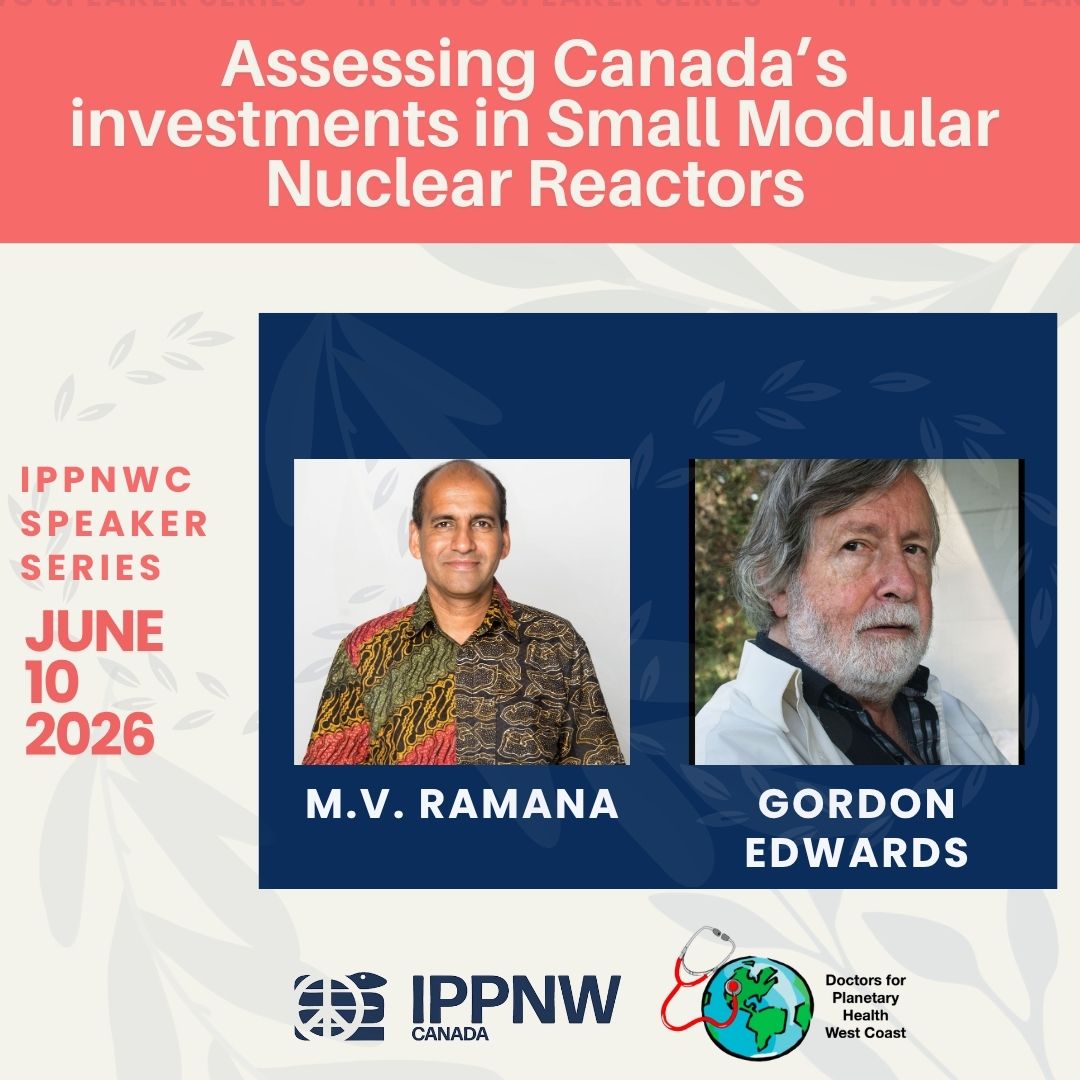
10 June – Assessing Canada’s Investments in Small Modular Nuclear Reactors – https://zoom.us/meeting/register/IiqHA5feRhaEBycOLNTJlA#/registration


Cuba Is Not a Failed State – It Is a Besieged State
PETITION: “Global Appeal to Endorse Palestinian Right of Return of Refugees”
To see nuclear-related stories in greater depth and intensity – go to https://nuclearinformation.wordpress.com
-
Archives
- June 2026 (85)
- May 2026 (306)
- April 2026 (356)
- March 2026 (251)
- February 2026 (268)
- January 2026 (308)
- December 2025 (358)
- November 2025 (359)
- October 2025 (376)
- September 2025 (257)
- August 2025 (319)
- July 2025 (230)
-
Categories
- 1
- 1 NUCLEAR ISSUES
- business and costs
- climate change
- culture and arts
- ENERGY
- environment
- health
- history
- indigenous issues
- Legal
- marketing of nuclear
- media
- opposition to nuclear
- PERSONAL STORIES
- politics
- politics international
- Religion and ethics
- safety
- secrets,lies and civil liberties
- spinbuster
- technology
- Uranium
- wastes
- weapons and war
- Women
- 2 WORLD
- ACTION
- AFRICA
- Atrocities
- AUSTRALIA
- Christina's notes
- Christina's themes
- culture and arts
- Events
- Fuk 2022
- Fuk 2023
- Fukushima 2017
- Fukushima 2018
- fukushima 2019
- Fukushima 2020
- Fukushima 2021
- general
- global warming
- Humour (God we need it)
- Nuclear
- RARE EARTHS
- Reference
- resources – print
- Resources -audiovicual
- Weekly Newsletter
- World
- World Nuclear
- YouTube
-
RSS
Entries RSS
Comments RSS
 nuclear-news