Epic Interruptus: The Iranian Snare and American Defeat
13 May 2026 Dr Binoy Kampmark, https://theaimn.net/epic-interruptus-the-iranian-snare-and-american-defeat/
On May 10, Robert Kagan, the high priest of neoconservative thought, the bell ringer for muscular interventionism and general American meddlesomeness, lamented in The Atlantic that the United States had suffered a unique defeat in its efforts to subjugate Iran. The article says much about Kagan’s own identification with the obvious, some feat given the military fancy and fantasy that continues to blot the current Trump administration.
Be that as it may, he finds the Iran War dishing out a defeat to the United States of unique quality, one that “can neither be repaired nor ignored.” No ultimate American triumph could emerge, and nothing would “undo or overcome the harm done” to “return to the status quo ante.” The Strait of Hormuz would not be “open” as it was prior to February 28. Iran’s regional position, far from being blunted, had improved. China and Russia had been strengthened; the US “substantially diminished.” “Far from demonstrating American prowess, as supporters of the war have claimed, the conflict has revealed an America that is unreliable and incapable of finishing what it started.”
This prompting was undoubtedly due to the claim made by US Secretary of State Marco Rubio on May 5 in the White House Press Briefing Room that Operation Epic Fury had concluded, though US President Donald Trump, ever keen to keep an iron in the fire, huffed that Iran had to “agree to give what has been agreed to.” (The “what” is always the problem in Trumpland.) Not doing so would result in bombing “at a much higher level and intensity than it was before.” The President had also “paused” Project Freedom, that massive prop of wishful thinking involving the use of the US military to escort commercial shipping through the Strait of Hormuz. The pause – effectively a breezy termination – had been induced, in no small part, by the grumpiness of Saudi Arabia’s Mohammed bin Salman, worried that adventurism in the Strait would incite yet another round of Iranian attacks on Gulf states. To show his disapproval, the Crown Prince had refused to permit the use of the Prince Sultan Airbase for US operations.
Iran’s airstrikes had also shown far more bite than was initially reported, at least in the Western media stable. Some of this can be put down to the restrictions on the release of satellite imagery supplied by commercial providers Vantor and Planet. Both have been compliant with the Pentagon’s request to either limit, delay or indefinitely withhold the publication of timely imagery covering the region. The Iranians, through state-affiliated news outlets, felt no such restraint.
On May 6, The Washington Post, after examining Iranian satellite imagery, reported that some 228 structures of pieces of equipment at US military sites across the Middle East since February 28 had been damaged and destroyed. Hangars, barracks, fuel depots, aircraft, vital radar, communications and air defence equipment had been struck by Iran’s forces. The dangers posed by Iranian strikes had been so formidable as to force some US bases in the region to relocate personnel out of missile range.
In its analysis, the paper claims to have verified some 109 images, aided by a comparison with lower-resolution imagery obtained from the European Union’s Copernicus satellite system, and any high-resolution images at hand from Planet. The Iranian images also confirmed previously reported damage or destruction inflicted on a number of US military assets: the radomes at Camp Arifjan and Ali al-Salem Air Base in Kuwait and at the 5th Fleet Headquarters; the Terminal High Altitude Area Defense (THAAD) missile defence radars and equipment located at Jordan’s Muwaffaq Salti Air Base and two sites in the United Arab Emirates; a second satellite communications site located at al-Udeid Air Base, and an E-3 Sentry command and control aircraft and a refuelling tanker at Prince Sultan Air Base in Saudi Arabia.
The analysts roped in to examine the images were impressed. Mark Cancian, a former Marine Corps colonel and senior advisor to the Center for Strategic and International Studies (CSIS), found the strikes to be “precise.” “There are no random craters indicating misses.” William Goodhind of the open-access research project Contested Ground, in addition to noting the destruction of equipment, fuel storage and air base infrastructure, found damage to “soft targets, such as gyms, food halls and accommodation.”
To add stinging insult to burgeoning injury, the defences used to cope with Iranian strikes proved staggeringly draining and disproportionately costly. The CSIS estimates the use of at least 190 THAAD interceptors and 1,060 Patriot interceptors between February 28 and April 8, running down inventories of both at 53% and 43% respectively. And just to improve the mood in Washington, Tehran, according to an analysis by the US intelligence community, retains roughly 75% of its prewar inventories of mobile launchers and roughly 70% of its pre-war missile stockpile. Vague as they are, that’s another objective of Operation Epic Fury dashed.
While the childish pantomime of non-diplomacy continues (Trump rages that the ceasefire with Tehran, given the latest “piece of garbage” of a counter proposal, is on “life support”), Washington is banking on a strangulation policy through yet another project of dubious merit: Economic Fury. “As Iran’s military desperately tries to regroup, Economic Fury will continue to deprive the regime of funding for its weapons programs, terrorist proxies, and nuclear ambitions,” tooted the Secretary of the Treasury Scott Bessent on May 11. “Treasury will continue to cut the Iranian regime off from the financial networks it uses to carry out terrorist acts and to destabilize the global economy.”
Economic Fury, still in its swaddled infancy, also risks early retirement. Iranian stubbornness and stout resilience continues to trouble analysts in the intelligence community. A CIA analysis circulated this month concluded that Tehran could withstand the US naval blockade for between 90 to 120 days before experiencing dramatic economic deterioration. Iran’s economy may be in a wretched state, but parochial determination has a certain staying power. Bureaucratic bickering, however, often finds its way, and a senior US intelligence official (that could be anyone) has surfaced to counter the claims of the assessment. Genuine, extensive and rapid economic damage is being inflicted. The US remains in the ascendant.
These varied intelligence assessments of decorative astrology cannot escape the dunderheaded reasoning that undergirded the war, along with the failure to appreciate the shocks caused, not merely by Iran’s closure of the Hormuz Strait but its systematic shredding of the US security guarantee for Gulf states. Unlike the fumbling, inventive antics shown prior to the invasion of Iraq in March 2003, the CIA and allied intelligence services were well aware that a campaign against Iran was freighted with terrible risk. Ensnared and trapped, Trump will find it hard to avoid using the good offices of China’s President Xi Jinping to lean on Beijing’s ally. If so, it is bound to come at an exacting price.
On Iran war he opposed then supported, Secretary of State Rubio channeled wrong predecessor – Walt Zlotow.

Don’t expect Marco Rubio to ever apologize for helping bring on what will likely become the most disastrous war in America’s 250 years. Rubio has been a fervent, lifelong promoter of senseless, endless US wars and US exceptionalism. He has always demonstrated the exact opposite of what a decent, peace promoting Secretary of State should be.
13 May 26, Walt Zlotow, https://theaimn.net/on-iran-war-he-opposed-then-supported-secretary-of-state-rubio-channeled-wrong-predecessor/
Marco Rubio is America’s 72nd Secretary of State going back to John Jay in 1789. While serving as the President’s top foreign affairs advisor, overseeing diplomatic missions, managing international relations, promoting human rights, Job One for every Secretary of State is to champion peace, not war.
Predecessors in this prestigious post include Thomas Jefferson, James Madison, James Monroe, John Quincy Adams, Henry Clay, Daniel Webster and William Jennings Bryan.
What an as astonishing cast of noble Secretaries that Rubio could have chosen from to respond to Trump’s decision to blow up Iran and now possibly the world economy beginning 75 days ago. Reports indicate Rubio argued against the invasion, not on moral grounds it was a criminal war, but on practical grounds it would fail. When Trump brushed asides Rubio’s concerns and pulled the trigger, dutiful Rubio hopped off the Peace Train and grabbed a First Class seat on Trump’s War Train.
Once started, Rubio offered one of the most disingenuous, disgusting rationales for war in American history. Rubio said the US had to attack Iran first. Why? Because we knew Israel was going to attack Iran and if they did, Iran would attack their best buddy America. By attacking first, the US would suffer less casualties. Of course, Rubio omitted that all along the US and Israel planned a one, two sucker punch on Iran while in peace negotiations with them.
Rubio sadly followed up on what till then had been the worst precedent in US history of a Secretary of State abdicating his job responsibility promoting peace to support his President’s rush to criminal war. On February 5, 2003, George W. Bush’ Secretary of State Colin Powell shamelessly told the UN a blizzard of lies Iraq had WMD, intended to use them, and time was running out for the world to stop them. Forty-four days later Bush launched his war that Powell, with his enormous but fake credibility, made possible. The belief was, ‘If Colin Powell says war is necessary, then war it is.’
Alas, Rubio should have gone back 88 years earlier than Powell’s disgrace to channel instead predecessor William Jennings Bryan. On June 9, 1915, President Woodrow Wilson’s Secretary of State William Jennings Bryan resigned. After the British liner Lusitania was sunk May 7, Bryan sent Germany a conciliatory note requesting restraint and high level diplomacy to keep the European war from drawing in the US. Bryan was mindful Germany neither attacked nor threatened America far across its Atlantic mote. Wilson was furious and penned a much stronger note that Bryan refused to sign out of conscience, resigning instead.
Bryan’s principled plea for peace did not prevent Wilson’s disastrous declaration of war on Germany 22 months later. But had Rubio bluntly told Trump he would resign and go public with his opposition to a clearly unwinnable war, Trump might have pulled back from the catastrophe he’s unleashed.
It took two and a half years for Colin Powell to admit his perfidy in enabling America’s horrific Iran war that killed hundreds of thousands of Iraqis and over 5,000 US and allied troops. “I, of course, regret the U.N. speech that I gave, which became the prominent presentation of our case. I never saw evidence to suggest a connection between the September 11, 2001 terror attacks in the United States and the Saddam regime. I’m the one who presented it on behalf of the United States to the world, and (it) will always be a blot on my record. It was painful. It’s painful now.”
Don’t expect Marco Rubio to ever apologize for helping bring on what will likely become the most disastrous war in America’s 250 years. Rubio has been a fervent, lifelong promoter of senseless, endless US wars and US exceptionalism. He has always demonstrated the exact opposite of what a decent, peace promoting Secretary of State should be.
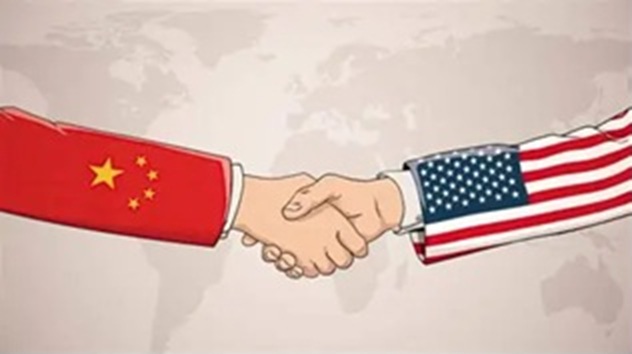
US President Donald Trump, Chinese President Xi Jinping end unipolar age in Beijing
By Bang Xiao, 16 May 26, https://www.abc.net.au/news/2026-05-16/us-donald-trump-china-xi-jinping-end-unipolar-age-beijing/106687004
For nearly a decade, the world has braced for a collision.
The dominant United States and a rising China, locked in escalating strategic competition, were said to be hurtling towards a Thucydides Trap that history suggested would be almost impossible to avoid.
This week in Beijing, both Donald Trump and Xi Jinping quietly admitted something the rest of the world has been slow to grasp. Neither of them can afford the collision.
The summit produced no breakthrough trade deal, no joint statement, no big announcement on Taiwan. And yet what it delivered may turn out to be more consequential than any of those things. The public outline of a new global order.
One in which the US and China are not enemies, not rivals, and not partners in the warm Western sense. They are something newer and harder to name. Two structurally interdependent superpowers who have decided, for now, to manage their rivalry rather than let it manage them.
At the state banquet on Thursday night, Xi put the new compact in language no Chinese leader has previously offered an American counterpart in such direct terms.
“The China-US relationship is the most important bilateral relationship in the world,” he said.
“We must make it work and never mess it up.”
Beijing gave the framework a name: a “constructive China-US relationship of strategic stability”.
Xi spelled it out in four phrases. Positive stability with cooperation as the mainstay. Sound stability with moderate competition. Constant stability with manageable differences. Enduring stability with promises of peace.
Trump endorsed it. Beijing says the framework will guide bilateral relations for the next three years and beyond.
Read carefully, that is not a thaw. It is the architecture of a new bipolar order.
What was striking about Beijing this week was not just the warmth of the welcome that Xi has staged, it was the unprecedented openness. Cameras were granted access to Zhongnanhai, China’s most secretive political compound, in numbers nearly no foreign press has ever enjoyed.
Xi gave Trump a tour of trees four centuries old, told him the seeds of Chinese roses were on their way home as a gift, and walked beside him into rooms that almost no foreign leader has ever entered.
The only other one to have stood there, it should be said, is Vladimir Putin.
Xi framed the access in personal terms. He told Trump in front of the cameras that he had “chosen this place especially to reciprocate the hospitality extended to me in 2017 at Mar-a-Lago”. It was a private courtesy returned.
Trump went further. He called the relationship “the G2” — the world’s two most important countries.
At the banquet he called Xi “my friend” and described the visit as one of “the most consequential relationships in world history”. He traced the connection between the two peoples back 250 years.
“It’s a special world,” he said, “with the two of us united and together.”
That is the speech of a US president acknowledging a shared story. Nothing in it reads like he will contain a rival.
At the Zhongnanhai tea on Friday, Trump matched Xi’s warmth. He said the two had known each other “almost 12 years” and had “settled problems other people wouldn’t have been able to settle”.
The first test is already in front of them. It is the Strait of Hormuz.
Both leaders publicly agreed this week that the strait should be reopened. Xi indicated he would press Tehran behind the scenes.
What is on the calendar is September 24. That is when Xi will arrive in Washington for the reciprocal state visit Trump confirmed before his departure from China.
It is also, effectively, the deadline for the two most powerful men in the world.
If the Middle East war is not resolved by then, Xi will land in Washington without the commitment he made this week. The G2 will face its first practical test having failed it.
Both sides bet on a wider grey
There was no joint statement issued from Beijing this week. But what Trump delivered at Zhongnanhai, with Xi standing beside him, read like one.
For more than a decade, the US-China relationship has been described in black and white. Rivals or partners. Containment or appeasement. Decoupling or engagement. Democracy or authoritarianism.
This week, both leaders quietly retired the narrative. What they care about most sits in the grey area in between: trade, energy, Iran, supply chains, agriculture and Chinese international students.
The bet is that the grey will keep expanding. If it does, the Cold War tactics of the past decade will lose their grip. Less chip-export brinkmanship. Fewer tariff retaliations. Quieter security frictions. None of it is guaranteed.
The grey holds only if both sides keep their nerve.
The bet rests on a structural reality. Both superpowers are slowing.
China’s growth has decelerated from the highs of the 2000s, weighed down by demographics, a property correction and US tech restrictions.
America’s productivity is real, but its consumer is exhausted, its public debt unprecedented, and its industrial base in semiconductors and rare earths dangerously exposed.
In a slowing world, the cost of confrontation rises. Xi’s “Chinese Dream” of a high-tech, sustainable economy needs continued access to American capital and innovation. Trump’s “Make America Great Again” needs access to the largest consumer market on Earth.
The closure of the Strait of Hormuz has tightened the screws further. With Iranian oil crippled, Beijing needs the energy flow uninterrupted, and Trump has the leverage. Both leaders know it.
Xi made the convergence explicit at the banquet, in a single line that will be re-read for months: “Achieving the great rejuvenation of the Chinese nation and making America great again can go hand in hand.”
It was the first time the leader of the Chinese Communist Party has publicly endorsed an American political slogan. Trump raised his glass.
After nearly a decade of trade wars and chip-export controls, both sides have arrived at the same conclusion. Neither can win.
And the worst case scenario is already playing out. Both leaders are increasingly distrusted by the rest of the world. That makes the bilateral alignment more valuable to each of them, not less.
A decade ago, Beijing was the rising party seeking acknowledgement. This week, Xi sat across from Trump as a co-equal. Trump accepted the framing.
The unipolar moment ended somewhere between the 2008 financial crisis and Donald Trump’s second inauguration. This week in Beijing was the formal recognition of it.
Where the grey ends
There remains one structural risk: Taiwan.
Xi was unusually pointed on the issue during the bilateral, warning Trump that mishandling Taiwan would push the relationship “into an extremely dangerous situation” of “collision and conflict”.
Beijing chose to release these comments while Trump was still in the country. The framework of strategic stability does not extend to what China considers its red line.
The toasts themselves contained no mention of Taiwan. The hard line was for the bilateral, the soft line for the cameras.
Trump, asked about Taiwan at the Temple of Heaven, deflected with “China is beautiful” and changed the subject. That is not endorsement. But nor is it the unconditional defence Taipei would want to hear.
The new bipolar order, then, is not a stable equilibrium. It is a managed one. It depends on each side resisting the temptation to test the other on the one issue where both have publicly committed to no compromise.
For Australia and other middle powers, the implications run deep. The strategic competition framework that Canberra used to align with Washington has been quietly retired in favour of something messier and more transactional.
The two superpowers have now stood side by side and called themselves partners, friends, co-stewards of the giant ship of human history.
America and China are no longer enemies-in-waiting. They are two slowing giants who have agreed, in Beijing this week, that they need each other more than they once admitted.
The rest of the world has been preparing for a cold war. It has been handed a partnership of necessity between two superpowers who have both reached the limits of confrontation.
That is the order we now live in. And the rest of us will have to adjust.
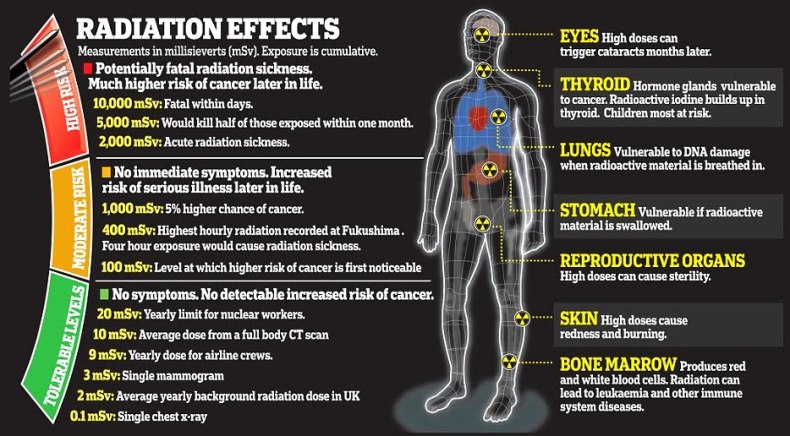
CHANGES TO RADIATION PROTECTION STANDARDS – FOR WORSE OR FOR BETTER?
Tony Webb, May 17, 2026, https://mail.google.com/mail/u/0/?tab=rm&ogbl#inbox/WhctKLcDwkXLRPthNZwfjCSsBVWXNmPvNPFqnmqNVGDcPLVtBDMvdgXHsDPZrKHkgNfHZjG?projector=1&messagePartId=0.1.1
Changes for worse or better protection for workers and the public is on the international
and national political agenda in a number of countries. Trade Union, environment and
public health groups around the world are concerned that the USA is considering proposals
that would weaken radiation protection standards at a time when the scientific evidence
suggests these need to be significantly tightened.
Our concern arises as a result of a Directive (EO 14300) 1 issued in May 2025 by US President
Donald Trump requiring the US Nuclear Regulatory Commission (NRC) to review nuclear
safety regulations with particular reference to radiation protection of workers and the
public. The Directive instructs the NRC to abandon fundamental principles that have
formed the basis for radiation protection for much of the past century. These include: the
internationally accepted position that there is no threshold or safe level of exposure; that,
as a consequence, all exposures should be kept as low as reasonably achievable (ALARA) ;
and all exposures to workers and the public be kept below strict annual limits in line with
the best evidence of radiation-induced health risks.
The evidence used to set current standards was drawn mainly from the studies of cancer
rates among the Japanese A-bomb survivors who were exposed to relatively high doses over
short time periods. Since then studies of workers in nuclear power facilities exposed to
lower doses over long time periods show higher rates of cancer than predicted by the
Japanese studies. Rather than indicating any threshold these studies suggest that at low
doses the cancer rates are proportionately higher than expected from the Linear No-
Threshold model used to set current standards. 2 Worker studies also show elevated rates of
cardio-vascular diseases 3 , and increased rates of dementia 4 . In addition, studies on
populations around nuclear power plants are now showing higher cancer rates affecting
particularly children 5 and the elderly 6 – correlated to how close they lived to these facilities.
Despite this mounting evidence that exposure limits should be lowered the likely result of
changes in line with the Presidential directive would be to increase the permissible exposure
limit for workers and the public to five times the current internationally recommended
level.
The US NRC is clearly faced with a dilemma. To adopt the changes demanded by the
President would require reversing its 2021 decision that specifically rejected these same
proposals 7 . The initial date for publication of the NRC’s draft response for public
consultation was 23 February 2026. This was deferred to 30 April and again at short notice
to 24 June. One might speculate that despite large scale resignations and lay-offs among
NRC staff there remain some with scientific integrity opposing the changes. However the
final revision of standards is required by end of November 2026. Given the President’s
record for seeking retribution on government representatives or officials who oppose his
plans it is hard to see any outcome from the NRC other than a change to weaken the US
standards.
There will also likely be pressure on international and national standards agencies to align
with changes in the USA. Some push-back can be expected. Already the heads of European
standards agencies have issued a statement supporting the LNT and ALARA principles and insisted that exposure standards be set on the basis of the scientific evidence without
undue influence. 8 However NRC changes in line with the Trump Presidential Directive will
embolden the nuclear power lobby and create pressure for change where there are joint
ventures involving US military or industrial interests. These changes are also likely to
impede public pressure for review and improvement of current standards.
In Australia, for example, there are a number of joint ventures in uranium and radioactive
rare earths and mineral sands mining and the government has already established a
separate Naval Nuclear Power Safety Regulator (ANNPSR)to oversee all aspects of
construction, operation, maintenance, decommissioning and nuclear waste management
under the Australia-UK-US (AUKUS) nuclear submarine program. While these standards are
expected to be consistent with those of the current Australian Radiation and Nuclear Safety
Agency (ARPANSA) the pressure for change can come from either agency. Hopefully it will
be politically independent science-based pressure to not merely oppose the direction
prompted by the US President’s directive but for better standards to protect health of
workers and the public where they are routinely exposed to ionising radiation.
References and Further Reading……………………………………
Trump‑Xi summit: Cautious Progress On Trade, Ties And Some ‘Win‑Wins’.
But importantly, Xi and Trump agreed to establish a Board of Trade and Board of Investment – intended to create a pathway forward to more trade in the months to come.
May 16, 2026 , Yan Bennett for the Conversation, https://scheerpost.com/2026/05/16/trump-xi-summit-cautious-progress-on-trade-ties-and-some-win-wins/
President Donald Trump departed China on May 15, 2026, after a two-day summit with Chinese leader Xi Jinping that was scrutinized from every angle for clues on where the relationship is heading.
Trump hailed the trip as “incredible,” while Xi remarked that it marked a “new bilateral relationship.” Other observers were a little less enthusiastic, noting that no major breakthroughs were evident at the highly anticipated meeting of the world’s two most powerful political leaders.
The Conversation turned to Yan Bennett, an expert in U.S.-China relations and author of “American Policy Discourses on China,” to provide her three big takeaways from the summit.
Taiwan: Tough(ish) talk but status quo in place
No one really expected there to be movement on Taiwan – which mainland China lays claims over – although it is clear that Beijing would like the United States to make a firmer stance against the island moving toward a declaration of independence, or for the U.S. to expressly demand reunification.
So what we got was Beijing reiterating that Taiwan remained a priority and a core interest. Xi did this on the first day of the summit, noting that the Taiwan “question” remained “the most important issue in China-U.S. relations,” and that any mishandling of it could lead to “clashes and even conflicts.”
But this was aimed at two things. First, Xi has a domestic audience he needs to address, and Taiwan has long been important to Chinese rhetoric. The Chinese Communist Party has around 100 million members, many of whom would have expected Xi to talk tough on Taiwan – and it was those people he was largely talking to.
But he was also signaling to the U.S. that it shouldn’t support Taiwanese independence. And that won’t ruffle any feathers in Washington. Indeed, the 2025 National Security Strategy stressed that the U.S. opposed unilateral action on Taiwan from “either party” – a signal to Beijing that it opposed Taiwan declaring independence.
Trump did mention arms deals to Taiwan. But the U.S.’s declaratory policy since the Reagan administration is that it doesn’t allow Beijing to enter discussions about what weapons Washington sells to Taiwan. And that hasn’t changed at all, nor has the U.S.’s treaty commitment to Taiwan since 1979 that requires the U.S. to provide Taiwan with defensive weapons to maintain a sufficient self-defense capability.
Rhetoric aside, everyone is happy with the status quo on Taiwan – it is in no one’s interest for it to change.
But talk of Taiwan has been muddied a little by Xi’s determination to modernize the People’s Liberation Army. The Chinese president has laid out a series of benchmarks including that the PLA should be capable of invading Taiwan by 2027. This has been misinterpreted in the U.S. under the so-called “Davidson window” – a concept that has it that China is intent on invading by that time.
In reality, China is nowhere near able to do so. It doesn’t have a “blue water navy” able to operate without port assistance, and the island is incredibly difficult to invade – it only has two places where you can land, and only at certain times of the year. It is also very mountainous. Taiwan is also slowly building its defenses – and learning a lot from Ukraine’s war with Russia – with the intention of becoming “indigestable” to China.
Xi’s modernization timeline also states that the PLA should be a “world class military” – taken to be a peer to the U.S. – by 2049. But the fact that it spends more on internal security than it does on defense indicates where the CCP’s true interests lay – in domestic security rather than external capabilities.
Trade: Tamped down expectations
The big picture is that the U.S. and China have been trying to restabilize what was until fairly recently a very good relationship in terms of economic ties.
Both sides have clear priorities to that extent. China wants to regain the American market it had in the 1990s and early 2000s – and certainly reverse the trend since 2018’s trade war.
Trump since his first administration has made it clear that he sees Chinese control over supply chains and the trade imbalance as a national security issue. Washington also wants to address unfair trade practices, such as the requirement that American companies hand over blueprints, trade secrets, customer lists, marketing plans and more to operate.
So what was achieved in the summit? On the surface, very little. There was some movement on sales of U.S. beef to China. And Trump announced that Beijing would buy 200 aircraft from Boeing – lower than the 500 that had been earlier touted in media reports. And several Chinese companies agreed to buy Nvidia microchips – a continuation of a process that began in late 2025.
That doesn’t seem much, and it was telling that Trump himself wasn’t being very “Trumpian” on what could be achieved during the summit. He wasn’t promising the moon.
A lot of focus will be on technology. China is about 18 months behind the U.S. in microchip development. Some have questioned whether U.S. companies should be selling chips to China, amid fears that China could steal the intellectual property and be able to use higher-technology chips for defense reasons. The U.S. position is it can’t allow Huawei – China’s telecom giant – to take over the whole Chinese market, so it will only allow the sale of what it considers appropriate-level Nvidia chips.
Military matters: Washington wants to talk
During the Cold War, the Soviet Union and the U.S. always kept the military lines of communications open to avert a catastrophic incident. This hasn’t been the case with Beijing and Washington. We saw that in 2001 when a U.S. aircraft collided with a Chinese jet; and again over the “Chinese spy balloon incident” in 2023.
Washington is seeking to open up a line of communication on military matters, and that is probably why U.S. Secretary of Defense Pete Hegseth was there in Beijing. Indeed, it is highly unusual for a defense secretary to be at such a summit.
Not that Trump believes he needs China’s help on military matters. He made that clear when asked about possible Beijing assistance prior to the summit.
In fact, little news came out of the summit on Iran. China has criticized the U.S. over the war, but has also quietly been telling Tehran to stop bombing Gulf countries.
Despite some commentary suggesting that Beijing benefits from the U.S. being bogged down in the Middle East, what Xi will want is a resolution before the economic fallout bites in China.
China’s stockpile of Iranian oil will only last a few more weeks and then oil price rises will hit China like a brick.
Trump overseeing decline of US world dominance…and that’s good

Walt Zlotow West Suburban Peace Coalition Glen Ellyn IL, 16 May 26
The global economic consequences of Trump’s failed war on Iran have yet to be fully realized. But even if Trump surrenders to Iran’s sensible demands today, they will degrade the world economy for months to come.
Trump is utterly trapped because he cannot win with either his current blockade or renewed bombing campaign. All US bases in the Gulf States are damaged or destroyed. Gulf States oil infrastructure is degraded. Should Trump renew bombing, Iran will completely destroy them, finish off US bases, and resume degrading Israeli infrastructure as well.
The Gulf States will never again put their full security in US military might. It has proven a complete failure in winning a war against their imagined enemy Iran. America’s Asian allies Japan the Philippians, Taiwan and others now realize the limits of US power and credibility. European NATO countries are coming to the same conclusion as Trump has largely left them on their own to continue their futile effort to push Russia out of Ukraine.
As horrendous as the Iran war’s consequences are, the decline of US world dominance is an outcome we should welcome. China has passed up the US both economically and politically, in part because they have used investment, not intimidation, economic sanctions and yes, bombings to exert their power on the world stage. Outside of Israel, most countries are moving toward multi power polarity as evidenced by BRICS and the Shanghai Cooperation Organization rather than rely on, even prostrate themselves before US military might.
There is a long way to go before America fully realizes the folly of its quest to rule the world using violence. We’re still bombing countries posting no threat to the US whatsoever. Trump has bombed Somalia over 60 times this year tho most Americans couldn’t find it on a map, much less fear its non existent threat. We killed over a hundred to depose and kidnap Venezuelan President Maduro. We’ve killing Cubans with our grotesque economic sanctions, including cutting off most their oil imports. We’re still providing intelligence and military aid for Ukraine to continue its war with Russia. Of course, worst of all we have not given up on destroying Iran and may resume the futile bombing at any moment.
But US world dominance is inexorably eroding due to its refusal to pivot from war to peace to resolve international disputes. If somehow, some way America accepts this reality of a new world order without US dominance, we can thank, in part, President Trump for making that shift with his launching a war too far against Iran.
‘He asked if I would defend them’: Trump shares key details of Xi meeting
Michael Koziol, 16 May, 26, https://www.smh.com.au/world/north-america/he-asked-if-i-would-defend-them-trump-shares-key-details-of-xi-meeting-20260516-p5zxnw.html
Washington: Xi Jinping asked directly whether the US would defend Taiwan in a war, Donald Trump said, as he divulged key details of his conversations with the Chinese president while flying home from the high-stakes meeting in Beijing.
The two men also spoke “in great detail” about US arms sales to Taiwan, which China would like to stop, and which Trump has not committed to continuing. He said he would make that decision soon, after speaking with the leader of Taiwan.
“President Xi and I talked a lot about Taiwan … he’s against very much what they’re doing,” Trump said aboard Air Force One.
“He does not want to see a fight for independence because that would be a very strong confrontation … I didn’t make a comment on it, I heard him out. I have a lot of respect for him.”
Asked by a reporter whether he would defend Taiwan, Trump said he would not answer – maintaining the long-standing US position of strategic ambiguity. He said he gave the same response to Xi.
“He asked me if I would defend them. I said, ‘I don’t talk about that’. There’s only one person that knows that. You know who it is? Me.”
In December, the Trump administration approved a record $US11.1 billion ($15.5 billion) arms package for the self-governing democracy (over which China claims sovereignty). But the president has delayed approval of another package worth up to $US14 billion.
Trump indicated he did not feel bound by the so-called “six assurances” given to Taiwan in 1982 under then president Ronald Reagan, one of which was that the US would not consult China about arms sales to Taiwan.
“1982 is a long way, that’s a big, far distance away,” he told reporters on the plane. “[Xi] brought that up, he talked about that to me – so what am I gonna do, say, ‘I don’t want to talk to you about it because I have an agreement that was signed in 1982?’
“I made no commitment either way. I’ll make a determination over the next fairly short period of time. I have to speak to the person – you know who he is – that is running Taiwan.”
Trump said he and Xi also discussed lifting US sanctions on Chinese oil companies that buy oil from Iran, and would decide in the next few days.
The US president’s account of his conversations with his counterpart were far more detailed than the summary given by the Chinese foreign minister, Wang Yi, when answering questions from state-affiliated news agencies.
Wang said the two men spent nine hours together across their several encounters, which included the bilateral meeting, a banquet dinner, a visit to the Temple of Heaven and tea/lunch at Xi’s Zhongnanhai compound.
He emphasised the centrality of the Taiwan question, repeating Xi’s message that “if handled poorly, the two countries will clash, pushing the entire Sino-US relationship into a very dangerous situation”.
Wang added that China hoped the US would take “concrete actions” to safeguard the relationship, which the Chinese are now framing as being one of “constructive strategic stability”.
On Iran, Trump said he did not seek Xi’s assistance in pressuring Tehran to reopen the Strait of Hormuz – but that he believed China would lean on its partner regardless, as Beijing also wanted the passage open and free.
“I’m not asking for any favours, ’cos when you ask for favours you need to do favours in return. We don’t need favours,” Trump said.
He also lashed out at journalists on Air Force One, accusing The New York Times’ veteran correspondent David Sanger of treason after he asserted Trump had failed to achieve the political changes he sought in Iran.
“I had a total military victory. But the fake news, guys like you, write incorrectly. You’re a fake guy,” Trump said to Sanger.
“You should know better, David. You know better. Your editors tell you what to write, and you write it, and you should be ashamed of yourself. I actually think it’s treason.”
He also clashed with a BBC journalist who asked about the missile strike on an Iranian girls’ school at the beginning of the war, which reportedly killed about 175 people.
The US has not taken responsibility despite a New York Times report saying a preliminary investigation confirmed it was an American missile. Trump said it remained under investigation.
Meanwhile, the US State Department announced Israel and Lebanon would extend their ceasefire by a further 45 days following two days of talks in Washington.
Israel is not at war with Lebanon but struck targets associated with the Iran-backed Hezbollah terrorist group in the country, including the capital Beirut, during the war against Iran.
It has continued its strikes leading up to this week’s talks, despite the ceasefire that began on April 16. Lebanon’s Health Ministry said 22 people were killed in attacks on Wednesday, including eight children.
The Washington talks represent the first high-level diplomatic relations between Israel and Lebanon for more than 30 years. State Department spokesman Tommy Piggott said political negotiations would resume in early June and a security discussion would be added on May 29.
While the Beijing summit did not produce many immediate tangible outcomes, Trump said China agreed to buy 200 aircraft from American manufacturer Boeing – less than the 500 the firm initially hoped for – and up to 750 “if they do a good job”
This summit was just “the beginning”, he said, noting he and Xi could meet as many as four times this year. Trump has invited Xi to the White House on September 24 – during the United Nations General Assembly’s high-level week – and Beijing confirmed the Chinese leader would visit the US in the northern autumn.
The two leaders could also meet at the Asia-Pacific Economic Cooperation forum in China in November, and the G20 world leaders’ summit December, hosted at the Trump National Doral resort in Miami.
with Lisa Visentin, Reuters
This Is The REAL Reason For Trump’s Visit To China.
May 14, 2026, Joshua Scheer, https://scheerpost.com/2026/05/14/this-is-the-real-reason-for-trumps-visit-to-china/
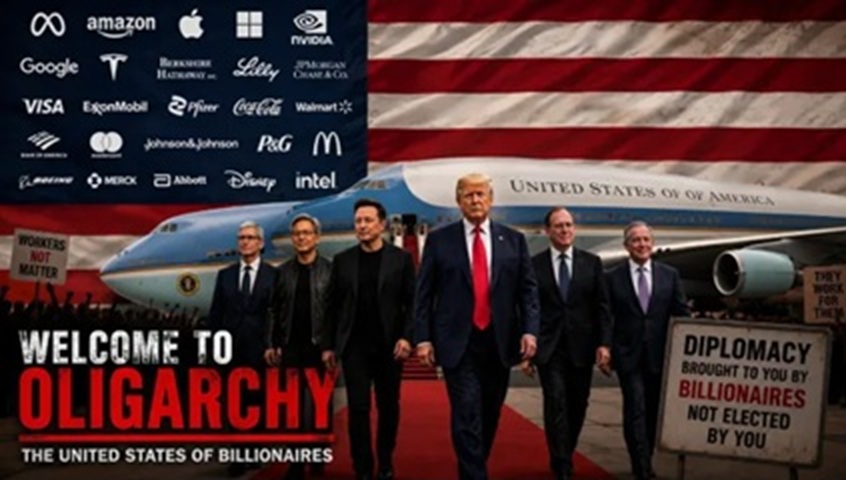
Donald Trump didn’t arrive in Beijing as the leader of a confident superpower. He arrived like a salesman carrying a collapsing empire on his back — flanked not by diplomats or peace negotiators, but by Silicon Valley monopolists, Wall Street vultures, and billionaire oligarchs desperate to keep their fortunes alive. Elon Musk. Jensen Huang. Larry Fink. Tim Cook. Blackstone. Goldman Sachs. The entire spectacle looked less like diplomacy and more like a corporate hostage negotiation staged on behalf of an American ruling class suddenly realizing it may have lost the economic war it started.
In this blistering breakdown, Ben Norton argues that Trump’s China summit exposes a geopolitical reality Washington refuses to admit publicly: the U.S. trade war backfired, China adapted, and America’s corporate elite now need Beijing far more than Beijing needs them. As the war on Iran drives inflation higher, supply chains fracture, and rare earth shortages threaten both Silicon Valley and the Pentagon, Trump’s anti-China rhetoric is quietly giving way to panic, flattery, and desperation. The result is an extraordinary image of imperial decline — an American president openly traveling with oligarchs to plead for access to the very economic system Washington spent years trying to cripple.
The best line of all from Ben may be this: “Nothing screams ‘we are an oligarchy’ more than taking oligarchs instead of diplomats to a diplomatic mission.”
And he’s right. We are living in an oligarchy — one where billionaires ride on Air Force One while working people are left paying for inflation, war, tariffs, and economic collapse. The masks are gone. Corporate CEOs now sit beside presidents like unelected cabinet members, openly shaping foreign policy, trade policy, and even war itself.
As the country barrels toward another election in 2028, the deeper crisis is that most major candidates, regardless of party branding, still end up bowing before the same billionaire donor class. The slogans change. The marketing changes. But the power structure remains untouched.
Golden Dome plan would cost $1.2 trillion, CBO finds
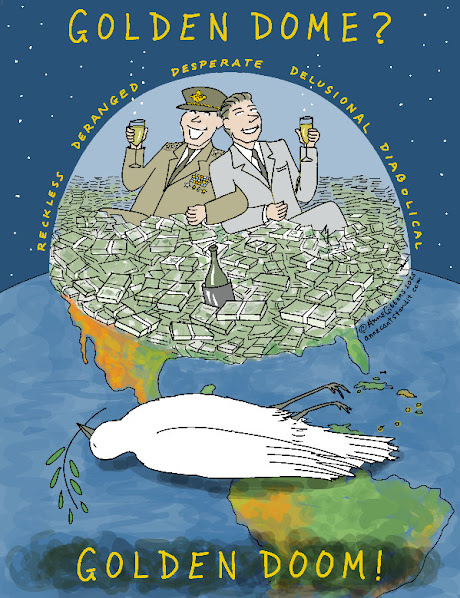
That’s seven times what Trump initially said, and almost double the congressional office’s first estimate.
12 May, 26, Thomas Novelly, https://www.defenseone.com/defense-systems/2026/05/golden-dome-cost-trillion-cbo/413485/
The Golden Dome missile-defense system would cost $1.2 trillion to build out, far more than the White House has budgeted, according to a new estimate by Congressional researchers.
The figure is roughly double the Congressional Budget Office’s assessment last year of a potential space-based interceptor system, based on the expansive yet vague executive order issued in the busy first week of the second Trump administration. It’s nearly seven times larger than President Trump’s original promise to build it for $175 billion.
And it’s fifteen times larger than the $79 billion the administration plans to spend in the Golden Dome for America account over the next five years, which excludes other-related missile defense funding.
“The system would provide significantly expanded defensive capabilities but would not be impenetrable, particularly against large-scale attacks from peer adversaries,” the office said in an emailed statement. “CBO’s estimate is substantially higher than publicly cited administration figures, which may reflect differences in scope, time frame, and assumptions.”
In the last two months, Golden Dome’s budget has swelled by $10 billion. And the program’s leader has conceded that space-based interceptors, a cornerstone of the proposed missile shield, may be too costly to build.
The bulk of the funds—about $730 billion—would purchase only enough space-based interceptors to destroy about 10 incoming ballistic missiles.
The new CBO assessment was requested by Sen. Jeff Merkley, D-Oregon.
The $1.2 trillion estimate is not far off from a projection published by Todd Harrison, a defense budget analyst and space expert with AEI. In September, Harrison wrote that roughly $1 trillion over two decades could buy enough space-based interceptors to take out five missiles in the boost phase, 50 hypersonic weapons in the glide phase, and 50 warheads in midcourse. The sum would also purchase nearly 150 missile-warning and -tracking satellites, 10 Ground-Based Midcourse Defense battalions, 10 Patriot batteries, eight THAAD batteries, and two Aegis Ashore sites.
But the administration’s $185 billion budget won’t buy anywhere close to that, Harrison said.
“The fact that CBO’s estimate is almost an order of magnitude higher than what the administration says it will cost can only mean one thing: the administration is not actually building what the executive order described,” he said. “The CBO analysis and my previous analysis both demonstrate that the homeland missile defense you can buy for $185 billion is an incremental improvement over what we have today but not an impenetrable shield that will forever end the missile threat to the United States.”
When asked by lawmakers last month about the AEI analysis and past estimates, Space Force Gen. Michael Guetlein, the program’s leader, said he’s been “laser-focused on affordability” and that the Pentagon is doing business differently than it has in the past.
“When we start talking about the different cost estimates, the first thing I always say is, first of all, they’re not estimating what I’m building,” Guetlein said. “They are estimating the modernization or the continuation of the legacy systems that we already have, and they just take the cost of a legacy system, and they multiply it out and they get these really large numbers and they say, well, that must be it. That is not what Golden Dome is doing.”
The Trump administration has leaned heavily on funds outside the baseline defense budget to make Golden Dome a reality. Last year, the Pentagon netted $24 billion in reconciliation funds for the program. For the 2027 defense budget, the administration requested more than $17 billion from the same funding source and just $400 million from the annual Pentagon budget.
Additional reconciliation funds are not guaranteed, but the administration has projected future support in the baseline budget — the Pentagon plans to request an estimated $14.7 billion in the 2028 budget and projects it to rise to $16 billion by 2031, according to the American Enterprise Institute data.
Last year’s Golden Dome executive order called for fielding the “development and deployment” of space-based interceptors that can hit a missile within minutes of its initial launch. But physics shows that weaving a defensive web to stop any number of missiles from anywhere would require tens or hundreds of thousands of satellites.
Space interceptors, as the CBO’s estimate points out, are the most expensive component. Guetlein also told lawmakers last month that he’s focused on staying within the budget and said, “If we cannot do it affordabl[ly], we will not go into production” on boost-phase space-based interceptors.
CBO researchers said the $1.2 trillion estimate could be reduced if space-based interceptors aren’t included.
“Because of the limited information available about the Administration’s planned [national missile defense] architecture, a direct comparison of DoD’s and CBO’s [defense] systems and their costs is difficult,” the report said. “If the space-based interceptors—which have a high cost per kill—were deleted from CBO’s notional NMD system, the system’s 20-year cost would drop to $448 billion, but the overall system would not align with the objectives outlined in the ‘Iron Dome’ executive order, which specifically called for space-based interceptors.”
In light of the new estimate, Harrison said, Congress should have serious doubts about prioritizing and funding space-based interceptors instead of focusing on more attainable homeland security defenses.
“One of the lingering questions for Congress is: why are we still funding [space-based interceptor] development? Prototyping the system and maturing the technology will not prove or disprove its ability to scale with the threat—scalability is a matter of orbital mechanics, and the prototyping effort does nothing to change that,” Harrison said. “SBIs do not scale. We are throwing away billions of dollars on a system with no future, when that money could instead be used to buy more of the ground-based interceptors and drone defenses we are in desperate need of today that do scale with threats.”
Trump lands in Beijing with over a dozen western moguls in tow ahead of high-stakes talks with Xi
Elon Musk, Tim Cook, and top executives from Nvidia, Qualcomm, BlackRock, Goldman Sachs, Mastercard, Visa, Boeing, and Meta joined the US president
The Cradle, MAY 13, 2026
US President Donald Trump landed in Beijing on 13 May for a crucial meeting with Chinese President Xi Jinping to address trade, technology, Taiwan, the war against Iran, and the Strait of Hormuz.
Met with red-carpet treatment in the Chinese capital, Trump was joined by a retinue of more than a dozen billionaires whose companies span major sectors of the US and global economies.
A total of 16 high-profile business leaders accompanied the US president, including Tesla and SpaceX CEO Elon Musk and Apple CEO Tim Cook, as well as CEOs from Nvidia, Qualcomm, BlackRock, Goldman Sachs, Citigroup, Mastercard, Visa, Boeing, and Meta Platforms President and Vice Chair Dina Powell McCormick.
Trump is scheduled to meet Xi after his first night in Beijing, with the visit centered on what both sides agree to be a crucial moment for the world’s two largest economies.
The US-Israeli war on Iran and the resulting global energy crisis are expected to weigh heavily on the talks.
The US President is expected to urge his Chinese counterpart to pressure Tehran to reopen the Strait of Hormuz and move toward a peace deal, as China depends heavily on crude oil shipments through the waterway.
The talks are also expected to cover Taiwan, artificial intelligence, advanced chip exports, trade, and fentanyl, with both sides seeking concessions on long-running disputes that have strained relations between Washington and Beijing……………………………………………………………………………………………………………….
The meeting also comes as Washington imposes new sanctions on a China–Iran oil network ahead of Trump’s Beijing visit, tightening efforts to choke off Tehran’s oil revenue while the US–Israeli war on the Islamic Republic and the Hormuz crisis strain global energy markets. https://thecradle.co/articles/trump-lands-in-beijing-with-over-a-dozen-western-moguls-in-tow-ahead-of-high-stakes-talks-with-xi
US-China Summit: A strategic moment for stabilizing bilateral relations
14 May 2026 AIMN Editorial , By Chen Ziqi, https://theaimn.net/us-china-summit-a-strategic-moment-for-stabilizing-bilateral-relations/
US President Donald Trump arrived in Beijing on Wednesday for a new round of face-to-face talks with Chinese President Xi Jinping from May 14 to 15, a meeting arriving at a particularly delicate moment in global politics and the international economy.
It marks the first in-person meeting between the two leaders since the Busan agreement last October, where both sides agreed to suspend further escalation of the US–China trade war for one year.
While a flare-up in the Middle East delayed this meeting by a month, the cooling of tensions with Iran has finally cleared the flight path for what many view as the most consequential diplomatic inflection point of 2026.
Amid a fragile global recovery and uncertainty in international markets, the Beijing meeting is being closely watched for whether both powers can move from “crisis management” to a more sustainable form of strategic equilibrium, with implications for broader global economic stability.
At their first meeting on Thursday morning, President Xi congratulated the United States on its 250th anniversary, while President Trump praised Xi as “a great leader,” setting a warm and friendly tone for the opening of the summit.
President Xi noted that China and the US should be partners, not rivals, empathizing the relationship between the two countries would have implications not only for their peoples, but also for the future of the world. President Trump addressed this is going to be the biggest summit, as top business delegation was with him.
A US official said the two sides are expected to continue discussions on establishing new mechanisms for trade and investment coordination, with cooperation in agriculture, aerospace, and energy also likely to feature prominently.
Beijing, meanwhile, has framed the visit as an opportunity to stabilize bilateral ties amid growing global uncertainty. In remarks on Monday, China’s Foreign Ministry emphasized the need to expand mutually beneficial cooperation, manage differences, and “inject greater stability and certainty into a turbulent and changing world.”
Guidance from strategic analysts
Beijing, meanwhile, has framed the visit as an opportunity to stabilize bilateral ties amid growing global uncertainty. In remarks on Monday, China’s Foreign Ministry emphasized the need to expand mutually beneficial cooperation, manage differences, and “inject greater stability and certainty into a turbulent and changing world.”
Analysts broadly agree that the summit reflects a shared near-term interest in stabilizing China–US relations, even as deeper strategic tensions remain unresolved.
Zhao Hai, director of the International Politics Program at the National Institute for Global Strategy, points out that the primary “product” of this summit needs to be predictability. For the private sector, the specific policy is often less damaging than the volatility of not knowing what the policy will be tomorrow.
This mirrors the “managed strategic competition” framework championed by former Australian Prime Minister Kevin Rudd. The goal in Beijing is not necessarily to bridge a decade-long trust deficit in a three-day summit, but to prevent further accidental escalation. He said that careful coordination and transparent dialogue are essential to maintaining stability over the long term.
Economic frictions and business impacts
While Chinese state media frame economic relations as both a stabilizing foundation and a key driver of broader China–US ties, US tariff policy continues to sit at the center of bilateral disagreement.
While Beijing views these measures as “unreasonable restrictions,” the Trump administration continues to utilize them as its primary tool of economic leverage.
John McLean, chairman of the China–UK Business Development Centre, noted that shifting US tariff policies are creating deep uncertainty, prompting many companies to delay or reconsider long-term investment plans.
The economic data, however, tells a more nuanced story of self-inflicted wounds. A recent study by the Kiel Institute, a leading German economic research body, found that foreign exporters absorb only about 4% of the tariff burden, with the remaining 96% falling on US business and consumers.
These findings underscore that while tariffs are often framed as protecting American industries, their indirect effects are influencing pricing, supply chains, and investment decisions.
For small and medium-sized enterprises, the consequences are particularly acute. Philip Crawley, who operates a laser equipment import business in California, reported that tariffs imposed last year cost his company millions, forcing it to slow operations, reduce employee pay, and postpone hiring plans.
Glen Calder, president of Calder Brothers in South Carolina, said his steel costs increased by 25% even before US tariffs took effect, as markets anticipated higher trade barriers.
Strategic competition may be conducted at the state level, but its economic consequences are frequently absorbed by businesses, workers, and consumers navigating unpredictable policy environments.
Continued investment interest in China
Perhaps the most surprising element of the current climate is the resilience of corporate interest. Despite these challenges, many US businesses continue to view China as a critical market.
According to the American Chamber of Commerce in China, around 60% of American companies still plan to invest in the Chinese market, reflecting enduring confidence in China’s economic opportunities.
The rationale is clear: China accounts for roughly 17% of global GDP, contributes about 30% of global economic growth, with a and is projected to export nearly $4 trillion in exports in 2025.
Its sheer economic scale and growth make it important for companies to overlook, providing strong incentives to maintain or expand investment even amid uncertainty.
Looking ahead: Cooperation and strategic stability
President Xi noted in today’s meeting that success in one is an opportunity for the other. China has maintained a relatively consistent stance toward Washington, rooted in the idea that the Pacific is large enough for both powers. This summit offers a rare window to clarify intentions and move beyond the zero-sum rhetoric that has dominated the 2020s.
Reducing uncertainty in trade, investment, and technology will benefit businesses and global markets alike, reinforcing long-term stability, which is a shared asset, not a concession. Reducing the “noise” in trade and technology isn’t just a win for diplomats. It’s the oxygen required for global markets to breathe again.
Chen Ziqi is a reporter from CGTN
From “Mission Accomplished” to Missile Shortages: The Iran War Narrative Unravels.
May 12, 2026, Joshua Scheer, https://scheerpost.com/2026/05/12/from-mission-accomplished-to-missile-shortages-the-iran-war-narrative-unravels/
Ben Norton dismantles the triumphalist rhetoric surrounding the U.S. war on Iran in this blistering breakdown of a conflict that appears far more costly — and far less successful — than Washington admits. Drawing on reporting from CNN, The Washington Post, The New York Times, NBC News, and Fortune, Norton argues that despite Donald Trump’s repeated claims of “victory,” Iran has inflicted extensive damage on U.S. military infrastructure across West Asia while preserving much of its missile capability. The video traces the widening economic, military, and geopolitical fallout of a war that critics say is enriching defense contractors while pushing the region — and the global economy — toward catastrophe.
Rather than a show of overwhelming American dominance, Norton presents the war as a warning sign of imperial overreach: damaged U.S. bases, depleted missile stockpiles, fractured alliances, and mounting costs projected to surpass $1 trillion. He also examines how Gulf monarchies once marketed as “safe havens” are now facing infrastructure destruction, economic instability, and growing fears of becoming permanent targets in a spiraling regional conflict.
While Donald Trump continues declaring Iran “militarily defeated,” a growing body of mainstream reporting paints a very different picture — one Ben Norton argues reveals the limits of American military power in the region.
In a sweeping analysis for Geopolitical Economy Report, Norton dismantles what he calls the propaganda surrounding Washington’s war on Iran, citing investigations from CNN, NBC News, The Washington Post, and The New York Times showing that Iranian strikes have heavily damaged U.S. military installations throughout West Asia.
According to Norton, the contradiction is becoming impossible to ignore: while the White House insists the war is a success, leaked intelligence assessments and major media investigations describe destroyed radar systems, damaged aircraft, emptied bases, and U.S. troops relocated out of range of Iranian fire.
“The war is not going swimmingly,” Norton argues. “The evidence shows the exact opposite.”
“Many Bases Are All But Uninhabitable”
One of the video’s most explosive sections centers on reports that Iranian missile strikes have rendered major U.S. facilities across the Persian Gulf region severely damaged or unusable. Norton cites reports claiming at least 16 American military sites were hit, with more than 228 structures or pieces of equipment reportedly damaged.
He highlights descriptions from mainstream outlets detailing destroyed hangars, communications systems, barracks, fuel depots, and air-defense infrastructure — damage so extensive that some bases were allegedly evacuated or partially abandoned.
Norton also points to reports that thousands of U.S. personnel have been relocated to Europe or moved into temporary facilities as Iranian strikes continue targeting American positions throughout the region.
A Trillion-Dollar War
The economic cost, Norton warns, could become staggering.
Referencing reporting from Fortune and estimates from analysts at Harvard Kennedy School, he argues the war’s total cost could exceed $1 trillion once infrastructure losses, weapons depletion, reconstruction, and long-term veteran care are fully accounted for.
Meanwhile, he notes, the Pentagon is reportedly burning through advanced missile systems at alarming rates. Norton cites figures claiming the U.S. has already used roughly half its stockpiles of several key interceptor and precision-strike systems — a depletion that could take years to replace.
For Norton, the contradiction is politically devastating: endless funding for war while healthcare, housing, and social programs continue facing austerity at home.
He highlights a recent Fortune report, Harvard policy expert Linda Bilmes — who previously exposed how the Iraq and Afghanistan wars cost trillions more than official government estimates — warned she is “certain” the true price tag of the Iran war will exceed $1 trillion for U.S. taxpayers once long-term military care, destroyed infrastructure, weapons depletion, and regional fallout are fully accounted for. The warning lands as the Pentagon reportedly burns through advanced missile stockpiles while Americans continue hearing there is “no money” for healthcare, childcare, housing, or social programs at home.
That constant cry that “there’s no money” comes from the fool at the top — and it should be challenged in every discussion about war. War costs money. Endless war drains societies dry while those in power pretend basic human needs are somehow unaffordable. Look at America’s so-called adversaries: many invest in infrastructure, innovation, science, and long-term development, while the U.S. continues pouring trillions into destruction. We behave like a civilization trapped in permanent attack mode, reacting with brute force instead of evolving beyond it.
Pete Hegseth LIVE: Pentagon admits Iran war cost hits $25 billion after explosive hearing testimony – https://www.youtube.com/watch?v=gFGiQPlwQX4
At the same time, War God Pete Hegseth claims far less money has been spent than critics and economists say is actually being burned through in the conflict. As the war on Iran enters its third month, Hegseth is facing growing backlash on Capitol Hill over the true cost of the war — and how much the Pentagon may be hiding from the public. During a tense House Armed Services Committee hearing, Pentagon officials claimed the U.S. has spent roughly $25 billion so far, largely on missiles, munitions, and military maintenance. But lawmakers and economists warn the real cost could be vastly higher once rising fuel prices, damaged military infrastructure, supply chain disruptions, and long-term economic fallout are fully counted. Rather than seriously addressing those concerns, Hegseth lashed out at critics, accusing skeptical lawmakers of being “reckless,” “feckless,” and “defeatist” for questioning Donald Trump’s handling of the war — a response critics say reflects growing panic inside an administration struggling to defend an increasingly costly, destabilizing, and unpopular conflict.
“Iran Is Not Iraq”
A recurring theme is that Iran has proven far more resilient than U.S. planners anticipated.
Washington expected a rapid collapse through “decapitation strikes” and economic pressure. Instead, he says, Iran maintained much of its missile arsenal, reopened underground facilities, and strengthened internal political cohesion in the face of external attack.
With intelligence assessments reportedly concluding Iran still possesses roughly 70–75% of its missile stockpile and launcher capacity despite weeks of bombardment.
Despite repeated claims from Donald Trump and the Pentagon that Iran’s military capabilities have been “crippled,” recent U.S. intelligence assessments reportedly conclude that Iran still maintains a significant portion of its missile-launching infrastructure. According to CNN, roughly half of Iran’s missile launchers remain intact — including underground systems hidden in tunnels and caves — while thousands of drones and major coastal defense capabilities are still operational, raising fears that Tehran retains the ability to inflict major damage across the region.
With the result clearly being not regime change — but deterrence.
Gulf Monarchies Feeling the Blowback
The video explores the growing panic spreading through the Gulf monarchies that have long hosted U.S. military power in the region. Ben Norton argues that Saudi Arabia’s hesitation to fully back further escalation reflects a deepening fear that the war with Iran is no longer controllable. In a parallel conversation with Danny Haiphong, Mohammad Marandi says Gulf states like Saudi Arabia and the UAE are beginning to realize that Washington’s military presence is not shielding them from catastrophe — it is making them targets. As energy infrastructure comes under threat, tourism declines, deficits soar, and oil-dependent economies face mounting instability, the illusion that the Gulf could remain insulated from regional war is rapidly collapsing. Reports that some Gulf governments restricted U.S. military access during the failed “Project Freedom” operation in the Strait of Hormuz only fueled perceptions that cracks are forming within America’s regional alliance system. “The U.S. isn’t protecting these countries,” Norton argues. “It’s turning them into targets.”
The Larger Warning
The war as part of a larger crisis of American empire: a military superpower capable of unleashing enormous destruction, yet increasingly unable to achieve its political goals.
For critics of the war, it becomes less about whether Iran is “winning” and more about whether Washington’s model of endless militarized dominance is beginning to fracture under its own contradictions.
And as the costs rise — economically, politically, and morally — Norton argues the gap between official rhetoric and reality is becoming harder to conceal.
A nation that claims there is “no money” for healthcare, housing, education, or childcare somehow always finds trillions for bombs, bases, sanctions, and endless war. Yet despite the overwhelming firepower, the destruction, and the propaganda, Washington still appears unable to impose the political outcomes it demands. Instead, the war is exposing weakened alliances, destabilizing the global economy, draining military stockpiles, and turning America’s closest regional partners into potential targets. The question is no longer whether this conflict is sustainable — but how much damage will be done before the political class admits the project itself is collapsing.
Trump says 20-year nuclear programme suspension by Iran would be enough
Robert Greenall, 16 May 26. https://www.bbc.com/news/articles/cgkpnnen5dzo
US President Donald Trump has said he would accept a 20-year suspension by Iran of its nuclear programme, in what appears to be confirmation of a shift in position away from a demand for a total end to it.
Trump said it had to be a “real 20 years”. Previously he has called on Iran to permanently cease enriching uranium – a stage in making a weapon – and to be prevented from ever acquiring nuclear weapons.
But he also said his patience with Iran was running out, with no sign of a breakthrough in talks.
Israeli and US forces began massive air strikes on Iran on 28 February. A ceasefire in place since last month meant to facilitate talks has been largely observed, despite some exchanges of fire.
Pakistan has been playing the role of mediator.
However, both sides appear to be far apart, having rejected each other’s most recent proposals to end the war.
Iranian media said Tehran’s proposal had included an immediate end to the war on all fronts – an apparent reference to Israeli attacks against its Shia ally Hezbollah in Lebanon – a halt to the US naval blockade of Iranian ports and guarantees of no further attacks on Iran.
Speaking to reporters on Air Force One after talks in Beijing with Chinese President Xi Jinping, Trump said the two sides had agreed Tehran could not be allowed to have a nuclear weapon and must reopen the Strait of Hormuz, which it is currently blocking, prompting a rise in world oil prices.
When a reporter suggested that a 20-year suspension of Iran’s nuclear programme was not enough, he replied: “Twenty years is enough, but the level of guarantee from them, in other words it’s got to be a real 20 years.” He did no elaborate.
US media reported in April that during a session of talks in the Pakistani capital, Islamabad, Vice-President JD Vance had responded to an Iranian proposal to cease enrichment for five years by insisting on a minimum of 20 years.
However, this is thought to be the first time Trump himself has mentioned a 20-year timeframe.
In his first term as president, he withdrew from a 2015 nuclear agreement reached with Iran by the Obama administration. One of the reasons given was opposition to so-called “sunset clauses” that would have allowed some restrictions on Iran to expire over time.
Israel has so far not reacted to Trump’s remarks. Prime Minister Benjamin Netanyahu has said that Iran’s stockpile of enriched uranium must be “taken out” before the war against Iran can be considered over.
Netanyahu vehemently opposed the 2015 nuclear deal, partly on the grounds that the sunset clauses would leave open the possibility of Iran obtaining nuclear weapons and continuing to present a grave threat to Israel.
We Can’t Curb Nuclear Proliferation If We Don’t Acknowledge Israel’s Nukes.

This letter is a rare and important challenge to one of the most entrenched taboos in U.S. foreign policy: acknowledging that Israel has an undeclared nuclear arsenal for decades and that Washington has largely complied with Israel’s desire to maintain silence around it
The goal of nonproliferation cannot be credible if it is selective. Israel is not a signatory to the Nuclear Non-Proliferation Treaty, while Iran is.
There is no credible nonproliferation policy that begins by pretending not to see the bombs your ally already has.
Etan Mabourakh , Truthout, May 12, 2026, https://truthout.org/articles/we-cant-curb-nuclear-proliferation-if-we-dont-acknowledge-israels-nukes/?utm_source=Truthout&utm_campaign=603e7eec49-EMAIL_CAMPAIGN_2026_05_12_09_25&utm_medium=email&utm_term=0_bbb541a1db-603e7eec49-650192793
Thirty House Democrats, led by Rep. Joaquin Castro, publicly asked Secretary of State Marco Rubio on May 4 to end the long-standing U.S. policy of ambiguity around Israel’s nuclear capabilities. In a letter, the group asked for answers on detailed questions about Israel’s warheads, delivery systems, fissile material production, and nuclear doctrine. They argue that Congress has a constitutional responsibility to understand the nuclear balance in the Middle East and warn that official silence makes coherent nonproliferation policy impossible.
Lawmakers tied their demand for transparency directly to the current U.S.-Israeli war on Iran, warning that fighting alongside a state whose nuclear posture remains officially unacknowledged heightens the risks of miscalculation and escalation. It also makes the United States out to be hypocritical — citing the nonexistent threat of an Iranian nuclear weapon yet to be built, which Iran had forsworn, while simultaneously ignoring Israel’s secret, unmonitored, undiscussed nuclear weapons arsenal.
If the United States claims to be deeply concerned about nuclear proliferation in the region, the government has a responsibility to stop ignoring facts that make the entirety of U.S. foreign policy on proliferation look completely disingenuous. The U.S. cannot keep sending billions in weapons unconditionally to a nuclear-armed state while treating open discussion of that reality as impermissible.
This letter is a rare and important challenge to one of the most entrenched taboos in U.S. foreign policy: acknowledging that Israel has an undeclared nuclear arsenal for decades and that Washington has largely complied with Israel’s desire to maintain silence around it. That posture goes all the way back to a secret 1969 understanding that allowed the issue to remain publicly unspoken even as it has shaped regional calculations. For decades, Washington would not acknowledge Israel’s nuclear capability, and Israel would not confirm it. But declassified National Security Archive material suggests that by 1969, U.S. agencies had already accumulated enough sensitive evidence to treat the issue as a serious intelligence matter, while also deciding that political and foreign policy costs outweighed the benefits of pressing it openly. The result was an unofficial understanding that helped lock the subject inside a veil of deniability, even as internal investigations, wiretaps, and intelligence briefings continued behind the scenes.
If the formal public stance of the U.S. is to not support the existence of nuclear weapons in the Middle East — whether in Iran or Israel — then the foreign policy objective should be to advocate for a Middle East free of weapons of mass destruction. This would require acknowledging that war has utterly failed as a strategy to prevent that goal, especially when the fake threat of an active nuclear weapons program is used to justify military action — as has been the case in costly, useless U.S. wars in Iraq and now in Iran.
The goal of nonproliferation cannot be credible if it is selective. Israel is not a signatory to the Nuclear Non-Proliferation Treaty, while Iran is. Simply acknowledging that fact does not require putting full trust in Tehran to abide by the treaty — indeed, that’s why Iran has been subjected to countless inspection regimes; it simply means that any honest regional nonproliferation framework has to begin with the facts as they are, not as Washington prefers to describe them.
Those facts and suspicions have been a matter of public record for decades, even if U.S. officials have often refused to address them publicly. As far back as 1965, the U.S. government knew that over 200 pounds of highly enriched, weapons-grade uranium had gone missing from the Nuclear Materials and Equipment Corporation (NUMEC) plant in Pennsylvania — triggering enduring investigations and allegations by the CIA and other agencies that the material was clandestinely diverted to the Israeli nuclear program.
Decades later, in 1986, former Dimona technician Mordechai Vanunu leaked photographs and data to the Sunday Times that exposed the full scale of Israel’s covert weapons program. These facts have long been known and reported on by countless media outlets and scholars, even if they were officially evaded by the U.S. government.
That is why the Castro letter deserves attention beyond the news cycle. The lawmakers wrote that ambiguity about Israel’s program makes coherent nonproliferation policy impossible not only for Iran, but for Saudi Arabia, the United Arab Emirates and every other state making decisions based on the capabilities of its neighbors. These 30 Democrats are right to express this concern, and the principle involved is larger than one conflict: There’s no such thing as a rules-based order built on exceptions for allies and punishment for adversaries.
We will not be able to resolve complex issues of nuclear proliferation if we cannot even share a basic reality. The Orwellian “ceasefires” in Gaza, Lebanon, and Iran illustrate this clearly. The U.S. government and its allies lie, and then expect the other side to not just accept their terms, but also their version of the truth — a recipe for perpetual conflict.
Ironically, tragic and repeated U.S. failures of diplomacy have strengthened the most conservative forces inside Iran, who benefit most from isolation, siege, and perpetual confrontation. If U.S. officials profess to care about the Iranian people, regional peace, and genuine nonproliferation, they should be building diplomatic pathways that reduce incentives for weaponization, not destroying the possibility of trust altogether.
The United States should state openly what it knows, demand transparency from all regional actors, and return to the hard work of diplomacy. The rest of Congress should insist on answers to the questions raised in the Castro letter, not bury them. And anyone serious about preventing nuclear catastrophe should be willing to say a simple thing out loud: There is no credible nonproliferation policy that begins by pretending not to see the bombs your ally already has.
Now You See Them… Now You Don’t – Trumpland Is a Man’s World
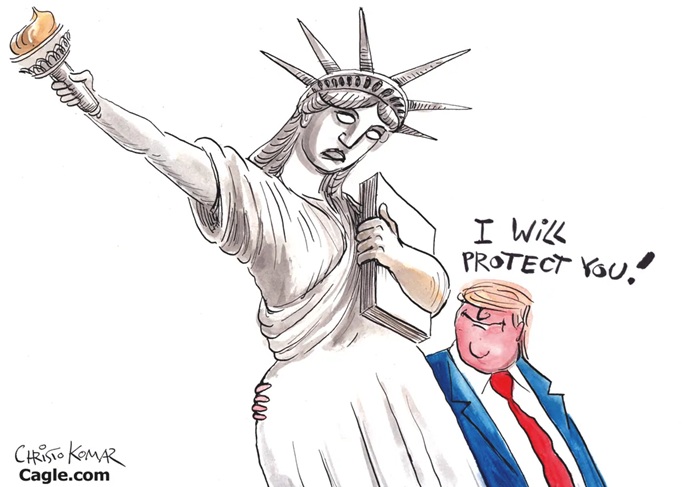
Focusing on Noem and Bondi, however, misses the larger point. This first year of Trump 2.0 has seen women, one after another, summarily gone from their posts (some fired, some resigning) as part of a larger DEI purge. As I pointed out in a TomDispatch piece in January, the military has led the way with a full-scale attack on women. And that trend started on the administration’s very first day in office when Trump removed Linda Fagan, the first female commandant of the Coast Guard.
Fagan was, in fact, the first woman ever to serve as a military service chief and, among other things, she had exposed “Operation Fouled Anchor,” a previously covered-up investigation into sexual harassment and assault in the Coast Guard. Admiral Lisa Franchetti, the first woman to lead the Navy, was fired as well. Both have now — no surprise — been replaced by men.
Women Leaders and Trump 2.0
Karen J. Greenberg Tom Dispatch, May 10, 2026, https://tomdispatch.com/now-you-see-them-now-you-dont/
It’s been a tough couple of months for women officials in Washington — or, more accurately, in Trumpland. In early March (Women’s History Month, by the way), in a Truth Social post, the president fired Secretary of Homeland Security Kristi Noem, the second woman ever to hold that title. Weeks later, also in a social media post, he fired Attorney General Pam Bondi, the third woman ever to serve as head of the Department of Justice.
While in the first year of his first presidency, Trump 1.0 had fired numerous officials, this time around, Bondi and Noem, who ran the two largest law enforcement agencies in the country, were the first cabinet officials to be dismissed. Both — no surprise — were replaced by men. And just as I was writing this piece, Trump removed another female cabinet official, Secretary of Labor Lori Chavez-DeRemer. Meanwhile, speculation lingers about the possible firing of a fourth female cabinet member, Director of National Intelligence Tulsi Gabbard, the second woman to hold that job. And whether or not Gabbard is formally dismissed, she has recently been effectively sidelined, as her absence from White House meetings on the war in Iran suggests.
Notably, Noem, Bondi, Chavez-DeRemer, and Gabbard are, of course, all women. As Jasmine Crockett, a Democratic House of Representatives member from Texas, recently tweeted, “Well… first it was Kristi Noem, now it’s Pam Bondi… it would be too much like right that Pete [Hegseth] be next. I see a theme. He [Trump] will throw the incompetent women under the bus a lot faster than the incompetent men.”
Equal Opportunity Failure
Crockett has a point. Pete Hegseth’s leadership at the Department of Defense (now all too appropriately retitled the Department of War) has erased time-honored rules and norms in staggering ways. He has, for instance, drastically reduced media access to the Pentagon, purged employees who disagreed with him, as well as those he deemed to be DEI (diversity, equity, and inclusion) appointees, and is now exerting his leadership in a war against Iran for which the exit strategy seems elusive at best, despite his assurance that, as the Guardian reported, “the U.S. would not get bogged down in the conflict.” The U.S. operation, he insisted, was not a “democracy-building exercise,” adding that ‘this is not Iraq. This is not endless.’”
Hegseth’s behavior has led Arizona Democratic Representative Yassamin Ansari to file articles of impeachment against him on six charges. They include the commission of war crimes, especially the killing of at least 165 people, including many children, at a girls’ primary school in Iran hit by a U.S. missile; negligence with sensitive information; and conducting an unauthorized war without congressional approval. In the Senate, Massachusetts Democrat Elizabeth Warren has followed up with a letter to U.S. Securities and Exchange Commission Chairman Paul Atkins asking for an investigation into whether Hegseth attempted to profit from his financial investments in the run-up to the war in Iran.
Crockett might just as easily have highlighted the wayward behavior of FBI Director Kash Patel, recently exposed in a piece in The Atlantic describing “excessive drinking” that interfered with his job (an article over which Patel immediately filed suit for $250 million in damages), or the trashing of health standards by Health and Human Resources Secretary Robert F. Kennedy, Jr.
But whatever the future of those reprehensible men in cabinet positions, it’s unfortunately difficult to defend either Bondi or Noem for their actions while in office. Like their male counterparts, both defiantly tossed professionalism and decency to the winds. Under Noem, with U.S. Immigration and Customs Enforcement (ICE) leading the way, the Department of Homeland Security (DHS) was weaponized and transformed into President Trump’s version of a homeland militia. It’s hardly a stretch to make the comparison to Hitler’s Brownshirts.
So far, in Trump’s second term in office, ICE has terrorized schools and businesses, while cruelly imprisoning migrants without due process of any sort. It has held children in detention centers under abhorrent conditions, attacked peaceful protesters, and killed citizens on the streets of America. Worse yet, Noem appropriated tens of millions of dollars to cover the costs of a pro-ICE ad featuring herself riding a horse in front of Mount Rushmore saying, “Break Our Laws, We’ll Punish You.” (Nor should we imagine that things will get any better without her.)
Bondi’s ouster followed failures of a different order — namely, her stumbling, wildly inept efforts to fulfill Trump’s agenda. She proved unable even to make the case of Trump pal Jeffrey Epstein go away, while what she had to say when releasing documents related to him led to accusations that her statements were riddled with falsehoods. Meanwhile, prosecutions under her watch of New York State Attorney General Letitia James and former FBI Director James Comey, high-priority items for the president, fell apart.
And when called before Congress to explain herself, her rank lack of civility resembled the behavior of a spoiled teenager berating her teacher, knowing that, since her parents wielded power over the school, she should fear no reprisals. Under Bondi, the sacrosanct mission of the Department of Justice as an agency independent of the White House was summarily tossed aside (as the roof-to-ground-floor Trump banner that hung from its office building demonstrated).
Female Purges
Focusing on Noem and Bondi, however, misses the larger point. This first year of Trump 2.0 has seen women, one after another, summarily gone from their posts (some fired, some resigning) as part of a larger DEI purge. As I pointed out in a TomDispatch piece in January, the military has led the way with a full-scale attack on women. And that trend started on the administration’s very first day in office when Trump removed Linda Fagan, the first female commandant of the Coast Guard.
Fagan was, in fact, the first woman ever to serve as a military service chief and, among other things, she had exposed “Operation Fouled Anchor,” a previously covered-up investigation into sexual harassment and assault in the Coast Guard. Admiral Lisa Franchetti, the first woman to lead the Navy, was fired as well. Both have now — no surprise — been replaced by men. As it stands, there are no longer any four-star women generals in the military. And only this month, we learned that Secretary of War Hegseth had reportedly removed two women from a promotion list to become one-star Army generals.
Outside of the Department of Defense, the resignations or firings of women in leadership positions have abounded across agencies ranging from the National Labor Relations Board to the Federal Trade Commission and the CDC.
This widespread purge of women stands in stark contrast to their presence in office during the Biden years. Under President Joe Biden, women held just under 50% of all cabinet or cabinet-level positions. And let’s not forget Kamala Harris, the first female vice-president in American history. It’s worth noting as well that, under Biden, the Deputy Attorney General and the Deputy Secretary of Defense were both women.
Trump is not unmindful of those statistics. Last year, he boasted about the presence of eight women among his 24 cabinet officers, or a third of his cabinet. As Business Insider reports, he was “thrilled to say that we have more women in our Cabinet than any Republican president in the history of our country.” Following the removal of Noem, Bondi, and Chavez-DeRemer, however, women occupy just over one-fifth of the cabinet positions — admittedly an improvement on his first term when, after two years of resignations and firings, women held only 13% of all cabinet-level positions.)
Project 2025
It’s worth noting that the path to the current backlash against women, including all the purges and punishments we’re now witnessing in real time, didn’t come about by mere happenstance. In the run-up to the 2024 election, the conservative think tank the Heritage Foundation published a Project 2025 report entitled Mandate for Leadership: The Conservative Promise, a 900-plus page blueprint for overhauling the federal bureaucracy. It called for gutting DEI programs, eliminating and reducing the size of any offices that didn’t serve a conservative agenda, and enhancing the powers of the president. Among its many recommendations, Project 2025 touted an anti-female message, including removing “gender equality” language from government websites, emphasizing “family planning,” and recommending limitations on access to contraception and cuts to federal funding for abortions.
Although Trump repeatedly distanced himself from Project 2025, many of its recommended policies have indeed become our new reality, including matters affecting women. In the first months of Trump’s second term, images of women, as well as persons of color and LGBTQ+ individuals, were systematically erased from government websites. So, too, protections for women’s health were tossed to the winds. As the abortion rights group Reproductive Freedom for All has reported, as of January 2026, “53% of [Project 2025’s] policies attacking reproductive freedom are completed or in progress.”
And now, there is a brand-new Heritage Foundation report devoted to the need to counter the declining birth rate and the fragility of the American family. “Saving America by Saving the Family: A Foundation for the Next 20 Years” calls for the restructuring of incentives to promote childbearing and “revive the institution of marriage.” Signaling its message, the report makes the case for privileging marriage and children over career advancement and less traditional family arrangements caused by divorce and single-parenthood. While the report underscores the family roles incumbent upon both men and women, the fact is that reforms aimed at incentivizing childbearing will fall primarily on women, while those aimed at privileging childrearing over career choices would likely fall most heavily on women as well.
MS NOW’s Ali Velshi and “Velshi” Segment Producer Amel Ahmed summed up the report well, pointing out that its overall takeaway is: “the freedoms fought [for] and won by America’s women aren’t progress; they are the problem.”
Of course, in the era of Donald Trump, none of this should come as a surprise, not when you consider the histories of the men who are now running the show: a president who, in addition to once touting the fact that he could “grab them by the pussy,” has been convicted in E. Jean Carroll’s civil suit over accusations of sexual abuse and defamation to the tune of $83.3 million in damages, a decision upheld by an appellate court. And let’s not forget that Trump’s first nominee for Attorney General, Matt Gaetz, withdrew his name from consideration under a cloud of accusations of wrongful behavior, including sexual misconduct. Not to mention the shadow cast by the number of individuals within the current administration whose names are said to appear in the Epstein files. While no formal charges of sexual misconduct have been issued against them, Commerce Secretary Howard Lutnick is reportedly being pressured to resign over his alleged ties to Epstein.
A Future Government Without Women?
It’s hard to predict which women will come under the axe from Trump and crew in the coming months. But the onslaught has understandably led women from both sides of the political spectrum to sound the alarm. Months before she announced her resignation from Congress, former Trump supporter Marjorie Taylor Greene had already expressed her own misgivings about the misogyny of the Republican leaders in Congress.
When Trump rescinded New York Congresswoman Elise Stefanik’s nomination to be the U.S. Representative to the United Nations and replaced her with Michael Waltz (who had embarrassed himself by adding a reporter to a private Signal chat about possible future strikes against the Houthis in Yemen), Greene saw it as a sign of a general trend of sidelining women. She summed it up as a case where Stefanik “gets shafted,” while Waltz “gets rewarded.” For Greene, it was proof of an overwhelming Trump administration mood of: “She’s a woman, so it was OK to do that to her somehow.”
Greene’s dissatisfaction wasn’t just over Stefanik but over the general trend that has led to only one Republican woman chairing a committee in Congress. Notably, alongside Greene, Republican representatives Nancy Mace and Laurent Boebert signed a petition pressuring the Department of Justice to release information on the Epstein files.
The signs are everywhere. Expectations are disappearing that women will hold leadership positions inside the Trump administration or in the halls of Congress (unless the Democrats win decisively in November). If you didn’t realize it before, you really can’t hide from it now. The attack on diversity in government has become pervasive and (at least as yet) is undeterred, targeting with abandon females, as well as people of color, immigrants, and critics of the president. In other words, the fate of women leaders should provide us with an insight, however dispiriting, into just how quickly the values and assumptions that guided this nation’s progress in matters of race, gender, and ethnicity for decades have disappeared.
What once amounted to progress is indeed now seen as the problem. Nowhere is this more apparent than in the exorcising of women from the halls of government.
Karen J. Greenberg is a future studies fellow at New America, a non-resident research fellow at the NYU Reiss Center for Law and Security, and co-host of the SpyTalk podcast. She is the author of many books, including Subtle Tools: The Dismantling of American Democracy from the War on Terror to Donald Trump.
1 This Month
10 June – Assessing Canada’s Investments in Small Modular Nuclear Reactors – https://zoom.us/meeting/register/IiqHA5feRhaEBycOLNTJlA#/registration


Cuba Is Not a Failed State – It Is a Besieged State
PETITION: “Global Appeal to Endorse Palestinian Right of Return of Refugees”
To see nuclear-related stories in greater depth and intensity – go to https://nuclearinformation.wordpress.com
-
Archives
- June 2026 (89)
- May 2026 (306)
- April 2026 (356)
- March 2026 (251)
- February 2026 (268)
- January 2026 (308)
- December 2025 (358)
- November 2025 (359)
- October 2025 (376)
- September 2025 (257)
- August 2025 (319)
- July 2025 (230)
-
Categories
- 1
- 1 NUCLEAR ISSUES
- business and costs
- climate change
- culture and arts
- ENERGY
- environment
- health
- history
- indigenous issues
- Legal
- marketing of nuclear
- media
- opposition to nuclear
- PERSONAL STORIES
- politics
- politics international
- Religion and ethics
- safety
- secrets,lies and civil liberties
- spinbuster
- technology
- Uranium
- wastes
- weapons and war
- Women
- 2 WORLD
- ACTION
- AFRICA
- Atrocities
- AUSTRALIA
- Christina's notes
- Christina's themes
- culture and arts
- Events
- Fuk 2022
- Fuk 2023
- Fukushima 2017
- Fukushima 2018
- fukushima 2019
- Fukushima 2020
- Fukushima 2021
- general
- global warming
- Humour (God we need it)
- Nuclear
- RARE EARTHS
- Reference
- resources – print
- Resources -audiovicual
- Weekly Newsletter
- World
- World Nuclear
- YouTube
-
RSS
Entries RSS
Comments RSS
 nuclear-news