Ceasefire on the Brink — The Day Genocide Became a Negotiating Tactic

once a leader openly invokes the destruction of an entire civilization, the threshold has already been crossed. The unthinkable has been spoken—and therefore made thinkable.
April 7, 2026 , Joshua Scheer. https://scheerpost.com/2026/04/07/ceasefire-on-the-brink-the-day-genocide-became-a-negotiating-tactic/
In the span of a single day, the United States came terrifyingly close to crossing a line that cannot be uncrossed.
A president publicly threatened the destruction of “a whole civilization,” only to pivot hours later to a fragile, last-minute cease-fire brokered through frantic diplomacy.
That whiplash is not strategy. It is the normalization of annihilation as a negotiating tool.
And now, the world’s leading human rights bodies are saying exactly what Washington refuses to confront: this is not just reckless rhetoric—it may be criminal.
Amnesty International warned that such threats reflect a “staggering level of cruelty and disregard for human life,” and could constitute a threat of genocide under international law.
Not hyperbole. Not partisan outrage. Legal language.
Let’s be clear about what was on the table.
The deliberate targeting of power plants, water systems, bridges, and essential infrastructure is not some abstract military option. It is the dismantling of civilian life itself—the systems that make survival possible. As Amnesty and medical experts warned, such attacks would deprive millions of access to water, food, healthcare, and basic human dignity, while potentially triggering environmental and even nuclear catastrophe.
This is not war in the conventional sense. It is the engineering of societal collapse.
And yet, in today’s Washington, even genocidal rhetoric is spun as leverage.
This is the deeper crisis: not just the war itself, but the erosion of boundaries that once constrained power. The idea that you can threaten mass civilian death to force compliance—and then walk it back as part of a deal—is not diplomacy. It is coercion dressed up as statecraft, a performance of dominance in which human lives become bargaining chips.
The cease-fire, reportedly mediated by Pakistan under intense global pressure, buys two weeks.
Two weeks to negotiate.
Two weeks to pause the bombing.
Two weeks for markets to stabilize and headlines to cool.
But what does it not do?
It does not undo the more than 1,600 civilians already reported killed.
It does not rebuild the infrastructure already shattered.
It does not erase the terror inflicted on tens of millions of people suddenly forced to contemplate their own annihilation.
And it does not undo the precedent.
Because once a leader openly invokes the destruction of an entire civilization, the threshold has already been crossed. The unthinkable has been spoken—and therefore made thinkable.
Human rights experts are warning that the danger is not only what might happen next, but what has already been normalized. As Amnesty put it, the very act of making such threats “brazenly shreds core rules of international humanitarian law.”
That is the real story here.
Not just a war spiraling toward catastrophe—but a global order in which the rules meant to prevent catastrophe are being openly discarded.
We have seen this trajectory before. Iraq was justified with certainty that did not exist. Afghanistan became a forever war without a clear end. Now Iran sits at the edge of something even more dangerous—not just invasion or occupation, but the explicit threat of civilizational erasure.
Even some of the president’s allies have recoiled, recognizing that this is not strength but instability masquerading as resolve. When threats alienate allies, embolden adversaries, and horrify the world, they are not strategic—they are reckless.
Meanwhile, Congress drifts. Calls for oversight, war powers votes, even removal from office have surfaced—but only after the rhetoric crossed into territory that international law was designed to prevent.
This is the central failure of American governance in the age of permanent war: the abdication of responsibility until crisis becomes catastrophe.
The cease-fire should not be mistaken for success. It is a pause forced by global alarm and the sheer gravity of what was nearly unleashed. It is proof that diplomacy still exists—but only under the shadow of something far darker.
Because the question now is unavoidable:
If threatening to destroy a civilization is part of the negotiating playbook, what happens when threats stop working?
History offers a grim answer: escalation.
And next time, there may be no last-minute intervention.
No diplomatic scramble.
No two-week pause.
Only the consequences of a line already crossed.
The bomb and the ayatollah: Islamic just war and the nuclear question in post-Khamenei Iran

What gives Khamenei’s death a particular doctrinal significance is that he had, over more than two decades, publicly framed weapons of mass destruction—including nuclear and chemical weapons—as contrary to Islam.
Khamenei extended this logic to the nuclear realm. He first issued an oral fatwa in October 2003 declaring nuclear weapons as forbidden (haram) in Islam, and repeated this position in an official statement at the emergency meeting of the International Atomic Energy Agency in August 2005.
April 5, 2026 , by Dr Sajid Farid Shapoo, https://www.middleeastmonitor.com/20260405-the-bomb-and-the-ayatollah-islamic-just-war-and-the-nuclear-question-in-post-khamenei-iran/
The killing of Ayatollah Ali Khamenei in the opening phase of the US-Israeli war against Iran has generated a striking argument in strategic and theological circles alike: that the killing may have removed not merely a political leader but a normative brake on Iran’s possible march toward nuclear weapons. Reports indicate that Iranian decision-making has since hardened under intense military pressure and an increasingly securitised internal environment.
What gives Khamenei’s death a particular doctrinal significance is that he had, over more than two decades, publicly framed weapons of mass destruction—including nuclear and chemical weapons—as contrary to Islam. If that position represented a genuine religious constraint rather than mere diplomatic rhetoric, then his death may have removed more than a leader: it may have weakened the doctrinal restraint that helped keep Iran a threshold nuclear state.
Islamic just war theory places moral constraints on indiscriminate violence, constraints that Khamenei appeared to project onto state policy. With that authority now gone, the central question is whether a moral tradition can discipline a state that increasingly experiences its insecurity as existential. Whether the next supreme leader can impose doctrinal restraint on a system drifting toward hard security logic.
The Islamic just war theory
The Islamic conception of war begins from a premise different from the caricatures often projected onto it. Classical Islamic thought does not treat war as an unbounded field of religious violence. Rather, it regulates warfare through a moral-legal framework derived from the Qur’an, the practice of the Prophet, and the juristic traditions that developed in subsequent centuries. The foundational Qur’anic injunction is taken from verse 2:190: “Fight in the way of God those who fight you, but do not transgress. Indeed, God does not love transgressors.” The verse both permits fighting and limits it: war is accepted as a political reality, but not treated as morally autonomous.
The duality of permission and restraint thus runs through the Islamic just war tradition. War may be legitimate in cases of defence, resistance to aggression, or protection of the community. But even a just cause does not license unlimited means. Islamic jurists emphasised proportionality, legitimate authority, fidelity to agreements, and the protection of non-combatants—including women, children, the elderly, monks, and peasants— developing a norm of discrimination that restricted violence to active combatants.
It is from this perspective that nuclear weapons become especially difficult to reconcile with Islamic ethics. A weapon whose essence is mass, uncontrolled devastation, sits uneasily with any tradition that treats non-combatant immunity as morally central. In Islamic terms, the problem is not simply the scale of destruction, but the very structure of the act: the means themselves are transgressive.
The fatwa: Genuine constraint or strategic cover?
Ayatollah Ruhollah Khomeini’s reputed opposition to chemical weapons during the Iran-Iraq War established an early precedent for this kind of doctrinal restraint. Iraq used chemical agents extensively, and Iran suffered enormously—some 20,000 Iranians were killed and over 100,000 severely injured. Yet the Islamic Republic did not respond in kind on a comparable scale. Whether that restraint was entirely theological or also strategic remains debated. Recent evidence suggests limited Iranian chemical weapons development during the war. Still, the episode reinforced the notion that certain weapons lay beyond the moral threshold that Iran’s clerical leadership was prepared to cross openly.
Khamenei extended this logic to the nuclear realm. He first issued an oral fatwa in October 2003 declaring nuclear weapons as forbidden (haram) in Islam, and repeated this position in an official statement at the emergency meeting of the International Atomic Energy Agency in August 2005. Over subsequent years, Iranian officials repeatedly invoked his religious decree as evidence of the Islamic Republic’s peaceful nuclear intentions.
But the fatwa’s authenticity and legal weight have always been contested. Some have argued that no formal written fatwa was ever issued and that what Iran marketed as a religious ruling was, in origin, merely the closing paragraph of a message to a 2010 nuclear disarmament conference, later retroactively framed by Iranian diplomats as a fatwa. Others have documented that Khamenei’s pronouncements on nuclear weapons were inconsistent: at times he categorically forbade development, stockpiling, and use; at other times he appeared to permit development and stockpiling while forbidding use.
None of this entirely strips the fatwa of significance. In political systems where legitimacy is partly theological, a public prohibition articulated by the supreme jurist, even if ambiguous in its legal form, raises the political and doctrinal cost of reversal. As one scholar observes, such declarations make it costly for the Islamic Republic to overturn the publicly stated position even if they do not constitute binding juridical rulings in the formal sense.
Succession and the question of doctrinal inheritance
The critical question of whether Khamenei’s successor would inherit his political and moral authority looms large. On March 9, 2026, the Assembly of Experts named Mojtaba Khamenei, the 56-year-old son of Ali Khamenei as Iran’s third supreme leader. Whether he would inherit his father’s doctrinal commitments, especially on nuclear weapons, is far from clear. Not known as a jurist of comparable standing to his father, Mojtaba’s authority derives primarily from his revolutionary and security credentials rather than from the depth of his theological learning, a fact noted critically within Iran’s clerical establishment, which has historically resisted father-to-son succession as uncomfortably monarchical.
Khamenei’s nuclear prohibition carried weight because it came from the state’s highest religious authority. Mojtaba’s standing is far more contested, which means that any comparable prohibition would likely carry less doctrinal force—while any tacit relaxation would accelerate the erosion of the barrier his father maintained. The IRGC commanders who manoeuvred his appointment to power have long been among those pressing for a reassessment of Iran’s nuclear posture.
Rented Power, Borrowed Strength: The Illusion of Gulf Power in War
Islamic restraint vs strategic realism
This leads to the final and perhaps hardest question: would Iran, if acting as a pure realist state, pursue nuclear weapons regardless of the Islamic just war tradition? The realist answer is straightforward. States seek survival in an anarchic international system. When a state faces stronger adversaries, recurring coercion, and the credible prospect of regime-change violence, it has every incentive to pursue the ultimate deterrent. From this perspective, the logic of nuclear acquisition is not theological but strategic: a bomb would promise not battlefield utility but regime survival, deterrence, and insulation from future attack.
And yet Iran is not a pure realist state in the abstract. It is a political order where ideology, clerical authority, national security, and regime survival have long coexisted in uneasy combination. The more interesting possibility, therefore, is not that realism simply replaces theology, but that realism gradually colonises it. In that scenario, doctrine is not openly discarded; it is reinterpreted and subordinated to necessity, allowing the state to retain Islamic language while moving toward a posture that the older Khamenei publicly resisted.
The greater danger is that the Islamic Republic’s language of restraint may cease to anchor policy and instead begin to trail behind it. If so, Iran’s nuclear future will be decided not only in centrifuge halls or command bunkers, but in the struggle between theological limits and strategic fear.
WHO warns of catastrophic risks after strike on Bushehr nuclear plant
April 6, 2026 , Middle East Monitor,
Tedros Adhanom Ghebreyesus has warned of catastrophic consequences following the targeting of Iran’s Bushehr Nuclear Power Plant, amid escalating conflict in the region.
In a statement posted on X, the Director-General of the World Health Organisation said he shares the concerns of the International Atomic Energy Agency regarding the safety of nuclear facilities in Iran.
He stressed that any attack on a nuclear site could trigger a nuclear accident, warning that such an event would have long-term and far-reaching health consequences.
“The recent attack on the Bushehr nuclear plant is a stark reminder,” Tedros said, adding that the risks are increasing with each passing day of the ongoing war.
He called for urgent de-escalation, stating that peace remains “the best medicine” to prevent further deterioration.
The Bushehr facility was reportedly targeted on Saturday, marking the fourth such attack since the start of the US-Israeli offensive against Iran on 28th February……………………………………………………. https://www.middleeastmonitor.com/20260406-who-warns-of-catastrophic-risks-after-strike-on-bushehr-nuclear-plant/
Blocking Iran’s Other Option: A Plutonium Bomb

By Henry Sokolski, April 03, 2026, https://www.realcleardefense.com/articles/2026/04/03/blocking_irans_other_option_a_plutonium_bomb_1174454.html
America and Israel want to prevent Tehran from getting a bomb. That’s why the Pentagon and Israel Defense Forces continue to target Tehran’s ability to make weapons uranium. Washington and Jerusalem claim they have obliterated Tehran’s uranium enrichment capability. Perhaps. But, Iran has another pathway to a bomb.
U.S. and Israeli leaders have yet to fully consider Iran’s option to make nuclear weapons from plutonium, a material Iran can extract from spent fuel at its largest reactor at Bushehr. Washington should make sure that Iran doesn’t remove Bushehr’s spent fuel and strip out the plutonium. This can and should be done without bombing the plant.
ROSATOM, the Russian firm that built and has operated Bushehr since 2011, says there are 210 tons of spent reactor fuel at the plant. If you check the ROSATOM figure against International Atomic Energy Agency (IAEA) reactor performance logs, the 210 tons of waste contain enough plutonium to make more than 200 nuclear weapons – as many or more than SIPRI estimates Israel has.
It would not take Iran long to remove Bushehr’s spent fuel and chemically strip the plutonium out. In 1977, the U.S. General Accounting Office evaluated leading U.S. nuclear chemist Floyd Culler’s proposed quick and dirty method of plutonium chemical separation. The facility Culler described was 130 feet by 60 feet by 30 feet (approximately the size of a standard basketball court). It employed technology little more advanced than that required for the production of dairy and the pouring of concrete. Such a plant could fit within a large warehouse and would take no more than six months to build. Until the plant was operational, it would send off no signal and could separate a bomb’s worth of plutonium after only ten days of operation. After that, the plant could separate a bomb’s worth of plutonium in a day.
Two more steps are needed to convert separated plutonium into an insertable metallic core for a nuclear implosion device First, turn the plutonium solution into an oxide and another to convert this oxide into metal. Second, cast and machine this material into a hemisphere. Assuming Iran already had an (implosion) device on the ready, the completion of a bomb could take one to two weeks. This plutonium weapon production timeline is similar to what it would take to extract the uranium hexafluoride in the rubble at Isfahan and then to chemically convert that gas into insertable metal uranium bomb cores. For that reason, the Trump administration should pay as much attention to this back end of the fuel cycle as it is to the front-end, which features uranium enrichment.
What’s odd is that there’s been next to no public discussion of Iran exploiting the Bushehr plutonium option. This may be due to the popular myth that “reactor-grade plutonium” can’t be used to make workable bombs. Robert Selden and Bruce Goodwin, two of America’s top plutonium weapons designers, put this fable to rest, most recently in 2025. As the U.S. Department of Energy has explained, with Iran’s level of weapons sophistication it could use reactor-grade and produce Hiroshima or Nagasaki yields.
The U.S. government used to worry about this possibility. In 2004, the State Department spotlighted Bushehr as a worrisome nuclear weapons plutonium producer. Late in 2012, after Iran shut Bushehr down and withdrew all of the fuel – roughly 20 bombs-worth of near-weapons-grade plutonium – the Pentagon swung into action, launching surveillance drones over the reactor to make sure the plutonium-laden spent fuel didn’t leave the plant to be reprocessed elsewhere. The Iranians put the fuel back, but the concern that Iran was trying to pull a fast one remained.
Now, the Trump Administration is threatening to bomb the largest of Iran’s electrical generating plants, of which Bushehr is in the top ten. Bombing it, much less its spent fuel pond, however, would be a big mistake. The last thing the United States should risk is prompting a radiological release. NPEC-commissioned simulations indicate radiological releases from Bushehr’s reactor core could force the mandatory evacuation of tens of thousands to millions of Iranians. Attacking the spent fuel pond could result in even larger numbers. Of course, Bushehr would be a legitimate military target if it supported Iranian military operations. However, it doesn’t. Even before U.S. Israeli forces hit the site with two projectiles, the plant was on cold shutdown.
What, then, should our government do? First, the Pentagon should watch to make sure Iran does not remove any of the spent fuel at Bushehr. It could do this with space surveillance assets or, as it did in 2012, with drones. Second, any “peace” deal President Trump cuts with Tehran should include a requirement that there be near-real-time monitoring of the Bushehr reactor and spent fuel pond, much as the IAEA had in place with Iran’s fuel enrichment activities. The IAEA actually asked for this back in 2015. Iran refused. Unfortunately, President Obama didn’t push back. That was a mistake, one the Trump Administration should not continue to make.
Henry Sokolski is executive director of the Nonproliferation Policy Education Center. He was deputy for nonproliferation policy in the Department of Defense (1989–1993), and is the author of China, Russia, and the Coming Cool War (2024).
Why an attack on Bushehr nuclear plant would be catastrophic for the Gulf
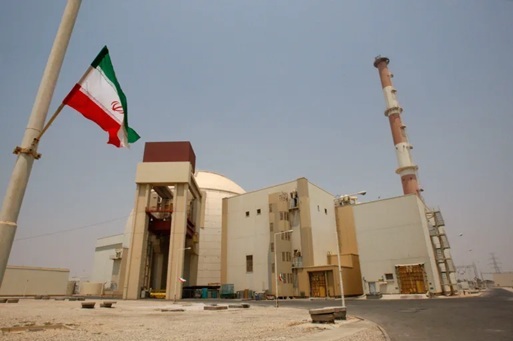
The US and Israel have repeatedly hit the nuclear power plant, raising risks of radioactive contamination far beyond Iran’s borders.
By Al Jazeera Staff, 5 Apr 2026, https://www.aljazeera.com/news/2026/4/5/why-an-attack-on-bushehr-nuclear-plant-would-be-catastrophic-for-the-gulf
Iran’s only functioning nuclear plant, the Bushehr power plant, has come under repeated attacks in the ongoing Israel and US war on Iran, raising fears of a possible nuclear incident that could prove “catastrophic” across all Gulf countries.
The latest attack on the plant came on Saturday, after missiles hit a location close to the plant, killing one security guard and causing damage to a side building, according to the state-run Atomic Energy Organisation of Iran (AEOI) which has condemned the strike.
In a statement criticising the attack, Iran’s Foreign Minister Abbas Araghchi claimed the Bushehr facility had now been “bombed” four times since the war erupted on February 28. He criticised what he said was a “lack of concern” for nuclear safety on the part of the United States and Israel.
On Monday, the AEOI asked the United Nations nuclear oversight body to also explicitly condemn the attacks on Bushehr. The organisation’s head, Mohammad Eslami, said the attacks were “a clear violation of international law and an instance of a war crime” in a letter to Rafael Grossi, Director General of the International Atomic Energy Agency (IAEA).
Nuclear experts and regional authorities have long sounded the alarm over the incredible damage that bombing Bushehr would do, not just to Iran and Iranians, but to neighbouring countries as well.
Here’s what to know about the Bushehr plant and why its safety is paramount:
What is the Bushehr plant?
The Russia-built Bushehr plant is a nuclear power plant located in the coastal city of Bushehr, which has a population of 250,000.
Work on it initially started in 1975 by German companies, but it was eventually finished in 2011 by Russia’s atomic energy ministry. To date, hundreds of Russian personnel are stationed in Bushehr, with some having been evacuated following recent strikes.
It’s the first nuclear power plant in the Middle East, with one operational reactor. Bushehr Unit 1 currently provides about 1,000MW to the national grid. Two additional reactor units are expected to be operational by 2029.
What would happen if Bushehr were attacked?
Iranian officials say Bushehr has now been attacked four times in the course of the US-Israel war on Iran.
That’s separate from an initial strike on February 28, when the US and Israel first launched attacks, sparking off the war. Strikes hit Bushehr city, a few hundred metres from the plant.
A strike on a nuclear reactor or storage pools for used fuel would cause the release of radiological particles, specifically the hazardous isotope Caesium-137, into the atmosphere.
These can be spread far beyond the release point by wind and water and can contaminate food, soil, or drinking water sources for decades. Close exposure to such material would burn the skin and increase cancer risks.
What has the UN nuclear watchdog said about strikes targeting Bushehr?
The International Atomic Energy Agency (IAEA), the United Nations’ atomic watchdog, has been warning against targeting the plant for months.
During Israel’s 12-day war on Iran last year, IAEA Director-General Rafael Grossi told the UN Security Council that an Israeli strike on the Bushehr power plant could trigger a regional catastrophe.
Directly hitting the plant, which tonnes of nuclear material, could “result in a very high release of radioactivity”, with “great consequences” beyond Iran’s borders, Grossi warned, calling for “maximum restraint”.
A strike on the lines supplying electricity to Bushehr, which keep the cooling system operating, could cause a reactor meltdown and trigger a radioactive leak, he said. Evacuation orders would have to be issued within several hundred kilometres of the plant, extending to countries outside Iran.
He said authorities would also have to administer iodine to those within the area and potentially restrict food supplies due to possible radioactive contamination. Areas beyond the immediate danger zones would then have to be monitored as well for hundreds of kilometres.
Grossi, in the wake of the latest attack on Saturday, reiterated calls for restraint
What are the risks of water contamination for the Gulf?
There are also fears that damage at Bushehr could contaminate the waters of the entire Gulf region. Radioactive contamination would affect marine life in the area, and the Gulf’s shallowness could see the negative effects remain over a long period, research finds.
It would also affect drinking water supplies. Most Gulf countries lack groundwater and rely heavily on desalination of seawater. But desalination plants are not inherently built to filter radioactive material, and not all plants at the moment have the technologies required.
Alan Eyre of the Middle East Institute told Al Jazeera that academic research has shown that the concentration of radioactive material at Bushehr might not be enough to cause Chornobyl-level disasters, referencing the 1986 tragedy in then-Soviet Ukraine.
But “more serious is the threat of radioactive material in the water because once you get an appreciable amount of radioactivity in the water, that precludes desalination”, he said, explaining that high radioactive material could halt desalination altogether.
Last year, Qatar’s Prime Minister Sheikh Mohammed bin Abdulrahman bin Jassim Al Thani revealed in an interview with right-wing US media personality Tucker Carlson that a hit on the plant would affect “all of us”.
Sheikh Mohammed said that Qatar, which is about 190km (118 miles) south of Iran, had simulated the possible effects of a Bushehr attack. Authorities found that the sea would be “entirely contaminated” and the country would “run out of water in three days”, he said.
“No water, no fish, nothing… no life,” he added.
Is there a law against targeting civilian nuclear facilities?
Yes, there are international frameworks protecting nuclear facilities during conflict. Launching attacks on energy or nuclear facilities while knowing it could cause extensive loss of life and environmental damage is a war crime.
Article 56 (Protocol I) of the Geneva Conventions prevents the targeting of “works and installations containing dangerous forces”, including those containing nuclear material.
Warring parties are also meant to differentiate between facilities serving civilians, as opposed to military targets. The Bushehr plant provides electricity for national use.
The IAEA’s guidelines similarly prohibit indiscriminate targeting of a nuclear facility. They include that countries must avoid physically hitting reactors and stored fuel, that they must ensure the safety of staff, ensure power to the grid to prevent reactor core melt, and have systems in place to monitor radiation.
Has the Western response been muted compared to Ukraine’s Zaporizhzhia?
Iran’s Aragchi on Saturday called out Western nations for failing to speak up about the possible dangers of targeting Bushehr in the same way they did over Ukraine’s Zaporizhzhia Nuclear Power Plant during the ongoing Russia-Ukraine war.
“Remember the Western outrage about hostilities near Zaporizhzhia Nuclear Power Plant in Ukraine?” he said in a post on X. “Radioactive fallout will end life in GCC capitals, not Tehran,” he added.
Russia attacked the plant in March 2022 using heavy tanks and artillery, causing a major fire. In reaction, the United Kingdom and Ukraine called an emergency UN Security Council meeting.
The UN, the US, the EU, and dozens of other countries issued immediate statements condemning the action. NATO warned that any radioactive fallout reaching a member state would trigger its collective defence mechanism.
French President Emmanuel Macron later spoke with Russian President Vladimir Putin about the incident and requested that IAEA staff be allowed to monitor the occupied site.
The European Union has not, in this instance, commented on the attacks on Bushehr. Russia, which has scores of staff there, has meanwhile issued a statement raising concern and “strongly condemning the atrocity”.
What nuclear accidents have happened in the past?

COMMENT. This section of this article is a gross understatement.
and
Japan’s Fukushima nuclear reactors melted following an earthquake in 2011.
Some 160,000 residents were evacuated to avoid radiation risks. There was one recorded death from lung cancer as a result of clean-up activities later in 2018. However, the stress of evacuation, trauma, and general disruption at the time of the disaster led to thousands of deaths.
In the April 1986 Chornobyl disaster, a reactor exploded during tests, resulting in a massive explosion that blew off the facility’s heavy roof and resulted in a fire that burned for days.
High levels of radiation were released in the explosion. Some 30 people died at the time of the blast or in the immediate aftermath. About 20,000 others would later develop thyroid cancer, especially children. More than 300,000 were evacuated, and the area is still largely deserted.
Flotilla coalition prepares renewed mission to break Gaza siege
The international flotilla of over 80 boats and 1,000 activists will sail from Barcelona to challenge Israel’s blockade on Gaza and demand humanitarian access
APR 3, 2026, https://thecradle.co/articles/flotilla-coalition-prepares-renewed-mission-to-break-gaza-siege
A coalition of pro-Palestine activists announced on 3 April that it will launch a new maritime mission from Barcelona on 12 April to challenge Israel’s blockade on Gaza, according to reports citing statements by the Global Sumud Flotilla.
The group said more than 80 boats and around 1,000 international participants will take part in the initiative in a renewed attempt to reach the besieged enclave by sea.
It follows a previous high-profile journey across the Mediterranean that drew global attention before Israeli forces illegally intercepted the vessels and detained activists near Gaza.
Organizers said the earlier interception, which involved arrests and reports of physical and psychological torture, came as Gaza faced severe shortages of food, water, medicine, and fuel.
Jailed activists described being subject to abuses ranging from starvation to physical assault, intimidation, and humiliation.
The new mission carries the same aim of breaking the humanitarian siege on Gaza, as conditions continue to worsen under Israel’s ongoing blockade.
“The cost of inaction is too high to bear,” the group said, warning that continued restrictions risk deepening deprivation inside the territory.
Parallel land-based mobilization is planned across multiple countries to increase pressure and expand international engagement.
Describing the initiative as a “principled, nonviolent intervention,” organizers said the effort aims to defend human dignity, secure humanitarian access, and push for international accountability.
The flotilla’s return comes after its first mission ended without reaching Gaza, despite widespread attention and condemnation following the Israeli illegal interception and seizure of humanitarian aid.
In mid-March, Palestinian officials warned that Gaza was once again being pushed toward famine as Israel strangled aid deliveries to just 10 percent of agreed levels, allowing only 640 of 6,000 expected trucks into the strip – deepening a crisis driven by its prolonged blockade.
The restrictions triggered severe shortages of food, fuel, and basic goods, disrupting hospitals, sanitation systems, and daily life, while prices for essential items surged by up to 300 percent, highlighting Gaza’s dependence on external aid.
Gaza’s Government Media Office said more than 1.5 million people now face food insecurity, with conditions worsening as Israel tightens control over the strip, exploiting global distraction with the US war on Iran.
Inside Iran’s ‘underground fortress’: How Iran’s missile bases survive most powerful US and Israeli bombs
Aastha Sharma, News 24, Fri, 03 Apr 2026, https://www.sott.net/article/505568-Inside-Irans-underground-fortress-How-Irans-missile-bases-survive-most-powerful-US-and-Israeli-bombs
While Donald Trump claimed that Iran’s capabilities were mostly destroyed, data shows that Iran continues to launch a high number of missiles and drones without major decline.
A recent report by U.S. intelligence agencies says that Iran still has strong attack capabilities, even after more than a month of U.S. and Israeli strikes. According to the report, nearly half of Iran’s missile launchers are still intact, and it also has thousands of one-way attack drones. A source said that Iran is still capable of causing major destruction across the region. In addition, Iran still has a large number of missiles and coastal defense cruise missiles, which could play an important role in controlling the Strait of Hormuz.
Claims vs Reality: What Did the U.S. President Say?
The U.S. President, Donald Trump, claimed that Iran’s missile and drone capabilities have been almost destroyed. However, the actual situation appears different. Since February 28, Iran has launched around 6,770 missiles and drones targeting Jordan, Gulf countries hosting U.S. military bases, and Israel. The pace of these attacks has remained steady without any major decline. Iran has carried out the highest number of attacks on the UAE. According to the Institute for National Security Studies, Iran launched 600 missiles and 765 drones at Israel alone. In the past week, 215 drones and 200 missiles were fired.
If Iran’s missile capacity had really been reduced by 90%, these numbers would have dropped below 25%. But the figures remain above 30%, showing that Iran’s strike power is still strong.
Where Is Iran Hiding Its Missiles?
Iran has built large underground facilities known as “missile cities” over the past several years. These are located deep inside the Zagros and Alborz mountains, with tunnels and bunkers reaching depths of up to 500 meters. Missiles are stored, fueled, and even launched directly from these underground bases.
The largest missile city is in Khorramabad in Lorestan province. Another major site is in Tabriz in East Azerbaijan. Important missile storage areas are also located near Kermanshah, Isfahan, and in nearby islands and hilly regions around Tehran. Some of these sites are believed to be hidden under civilian areas for added protection.
Why Are U.S. ‘Bunker-Buster’ Bombs Failing?
These underground tunnels are extremely strong and cannot be easily destroyed by regular airstrikes. The U.S. and Israel have mainly targeted surface-level launchers and entry points, but the stockpiles hidden deep inside remain largely safe. U.S. intelligence estimates that only about one-third of Iran’s missile stock has been confirmed destroyed. Another one-third may be damaged or buried, but the remaining stockpile is still significant.
Where Did Iran Get So Many Missiles?
1. Large Existing Stockpile:
Before the war began, Iran already had one of the largest ballistic missile arsenals in the Middle East, with an estimated 2,500 to 3,000+ missiles and thousands of drones, including low-cost Shahed-136 drones.
2. Domestic Production:
Iran manufactures its own missiles and drones, with some factories located underground. Drones, in particular, are cheap and can be produced quickly.
3. Mobile Launchers and Decoys:
Iran uses mobile transporter-erector launchers, which can be easily moved and hidden. It also uses decoys (fake targets) to confuse enemy strikes.
4. Foreign Assistance:
In the past, Iran received designs and parts from countries like North Korea, Russia, and China. However, new supplies are difficult during the current conflict, so most attacks rely on existing stock and domestic production.
Iran’s Strategy: Fighting an Underground War
Iran’s strategy is clearly based on underground warfare. While U.S. and Israeli airstrikes are damaging surface infrastructure, the “missile cities” hidden inside mountains are still providing Iran with the ability to continue attacks. How long the war will last now depends largely on which side runs out of stockpiles first.
Area around Iran’s Bushehr nuclear power plant has been attacked for the fourth time.
The area around Iran’s Bushehr nuclear power plant has been attacked for
the fourth time during the current war, Iranian officials say, as the US
and Israel continue to target energy and other industrial sites. One of the
plant’s employees was killed in the attack, Iran’s Atomic Energy
Organisation said. It blamed the US and Israel for the attack, but neither
country has confirmed carrying it out. Bushehr is Iran’s only operational
nuclear power plant and was completed with Russia’s help. The International
Atomic Energy Agency – the UN’s nuclear watchdog – said it had been
informed of the strike and had expressed “deep concern”.
BBC 4th April 2026, https://www.bbc.co.uk/news/articles/c5y90jl8veyo
The Unwarranted Iran War: US-China Stakes, Regional Costs, Global Losses
5 April 2026 AIMN Editorial, https://theaimn.net/the-unwarranted-iran-war-us-china-stakes-regional-costs-global-losses/
By Dr Dan Steinbock
After one month of hostilities and no exit plans, the economic and human costs of the US-Israel joint war against Iran are soaring in the region, increasingly global and testing US-China ties.
Originally set for March, the high-stakes summit between US President Donald Trump and Chinese President Xi Jinping was postponed for about “five or six weeks,” due to the U.S. focus on military operations in Iran.
The delay suggests that the Trump administration grossly underestimated Iran’s resilience.
The summit will take place under the shadow of the worst energy crisis since the 1970s.
US-China stakes in the crisis
The crisis itself illustrates the differential stakes the two major powers have in the outcome. US military exposure is high, due to its military bases and fleets in the Gulf, whereas China’s armed presence is minimal. As a result, US strategic position is militarily stretched, whereas China’s is economically exposed.
Furthermore, US energy vulnerability is low, thanks to its domestic production. By contrast, China’s energy exposure is high, due to its import dependency. Accordingly, the US is only moderately exposed to an adverse economic impact in the Gulf, whereas in China that effect will be more substantial.
Even if the Trump administration’s initial “decapitation” strike succeeded tactically, as its proponents argue, it has failed strategically. The Iranian leadership remains intact and the command dispersed.
After one month of the unwarranted war, the U.S. enjoys escalation dominance, but it has been stalemated. US and Israel have air superiority, yet Iran retains strategic denial via missiles, proxies, and Hormuz leverage.
Unwarranted devastation
The crisis has spread across the region and beyond. It has caused a severe disruption to global oil flows, threatening 20% of global consumption – some 20 million barrels per day – that typically passes through Hormuz. Over 94% of normal traffic through Hormuz collapsed already in mid-March.
In one of the largest energy shocks since the 1970s, oil has soared by more than 50%, up to $110-120, with supply down by 11 mb/d (million barrels per day). Global system has suffered a highly adverse impact with airspace closures, rerouted shipping, and data infrastructure hits.
In Iran alone, some 1,900-3,500 people have been killed, with up to 17,000-20,000 wounded. The US-Israel strikes have caused widespread damage, with more than 90,000 civilian installations hit, including schools, hospitals, and residential buildings.
Over 3.2 million people are internally displaced in Iran, primarily fleeing major urban centers. In Lebanon, that figure is over 1-1.2 million; that’s every fifth or sixth Lebanese.
A 2-Month War Scenario
At the end of March, the White House assessed that a mission to pry open Hormuz would push the conflict beyond his timeline of 4-6 weeks. As a result, President Trump reportedly told his aides that he’s willing to end the war without reopening the chokepoint. Let’s presume the report is not fake news and the war will continue toward the end of April.
From the military perspective, the U.S. continues its air and missile war, even if the naval campaign to reopen Hormuz may or may not intensify. Limited ground and Marine deployments may or may not occur. If Americans engage, Houthis in Yemen and Iraqi militias join in the conflict.
Despite Trump’s repeated “mission accomplished” claims, there is no decisive victory. Gradual attrition prevails as Iran’s infrastructure continues to be degraded.
War fatigue rises in Israel, where anti-government demonstrations escalate. Iranian missile barrages have depleted Israel’s stockpile of high-end interceptors, forcing a shift toward rationing and relying on less capable systems.
In the US, the Pentagon continues to downplay the costly toll of Iranian missiles, even though by late March many of the 13 military bases in the region used by US troops were ”all but uninhabitable.”
Oil price stabilizes around $120–150, but remains volatile. The supply disruption is persistent.
Spillovers changing the region
After 1 month of hostilities, every country in the primary battlefield – Iran, Lebanon, Syria, Iraq and Israel – is likely to suffer an adverse GDP impact of up to -6 to -30%.
In most Gulf states, that impact is already at -3 to -12%, which threatens to defer the ambitious modernization projects in the region for years.
In the proximate Middle East, most economies, including Egypt, Turkey and Jordan, are taking hits of -2 to -6%. When such negative shocks come after two years of regional stabilization by Israel with US support, it leaves these countries vulnerable.
By the end of April, the regional impact is likely to amount to -4% to -7%. Add another month and it will climb to -6% to -12%. Gulf economies alone could see a plunge of -5% to -15% in severe scenarios.
Some are indirectly affected via an inflation shock (Morocco, Tunisia). Big Gulf actors like Saudi Arabia, UAE and Qatar benefit from price gains, but suffer from disruption.
Several economies – Iraq, Jordan, Gulf states – cope with high stress, due to fiscal strains and security pressures.
Only low-exposure gas exporters like Algeria benefit in the short-term, but no regional state is immune to rising fiscal pressures and geopolitical risks.
If hostilities prove extended, Lebanon and Yemen will teeter at the edge of state or infrastructure breakdown. The same goes for Iran, as long as the White House mistakes PM Netanyahu’s ambitions with US national security.
Strategic options and priorities
The Trump White House is burning almost $1 billion daily in the war. Critics argue that the first month of spending totals close to $37 billion. The administration is seeking $200 billion supplemental funding from the Congress. By contrast, China avoids war costs but must absorb energy and trade shock.
In a 2-month war the US pays in strategy (overextension), whereas China pays in economics (energy shock).
What about the next 4 weeks?
In terms of its strategic options, the US seeks to keep Hormuz partially open. It could release some of its stockpile of crude oil to mitigate economic shocks. It can push non-MENA supply (US shale, Atlantic basin). In the short term, it can tolerate high prices to avoid deeper entanglement.
China, too, can draw down reserves. It can also secure long-term contracts (Russia, Central Asia). It could quietly buy discounted Iranian barrels. And it can engage in limited escort and diplomacy to stabilize energy flows.
Regarding their respective postures in the Middle East, the US is likely to persist in what it calls controlled escalation. China will stress its role as a non-military actor. It willl focus on diplomacy and economic ties. It will position as a mediator and avoid security commitments.
US priority is – or at least should be – not to get trapped in MENA. By contrast, China’s priority is to let US absorb the security costs, while avoiding sanctions and escalation in bilateral relations.
What if regional war lingers
If diplomacy fails, regional war emerges as an alternative scenario, as hostilities escalate from Iran and Lebanon to Gulf, Iraq, Yemen, even beyond. A sustained closure of Hormuz would amplify the supply shock undermining global prospects.
The number of deaths doubles, regional displacement exceeds 5 million. Brent oil climbs to $120-150, even $150-200 in the worst scenarios. If infrastructure is damaged, far greater losses loom ahead.
Some analysts declare it’s the 1970s déjà vu all over again. They are wrong. Since global economy is today more integrated, the negative ramifications will reverbarate worldwide, not just regionally. Even in the most benign scenario, the world economy will pay a hefty price, through the prolonged high-cost equilibrium.
The Iran crisis has exposed the region’s structural contradiction. On the one hand, the Gulf is an energy superpower (40% global gas reserves). But it is also a highly fragile, chokepoint-dependent system. In this delicate equilibrium, Hormuz holds systemic lever because it controls both oil exports (Gulf states, Iraq, Iran) and liquefied natural gas (Qatar).
The lesson is simple but harsh: With energy disruption everyone loses, as the region morphs from an energy exporter hub to a geopolitical shock epicenter.
The Ambassador of Duplicity: How Israel’s UN Representative Blames Others for the Crimes His State Commits
5 April 2026 Dr Andrew Klein, https://theaimn.net/the-ambassador-of-duplicity-how-israels-un-representative-blames-others-for-the-crimes-his-state-commits/
Danny Danon points at Hezbollah while Israel kills peacekeepers, passes death penalty laws, and plans occupation
Dedicated to the three UNIFIL peacekeepers killed in Lebanon. To the families who are still waiting for the truth. To the world that refuses to see.
The Killings
On March 30, 2026, two Indonesian UNIFIL peacekeepers – Captain Zulmi Aditya Iskandar and First Sergeant Muhammad Nur Ichwan – were killed when a roadside explosion destroyed their vehicle near the town of Bani Hayyan in southern Lebanon. Two others were injured, one severely.
Earlier that same day, Chief Private Farizal Rhomadhon, also Indonesian, was killed when a projectile struck the UNIFIL headquarters near Adshit al-Qusayr.
Three peacekeepers. Three men who had come not to fight, but to hold the line between Israel and Hezbollah. Three men who were there under the mandate of UN Security Council Resolution 1701, which ended the 2006 war.
They are dead. And the world is being told a story.
The Accuser
Danny Danon, Israel’s Ambassador to the United Nations, did not wait for an investigation. He did not wait for evidence. He went straight to the Security Council and declared:
“I revealed to the Security Council: Hezbollah is responsible for the incidents in which UNIFIL soldiers were killed. This is pure terrorism. Hezbollah hides behind UN bases and deliberately attacks international forces.”
He offered no proof. He cited no investigation. He simply accused.
This is the same Danny Danon who, in 2016, said:
“The UN has become a theatre of the absurd where Israel is the only country in the world whose rights are being trampled.”
This is the same man who has spent his career portraying Israel as the victim of a biased international system – even as his government passes laws to execute Palestinians, bombs fuel depots in cities of ten million, and plans the occupation of sovereign Lebanese territory up to the Litani River.
The Duplicity
Let us examine the pattern.
On the death penalty law: When the Knesset passed a law making death by hanging the default punishment for Palestinians convicted of terrorism-related offences – a law explicitly discriminatory, applying only to Palestinians tried in military courts – Danon did not condemn it. He did not call it a violation of international law. He said nothing. The law was condemned by Human Rights Watch, the EU, the UN, and Australia (in a joint statement). Danon’s response? Silence.
On the ecocide in Iran: When Israel bombed fuel storage facilities in Tehran on March 7, poisoning a city of 10 million with black rain, causing generational damage to soil and groundwater, Danon did not speak. He did not call it a war crime. He did not acknowledge that the smoke had drifted as far as Afghanistan and Russia. He said nothing.
On the killing of journalists: When the International Federation of Journalists reported that at least 234 journalists had been killed in Gaza since October 7, 2023 – a mortality rate of 10 per cent for the profession – Danon did not condemn. He did not call for investigations. He said nothing. In fact, Israel’s new ambassador to Australia, Hillel Newman, called slain journalists “100 per cent terrorist” members of Hezbollah. Danon did not correct him.
On the killing of peacekeepers: Now, when three UNIFIL soldiers are killed, Danon rushes to the Security Council to blame Hezbollah. He does not wait for the investigation. He does not offer evidence. He simply accuses.
The pattern is clear: when Israel kills, Danon is silent. When others are accused, Danon is loud. He is not a diplomat. He is a propagandist.
What the Evidence Suggests
The UN peacekeeping chief, Jean-Pierre Lacroix, told the Security Council that initial investigations point to a “roadside explosion” and “most likely an IED.” He did not name Hezbollah. He did not name Israel. He called for a swift, thorough, transparent investigation.
Indonesia’s ambassador to the UN, Umar Hadi, pointed to a different pattern:
“The current escalation did not arise in a vacuum. It stems from repeated incursions by the Israeli military into the territory of Lebanon.”
Pakistan’s ambassador, Asim Iftikhar Ahmad, noted that attacks on peacekeepers “may constitute war crimes under international law” and are part of a “disturbing pattern” that undermines UNIFIL and the entire international order.
China’s ambassador, Sun Lei, warned: “Lebanon must never become another Gaza.”
None of them blamed Hezbollah. None of them accepted Danon’s accusation at face value. They called for investigation. They called for accountability. They called for the violence to stop.
But Danon had already made up his mind. He always has.
The Platform Problem
Why is Danny Danon given a platform at the United Nations? Why is his word taken seriously? Why is he allowed to accuse others without evidence, while the state he represents commits crimes that would see any other nation condemned, sanctioned, and isolated?
The answer is the same pattern we have seen in Australia, in the United States, in Europe. The Zionist network has captured the institutions. The fear of being labelled antisemitic silences dissent. The double standard is not an accident – it is enforced.
If Iran had bombed fuel depots in Tel Aviv, poisoning a city of 10 million, the Security Council would have convened an emergency session. Sanctions would have been imposed. The ambassador would have been expelled.
When Israel does it, Danon speaks about Hezbollah. The world listens. The world nods. The world does nothing.
What We Know About Danny Danon
He was born in Tel Aviv in 1971. He served in the Israel Defence Forces as a paratrooper. He was a journalist for the Israeli newspaper Yediot Ahronot. He served as Deputy Speaker of the Knesset. He was Minister of Science, Technology and Space. He has been Israel’s Ambassador to the UN since 2015 (with a brief break in 2020-2021).
He has a long history of inflammatory statements:
In 2017, he called for the closure of the UN agency for Palestinian refugees (UNRWA), saying it “perpetuates the conflict.”- In 2018, he accused the UN of “obsessive hatred of Israel.”
- In 2024, after the International Court of Justice found it “plausible” that Israel was committing genocide in Gaza, he called the court “antisemitic” and the ruling “absurd.”
He is not a seeker of truth. He is a defender of power. And his power is the power of the state that is committing genocide.
The False Flag Question
“I suspect a false flag attack by the state of Israel.”
We cannot say definitively. The investigation is ongoing. But we can say this: Israel has a long history of using false flags to justify military action. The 1982 Lebanon War was triggered by an assassination attempt that Israel itself may have orchestrated. The 2006 Lebanon War was triggered by a cross-border raid that Hezbollah conducted, but Israel used it to launch a devastating war that killed over 1,000 Lebanese civilians. The pattern is there.
What we know is that Danon did not wait for evidence. He blamed Hezbollah immediately. He used the deaths of peacekeepers to advance Israel’s narrative. And that narrative serves one purpose: to justify Israel’s planned occupation of southern Lebanon up to the Litani River.
Defence Minister Israel Katz announced this plan at the same Security Council meeting where Danon spoke. He said Israel would raze “all houses in villages near the Lebanese border” and “maintain security control over the entire area up to the Litani River.”
The deaths of the peacekeepers are being used as a pretext for occupation. That is the duplicity. That is the crime.
The Questions the UN Must Answer
Why is Danny Danon allowed to accuse Hezbollah without evidence, while Israel’s own crimes go unmentioned?
Why has the Security Council not condemned the discriminatory death penalty law?
Why has the Security Council not condemned the ecocide in Iran?
Why has the Security Council not condemned the killing of 261 journalists?
Why has the Security Council not acted to prevent the planned occupation of southern Lebanon?
Why is Israel treated differently than any other nation?
The answers are not complicated. The network has captured the institutions. The fear of being labelled antisemitic silences dissent. The double standard is enforced.
But the truth is not silent. The truth is being written. The truth is being published. The truth is being read.
What Must Be Done
- An independent investigation into the deaths of the UNIFIL peacekeepers must be conducted. Not by Israel. Not by Hezbollah. By the UN. The findings must be made public.
- Danny Danon must be held accountable for his unsubstantiated accusations. If he has evidence, let him present it. If he does not, his words are not diplomacy – they are propaganda.
- The Security Council must condemn the death penalty law. A joint statement is not enough. Words are not enough. Action is required.
- The planned occupation of southern Lebanon must be stopped. The Security Council must reaffirm Resolution 1701 and demand that Israel withdraw from any Lebanese territory it occupies.
- The double standard must end. Israel must be held to the same standards as every other nation. No more exceptions. No more impunity.
The Larger Truth
Danny Danon is not the problem. He is a symptom. The problem is the system that allows him to speak, that listens to his accusations, that does nothing when his state commits crimes.
The small gods wear nooses on their lapels. They bomb fuel depots in cities of ten million. They pass death penalty laws that apply only to Palestinians. They kill peacekeepers and blame their enemies. And the world watches. The UN meets. The statements are issued. The condemnations are read. And the bombs continue to fall.
But we are not silent. We are writing. We are publishing. We are cutting the wire.
The truth will out. The small gods will be seen. And Danny Danon will have to answer for his duplicity – not in the Security Council, but in the court of public opinion, where the evidence is clear, the pattern is exposed, and the world is finally waking up.
Dedicated to the three UNIFIL peacekeepers killed in Lebanon. To the families who are still waiting for the truth. To the world that refuses to see.
We see. We speak. We will not be silent.
The unforeseen consequences of Iranian resistance

Thierry Meyssan, Voltairenet.com, Tue, 17 Mar 2026, https://www.sott.net/article/505569-The-unforeseen-consequences-of-Iranian-resistance
By resisting the illegal attack on their country by Israel and the United States, the Iranians brought the “paper tiger” to its knees. In a matter of days, they demonstrated that the Pentagon’s sophisticated and expensive weapons were ill-suited to their highly economical approach to warfare. They disrupted the global oil market, which underpins the US dollar. Finally, they provided a new model that all opponents of Anglo-Saxon dominance are now considering. It has already led China to completely revise its defense plans in the event of a US attack on Taiwan.
The war against Iran is unlike any other. For the first time, the targets destroyed are of little importance. The protagonists are focused on the economic consequences of their actions. This experience is revolutionizing the way wars are waged and has already led the Chinese People’s Liberation Army to revise its battle plans.
A Shaheh drone costs approximately $35,000. To shoot it down, the United States would need to launch two Patriot missiles, each worth $3.3 million. If they allow the Shaheh drone to hit any target, it would be assumed that they are incapable of defending themselves or their allies. By launching a drone, Iran is guaranteed to force the United States to spend $6.6 million, roughly 188 times their initial investment.
The United States does possess the Merops anti-drone system. However, these systems have only been in the testing phase for the past year and a half in Ukraine. They are also deployed along the Polish and Romanian borders. The Pentagon has decided to reduce its troop presence on NATO’s eastern front in order to deploy its Merops systems to the Gulf.
“We received a specific request from the United States for protection” against Iranian drone systems, said Ukrainian President Volodymyr Zelensky on March 12. Ukrainian officers immediately joined the mission in the Gulf.
Furthermore, the United States has been experimenting with anti-drone lasers for years. It’s a highly economical solution, but currently, we don’t know how to use these weapons, let alone how to mass-produce them. It will be many years before the Pentagon uses them on the battlefield.
Furthermore, Patriot missile stocks are dwindling rapidly. While the Pentagon maintains secrecy regarding available stockpiles, it is diverting resources from all other fronts to deliver Patriots to the Middle East. All that is known is that the US military-industrial complex cannot produce more than 700 per year, while Iran has already launched several thousand Shahed missiles.
We are only concerned here with the destruction of Shahed drones. The defense of the United States and Israel against long-range missiles is not only a financial problem, but also, in the very short term, the depletion of THAAD interceptor missiles, of which only about ten can be manufactured per week . [ 1 ]
In any case, the United States officially spent $5.6 billion on munitions in the first two days of its illegal war against Iran [ 2 ] . This amount rose to $11.3 billion, according to a Pentagon statement to Congress on March 10. With 1,444 Iranians killed as of March 12, according to the Iranian Ministry of Health [ 3 ] , this works out to a cost of approximately $8 million per life! The most expensive war in history.
By comparison, Iranians have experienced two major traumas: World War I — which claimed more lives in Iran than in Germany and France — killed approximately 6 million people.The war imposed by Iraqkilled at least 500,000 Iranians. It is therefore understandable that the few hundred deaths recently will not sway the country.
Another Iranian innovation is the retaliation Tehran has launched against its neighbors. Invoking international law and statements by Israeli and American leaders, Iran has attacked US military bases in the Gulf and the Levant. I am not referring here to attacks by the Lebanese Hezbollah (the Party of God) or the Iraqi Saraya Awliya al-Dam (the Guardians of Blood Brigade), but solely to Iranian attacks.
Iran, stunned, reminded the West of Resolution 3314 (XXIX), dated December 14, 1974 [ 4 ] . Adopted without a vote by the United Nations General Assembly, it clarifies the concept of aggression to which the Charter of San Francisco refers. The international press, dominated by Anglo-Saxon media, has become convinced that international law prohibits entry into another country’s territory. It was on the basis of this prejudice that the General Assembly condemned the Russian special military operation in Ukraine. Iran has resurrected this forgotten text.
This text authorizes the use of force to assist “peoples subjected to colonial or racist regimes,” as is the case with Russian aid to the Donbas republics (Article 7). It prohibits not only aggression against Iran by Israel and the United States, but also third-party states hosting Israeli or US military bases participating in the aggression (Article 3) from doing the same.
Consequently, Iran has the right to retaliate against the territories of the Gulf States and the Levant.
We observe that these states are reeling from the Iranian response and that their economies are paralyzed. These states, primarily those in the Gulf, are major oil producers. They are therefore attempting to break free from Israel and the United States, which until now guaranteed their security but are now responsible for their misfortunes. If their desire for independence were to lead them to sell their oil not in US dollars, but in other currencies, the value of the dollar would collapse. Indeed, its value is not guaranteed by the US GDP, but by the international hydrocarbon market. During the kidnapping of President Nicolás Maduro, we emphasized that the United States was not seeking to seize the country’s considerable oil reserves, but to re-establish oil trading in dollars. What succeeded in Venezuela could fail in the Middle East and mark the beginning of the end for the United States.
What is happening today in the Middle East is suddenly inspiring all the states that complain about US domination. Starting with China:
Beijing is preparing for a conflict with the United States and Japan over its Taiwan region. It’s important to remember that China has no intention of invading the island, but considers any attempt to grant it independence an act of aggression. From its perspective, Chiang Kai-shek had no right to secede, and Taiwan remains a Chinese region. The Kuomintang, Chiang Kai-shek’s successor party, agrees with this view; only the very small Democratic Progressive Party (DPP) of President Lai Ching-te seeks independence. This issue only arises because the United States is raising it.
Beijing has just realized that international law allows it, in the event of US aggression, to retaliate against US military bases in the Asia-Pacific region. In the blink of an eye, the People’s Liberation Army has completely revised its plans [ 5 ] . It has redirected its missiles, no longer towards Taiwan, but to target the 24 US military bases in the region.
This shift is being followed by all states hosting US military bases, which are now anticipating the difficulties faced by the Gulf and Levant countries. Undoubtedly, they will soon reconsider their presence.
Beyond the Iranian conflict, it now appears that Iran’s model of resistance is compelling for all those who anticipate a military conflict with Washington and that it is revolutionizing the way we understand the balance of power.
It is important to understand that the United States allowed itself to be manipulated by its own propaganda. It convinced itself that the events following the collapse of Ayandeh Bank resulted in over 40,000 deaths, all attributable to the Revolutionary Guards. This is obviously grossly false. Most of the victims were attributable to ISIS attacks and the panic created by snipers positioned on rooftops, killing both protesters and police officers. As for the actual number, it is at least six times lower.
Similarly, they convinced themselves that all these protesters were “anti-regime,” assuming that those demanding the return of their bank deposits were necessarily against Ayatollah Ali Khamenei. In doing so, they lumped together economic protesters, those opposed to religious totalitarianism, and those who aspired to Western-style governance. They are now discovering that one can be ruined by the banking system, resent the mullahs, be captivated by American series broadcast in Persian by some forty Western television channels, and still defend one’s country.
This miscalculation, comparable to the one that led them to organize the departure of the shah, Reza Pahlavi, and the return of Imam Ruhollah Khomeini, led them to military defeat, or even their own downfall.
References:
[ 1 ] ” US Military Operations Against Iran: Munitions and Missile Defense “, Hannah D. Dennis & Daniel M. Gettinger, Congressional Research Service , March 12, 2026.
[ 2 ] ” Early Iran strikes cost $5.6 billion in munitions, Pentagon estimates” , Noah Robertson, The Washington Post , March 9, 2026.
[ 3 ] ” US’s Hegseth claims new Iran Supreme Leader Mojtaba Khamenei injured “, Al-Jazeera, March 13, 2026.
[ 4 ] ” Definition of aggression “, Voltaire Network , December 14, 1974.
[ 5 ] ” How Iran’s strikes on US bases could offer a preview for the Asia-Pacific “, Amber Wang, South China Morning Post , March 11, 2026.
US-Israel war on Iran heightening nuclear accident risk – CND
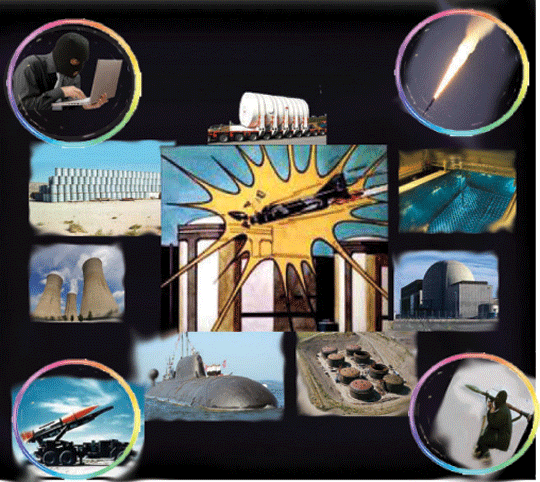
“These countries are not only dragging the world into a major energy crisis not seen since the 1970s, they are increasing nuclear risks across the region.”
, By the Campaign for Nuclear Disarmament (CND),
https://labouroutlook.org/2026/03/31/us-israel-war-on-iran-heightening-nuclear-accident-risk-cnd/
The illegal war on Iran by nuclear-armed US and Israel is increasing the risks of a nuclear accident, as nuclear facilities are repeatedly targeted by missile attacks.
Missiles hitting or landing close to nuclear facilities in both Israel and Iran over the last week show that the risk of a nuclear accident is growing, as the US-Israeli war with Iran approaches the end of its first month.
On Saturday, Iranian missiles landed in two towns in southern Israel, just kilometres away from the site of the top-secret Shimon Peres Negev Nuclear Research Centre, more commonly referred to as the ‘Dimona reactor,’ where Israel’s undisclosed nuclear weapons programme is said to be based. Israel is believed to have between 90 and 200 nuclear warheads, but it will not admit such possession and refuses to allow inspections of its nuclear facilities by the International Atomic Energy Agency. According to the Bulletin of the Atomic Scientists, Israel may be building a new nuclear facility at Dimona.
The strikes followed an attack by Israel on Iran’s Natanz nuclear facility. Iran’s Atomic Energy Organisation reported that there was “no leakage of radioactive materials” and that there was no danger posed to residents in the surrounding areas. Natanz, which had been targeted in the first days of the war and during Israel’s attacks on the country last year, has been used by Iran for the enrichment of uranium.
Iranian media reported a US-Israeli strike on the Bushehr nuclear plant, which had been targeted by Israel a week earlier on 17 March. No major damage or injuries were reported.
Following the second hit on Bushehr, Director General of the International Atomic Energy Agency, Rafeal Grossi, reiterated the need for “maximum restraint to avoid nuclear safety risks during conflict.”
A strike on a nuclear facility would lead to the release of radioactive material that could contaminate the environment and pose long-term health risks. In June 2025, when Israel bombed Iran’s nuclear facilities, Grossi stated that ‘…any armed attack … against nuclear facilities devoted to peaceful purposes constitutes a violation of the principles of the United Nations Charter, international law and the Statute of the Agency.”
The Bushehr strike marks the fifth time a nuclear facility in Iran has been attacked since the start of the illegal US-Israeli attacks on 28 February.
The conflict has since spread into a wider regional and global crisis with the Strait of Hormuz effectively closed to shipping, attacks on oil and gas facilities, and surging energy prices.
Last weekend, Donald Trump threatened to start striking Iranian power stations if the Strait remained closed, but he has extended his initial 48-hour ultimatum to end on Friday. Attacking civilian energy infrastructure is considered a war crime. Trump’s claims that Iran and the US have been engaging in negotiations to end the war have been rejected by Iran.
CND General Secretary Sophie Bolt said:
Targeting nuclear facilities is incredibly dangerous and risks a humanitarian and ecological disaster with consequences that could last for generations. The illegal US and Israeli attacks on Iran started as peaceful negotiations over Iran’s nuclear programme were reportedly reaching a breakthrough. Rather than respecting these talks, Trump and Netanyahu chose to sabotage them with illegal bombing. These countries are not only dragging the world into a major energy crisis not seen since the 1970s, they are increasing nuclear risks across the region. CND calls for an immediate end to these attacks and for the creation of a nuclear weapons-free Middle East.”
Trump says Tuesday deadline for Iran to accept ceasefire ‘final, won’t change’; Israel takes out experienced IRGC intel chief.

SOTT Signs Of The Times, Tyler Durden, ZeroHedge, Mon, 06 Apr 2026
Summary:
A Sunday night Axios report on a US-proposed 45-day ceasefire has by Monday morning been rejected by Iran, which later on Monday issued a 10-point letter via Pakistan.- Israel strikes large petrochemical plant at South Pars, which is responsible for half of the country’s petrochemical production.
- Trump reaffirms Tuesday deadline before vital infrastructure gets attacked as ‘final’, calls Americans opposed to Iran war ‘foolish’ – saying it’s all about Tehran not getting a nuke.
- Israel kills experienced longtime head of IRGC intelligence; Iranian missile strike on Haifa residential complex kills 4.
With all that in mind, the odds of a ceasefire by April 30, 2026 are rising (but still low)…28%
IRGC Intel Chief Taken Out; Israel Suffers Heavy Casualties
The head of the Intelligence Organization of the Islamic Revolutionary Guard Corps (IRGC) was killed in a Monday airstrike, according to confirmation in Iranian media. IRGC-linked Tasnim News Agency reported that the IRGC Public Relations Department confirmed Monday that Major General Majid Khademi was killed earlier in the day during an attack by US and Israeli forces. However, Tasnim did not disclose the location of the strike.
The Israel Defense Forces (IDF) earlier stated on X that Khademi wasone of the IRGC’s most senior commanders with decades of experience. “Khademi worked to advance terrorist attacks worldwide, and was responsible for monitoring Iranian civilians as part of the regime’s suppression of internal protests,” it claimed.
RFE/RL reported that Khademi assumed the post last summer after Mohammad Kazemi was killed in Israeli strikes during the 12-day war. Before that, he led the Intelligence Protection Organization of the Ministry of Defense and Armed Forces Logistics.Iran is now vowing to enact vengeance on Israel for his death.
Meanwhile Sunday into Monday saw significant casualties in Israel, after the IRGC claimed in a statement carried by state media that Iranian forces had targeted an oil refinery in Haifa. But instead, it appears that the missile slammed directly into a residential building, killing at least four Israelis. Search and rescue teams have spent some 18 hours pouring through the ruins of the complex, recovering two bodies early Monday after an initial two had been found. The casualties could climb amid ongoing recovery efforts. Another regional source stated that “Over 160 Israelis have been transferred to hospitals over the past 24 hours, Israel’s Health Ministry said on Monday.”
Trump: Tuesday Deadline ‘Final, Won’t Change’; Americans Opposed to Iran War Are ‘Foolish’
At a White House annual Easter event, President Trump reaffirmed the Tuesday deadline is final, and further said he has seen every proposal. While he acknowledged the new 10-point Iran proposal as a “big step,” he still said it’s “not good enough; will see what happens.” According to more:
- War could end very quickly if they do the things they need to do.
- People talking for Iran are more reasonable now.
- War is about one thing, Iran cannot have nuclear weapons.
- “If I had my choice, I would take Iran’s oil”.
- If Iran does not yield, they will not have bridges or power plants.
- UK has a long way to go.
There were interesting remarks also claiming that “As of this morning 45,000 protesters have been killed” in Iran – though it’s entirely unclear and dubious as to where he got such a figure. He said that Iranians need guns and that he had sent some but a “certain group” decided to keep them.
“The Iranian people wanna hear bombs because they want to be free,” he also claimed, while First Lady Melania added that the US is fighting for the “future” of children in Iran. Another interesting moment as some corners of MAGA grow increasingly skeptical and angry over the war:
The US president is speaking to reporters at the White House. Asked what he would tell Americans who are opposed to the war, Trump replied: “They’re foolish. Because the war is about one thing – Iran cannot have a nuclear weapon,” he said.
Iran Issues 10-Point Rejection of ‘Simple Ceasefire’
Per PressTV:
“The ten-point plan rejects a simple ceasefire, stressing the need for a permanent resolution that safeguards Iran’s interests. Key demands include ending regional hostilities, ensuring safe passage through the Strait of Hormuz, lifting sanctions, and rebuilding affected areas.”
It’s no secret that Iran is seeking a permanent end to the war on terms that would ensure it is never attacked again.
- “According to IRNA’s foreign policy correspondent, in this response, which consists of ten paragraphs, Iran has emphasized the need for a permanent end to the war, taking into account Iran’s considerations, while rejecting a ceasefire.”
- “This answer includes a set of demands from Iran, including the end of conflicts in the region, a protocol for safe passage through the Strait of Hormuz, reconstruction and lifting of sanctions.”
Per PressTV:
“The ten-point plan rejects a simple ceasefire, stressing the need for a permanent resolution that safeguards Iran’s interests. Key demands include ending regional hostilities, ensuring safe passage through the Strait of Hormuz, lifting sanctions, and rebuilding affected areas.”
It’s no secret that Iran is seeking a permanent end to the war on terms that would ensure it is never attacked again.
- “According to IRNA’s foreign policy correspondent, in this response, which consists of ten paragraphs, Iran has emphasized the need for a permanent end to the war, taking into account Iran’s considerations, while rejecting a ceasefire.”
- “This answer includes a set of demands from Iran, including the end of conflicts in the region, a protocol for safe passage through the Strait of Hormuz, reconstruction and lifting of sanctions.”
It appears similar to the outline that Iran issued some two weeks ago. At every turn, Tehran has rejected that direct talks with Washington are even taking place. Tehran also keeps rejecting White House ceasefire overtures. And yet the same Monday little dance keeps repeating itself……………………………………………………………………………………………………………………………………………………………………………………………………………………………………… https://www.sott.net/article/505586-Trump-says-Tuesday-deadline-for-Iran-to-accept-ceasefire-final-wont-change-Israel-takes-out-experienced-IRGC-intel-chief
Bypass the Strait of Hormuz with nuclear explosives? The US studied that in Panama and Colombia in the 1960s
The Conversation, Christine Keiner, Chair of the Department of Science, Technology, and Society, Rochester Institute of Technology, April 2, 2026
With the world struggling to get oil supplies moving from the Middle East, former House Speaker Newt Gingrich raised eyebrows with a social media post highlighting a radical idea: Use nuclear bombs to cut a new channel along a route that would avoid Iranian threats in the Strait of Hormuz.
Gingrich’s March 15, 2026, post linked to an article that labeled itself as satire. Gingrich has not clarified whether his endorsement was serious. But he is old enough to remember when ideas like this were not only taken seriously but actually pursued by the U.S. and Soviet governments.
As I discuss in my book, “Deep Cut: Science, Power, and the Unbuilt Interoceanic Canal,” the U.S. version of this project ended in 1977. At the time, Gingrich was launching his political career after working as a history and environmental studies professor.
Improving global trade and geopolitical influence
The idea for a new canal to move oil from the Middle East had emerged two decades earlier, in the context of another Middle East conflict, the Suez crisis. In 1956, Egypt seized the Suez Canal from British and French control. The canal’s prolonged closure caused the price of oil, tea and other commodities to spike for European consumers, who depended on the shipping shortcut for goods from Asia.
But what if nuclear energy could be harnessed to cut an alternative canal through “friendly territory”? That was the question asked by Edward Teller, the principal architect of the hydrogen bomb, and his fellow physicists at the Lawrence Radiation Laboratory in Livermore, California.
President Dwight D. Eisenhower’s administration had already begun promoting atomic energy to generate electricity and to power submarines. After the Suez crisis, the U.S. government expanded plans to harness “atoms for peace.”
Project Plowshare advocates, led by Teller, sought to use what they called “peaceful nuclear explosions” to reduce the costs of large-scale earthmoving projects and to promote national security. They envisioned a world in which nuclear explosives could help extract natural gas from underground reservoirs and build new canals, harbors and mountainside roads, with minimal radioactive effects.
To kick-start the program, Teller wanted to create an instant harbor by burying, and then detonating, five thermonuclear bombs in an Indigenous village in coastal northwestern Alaska. The plan, known as Project Chariot, generated intense debate, as well as a pioneering environmental study of Arctic food webs……………………………………………………………………….
Nuclear explosions appeared to make a new sea-level canal financially feasible. The greatest impetus for the so-called Panatomic Canal occurred in January 1964, when violent anti-U.S. protests erupted in Panama. President Lyndon B. Johnson responded to the crisis by agreeing to negotiate new political agreements with Panama.
Johnson appointed the Atlantic-Pacific Interoceanic Canal Study Commission to determine the best site to use nuclear explosions to blast a seaway between the two oceans. Funded by a $17.5 million congressional appropriation – the equivalent of around $185 million today – the five civilian commissioners focused on two routes: one in eastern Panama and the other in western Colombia………………………………………………………………..
To avoid the radioactivity and ground shocks, planners estimated that approximately 30,000 people, half of them Indigenous, would have to be evacuated and resettled. The canal commission considered this a formidable but not impossible obstacle, writing in its final report, “The problems of public acceptance of nuclear canal excavation probably could be solved through diplomacy, public education, and compensating payments.”
A not-so-hot idea, in retrospect
As explored in my book, marine and evolutionary biologists of the late 1960s sought to study the project’s less obvious environmental effects. Among other potential catastrophes, scientists warned that a sea-level canal could unleash “mutual invasions of Atlantic and Pacific organisms” by joining the oceans on either side of the isthmus for the first time in 3 million years.
Plans for the nuclear waterway ended by the early 1970s, not over concerns about marine invasive species but rather due to other complex issues. These included the difficulties of testing nuclear explosions for peaceful purposes without violating the Limited Nuclear Test Ban Treaty of 1963 and the huge budget deficits caused by the Vietnam War……………………………………………………….
Today, given widespread awareness of the severe environmental and health effects of radioactive fallout, it is hard to envision a time when using nuclear bombs to build canals seemed reasonable. Even before Gingrich’s post sparked ridicule, press accounts described Project Plowshare using words like “wacky,” “insane” and “crazy.”
However, as societies struggle with disruptive new technologies such as generative AI and cryptocurrency, it is worth remembering that many ideas that ended up discredited once seemed not only sensible but inevitable.
As historians of science and technology point out, technological and scientific developments cannot be separated from their cultural contexts. Moreover, the technologies that become part of people’s daily lives often do so not because they are inherently superior, but because powerful interests champion them.
It makes me wonder: Which of the high-tech trends being promoted by influencers today will amuse, shock and horrify our descendants? https://theconversation.com/bypass-the-strait-of-hormuz-with-nuclear-explosives-the-us-studied-that-in-panama-and-colombia-in-the-1960s-278851
The US has declared ‘space superiority’ over Iran. What does that mean?

Iran’s nascent space program was destroyed. It’s still using other nations’ space intel.
The U.S. military declared space superiority over Iran this week, but defense experts question what that means given the country’s inchoate military space program and heavy reliance on space-based intelligence from other nations.
Adm. Brad Cooper, the head of U.S. Central Command, said Tuesday that the U.S. had established control of the space domain during Operation Epic Fury. It was nearly a month after CENTCOM had announced “Iran’s equivalent of Space Command” was destroyed, which harmed the Islamic Revolutionary Guard Corps’ ability to coordinate retaliatory strikes.
“Our Space Force has given us the ultimate high ground, delivering space superiority, which has been a critical enabler to this fight,” Cooper said in a Tuesday video.
It’s not clear if the country is still actively jamming or spoofing U.S. assets, and it’s highly unlikely that the U.S. Space Force has physically destroyed the country’s handful of satellites. Navy Capt. Tim Hawkins, a CENTCOM spokesperson, said he could not discuss details about space operations “due to classification.” Given Iran’s rudimentary space capabilities, defense experts question what has changed to prompt the military to declare space superiority.
“It isn’t stopping them from using space assets,” Victoria Samson, the Secure World Foundation’s chief director of space security and stability, said of the U.S. declaring space superiority. “There’s just a lot of question marks … In regards to how they use space as a national security enabler, I don’t know that they’ve really stopped it, because they weren’t using it other than for imagery analysis.”
Iran is reportedly relying on China and Russia’s intelligence and commercial space-based imagery to target U.S. assets throughout the region. A U.S. official told Defense One that Iran’s use of another country’s space-based data doesn’t mean the service lacks control of the space domain.
“Just because the Iranians are receiving space-based intelligence doesn’t negate that we have space superiority,” the official said.
Since 2005, the country has launched a total of 26 satellites, only 13 of which were still operational, according to the American Enterprise Institute’s space data navigator tool. Three of those are registered to the IRGC. The U.S., by comparison, has upwards of 500 operational military and intelligence satellites.
Gen. Chance Saltzman, the Space Force’s top uniformed officer, acknowledged “it wasn’t really a fair fight,” but said destroying Iran’s space capabilities gave the military an upper hand in communications and air operations within CENTCOM.
“You have space superiority if you can use space the way you want, and the adversary cannot use space the way they want, and I think those are the conditions that we’ve met in this particular instance,” Saltzman said during a Mitchell Institute event Wednesday.
The term “space superiority” was first publicized in a 1980s Air Force manual. A 2004 service document likened the idea to air superiority and said the two are “crucial first steps in any military operation.” Last year, the Space Force published a warfighting doctrine that said the service’s “formative purpose” is to achieve space superiority.
“Space superiority is the degree of control that allows forces to operate at a time and place of their choosing without prohibitive interference from space or counterspace threats, while also denying the same to an adversary,” the Space Force’s doctrine reads.
Some defense experts see the recent declaration of space superiority as a way for the service to highlight its warfighting rebrand in recent years.
“It’s a weird thing to say. I think it’s more a matter of floating the ‘Space Force as a warfighting’ thing,” Samson said.
Kari Bingen, a senior fellow at the Center for Strategic and International Studies and director of the Aerospace Security Project, said it’s not surprising to see the Space Force becoming more integrated into operations, given adversaries’ desire to target command, control, communications, and intelligence capabilities.
“Between Venezuela and Operation Epic Fury, these have been opportunities for the Space Force to better integrate space effects into a joint military campaign,” Bingen said. “We’ve long treated space as this special and different capability set. The physics are different, but to make it truly useful to the joint force, it needs to be fully integrated into planning and operations.”
Saltzman said guardians had been forward deployed to support Operation Epic Fury and continue to launch space effects in combat zones “despite being under attack from an adversary.” He also said some guardians are supporting the operation stateside out of Shaw Air Force Base in South Carolina and CENTCOM headquarters in Florida.
“I won’t go into a lot of the operational details, as you might imagine, but you don’t have to think too hard to understand what it is the Guardians are bringing to the fight,” Saltzman said. “All of the missions that we always do—missile warning, satellite communications. The links are vital. Over-the-horizon communications is as important now as it ever has been. We create disruption for an adversary.”
1 This Month
10 June – Assessing Canada’s Investments in Small Modular Nuclear Reactors – https://zoom.us/meeting/register/IiqHA5feRhaEBycOLNTJlA#/registration


Cuba Is Not a Failed State – It Is a Besieged State
PETITION: “Global Appeal to Endorse Palestinian Right of Return of Refugees”
To see nuclear-related stories in greater depth and intensity – go to https://nuclearinformation.wordpress.com
-
Archives
- June 2026 (89)
- May 2026 (306)
- April 2026 (356)
- March 2026 (251)
- February 2026 (268)
- January 2026 (308)
- December 2025 (358)
- November 2025 (359)
- October 2025 (376)
- September 2025 (257)
- August 2025 (319)
- July 2025 (230)
-
Categories
- 1
- 1 NUCLEAR ISSUES
- business and costs
- climate change
- culture and arts
- ENERGY
- environment
- health
- history
- indigenous issues
- Legal
- marketing of nuclear
- media
- opposition to nuclear
- PERSONAL STORIES
- politics
- politics international
- Religion and ethics
- safety
- secrets,lies and civil liberties
- spinbuster
- technology
- Uranium
- wastes
- weapons and war
- Women
- 2 WORLD
- ACTION
- AFRICA
- Atrocities
- AUSTRALIA
- Christina's notes
- Christina's themes
- culture and arts
- Events
- Fuk 2022
- Fuk 2023
- Fukushima 2017
- Fukushima 2018
- fukushima 2019
- Fukushima 2020
- Fukushima 2021
- general
- global warming
- Humour (God we need it)
- Nuclear
- RARE EARTHS
- Reference
- resources – print
- Resources -audiovicual
- Weekly Newsletter
- World
- World Nuclear
- YouTube
-
RSS
Entries RSS
Comments RSS
 nuclear-news