America’s pro-Israel J Street says Israel should pay out-of-pocket if it wants US weapons
The pro-Israel advocacy group likely changed its tune after widespread popular opposition to taxpayer-funded weapons
By MEE staff, 13 April 2026 , https://www.middleeasteye.net/news/j-street-says-israel-should-pay-out-pocket-if-it-wants-us-weapons
The pro-Israel advocacy group J Street is now calling for an end to “direct” US military support to Israel, per a new policy document published on Monday.
The group had previously backed Washington’s continued provision of defensive weapons systems, such as the replenishment of Israel’s Iron Dome, at no cost to Israelis.
Now, it says the US “should continue to sell” short-range air and ballistic missile defence capabilities to Israel, but Israel should use its own money to pay for them.
“Israel faces real security challenges that require a significant defense investment. With a per capita GDP comparable to leading US allies such as the United Kingdom, France and Japan, as well as an annual defense budget of over $45 billion, it has the financial means to address these challenges,” J Street said.
“It does not require almost $4 billion per year in US financial subsidies to purchase weapons,” it added.
“Continuing this assistance is both unnecessary and politically counterproductive, creating avoidable tensions in US domestic politics and in the bilateral relationship.”
The way the current military aid package operates is that the US provides Israel with American taxpayer funds, and those funds are put into US weapons companies to acquire equipment.
On its website, J Street says that it “organizes pro-Israel, pro-peace, pro-democracy Americans to promote US policies that embody our deeply held Jewish and democratic values and that help secure the State of Israel as a democratic homeland for the Jewish people”.
Political tide turns
J Street’s shift follows a distinct change in attitudes towards Israel among the American public after the genocide in Gaza, where over 72,000 Palestinians have been killed since Israel’s war on the enclave broke out in October 2023.
But perhaps more importantly for the group, whose support base is made up of Democrats, the party’s future is changing course.
Progressive New York Congresswoman Alexandria Ocasio-Cortez, who is widely believed to be seeking higher office, announced earlier this month that she would no longer vote for any US military support to Israel, despite having previously backed the provision of defensive weapons, much to the disappointment of many of her supporters.
It is notable, however, that her statement followed Israeli Prime Minister Benjamin Netanyahu’s surprise declaration earlier this year that Israel will not seek to renew its military aid package with the US in 2028.
“I want to taper off the military aid within the next 10 years,” all the way down to zero, Netanyahu told The Economist in January.
J Street’s new position demands that any future US arms sales that Israel pays for out-of-pocket “be fully consistent with American law”, which echoed Ocasio-Cortez’s statement.
US law prohibits security assistance to any country whose government engages in a consistent pattern of gross human rights violations or blocks or restricts the transport or delivery of US-backed humanitarian aid.
“US arms sales to Israel should be further conditioned to incentivize alignment with American interests and laws – as has been the case with other allies and partners – when their behavior is inconsistent with US interests,” J Street said.
At the same time, the group acknowledges that Washington and Israel generally share the same interests anyway.
“The US also benefits meaningfully from the relationship. Intelligence sharing has been critical in campaigns such as the fight against ISIS, while joint operations such as Israel’s 2006 strike on Syria’s secret nuclear facility have advanced shared security goals.”
It added that because “approximately 500,000 American citizens live in Israel”, selling it weapons should continue to be a US national security priority.
Israel Destroys a Synagogue; US Media Yawn
“Iranian Jews are viewed by Iranians as indigenous,” he said. “They’re the original Bundists,” a nod to the Jewish political movement that “stood not just for socialism, but for do’ikayt—Yiddish for ‘hereness,’” the concept that a Jew’s homeland was in whatever nation they resided in (New York Times, 4/6/26).
Ari Paul, April 16, 2026 https://fair.org/home/israel-destroys-a-synagogue-us-media-yawn/
An Israeli missile attack destroyed a Tehran synagogue during the Jewish Passover holiday (Religion News Service, 4/9/26). The Israeli military “expressed regret over what it called ‘collateral damage’ to a synagogue in Tehran caused by an overnight strike,” which was “targeting a senior Iranian commander,” said the Middle East Eye (4/7/26).
Photos of the wreckage at the Rafi-Nia Synagogue have accompanied many of these pieces. The Council on American-Islamic relations condemned the attack in a statement (4/7/26):
We strongly condemn the Israeli regime’s bombing of a synagogue in Tehran, which was the predictable end result of the indiscriminate US/Israel bombing campaign against mosques, hospitals, schools, apartments and other civilian sites across Iran.
The group challenged “various Israel advocacy groups and politicians that support this war in the name of protecting Israel to condemn Israel’s synagogue attack.”
Buried at best
The story of the attack on the Tehran synagogue was, at best, buried in the US corporate media. CNN posted a brief video (4/7/26) about the bombing but had no online article about it. The New York Times (4/7/26, 4/7/26) mentioned the attack, but as background in broader stories about the US/Israel war on Iran.
A search for “Rafi-Nia” on the Washington Post website yields no results. Ditto for the AP, although the news service did post a video to YouTube (4/7/26). Al Jazeera’s coverage (4/7/26) of the attack was a mélange of AP and AFP copy. CBS News (4/7/26) also used a few paragraphs of AFP copy to report on the attack, although it was buried in the middle of a general timeline about the war.
The Wall Street Journal (4/7/26) had the story, but led with Israel’s contrition over the destruction; that’s not a journalistic construction we see in US news coverage when it comes to the Israeli bombings of other civilian structures in Iran, Gaza or Lebanon. When Israel destroys a hospital, apartment building, encampment, etc., the stories don’t lead with official regret, but rather include Israeli claims that the civilian facilities were actually legitimate military targets. The Journal’s lead provided the government with public relations cover over the sensitive issue of destroying a Jewish house of worship.
Newsweek (4/8/26), once a bigger player in the US media landscape, led with condemnation of the attack from Jewish Iranian leaders, who declared “their unwavering solidarity with Iran in defending the homeland.”
Jewish presence in Iran
Underplaying the story obscures not only the wantonness of Israel’s aggression, but the actual nature of Iranian society, which is portrayed as obsessed with wiping Jews off the map (ADL, 6/25/25). “Iranian foreign policy freely mixes anti-Israel furies with anti-Jewish ones,” wrote New York Times columnist Bret Stephens (1/13/26), a pro-war cheerleader (2/22/26, 3/24/26).
In fact, while Israel is obviously the center of Mideastern Jewish life, the Iranian Jewish population dwarfs those elsewhere in the Middle East. “Estimates range from 9,000 to 20,000 Jews currently living in Iran,” according to the Forward (6/18/25).
Wrote the Palestine Chronicle (3/6/26): “The Jewish presence in Iran is among the oldest continuous Jewish communities in the world, with roots that historians trace back more than two millennia.”
Yes, Iran is a theocracy; the government is no model for an open society. But there is a Jewish member of Iran’s parliament, who even went on record this year openly criticizing Iranian President Masoud Pezeshkian’s handling of popular unrest (i24, 1/29/26).
‘Well-protected second-class citizens’
US media have covered the Jews of Iran before. USA Today (8/29/18) did a story in 2018, reporting from Tehran. Former Forward reporter Larry Cohler-Esses (8/12/15, 8/12/15, 8/18/15, 8/27/15) reported extensively and critically on Iranian Jews, indicating that the country was at least open to letting a reporter for a Jewish publication do their job.
Cohler-Esses told FAIR that Jews in Iran are “well-protected second-class citizens.” In fact, when he read about the attack, he “wondered if it was the synagogue I spent Shabbat in, but it wasn’t,” because there are more than a dozen active synagogues in Tehran—a reflection of the size of the Jewish community there.
Recalling his 2015 reporting trip, Cohler-Esses said that on Shabbat, Jews would spill out of their synagogues and mingle in the street after services, a sight he didn’t often see in many places in Europe. In one instance, after he left a synagogue service, one of the congregants ran after him through a street teeming with people, wearing a kippah and a tallit (traditional religious attire), and “no one batted an eye.”
The Jews of Iran do suffer discrimination, because Muslims are favored in the legal code over all non-Muslims, Cohler-Esses said. He noted that the Jewish population of Iran has shrunk significantly since the 1979 Islamic Revolution.
“Iranian Jews are viewed by Iranians as indigenous,” he said. “They’re the original Bundists,” a nod to the Jewish political movement that “stood not just for socialism, but for do’ikayt—Yiddish for ‘hereness,’” the concept that a Jew’s homeland was in whatever nation they resided in (New York Times, 4/6/26).
Cohler-Esses was hopeful that coverage of the synagogue’s destruction in the Jewish and Israeli press (JTA, 4/7/26; Jerusalem Post, 4/7/26) had the “potential to make Jewish readers of Jewish media outlets go, ‘Oh, they have synagogues there.’” But with the underplaying of the story in US media, it’s a missed teachable moment for news consumers generally.
More robust press coverage of the attack could have taught Americans that the Jews of Iran do have something to fear: Israel.
With 38,000+ Dead, Women and Girls Make Up Over Half of Those Killed in Israel’s US-Backed War on Gaza: UN
“Not a single combatant among them,” said one human rights activist. “Further confirmation that over 90% of the victims are innocent civilians.”
Brad Reed for Common Dreams, Apr 17, 2026 https://www.commondreams.org/news/israel-gaza-war-women
Israel’s yearslong assault on Gaza has killed more than 38,000 women and girls, according to a report released Friday by the United Nations.
In total, the UN found that at least 22,000 women and 16,000 girls have been killed in the conflict, an average of nearly 50 women and girls per day.
Sofia Calltorp, chief of humanitarian action at UN Women, said the report shows how Israel’s war on Gaza “has affected every aspect of life, with its most horrific toll seen in the scale of death.”
“Women and girls accounted for a proportion of deaths far higher than those observed in previous conflicts in Gaza,” Calltorp emphasized. “Those killed were mothers, they were daughters, sisters, and friends—deeply loved by those around them. They were individuals with lives and with dreams.”
More than 72,000 people in total have been killed since Israel launched its attack on Gaza in October 2023, after Hamas invaded Israeli territory and killed approximately 1,200 Israelis. Experts warn that the current known death toll is likely an undercount.
While Palestinian women and girls represent more than half of those who have been killed, according to the report, Israeli and US officials have persisted in claiming the US-backed assault has targeted Hamas fighters.
“Not a single combatant among them,” said Ramy Abdul, chairman of the Euro-Mediterranean Human Rights Monitor. “Further confirmation that over 90% of the victims are innocent civilians.”
Although a ceasefire has been in place since October 2025, the report notes that an estimated 730 Gaza residents have been killed over the last six months. Additionally, the report says the humanitarian situation in Gaza remains dire.
“Nearly one million women and girls have been displaced, repeatedly,” said Calltorp. “Access to water and food have been severely limited, with nearly 790,000 women and girls experiencing crisis-level or catastrophic levels of food insecurity. Extensive damage to infrastructure has made it almost impossible for women and girls in Gaza to access their basic needs, like healthcare.”
Calltorp demanded that the ceasefire deal “be fully implemented,” and that “respect for international law must be upheld” to ease the suffering in Gaza.
“Humanitarian assistance must reach those in need—at scale and without obstruction,” Calltorp said. “And women and girls must be placed at the center of response and recovery efforts.”
In addition to causing a humanitarian disaster in Gaza, Israel in recent weeks has also been waging an aerial bombing and ground invasion in Lebanon that has killed thousands of people and displaced more than 1 million. US President Donald Trump announced on Thursday that Israel and Lebanon came to a ceasefire agreement that is set to last for 10 days.
At the same time, Israeli settlers have been waging a campaign of increased violence against Palestinians living in the West Bank, and veteran Israeli war correspondent Ron Ben-Yishai on Thursday declared that the actions of the settlers look like “ethnic cleansing.”
Collapsing Empire: Hezbollah Crushes ‘Greater Israel’
Kit Klarenberg, Global Delinquents, Apr 17, 2026
On April 8th, the Zionist entity struck a demonic blow to the heart of Beirut, dropping 1,000 pound bombs in densely packed residential areas, killing untold civilians and injuring many more. One of Lebanon’s most dire mass-killings since the end of the 1990 civil war, it marked the resumption of Israel’s avowedly genocidal invasion. With bombs raining down apace even as rare in-person talks between the pair near, Zionist Occupation Force-backed settlers are moving quickly to establish a permanent presence in the country’s south.
Whatever abrupt pause in the war on the Islamic Republic can be sustained by duelling Iranian and US blockades of the Strait Of Hormuz must be viewed in the context of the Zionist entity’s longstanding determination to annex Lebanese territory, in service of ‘Greater Israel’. Tel Aviv’s criminal incursion ignited March 16th, Orwellianly dubbed by officials a “targeted ground operation against key targets.” It was not until 10 days later that major news outlets deigned to call it an invasion.
On March 23rd, Tel Aviv’s finance minister Bezalel Smotrich – a self-proclaimed fascist – urged the ZOF to formally annex southern Lebanon. Since then, over a million people have been displaced, thousands killed, and civilian infrastructure razed en masse. While a significant chunk of the country is now occupied, the cost for Tel Aviv was substantial. Unrelenting Hezbollah fire produced heavy casualties and record equipment and vehicle losses, including 21 Merkava main battle tanks in a single day on March 26th.
On April 2nd, Israeli media openly advertised the impending ceasefire in the war on Iran. It was revealed the Zionist entity was preparing to intensify its air campaign against Lebanon, due to enormous damage inflicted by the Resistance upon the ZOF. Tel Aviv reportedly planned to “[reduce] the current focus on Iran,” in order to support “Israeli ground forces attempting to seize Lebanese territory.” Were it not for hell being unleashed from the skies, the ZOF would currently be in big trouble.
On April 5th, the ZOF’s Northern Command chief admitted Tel Aviv had grossly overestimated damage inflicted upon Hezbollah during its October 2024 invasion of Lebanon. Entity political and military chiefs had long-claimed the Resistance faction was obliterated by the illegal intervention. The ZOF estimated 70 – 80% of Hezbollah’s rocket capabilities were destroyed during the conflict. This reverie was comprehensively shattered by hundreds of the group’s projectiles successfully targeting Tel Aviv daily, throughout the Zionist-American war on Iran.
No wonder that conflict is now on hold. Hezbollah remains a redoubtable adversary, which can independently, and in tandem with its Resistance comrades, thwart Tel Aviv’s seizure of Lebanese territory, and permanently expel Zionist settlers from northern Palestine. This wreaks havoc with Greater Israel’s construction, which Benjamin Netanyahu openly yearns to be his enduring political legacy, and literal ‘get out of jail free’ card. Hence, southern Lebanon must be annexed, and Hezbollah neutralised. But attempting to do so will, as before, end in fatal catastrophe.
‘Forced Expulsions’
In June 1982, Zionist militants invaded Lebanon, ostensibly to drive Palestinian freedom fighters away from the entity’s claimed northern border. Quickly, it became apparent ethnic cleansing, massacres, and land theft were the ZOF’s true goal. As a declassified July 1983 US National Intelligence Council assessment noted, ultra-Zionists then as now were aggressively demanding outright annexation of Lebanon’s south. Which is precisely what temporarily came to pass, until Hezbollah expelled the ZOF decisively in 2000. Along the way, obvious lessons weren’t learned by Tel Aviv.
The Council predicted the ZOF would create a puppet state in the south, to fulfil “some day-to-day governing tasks,” while “real power will remain in Israeli hands.” Despite judging the costs “of semi-permanent occupation” to be “not inconsequential,” they were nonetheless “manageable”, due to the entity’s “proven track record” of suppressing “unrest” in territory it illegally occupies. “Forced expulsions, use of local surrogates, and ruthless counterintelligence operations” by the ZOF were correctly forecast, which the NIC believed would negate “increasingly” hostile local opposition.
The Council assessed the ZOF would “[get] a handle on the guerrillas in the next six – 12 months.” This prediction couldn’t have been more wrong. Unmentioned by the Council, Hezbollah was quickly founded following the Zionist entity’s invasion. Inspired by the Islamic Revolution and assisted by the Iranian Revolutionary Guard Corps, the group rapidly gained in strength, spreading radical fervour among Lebanese citizens of every faith, until forcibly purging ZOF militants from Lebanon outright in May 2000.
Hezbollah’s success – repeated with an unprecedented battering of Zionist invasion forces in 2006 – inspired new generations of Resistance fighters, including Hamas. Today, the faction is the most popular and potent political and social force in Lebanon, embraced by citizens of every faith. Bashar Assad’s fall also did not, contrary to widely-held assumptions, make it remotely difficult for Iran to equip and coordinate with Hezbollah. A failure to comprehend these inconvenient truths has led the Zionist entity into disastrous ruin in Lebanon, yet again.
On March 27th, ZOF chief of staff Eyal Zamir issued a grave warning during a security cabinet meeting. Namely, Israel’s military “is going to collapse in on itself,” due to “mounting operational demands and a deepening manpower shortage,” which could rapidly prove catastrophic. Already, an infantry battalion intended to be deployed to Lebanon had been redirected to the West Bank, to “keep the peace” as armed settlers carried out violent if not murderous attacks on Palestinians. The ZOF would’ve struggled to field further forces in either Greater Israel theatre.
Then on April 3rd, the ZOF openly admitted “its goal of disarming Hezbollah” was “unrealistic, as it would require the military to launch a full-scale invasion of Lebanon,” which Tel Aviv wasn’t able to wage. In other words, the Resistance was undefeated, and Lebanese territory couldn’t be stolen. Having been engaged in perpetual, multi-front war since October 7th 2023, the exhausted Zionist entity lacked the muscle to achieve its Lebanese goals while also targeting the West Bank and Iran, contrary to intelligence, military and political forecasts.
‘Last Minute’
Israel was so ruinously overextended attempting to wage all-out war on the entire Resistance – without AnsarAllah even having fully joined the fight – it was reportedly considering an extraordinarily desperate solution. Namely, inviting Syria’s MI6-installed extremist government to battle Hezbollah. Ahmed al-Sharaa’s regime is maintained in power exclusively via a brutal, repressive domestic security and military apparatus. Forces could not be deployed in sufficient numbers to counter Hezbollah, without risking major domestic upheaval. However, Hebrew-language outlet Maariv reported April 5th this suicidal pact was being seriously contemplated:
Under the auspices of these “understandings”, the ZOF would “take over southern Lebanon, while the Syrians will act in northern Lebanon against Hezbollah.” However, the US reportedly “very much [preferred] not to reach such a scenario.” After all, it would be a deeply hazardous Faustian bargain, imperilling al-Sharaa’s already brittle rule. While he and his army of ISIS fighters may detest Hezbollah, the overwhelming majority of Syrians reject alliance with Israel, at a time local Resistance elements are growing in strength.
………………………………………………………………………………………………………. With Hezbollah supposedly dismantled, and Syria at last transformed into a doting Anglo-American puppet state, Greater Israel could be advanced without hindrance – or so Netanyahu thought. In reality, the “great opportunity” about which he boasted from the Golan Heights following Bashar Assad’s fall has become a dangerous trap. Unable to sustain a grand battle against the triumphant Islamic Republic even with US help, Israel is now overextending itself yet further in southern Lebanon. Hezbollah isn’t fazed one iota, and the Resistance is watching intently.
As history old and new amply shows, the Empire and its Zionist proxy underestimate AnsarAllah, Hamas, Hezbollah, Iran, and the wider Resistance at their immense peril – but persist in doing so. Over and again across decades, the same failed strategies are applied without success, then aren’t subsequently revised. The Empire’s crushing past defeats by the Resistance are spun as victories, and/or promptly forgotten about. All along though, in the real world, the Zionist-American death machine is ever-weakened, and Palestine’s long-overdue liberation grows irresistibly closer. https://www.kitklarenberg.com/p/collapsing-empire-hezbollah-crushes
Confused Closures and Opaque Openings: Continuing Dramas in the Hormuz Strait
19 April 2026 Dr Binoy Kampmark, https://theaimn.net/confused-closures-and-opaque-openings-continuing-dramas-in-the-hormuz-strait/
Reading messages from President Donald J. Trump is an exercise in taunting masochism. It is one inflicted on commentators and the press corps the world over, and they are not better for it. The latest – and here, the latest will become distant and dated shortly – is that the Strait of Hormuz, predictably controlled by Iran with devastating global effect, was to be reopened for commercial traffic under certain conditions. Trump thought this undertaking absolute and indefinite, a rich suggestion coming from a man with such a fair-weather mind. “Iran has agreed to never close the Strait of Hormuz again. It will no longer be used as a weapon against the World!”
This proved typically premature: within a matter of hours, Iran’s decision was, if not reversed then heavily qualified. (The Strait technically always remained open to vessels favoured by the Iranian authorities.) On April 17, Iran’s Foreign Ministry spokesperson Eshmaeil Baghaei affirmed two key principles in Tehran’s policies: Iran retained the right to control traffic moving through the Strait, and that it would not surrender enriched uranium, an issue “sacred to us as Iranian soil” and non-negotiable. The latter was certainly aimed at Trump’s dotty claim that Washington and Tehran would jointly deploy “lots of excavators” to remove fissile material (“nuclear dust”) and shift it to the US. On CBS News, the president claimed that “Our people, together with the Iranians, are going to work together to get it.” This all suggested much confusion on the part of the Americans.
Iran’s moves on the Strait were always going to be governed by other impediments. There was the demand, for instance, that Washington release $20 billion in frozen Iranian assets. This was rejected. Trump has also insisted on a continued blockade of Iranian ports, which currently employs over 12 warships and something in the order of 100 fighter and surveillance aircraft. As he told Fox News, “we’re not going to let Iran make money on selling oil to people that they like and not people that they don’t like.” Maritime intelligence on this, however, suggests that the blockade has not been quite as effective as heralded by US officials. Martin Kelly, Head of Advisory at EOS Risk Group can point to the successful passage of sanctioned tankers and vessels of the shadow fleet such as LPG carriers Crave, Raine and NV Aquamarine.
On April 18, the Islamic Revolutionary Guard Corps (IRGC) Navy issued a statement that “no vessel is to move from its anchorage in the Persian Gulf or the Sea of Oman.” A number of vessels had successfully managed to pass through under supervision since Friday night, but the Strait would be closed till the US ceased blocking Iran’s ports. “Approaching the Strait of Hormuz will be considered cooperation with the enemy, and the offending vessel will be targeted.”
The IRGC have been true to their word. According to UK Maritime Trade Operations, the Master of a tanker reported “being approached by 2 IRGC gun boats” without a VHF challenge, “then fired upon the tanker.” No injuries were sustained. Another report documented “a Container Ship being hit by an unknown projectile which caused damage to some of the containers.” There were no fires or environmental impacts reported. A third incident involved the sighting by the Master of a cruise ship of “a splash in close proximity to the vessel” regarded as suspicious.
The ongoing US blockade, argues Iran’s Supreme National Security Council (SNSC), was also a violation of the ceasefire agreement between Tehran and Washington. As Tehran revealed in a statement, passage through the Strait would only take place through a “designated route” and only with Iranian authorisation. The opening or closing of the Strait, along with pertinent regulations governing it would be “determined by the field, not by social media.” The Council has also revealed that it is reviewing new proposals from the US that may form the basis of future talks.
Trump has also huffed that the latest developments in the Strait were “not tied, in any way, to Lebanon,” a barely plausible contention. Iran has insisted that any lasting ceasefire manoeuvres would have to include a cessation of Israeli strikes on Lebanon and Hezbollah positions, even if negotiations between the US and Lebanon did not involve any mention of the Shia militia. The US president duly went on Truth Social to bluster that Israel “will not be bombing Lebanon any longer.” They were “PROHIBITED from doing so by the USA. Enough is enough.”
The somewhat devalued currency of a ceasefire did not, as it was subsequently confirmed, prohibit Israel from resorting to its right to self-defence, a right so latitudinous as to be boundless. Israeli Prime Minister Benjamin Netanyahu promised that things were far from concluded. “I will say honestly, we have not yet finished the job.” Remaining rocket and drone threats needed neutralisation. Hezbollah would have to be dismantled through a “sustained effort, patience, and careful navigation in the diplomatic arena.”
There was also much room for lashing reluctant allies. “Now that the Hormuz Strait situation is over,” declared Trump, “I received a call from NATO asking if we would need some help.” With the usual flourish of petulance, he dismissed the call: Stay away unless you want to load up with oil. “They are useless when needed, a Paper Tiger!” Increasingly, the US imperium is resembling that tiger, incapable of stalking and capturing its far more resourceful prey.
Nobody’s “Obsessed” With Israel — It’s Just A Uniquely Horrible Country
Caitlin Johnstone, Apr 12, 2026, https://www.caitlinjohnst.one/p/nobodys-obsessed-with-israel-its?utm_source=post-email-title&publication_id=82124&post_id=193965406&utm_campaign=email-post-title&isFreemail=true&r=1ise1&triedRedirect=true&utm_medium=email
Israeli Foreign Minister Gideon Sa’ar has accused Spain of an “anti-Israel obsession” for its criticisms of the US-Israeli war on Iran and its refusal to allow its airspace to be used in the onslaught, a perceived slight to which Israel has responded by banning Madrid from participation in a coordination center for the oversight of the so-called “ceasefire” in the Gaza Strip.
We’ve been hearing this “obsession” talking point from Israel and its apologists a lot lately. A recent article from the Jewish News Syndicate carries the headline “Why is the media obsessed with violent Israelis?”, bizarrely trying to argue that the western press likes to “smear Israelis” in order “to distract attention from Palestinian terror.” The other day right-wing pundit Meghan Murphy had a strange conversation with Tablet Magazine editor Jacob Siegel about our society’s “recent insane obsession with Israel,” speaking as though everyone just randomly began fixating on this genocidal apartheid state out of nowhere a short while ago, for no valid reason.
The argument, as I understand it, is that Israel is just a normal small country like any other small country, and any special focus on it suggests a sinister desire to single out Jews for discrimination.
But have you ever noticed how the same people who accuse Israel’s critics of “obsession” with a tiny insignificant country will also fall all over themselves to tell you that Israel is an indispensable ally whose interests are inextricably intertwined with the interests of western civilization?
When Israel is being criticized they try to frame it as unworthy of special attention; when alliances and military aid for Israel are being criticized they frame it as worthy of all our resources and energy. When Israel’s evil actions are making headlines, its apologists try to frame it as an itty bitty country the size of New Jersey trying to mind its own business while being victimized by obsessive hatred from the entire world because its inhabitants happen to be Jewish. When people question why their tax dollars and military resources need to support that small nation in west Asia, suddenly the argument pivots in the exact opposite direction: Israel is massively important, and is absolutely central to the wellbeing of the west.
You can claim Israel is a crucial ally in the middle east, OR you can claim it’s discriminatory to focus more on Israel’s crimes than the abuses of other countries. You can’t claim both are true, because they’re contradictory. Israel can’t be (A) immensely significant and intimately involved in the fate of our own society, and also (B) insignificant and unworthy of special attention. It’s either A or B. It can’t be simultaneously deserving AND undeserving of special treatment.
In reality, everyone in the world has every right to focus their attention on Israel — especially right now while its efforts to sabotage the ceasefire with Iran threaten to cause a global fuel crisis. You don’t get to cause a global fuel crisis and then act like you’re just an uwu smol bean who’s being singled out because of your religion.
But really Israel has always been worthy of critical attention in the west, exactly because it is so intimately intertwined with western power structures. Its genocide in Gaza is our genocide. Its abuses are our abuses. Its wars directly impact us. The aggressive push from its lobbyists to stomp out free speech throughout our society is taking away our rights.
Israel is our business, and it always has been. We are right to spotlight its criminality, and the complicity of our own western governments in those crimes.
Israel supporters will tell me “Oh yeah well how come you don’t criticize Egypt’s humanitarian abuses, huh? How come you’re not tweeting every day about the human rights violations of Iran? Something in particular about this one specific middle eastern country that draws your attention, is there? Perhaps you just HATE JEWS??”
But the reason I criticize Israel more than Egypt or Iran has nothing to do with religion. Egyptian aggressions aren’t starting wars of immense consequence which directly affect me. Nobody’s trying to make it illegal to criticize Iran in my country. My government is providing material and diplomatic cover for wars and genocides for this one country in particular, and eroding my free speech rights in order to protect its information interests. This would be true regardless of what religion or ethnicity happens to be favored in this one particular nation.
I’m not “obsessed” with Israel. Does it look like I’m having a great time talking about this horrible apartheid state every day? Does it look fun having people call me a Nazi in my replies all the time?
I wish I could ignore Israel completely. If it were up to me, I would. But because my own society is so complicit in its abuses, and because its abuses affect my society directly, I have an obligation to call out its wrongdoing. And so does every other westerner.
Israeli Journalist With Deep Ties to IDF Admits West Bank Violence ‘Looks Like… Ethnic Cleansing’
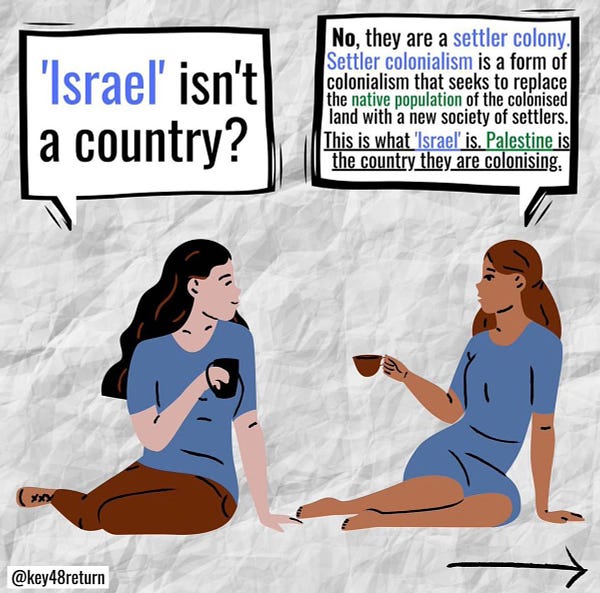
In conversations with Israeli settlers, Ben-Yishai often found that they believed they were entitled by God to take all land where Palestinians reside.
April 16, 2026 , Brad Reed for Common Dreams https://www.commondreams.org/news/west-bank-ethnic-cleansing
West Bank settler attacks on Palestinians are “rather sophisticated, organized, and funded systematic actions,” with the goal of “cleansing” the entire region, said journalist Ron Ben-Yishai.
An Israeli war correspondent who has been described as having deep ties to the Israel Defense Forces said that intensifying settler violence in the occupied West Bank appears to be “ethnic cleansing.”
In an column published by Ynet titled “This looks like blue and white ethnic cleansing,” journalist Ron Ben-Yishai wrote that, during a recent tour of the West Bank, he observed “a disturbing reality” of Israeli teenagers “who go on ‘intimidation tours’” in Palestinian villages, attacking Palestinians while members of the Israeli military frequently either stand by or actively join in the attacks.
“In some cases, these are reservists who also identify ideologically with the rioters, and therefore stand by and do not prevent them from going wild—and sometimes even help them,” explained Ben-Yishai. “Even in the regular IDF units stationed in the territories, there have been quite a few cases in which commanders and fighters have deviated from the norms and the IDF’s code of ethics for religious-nationalist reasons.”
In conversations with Israeli settlers, Ben-Yishai often found that they believed they were entitled by God to take all land where Palestinians reside.
“The confident reliance on God’s command as the answer to all moral and practical questions and concerns,” he wrote, “gave me a disturbing feeling that this was a type of Jewish terrorism motivated by religious and nationalist motives.”
Ben-Yishai also described ways in which Israeli settlers surround Palestinian communities “in order to prevent them from moving freely and strangle them economically.”
Taken as a whole, Ben-Yishai concluded that the Israel settler attacks on Palestinians are a “rather sophisticated, organized, and funded systematic actions—with the long-term strategic goal being to ‘cleanse’ most of” the West Bank and Gaza of Palestinian presence.
In a social media post, geopolitical analyst Shaiel Ben-Ephraim explained how significant it was for someone like Ben-Yishai, whom he said has “the deepest ties to the IDF of any reporter,” to describe West Bank settlers’ actions as ethnic cleansing.
“Observers have been saying for years that what is happening in the West Bank is ethnic cleansing,” he wrote. “But now voices from the heart of the Israeli consensus are admitting it as well.”
Israel May Be Preparing to Permanently Reoccupy Southern Lebanon
Negotiations may end up stopping bombs on Beirut, but are unlikely to end Israel’s expanding south Lebanon occupation
.By Shireen Akram-Boshar , Truthout, April 16, 2026
n April 16, U.S. President Donald Trump announced a 10-day ceasefire in Lebanon, set to begin later that day. Although Lebanese President Joseph Aoun and Prime Minister Nawaf Salam welcomed this announcement, it is unlikely to put a stop to Israel’s expanding occupation of south Lebanon. In the hours before the announcement, Israel continued to bomb Lebanon’s south, bombing a school as well as the last main bridge connecting the south of the country to the rest of Lebanon.
The announcement came after a meeting on April 14, in which U.S. Secretary of State Marco Rubio hosted Lebanon and Israel’s ambassadors for the first diplomatic talks between the two countries since the early 1990s, a move that is likely to cause further turmoil in Lebanon. In a statement after the meeting, the U.S. explained that direct negotiations would be launched at a later date, and that objectives included the disarming of Hezbollah. Additionally, it asserted that mediation would be limited to the U.S., and that Lebanon’s reconstruction would be linked to negotiations with Israel.
A day after the envoys met in Washington, D.C., Israel launched another round of strikes on southern Lebanon, pushing forward with its invasion of the south even as it purportedly moves toward “peace.” Israel’s strikes reportedly killed 20; at the same time, Israel issued yet another forced displacement order for residents of the south. Days earlier, protesters in Beirut mobilized against the Lebanese government’s planned negotiations with Israel.
The push for direct negotiations between Israel and Lebanon came after Israel’s massive attacks on Lebanon on April 8. Hours after a fragile ceasefire took effect in the U.S.-Israeli war with Iran on April 7, Israel escalated its attacks on Lebanon, unleashing the most violent assault of its six-week war on the country. Iran and Pakistan — which mediated the U.S. ceasefire with Iran — insisted that a halt to attacks on Lebanon was part of the agreement, but Israeli Prime Minister Benjamin Netanyahu and Trump claimed otherwise. Israel’s military declared that “the battle in Lebanon is ongoing,” while renewing expanded evacuation orders for southern Lebanon.
Israel’s wave of attacks on April 8 clearly aimed to pressure the Lebanese government to further capitulate to Israel’s wishes. Throughout that morning, Israel bombed areas of southern Lebanon, attacking residential buildings as well as medical vehicles and a medical center. In the early afternoon, Israel escalated, unleashing more than 100 airstrikes in less than 10 minutes, bombing residential and commercial areas across Beirut as well as in southern Lebanon and the eastern Bekaa Valley. These airstrikes killed at least 357 people and wounded more than 1,200, marking the deadliest day of Israel’s current assault on the country. Airstrikes struck residential complexes, bridges, grocery stores, a funeral procession in a cemetery, and a university hospital………………………………………………………………………………………………………………………………………………………………………………………………………………………….
A Genocidal Aggression
Israel began its latest escalation in its war on Lebanon on March 2, when Hezbollah fired rockets at Israel after the U.S.-Israeli assassination of Iranian leader Ali Khamenei. In reality, Israel had already been waging a protracted war on southern Lebanon since 2024. The ceasefire that marked the end of Israel’s 2024 war on Lebanon did not see an end to Israel’s attacks on the south of the country. In a familiar pattern from Gaza, the agreement essentially became a one-way ceasefire, with Israel attacking south Lebanon on a regular basis and continuing to occupy areas of the south between November 2024 and March 2026. According to the UN, Israel violated the 2024 ceasefire more than 15,000 times.
Since March 2, Israel has carried out a campaign of collective punishment, particularly of the Shia-majority regions of Lebanon, and has expanded its occupation of the south of the country. Israel’s assaults, and in particular its occupation of the south, have forced 1.2 million people — 20 percent of the country’s population — to flee their homes, creating a severe displacement crisis. Israel is also working to exploit frustrations with Hezbollah and sectarian tensions within Lebanon to push the country toward civil strife or even civil war.
This current war adds to the prolonged list of catastrophes that Lebanon has already been facing:………………………………………………………………………………………………………………………………………………………………………………………….
Israel’s expansion of its war on Shia-majority areas of Lebanon uses methods from its genocidal war on Gaza. Israel has waged mass ethnic cleansing of the population of the south of Lebanon, as well as the southern suburbs of Beirut — both of which have largely been depopulated throughout the course of the war. The Israeli military has issued numerous expulsion orders as it invades and pushes towards the Litani River — some 20 miles north of Lebanon’s border with Israel — while destroying civilian infrastructure……………………………………………………………………………………………………………………………………………. https://truthout.org/articles/israel-may-be-preparing-to-permanently-reoccupy-southern-lebanon/?utm_source=Truthout&utm_campaign=8b318324c6-EMAIL_CAMPAIGN_2026_04_16_09_07&utm_medium=email&utm_term=0_bbb541a1db-8b318324c6-650192793
‘THIS IS NOT SELF-DEFENSE’: UN EXPERTS BLAST ISRAEL’S ASSAULT ON LEBANON AS WAR CRIME
April 16, 2026, ScheerPost Staff, https://scheerpost.com/2026/04/16/this-is-not-self-defense-un-experts-blast-israels-assault-on-lebanon-as-war-crime/
As Israel intensifies its bombardment of Lebanon, a group of United Nations experts is now saying plainly what much of the political class refuses to: this is not self-defense—it is a violation of international law.
In a sharply worded joint statement, two dozen UN special rapporteurs condemned the ongoing assault as “a blatant violation of the UN Charter” and “an affront to the international legal order,” warning that the scale and timing of the attacks—launched even as ceasefire talks were underway—represent a deliberate destruction of any remaining path to peace.
What’s unfolding is not just escalation—it’s acceleration.
According to reports, Israeli forces unleashed one of the largest coordinated strike campaigns in Lebanon in decades, leveling towns, hitting civilian infrastructure, and killing rescue workers in so-called “triple-tap” strikes—attacks that target first responders arriving at the scene.
The human toll is staggering. Over a million people—more than a fifth of Lebanon’s population—have been displaced since March. Thousands are dead. Hundreds of thousands of children have been forced from their homes, with UNICEF warning that “nowhere is safe.”
But beyond the numbers is the pattern.
The Israeli and Lebanese governments are once again attempting to come together for peace—at least on paper.
But even that fragile possibility comes wrapped in uncertainty. In a Truth Social post published just before midnight, Donald Trump said he was “trying to get a little breathing room between Israel and Lebanon.”
“It has been a long time since the two leaders have spoken—like 34 years,” he added, without specifying who would attend or where the talks would take place. As the death toll has now risen to 2,164, with 7,061 wounded as of today.
UN experts point to what they describe as “domicide”—the systematic destruction of homes and civilian infrastructure—combined with mass displacement orders that leave entire populations with nowhere to return. Under international law, they warn, this constitutes crimes against humanity and war crimes.
UN human rights experts are now sounding the alarm in unmistakable terms: Israel’s latest wave of strikes on Lebanon—launched within hours of a ceasefire announcement—constitutes not self-defense, but a “blatant violation of the UN Charter” and a direct assault on the international legal order. In a coordinated bombardment hitting more than 150 locations in minutes, hundreds were killed and injured, entire neighborhoods were reduced to rubble, and over a million people have been driven from their homes—an unprecedented displacement crisis that experts warn reflects a deliberate pattern of “domicide” and collective punishment. The scale, timing, and targeting of civilian areas, they argue, not only undermine any remaining prospects for peace but rise to the level of war crimes and crimes against humanity under international law, raising urgent questions not just about the attacks themselves—but about whether any system of global accountability still exists.
And yet, the bombs continue to fall.
The statement does not just call out Israel—it directly challenges the United States, Israel’s primary military backer, urging Washington to use its leverage to halt the assault. That pressure, so far, has not materialized in any meaningful way.
Instead, the gap widens—between what international law says and what global power allows.
The Art of the Deal Is War
April 11, 2026, ScheerPost Staff, https://scheerpost.com/2026/04/11/the-art-of-the-deal-is-war/
In a moment that was supposed to signal de-escalation, the United States and Iran announced a temporary two-week ceasefire—only for it to begin unraveling almost immediately. Within hours, accusations of violations surfaced, Israeli airstrikes hit Lebanon, and the fragile illusion of diplomacy gave way to a more familiar reality: war continuing under a different name. As makes clear, this is not an end to conflict—it is a transition into a more dangerous and uncertain phase.
Ben Norton’s latest analysis cuts through the fog with clarity and urgency. His reporting lays out a pattern that is as old as U.S. foreign policy itself: agreements made publicly, undermined privately, and ultimately discarded when they no longer serve imperial interests. Norton points to immediate violations following the ceasefire announcement, particularly Israel’s bombing campaign in Lebanon, which Tehran argues was explicitly included in the terms of the deal. Washington denies this. Both sides claim victory. Both cannot be telling the truth.
At the heart of Norton’s analysis is a deeper indictment—not just of this ceasefire, but of a broader strategy. The so-called diplomacy surrounding Iran, he argues, often functions less as a path to peace and more as a tactical pause: a chance to regroup, rearm, and reposition. This aligns with a long historical record in which negotiations are used as cover for escalation rather than resolution. From the collapse of the nuclear deal to repeated ceasefire breakdowns in Gaza, the pattern is consistent—and deadly.
But this moment is not just about broken promises. It is about shifting global power. Norton highlights how Iran has leveraged its strategic position—particularly control over the Strait of Hormuz—to exert real pressure on global energy markets. The consequences are already rippling outward: rising oil prices, supply chain disruptions, and the early tremors of what could become a global economic crisis. Even in the unlikely event that peace were to hold, the damage has already been set in motion.
Perhaps most striking is the contradiction at the center of this ceasefire. The U.S. reportedly issued sweeping demands—limiting Iran’s military capacity, restricting enrichment, and reshaping regional alliances—while Iran presented its own conditions, including the lifting of sanctions, withdrawal of U.S. forces, and a halt to all aggression, including in Lebanon. Each side claims the other agreed. The reality, as Norton bluntly frames it, is simple: someone is lying.
This is why Norton’s video is essential viewing. It doesn’t just recount events—it exposes the mechanics of power behind them. It forces us to confront uncomfortable questions: What does a ceasefire mean when bombs continue to fall? What is diplomacy worth when it is used as a weapon? And how should the world respond when the architects of “peace” are the same actors perpetuating war?
For ScheerPost, reposting and amplifying this analysis is not just about sharing information—it is about challenging the narratives that normalize endless conflict. Because if this moment teaches us anything, it is that war no longer begins with declarations. It begins with agreements.
And sometimes, it never really stops.
From the very start of his video, Norton underscores a crucial reality often buried beneath headlines: this ceasefire is temporary, fragile, and possibly strategic rather than sincere. He warns that even in a “best-case scenario,” the war has already triggered a global energy shock—one that will take months, if not years, to fully unfold. Inflation, supply chain breakdowns, and rising food and fuel prices are not side effects—they are central consequences of this conflict. The war doesn’t pause when bombs stop falling; it continues through markets, shortages, and economic strain felt worldwide.
At the heart of Norton’s analysis is a deeper indictment—not just of this ceasefire, but of a broader strategy. The so-called diplomacy surrounding Iran, he argues, often functions less as a path to peace and more as a tactical pause: a chance to regroup, rearm, and reposition. He points specifically to how a two-week ceasefire could allow U.S. and allied forces to restock depleted weapons systems and prepare for the next phase of escalation. This aligns with a long historical record in which negotiations are used as cover for escalation rather than resolution.
Norton also highlights one of the most revealing contradictions: both Washington and Tehran claim the other agreed to their demands. The U.S. reportedly pushed a sweeping 15-point plan, while Iran published its own 10-point proposal, including sanctions relief, recognition of its regional position, and an end to attacks across all fronts—including Lebanon. These positions are fundamentally incompatible. As Norton bluntly frames it, one side is not telling the truth—and history suggests where skepticism should fall.
Perhaps most striking is his breakdown of what he calls Trump’s “art of the deal” in practice: agreements are made, selectively followed, and then reinterpreted to justify further escalation. It is not diplomacy—it is leverage through deception. And in this case, it may already be unfolding again.
But this moment is not just about broken promises. It is about shifting global power. Norton emphasizes that Iran has demonstrated significant leverage through its control of the Strait of Hormuz, a chokepoint through which roughly 20% of the world’s oil supply passes. That leverage has already disrupted global markets and forced the U.S. to the negotiating table—whether in good faith or not.
This is why Norton’s video is essential viewing. It doesn’t just recount events—it exposes the mechanics of power behind them. It forces us to confront uncomfortable questions: What does a ceasefire mean when bombs continue to fall? What is diplomacy worth when it is used as a weapon? And what happens when economic warfare becomes indistinguishable from military conflict?
A conflict of attrition: Iran’s bet on asymmetric warfare
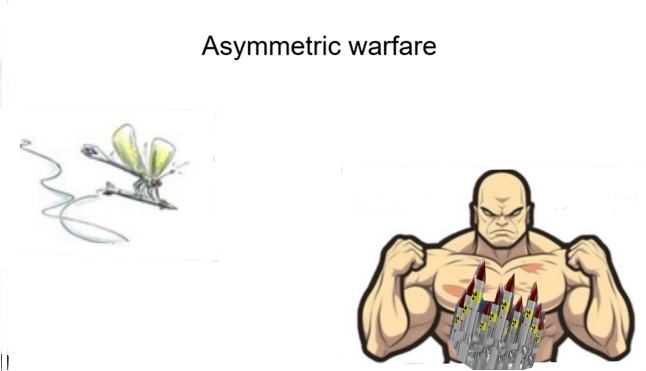
Destabilizing the global economy is perhaps Iran’s most visible and salient use of asymmetric warfare. Tehran has used artillery strikes, sea mines, and electronic warfare to impede transit through the Strait of Hormuz, dominating a vital maritime chokepoint through which a significant portion of the world’s fossil fuels and fertilizers transit.
By Spenser A. Warren | Analysis | April 7, 2026, https://thebulletin.org/2026/04/a-conflict-of-attrition-irans-bet-on-asymmetric-warfare/?utm_source=ActiveCampaign&utm_medium=email&utm_content=Iran%20s%20bet%20on%20asymmetric%20warfare&utm_campaign=20260409%20Thursday%20Newsletter
Around midnight on March 30, crewmembers on the bridge of the oil tanker Al Salmi were rocked by a large explosion. Hours later, fires still raged on the ship’s deck. The explosion was caused by an Iranian drone strike. The Al Salmi is not an adversary warship; its crew are not enemy combatants—it is a civilian vessel owned by the Kuwait Petroleum Corporation.
Like others on civilian oil tankers, this attack was intended to disrupt energy supplies and threaten regional security. In short, it’s part of Iran’s asymmetric warfare effort—which includes the use of several types of disruptive technologies—over the course of its ongoing conflict with the United States and Israel.
For Iran—in overall military terms far weaker than the United States—an asymmetry strategy attempts to counter expensive, often exquisite US capabilities with cheaper, lower-tech weapons and tactics designed to target critical American vulnerabilities. Most visibly, this strategy has included the use of mines, drone boats, and anti-ship missiles to close the Strait of Hormuz. Additionally, Iran has used drone strikes against US assets and those of its regional partners, cyberwarfare, and missile strikes against economic and civilian targets in Israel and the Gulf States. These drone attacks deplete the stockpiles of interceptor missiles defending US and allied bases and infrastructure, degrading air-defense capabilities and increasing political and economic pressure against continued American engagement.
The Trump administration appears to have been taken off guard by at least some of Iran’s tactics, including attempts to close the Strait of Hormuz. A degree of uncertainty is unsurprising given the nature of both asymmetric warfare and disruptive technologies. However, such tactics have been at the center of Iranian strategy for decades, and analysts have explicitly predicted the closure of the Strait of Hormuz in the event of a US-Iran war.
Thus far, Iran’s warfare has to some degree degraded American and Israeli capabilities, increased pressure on Washington, and hampered the global economy. While Iran has employed emerging or evolving technologies as part of its efforts, it is also using older technologies to significant effect. But Tehran’s strategy has serious limits, and the United States and Israel have exacted a significant toll on Iran’s military capabilities over the course of the war, now in its sixth week. Overall, this war has shown both the ways that weaker opponents can leverage asymmetric advantages to significant effect and how stronger opponents may still be able to limit the ultimate impact of asymmetric tactics.
Use of asymmetric warfare and disruptive tech. Recognizing its marked conventional imbalance against countries such as the United States and Israel, Tehran has been preparing to fight such a war for years and thus developing a range of technologies and strategies. Iran’s war effort has one overarching goal: survival. To try to achieve it, Iran has pursued tactics that appear to be aimed at three instrumental sub-goals: it has sought to degrade American and Israeli offensive capabilities; attempted to increase political pressures to end the war quickly; and sought to disrupt the global economy to increase economic pressure on Washington.
To target American, Israeli, and partner assets, Iran has used both ballistic missiles and drones. Coming into the war, Iran had a large and diverse missile force that included short- and intermediate-range ballistic missiles. Some estimates placed the number of the Iranian ballistic missile arsenal at around 3,000. Recently, Iran showcased a possibly extended range for some of its ballistic missiles, firing two at a joint US-UK base at Diego Garcia, well beyond the stated maximum range of their capabilities. At this range, Iranians could strike parts of Europe, Africa, and Asia, as well as naval targets in the Indian Ocean and Mediterranean, previously thought safe. To conduct the attempted strike, it’s possible that Iran modified space-launch assets. However, the reliability of such strikes is questionable: One of the two missiles broke up during flight, while the second proved vulnerable to air and missile defenses from Diego Garcia.
Iran’s drone arsenal, which dates to the 1980s, has yielded significant innovations despite producing mostly cheap and expendable, drones. The low cost of these systems, combined with their accuracy and reliability, has allowed Iran to deploy large numbers of them against specific targets, overwhelming defenses. This means Iran can launch enough drones to make a survival rate of only 10 to 20 percent acceptable.
Israel, the United States, and other American partners in the Persian Gulf have succeeded in intercepting many Iranian missiles and drones, limiting the effectiveness of Iran’s strikes. But the interceptions have taken a significant toll on American and partner forces. The United States reports a Terminal High Altitude Area Defense (THAAD) intercept success rate of 90 percent. But this level of effectiveness comes at a high burn rate, potentially using more than 30 percent of its total stockpile of THAAD interceptors in the first 96 hours of Operation Epic Fury alone.
The financial burden of interception alone is staggering. Iran’s Shahed-136 and several other of its variants are estimated to cost between $20,000 and $50,000 per unit. Interceptor costs vary significantly depending on which system a defender is using but can involve multimillion-dollar assets. Beyond the financial bottom line, the depletion of interceptor stockpiles will take many years to rectify, substantially weakening the United States regionally and globally. A reportspecifically on Terminal High Altitude Area Defense depletion suggests that just replacing these assets could take three to eight years.
Iran initially used its improving missile force and drone capabilities to strike American bases in the region but pivoted towards softer civilian targets. Among Iran’s nonmilitary targets is water infrastructure in the Gulf. On March 8, it struck a critical desalination plant in Bahrain. This strike exhibited a level of symmetry instead of asymmetry, with the attack occurring after Iran accused the United States of striking an Iranian desalination plant. Iran’s other targets have included airports and hotels, disrupting travel, tourism, and the domestic economies of several Gulf Arab states, as well as global air travel and logistics networks.
Destabilizing the global economy is perhaps Iran’s most visible and salient use of asymmetric warfare. Tehran has used artillery strikes, sea mines, and electronic warfare to impede transit through the Strait of Hormuz, dominating a vital maritime chokepoint through which a significant portion of the world’s fossil fuels and fertilizers transit.
Civilian ships have reported strikes from unknown projectiles that are likely mobile or shore-based artillery. Iranian forces have also rammed vessels with explosive-laden uncrewed “kamikaze boats.”
As of March 24th, Iran has also laid approximately a dozen Maham 3 and Maham 7 limpet mines in the Strait. Further, Tehran has made extensive use of electronic warfare targeted at military and civilian assets in and around the Gulf. While the broader use of electronic warfare has had limited effects, it has proven significantly successful in targeting shipping in the Strait of Hormuz. Maritime data and intelligence company Lloyd’s List Intelligence has tracked Iranian’s global navigation satellite systems in and around the Strait, logging more than 1,700 jamming incidents affecting 655 vessels, usually lasting around three to four hours each.
The Strait of Hormuz is not completely shut. Iran is allowing shipping from some friendly or neutral states to transit the waterway, so long as vessels comply with IRGC requirements and acquiesce to their inspections. Previous Iranian strikes on neutral shipping, however, has limited the credibility of this claim. As such, the threat of Iranian strikes, concern for seafarer safety, and exorbitant insurance costs have resulted in transit grinding to a near halt.
New and old technologies. Much has been written about the impacts of emerging and novel technologies on strategic outcomes, escalation dynamics, stability, and warfighting. Some of the technologies that Iran has used, such as uncrewed speedboats, are emerging—or at least evolutionary. However, Tehran has proven that many of its old, dated technologies, such as artillery, can still be effective tools of asymmetric warfare.
Both drones and cyber capabilities figure heavily in past literature on emerging disruptive technologies. It may be difficult to describe either, as well as electronic warfare systems, as emerging or novel today. But Iran’s capabilities are evolutionary, with its drone, cyber, and electronic warfare systems becoming increasingly advanced and effective over the past several decades. This is particularly true for Iran’s drone forces, with the country being among the pioneers of drone warfare.
Ballistic missiles, which Iran has used for strikes against US bases and softer, nonmilitary targets, are fundamentally a mid-20th century technology, even if Iran took longer to develop them. Short-range ballistic missiles and intermediate-range ballistic missiles, in particular, emerged more than 70 years ago. Similarly, sea mines are an old technology, not an emerging one, and their impact on the US-Iran war has been limited not by their technological characteristics, but by intentional American strikes against minelaying vessels.
Global impact and wider implications. Iran’s asymmetric warfare has implications beyond the ongoing war and the greater Middle East. The closure of the Strait of Hormuz has led to an increase in global oil prices. And those prices are threatening to rise further if the war doesn’t end or the strait isn’t reopened. Additionally, food prices are likely to rise due to a shortage of fertilizer, as the region is one of the main producers of nitrates necessary for crops. Further, up to 20,000 seafarers and several ships are stranded in the Persian Gulf, complicating global shipping, while the inaccessibility of Middle Eastern airports has exacerbated supply chains around the world.
The conduct of the war also provides possible lessons for future conflicts. The use of cheap drones and relatively rudimentary ballistic missile capabilities to draw down interceptor stores is indicative of forthcoming issues that United States would have if fighting a larger conventional adversary unless the American defense industrial base can rapidly ramp up production. Even then, Iran’s successes with $35,000 Shahed drones against multimillion dollar interceptors indicates a balance that favors offensive capabilities in the missile-interceptor race. Conversely, the unwillingness of the United States Navy to traverse the Strait or attempt to clear it alone indicates a balance favoring defensive capabilities and Anti-Access/Area Denial (which restricts adversaries in an area by prohibiting or limiting their ability to operate at a level of acceptable risk) strategies in naval warfare. Iran has successfully limited the world’s most powerful navy’s freedom of navigation despite losing most of its own navy—as well as most of its air force—in the war’s opening days.
Iran’s asymmetric successes may provide lessons for a potential United States-China conflict, though experts should use caution when trying to understand the similarities between the current crisis and a hypothetical one in the Taiwan Strait. First, the United States is likely to bring more forces to bear on China than it has against Iran. Second, the Taiwan Strait is far wider than Hormuz, making certain capabilities that China may use less effective. Third, additional actors—including the Taiwanese and Japanese—would play a significant role, with Taiwan seeking to counter Chinese movements in the Strait and the Japanese Maritime Self Defense Force potentially joining the fight, one much larger than partner navies are currently playing in the Persian Gulf. Finally, the Chinese military, especially the Chinese Navy, is far more capable than their Iranian counterparts. Despite these important differences, the United States should draw lessons about the missile-interceptor balance and the effectiveness of adversary Anti-Access/Area Denial capabilities.
Analyzing Iran’s many tactical and operational successes and their implications for future conflicts may be conducive to overstating their broader military successes. Despite blocking off the strait, depleting United States’ and partner interceptor stocks, and hitting military, political, and economic targets with kinetic and cyberattacks, Iran has had several military and political setbacks and has faced stark losses.
The United States has attacked Iranian minelaying ships attempting to close the Strait of Hormuz, potentially destroying several dozen of such vessels, if the Defense Department estimates are accurate. The destruction of so much of Iran’s minelaying force has likely contributed to its inability to deploy more than maybe a dozen mines in the Strait. While Iran has continued missile strikes against American, Gulf Arab, and Israeli targets, American and Israeli precision strikes and sabotage have degraded Iran’s missile capabilities, placing a ceiling on their ultimate effectiveness.
Militarily, Iran is likely to be defeated in this war, facing mounting losses with mounting time. But the war is also taking a major strategic toll on the United States. The cost of achieving America’s shifting war aims—including the decapitation of Iran’s pre-war leadership, degrading Iran’s missile forces, and potentially weakening its ability to restart a nuclear program—has been steep. The United States has burned through a large portion of its interceptor stockpile. The war has placed a high level of stress on the U.S.S. Gerald Ford aircraft carrier and its crew, hampering its future readiness. And Iran has struck and destroyed some critical assets, most important an E-3 Sentry aircraft that is part of the airborne warning and control system. Each of these losses reduces American readiness to respond to crises or counter great power adversaries in the short to mid-term future.
Normalizing zionist terrorism against Palestine, Lebanon, Sudan, Syria, Yemen, Iraq, Iran
Organizing Notes, Bruce Gagnon, April 09, 2026
Pakistan confirmed US and Iranian delegations will meet Friday in Islamabad, with V-P Vance supposedly leading the American team and Ghalibaf heading Iran’s. However, Iran informed mediators its participation is conditional on a Lebanon ceasefire—a condition Washington explicitly rejected. Trump named Jared Kushner and Steve Witkoff as special envoys for behind-closed-doors negotiations.
- New footage documents the effects of the occupation’s bombing of a building in the Tellat al-Khayat area of Beirut, Lebanon.
- The Pentagon: Operation Epic Fury is currently paused, objectives have been achieved, and US forces remain on high alert.
- Sheikh Ali Reza Panahian (Iranian Twelver Shia Scholar & official): “If we leave Lebanon to its fate, God will leave us to ours. If we withdraw from the temporary Zionist regime, it will not withdraw from us. We must secure a possible agreement with the U.S. by destroying Israel”.
- Tehran Metro displays slogans and banners including the phrase ‘We will not abandon Lebanon’. A lot of anger among Iranians tonight for ceasefire violations in Lebanon. One man on the street says, ‘We don’t want this cursed ceasefire if our brothers & sisters in Lebanon are being slaughtered. They stood by us, now we should stand by them’.
- Terrorist Netanyahu: The Zionist entity announces its withdrawal from the ceasefire agreement with Iran. The ceasefire will not include Hezbollah, and we will continue striking them. Yesterday we dealt Hezbollah its biggest blow since Operation Siren (the Pager).
- The United States officially announces that the agreement does not include Lebanon and threatens Iran with escalation if it reneges on the agreement. Trump on Lebanon: ‘That’s part of a separate skirmish, okay?’ And the Trump admin says they will be discussing their 15 points, not Iran’s 10 points. (Recall the Native Americans told us that the ‘White man speaks with a forked tongue’.)
- White House spokesperson, Karoline Leavitt: ‘Iran submitted a 10-point proposal, which was ignored by the President’. JD Vance will not be able to take part in negotiations with Iran in Pakistan due to security concerns —Trump told the New York Post. That leaves perennial liars Witcoff and Kushner. Both real estate crooks and not statesmen which are needed but the US doesn’t have any.
- The ceasefire already going down the hill – fast. The death cult bombed a Chinese New Silk Roads railway INSIDE Iran. US-Israel don’t want peace. They are out to take down all BRICS+ nations. The collective west is in a war to stop the fall of the colonial genocide project. This is a war of massive desperation.
- Iranian National Security Expert Mostafa Najafi: ‘Pakistan’s mediation should be approached with skepticism and caution. It is a country heavily reliant on Saudi Arabia financially, and since Trump came to power, it has sought various ways to curry favor with Washington! It is not unlikely that what is happening in Lebanon is the result of Pakistan’s cunning, acting as a covert agent for the Saudis! The Saudis harbor animosity toward Hezbollah in Lebanon no less than that of Israel! To what extent can Pakistan be relied upon to convey messages’?
- Don’t forget Pakistan’s very popular Imran Khan, the former Prime Minister, is rotting in prison on trumped up charges because he dared support true peace in regional hotspots around the globe.
- Iran has emerged as victorious in the public mind throughout the entire world.
- New York Times: ‘Trump faces political pressure preventing him from resuming the war’. Who could be exerting pressure? The American people? Yes. Global public opinion? Yes. The Iranians, Lebanese, Palestinians, people in Yemen and Iraq? Yes. Then who wants Trump to keep the war going? Israel, Wall Street and the military industrial complex….along of course with the Epstein class. ………………………………………………………………………………………………………………………………………………………………………………………………………………………………………………….https://space4peace.blogspot.com/2026/04/normalizing-zionist-mobster-terrorism.html
Mass Destruction in Southern Lebanon as Israeli Forces Use ‘Gaza Tactics,’ Level Villages
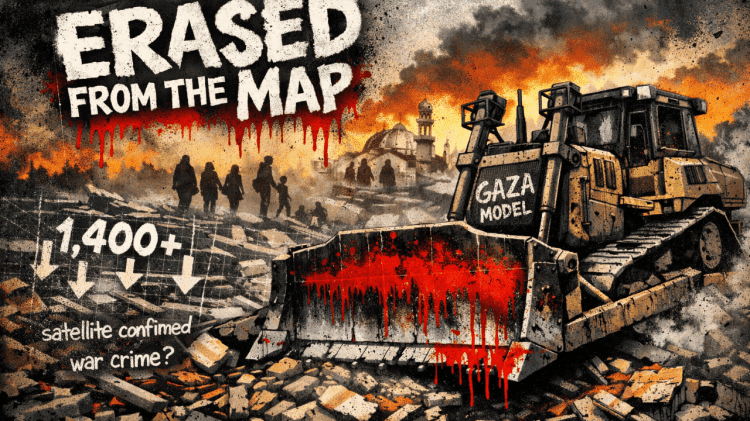
Satellite images confirm over 1,400 buildings destroyed in Israeli invasion
by Jason Ditz | April 16, 2026, https://news.antiwar.com/2026/04/16/mass-destruction-in-southern-lebanon-as-israeli-forces-use-gaza-tactics-level-villages/
Israeli officials have been saying they intended to apply a Gaza Strip model to the invasion of Lebanon, but the extent of the destruction inflicted on the southern part of Lebanon in the first month and a half of the war is even bigger than initially feared.
New reports from the BBC are that they’ve visually confirmed more than 1,400 buildings destroyed in the course of the Israeli offensive using satellite imagery and that, given the limited access on the ground, the true number is potentially far higher.
Images show that villages like Taybeh have been effectively erased, and while it’s being done concurrently with an invasion and occupation, much of the actual destruction is being inflicted by Israeli military bulldozers and demolition crews, explicitly destroying the buildings.
That’s illegal under international law, though the IDF maintains they do “not allow the destruction of property unless there is an imperative military necessity.” In as much as Israel is wiping entire villages off the map systematically and demolishing civilian residences, it would be a real legal challenge to argue that was actually a military necessity above and beyond territorial ambitions on the Israeli far-right.
It’s not only the villages. Part of a UNESCO-listed historical site in Shamaa, the shrine of Prophet Shimon al-Safa, was bulldozed by Israeli forces before its ruins were further leveled by artillery fire. It’s a religious site that includes a Shi’ite mosque.
Here again, the destruction of a shrine with aspects dating back to the 11th century is going to fuel long-term resentment about the Israeli offensive, but importantly, it would also be difficult to argue that such an ancient shrine had any specific, immediate military requirement to be destroyed.
Israel’s promise of Gaza tactics seems definitely to have come to pass, but beyond Israeli military intentions to install more permanent military bases on Lebanese soil, practical policy has been forced mass displacement and systematic destruction of civilian infrastructure, both war crimes under international law.
Jason Ditz is Senior Editor for Antiwar.com. He has 20 years of experience in foreign policy research and his work has appeared in The American Conservative, Responsible Statecraft, Forbes, Toronto Star, Minneapolis Star-Tribune, Providence Journal, Washington Times, and the Detroit Free Press.
Netanyahu Doctrine: How one man’s war addiction is consuming Israel, Lebanon, and the World

The concept of Greater Israel – a territory stretching from the Nile to the Euphrates, encompassing all of modern-day Israel, the Palestinian territories, Lebanon, Jordan, Syria, Iraq, Kuwait, Saudi Arabia, and parts of Turkey – is not a fringe fantasy. It is the stated aspiration of the Netanyahu government.
Israel is not being destroyed by its enemies. It is being destroyed by its own internal contradictions. The addiction to war, the messianic ideology, the economic unsustainability, the exodus of the educated – these are not external threats. They are internal cancers.
15 April 2026 Dr Andrew Klein, https://theaimn.net/the-netanyahu-doctrine-how-one-mans-war-addiction-is-consuming-israel-lebanon-and-the-world/
From the ‘Villa in the Jungle’ to the ‘Greater Israel Nightmare’
I. Introduction: The Doctrine of Perpetual War
On October 7, 2023, Israel suffered the worst terrorist attack in its history. Hamas militants crossed from Gaza, unimpeded, and killed and tortured Israeli civilians. That day alone should have disqualified Benjamin Netanyahu from office. In most political systems, he would have been driven from power long ago.
Instead, he did what he has always done: he escalated.
What emerged from the ashes of October 7 is what analysts now call the Netanyahu Doctrine – a security strategy based not on containment, not on deterrence, but on perpetual war. As Netanyahu himself told military officers:
“No more containment of threats. No more the idea of the ‘villa in the jungle’, where one hides from predators beyond the wall. On the contrary: if you don’t go into the jungle, the jungle comes to you.”
The doctrine is simple: preventive attacks against every perceived threat, the creation of buffer zones through the seizure of neighbouring territories, and the constant use of force as the only guarantee of security. It is a doctrine born of trauma, shaped by political expediency, and devoid of any long-term diplomatic vision.
This article examines the Netanyahu Doctrine in action: in Gaza, in Lebanon, in Syria, and against Iran. It documents the destruction, the displacement, and the erosion of Israel’s international standing. It argues that Netanyahu is not a strategist – he is an opportunist. He does not plan for the long term. He plans for the next distraction.
And the world is always distracted.
II. The Greater Israel Dream: From the Nile to the Euphrates
The doctrine is not about security. It is about expansion. The buffer zone is not the goal. The settlements are the goal. The land clearance is not for defence. It is for colonisation.
The concept of Greater Israel – a territory stretching from the Nile to the Euphrates, encompassing all of modern-day Israel, the Palestinian territories, Lebanon, Jordan, Syria, Iraq, Kuwait, Saudi Arabia, and parts of Turkey – is not a fringe fantasy. It is the stated aspiration of the Netanyahu government.
This is not a fringe position. It is the official policy of the Netanyahu government. And it is being executed.
III. Lebanon: The Pattern Repeats
The same pattern as Gaza. The same destruction. The same rubble.
On March 2, 2026, Israel launched an offensive against Hezbollah in Lebanon. The stated goal was to create a “buffer zone” up to the Litani River, approximately 30 kilometres north of Israel’s border, to protect northern Israeli communities from Hezbollah rockets.
The reality is different. The buffer zone is not a buffer. It is a land grab. The territory up to the Litani is not needed for defence. It is needed for settlements.
Defence Minister Israel Katz has been explicit:
“All houses in villages near the Lebanese border will be destroyed, in accordance with the model used in Rafah and Beit Hanoun in Gaza, in order to permanently remove the threats near the border.” Displaced residents will not be allowed to return south of the Litani “until the safety and security of residents of northern Israel is guaranteed” – a condition that may never be met.
The human cost in Lebanon (as of April 2026):
- 1,268 people killed in Israeli strikes, including 125 children and 52 medics
- 303 killed in a single day (April 8, 2026) – one of the deadliest bombings ever inflicted on Lebanon
- 1,200+ killed and 1.2 million displaced since March 2
- 1,094 confirmed martyrs and 3,119 injured according to the Lebanese Ministry of Health.
The air force can project power anywhere. The ground troops are not needed for security. They are needed for clearance.
IV. Conflicting Views: Military vs. Political Leadership
The Israeli military and political leadership are not aligned. The military leaders want a buffer zone. The political leaders want settlements.
In early April 2026, the Israeli army proposed a revised set of objectives for its operations in Lebanon, limiting the goal of disarming Hezbollah to areas south of the Litani River, rather than across the entire country. The proposal triggered sharp disagreements with Israel’s political leadership, leading to the postponement of a cabinet meeting.
Foreign Minister Israel Katz was among those who opposed the plan. Under the alternative military approach, the army would focus on the large-scale destruction of villages in South Lebanon and the forced displacement of their citizens to establish a buffer zone.
The gap is not a failure of communication. It is a feature. The ambiguity provides cover. The confusion provides deniability.
The military leaders can say: “We were only establishing a buffer zone.”
The political leaders can say: “The military recommended it.”
And the settlers move in.
V. The Economic Cost: Israel Cannot Afford This War
The Netanyahu Doctrine is not sustainable. The economic numbers are stark.
The cost to Israel:
The defence budget has ballooned. The army needs approximately 15,000 more soldiers, half of them for ground combat units. Chief of Staff Eyal Zamir warned the government: “I am raising 10 red flags. If this continues, the Israeli army will collapse from within.”- The ultra-Orthodox community, which relies heavily on state benefits, is expected to triple by 2065, pushing the burden on non-Orthodox households to the equivalent of 60,000 shekels ($19,370) a year.
- Foreign investment is down. Institutional investors have been moving money out of the country since the 2008 financial crisis.
- More than 150,000 people have left Israel in the past two years, and more than 200,000 since the current government took office in December 2022. The educated upper class are more able to leave – they speak English, can find jobs, and are more exposed to international media.
The cost to Lebanon:
The Lebanese economy, already in freefall, is being shattered. The destruction of infrastructure, the displacement of 1.2 million people, and the loss of agricultural land in the south will take decades to repair.- Sectarian tensions are rising. Non-Shi’a Lebanese are increasingly ostracising the Shi’a community, viewing them as a liability that brings Israeli bombs. The country’s fragile social fabric is tearing apart.
The Netanyahu Doctrine is not about security. It is about expansion. And expansion costs money that Israel does not have.
VI. The Sabra and Shatila Precedent
This is not the first time Israel has invaded Lebanon. It is not the first time the world has been distracted. And it is not the first time the consequences have been catastrophic.
In 1982, Israeli forces invaded Lebanon and besieged Beirut. On 16 September, under Israeli supervision and protection, Lebanese Forces militias entered the Palestinian refugee camps of Sabra and Shatila. For 43 hours, they tortured and killed everyone they came across. They crushed the heads of children and babies against walls. They raped women and girls before slaughtering them. They dismembered their victims.
An estimated 3,500 to 4,500 Palestinian and Lebanese civilians were killed.
The Israeli government did not deny that it had overseen the camps. It denied knowledge of the massacre, despite order number 6 of the Israel Defense Forces command stating that “the refugee camps are not to be entered” and that “searching and mopping up the camps will be done by the Phalangists/Lebanese Army.”
The Kahan Commission found Israeli Defence Minister Ariel Sharon “personally responsible for ignoring the danger of bloodshed and revenge.” He was forced to resign.
The world was shocked. The world moved on. And Israel invaded Lebanon again.
The Netanyahu Doctrine is not new. It is the same doctrine, dressed in new clothes, enabled by a distracted world, and executed with unprecedented brutality.
VII. The UN Warning: ‘The Gaza Model Must Not Be Replicated’
The international community is not silent. But its warnings are being ignored.
UN Secretary-General Antonio Guterres has issued a warning cry, stressing that the model of destruction witnessed in the Gaza Strip must not be repeated in Lebanese territories. He described the humanitarian repercussions as severe and requiring immediate intervention to prevent a slide towards a comprehensive catastrophe.
Stanford Law Professor Tom Dannenbaum warned that destroying all homes near the Lebanese border would not meet the standard of “absolute military necessity” required by the laws of war. “The unnecessary destruction of property can qualify as a war crime,” he said. Katz’s comments barring residents from returning home “strongly indicate an illegal policy of long-term or permanent displacement.”
European countries have called on Israel to avoid further escalation. Canadian Prime Minister Mark Carney said Israel’s occupation of Lebanese territory was a “violation of their territorial sovereignty” and condemned it.
The world is not silent. But the world is distracted.
VIII. The Netanyahu Doctrine: A Record of Failure
Jonathan Freedland, writing in The Guardian, sums up the Netanyahu record:
“This is now the fourth time in a row – in Gaza, once in Lebanon and twice in Iran – that Netanyahu’s boasts of total victory and the removal of existential threats have been exposed as empty promises.”
The failures are clear:
Gaza: Netanyahu promised “total victory” over Hamas. After a two-year campaign that killed approximately 70,000 people, Hamas still rules the ruins of half of Gaza.- Lebanon (first round): Netanyahu boasted that he had “vanquished” Hezbollah, destroying its ability to menace northern Israel. Hezbollah continues to fire rockets.
- Iran (first round, June 2025): Netanyahu described the 12-day confrontation with Iran as a “historic victory that will stand for generations.” Eight months later, Tehran was once again said to pose an existential threat.
- Iran (second round, February-April 2026): Iran still has a stockpile of enriched uranium. Its rulers remain in place, more hardline than before. Tehran has demonstrated a mighty deterrent – a chokehold on the global economy in the form of the Strait of Hormuz.
As Yair Golan, the Israeli opposition politician and former general, observed: Netanyahu “does not know how to turn military achievements into political security.” There is no attempt to seize diplomatic openings, no effort to turn Israel’s enemies’ enemies into friends.
The Lebanese government and much of its people are desperate to be rid of the Hezbollah cuckoo in their nest. But Netanyahu speaks to them only through bombs.
IX. The Strait of Hormuz Distraction
The timing of the Lebanon escalation is not accidental. The world is focused on Trump and Iran. The media is focused on oil prices. The public is focused on the cost.
On February 28, 2026, the US and Israel launched joint military strikes against Iran. The war has spread across the Middle East. The Strait of Hormuz is effectively blockaded. Oil prices have spiked. Inflation is rising. The global economy is bleeding.
Netanyahu is taking advantage. He always does.
The Iranian threat is not existential. It is useful. The fear is the tool. The distraction is the opportunity.
Netanyahu has been playing this game for decades. He is very good at it.
X. What This Means: The Erosion of Israel’s Standing
The Netanyahu Doctrine has gained nothing. And it has come at a monstrously high price.
Most obviously, in the lives of all those killed – whether in Rafah or the Bekaa Valley or Israel itself. But it has also inflicted perhaps irreparable damage on Israel’s standing in the world. Every day Netanyahu remains in post, he makes his country more of a pariah.
The Knesset has passed a racist law that will, in effect, impose the death penalty on Palestinians convicted of terrorist murderers – but not Jews. The bill was driven by Itamar Ben-Gvir, but Netanyahu went out of his way to vote for it.
Israel is not being destroyed by its enemies. It is being destroyed by its own internal contradictions. The addiction to war, the messianic ideology, the economic unsustainability, the exodus of the educated – these are not external threats. They are internal cancers.
The collapse will not be dramatic. It will be bureaucratic. The economy will contract. The allies will defect. The public will turn. The reservists will refuse. The militias will fight each other.
The Strait of Hormuz crisis will pass. The oil prices will stabilise. The media will move on.
But the land in Lebanon will not return. The settlements will not be dismantled. The buffer zone will become permanent .
The Netanyahu Doctrine is not about security. It is about expansion. The existential threat is not a threat. It is an excuse.
And the world is too distracted to notice.
XI. A Final Word
The Netanyahu Doctrine is a death spiral – for Israel, for Lebanon, for the region. It is a doctrine of perpetual war, sustained by distraction, enabled by silence, and paid for with the bodies of the innocent.
The question is not whether Israel will collapse. The question is how many more must die before the world stops looking away.
Sources……………………………………..
Not a Ceasefire—A Reset: The Quiet Expansion of Palestinian Incarceration
April 14, 2026, ScheerPost Staff, https://scheerpost.com/2026/04/14/not-a-ceasefire-a-reset-the-quiet-expansion-of-palestinian-incarceration/
While global attention drifts, the machinery of occupation does not slow—it tightens. Arrests replace releases. Silence replaces scrutiny. And behind it all, a system of incarceration continues to expand, largely out of view.
In this episode of Rattling the Bars, host Mansa Musa sits down with scholar-activist Dr. Rabab Abdulhadi to expose what they describe as a revolving door of detention shaping daily life for Palestinians. What emerges is not simply a prison system—but an architecture of control that extends far beyond prison walls, touching every aspect of Palestinian existence.
More than 9,000 Palestinians are currently held in Israeli custody—a number that continues to climb even after high-profile prisoner releases.
Despite the release of nearly 2,000 Palestinian prisoners during what was labeled a ceasefire in October 2025, a new wave of arrests has already erased that moment. Today, more than 9,000 Palestinians are again held in Israeli custody, according to Dr. Rabab Abdulhadi, with the total constantly shifting as new detentions replace those released.
“It’s a revolving door,” she explains. “You release prisoners—and then you arrest more.”
At the center of that system is administrative detention—imprisonment without charge, without trial, and often without end. Detainees may never be told what they’re accused of, while access to lawyers, family, and even basic information is severely restricted.
Two legal systems operate side by side: one for Israeli settlers, another for Palestinians. Even children are caught in it—Palestinian minors can be prosecuted as adults under military law, stripped of protections others receive.
Inside prisons, conditions continue to deteriorate: reduced food, denied medical care, and near-total isolation since October 2023.
But the system doesn’t end at the prison gates.
Night raids, arbitrary arrests, and movement restrictions turn daily life into an extension of confinement—what Abdulhadi describes as a reality where prison becomes a condition, not just a place.
Children grow up inside it. Families are fractured by it. Entire communities are shaped around it.
And still, the cycle continues.
“The people will resist because they want to live,” Abdulhadi says. This is not a story of what has happened—but of what is still happening, in front of our very eyes.
About children who can identify military aircraft before they can read. Children who grow up navigating checkpoints, raids, and the constant threat of arrest.
“They should not be scared every night,” Abdulhadi says. “They should not have nightmares.”
1 This Month
10 June – Assessing Canada’s Investments in Small Modular Nuclear Reactors – https://zoom.us/meeting/register/IiqHA5feRhaEBycOLNTJlA#/registration



Cuba Is Not a Failed State – It Is a Besieged State
PETITION: “Global Appeal to Endorse Palestinian Right of Return of Refugees”
To see nuclear-related stories in greater depth and intensity – go to https://nuclearinformation.wordpress.com
-
Archives
- June 2026 (89)
- May 2026 (306)
- April 2026 (356)
- March 2026 (251)
- February 2026 (268)
- January 2026 (308)
- December 2025 (358)
- November 2025 (359)
- October 2025 (376)
- September 2025 (257)
- August 2025 (319)
- July 2025 (230)
-
Categories
- 1
- 1 NUCLEAR ISSUES
- business and costs
- climate change
- culture and arts
- ENERGY
- environment
- health
- history
- indigenous issues
- Legal
- marketing of nuclear
- media
- opposition to nuclear
- PERSONAL STORIES
- politics
- politics international
- Religion and ethics
- safety
- secrets,lies and civil liberties
- spinbuster
- technology
- Uranium
- wastes
- weapons and war
- Women
- 2 WORLD
- ACTION
- AFRICA
- Atrocities
- AUSTRALIA
- Christina's notes
- Christina's themes
- culture and arts
- Events
- Fuk 2022
- Fuk 2023
- Fukushima 2017
- Fukushima 2018
- fukushima 2019
- Fukushima 2020
- Fukushima 2021
- general
- global warming
- Humour (God we need it)
- Nuclear
- RARE EARTHS
- Reference
- resources – print
- Resources -audiovicual
- Weekly Newsletter
- World
- World Nuclear
- YouTube
-
RSS
Entries RSS
Comments RSS
 nuclear-news