GOP Senator Suggests Trump Should “Finish” Iran With Nuclear Bomb

The senator, Roger Marshall, said Trump has to “take everything into consideration” if ceasefire progress stalls
.By Sharon Zhang , Truthout, April 22, 2026, https://truthout.org/articles/gop-senator-suggests-trump-should-finish-iran-with-nuclear-bomb/?utm_source=Truthout&utm_campaign=9a9827f3a8-EMAIL_CAMPAIGN_2026_04_22_09_22&utm_medium=email&utm_term=0_bbb541a1db-9a9827f3a8-650192793
epublican Sen. Roger Marshall (Kansas) said in an interview on Wednesday that President Donald Trump faces issues on par with those of World War II with regard to the U.S. and Israel’s war with Iran, seeming to suggest that Trump should nuke Iran in order to prevent the country from ever having nuclear weapons.
Marshall was asked by a Newsmax anchor if he believes that the U.S. military will “have to go in and finish this job” if negotiations between the U.S. and Iran for a permanent ceasefire continue for several more weeks.
“I think that’s right,” said the senator. “Previous presidents have had the same issues on what to do. Think about President Truman’s decision on dropping the bomb, and D-Day for President Eisenhower.”
“You’ve got to take everything into consideration,” Marshall said, including whether negotiations are “truly making progress or not.”
Earlier in the interview, the senator said that the U.S.’s aggression against Iran is necessary because “Iran can never, never, ever have a nuclear weapon.”
Related Story
“If Iran had a nuclear weapon, gasoline would be $10 a gallon, and for generations to come, Americans’ lives would be threatened,” the lawmaker said.
The statements echo Trump’s genocidal rhetoric toward Iran, including his threat to “blow up the rest of their Country” if negotiations falter on Tuesday. Legal experts have said that Trump’s indiscriminate threats against Iran as a whole, as well as his pledges to target civilian infrastructure like power plants, constitute threats to commit war crimes.
Marshall also bragged about the harm that the U.S. is causing civilians with Trump’s blockade on Iran.
“We also have this embargo working as well, the blockade, and we’re literally starving them,” said Marshall, “both financially and they can’t feed themselves either, very long.”
The use of starvation as a weapon of war is prohibited under international law.
The UN indeed warned last month that an additional 45 million people may be “pushed into acute hunger by price rises” if the conflict and closure of the Strait of Hormuz continue through June, adding to the already record high of 319 million people currently facing acute food insecurity. Iran previously pledged to open passage through the strait as a term of the temporary ceasefire agreement, but is still prohibiting ships from crossing due to Israel’s attacks on Lebanon and the U.S.’s blockade of Iranian ports, which Iranian officials have said are both violations of the ceasefire.
Republicans have previously called for the usage of nuclear weapons with impunity. Last May, Rep. Randy Fine (R-Florida), said that Israel should drop a nuclear weapon on Gaza. “We nuked the Japanese twice in order to get unconditional surrender. That needs to be the same here,” he said. “There is something deeply, deeply wrong with this culture and it needs to be defeated.”
The staunchly pro-Israel lawmaker’s statements were condemned by rights advocates — but, just weeks later, Republican leaders granted him a seat on the high-powered House Foreign Affairs Committee.
This followed a remark by another Republican House lawmaker, Rep. Tim Walberg (Michigan), who said in March of 2024 that Gaza should be attacked “like Nagasaki and Hiroshima.”
Exposed: Israeli operation to help Brits move to West Bank
Undercover investigation reveals charity touted ‘awesome’ illegal settlements and claimed it could benefit from UK tax subsidies
Martin Williams, DECLASSIFIED UK, 13 April 2026
An Israeli organisation has been caught on camera offering to help British citizens move to an illegal settlement in the West Bank.
Declassified can reveal how the group, Shivat Zion, told supporters it could benefit from UK tax subsidies – despite staff bragging about “awesome” settlements.
An undercover investigation saw the group’s “encouragement” officer discussing the support it would give settlers moving to Efrat, in the West Bank.
“You’re next to the Arabs; you’ll hear their mosques,” he was recorded saying. “But apart from this, it’s a great living standard.”
The comments were made during a Zoom call with a Jewish anti-Zionist activist, who asked Declassified to secretly film the conversation.
In February, the UK government promised to take “concrete steps in accordance with international law to counter settlement expansion”.
Foreign minister Hamish Falconer said: “Israel’s illegal settlements and decisions designed to further them are a flagrant violation of international law”.
But Declassified can reveal how Shivat Zion invited supporters to claim UK Gift Aid when making donations.
Despite being registered in Israel, it directed donations to a separate charity called UK Toremet Ltd, based near London.
In an email seen by Declassified, a representative from Shivat Zion claimed that donations “go through” the UK Toremet charity, explaining that this “ensures the donations properly reach Shivat Zion”.
If money were to be received this way, it could mean that support for illegal settlers could potentially benefit from British tax subsidies………………………………………………………………………………………………………………………………………………………………………………………………………. ‘Unacceptable’
Human rights lawyer Daniel Machover told Declassified: “Fundamental breaches of international law cannot constitute charitable purposes.”
He added: “It’s just unacceptable, really, for these things to go unhindered when it’s clear that they shouldn’t be taking place. I am really deeply disturbed that this is going on.”………………………………………………………………………………………………..https://www.declassifieduk.org/exposed-israeli-operation-to-help-brits-move-to-west-bank/
Replay: Israel’s slow ethnic cleansing of Christians from the Holy Land
Israel has used the steady decline in Palestinian Christian numbers to promote a claim that Muslims are hounding them out of the region. But the real blame lies with Israel and the foreign Churches
Jonathan Cook, Apr 21, 2026
The photo of an Israeli soldier striking a statue of Jesus with a sledgehammer in a village in south Lebanon went so viral on social media this week that even establishment outlets like the BBC felt compelled to note the desecration. Its reporting, of course, was peppered with plenty of “allegedly”s and “apparently”s, despite the Israeli military confirming that the image was real.
In fact, though rarely reported, the Israeli state has a long and ugly record of oppressing Christians, most usually Palestinian Christians, as part of concerted attempts to drive them out of the birthplace of Christianity. Why? Because the traditional and central place of Christians in Palestinian national and resistance movements undermines Israel’s efforts to promote a false narrative of an ideological divide between, on one side, a supposed Judeo-Christian civilisation and, on the other, supposed Muslim barbarity.
The very existence of Palestinian Christians complicates a simple narrative Israel needs to justify the erasure of the Palestinian people.
The desecration of the statute, though it has attracted a lot of attention, is far less significant and abhorrent than attacks on churches orchestrated by the Israeli state through its military and its settler militias. Gaza’s three churches were targeted during Israel’s genocidal rampage, part of the wider destruction of religious and cultural sites central to the local population’s identity. In July last year, settlers tried to torch the fifth-century Church of St George in the town of Taybeh, the last exclusively Palestinian Christian community in the West Bank.
Part of the reason why this systematic violence by Israel over decades against Palestinian Christians has gone so unreported is because the foreign Churches have chosen to avoid raising their voices. I explain in the latter section of the essay below why they have been so cowardly.
I was based in Nazareth, the largest Palestinian Christian community inside Israel, for 20 years. I had plenty of time to reflect on the issues I report on below. This essay was written in summer 2020 in the early stages of a Covid pandemic that left the West Bank even more isolated – and at the mercy of Israeli malevolence – than normal. But the experiences of Palestinian Christians are essentially unchanged since I wrote the piece, which is why I am republishing it now.
…………………………………………………………………………………………………………………………………………………………………………………………………….. Like the plague-bearing Greeks, visitors to Bethlehem could not avoid mixing, even if perfunctorily, with a few locals, mostly Palestinian Christians. Guides showed them around the main attraction, the Church, while local officials and clergy shepherded them into queues to be led down to a crypt that long ago was supposedly the site of a stable where Jesus was born. But unlike the Greek visitors, most pilgrims did not hang around to see the rest of Bethlehem. They quickly boarded their Israeli coaches back to Jerusalem, where they were likely to sleep in Israeli-owned hotels and spend their money in Israeli-owned restaurants and shops.
For most visitors to the Holy Land, their sole meaningful exposure to the occupation and the region’s native Palestinian population was an hour or two spent in the goldfish-bowl of Bethlehem.
A taste of occupation
In recent years, however, that had started to change. Despite the wall, or at times because of it, more independent-minded groups of pilgrims and lone travelers had begun straying off grid, leaving the Israeli-controlled tourism trail. Rather than making a brief detour, they stayed a few nights in Bethlehem. A handful of small, mostly cheap hotels like the Angel catered to them, as did restaurants and souvenir stores around the church.
In tandem, a new kind of political tourism based in and around Bethlehem had begun offering tours of the wall and sections of the city, highlighting the theft of the city’s land by neighboring Jewish settlements and the violence of Israeli soldiers who can enter Bethlehem at will…………………………………………………………
………………………………………… Shrinking population
Bethlehem’s plight – a microcosm of the more general difficulties faced by Palestinians under occupation – offers insights into why the region’s Palestinian Christian population has been shrinking so rapidly and relentlessly.
The demographics of Bethlehem offer stark evidence of a Christian exodus from the region. In 1947, the year before Israel’s creation, 85 percent of Bethlehem’s inhabitants were Christian. Today the figure stands at 15 percent. Christians now comprise less than 1.5 percent of the Palestinian population in the West Bank – some 40,000 of a population of nearly 3 million – down from 5 percent in the early 1970s, shortly after Israel occupied the territory in 1967.
In 1945 Bethlehem had nearly 8,000 Christian residents, slightly more than the 7,000 who live there today. Natural growth should mean Bethlehem’s Christian population is many times that size. There are, in fact, many times more Palestinian Christians overseas than there are in historic Palestine. The 7,000 Christians of Beit Jala, next to Bethlehem, are outnumbered by more than 100,000 family members who have moved to the Americas.
Israel ostensibly professes great concern about this decline, but actually it is only too happy to see native Christians depart the region. Their exodus has helped to make Israel’s clash of civilizations narrative sound more plausible, bolstering claims that Israel does indeed serve as a rampart against Muslim-Arab terror and barbarism. Israel has argued that it is helping Christian Palestinians as best it can, protecting them from their hostile Muslim neighbors. In this way, Israel has sought to mask its active role in encouraging the exodus.
The rapid decline in the numbers of these Christians reflects many factors that have been intentionally obscured by Israel. Historically, the most significant is that Palestinian Christians were nearly as badly impacted as Palestinian Muslims by the mass expulsions carried out by Zionist forces in 1948. In total, some 80 percent of all Palestinians living in what became the new state of Israel were expelled from their lands and became refugees – 750,000 from a population of 900,000. Those forced into exile included tens of thousands of Christians, amounting to two-thirds of the Palestinian Christian population of the time.
Palestinian Christians who remained in historic Palestine – either in what had now become Israel or in the territories that from 1967 would fall under Israeli occupation – have naturally shrunk over time in relation to the Muslim population because of the latter’s higher birth rates. Palestine’s Christians mostly lived in cities. Their urban lifestyles and generally higher incomes, as well as their greater exposure to western cultural norms, meant they tended to have smaller families and, as a result, their community’s population growth was lower……………………………………………………………………………………………..
Struggling under occupation
Israel’s oft-repeated claim that Hamas and the Palestinian Authority are responsible for the exodus of Christians out of the Holy Land is given the lie simply by examining the situation of Palestinian Christians both inside Israel, where neither Hamas nor the PA operate, and in East Jerusalem, where the influence of both has long been negligible. In each of those areas, Israel has unchallenged control over Palestinians’ lives. Yet we can see the same pattern of Christians fleeing the region.
And the reasons for Gaza’s tiny Palestinian Christian population, today numbering maybe only 1,000, to leave their tiny, massively overcrowded enclave, which has been blockaded for 13 years by Israel, barely needs examining. True, it has been hard for these Christians – 0.0005 percent of Gaza’s population – to feel represented in a territory so dominated by the Islamic social and cultural values embodied by the Hamas government. But there is little evidence they are being persecuted.
On the other hand, there is overwhelming proof that Gaza’s Christians are suffering, along with their Muslim neighbors, from Israel’s continuing violations of their most fundamental rights to freedom, security and dignity.
…………………………………………………………………………………………………………………………………. Zionism, Israel’s state ideology, draws heavily on a Christian Zionism that became popular among British Protestants more than 150 years ago. Today, the heartland of evangelical Zionism is the United States, where tens of millions of believers have adopted a theological worldview, bolstered by prophecies in the Book of Revelation, that wills a Jewish “return” to the Promised Land to bring about an apocalyptic end-times in which Christians — and some Jews who accept Jesus as their savior — will be saved from damnation and rise up to Heaven.
Inevitably, when weighed against a fast-track to salvation, the preservation of Palestinian Christians’ 2,000-year-old heritage matters little to most US Christian Zionists. Local Christians regularly express fears that their holy sites and way of life are under threat from a state that declares itself Jewish and whose central mission is a zero-sum policy of “Judaization”. But for Christian Zionists, Palestinian Christians are simply an obstacle to realizing a far more urgent, divinely ordained goal.
US evangelicals have, therefore, been pumping money into projects that encourage Jews to move to the “Land of Israel,” including in the settlements in the occupied West Bank and East Jerusalem. Their leaders are close to the most hawkish politicians in Israel, such as Prime Minister Benjamin Netanyahu.
The political clout of the evangelical movements in the US, the world’s only superpower and Israel’s chief patron, has never been more evident. The vice-president, Mike Pence, is one of their number, while President Donald Trump depended on evangelical votes to win office. That was why Trump broke with previous administrations and agreed that the US would become the first country in modern times to move its embassy from Tel Aviv to Jerusalem, effectively killing any hope for the Palestinians of securing East Jerusalem as their capital.
Given this international atmosphere, the isolation of Palestinian Christians and their leaders is almost complete. They find themselves marginalized within their own Churches, entirely ignored by foreign evangelical movements, and an enemy of Israel. They have therefore tried to break out of that isolation both by forging greater unity among themselves and by setting out a clearer vision to strengthen ties to Christians outside the Holy Land……………………………………………………………………………………………………………….
srael introduced the option of registering a new nationality, “Aramaic”, on Israeli identity cards. Israel has always refused to recognise an “Israeli” nationality because it would risk conferring equal rights on all Israeli citizens, Jews and Palestinians alike. Instead many rights in Israel are accorded to citizens based on their assigned nationalities – with the main categories being “Jewish”, “Arab” and “Druze”. “Jewish” nationals receive extra rights unavailable to Palestinian citizens in immigration, land and housing, and language rights. The new “Aramaic” category was intended to confer on Christians a separate nationality mirroring the Druze one……………………………………………………………………………………………………………………………………………………………………………………………….. https://jonathancook.substack.com/p/replay-israels-slow-ethnic-cleansing
New report lays bare media bias on Gaza

| DECLASSIFIED UK, Hamza Yusuf, 23 April 26 A comprehensive, data-rich report released today by UK media monitoring group NewsCord puts hard numbers on the UK media’s failings in reporting on Israel’s crimes in Gaza.The study analyses coverage from Al Jazeera, BBC, The Guardian and Sky News across 686 articles and 11,295 classified excerpts.The findings illustrate how the UK mainstream media methodically sanitises genocide, shields the public from reality and marginalises Palestinian experience. For example, when civilians are killed in Gaza, the BBC attributes the attack to Israel in only 50% of cases, with the Guardian only marginally better with 54%. The BBC also labels Gaza’s health ministry as “Hamas-affiliated” in 60% of death toll citations, but mentions that the United Nations considers these figures credible in only 0.6% of cases. Al Jazeera names the perpetrator at nearly twice the rate of the BBC and Guardian. References to “genocide” in UK outlets are notably limited in the dataset – 15 mentions by the BBC, 12 by Sky News, and 21 by the Guardian – compared to 58 by Al Jazeera. Just as important as how a story is told is whose story is heard: Sky News gives Israeli perspectives nearly double the space of Palestinian ones. Meanwhile, when Israeli officials declared explicit genocidal intent, this went practically unreported. The BBC never covered such statements by Israeli figures like Benjamin Netanyahu, Isaac Herzog or Yoav Gallant. This is despite some of those statements being cited in proceedings at the International Court of Justice in the case against Israel. Reflecting on the report’s findings, NewsCord founder Nima Akram said: “The data is not opinion, it’s the result of classifying thousands of articles to measure bias. These aren’t isolated incidents, they’re structural patterns that shape how millions understand the genocide in Gaza, and whose suffering deserves attention.” Their report demands the outlets publicly review their Gaza coverage against the evidence and to disclose and revise their editorial practices. Simply put, the mainstream media has failed in its duty to report Israel’s actions with accuracy, fairness and integrity. The new data leaves little room for denial. |
No Peace, Only Escalation: The Push Toward Total War With Iran
April 22, 2026 , https://scheerpost.com/2026/04/22/no-peace-only-escalation-the-push-toward-total-war-with-iran/
As ceasefire talks collapse, retired Col. Douglas Macgregor warns that Washington is not negotiating—it’s preparing for a devastating, infrastructure-targeting war that could reshape the global order.
The language of peace still lingers in official statements—but on the ground, the machinery of war is accelerating.
In this stark and deeply unsettling conversation, retired U.S. Colonel Douglas Macgregor joins Glenn Diesen to dismantle the illusion of diplomacy surrounding the Iran conflict. What’s being sold as negotiation, he argues, is little more than theater—designed to calm markets, not stop bombs.
Behind the headlines, a far more dangerous reality is taking shape: a coordinated buildup for what Macgregor describes as a potential “total war” scenario, one that moves beyond military targets and toward the destruction of an entire state’s infrastructure.
If he’s right, the question is no longer whether the war will escalate—but how far it will go, and how much of the world it will drag with it.
A cause for major concern—one that cannot be repeated enough—is this warning from Macgregor:
“There was no real path to an agreeable solution—because there was no real negotiation. When the vice president steps out mid-meeting to take a call from Netanyahu, it tells you everything. These aren’t negotiations. It suggests that Netanyahu—not Trump—is effectively calling the shots on whether we go to war.”
Highlights
- “There were no real negotiations.”
Macgregor argues the so-called peace talks were never genuine, describing them as political theater meant to project stability while preparing escalation. - Power behind the scenes:
He suggests decision-making is not fully in Washington’s hands, pointing to Israeli influence shaping U.S. military direction. - From war to state destruction:
The next phase, he warns, targets not just military assets—but bridges, power plants, oil infrastructure, and civilian systems—a shift toward dismantling Iran as a functioning state. - A global economic shockwave:
Disruptions in the Persian Gulf could trigger fuel shortages, fertilizer collapse, and famine risks across the Global South. - The limits of U.S. power:
Fighting thousands of miles from supply lines while Iran operates defensively at home creates what he calls a “home court advantage” that undermines U.S. strategy. - End of the old order:
Macgregor frames the conflict as part of a larger collapse of U.S. dominance—warning that the petrodollar system and global unipolarity may already be breaking down. - No clear path to victory:
Even with overwhelming force, he sees no realistic military outcome that delivers control—only deeper instability.
Did Iran ever Really Have a Nuclear Weapons Program?
Fariba Amini, 04/21/2026, https://www.juancole.com/2026/04/nuclear-weapons-program.html
Interview of Dr. Mehran Mostafavi by Fariba Amini
In a resolution against nuclear war initiated by philosopher Bertrand Russell and endorsed by Albert Einstein just a week before his death, they wrote: “We appeal, as human beings, to human beings, remember your humanity and forget the rest. If you do so, the way lies open to a new paradise; if you cannot, there lies before you the risk of universal death.” — July 1955, letter addressed to President Roosevelt, the Russel-Einstein Manifesto
Dr. Mehran Mostafavi* is a nuclear expert who teaches at some of the most prestigious institutions in France. Throughout the years, he has also been on various French and Iranian media outlets speaking about Iran’s nuclear energy while a vocal critic of the Islamic Republic for its repressive rule. He is also the son-in-law of a very famous Iranian, the late Abolhassan Bani-Sadr, the first President of Iran (1980-1981) who left Iran clandestinely and passed away in a suburb of Paris.
He is the 2026 recipient of Medal of Honor from CNRS (Centre National de la Recherche Scientifique).
FA: What is your field of expertise?
MM: I am a physical chemist and a professor at Université Paris‑Saclay. I have been following Iran’s nuclear policy for 20 years, and I have written several dozen articles and given hundreds of interviews about it.
FA: As an expert on nuclear energy who has done extensive research on the subject, how do you evaluate Iran’s nuclear energy program?
MM: Iran’s nuclear policy began in the late 1980s. At that time, Iran was in a difficult position in its war with Iraq, and Iraq was using chemical bombs provided by the West against Iran. In Iran, the idea gradually took shape that to deter and confront Israel, it would be better for Iran to have an atomic bomb. On the other hand, the Islamic Republic decided to complete the Bushehr reactor,
much of the work on which had been done by the Germans before the revolution, with Russian help, and various projects were launched in this field. However, Iran was forced to abandon the military program in 1992. In the civilian sphere, Iran has only the Bushehr power plant, which generates less than 2 percent of Iran’s electricity, and its fuel is supplied by the Russians.
FA: Did the Islamic Republic intend to make the bomb as Israelis have claimed? We know that Netanyahu has been declaring that Iran would have the bomb in six months since 1984. It is now 2026.
MM: Yes, Israel, even though it knows that since 1992 Iran has not been active in building a bomb and had only carried out rudimentary work before then, regularly claims that Iran will build an atomic bomb any day now—a big lie that has been repeated countless times without evidence. All Western intelligence agencies, including the U.S. one, have reported that Iran does not have a bomb-building program.
FA: The nuclear power plants were built under the Shah in the 1970’s initially in Bushehr with the help of the German company Siemens KVU. But the project was abandoned after the 1979 Revolution, damaged during the Iran-Iraq, and later completed by Russia. At that time, did anyone object to this project?
MM: At the beginning of the revolution, it was decided that Iran did not need a nuclear power plant and that it was not cost-effective to complete the Bushehr plant. This position was particularly championed by Mehdi Bazargan and Abolhassan Bani-Sadr and was eventually approved. However, in the 1990s the Islamic Republic once again resumed construction of the plant with Russian assistance.
FA: To build a nuclear bomb, you need to enrich to more than 60 percent uranium. In your opinion, was this ever done?
MM: Yes, you need to enrich it up to 90%
FA: Why did the Islamic Republic of Iran (IRI) build its nuclear facilities in Natanz and Bushehr or near cities which ultimately could be dangerous for the people?
MM: It is not particularly significant that these facilities are located a few dozen kilometers from towns. There is no risk of a nuclear explosion, but there is a risk of radioactive contamination or chemical pollution. In this respect, the facilities in Iran, even following very intense bombing by the Americans and Israelis, have not caused any serious problems.
FA: According to several U.S. intelligence services Iran was no imminent threat to the U.S. Why then did Trump push for war?
MM: Trump is a compulsive liar! Let me remind you that, following the attacks in June, he claimed that the US had destroyed Iran’s nuclear facilities, and then in March he attacked Iran on the grounds that it posed an imminent threat. We know full well that this is not true. He started the war in response to demands from Israel, which does not want any regional powers other than itself in the Middle East.
FA: We know that upon coming into office in 2016, Trump tore up the JCPOA [the 2015 nuclear deal], at the advice of the man in Tel Aviv. Today, if an agreement is made, it will probably be little different from the one that the Obama administration agreed to. Do you think there will be any significant differences?
MM: I do not believe that they will do a similar agreement.
FA: Do you believe that the IRI ever had the intention to use nuclear weapons against Israel as they claim? We know that the Israelis, even if they have never been open about it, have at least 300 nukes. So, isn’t all a sham?
MM: No, because Iran has never had the full technical capability to build a bomb. Iran is still a long way from having a bomb. Even if Iran enriches uranium to 90%, it will still take a long time – perhaps a year – before it had the capability to use the bomb. Israel has never declared its facilities and has never complied with international law. Israel is in no position to lecture other countries
FA: Don’t you think that for the IRI, this whole idea was more defensive rather than offensive?
MM: I think that over the last 20 years, Iran has used its nuclear policy to bargain with the West, and in recent years its intention has been to demonstrate that it can become a nuclear-capable country.
FA: In a recent New Yorker article dated April 6, 2026, a former CIA operative says that he was involved in getting Iranian nuclear scientist defect or be killed. We know that Mossad has been involved in the assassination of several scientists in Iran, approximately eighteen of them. Do you know of any defections?
MM: I am fully aware that Israel has eliminated several Iranian scientists. It is very interesting to note that Iran and Israel worked together in a consortium to develop the only synchrotron in the Middle East, in Jordan. It was a peaceful project for a facility intended for physicists. One of the Iranian representatives was Prof. Massoud Ali Mohamadi. The Israelis met him in Jordan during the meetings and knew him well. He was assassinated by the Israelis. He was very intelligent but was not involved in the Iranian nuclear program. He was simply assassinated because he was a great physicist.
Is There a Way out of the Iran War? (w/ John Mearsheimer) | The Chris Hedges Report.
As ceasefire talks hang by a thread, rising tensions over the Strait of Hormuz reveal a stark reality: escalation could trigger a global economic catastrophe—and the United States may have far less control than it claims.
April 21, 2026, Joshua Scheer, https://scheerpost.com/2026/04/21/is-there-a-way-out-of-the-iran-war-w-john-mearsheimer-the-chris-hedges-report/
The illusion of control is collapsing.
The story being told to the public is one of control—measured escalation, strategic pressure, and a superpower shaping outcomes in a volatile region.
The reality is something else entirely.
As the ceasefire deadline approaches, the United States is not dictating terms—it is reacting to them. Iran, through its ability to constrict or reopen the Strait of Hormuz, holds a form of leverage that no amount of rhetoric can override. Oil flows, fertilizer supply chains, shipping routes, and global food systems all run through this narrow corridor. And right now, that corridor is unstable.
What makes this moment especially dangerous is not just the risk of war—but the structure of it.
This is not a chaotic breakdown. It is a system under strain: competing pressures from Israel pushing for continued escalation, economic realities demanding de-escalation, and a U.S. leadership apparatus that appears, at times, unable or unwilling to reconcile the two. The result is a policy environment defined less by strategy than by contradiction.
In this conversation, Professor John Mearsheimer offers a blunt assessment: the United States cannot win an escalatory confrontation with Iran under these conditions. The longer the conflict continues, the more leverage shifts away from Washington and toward Tehran. Meanwhile, the global economy—already weakened—absorbs the shock in real time: energy disruptions, fertilizer shortages, rising food costs, and the creeping threat of systemic breakdown.
The war’s original objectives—eliminating Iran’s nuclear capacity, weakening its regional alliances, asserting dominance—remain unmet. In some cases, they have been reversed.
What remains is a narrowing set of options. Escalation risks triggering an economic crisis that could reverberate worldwide. De-escalation requires concessions that Washington—and its allies—have long resisted.
Between those two paths lies a fragile, temporary possibility: a ceasefire that holds just long enough to delay collapse.
Whether that window remains open is now the central question—not just for the region, but for the global system itself.
FULL TRANSCRIPT (CLEANED FOR PUBLICATION)
Iran, after initially balking, will send negotiators to Islamabad for a new round of talks with the United States less than 48 hours before the ceasefire is set to expire. Iran, however, has criticized the U.S. for violating the ceasefire from the beginning of its implementation, citing the U.S. naval blockade of the Strait of Hormuz since April 13 and the seizure of an Iranian container ship……………………………………………………………………………………………………………………………………………………………………………………………………………………………………. https://scheerpost.com/2026/04/21/is-there-a-way-out-of-the-iran-war-w-john-mearsheimer-the-chris-hedges-report/
Iran Says It Won’t Negotiate With ‘Erratic’ Trump After Genocidal Threat to ‘Blow Up’ Whole Country
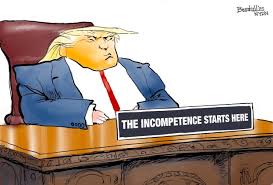
“Our assessment is that Trump effectively lacks both a coherent plan and the capacity to secure even a temporary agreement,” the official said. “His decision-making appears to be grounded in Israeli political and security assessments, conveyed to him on a daily basis.”
“Our assessment is that Trump effectively lacks both a coherent plan and the capacity to secure even a temporary agreement,” an Iranian official said.
Stephen Prager, Common Dreams, Apr 19, 2026
Iran says it has no plans to negotiate with the US after President Donald Trump said Sunday that “the whole country is going to get blown up” if Iran refuses to make a deal.
Trump claimed that Iranian officials were heading to Islamabad for another round of talks Monday with Vice President JD Vance, his son-in-law Jared Kushner, and Middle East envoy Steve Witkoff.
But Iran’s official IRNA news agency later reported that claims Iran was coming to negotiate were “not true” and described the announcement as “a media game and part of the blame game to pressure Iran.”
The Tasnim News Agency, which is linked to Iran’s Islamic Revolutionary Guard Corps, reiterated the government’s previous position that it would not negotiate unless Trump lifts his blockade of Iranian ports, which Tehran considers a violation of the ceasefire between the US and Iran.
After Trump said the blockade would continue, Iran again shut down travel through the Strait of Hormuz on Saturday, following a brief reopening Friday following the announcement of a ceasefire between Lebanon and Israel.
IRNA added that negotiators decided not to return because of “Washington’s excessive demands, unrealistic expectations, constant shifts in stance, repeated contradictions, and the ongoing naval blockade.”
An unnamed Iranian official familiar with Tehran’s internal deliberations told Drop Site News on Sunday that Tehran is prepared for a long war.
He said negotiators would prefer to make a deal with the US that would give Iran the right to enrich uranium, provide sanctions relief, and establish a long-term non-aggression framework.
But the official said Trump’s erratic behavior and maximalist demands—including that Iran surrender all its enriched uranium—are causing Iranian officials to sour on the idea that he could ever be a trustworthy negotiating partner.
“Our assessment is that Trump effectively lacks both a coherent plan and the capacity to secure even a temporary agreement,” the official said. “His decision-making appears to be grounded in Israeli political and security assessments, conveyed to him on a daily basis.”…………………………………………………………………………………………………………………………………………………………………
Trita Parsi, executive vice president of the Quincy Institute for Responsible Statecraft, said Sunday that Trump’s apparent belief that he can use threats of mass violence to bully Iran into a favorable deal is pushing Tehran further from the negotiating table
“Due to poor discipline, Trump ends up prioritizing the optics of victory over actually getting a deal,” Parsi said. “Instead of using deescalatory signals from Iran to get closer to a deal, he declares victory and seeks Iran’s humiliation, and by that, he undermines his own diplomacy.” https://www.commondreams.org/news/iran-no-talks-trump-threats
Beyond Nuclear statement on threat to Iran’s reactor
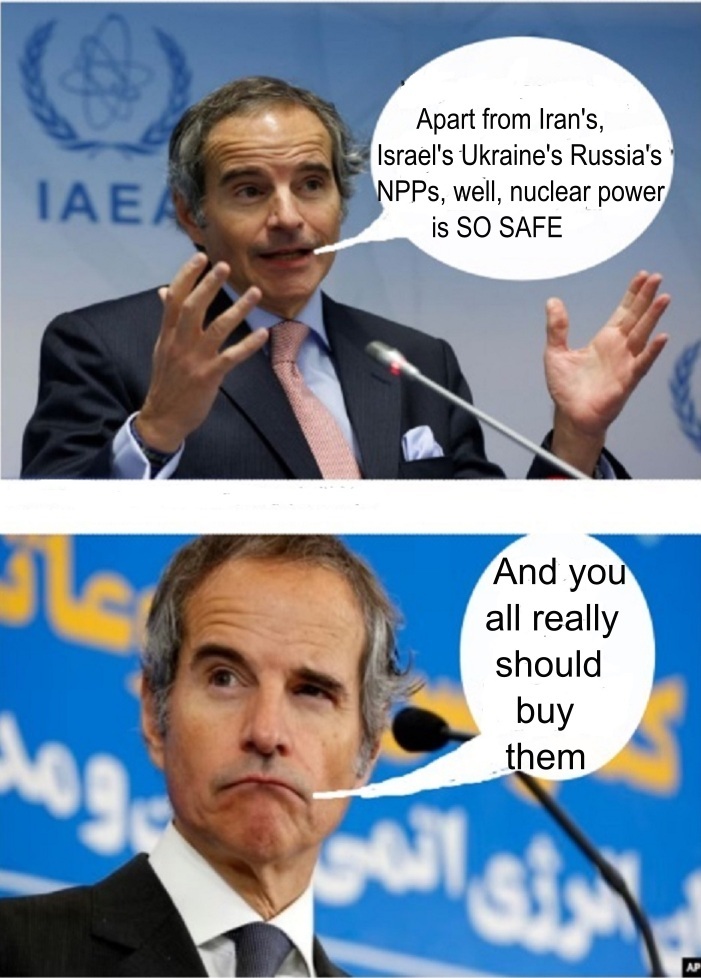
“Secretary Grossi is ignoring two key factors,” Pentz Gunter said. “The first is that the IAEA actively promotes the use and expansion of nuclear power around the world, so the agency must take responsibility for its role in the extreme danger we have found ourselves in, first in Ukraine and now Iran, with nuclear plants embroiled in war. Second, the “seven pillars” make an assumption we can now recognize as entirely unreliable — that the world leaders expected to abide by these protocols are sane and rational.
April 7, 2026, https://beyondnuclear.org/beyond-nuclear-statement-on-threat-to-irans-reactor/
Trump’s threats to obliterate power plants in Iran could lead to a fatal nuclear disaster affecting the Middle East and beyond
The recklessness of the US and Israeli bombing attacks on Iran that now threaten to potentially destroy the Bushehr commercial nuclear power plant there, represents a radiological risk of monumental proportions, warned Beyond Nuclear today.
The 1,000 megawatt Russian built VVER reactor sits on the Iranian coast. It is the same design as the reactors in Ukraine where alarm has already been raised by the International Atomic Energy Agency and other international authorities, should any be struck or seriously damaged by Russian missiles as the war in Ukraine continues to drag on.
But there has been significantly less international comment about the similar risks at Bushehr, a disturbing trend as the US president dispenses with all the norms and protocols of war and threatens to obliterate all of Iran’s critical infrastructure including power plants by midnight on Tuesday if no agreement with Iran is met by then.
“Hitting the Bushehr civil nuclear power plant would be a war crime,” said Linda Pentz Gunter, executive director of Beyond Nuclear. “The Geneva Convention specifically defines a war crime to include hitting facilities that, if damaged or destroyed, would result in extensive loss of non-combatant life,” Pentz Gunter added. “A commercial nuclear power plant certainly falls into this category.”
The particular dangers at Bushehr stem from the highly radioactive uranium fuel inside the reactor and stored in cooling pools and on-site casks. Any extended loss of power caused by an attack or a direct hit could see the fuel overheat and ignite, potentially leading to explosions. The resulting radiological releases would result in long-lasting radioactive fallout affecting vast areas in Iran, neighboring countries and beyond, contaminating agricultural land as well as sea water, an essential drinking water source for a region that relies on desalination.
The International Atomic Energy Agency’s director general, Rafael Grossi, has called for restraint, citing the “Seven Indispensable Pillars” he created to try to discourage attacks on nuclear power plants.
“Secretary Grossi is ignoring two key factors,” Pentz Gunter said. “The first is that the IAEA actively promotes the use and expansion of nuclear power around the world, so the agency must take responsibility for its role in the extreme danger we have found ourselves in, first in Ukraine and now Iran, with nuclear plants embroiled in war. Second, the “seven pillars” make an assumption we can now recognize as entirely unreliable — that the world leaders expected to abide by these protocols are sane and rational.
“Grossi is effectively clinging to his pillars like a barrelman hanging onto the mast of a storm-tossed ship about to hit the rocks while his cries of alarm are drowned out by the mayhem around him,” Pentz Gunter said.
Nuclear meltdowns deposit radioactive contamination where the wind blows, coming down during rainfall as fallout. The 1986 Chernobyl nuclear power disaster resulted in a 1,000 square mile exclusion zone, still too radiologically contaminated for human habitation even today.
Japan experienced a triple meltdown in March 2011, when three of the four Fuskushima Daiichi reactors exploded. The long gestation period for some diseases caused by persistent exposure to radiation, means that the true health outcomes from that disaster, whether fatalities or debilitating diseases, will not be known for many years.
“To set up the possibility of another Chernobyl or Fukushima in the Middle East is criminally irresponsible,” Pentz Gunter concluded. “And even though we know Iran’s nuclear facilities were merely the pretext for the US-Israeli attack, we must remember that it was President Trump during his first term who effectively tore up a perfectly effective nuclear inspection and verification agreement — the Joint Comprehensive Plan of Action — that ensured Iran stayed within the boundaries of a civil nuclear program. Maintaining the JCPOA would have been the sensible way to keep those nuclear safeguards in place.”
Trump may want out of the Iran war, but the first round of negotiations showed the challenges ahead
It seems clear that Donald Trump realizes that this war has been a catastrophe for him, regardless of what he says publicly. As the global economy barrels toward recession, he sees little use in persisting. His only option is to increase pressure on Iran with more destruction, which would only bring more Iranian retaliation and lead to an even greater global economic catastrophe.
Iran is not willing to sacrifice what it sees as its national right to enrich its own uranium for civilian use, something permitted them under the Nuclear Non-Proliferation Treaty (NPT) to which they are a signatory, and, notably, Israel is not.
By Mitchell Plitnick April 17, 2026, https://mondoweiss.net/2026/04/trump-may-want-out-of-the-iran-war-but-the-first-round-of-negotiations-showed-the-challenges-ahead/
When U.S. Vice President JD Vance took to the podium after a long day of talks to end the American and Israeli war of choice on Iran, he made one thing clear. This had not been a serious attempt to reach a deal.
Although the talks went on for more than twenty hours, it’s just one day of negotiations. The very fact that the headline was that there had been no “breakthrough” in just one day displayed a fundamental lack of seriousness.
Despite Vance’s attempt at drama, neither side shut the door on continuing negotiations. The U.S. has even proposed extending the ceasefire, as Pakistani emissaries have arrived in Tehran to arrange further talks. Washington has even pressed Israel for a ceasefire in Lebanon, something that does not sit well with either Israeli Prime Minister Benjamin Netanyahu or the Israeli Jewish population.
At the same time, the United States has moved to block Iranian ships from using the Strait of Hormuz, a sort of counter-blockade, and has dispatched thousands more troops to the region.
What does all of this mean?
Trump wants a way out of this war, but does he have one?
It seems clear that Donald Trump realizes that this war has been a catastrophe for him, regardless of what he says publicly. As the global economy barrels toward recession, he sees little use in persisting. His only option is to increase pressure on Iran with more destruction, which would only bring more Iranian retaliation and lead to an even greater global economic catastrophe.
In that context, Trump’s move to “blockade Iran’s blockade” in the Strait of Hormuz is best understood as an attempt to appear strong before being forced to accept terms that end this war with Iran in a stronger position than it was before.
Trump even went so far as to force Netanyahu to accept a brief pause in Lebanon. That’s not an easy feat, as Netanyahu is reeling in Israel from the lack of positive results from the wars in both Iran and Lebanon. Israeli Jews support both wars but believe Netanyahu has not handled them correctly, based on the lack of tangible political gains for Israel since they began, in contrast to what they see as military triumphs.
But while Trump may want a way out of the war, finding that exit may still be difficult.
One option is for Trump to simply leave the ceasefire in place without an agreement. That means the Strait of Hormuz remains blocked, whether by Iran alone or by both Iran and the United States. Iran and Israel would continue to fight, but the fighting would likely be limited to those two countries, leaving the Gulf Arab states out.
That isn’t a very appealing option for Trump. He could talk about having “changed the Iranian regime,” but the reality of economic depression, ongoing fighting, and a strengthened Iran would be clear.
Moreover, Israel has been more vulnerable to both Iranian and Hezbollah attacks, as their supply of interceptors has dwindled. The U.S. can replenish them, but probably not at prior levels and not as quickly as Israel would need. The image of Israel getting pounded by Iranian and Hezbollah missiles is not one Trump wants his constituents to see.
Another option is simply to double down on force. Iran has already shown what the result would be if Trump chooses that option. Their recent attacks on Saudi Arabia’s East-West Pipeline, which serves as an alternative to the Strait of Hormuz for the export of oil, were a warning of Iran’s ability to do a lot more damage to oil exports from the region. Iran has also threatened to close the Bab al-Mandeb Strait in the Red Sea. Ansar Allah (the Houthis) in Yemen have shown they can do this at will and that there is little the U.S. can do about it.
The third option is a realistic agreement. This seems to be the one Trump wants to take. The problem he faces is that American demands are unrealistic, and the compromises he would have to make would be extremely hard to sell as anything but capitulation.
According to reports, the talks in Islamabad crashed on the key issues of Iran’s nuclear program, its support of armed non-state actors in the region, and control of the Strait of Hormuz.
That was backed up by the words of a U.S. official who told Axios reporter Barak Ravid that the American red lines were that Iran would:
- End all uranium enrichment;
- Dismantle all major nuclear enrichment facilities;
- Surrender all highly enriched uranium;
- Accept an American peace, security and de-escalation framework that includes regional allies;
- End funding for regional allies like Hamas, Hezbollah, and Ansar Allah;
- Fully open the Strait of Hormuz, charging no tolls for passage.
If the American spokesperson was accurate in calling those “red lines” rather than negotiating points, they’re non-starters.
Iran has offered to suspend all nuclear enrichment activity for five years, countering a U.S. demand that they agree to a twenty-year suspension. Iran had, before the war, agreed not to stockpile enriched uranium, which would make it impossible for them to ever accumulate enough nuclear material for a bomb.
But Iran is not willing to sacrifice what it sees as its national right to enrich its own uranium for civilian use, something permitted them under the Nuclear Non-Proliferation Treaty (NPT) to which they are a signatory, and, notably, Israel is not.
Demanding Iran give up that option is not realistic. Yet that very unrealistic demand has been made more pressing by the war itself. By attacking Iran, Israel and the United States have reinforced the evidence for what happens to countries that abandon the pursuit of nuclear weapons. Iran can look at itself along with Libya, Iraq, Syria, and Ukraine on one hand and North Korea on the other to see this obvious logic.
The path out of that paradox is Iran’s returning to the nuclear monitoring that it agreed to before Trump tore up the nuclear deal, and the U.S. accepting that Iran can enrich its own uranium, within reasonable limits. That creates a mutual deterrence; Iran would have to break off the inspections to even begin enriching uranium beyond its immediate needs, which it wouldn’t do unless the U.S. and Israel continue their belligerence.
It appears that such a resolution would be acceptable to Iran, but it would mean a significant climbdown for Trump. And, obviously, Israel will not accept it and would have to be strictly restrained by the United States. Yet it remains the only reasonable way out.
It is notable that there was no mention of Iran’s missile and drone capabilities among the red lines. That seems to imply that the United States has already backed away from a condition that amounts to convincing Iran to disarm itself in the face of not only American and Israeli aggression but also the understandably renewed hostility toward it from the Gulf Arab states.
That realization by the Americans reflects someone getting in Trump’s ear and making some headway on issues that are just absurdly unrealistic. Similarly, while Vance might have included support for non-state allies in his talks, that has not featured prominently in White House statements or in Trump’s stream-of-consciousness ramblings since the talks in Islamabad.
The nuclear issue seems to have the most prominent position, and that is always better. It is the issue on which Iran has the most flexibility, largely because it is based on Western fears and propaganda more than it has been based on reality until now. Yes, the war has probably made Iran’s nuclear ambitions much more real. The death of Ayatollah Ali Khamenei means his fatwa against nuclear weapons is no longer in effect, and, as noted, Iran has been given much more incentive to pursue a nuclear weapon than ever before.
Still, the fact that they were even willing to offer a five-year suspension of nuclear activity and have not stated any opposition to the idea of international inspectors would indicate that Iran is open to significant compromise on the nuclear issue.
The Strait of Hormuz may be more problematic. Iran has always and will always have the ability to disrupt shipping in the Strait. No American threat or international anger can change that simple fact of geography.
On the other hand, while neither Iran nor the United States has ratified the UN Convention on the Law of the Sea, which guarantees safe and unimpeded passage to peaceful vessels through many waterways including the Strait, most of the world views Iran’s threats to passage in the Strait and to its plan to collect tolls for passage as unacceptable.
Iran wants to use its ability to threaten passage through the Strait to help press for the reparations they need and, more importantly, to ease the sanctions that have restricted Iran’s ability to participate in the global economy, particularly regarding trade with Asia and Europe. It is likely that they would abandon the legally dubious idea of collecting tolls in the Strait if they can re-enter the Asian and European markets and receive reparations for this war.
Again, though, this would be a huge concession from the United States. It would be impossible to sell such a concession as anything but a massive defeat, even to Trump’s most sheepish supporters. Iran would be significantly stronger and economically healthier than it was before the war. There’s no way to dress that up.
Israel’s Lebanon land grab
Finally, there is Lebanon. Trump surely had to exert extreme pressure to get Netanyahu to agree to a ceasefire, even a brief one.
Israel has not tried to hide the fact that this aspect of the war is a pure land grab. Netanyahu intends to extend Israeli control, if not its border, north to the Litani River. He is not about to abandon that goal lightly, even if he is forced to accept that his long-sought war on Iran is a failure.
The talks in Washington between Israel and Lebanon are a farce. No agreement there is possible, because what Israel wants is a permanent presence in Lebanon and the disarmament of Hezbollah.
This Lebanese government would be open to a reasonable agreement with Israel, but those terms are obviously unreasonable. No country, especially not one as small as Lebanon, would simply give up a huge chunk of its territory.
But this Lebanese government wanted to address Hezbollah. They wanted to bring Hezbollah into the Lebanese military, thus disarming them and integrating them into a single, national force. That was never going to be easy, but Israel never stopped attacking Lebanon during the so-called “ceasefire” brokered in late 2024. If they really wanted the Lebanese government to eliminate Hezbollah as an independent fighting force, that was exactly the opposite of what they would have done.
The Lebanese are attending these meetings to help convince Trump to rein Israel in. Israel is doing it to convince Trump that they are willing to cooperate with his effort to end the Iran war. In both cases, the effort is merely a show.
Trump will take the exit from Iran as soon as he can find it, and Israel will find it hard to bring him back in again now that he has seen why all other U.S. presidents didn’t fall for Netanyahu’s “bomb Iran” pitch. But he will have little reason to exert the political influence that would be needed to keep Israel from occupying southern Lebanon permanently. Israel and Iran will also likely continue lobbing missiles at each other, even though Israel’s ability to fight Iran without direct American support is extremely limited.
That’s the best-case scenario for Trump, and it’s not a good one. It is entirely possible that, rather than admit a huge defeat, he will decide to keep fighting Iran to no possible better outcome.
Trump made this bed. He can either lie in it or take one of the less disastrous options to get out of it. Unfortunately for the world, he is not a man prone to making good decisions. .Plitnick is correct a fatwa in shiism if comes it from your marja is considered binding and upon his death is rescinded, apologies. I asked an al khoei who called for an unrelated reason. it’s not like that in sunni practise, can one never safely assume, i thought it would be ok this time.
Israel is racing to expand West Bank settlements before new political realities end its era of impunity
Israel is approving the construction of new West Bank settlements at an unprecedented rate because it knows its window of impunity is closing — especially if Iran emerges intact from the war and the Republicans lose the U.S. midterms.
By Qassam Muaddi, Mondoweisss , April 19, 2026
The Israeli cabinet approved the construction of 34 new West Bank settlements last week, bringing the total number approved by the ruling coalition led by Israeli Prime Minister Benjamin Netanyahu up to 103. The cabinet decision is the largest batch of new settlements approved in decades, breaking the record set by a previous landmark decision in June 2025, which approved 22 new settlements.
While the latest decision has been overshadowed by the regional conflagrations related to the U.S.-Israeli war on Iran, its timing indicates that Israel perceives a closing window for its ability to entrench its colonial project in its own backyard — the West Bank — in light of shifting realities that might see Iran emerging from the war intact and in a strengthened position regionally.
These developments come as Israel has reportedly been “coerced” to halt its onslaught against Lebanon by U.S. President Donald Trump, forcing it to accept a ceasefire with Hezbollah. Meanwhile, the very fact that the U.S. agreed to a temporary ceasefire with Iran was condemned by the entirety of the Israeli political establishment, both from within Netanyahu’s camp and from the Israeli opposition, who lambasted Netanyahu’s “failure” to overthrow the Iranian government.
While Israel will attempt to use the ceasefire in Lebanon to force the hand of the Lebanese government to accept the ongoing occupation of the southern part of the country, little military progress has been made against Hezbollah, which has reportedly rebuilt its military capabilities since it was bloodied by Israel in October 2024. Iran has also continued to show strength in the region through exerting control over the Straits of Hormuz, and has been described by analysts as an emerging “major world power.”
This is the crucial backdrop to Israel’s moves in the West Bank. It seeks to further cement its de facto annexation of the territory in a race against time to entrench its colonial project in the only geographic region where it can proceed with comparatively minimal resistance.
The closing window
The impatience of the Israeli decision is not only suggested by the magnitude and speed of the cabinet approval, but also by the fact that Israel is in an election year, with polls indicating that Netanyahu and his hardline allies, Finance Minister Bezalel Smotrich and National Security Minister Itamar Ben-Gvir, show a low chance of winning…………………………………………………………………………………………………………………………………………………………………………………. https://mondoweiss.net/2026/04/israel-races-against-time-to-expand-west-bank-settlements-before-it-is-limited-by-new-regional-realities/
THE US HAS NO ROUTE TO VICTORY IN IRAN WHICH WILL LIKELY EMERGE STRONGER
THIS ADVENTURE MAY DO TO AMERICAN COLONIALISM WHAT SUEZ DID TO THE BRITISH AND THE FRENCH
Ian Proud, Apr 19, 2026, https://thepeacemonger.substack.com/p/the-us-has-no-route-to-victory-in?utm_source=post-email-title&publication_id=3221990&post_id=194637482&utm_campaign=email-post-title&isFreemail=true&r=1ise1&triedRedirect=true&utm_medium=email
I was pleased to meet Laith Marouf, a War Correspondent and Executive Director of Free Palestine TV for the first time.
As Laith is based in Lebanon, we discussed the recently announced 10 day ceasefire with Israel, and whether it might endure. This ceasefire had clearly been imposed on Netanyahu by Trump, but what was the prevent Israel from returning to position normal after any putative peace deal over Iran? Laith laid out the historical and religious reasons why Iran would never abandon Lebanon purely to obtain a peace deal with the USA. Other people I have spoken to talk about the muti-confessional nature of Lebanon but that, come what may, Hezbollah remains a powerful force in politics, that won’t be eradicated by air strikes.
So, Israeli conquest of Lebanon will likely never be possible for as long as Iran remains a powerful force in the region.
We therefore discussed the US and Israel’s inability to inflict a defeat on Iran. There is no evidence that the US has the capability or the political capital at home to endure an extended military engagement with a country, thousands of miles from the US, geographically and by population size far bigger than any adversary confronted in the twenty first century, and with the support of the two big regional military and economic powers, Russia and China.
The only way that the US can impose a defeat on Iran is to precipitate regime change and despite Trump’s ramblings about regime change equating to a change of leader (sic!) the proposition that a modern-day Shah can be returned to the throne in Tehran have never looked possible or remotely likely.
That leaves the US militarily stuck in a conflict that is causing global economic shocks that are mobilising both the developing world and parts of the western world against American hegemony. Iran may be to US colonialism what Suez was to the British and French.
Laith situated this latest war in the context of what he describes as the 100 years of humiliation for the Muslim world.
Iran differs from the Arab world in having civilisational integrity and history that will endure this latest attempt at subjugation by western powers. War in the other hand is putting significant pressure on the smaller more fragmented governments across the Arab world which are reliant for survival on the umbrella of US hegemony which is collapsing.
We briefly considered the risk of nuclear escalation in Iran and the likelihood that this, ultimately, would backfire spectacularly on the west with a potentially enormous flood of refugees heading west, not to mention the intense ecological damage and the impact that would have on the global economy. Lots of people pontificate about Israel using tactical nukes, which, while I consider Netanyahu desperate to cling to power, I consider unlikely if only because it would likely sever the hitherto ironclad relationship with the US and lead to more immediate and existential risks to the functioning and integrity of Israel as a state.
We discussed Israel’s nuclear capability and how it can coexist in a more peaceable way with other countries in the region. Laith drew on the example of Apartheid South Africa which was also nuclear armed but which gave up its nuclear programme and completely shifted its model of governance to abandon the rule of white supremacists.
In the completely hypothetical scenario of Israel doing the same – which looks wholly unlikely anytime soon – I asked about the position of Jewish people in Israel under theoretical Palestinian rule. We considered the outlier role of the Jewish community in Iran which is the only major subset of Judaism that isn’t hardwired into the ecosystem of Zionism as a potential model.
In the final analysis, whenever the war against Iran ends, however it ends, Iran appears likely to emerge in a stronger position as a regional superpower than it held before the war started, indeed, before Donald Trump abandoned the JCPOA deal. US power and influence, on the other hand, continues to shatter, ushering in a multipolar world with greater clarity.
A genuinely thought-provoking discussion which I’d encourage you to watch via the link above. I had a microphone problem so my audio is terrible, though still audible.
TRUMP SAYS “ENOUGH”—BUT ISRAEL PUSHES ON IN LEBANON WAR LATEST
April 17, 2026 , https://scheerpost.com/2026/04/17/trump-says-enough-but-israel-pushes-on-in-lebanon-war-latest/
A fragile pause in the widening Middle East war is colliding with escalating rhetoric, conflicting claims, and continued violence on the ground.
In a flurry of social media posts, President Donald Trump declared that the United States had directly intervened to halt further Israeli strikes on Lebanon.
“Israel will not be bombing Lebanon any longer,” Trump wrote.
“They are PROHIBITED from doing so by the U.S.A. Enough is enough!!! Thank you!”The statement, issued amid a rapidly evolving ceasefire framework, suggests a level of U.S. leverage over Israeli military operations that officials and analysts have long debated—but rarely seen asserted so bluntly.
Yet even as Trump claimed de-escalation, events on the ground told a more complicated story.
Reports out of southern Lebanon indicated continued violence, including a drone strike that killed at least one person despite the announced ceasefire. Meanwhile, Israeli Prime Minister Benjamin Netanyahu signaled no intention of ending the broader campaign.
“Israel is “not done yet” with Hezbollah, Netanyahu said, describing a strategy of pursuing both military pressure and political negotiation simultaneously.”
Hormuz Reopens—But Under Pressure
At the same time, Iran announced that the Strait of Hormuz—one of the world’s most critical oil chokepoints—would be reopened to commercial shipping during the ceasefire period.
Iranian Foreign Minister Abbas Araghchi stated:
“Passage for all commercial vessels through [the] Strait of Hormuz is declared completely open for the remaining period of ceasefire.”
Trump quickly echoed the announcement, declaring the strait: “COMPLETELY OPEN AND READY FOR BUSINESS AND FULL PASSAGE.”
But the reopening came with contradictions. While signaling relief for global markets—oil prices reportedly dropped sharply following the news—the U.S. simultaneously maintained its military pressure.
“The naval blockade will remain in full force and effect … until such time as our transaction with Iran is 100% complete,” Trump said.
In other words: open waters, closed fists.
Conflicting Claims, No Clear Deal
Despite Trump’s sweeping declarations—including that Iran had agreed to “never close the Strait of Hormuz again”—there was no immediate confirmation from Iranian officials.
On the ground and in diplomatic channels, uncertainty remains the defining feature of this moment.
Negotiations are reportedly ongoing, with proposals for a temporary framework lasting several weeks. But key issues—including sanctions relief, uranium enrichment, and regional military activity—remain unresolved.
Even Trump appeared to acknowledge the disconnect, insisting:
“This deal is not tied, in any way, to Lebanon.”
That separation may be more rhetorical than real.
Ceasefire or Illusion?
The current 10-day ceasefire between Israel and Lebanon has already shown signs of strain. While some displaced civilians have begun returning home, analysts warn that the underlying dynamics of the conflict remain unchanged.
“Hezbollah will keep its ‘finger on the trigger’” if violations continue, one warning noted, underscoring how quickly the situation could unravel.
And with more than a million people displaced and thousands killed in recent weeks, the pause—however real or temporary—offers only limited relief.
A War Paused, Not Ended
What emerges from the past 24 hours is not clarity, but contradiction.
A ceasefire declared—and violated.
A waterway reopened—under blockade.
A bombing campaign “prohibited”—while leaders vow to continue fighting.The language of peace is here. The reality of war has not left.
And as global powers posture over oil routes, naval blockades, and regional leverage, the question is no longer whether the conflict can pause—
—but whether anyone is actually in control of it.
As the U.S.–Israeli war on Iran spills across the region, a sudden ceasefire in Lebanon is being framed as a breakthrough—but the reality is far more unstable. Iran’s influence appears to have forced a pause on one front, reopening the Strait of Hormuz and easing global economic panic, while Israel signals it has no intention of ending its campaign against Hezbollah. At the center of it all is Donald Trump, claiming control over both escalation and restraint—yet presiding over a situation where bombs still fall and tensions continue to rise.
In this live discussion from Breakthrough News, analysts break down what’s really driving the ceasefire, how battlefield dynamics forced political shifts, and whether Washington is actually capable—or willing—to restrain Israel. Is this the beginning of de-escalation, or just a temporary pause before a wider war?
“I Felt Like a Monster”: Israeli Soldiers Break Silence on Gaza—and the System Behind It

And what lingers in these testimonies is not just what was done, but what it did to those who carried it out. Soldiers speak of shame, of dissociation, of an inability to reconcile their actions with any moral framework. The military calls it PTSD. But the soldiers—and some experts—call it something else: moral injury. Not fear of what happened to them, but horror at what they themselves became.
April 18, 2026, Joshua Scheer, https://scheerpost.com/2026/04/18/i-felt-like-a-monster-israeli-soldiers-break-silence-on-gaza-and-the-system-behind-it/
The official narrative isn’t just cracking—it’s being dismantled by the very people who carried it out.
In a devastating investigation, Israeli soldiers are now speaking in their own words about what they did, what they witnessed, and what their commanders allowed in Gaza. These are not secondhand accusations or political attacks. They are confessions—raw, detailed, and impossible to dismiss.
“I Felt Like a Monster”: Israeli Soldiers Expose ‘Moral Injury’—and a System Built on Silence
They describe opening fire on unarmed civilians identified only as “targets” on a drone feed. They describe prisoners humiliated, abused, and discarded. They describe executions—men surrendering with hands raised, only to be shot and later labeled “terrorists.” And they describe something just as revealing as the violence itself: a system where none of this leads to accountability.
What emerges is not chaos. It is structure.
This is not the “fog of war.” It is policy by practice—kill first, justify later, investigate never.
As we have seen in this country, the destructive effects of the “fog of war”—the brutal killings, the unjustified pushes toward empire—do not end on the battlefield. The damage lives on in the soldiers who are sent to carry it out. And too often, it feels as if those in power simply do not care. But we can choose something different. We can listen. We can create space for those who were there to speak honestly about what they saw and did. And in doing so, we can begin to confront the truth—not from the top down, but from the ground up—where real accountability, and the possibility of change, actually begins.
And what lingers in these testimonies is not just what was done, but what it did to those who carried it out. Soldiers speak of shame, of dissociation, of an inability to reconcile their actions with any moral framework. The military calls it PTSD. But the soldiers—and some experts—call it something else: moral injury. Not fear of what happened to them, but horror at what they themselves became.
Because moral injury doesn’t just indict individuals—it indicts systems.
This is not a new phenomenon in Israel. The concept of “moral injury” has been studied for years, but what Israeli researchers and clinicians are now documenting gives it renewed urgency—and clarity. It names what many soldiers themselves are struggling to articulate: a rupture between what they did, or were ordered to do, and the values they believed they held. Unlike PTSD, which is rooted in fear, moral injury is rooted in recognition—the realization that lines were crossed, often knowingly, in the heat of revenge, chaos, and command pressure. Psychologists working directly with troops describe a pattern: soldiers firing on people later found to be uninvolved, approving strikes with known civilian casualties, or participating in actions they justified in the moment but cannot live with afterward. The consequences are severe—depression, shame, substance abuse, even suicidal thoughts—but the deeper implication is structural. This is not just about individual breakdowns. It reflects a system that places soldiers in situations where moral collapse becomes not an exception, but an expectation.
It exposes a military culture that normalizes dehumanization, a political structure that shields it, and an international order that enables it. It reveals a reality that cannot be dismissed as isolated misconduct or “a few bad actors,” but instead points to a pattern—repeated, reinforced, and quietly accepted.
And of course it may take years for the damage the understanding to take hold with Y Net Global reporting “One of the complexities of moral injury is that it does not always appear at the moment of action,” Levi-Belz said. “Sometimes it emerges weeks later, after you take off the uniform. Sometimes years later.”
“There is no doubt that among IDF soldiers and reservists there has been an increase in moral injury compared to routine operations,” he said. Based on clinical experience and preliminary samples, he estimates that 40 percent to 50 percent of soldiers, particularly reservists, encountered morally injurious events during the war.
And that is where the story turns outward.
Because none of this unfolds in a vacuum. The bombs, the cover, the diplomatic protection—all of it flows, in part, from Washington. The United States continues to fund, arm, and politically defend the very system these soldiers are now describing from within.
The facts are no longer hidden. The voices are no longer external critics. They are coming from inside the system itself.
So the question is no longer whether the world knows.
The question is whether it is willing to act—or whether it will choose, again, to look away.
Because when even the perpetrators are telling the truth, silence is no longer ignorance.
It is complicity.
1 This Month
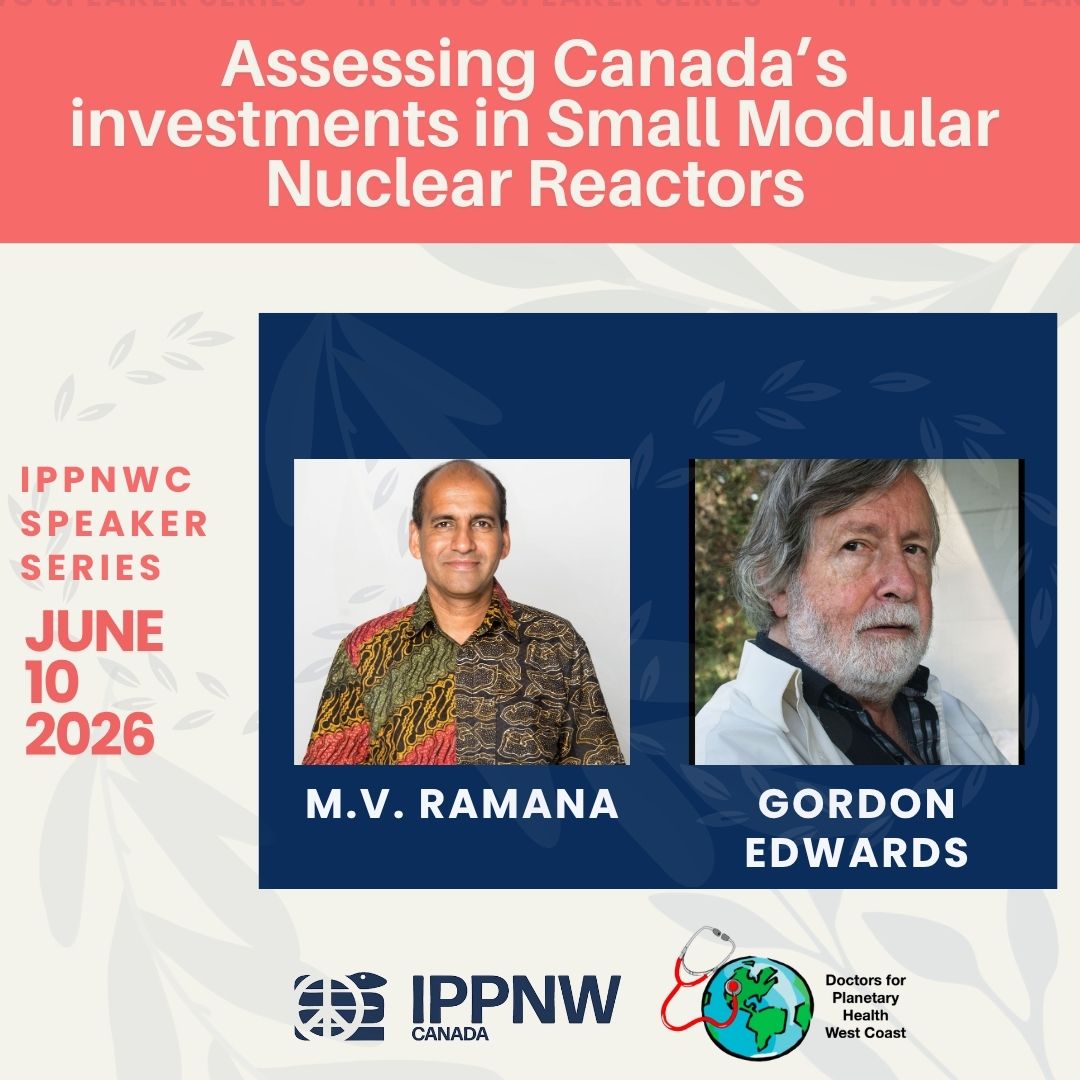
10 June – Assessing Canada’s Investments in Small Modular Nuclear Reactors – https://zoom.us/meeting/register/IiqHA5feRhaEBycOLNTJlA#/registration


Cuba Is Not a Failed State – It Is a Besieged State
PETITION: “Global Appeal to Endorse Palestinian Right of Return of Refugees”
To see nuclear-related stories in greater depth and intensity – go to https://nuclearinformation.wordpress.com
-
Archives
- June 2026 (89)
- May 2026 (306)
- April 2026 (356)
- March 2026 (251)
- February 2026 (268)
- January 2026 (308)
- December 2025 (358)
- November 2025 (359)
- October 2025 (376)
- September 2025 (257)
- August 2025 (319)
- July 2025 (230)
-
Categories
- 1
- 1 NUCLEAR ISSUES
- business and costs
- climate change
- culture and arts
- ENERGY
- environment
- health
- history
- indigenous issues
- Legal
- marketing of nuclear
- media
- opposition to nuclear
- PERSONAL STORIES
- politics
- politics international
- Religion and ethics
- safety
- secrets,lies and civil liberties
- spinbuster
- technology
- Uranium
- wastes
- weapons and war
- Women
- 2 WORLD
- ACTION
- AFRICA
- Atrocities
- AUSTRALIA
- Christina's notes
- Christina's themes
- culture and arts
- Events
- Fuk 2022
- Fuk 2023
- Fukushima 2017
- Fukushima 2018
- fukushima 2019
- Fukushima 2020
- Fukushima 2021
- general
- global warming
- Humour (God we need it)
- Nuclear
- RARE EARTHS
- Reference
- resources – print
- Resources -audiovicual
- Weekly Newsletter
- World
- World Nuclear
- YouTube
-
RSS
Entries RSS
Comments RSS
 nuclear-news