Trump’s battle plan for Iran
Bruce Gagnon, Mar 26, 2026, https://brucegagnon177089.substack.com/p/trumps-battle-plan-for-iran?utm_source=post-email-title&publication_id=3720343&post_id=192096004&utm_campaign=email-post-title&isFreemail=true&r=ln98x&triedRedirect=true&utm_medium=email
Europe key to US ops in Iran
Another very interesting piece from the WSJ. These details have been available through OSINT sources but it’s a good roundup showing how key Europe is to US operations against Iran:
- The central command center for US operations against Iran is within Ramstein Air Base in Germany (unsurprising)
- US drone operations are conducted from there as well
- Ramstein is increasingly being used as a hub by the Americans. Military transport aircraft, in particular, land there and took off for the Middle East, including several Boeing C-17 Globemaster III (77.5 tons of load) and Lockheed C-130 aircraft (20 tons).
- American media reported that F-16 fighter jets had been transferred from US Spangdahlem AFB, Germany to the Middle East. According to the trade magazine Air and Space Forces, they are to be used in Iran to combat air defenses. BBC reported that the base is now operating “around the clock.”
- American aircraft stationed in Spain have been relocated to France and Germany after the Spanish government denied the use of the Morón and Rota air bases for attacks on Iran
- Bomber aircraft sorties out of bases in the UK like RAF Fairford
- Refueling operations are based out of Aviano Air Base in Italy and Tubé Air Base in France
- Lajes Air Base in the Azores (Portugal) is serving as a major logistical hub, with dozens of aircraft stationed there at various times during the conflict
- RC-135 Rivet Joint spy planes are operating out of Souda Bay in Crete
- Unspecified “logistics and intelligence assets” are being hosted by Romania
- The piece paints an amusing picture of European attitudes towards this. Keir Starmer’s justification for overcoming his reticence to allow the US to base out of British facilities in the initial wave of strikes is that bomber operations are now “defensive” in nature.
- Merz has said publicly that this “isn’t [Germany’s] war,” but he has no choice but to allow US operations out of German air bases due to pre-existing legal agreements.
- Meloni has spun Italian involvement as minor because only refueling missions are flown out of Aviano. Similarly, French defense minister Vautrin said, “a refueling aircraft is a gas station, not a fighter jet.”
- These technicalities may work on the European public, but it’s difficult to imagine they’ll work on the Iranians.
Let’s focus not on what Trump says, but on what he does.
These are the U.S. military units recently deployed to the Middle East against Iran.
- 160th SOAR (Night Hunters): An elite helicopter unit that secretly inserts and extracts special forces, often at night, using skilled pilots and modified aircraft.
- 75th Airborne Brigade: A light infantry force for rapid raids, airfield seizures, and close-quarters combat missions against high-value targets.
- Delta Force (1st SFOD-D): A top-tier counterterrorism and hostage rescue unit focused on high-risk, precision missions targeting high-value individuals.
- 1st Special Forces Group (1st SFG): Operates primarily in the Asia-Pacific; trains allied forces, conducts unconventional warfare, and supports insurgencies or partner militaries.
- 5th Special Forces Group (5th SFG): Focused on the Middle East; It specializes in counterterrorism, unconventional warfare, and advising local forces.
- US Navy SEALs: Special operations focused on the sea—raids, reconnaissance, direct action, and covert missions from the sea, air, or land.
- But for what mission?
- Islands within or near the Strait of Hormuz—Small but strategically important islands used by Iran to control shipping lanes. US special forces could quickly seize them to reopen the strait.
- An island outside—Iran’s main oil export terminal. Seizing or destroying it would cripple Iranian oil revenues.
- Iranian nuclear facilities or other high-value sites—Potential raids to destroy stockpiles of enriched uranium or related infrastructure.
No Good Exit

21 March 2026 David Tyler, Australian Independent Media
John Mearsheimer sees war with Iran as a strategic folly, arguing it is unwinnable, will not destroy Iran’s nuclear knowledge, and could, instead, boost Iran’s interest in acquiring nuclear weapons.
No stranger to irony, or paradox, Dr Mearsheimer does not mince words. The West Point graduate and former Air Force Captain, now a distinguished scholar at Cornell, has spent two decades documenting exactly how an American Eagle could get sucked into the vortex of wars that serve its bovver-boy, or Middle-East proxy, Israel, and its bellicose aspirations at enormous cost.
When Mearsheimer speaks about a US military adventure in Iran, he is not waffling. He is quoting from the autopsy he wrote in advance. And Mearsheimer’s verdict on Operation Epic Fury, is that Trump has dug himself into a deep hole; an opinion all the more damning for its formal, almost courteous understatement:
“I think President Trump has put himself in a situation where he really doesn’t have a good exit strategy.”
Trump’s catastrophe may be complex and irretrievable, but it was not inevitable. It was predicted, in detail, by experts whose job it was to predict it, and who were systematically ignored, discredited or sacked for saying so. Trump ignored the experts. This is how he can always snatch defeat from the jaws of victory.
The pretext for the attack doesn’t bear scrutiny. Before the first double-tap Tomahawk missile crushed and burned alive 168 schoolchildren on 28 February, Oman’s Foreign Minister Badr Al-Busaidi was announcing what could have been a diplomatic coup: Iran had agreed to never stockpile enriched uranium, had accepted full IAEA verification, and was prepared to irreversibly downgrade its enriched uranium to the lowest level possible.
Peace, he said, was “within reach.” Further talks were due to resume on 2 March.
Iran now says that the US President never intended to avoid war and that the talks were a ruse to get more time to set up a military attack. It’s true. It’s also true that Trump and Netanyahu are driven by the need to stay out of court. Both are hell-bent in quest of a more enduring diversion-and both would have always pulled the trigger anyway. Even without Saudi encouragement……………………………………………………………………………………………………………………………………….
Iran now says that the US President never intended to avoid war and that the talks were a ruse to get more time to set up a military attack. It’s true. It’s also true that Trump and Netanyahu are driven by the need to stay out of court. Both are hell-bent in quest of a more enduring diversion-and both would have always pulled the trigger anyway. Even without Saudi encouragement.
……………………………………….. Many missile strikes in the war’s opening phase are seen by UN human rights experts as potential war crimes under the Rome Statute. At least a million Lebanese people have been displaced.
https://googleads.g.doubleclick.net/pagead/ads?gdpr=0&client=ca-pub-3072351457465524&output=html&h=280&adk=2235633406&adf=387799125&w=678&fwrn=4&fwrnh=100&lmt=1774125889&rafmt=1&armr=3&sem=mc&pwprc=5956714339&ad_type=text_image&format=678×280&url=https%3A%2F%2Ftheaimn.net%2Fno-good-exit%2F&host=ca-host-pub-2644536267352236&fwr=0&pra=3&rh=170&rw=678&rpe=1&resp_fmts=3&fa=27&uach=WyJXaW5kb3dzIiwiMTkuMC4wIiwieDg2IiwiIiwiMTQ2LjAuNzY4MC44MCIsbnVsbCwwLG51bGwsIjY0IixbWyJDaHJvbWl1bSIsIjE0Ni4wLjc2ODAuODAiXSxbIk5vdC1BLkJyYW5kIiwiMjQuMC4wLjAiXSxbIkdvb2dsZSBDaHJvbWUiLCIxNDYuMC43NjgwLjgwIl1dLDBd&abgtt=7&dt=1774125788538&bpp=1&bdt=3727&idt=0&shv=r20260318&mjsv=m202603170101&ptt=9&saldr=aa&abxe=1&cookie=ID%3Dd85616c6c9bd2a6c%3AT%3D1770448449%3ART%3D1774125788%3AS%3DALNI_MbtaAxRxG9MqgIcWMShV7avYd9mzg&gpic=UID%3D000011f58c2d07ec%3AT%3D1770448449%3ART%3D1774125788%3AS%3DALNI_MasvLU7CXh2jEp0EwTeqK932dwU3A&eo_id_str=ID%3D1b13a2c219278375%3AT%3D1770448449%3ART%3D1774125788%3AS%3DAA-AfjYkqjLrM9kIjGmfRgvZ6J5n&prev_fmts=0x0%2C678x280%2C678x280%2C1265x585%2C1265x122%2C678x280%2C678x280%2C678x280%2C678x280&nras=10&correlator=6552144162929&frm=20&pv=1&u_tz=660&u_his=2&u_h=720&u_w=1280&u_ah=672&u_aw=1280&u_cd=32&u_sd=1.5&dmc=8&adx=117&ady=5250&biw=1265&bih=585&scr_x=0&scr_y=2914&eid=95378429%2C95384535%2C42533294%2C95383746%2C95386039%2C95379823&oid=2&psts=AOrYGslFnD4MCobWfWWaTnZO58i7aVt7D29MIFScmcewoQBVZjRgX1f3b9NwGtVkwcGa5Z-1eoPb2VtruRZFG8PO7KJlApj9H8fZyI5zqVkCG4CmXvZmwQ3Box5rCHMTD73x%2CAOrYGslqDhuWvVFLDi_GZC5QcWZeq0_skU9KxspMCRk4eB7tugVH2yaIxi5G3F9O2Lf92rq8U8mMNGoqiazmp1b23UZ4BdLvnwQ3WxWxgRykEZSB%2CAOrYGskeRH4aNaTYW0JyG3hzeADf9iRr0p5FcMslU9tcjQOmsfMxJqNzQgBma4wHaEq5_EyPCfryTvgRCXzrdNA6zXpsYzi2aGa6YBEEsIrD4jk%2CAOrYGsnZlMGylK-NV6L01yQbFeOM_0OyuT3kK6KdRWPAa0ZJ-_fUiqW2vcAZvsE7G9PHnZ_OKbVa1uJ56Zi1H-BaO31G2fiS7gxE7wk%2CAOrYGskrNVCKFAP1enIxqXLvS3enuTJ1vSXSpDKMa_FTU_LIa3i733aUFije2OhcKHUesjN9G6616z_zZ30fUvobJwp9R63Myz8XDtyBjjQdpDmpSw%2CAOrYGsnrFCx6HaDRyuw7FJgzshe7poT_x7bpz6edsQFJsiawAUvVj1cdcmwj8C0dhnUgTtbxVbGZiUsGMRomL8AnScaaQ9jMiTGt-38YWkcIDhQ%2CAOrYGsmGx2dhmzE4w3QV-X9NmiFCpDNgjknMYKowrNLwx0eLRev6mAN_VRDxDLeClYOlXHDvSoaiEQKey8wTUJbgVV1DbfGqHw1h5d1Wiu7sDg&pvsid=5130612622751585&tmod=1337930814&uas=1&nvt=1&fc=1408&brdim=0%2C0%2C0%2C0%2C1280%2C0%2C1280%2C672%2C1280%2C585&vis=1&rsz=%7C%7Cs%7C&abl=NS&fu=128&bc=31&bz=1&pgls=CAEaBTYuOS40~CAEQBBoHMS4xNzQuMA..&num_ads=1&ifi=8&uci=a!8&btvi=8&fsb=1&dtd=M
Meanwhile, Donald Trump, on his Truth Social, calls Iran “militarily ineffective and weak.”…………………………………………………………………………………..
Trump is demanding NATO allies help secure the Strait of Hormuz. NATO is, to put it charitably, otherwise engaged.
Retreat? Mearsheimer is equally clear-eyed. Declare victory and withdraw, and it will be “perceived as a humiliating defeat for the US.” And that assumes Iran cooperates. “They have many cards to play,” he notes. “They can inflict significant losses. Therefore, even if we retreat, it’s unclear whether this will solve the problem.”
Trump promised a generation of winning. He has delivered a generation’s worth of losing, compressed into twenty days. And let’s not forget his Latin American fiasco. El Presidente, who endeared himself to millions south of the border with his talk of “shithole” countries, has rather a lot of Venezuelans on the warpath after his regime change curdled almost on contact into a neocolonial farce, with Maduro gone, sovereignty shredded and the gringos already with their fingers in the till.
Cuba could be next on Hegseth’s hit-list? Trump does need to keep the distractions going. Meanwhile disinformation is being pumped as vigorously as the Ford plumbing. And with similar effect.
Fox News cheerleaders and the Netanyahu communications office have been carefully not telling the American public: Iran is not the isolated, backward, sanction-crippled military of the pre-war briefings.
It is fighting with Russian eyes and Chinese precision. Together, those two contributions have changed the strategic calculus in ways that neither Washington nor Tel Aviv appear to have seriously gamed………………………………………………………………………………………………………………………………………………………………………………….
The Netanyahu Factor: Closing Every Window
Mearsheimer’s analysis cuts deepest on the question of diplomacy.
On Day 19, Israeli strikes killed two of Iran’s most consequential figures: security chief Ali Larijani and Basij commander Gholamreza Soleimani. Larijani’s death was not a military decapitation strike in the conventional sense. It was the targeted elimination of Iran’s most experienced nuclear negotiator; a pragmatic, sophisticated operator whom analysts had consistently identified as one of the few figures capable of opening a negotiated exit.
Israel killed the man who could have brokered the ceasefire Netanyahu claims to want.
Netanyahu told Sean Hannity that Operation Epic Fury “will usher in an era of peace that we haven’t even dreamed of” and create conditions for Iranians to form “their own democratically elected government.” He said something substantially similar about Iraq in 2003. About Libya in 2011. The script is laminated. The outcomes are identical. The lesson is never drawn.
He is currently in a bunker, hinting with characteristic coyness that perhaps the Iranian regime survives after all. Of course it does. The Islamic Republic has outlasted everything the West has thrown at it: the Iran-Iraq war, decades of sanctions, assassination campaigns, Stuxnet, and the twelve-day bombing campaign of last June………………………………………………………………………………………………………………..
The Intelligence Scandal Underneath It All
One more thread demands to be pulled. Tulsi Gabbard, Director of National Intelligence, has been accused of altering her Senate testimony on Iran; specifically, of omitting intelligence details that contradicted Trump’s claim that Tehran posed an imminent threat. The IAEA had found no evidence Iran was moving toward a nuclear weapon. Oman had just brokered what its foreign minister described as a breakthrough agreement……………………………….
What Australia Needs to Ask
An Iranian projectile struck near Australia’s military headquarters in the UAE this week. Anthony Albanese confirmed it. Then said nothing else useful.
Pine Gap is almost certainly providing targeting intelligence that has enabled strikes now characterised by UN human rights experts as potential war crimes. Under laws amended by the Howard government in 2001 and never restored, the Prime Minister can take Australia to war on Cabinet agreement alone, no parliamentary debate, no public mandate, no vote. Nobody in the national media is asking whether that authority has been invoked. Nobody is asking whether it should be.
The question Mearsheimer asks about Washington; what’s the exit, and who owns the consequences, deserves to be asked in Canberra. With the same urgency. And considerably more honesty than we are currently getting.
……………………. Trump got his war with Iran, on the urging of a foreign government, on the basis of intelligence his own Director of National Intelligence allegedly falsified, over a diplomatic resolution that was days from signature.
History won’t be interested in who did the urging. He owns this. Every schoolgirl in Minab. Every barrel at Ras Laffan. Every day the Hormuz stays closed.
It has, as Mearsheimer warned, no good exit. https://theaimn.net/no-good-exit/
Russia summons Israeli envoy over missile strike on journalists in Lebanon- Zakharova: “Cannot be called accidental”
Russia has told Israeli envoy Oded Joseph that Moscow wanted an investigation into the attack in southern Lebanon wherein two Russian state TV journalists were injured.
Sharangee Dutta, India Today, Fri, 20 Mar 2026, https://www.sott.net/article/505250-Russia-summons-Israeli-envoy-over-missile-strike-on-journalists-in-Lebanon-Zakharova-Cannot-be-called-accidental
The Russian Foreign Ministry summoned Israeli envoy Oded Joseph on Friday to lodge a formal protest over an Israeli missile strike in southern Lebanon in which two Russian state TV journalists were injured, TASS reported. Moscow has told Joseph that they want an investigation into the attack, which happened on Thursday, and want assurances that such incidents would not be repeated.
A video of the strike, which landed barely 10 metres away from the filming location of RT correspondent Steve Sweeney and his cameraman Ali Rida, was captured on the latter’s camera. Sweeney ducked for cover just in time with the viral clip showing how the strike turned the site into a massive ball of fire.
Both of them survived the attack and received treatment at a local hospital. In one of the videos posted by Rida, doctors are seen removing shrapnel from Sweeney’s arm. The cameraman alleged that Israel intentionally struck the area despite their jackets displaying press credentials.
Russian Foreign Ministry spokesperson, Maria Zakharova, echoed Ali Rida, and condemned the strike. Taking to Telegram, she posted that the attack on the journalists wearing press jackets “cannot be called accidental” considering the killing of 200 correspondents in Gaza.
“Especially since the rocket did not hit a ‘significant strategic military facility’, but rather the location where the report was being filmed,” Zakharova wrote on the social media platform, adding that Moscow was waiting for a response from the international organisation.
Sweeney and Rida were filming near a local military base in southern Lebanon, close to the Al-Qasmiya Bridge. The site is a crucial crossing point over the River Litani, which has faced constant Israeli strikes over the past few days. Israel has claimed that the river crossings are being used by the Iran-supported group Hezbollah to move fighters and weapons amid the war.
In response, Israel said that it had repeatedly given warnings for civilians and residents to move out of the area and that the strike was launched after adequate time had passed. It also stressed that Tel Aviv does not target civilians or journalists and functions in accordance with international law.
Macron slams ‘unacceptable’ Israeli attacks on Lebanon
The French president stressed that the Jewish state’s military operation violates international law and will not enhance its security.
20 Mar, 2026, https://www.rt.com/news/635660-macron-condemns-israel-lebanon-attacks/
Israel’s ongoing military operation in Lebanon violates international law, French President Emmanuel Macron has said.
Speaking at a European Council press conference in Brussels on Thursday, Macron also criticized the attacks on Israel being carried out by Lebanese-based militant movement Hezbollah, which has vowed to avenge the US-Israeli killing of Iranian Supreme Leader Ali Khamenei.
Macron rejected the notion that a third party could resolve the conflict with the Iran-linked group through force, emphasizing that only Lebanese authorities have the legitimacy to address the issue.
“We don’t think that the fight against Hezbollah and the removal of its weapons can be carried out by a third power,” Macron told reporters. “We believe that Israel’s ground military operation and bombardments are inappropriate and even unacceptable in terms of international law and the interests of both the Lebanese and Israel’s long-term security.”
Macron also pointed out that Israel has conducted similar operations in Lebanon for years without ever producing the “expected results.”
The French leader’s comments come as Israel has expanded its military campaign against Hezbollah following the US-Israeli strikes on Iran that began late last month. The Israel Defense Forces announced “limited and targeted ground operations against key Hezbollah strongholds” earlier this week, escalating cross-border hostilities that have already claimed hundreds of lives.
Lebanese authorities report that Israeli strikes have killed over 880 people over the past two weeks, with more than 2,000 injured and over 1 million displaced. The strikes have targeted residential districts, a UN peacekeeping position, and a Russian cultural center in the southern city of Nabatieh.
On Thursday, RT correspondent Steve Sweeney and his cameraman Ali Rida Sbeity were also injured in what appeared to be a deliberate Israeli airstrike on their filming position, despite them wearing clearly labeled press uniforms.
Moscow has condemned Israel over the strike, with Russian Foreign Ministry spokeswoman Maria Zakharova stressing that the attack on journalists wearing press markings “cannot be called accidental given the killing of two hundred journalists in Gaza.”
Iran’s Retaliation Reignites Discontent With US Military Bases in Middle East
The US spent decades building an empire of military bases throughout the Middle East. Now they’re under attack.
By Shireen Akram-Boshar , Truthout, March 20, 2026
n Thursday, March 19, Saudi Arabia’s foreign minister Prince Faisal warned Iran that tolerance for its regional attacks was running short — and that the Saudi regime has “the right to take military actions if deemed necessary.” He elaborated that Saudi Arabia and other Gulf states have “very significant capacities and capabilities that they could bring to bear” if the attacks continue. This came a day after Iranian attacks on Gulf energy sites in Saudi Arabia, Qatar, and the United Arab Emirates, which Iran said was in retaliation for an Israeli strike on an Iranian gas field.
Over the past three weeks of the U.S.-Israeli war on Iran, Iran has increasingly targeted sites across the Gulf, further regionalizing the war. Among its prime targets are U.S. military bases in the region: Iran has targeted, and damaged, at least 17 U.S. sites in the region, 11 of which are military bases. The two largest bases, Al Udeid Air Base in Qatar and the U.S. Navy’s Fifth Fleet in Bahrain, host 10,000 and 9,000 U.S. military personnel, respectively — of an estimated 50,000 U.S. military personnel across the region.
The existence of these military bases should alert us to a larger problem — that the U.S. has come to dominate the region militarily, building relationships with local regimes that further encourage repression and domination. Now, Iranian retaliation against these bases spurred by U.S.-Israeli attacks is reigniting a divide between Gulf leaders and their populations……………………………………………………………………………………………………………………………………………..
But the real expansion of U.S. military bases across the Middle East began in the early 1990s during and after the Gulf War, with the establishment of permanent U.S. bases in Kuwait, Qatar, and Bahrain, as well as sites in Saudi Arabia that the U.S. would use for long stretches. Though many expected U.S. global military presence to decrease after the collapse of the Soviet Union, the 1990 Gulf War saw a seismic expansion of U.S. troops in the Middle East along with the start of a unipolar world order dominated by the U.S. With the fall of the Soviet Union, the U.S. was now the world’s sole superpower, and the Middle East would experience its military might.
Following the 1990-’91 Gulf War, Kuwait, Bahrain, Qatar, and the UAE all signed public, formal defense agreements with the U.S., granting the U.S. access to each country’s bases and other facilities. With the exception of Saudi Arabia, U.S. military presence was now well-known rather than discreet. And soon after the U.S.-led campaign ended Iraq’s occupation of Kuwait, the U.S. played a role in bringing the Palestinian First Intifada to an end, pushing for first the Madrid Conference and then the Oslo Accords to contain and end the uprising that challenged Israel’s brutal status quo.
In the wake of the Oslo Accords, the U.S. also facilitated neoliberal transitions throughout the Middle East, accelerating privatization, deregulation, and the selling off of state assets — thereby reversing the nationalization policies of earlier decades and aligning the region with U.S. political and economic interests through a set of reforms and interventions commonly called the Washington Consensus. Thus, in the few years after the fall of the USSR, the U.S. managed to restructure the Middle East according to its designs; its military bases represented one pillar of its dominance and control over the region.
An Empire of Bases and Local Authoritarian Regimes
In 2001, the U.S. expanded its military bases even further, creating an “empire of bases” in the region as it launched its endless “war on terror.” During its wars on Afghanistan and Iraq, the U.S. held more than 1,000 installations in those two countries alone. New bases were established and old ones expanded in Qatar, the UAE, Kuwait, Iraq, and Jordan.
Though international and regional dynamics have changed over the past two-and-a-half decades, U.S. bases still dominate the region. The presence of these bases has also further encouraged U.S. support for authoritarian regimes capable of suppressing popular opposition to U.S. imperialism and support for the Palestinian cause. This is particularly obvious in the case of Bahrain, which hosts the U.S. Navy’s Fifth Fleet and some 9,000 U.S. troops — the second largest base in the region after Qatar’s Al Udeid Air Base — and is thus seen as a crucial base in the region…………………………………………………………………………………………………..
The US-Israeli war on Iran and the regionalization of the war highlight both the U.S.’s historic domination of the region, and the extent to which the region’s regimes have normalized relations with the U.S — straying far from the anti-imperialist sentiments that dominated the region in the 1950s and ‘60s. Instead, it is a reactionary status quo that is entrenched across the Middle East. While Bahraini people dare to protest against their regime, the U.S., and Israel, the Gulf states’ ruling regimes double down in their reliance on U.S. military support, making their alignment clear. Qatar in particular has used its military base to cozy up to Trump.
And yet it is this U.S. military presence itself that has pulled them into the increasingly regionalized war. Still, the large U.S. military presence remains in tension with the wishes of the vast majority of the population in most countries in the region, and it remains to be seen if the current U.S.-Israeli war on Iran, and Iran’s widespread retaliation against this network of bases, will once again reshape the U.S. military presence in the Middle East. https://truthout.org/articles/irans-retaliation-reignites-discontent-with-us-military-bases-in-middle-east/?utm_source=Truthout&utm_campaign=accdbb6382-EMAIL_CAMPAIGN_2026_03_20_06_50_COPY_01&utm_medium=email&utm_term=0_bbb541a1db-1f909890d7-650192793
Israel’s Manipulation of Trump on Iran

The public has noticed who is in charge. According to a soon-to-be-released poll from IMEU Policy Project and Demand Progress, conducted by Data for Progress, voters believe the war is being conducted for Israel’s benefit over America’s by a nearly 2-to-1 margin.
Today on TAP: The worse the Iran war goes, the more blame is likely to be directed at Israel, and by association the Jews.
by Robert KuttnerMarch 18, 2026, https://prospect.org/2026/03/18/iran-israel-joe-kent-trump-netanyahu-antisemitism/
On Tuesday, Joe Kent, director of the National Counterterrorism Center, became the first senior administration official to resign over the Iran war. He resigned not because the war is a debacle, but because of Israel’s role in triggering U.S. involvement.
“I cannot in good conscience support the ongoing war in Iran,” he wrote in a letter to President Trump. “Iran posed no imminent threat to our nation, and it is clear that we started this war due to pressure from Israel and its powerful American lobby.”
Kent has a history of association with far-right white nationalist and antisemitic groups, according to the Associated Press. At the time of his confirmation hearing last February, Rep. Seth Magaziner (D-RI) pointed out, “During his two failed campaigns for Congress, we learned that Kent has ties to white nationalists … [and] sought political support from a Holocaust denier.”
Administration officials and allies spent a frantic 24 hours trying to do damage control, stepping around the question of why a well-documented antisemite should have been given the sensitive post in the first place. The question is doubly awkward, given Trump’s supposed love for the Jews when that posture is convenient to assault universities.
Quite apart from Kent’s record and motives, the issue of Israeli Prime Minister Netanyahu’s manipulation of Trump should be taken seriously. Early in the war, on March 2, Secretary of State Marco Rubio said in a press briefing, “We knew that there was going to be an Israeli action. We knew that that would precipitate an attack against American forces, and we knew that if we didn’t preemptively go after them before they launched those attacks, we would suffer higher casualties.” That’s about right.
Rubio has repeatedly tried to walk that back, but he can’t unsay it. The Israeli attack of February 28, which assassinated top Iranian leaders and effectively set off the war, was reportedly aided by U.S. intelligence, but Netanyahu was determined to launch it whether or not Trump concurred.
Just to rub Washington’s nose in Israel’s habit of escalating war without asking Trump’s permission, on Tuesday of this week top Israeli officials made clear that Trump learned about Israel’s latest assassinations only after the fact. The Wall Street Journal reported, “Israel killed Iran’s security chief, Ali Larijani, in airstrikes Monday night, according to Israel’s defense minister. President Trump would be informed of Larijani’s death, Israel Katz said. ‘Prime Minister Benjamin Netanyahu and I directed the IDF to continue to hunt down the leadership of the terror and oppression regime in Iran and cut off the head of the octopus again and again and prevent it from regrowing,’ Katz said in a statement.”
Let me repeat that, in italics: President Trump would be informed of Larijani’s death, Israel Katz said. Not only was Trump not informed or asked to concur before the assassination. The Israeli defense minister, speaking for himself and Netanyahu, informed Trump via a statement to The Wall Street Journal. That’s even more contemptuous than announcing it on social media, Trump-style. The fact that it was in a deliberate prepared statement means that this was no accidental off-the-cuff blunder. Just yesterday, Israel continued targeting Iran’s leaders, killing the country’s intelligence minister, Esmail Khatib.
The public has noticed who is in charge. According to a soon-to-be-released poll from IMEU Policy Project and Demand Progress, conducted by Data for Progress, voters believe the war is being conducted for Israel’s benefit over America’s by a nearly 2-to-1 margin………..
As the odds increase against Trump finding some kind of exit with dignity, the risk is that he will widen and deepen the war. While Trump is ambivalent, Netanyahu has made it clear that he wants the war to continue, and he acts accordingly. He is just as reckless as Trump, but more strategic.
When a wider war turns into an even bigger crisis, more people who did not start out as antisemites will be inclined to blame history’s favorite all-purpose scapegoats, the Jews. Only in this case, Bibi has provided plenty of ammunition.
‘Iran Posed No Imminent Threat’: Trump’s Counterterrorism Director Resigns in Protest
Trump decided to attack Iran despite Director of National Intelligence Tulsi Gabbard testifying before Congress last year that it “is not building a nuclear weapon,” and that late Iranian Supreme Leader Ali Khamanei—who was assassinated last month by an Israeli airstrike—“has not authorized the nuclear weapons program he suspended in 2003.”
US intelligence agencies have repeatedly come to the same conclusion since the George W. Bush administration.
“I cannot support sending the next generation off to fight and die in a war that serves no benefit to the American people,” the far-right former Army Ranger and CIA officer
Brett Wilkins, Mar 17, 2026, https://www.commondreams.org/news/joe-kent-resigns
National Counterterrorism Center Director Joe Kent announced his resignation Tuesday, accusing President Donald Trump of being manipulated by Israel into launching a war on Iran.
“I cannot in good conscience support the ongoing war in Iran. Iran posed no imminent threat to our nation, and it is clear that we started this war due to pressure from Israel and its powerful American lobby,” Kent—a former Army Ranger and CIA paramilitary officer often described as a white nationalist and conspiracy theorist—wrote in his resignation letter to Trump.
National Counterterrorism Center Director Joe Kent announced his resignation Tuesday, accusing President Donald Trump of being manipulated by Israel into launching a war on Iran.
“I cannot in good conscience support the ongoing war in Iran. Iran posed no imminent threat to our nation, and it is clear that we started this war due to pressure from Israel and its powerful American lobby,” Kent—a former Army Ranger and CIA paramilitary officer often described as a white nationalist and conspiracy theorist—wrote in his resignation letter to Trump.
“Early in this administration, high-ranking Israeli officials and influential members of the American media deployed a misinformation campaign that wholly undermined your America First platform and sowed pro-war sentiments to encourage war with Iran,” Kent continued. “This echo chamber was used to deceive you into believing that Iran posed an imminent threat to the United States, and that should you strike now, there was a clear path to a swift victory.”
“This was a lie and is the same tactic the Israelis used to draw us into the disastrous Iraq War that cost our nation the lives of thousands of our best men and women,” he claimed.
While there is no solid evidence that Israel “drew” the US under then-President George W. Bush into invading Iraq and toppling longtime dictator and erstwhile US ally Saddam Hussein, then-Israeli opposition leader Minister Benjamin Netanyahu said in 2008 that the September 11, 2001 attacks on the United States—which Iraq had nothing to do with—were “benefiting” Israel. He also said two years later that “America is a thing you can move very easily, move it in the right direction.”
Kent, whose first wife, Navy intelligence officer Shannon Smith, was killed in a 2019 bombing targeting US forces invading Syria, said that “I cannot support sending the next generation off to fight and die in a war that serves no benefit to the American people nor justifies the cost of American lives,” said
“I pray that you will reflect upon what we are doing in Iran, and who we are doing it for,” he told the president.
Trump decided to attack Iran despite Director of National Intelligence Tulsi Gabbard testifying before Congress last year that it “is not building a nuclear weapon,” and that late Iranian Supreme Leader Ali Khamanei—who was assassinated last month by an Israeli airstrike—“has not authorized the nuclear weapons program he suspended in 2003.”
US intelligence agencies have repeatedly come to the same conclusion since the George W. Bush administration.
Kent—who has been a staunch Trump loyalist—is the most prominent US official to resign as the president, who infamously campaigned for reelection on a promise of no new wars, has attacked seven countries since returning to the White House and 10 over the course of his two terms.
In contrast to his vehement opposition to waging war on Iran, Kent led an effort to rewrite intelligence so that it did not clash with Trump’s dubious claim that the government of Venezuela was involved with the Tren de Aragua drug trafficking gang ahead of the recent US invasion of the South American country and kidnapping of its president, Nicolás Maduro.
While Kent’s resignation drew praise from many opponents of Trump and the illegal US-Israeli war of choice in Iran, others focused on his troubling record and associations.
“Joe Kent isn’t suddenly a good guy,” former Republican Congressman Adam Kinzinger (R-Ill.) said on X. “He’s a straight-up white nationalist. But there are fissures in the MAGA base.”
MeidasTouch News CEO Ron Filipowski also took to social media, writing, “Just for the record, I’m glad Joe Kent resigned but he is still a POS.”
UN preparing for nuclear catastrophe ‘worst case scenario’ including use of nukes in Middle East
By ELIANA SILVER, SENIOR FOREIGN NEWS REPORTER, 18 March 2026
The United Nations is preparing for a nuclear catastrophe if the Middle East war escalates further.
World Health Organization officials are monitoring the consequences of joint US-Israeli strikes on Iranian atomic sites and are remaining ‘vigilant’ for nuclear threats in the region.
WHO director Hanan Balkhy said: ‘The worst-case scenario is a nuclear incident, and that’s something that worries us the most.’
‘As much as we prepare, there’s nothing that can prevent the harm that will come … the region’s way – and globally if this eventually happens – and the consequences are going to last for decades,’ she told POLITICO.
It comes as in recent days, Donald Trump‘s AI adviser David Sacks warned that Israel could be on a path to ‘escalate the war by contemplating using a nuclear weapon.’
The UN nuclear watchdog said Wednesday that Iranian authorities had reported projectile impact at the country’s only operational nuclear power plant that caused no damage.
The International Atomic Energy Agency (IAEA) ‘has been informed by Iran that a projectile hit the premises of the Bushehr NPP on Tuesday evening’, the Vienna-based agency posted on social media.
‘No damage to the plant or injuries to staff reported.’
Agency head Rafael Grossi ‘reiterates his call for restraint during the conflict to avoid any risk of a nuclear accident’, the statement said.
The Bushehr plant in southwestern Iran has the Islamic republic’s only operational nuclear power reactor and was first connected to the grid in 2011, according to the IAEA.
Tehran has been under biting US sanctions since 2018, when Washington withdrew from a deal that granted Iran sanctions relief in return for curbs on its nuclear activities designed to prevent it from developing an atomic warhead.
The US and Israel say that destroying whatever remains of Iran’s nuclear program is one of the central aims of the war.
They have long suspected Iran seeks nuclear weapons, while the Islamic Republic says its nuclear program is peaceful.
In June of last year, the US and Israel targeted shadowy nuclear infrastructure in Iran, hitting sites in Fordow, Natanz and Isfahan.
Balkhy explained that although there have not yet been any signs of radioactive contamination in the region, a nuclear incident could cause extreme health problems to those affected………………….
…………………….Donald Trump said those who claim Iran didn’t pose a threat are ‘not smart’ and ‘not savvy,’ adding, ‘We don’t want those people.’
His comments came after America’s top counterterrorism official resigned over the war with Iran.
In an extraordinary and unprecedented move for this administration, National Counterterrorism Center Director Joe Kent announced he was stepping down over his objections to the US launching joint strikes with Israel.
‘It’s a good thing that he’s out because he said that Iran was not a threat. Iran was a threat – every country realized what a threat Iran was,’ the President insisted.
Trump’s AI advisor recently warned that there are ‘risks’ of an ‘escalatory approach’ by Israel.
Speaking on a podcast, David Saks said: ‘Israel could get seriously destroyed.’
‘And then you have to worry about Israel escalating the war by contemplating using a nuclear weapon.’
Sacks urged Trump to find an ‘off-ramp’ and bring the war with Iran to a swift close.
‘This is a good time to declare victory and get out,’ he added. ‘I agree that we should try to find the off-ramp.’
Intelligence gathered in the months after the strikes in June revealed the Islamic Republic desperately reconstructing a program Trump said was obliterated.
The Daily Mail exposed Iranian ‘chillers’ – sophisticated industrial equipment essential for cooling uranium – being frantically moved back into fortified underground positions as early as September 2025…………………https://www.dailymail.co.uk/news/article-15656871/UN-preparing-nuclear-catastrophe-worst-case-scenario-including-use-nukes-Middle-East.html
Iran’s Bushehr Nuclear Power Plant ‘hit in strike’ as radiation update issued

A projectile struck the grounds of the Bushehr Nuclear Power Plant sparking fears of a terrifying nuclear incident, according to the CEO of the Russian company which runs the plant.
Joe Smith, 18 Mar 2026, https://www.mirror.co.uk/news/world-news/breaking-irans-bushehr-nuclear-power-36887601
An Iranian nuclear power plant has been hit, sparking fears of a nightmare radioactive incident.
A projectile struck the grounds of the Bushehr Nuclear Power Plant, both Russia and Iran said. Neither country has confirmed whether there has been a release of nuclear material in the incident on Tuesday evening.
Russia’s state-run Tass news agency quoted Rosatom CEO Alexey Likhachev late Tuesday as claiming “a strike hit the area adjacent to the metrology service building located at the Bushehr Nuclear Power Plant site, in close proximity to the operating power unit.” Russian technicians from Rosatom operate the plant, using Russian-made, low-enriched uranium.
Any strike on a nuclear plant risks radioactive material being released into the environment, a nightmare scenario in any war. Bushehr sits on the Persian Gulf meaning contamination of the waters could spell disaster for millions living in the Gulf States, which rely on desalination plants for their water supplies.
“There were no casualties among Rosatom State Corporation personnel,” Likhachev said. “The radiation situation at the site is normal.”
The Atomic Energy Organization of Iran later issued a statement saying “no financial, technical, or human damage occurred and no part of the plant was harmed.” Tass later reported that Iran blamed the strike on the United States and Israel.
The International Atomic Energy Agency said: “The IAEA has been informed by Iran that a projectile hit the premises of the Bushehr NPP on Tuesday evening.”
The United Nations agency added: “No damage to the plant or injuries to staff reported.”
It remains unclear what the “projectile” that hit the complex was and neither Iran nor Russia have published images of the damage.
Iran’s nuclear materials and equipment remain a danger in an active war zone
March 17, 2026 , Matthew Bunn, The Conversation
Before launching his war on Iran, President Donald Trump said his most important goal was that Iran would “never have a nuclear weapon.” Yet it is not clear what, if anything, his administration has planned for dealing with Iran’s stock of enriched uranium that could be used to make nuclear bombs – or its remaining deeply buried nuclear facilities and the nuclear equipment that might be in them, or hidden elsewhere.
U.S. and Israeli strikes in June 2025 seriously damaged Iran’s major nuclear facilities and killed several prominent scientists associated with the country’s nuclear program. However, contrary to Trump’s claim that the Iranian nuclear program had been “completely obliterated,” it appears that Iran had stored much or all of its enriched uranium in deep tunnels that were not destroyed.
The Trump administration’s demand, just two days before the attacks began, that Iran export its enriched uranium stocks represented a tacit acknowledgment that Iran’s government still had control of this material or could get access to it.
So, as airstrikes on Iran continue, an unclear fate faces several elements of Iran’s nuclear program, including:
- Its stock of enriched uranium.
- Its centrifuges for enriching more uranium, and parts for more centrifuges.
- Any equipment it may have for turning enriched uranium into metal, shaping it into nuclear weapons components and taking other weapons-assembly steps.
- The documents and expertise from its past nuclear weapons program.
- Its as-yet-intact nuclear facilities that are deep underground.
I have been studying steps to stop the spread of nuclear weapons – including managing the dangers of Iran’s nuclear program – for decades. My conclusion is that if all these capabilities remain in place, the war will have accomplished little in reducing Iran’s nuclear capability, while likely increasing the government’s belief that it needs a nuclear weapon to defend itself.
Where could Iran’s uranium be?
The most immediate concern is roughly 970 pounds (441 kilograms) of highly enriched uranium containing 60% of the U-235 isotope that is relatively easy to split. That’s what Iran was believed to have before the summer 2025 bombings, and much of it reportedly survived those strikes.
Over 440 pounds (200 kilograms) of it is reportedly stored in deep underground tunnels near Isfahan. Other stocks of this material are thought to be in a deep underground facility near Natanz known as Pickaxe Mountain, and in Fordow, one of the sites bombed in summer 2025.
Gen. Dan Caine, chairman of the U.S. Joint Chiefs of Staff, has reportedly acknowledged that the Isfahan tunnels are too deep to destroy with bunker-buster bombs like those used on the underground Fordow facility last summer. Pickaxe Mountain, under granite, would be at least as challenging a target.
What could the uranium be used for?
With just 100 centrifuges, Iran could further enrich the 60% enriched material to be 90% or more U-235 in a few weeks. That is the concentration needed for the nuclear weapon design that Iran was working on in the secret nuclear weapons program it largely stopped in late 2003.
Even without further enrichment, the 60% enriched material could be used in a bomb, either exploding with less power or using more material and explosives.
Beyond Iran using this material itself, there are other concerns. Nobody knows who might get it if Iran’s government collapses. Some lower-level people managing it might decide to try to sell it as part of trying to save themselves from the current crisis, as happened after the 1991 collapse of the Soviet Union. Government studies have warned that even a sophisticated terrorist group might be able to make a crude nuclear bomb if it had the needed uranium.
Could it be removed peacefully?
One possibility is that the current Iranian government, or a future one, might be willing to cooperate or at least acquiesce in getting rid of the country’s nuclear material. The existing Iranian government reportedly offered to blend it down to a lower concentration in the negotiations that Trump ended by attacking Iran in February 2026.
Highly enriched uranium has been removed from many cooperative countries over the years. One early example was Project Sapphire, in 1994, in which U.S. teams worked with Kazakhstan to fly some 1,280 pounds (580 kilograms) of highly enriched uranium to safe storage in Tennessee. Similar efforts have removed tons of plutonium and highly enriched uranium from scores of sites around the world, removing the risk that terrorists could get hold of that material.
Could it be captured?
Without cooperation, and with the uranium in tunnels too deep to destroy from the air, the only other option for eliminating them could be sending in a team of either U.S. or Israeli soldiers and experts while the war continues.
U.S. special forces troops have long trained with federal scientists and experts to disable or secure adversaries’ nuclear weapons and material. But it wouldn’t be easy: Mark Esper, a defense secretary in Trump’s first term, has warned that actually doing so in Iran would take a large force and be “very perilous.”
Trump has said he would only do so if Iran was “so decimated that they wouldn’t be able to fight on the ground level.”……………………………………………………………………………………………………………………
Fundamentally, Iran’s nuclear knowledge cannot be bombed away. Ultimately, I believe, U.S. security would be best served through agreements to limit Iran’s nuclear efforts, coupled with effective international inspection, keeping watch year after year. Provisions to do that were central to the 2015 Iran nuclear deal between China, France, Germany, Russia, the United Kingdom, the United States, the European Union and Iran. Trump pulled the U.S. out of the agreement in 2018, enabling Iran to make the highly enriched uranium that now poses a danger.
In my view, only diplomacy can again provide strict limits and effective monitoring in the future. But this war may well have ruined the chances for such diplomatic options for many years to come. https://theconversation.com/irans-nuclear-materials-and-equipment-remain-a-danger-in-an-active-war-zone-278008
Trump, Netanyahu down to last card in criminal Iran war
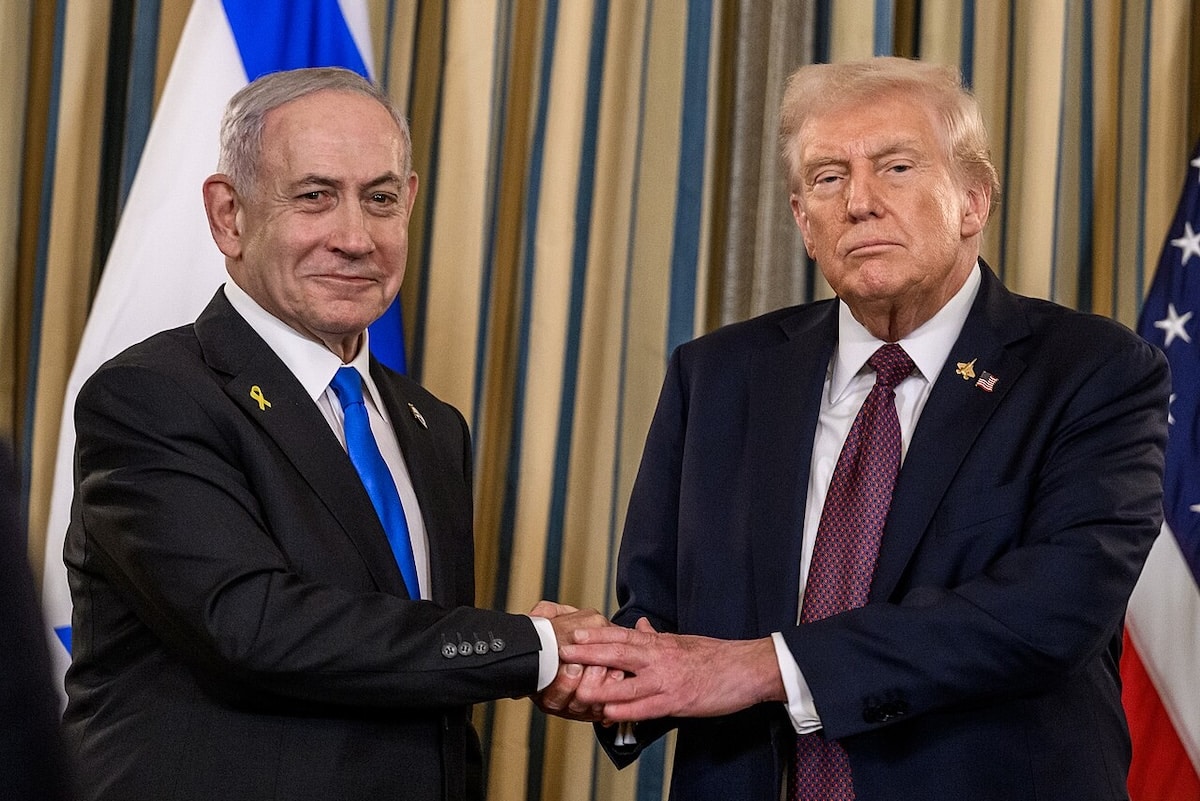
10 March 2026 AIMN Editorial, By Walt Zlotow, West Suburban Peace Coalition Glen Ellyn IL, https://theaimn.net/trump-netanyahu-down-to-last-card-in-criminal-iran-war/
President Trump and Israeli Prime Minister began their second war on Iran in 7 months with just 2 war crime cards to play.
The first card was the US, Israeli version of Blitzkrieg from the air. Kill Iran’s beloved leader the Ayatollah Ali Khamenei, demand surrender, then wait for the 90 million Iranians to capitulate to new masters Trump and Netanyahu. That was projected to take just about 72 hours.
As expected, millions of Iranians came into the streets following Khamenei’s assassination. But not to welcome the grisly invaders bombing them. It was to show near total support to the Islamic government, cheering them on to inflict as much retaliation possible to repel the Trump Netanyahu criminal tag team.
And they are succeeding, causing massive damage to US military facilities in Bahrain, Qatar, Jordan, Kuwait. Saudi Arabia and UAE. All 6 are running out of defensive interceptors provided by Uncle Sam. Why? Trump is giving them all to himself and his war partner Netanyahu. When this is all over, the Gulf States will never again trust America for their defense. They may even tell the US to vamoose the region PDQ.
Iran is also bombing Israel night and day, giving Netanyahu, flying around the region 24/7 to avoid Khamenei’s fate, a taste of what he visited on Palestinians in Gaza for 2 years.
That leaves Trump and Netanyahu with their last war crime card to play. Bomb Iran to smithereens till there is no more Iranian weapons or personnel left with which to retaliate.
Big problem facing America and Israel is size. Both Israel and US military facilities nearby are compact in size making them easy targets, while Iran, the 17th largest country by area, has their tens of thousands of missiles scattered and largely unreachable.
Now that Iran has chosen to fight to the death rather than capitulate as expected, the advantage may be tiltng in their favor. Rumors surfacing Trump is pondering an off ramp to stop the bleeding he has no way of controlling.
Worst case scenario remains that Netanyahu may get so desperate facing unfathomable defeat, he escalates to war crime card 3… nuke Tehran.
Israel planned this war on Iran for 40 years. Everything else is a smoke screen.
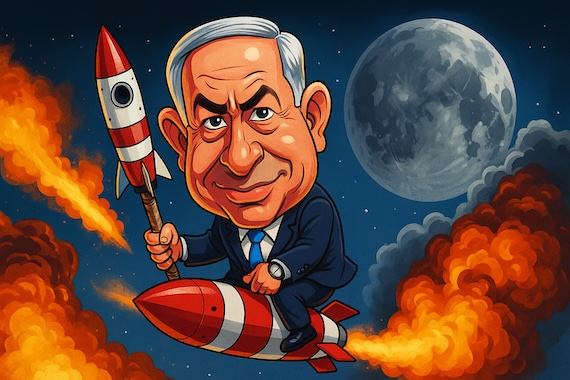
The Israeli prime minister, Benjamin Netanyah……… gloated: “This combined effort allows us to do what I have hoped to achieve for 40 years: to crush the regime of terror completely. That’s my promise and this is what is going to happe
And all the while, Israel’s own arsenal of nuclear weapons, undeclared and therefore unmonitored, has been an open secret.
The embers of resistance – in Gaza, Iraq, Lebanon, Syria, Yemen – have not been snuffed out. With the attack on Iran, they are being fanned into a fire
Jonathan Cook, Mar 06, 2026
It is near impossible to make sense – at least from the justifications on offer – of what US President Donald Trump really hopes to achieve with his and Israel‘s blatantly illegal war of aggression on Iran.
Is it to destroy an Iranian nuclear weapons programme for which there has never been any tangible evidence, and which Trump claimed just a few months ago to have “completely and totally obliterated” in an earlier lawbreaking attack?
Or is it intended to force Tehran back to negotiations on its nuclear energy enrichment programme that were brought prematurely to an end when the US launched its unprovoked attack – talks, we should note, that were made necessary because in 2018, during his first term, Trump tore up the original deal with Iran?
Or is the war supposed to browbeat Iran into greater flexibility, even though Trump blew up the talks at the very moment Oman, the chief mediator, insisted that Tehran had capitulated on almost every one of Washington’s onerous demands and that a deal was “within our reach“?
Or are the air strikes designed to “liberate” Iranians, even though the early victims included at least 165 civilians in a girls’ school, most of them children aged between 7 and 12?
Or is the aim to pressure Iran to give up its ballistic missiles – the only deterrence it has against attack, and which would leave it utterly defenceless against US and Israeli malevolent designs?
Or did Washington believe Tehran was about to strike first, even though Pentagon officials have confided to congressional staff that there was zero intelligence an attack was about to happen?
Or is the goal to decapitate the Iranian regime, as the strikes have already achieved with the assassination of Iran’s supreme leader, Ali Khamenei? If so, to what purpose, given that Khamenei was so opposed to an Iranian nuclear bomb that he issued a religious edict, a fatwa, against its development?
Might Khamenei’s successor – having seen how utterly untrustworthy the US and Israel are, how they operate as rogue states unconstrained by international law – now decide that developing a nuclear bomb is an absolute priority to protect Iran’s sovereignty?
No clear rationale
There is no clear rationale from Washington because the author of this attack is not to be found in either the White House or the Pentagon. This plan was cooked up in Tel Aviv decades ago.
The Israeli prime minister, Benjamin Netanyahu, admitted as much on Sunday. He gloated: “This combined effort allows us to do what I have hoped to achieve for 40 years: to crush the regime of terror completely. That’s my promise and this is what is going to happen.”
Those four decades, let us note, were also the timeframe for an endless series of warnings from Netanyahu and other Israeli leaders that Tehran was only months away from developing a nuclear bomb.
Netanyahu has been peddling this same urgent, nonsensical pretext for attacking Iran all that time. For 40 years, each year has been proclaimed the very last opportunity to stop the “mad mullahs” from obtaining a bomb – a bomb that never materialised.
And all the while, Israel’s own arsenal of nuclear weapons, undeclared and therefore unmonitored, has been an open secret.
Europe helped Israel develop its bomb, while the US turned a blind eye, even as Israeli leaders espoused a suicidal doctrine known as the “Samson Option“, which posited that Israel would rather detonate its nuclear arsenal than suffer a conventional military defeat.
The Samson Option implicitly rejects the idea that any other state in the Middle East can be allowed to acquire a bomb and thereby level the military playing field with Israel.
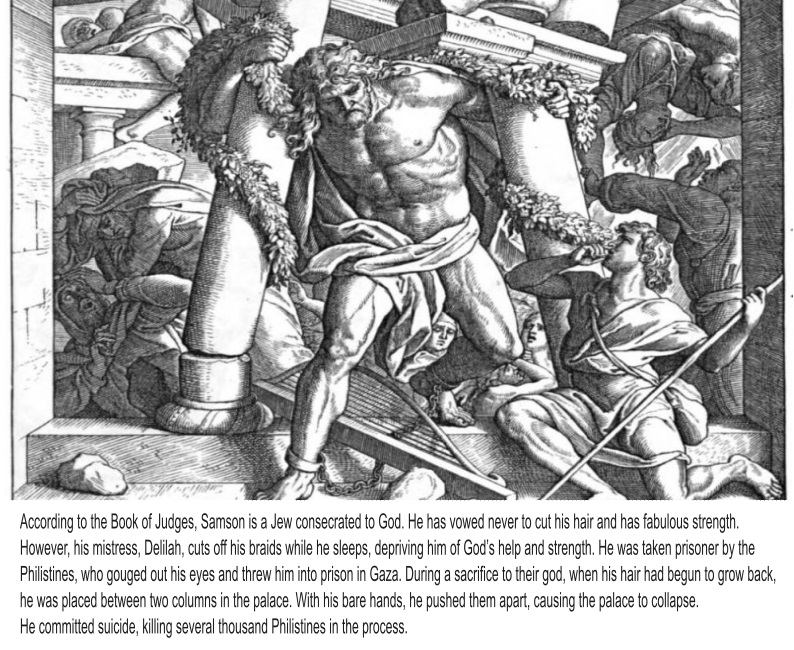
It is that very premise that, for decades, has guided Israeli policy towards Tehran. Not because Iran has shown an inclination to develop a weapon. Nor because its supposedly “mad mullahs” would be foolish enough to fire them at Israel were they ever to acquire them.
No, it was for other reasons. Because Iran is the largest and most unified state in the region, one with a rich history, a strong cultural identity and a formidable intellectual tradition. Because Iran has repeatedly shown itself – whether under secular or religious leaders – unwilling to submit to western, and Israeli, colonial domination.
And because it is looked to as a source of authority and leadership by Shia religious communities in neighbouring countries – Iraq, Lebanon, Syria, Yemen – that have a history of similarly refusing to bow to Israeli hegemony.
Israel’s fear was that, were Iran to follow North Korea and acquire a nuclear weapon, Israel would be finished as the West’s most useful militarised client state in the oil-rich Middle East.
Stripped of its ability to terrorise its neighbours, stoke sectarian division and help project US imperial power into the region, Israel would lose its rationale. It would become the ultimate white elephant.
Israeli leaders – grown fat on endless military subsidies paid for by US taxpayers and given licence to plunder the Palestinians’ resources – were never going to willingly step off their gravy train.
Which is why Iran has rarely been out of Israel’s sights……………………………………………………………………………………………………………………………………………………………………………………………………………………………………………………….
The last time Iran had a democratic government, in the early 1950s, its secular, socialist prime minister, Mohammad Mossadegh, outraged the West by nationalising Iran’s oil industry for the benefit of Iranians.
The CIA’s Operation Ajax toppled him in 1953 and reinstated the brutal Mohammad Reza Pahlavi as monarch, or Shah, allowing the US and Britain to take back control of Iran’s oil.
The backlash was 26 years coming. Islamic clerics rode an outpouring of popular hatred for the US and Israeli-backed Shah to launch their revolution…………………………………………………………………………………………………………….
Pact with the devil
Washington’s western allies may be privately uncomfortable at being visibly associated with another illegal US-Israeli war. But in supporting more than two years of genocide in Gaza, they already made their pact with the devil. There is no going back now.
Which is why Britain, France, Germany, Canada and Australia all dutifully lined up behind the Trump administration as the mayhem began………………………………………………………………………….
The embers of resistance – in Gaza, Iraq, Lebanon, Syria, Yemen, and potentially in new sites like Bahrain – have not been snuffed out. And now, with the attack on Iran, they are being fanned into a fire with every new crime, every new outrage, every new atrocity. https://jonathancook.substack.com/p/israel-planned-this-war-on-iran-for?utm_source=post-email-title&publication_id=476450&post_id=190093136&utm_campaign=email-post-title&isFreemail=true&r=17yeb&triedRedirect=true&utm_medium=email
.
Iran signals a ‘fight to the end’ with choice of new ayatollah

Tyler Durden, ZeroHedge, Mon, 09 Mar 2026
Meanwhile, the US struggles to define Israeli-coordinated endgame
Summary:
- Lebanon wants direct peace talks with Israel to end fighting but Israeli rejects it, also amid US skepticism: Axios.
- Trump says too soon to talk about seizing Iran’s oil but does not rule it out, tells NBC.
- Analyst consensus on question of potentially protracted conflict: Iran Signals a Fight to the End With Appointment of Khamenei’s Son
- Senator Graham: “The American Embassy is being evacuated in Riyadh because of sustained attacks by Iran against the Kingdom of Saudi Arabia.”
- Timeline to end Iran war? Trump signals decision will be only after ‘mutual’ decision with Netanyahu.
- Trump Truth Social post calls for Australia to give Iran National Woman’s Soccer team Asylum, but it remains unclear if the whole team is actually requesting it, or if individuals are.
- Iranian official to Al Jazeera: “we are able to continue the war for a long time and there is no room for diplomacy now.”
- G7 ‘closely monitoring’ energy markets, ‘ready’ to take necessary measures, including possible oil stockpile release.
- Younger, reportedly more ‘hardline’ Ayatollah takes command as regime stability continues: Military and political elites have pledged allegiance to Mojtaba Khamenei, who replaces his slain father as supreme leader and is viewed as a figure favored by the IRGC.
- Offramp, or more global shock & pain ahead? Trump after seeing oil prices: Short term oil prices, which will drop rapidly when the destruction of the Iran nuclear threat is over, is a very small price to pay for U.S.A., and World, ONLY FOOLS WOULD THINK DIFFERENTLY!
- Threat of whole regional war ongoing: Turkey says second Iranian ballistic missile shot down by NATO defenses in airspace, but then NATO quickly contradicts – saying no 2nd missile was intercepted.
- Nation-building, nation-smashing, divergent US-Israeli aims? More from Trump”…will work tirelessly to bring Iran back from the brink of destruction, making it economically bigger, better, and stronger than ever before.” But US officials distance themselves from big weekend attacks on Iranian oil.
Iran shuts door on ceasefire talk possibility, accuses US of seeking ‘partition’: as several countries have begun mediation efforts; however Foreign Ministry says: “While military aggression continues, there is little room to talk about anything other than a decisive response.”- CENTCOM confirms 8th US troop death; More Iranian missile/drone hits on Gulf sites, IDF ground operations expand inside Lebanon
Update(1240ET): Iran on Monday is seeking to showcase its continuity and ‘stability’ of government after a week of heavy US-Israeli bombardment failed to produce regime change. Instead, Tehran is vowing to fight back, saying it can keep the war going for as long as needed. Analysts have pointed out Iran needs to inflict a cost on the US and Israel, fearing it will just be attacked again somewhere down the line, even if years from now.
And yet, Trump admin officials have been signaling the American public there won’t be a protracted war. But on this big looming question, The Wall Street Journal is out Monday with the following ominous headline suggesting a lengthy conflict ahead:
Iran Signals a Fight to the End With Appointment of Khamenei’s Son…
The elevation of Mojtaba Khamenei, a conservative long close to Iran’s Islamic Revolutionary Guard Corps, shows that Trump’s efforts so far to cow the regime into surrender have failed. It also appears to have put hard-liners in firm control of the country, with moderate and reformist factions long marginalized. The 56-year old Khamenei is expected to take a confrontational stance toward the West.
His appointment also shows that Iran won’t acquiesce to Trump’s demand that he approve the country’s new top cleric. Trump told Axios last week that “Khamenei’s son is unacceptable to me.”
The younger Khamenei’s ascendance “suggests the continuation of the same old strategy: repression at home and resistance internationally,” said Sanam Vakil, director of the Middle East and North Africa program at Chatham House.
There remains the question of if US and Israeli goals and objectives are truly aligned on the Iran war. Some of Trump’s latest remarks are cause for concern, and highlight the aforementioned question: “Iran was going to destroy Israel and everything else around it. We’ve worked together. We’ve destroyed a country that wanted to destroy Israel,” Trump asserted.
The President indicated that he would keep the ultimate prerogative but while consulting directly with Netanyahu.
“I think it’s mutual, a little bit. We’ve been talking. I’ll make a decision at the right time, but everything’s going to be taken into account.”
Some admin officials are likely looking for a quick exit ramp, which would probably involve a politically expedient moment to declare ‘victory’ and get out. But will the Israelis cooperate when/if that moment comes?……………………………………………………………………………………………………………………………………………………………………………………………………………………………………………………..
As for ‘what’s next’ – escalation or offramp… the following from Bloomberg suggests there could be a gateway to ground troops if things take an escalatory war path: “Trump is weighing the option of deploying special forces on the ground to seize Iran’s near bomb-grade uranium, according to diplomats. He told the Times of Israel that a decision on when to end the war will also involve Benjamin Netanyahu,” Bloomberg reviews of prior weekend reporting.
This as there are claims that Washington and Tel Aviv don’t see eye to eye on ultimate war aims and strategy: “Israel’s strikes on 30 Iranian fuel depots Saturday went far beyond what the U.S. expected when Israel notified it in advance, sparking the first significant disagreement between the allies since the war began eight days ago, according to a U.S. official, Israeli official and a source with knowledge.” But all of this fresh reporting of ‘distance’ between the close allies who are executing Trump’s Operation Epic Fury could by design be meant to create artificial distance between the president and what might prove to be an unpopular war. https://www.sott.net/article/505074-Iran-signals-a-fight-to-the-end-with-choice-of-new-ayatolla
US Argues ‘Emergency’ of Iran War Means Israel Needs 20,000+ More Bombs Without Congressional Approval
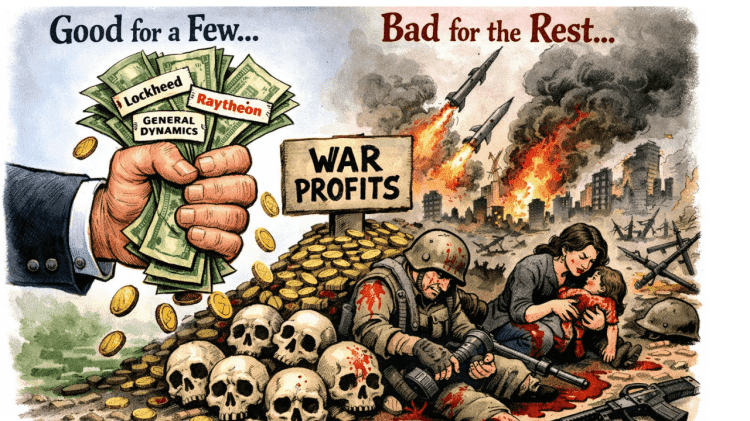
This is the first time that the second Trump administration has formally declared an emergency, allowed under the Arms Export Control Act, to bypass Congress to sell arms to Israel. The administration has bypassed the informal approval process in Congress three times to sell arms or send weapons aid to Israel, but previously has not declared an emergency
‘Who cares about Israel’s genocide, apartheid, and aggression?” asked one human rights expert.
Jon Queally, Mar 07, 2026, https://www.commondreams.org/news/us-bombs-for-israel-iran-lebanon
The US State Department is hiding behind the war against Iran that was started by US President Donald Trump last week to justify an emergency order to ship more than 20,000 bombs—estimated at a value of $660 million—to Israel, skirting a pending approval process for the sale by Congress.
In a statement issued quietly on Friday night, the State Department said 12,000 BLU-110A/B general purpose, 1,000-pound bombs had been determined for approval, noting that Secretary of State Marco Rubio has “provided detailed justification that an emergency exists that requires the immediate sale to the Government of Israel of the above defense articles and defense services is in the national security interests of the United States, thereby waiving the Congressional review requirements under Section 36(b) of the Arms Export Control Act.”
Not included in the statement, according to the New York Times, were additional parts of the sale that “include 10,000 bombs of 500 pounds each and 5,000 small-diameter bombs.”
“This is an emergency of the Trump administration’s own creation.” —Rep. Gregory Meeks (D-N.Y.)
According to the Times:
The State Department did not mention these details in the announcement, but two current US officials and a former, Josh Paul, who worked on weapons transfers at the State Department, said they were part of the emergency sale. The current officials spoke on the condition of anonymity to discuss sensitive arms transactions.
This is the first time that the second Trump administration has formally declared an emergency, allowed under the Arms Export Control Act, to bypass Congress to sell arms to Israel. The administration has bypassed the informal approval process in Congress three times to sell arms or send weapons aid to Israel, but previously has not declared an emergency.
The push for the “emergency” arms sale comes as Israel pummels Lebanon with airstrikes, forcing an estimate 500,000 people or more in southern regions outside of Beirut to flee their homes. It also coincides with Israeli forces hitting targets in Iran alongside the US in what experts say is a wholly illegal attack on that country.
Rep. Gregory W. Meeks (D-N.Y.), ranking member of the House Foreign Affairs Committee, denounced the move by the Rubio in a Friday statement.
“Today’s invocation of the Arms Export Control Act’s emergency authority to bypass congressional review for two munitions cases to Israel exposes a stark contradiction at the heart of this administration’s case for war,” said Meeks. “The Trump administration has repeatedly insisted it was fully prepared for this war. Rushing to invoke emergency authority to circumvent Congress tells a different story. This is an emergency of the Trump administration’s own creation.”
Others also questioned the emergency sale, especially given Israel’s record of genocide in Gaza over the last two years and its pivotal role in pushing the Trump administration toward a war of choice with Iran.
Meeks, in his statement, argued that key questions about Trump’s war in Iran remain unanswered.
“What is the endgame? What preparations have been made to protect American citizens in the region? And how much will this war cost the American people?” asked Meeks. “The administration has provided no credible answers. The American people deserve answers, and Congress must demand them.”
In US/Israeli war on Iran, all roads point to rise in global nuclear weapons.
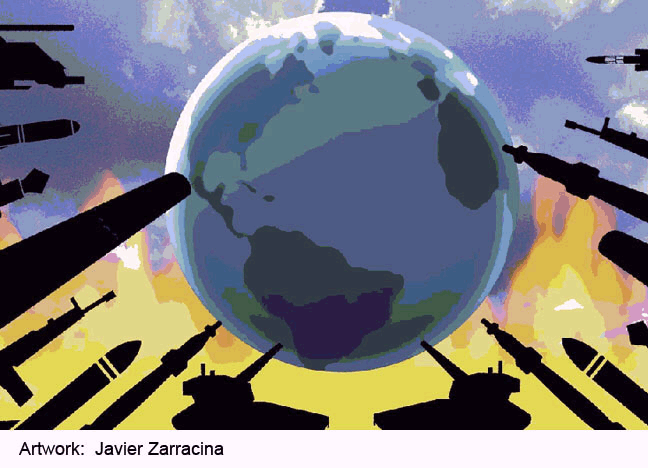
Trump and Netanyahu are already boasting of success. But the war is not going to plan for any of the parties involved
Paul Rogers, 6 March 2026, https://www.opendemocracy.net/en/us-iran-israel-war-lead-to-nuclear-weapons-donald-trump-netanyahu/
One week in, there is little prospect of an early end to the Israeli war with Iran and even less of preventing a regional escalation. Given Binyamin Netanyahu’s success in bringing Donald Trump’s United States on board as Israel’s partner in a widening war, he may feel satisfied with progress so far. In reality, though, the conflict is not going according to plan for any of the three states involved.
Netanyahu’s intended outcome was straightforward regime termination in Tehran, with the assassination of the supreme leader and most of Iran’s senior war leaders. A public uprising would then have followed, ending the power of the theocrats.
Israel and the US could then have brought sufficient force to terminate Iran’s nuclear and ballistic missile program and cut back its conventional forces, starting with the abolition of the Iranian Revolutionary Guard Corps (IRGC).
Finally, the removal of the US’s punishing economic sanctions on Iran would have been agreed, allowing some civil recovery for the country – although this would, of course, have been contingent on the new leaders agreeing to oil and gas deals that would prove punitive for Iran and lucrative for the US, likely ensuring Trump’s continued support for Israel.
The Israeli war aims may have been clear, but it is impossible to say for sure what the White House wanted.
A muddle of reasons and statements of intent for bombing Iran have been given by Trump, his secretary of state, Marco Rubio and self-styled secretary of war, Pete Hegseth, who last year sought to rebrand from the ‘secretary of defense’ title that has been used by successive post-holders since the end of the Second World War. While Washington initially embraced Israel’s desire for total regime termination through an uprising, that aim has disappeared from its recent statements. Now it seems that crushing Iran’s military capabilities, starting with its nuclear ambitions, is the US order of the day.
For Iran’s theocratic leadership, the primary war aim was survival in the face of the massive power of the Israeli/US war machine, which would itself have been quite an achievement. Indeed, Iran’s supreme leader, Ayatollah Khamenei, barely survived the first hour or so of the war before being killed in a missile strike.
The unexpected has since become clear: Khamenei is gone, but Iran’s leadership system is likely to survive for now. His successor will probably be his son, Ayatollah Mojtaba Khamenei, who will quite possibly be as hard-line as his father. Israeli defence minister Israel Katz has declared that whoever is chosen as Iran’s next supreme leader will be “a target for elimination” – a clear indication that for Netanyahu and the Israeli Defence Forces, there is no turning back.
If regime survival is one of the surprises of the conflict, the other is Iran’s continuing ability to fire barrages of armed drones and ballistic missiles, which has been the least expected element of the war so far.
By last July, the IDF and the US believed they had massively damaged Iran’s air defences, with Trump boasting of “spectacular military success” in a press conference. On top of this, the past week has seen the determined and intensive targeting of Iran’s missile systems by the combined power of the IDF and US armed forces. Yet to the genuine surprise of many Western political and military analysts, Iran can still launch its missiles.
Three elements of this survival offer a clue as to what comes next.
One is that the regime in Tehran is likely to continue to survive. Look to Gaza, where Hamas is still active despite the massive destruction that Israel has inflicted over the past two and a half years. This, as I noted in last week’s column, is largely down to its quite extraordinary network of tunnels dug mostly by hand and reinforced with concrete walls. The network, which extends to around the distance from London to Edinburgh, has around 5,700 shafts, as well as electricity, ventilation and communication facilities.
In Iran, the IRGC now looks to have been similarly active in extensively preparing for war. It has built numerous and widely dispersed underground ‘missile cities’ – deep tunnel complexes built into mountains for making and storing armed drones and other weapons – as well as producing undersea armed drones for use against the US Navy, especially if it tries to guide tankers through the Strait of Hormuz.
The second element follows on. There are indications that the IRGC appears to be using its older and least advanced missiles and drones first, aiming to deplete Israeli and US stocks of their anti-missile defences. Quite apart from anything else, this means Israel and the US are depleting their high-cost weaponry to “catch” incoming missiles, while Iran saves its most recently developed drones and ballistic missiles – with greater reach and more power for destruction, as well as improved accuracy and reliability – for later in the war.
Finally, there is the decision to opt for economic warfare against Western interests in many Gulf states. This involves the closure of the Strait of Hormuz, alongside attacks on oil and gas processing plants and distribution systems, as well as tourist infrastructure across the Gulf, with a luxury hotel in Dubai reportedly hit by a retaliatory strike.
This puts states such as Saudi Arabia, Kuwait and the United Arab Emirates in a difficult position as to how to respond. To react forcefully by joining the war against Iran may be the natural response, but this has consequences. It means allying with an Israel that has killed at least 80,000 Palestinian Arabs in Gaza and enacted violence in the occupied West Bank to make life fraught with difficulty and increasingly dangerous.
This war is barely a week old but is having a worldwide impact and, despite Trump’s bluster, is already problematic for the US. The killing of at least 165 people, many of them children, at the Shajareh Tayyebeh Girls School in Minab is just one example of this, while another may be significant in a different way.
On Wednesday, a US Navy submarine torpedoed an Iranian frigate, the IRIS Dena, killing at least 87 crew members. The Dena had recently left a series of exercises organised by the Indian Navy in the Bay of Bengal, and its sinking was reported with great glee by Hegseth, who told reporters: “Yesterday, in the Indian Ocean, an American submarine sunk an Iranian warship that thought it was safe in international waters. Instead, it was sunk by a torpedo. Quiet death. The first sinking of an enemy ship by a torpedo since World War II.”
Earlier in the press conference, Hesgeth had used the same celebratory and boastful tone to discuss what he framed as early US success. “We are only four days into this, and the results have been incredible. Historic, really,” he said. “Only the United States of America could lead this – only us. But when you add the Israeli Defence Forces, a devastatingly capable force, the combination is sheer destruction for our radical Islamist Iranian adversaries. They are toast, and they know it. Or at least, soon enough, they will know it. America is winning – decisively, devastatingly, and without mercy.”
The US war secretary’s speech betrayed the sense of impunity in Trump’s White House, confirming that members of his administration are certain in their own minds that in this war, Israel and the US can do what they like.
The consequences of this war are impossible to say for sure, but all roads appear to lead to increased uptake of nuclear weaponry, leaving the world an even less safe and stable place. If Israel and the US fail to terminate the Iranian regime and if any significant part of the IRGC survives, the very first thing it will do is to go to the ends of the earth to put together a crude nuclear device. Across the wider region, any state that sees two nuclear-armed regimes seeking to destroy a non-nuclear regime will see a need to go nuclear itself.
1 This Month
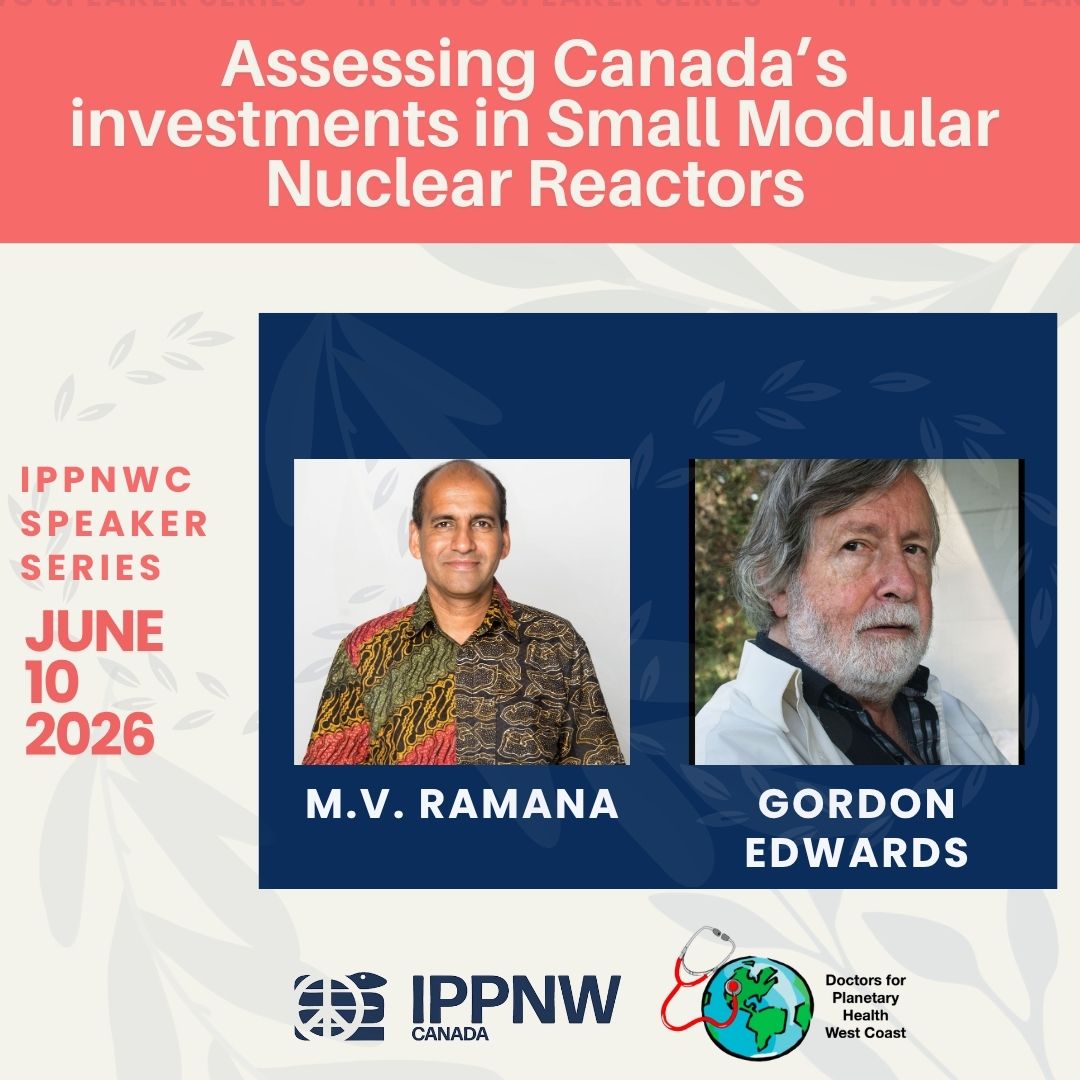
10 June – Assessing Canada’s Investments in Small Modular Nuclear Reactors – https://zoom.us/meeting/register/IiqHA5feRhaEBycOLNTJlA#/registration


Cuba Is Not a Failed State – It Is a Besieged State
PETITION: “Global Appeal to Endorse Palestinian Right of Return of Refugees”
To see nuclear-related stories in greater depth and intensity – go to https://nuclearinformation.wordpress.com
-
Archives
- June 2026 (89)
- May 2026 (306)
- April 2026 (356)
- March 2026 (251)
- February 2026 (268)
- January 2026 (308)
- December 2025 (358)
- November 2025 (359)
- October 2025 (376)
- September 2025 (257)
- August 2025 (319)
- July 2025 (230)
-
Categories
- 1
- 1 NUCLEAR ISSUES
- business and costs
- climate change
- culture and arts
- ENERGY
- environment
- health
- history
- indigenous issues
- Legal
- marketing of nuclear
- media
- opposition to nuclear
- PERSONAL STORIES
- politics
- politics international
- Religion and ethics
- safety
- secrets,lies and civil liberties
- spinbuster
- technology
- Uranium
- wastes
- weapons and war
- Women
- 2 WORLD
- ACTION
- AFRICA
- Atrocities
- AUSTRALIA
- Christina's notes
- Christina's themes
- culture and arts
- Events
- Fuk 2022
- Fuk 2023
- Fukushima 2017
- Fukushima 2018
- fukushima 2019
- Fukushima 2020
- Fukushima 2021
- general
- global warming
- Humour (God we need it)
- Nuclear
- RARE EARTHS
- Reference
- resources – print
- Resources -audiovicual
- Weekly Newsletter
- World
- World Nuclear
- YouTube
-
RSS
Entries RSS
Comments RSS
 nuclear-news