‘The rope is for Arabs only’: Israel’s new death penalty law for Palestinians recycles a colonial playbook

For years, Israeli forces already operated under rules that permitted the shooting and killing of unarmed persons, so long as they could nominally be deemed a threat. But Israel’s current war has expanded this category to the point that nearly everyone can now be made into a target.
The execution law is largely a shield designed to protect soldiers from even the limited threat of accountability, and to formalize what the field has already made routine.
The passing of the recent Israeli death penalty law legalizes an already existing policy of executions within a set schedule. The same colonial logic governs how Israel launches its wars: first Gaza, then Lebanon, now Iran. Resistance in this region is refusing Israel’s timetable of death.
By Abdaljawad Omar, Mondoweiss, April 2, 2026
The picture of Israeli National Security Minister Itamar Ben-Gvir jubilantly trying to open a champagne bottle on the Knesset floor over the passing of a death penalty law for Palestinians will be anchored in history as one of those photographs that needs no caption.
It’s the image of a country that has never truly left the colonial moment into which it was born. It didn’t simply inherit British practices, but kept them alive for over 70 years. It now reaches back to retrieve one of the darkest of these practices.
Israel’s new death penalty law, which exclusively targets Palestinians, did not come out of nowhere. It was passed down from a scaffold the British had already built on the same land, testing it on the same people under the same sky. In his study of Britain’s “pacification” of Palestine, Matthew Hughes, a military historian at Brunel University, shows how the military courts established by the British Mandate in November 1937 were built for speed above all else — a terror performed so quickly that no one had time to appeal or look away. Shaykh Farhan al-Sa’di, an elderly Qassamite revolutionary leader and one of the principal field commanders of the 1936 uprising, was captured on a Monday, tried on a Wednesday, and hanged on a Saturday. It’s the same law Israel reintroduced today.
What those courts also reveal is that British execution policy was, from the beginning, applied differently depending on who stood before the judge. Palestinians were hanged for carrying four bullets; Jews received prison sentences for firing weapons. The courts were equal on paper and unequal in practice, and everyone living under them knew it.
Bahjat Abu Gharbiyya, a Palestinian nationalist and resistance fighter who lived through the British Mandate and left some of the most detailed firsthand accounts of that period, documented this disparity plainly: in his account, the capital sentence fell on Arabs, while Jews charged with the same or graver offenses walked away with prison sentences. The rope, in practice, was for Arabs only.
The new Israeli law carries this same racism forward, entering a prison system where Palestinians make up the vast majority of political prisoners, and where the definition of who is dangerous has been stretched until it fits almost anyone who refuses to disappear quietly. The rope, as it always has been in Palestine, is for Arabs only.
There is something else that legalizing execution does, something beneath the law’s stated purpose that may be its more consequential effect. Hughes shows that in Mandate Palestine, official policy and unofficial violence never operated separately. As British courts hanged men with increasing speed and confidence, the threshold for what soldiers felt permitted to do in the field quietly fell. At Miska, a Palestinian village in the coastal area, British police tortured four captured Palestinian rebels in May 1938, killing them once interrogation was complete — not in a courtroom, but in the open.
Law and lawlessness were not opposites in that system: they fed each other. The widened application of capital punishment in the courts gave license to soldiers in the field. What we are watching in Gaza, Lebanon, and the West Bank today follows the same pattern, pushing the boundaries of permissible conduct.
For years, Israeli forces already operated under rules that permitted the shooting and killing of unarmed persons, so long as they could nominally be deemed a threat. But Israel’s current war has expanded this category to the point that nearly everyone can now be made into a target.
A codification of existing practice
In this sense, Israel is not doing something new with this law. It is catching up with itself. The execution law is largely a shield designed to protect soldiers from even the limited threat of accountability, and to formalize what the field has already made routine. According to Israeli rights group Yesh Din, of the 1,260 complaints filed against soldiers for harming Palestinians between 2017 and 2021, soldiers were prosecuted in less than 1% of cases — 0.87%, to be precise. The law does not create impunity, but guarantees it. Once enshrined, it pushes the violence further, each legal expansion making extrajudicial killing easier to justify, and each unjustified killing creating pressure for new legal cover. They drive each other.
………………………………………………………………………………………………………………………………………………………………………………………………………………………………………………………… https://mondoweiss.net/2026/04/the-rope-is-for-arabs-only-israels-new-death-penalty-law-for-palestinians-recycles-a-colonial-playbook/
Israel is making sure Trump can’t find an off-ramp in Iran

The main problem for Trump, the US narcissist-in-chief, is that he is no longer in charge of events – beyond a series of soundbites, alternating between aggression and accommodation, that appear only to have enriched his family and friends as oil markets rise and fall on his every utterance.
Trump’s words are worthless. He could agree to terms tomorrow, but how could Tehran ever be sure that it would not face another round of strikes six months later?
Netanyahu pitched the war as a repeat of Israel’s apparent ‘audacious feat’ of smashing Hezbollah. The US president should have noted instead Israel’s moral and strategic defeat in Gaza
Jonathan Cook, Mar 30, 2026
Israeli Prime Minister Benjamin Netanyahu must have persuaded Donald Trump that a war on Iran would unfold much like the pager attack in Lebanon 18 months ago.
The two militaries would jointly decapitate the leadership in Tehran, and it would crumble just as Hezbollah had collapsed – or so it then seemed – after Israel assassinated Hassan Nasrallah, the Lebanese group’s spiritual leader and military strategist.
If so, Trump bought deeply into this ruse. He assumed that he would be the US president to “remake the Middle East” – a mission his predecessors had baulked at since George W Bush’s dismal failure to achieve the same goal, alongside Israel, more than 20 years earlier.
Netanyahu directed Trump’s gaze to Israel’s supposed “audacious feat” in Lebanon. The US president should have been looking elsewhere: to Israel’s colossal moral and strategic failure in Gaza.
There, Israel spent two years pummelling the tiny coastal enclave into dust, starving the population, and destroying all civilian infrastructure, including schools and hospitals.
Netanyahu publicly declared that Israel was “eradicating Hamas”, Gaza’s civilian government and its armed resistance movement that had refused for two decades to submit to Israel’s illegal occupation and blockade of the territory.
In truth, as pretty much every legal and human rights expert long ago concluded, what Israel was actually doing was committing genocide – and, in the process, tearing up the rules of war that had governed the period following the Second World War.
But two and a half years into Israel’s destruction of Gaza, Hamas is not only still standing, it is in charge of the ruins.
Israel may have shrunk by some 60 per cent the size of the concentration camp the people of Gaza are locked into, but Hamas is far from vanquished.
Rather, Israel is the one that has retreated to a safe zone, from which it is resuming a war of attrition on Gaza’s survivors.
Surprises in store
When considering whether to launch an illegal war on Iran, Trump should have noted Israel’s complete failure to destroy Hamas after pounding this small territory – the size of the US city of Detroit – from the air for two years.
That failure was all the starker given that Washington had provided Israel with an endless supply of munitions.
Even sending in Israeli ground forces failed to quell Hamas’ resistance. These were the strategic lessons the Trump administration should have learnt.
If Israel could not overwhelm Gaza militarily, why would Washington imagine the task of doing so in Iran would prove any easier?
After all, Iran is 4,500 times larger than Gaza. It has a population, and military, 40 times bigger. And it has a fearsome arsenal of missiles, not Hamas’ homemade rockets.
But more important still, as Trump is now apparently learning to his cost, Iran – unlike Hamas in isolated Gaza – has strategic levers to pull with globe-shattering consequences.
Tehran is matching Washington’s climb up the escalation ladder rung by rung: from hitting US military infrastructure in neighbouring Gulf states, and critical civilian infrastructure such as energy grids and desalination plants, to closing the Strait of Hormuz, the passage through which much of the world’s oil and energy supplies are transported.
Tehran is now sanctioning the world, depriving it of the fuel needed to turn the wheels of the global economy, in much the same way that the West sanctioned Iran for decades, depriving it of the essentials needed to sustain its domestic economy.
Unlike Hamas, which had to fight from a network of tunnels under the flat, sandy lands of Gaza, Iran has a terrain massively to its military advantage.
Granite cliffs and narrow coves along the Strait of Hormuz provide endless protected sites from which to launch surprise attacks. Vast mountain ranges in the interior offer innumerable hiding places – for the enriched uranium the US and Israel demand Iran hand over, for soldiers, for drone and missile launch sites, and for weapons production plants.
The US and Israel are smashing Iran’s visible military-related infrastructure, but – just as Israel discovered when it invaded Gaza – they have almost no idea what lies out of sight.
They can be sure of one thing, however: Iran, which has been readying for this fight for decades, has plenty of surprises in store should they dare to invade.
No trust in Trump
The main problem for Trump, the US narcissist-in-chief, is that he is no longer in charge of events – beyond a series of soundbites, alternating between aggression and accommodation, that appear only to have enriched his family and friends as oil markets rise and fall on his every utterance.
Trump lost control of the military fight the moment he fell for Netanyahu’s pitch.
He may be commander-in-chief of the strongest military in the world, but he has now found himself unexpectedly in the role of piggy in the middle.
He is largely powerless to bring to an end an illegal war he started. Others now dictate events. Israel, his chief ally in the war, and Iran, his official enemy, hold all the important cards. Trump, despite his bravado, is being dragged along in their tailwind.
He can declare victory, as he has repeatedly sounded close to doing. But, having released the genie from the bottle, there is little he can actually do to bring the fighting to a close.
Unlike the US, Israel and Iran have an investment in keeping the war going for as long as either can endure the pain. Each regime believes – for different reasons – that the struggle between them is existential.
Israel, with its zero-sum worldview, is afraid that, were the military playing field in the Middle East to be levelled by Iran matching Israel’s nuclear-power status, Tel Aviv would no longer exclusively have Washington’s ear.
It would no longer be able, at will, to spread terror across the region. And it would have to reach a settlement with the Palestinians, rather than its preferred plan to commit genocide and ethnically cleanse them.
Similarly, Iran has concluded – based on recent experience – that the US, and especially Trump, can no more be trusted than Israel.
In 2018, in his first term, the US president tore up the nuclear deal signed by his predecessor, Barack Obama. Last summer Trump launched strikes on Iran in the midst of talks. And then late last month he unleashed this war, just as renewed talks were on the brink of success, according to mediators.
Trump’s words are worthless. He could agree to terms tomorrow, but how could Tehran ever be sure that it would not face another round of strikes six months later?
…………………………………………………………………………. Stoking the flames
As becomes clearer by the day, US and Israeli interests over Iran are now in opposition.
Trump needs to bring calm back to the markets as soon as possible to avoid a global depression and, with it, the collapse of his domestic support. He must find a way to reimpose stability.
With air strikes failing to dislodge either the ayatollahs or the Revolutionary Guard, he has one of two courses of action open to him: either climb down and engage in humiliating negotiations with Iran, or try to topple the regime through a ground invasion and impose a leader of his choosing.
But given the fact that Iran is not done wreaking damage on the US, and has zero reason to trust Trump’s good faith, Washington is being driven inexorably towards the second path.
Israel, on the other hand, bitterly opposes the first option, negotiations, which would take it back to square one. And it suspects the second option is unachievable.
The primary lesson from Gaza is that Iran’s vast terrain is likely to make invading troops sitting ducks for attack from an unseen enemy.
And there is far too much support for the leadership among Iranians – even if westerners never hear of it – for Israel and the US to foist on the populace the pretender to the throne, Reza Pahlavi, who has been cheering on the bombing of his own people safely from the sidelines.
Israel initiated this war with an entirely different agenda. It seeks chaos in Iran, not stability. That is what it has been trying to engineer in Gaza and Lebanon – and there is every sign it is seeking the same outcome in Iran.
This should have long been understood in Washington.
This week, Jake Sullivan, Joe Biden’s former national security adviser, cited recent comments by Danny Citrinowicz, a former veteran Israeli military intelligence lead on Iran, that Netanyahu’s aim is to “just break Iran, cause chaos”. Why? “Because,” says Sullivan, “as far as they’re concerned, a broken Iran is less of a threat to Israel.”
………………………………………………………………………………………….. Confusing messages
In typical fashion, Trump is sending confusing messages. He is seeking to negotiate – though with whom is unclear – while amassing troops for a ground invasion.
It is hard to analyse the US president’s intentions because his utterances make precisely no strategic sense.
This is not the logic of a superpower looking to shore up its own authority, and restore order to the region. It is the logic of a cornered crime boss, hoping that a last desperate roll of the dice may disrupt his rivals’ plans sufficiently to turn the tables on them.
That roll of the dice looks likely to be a plan to send US special forces to occupy Kharg Island, the main hub for Iran’s oil exports through the Strait of Hormuz.
Trump appears to think that he can hold the island as ransom, demanding Tehran reopen the Strait or lose its access to its own oil.
According to diplomats, Iran is not only refusing to concede control over the Strait but threatening to carpet-bomb the island – and US forces on it – rather than give Trump leverage. Tehran is also warning that it will start targeting shipping in the Red Sea, a second waterway vital to the transport of oil supplies from the region.
It still has cards to play.
This is a game of chicken Trump will struggle to win. All of which leaves the Israeli leadership sitting pretty.
If Trump ups the stakes, Iran will do so too. If Trump declares victory, Iran will keep firing to underscore that it decides when things come to a halt. And in the unlikely event that the US makes major concessions to Tehran, Israel has manifold ways to stoke the flames again.
In fact, though barely reported by the western media, it is actively fuelling those fires already.
It is destroying south Lebanon, using the levelling of Gaza as the template, and preparing to annex lands south of the Litani River in accordance with its imperial Greater Israel agenda.
It is still killing Palestinians in Gaza, still shrinking the size of their concentration camp, and still blockading aid, food and fuel.
And Israel is stepping up its settler-militia pogroms against Palestinian villages in the occupied West Bank, in preparation for the ethnic cleansing of what was once assumed to be the backbone of a Palestinian state.
Sullivan, Biden’s senior adviser, noted that Israel’s vision of a “broken Iran” was not in America’s interests. It risked prolonged insecurity in the Strait of Hormuz, the collapse of the global economy, and a mass exodus of refugees from the region towards Europe.
That would further deepen a European economic crisis already blamed on immigrants. It would strengthen nativist sentiment that far-right parties are already riding in the polls. It would intensify the legitimacy crisis already faced by European liberal elites, and justify growing authoritarianism.
In other words, it would foment across Europe a political climate even more conducive to Israel’s supremacist, might-is-right agenda.
Trump’s off-ramp is elusive. And Israel will do its level best to make sure it stays that way. https://jonathancook.substack.com/p/israel-is-making-sure-trump-cant?utm_source=post-email-title&publication_id=476450&post_id=192603646&utm_campaign=email-post-title&isFreemail=true&r=17yeb&triedRedirect=true&utm_medium=email
Closing Air Spaces and Cracking Alliances: Trump’s Growing Problem with Allies
2 April 2026 Dr Binoy Kampmark, https://theaimn.net/closing-air-spaces-and-cracking-alliances-trumps-growing-problem-with-allies/
With the Iran War groaning along, the Trump administration is getting increasingly indignant. Plumes of childish anger can be seen coming out of the White House and Pentagon. Having joined an illegal, joint enterprise with Israel in attacking Iran, allies are proving increasingly unwilling to play along.
That unwillingness gurgled to the top with Spain’s announcement on March 30 that it had closed its airspace to US aircraft participating in strikes on Iran. This added to Madrid’s decision earlier in the month to deny the US military access to its bases for military operations against Tehran. “We don’t authorise either the use of military bases or the use of airspace for actions related to the war in Iran,” Defence Minister Margarita Robles told reporters. Spain’s Economy Minister Carlos Cuerpo, in an interview with radio Cadena SER, called the move consistent and “part of the decision already made by the Spanish government not to participate in or contribute to a war which was initiated unilaterally and against international law.”
The government of Prime Minister Pedro Sánchez has been singularly pertinacious in its characterisation of the Iran War, and more broadly illustrative of the current bad blood in transatlantic relations. In a piece for The Economist, Sánchez wrote of his country’s misplaced support for Washington in February 2003 when the then US Secretary of State, Colin Powell, told the UN Security Council most gravely that Iraq had weapons of mass destruction, and needed to be attacked. The foolishly credulous Spanish Prime Minister at the time, José María Aznar, was convinced that the regime of Saddam Hussein had such weapons. “Today we face a similar situation, and my government’s position is the same as that voiced by Spanish society two decades ago: NO TO WAR. No to the unilateral violation of international law. No to repeating the mistakes of the past. No to the idea that the world’s problems can be solved with bombs.”
Italian authorities have also expressed displeasure at the presumptuousness of their US allies in taking liberties with their military facilities. In a March 31 report by Corriere della Sera, “several US bombers” that had intended to land at Sigonella air base on route to the Middle East were refused as they had not properly requested authorisation or consulted with the Italian military. A statement from Palazzo Chigi, the office of Italian Prime Minister Giorgia Meloni, reiterated that Italy “acts in full compliance with existing international agreements and with the policy guidelines expressed by the Government to Parliament.”
Other allies are openly rebuffing requests by US officials to secure additional military equipment to the Gulf. Critical here are air-defence systems such as the Patriot batteries that have been dramatically depleted since the outbreak of hostilities. In the first 16 days of the war, some 1,285 PAC-3 Patriot missiles were used by the US military and Gulf states.
The Polish Defence Minister, Władysław Kosiniak-Kamysz could not have been clearer in his statement on whether Poland’s complement of Patriot air defence systems would make their way to the Middle East. “Our Patriot batteries and their armaments are used to protect Polish airspace and NATO’s eastern flank. Nothing is changing in this regard, and we have no plans to move them anywhere!” Fellow allies understood “the importance of our tasks here. Poland’s security is an absolute priority.”
As has become customary, US President Donald Trump has led the growls of grievance, billowing with anger on Truth Social about the reluctance of European partners to throw in their lot in what is, at best, a criminal enterprise. On the issue of depleted jet fuel supplies restricted by the closure of the Strait of Hormuz, he brusquely suggested to his allies that they could purchase supplies from the US (“we have plenty”) and “build up some delayed courage, go to the Strait, and just TAKE IT.” With a demented paternalism, he went on to declare that “You’ll have to start learning how to fight for yourself, the USA won’t be there to help you anymore, just like you weren’t there for us.” With typically strained logic, he went on to suggest that any assistance would be minor, in any case, as Iran had been “decimated.” “The hard part is done. Go get your own oil!”
Special mention was made of mulishness on the part of the UK (“which refused to get involved in the decapitation of Iran”) and France. France, for instance, had refused to permit planes carrying military supplies destined for Israel to fly over French territory. “France has been VERY UNHELPFUL with respect to the ‘Butcher of Iran’, who has been successfully eliminated. The U.S.A. will REMEMBER!!!”.
Soon afterwards, a comically crazed and increasingly God loving Pete Hegseth struck a similar note in the Pentagon. “A lot has been laid bare, a lot has been shown to the world about what our allies would be willing to do for the United States of America,” grumbled the Secretary of Defense (he prefers War) to reporters. “When we undertake an effort of this scope on behalf of the free world, these are missiles that don’t even range the United States of America, they range allies and others and yet, when we ask for additional assistance or simple access… we get questions or roadblocks or hesitation.”
In his March 30 interview with Al Jazeera, Secretary of State Marco Rubio was also brimming with complaints. “If NATO is just about us defending Europe if they’re attacked but then denying us basic rights when we need them, that’s not a very good arrangement. That’s a hard one to stay engaged in and say this is good for the United States.” All this called for a reassessment. “All of it’s going to have to be re-examined.” The re-examination, notably judging from the temper of European states, is proving increasingly reciprocal and, in some circles, even welcome.
Israeli nuclear city emerges as focal point in escalating Iran–Israel confrontation
March 30, 2026, https://www.middleeastmonitor.com/20260330-israeli-nuclear-city-emerges-as-focal-point-in-escalating-iran-israel-confrontation/
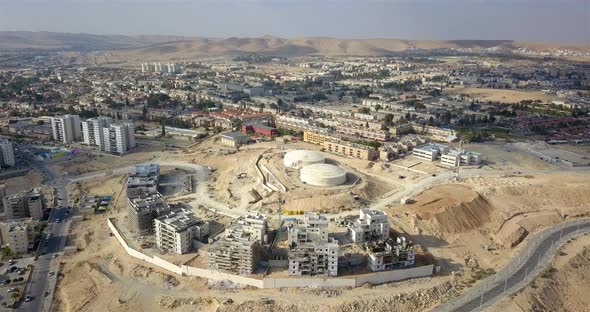
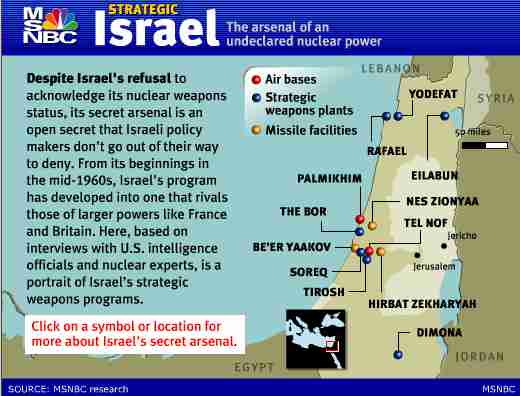
The city of Dimona has moved to the center of the escalating confrontation between Iran and Israel, following reports of an Iranian strike targeting its vicinity on 21st March.
Located deep in the Negev desert, Dimona is widely regarded as one of the most sensitive nodes in Israeli strategic infrastructure, largely due to its association with the country’s nuclear programme. Established in 1955, the city has since evolved into a key military and strategic site.
Researchers note that the area surrounding Dimona was historically inhabited by tens of thousands of Palestinian Bedouin Arabs prior to the 1948 Nakba. According to political analyst Muhammad Mustafa Shahin, the Negev region was home to between 90,000 and 95,000 Palestinians from tribes including the Tayyah, Azazmeh, and Jabarat, who relied on agriculture and herding.
Shahin highlights the geological significance of the region, noting that the Negev contains phosphate deposits rich in uranium in areas such as Aron, Zein, and Arad, alongside industrial facilities like the Rotem Amfert plants. These resources, he argues, contributed to the foundations of Israel’s nuclear development.
At the heart of Dimona’s strategic importance is the Negev Nuclear Research Center, commonly referred to as the Dimona reactor. Constructed with French assistance in the late 1950s and becoming operational in the early 1960s, the facility is widely believed to have played a central role in producing plutonium for nuclear weapons.
Shahin describes the reactor as part of what is known as Israel’s “Samson Option” — a doctrine of ultimate deterrence — which continues to fuel regional tensions, particularly in light of Israel’s refusal to sign the Nuclear Non-Proliferation Treaty (NPT).
The reported strike near Dimona marks a significant moment in the current escalation, drawing renewed attention to the risks surrounding nuclear-related infrastructure in an increasingly volatile regional conflict.
Netanyahu woke up on Iran war day 31 with a 3-front war he cannot win
By Walt Zlotow, Walt Zlotow, West Suburban Peace Coalition Glen Ellyn IL, 31 March 2026, https://theaimn.net/netanyahu-woke-up-on-iran-war-day-31-with-a-3-front-war-he-cannot-win/
Tho scrubbed from mainstream news, Trump attacked Iran February 28 because Israeli Prime Minister Benjamin Netanyahu pleaded, begged, demanded he do so. Trump’s top diplomat, Marco Rubio, revealed this when he stupidly admitted Trump knew Israel would attack Iran and had to preemptively attack as well to avoid Iran retaliation. What Rubio didn’t admit is that the Israeli attack was fully supported by the US since Israel could not attack without total US support.
Trump’s and Netanyahu’s unprovoked war of choice had one strategy. Kill Iranian leader the Ayatollah Ali Khamenei and watch the Iranian people depose their government and capitulate within 3 days.
That failed spectacularly as the Iranian people responded like Americans after Pearl Harbor. Iran’s government did likewise, with relentless bombing of Israel, 13 US bases in the Gulf States and closing the Strait of Hormuz.
If this was all that unfolded it would still represent a catastrophic loss for the Trump/Netanyahu war criminal tag team
But for Netanyahu it gets worse. He sent his army north into Lebanon to destroy Hezbollah. That war is now going south as Hezbollah just destroyed 20 Israeli tanks in one day. Hezbollah missiles are raining down on northern Israel driving tens of thousands of Israelis from home.
It gets worse. The Houthis who control Yemen just entered the war on Iran’s side by launching 2 strikes into Israel Saturday. Houthi spokesman Yahya Saree declared Yemen bombed Israel “in support of the Islamic Republic of Iran and the resistance fronts in Lebanon, Iraq, and Palestine, and in view of the continued military escalation, the targeting of infrastructure, and the perpetration of crimes and massacres against our brothers in Lebanon, Iran, Iraq, and Palestine.”
In addition, the Houthis may reimpose the blockade on Israeli-linked shipping through the Bab el-Mandeb Strait, which connects the Gulf of Aden and the Red Sea. If so, the Bab el-Mandeh Strait will join the Strait of Hormuz in expanding economic disaster worldwide.
Worse yet. Shi’ite militias in Iraq have joined the war and will be targeting US military assets in Iraq that the US has kept there for 23 years.
When Benjamin Netanyahu goes to sleep tonight, he won’t need to count sheep to fall asleep. He just needs to count neighboring countries joining Iran’s defense against the most self-destructive criminal war this century.
Israel wants to destroy Iran’s nuclear program. But should it have nuclear weapons itself?

March 25, 2026, Marianne Hanson, Associate Professor of International Relations, The University of Queensland, https://theconversation.com/israel-wants-to-destroy-irans-nuclear-program-but-should-it-have-nuclear-weapons-itself-278801?utm_medium=email&utm_campaign=The%20Weekender%20-%2028%20March%202026&utm_content=The%20Weekender%20-%2028%20March%202026+CID_09f9907cac66b0e5c3e3ca794f0c8c0c&utm_source=campaign_monitor&utm_term=Israel%20wants%20to%20destroy%20Irans%20nuclear%20program%20But%20should%20it%20have%20nuclear%20weapons%20itself
Israel’s avowed goal in the Middle East war is to prevent Iran from acquiring nuclear weapons. Yet, the double standard associated with this is hardly sustainable in the long run.
The worst-kept secret in the world of nuclear politics is that Israel possesses a formidable arsenal of nuclear weapons. It began developing these in the 1950s and reached a fully operational capability by the late 1960s.
Although Israel refuses to confirm or deny this fact, arms control organisations have assessed that the country has some 80–90 nuclear weapons.
In recent days, Iran targeted Israel’s nuclear facility in the southern town of Dimona, injuring more than 100 people. The head of the International Atomic Energy Agency (IAEA) called for restraint to avoid a “nuclear accident”.
A program shrouded in secrecy
There is much evidence to support the existence of Israel’s arsenal.
In 1963, then-Deputy Defence Minister Shimon Peres famously stated Israel would not be the first to “introduce” nuclear weapons to the Middle East. What this actually meant was spelled out a few years later by the Israeli ambassador to the US. For a weapon to be “introduced”, he said, it needed to be tested and publicly declared. Merely possessing them did not constitute introducing them.
Several whistleblower accounts, intelligence reports and satellite imagery confirm the extent of the Israeli program and its capabilities.
More recently, Amichai Eliyahu, a far-right minister in Prime Minister Benjamin Netanyahu’s government, alluded to using nuclear weapons in Gaza – a tacit acknowledgement of Israel’s capabilities. He was later reprimanded by Netanyahu.
And in 2024, Avigdor Lieberman, a former defence and foreign minister, threatened to “use all the means at our disposal” to prevent an Iranian nuclear weapon. He added: “It should be clear at this stage it is not possible to prevent nuclear weapons from Iran by conventional means.”
It is important to remember that Israel not only developed its nuclear weapons in secret – employing subterfuge, misleading claims, and even the suspected theft of bomb-grade nuclear material from the United States – it has also rejected international inspections of its facilities and refused to join the nuclear Non-Proliferation Treaty (NPT). This treaty has been signed by almost every state in the world.
Concerns over Iran’s program
Iran, meanwhile, has never had a nuclear weapon, though its program has been the source of international concern for more than a decade.
In 2015, Iran signed the Joint Comprehensive Plan of Action (also known as the Iran nuclear deal) with the US, Russia, China, France, the United Kingdom and Germany, which imposed restrictions on its nuclear program in return for sanctions relief. This included inspections by IAEA monitors.
However, Trump scuppered the plan in 2018. Since then, Iran has enriched uranium to levels well above those needed for its energy program. And last year, the IAEA said Iran was non-compliant with its nuclear nonproliferation obligations for failing to provide full answers about its program.
But since the current war began, US and international officials have confirmed that Iran was not close to developing a nuclear weapon and did not pose an imminent nuclear threat to the US or Israel.
In short, there is no truth to the claim, made for almost 40 years by Israel, that Iran is “weeks away” from acquiring the bomb. The IAEA made clear two years ago that a nuclear weapon requires “many other things independently from the production of the fissile material”.
Getting close to nuclear threshold status, but stopping short of developing an actual bomb, likely provides a fall-back position for Iran. If Iran were to feel pushed or threatened, it could, in time, accelerate its energy program towards a weapons program. Or it could use this enriched uranium as leverage in negotiations with the US.
Nuclear powers need to show restraint
This brings us back to a major question: can double standards about who can and cannot develop a nuclear weapon be sustained indefinitely?
Israel’s nuclear arsenal has been tacitly accepted by the West, implying there are “right hands” and “wrong hands” for nuclear weapons. But this is a risky and ultimately unsustainable position.
As Australia’s Canberra Commission noted in 1996, as long as any one state has nuclear weapons, other states will want them, too.
This is precisely why many states voted in 2017 to adopt the UN Treaty on the Prohibition of Nuclear Weapons. The treaty’s purpose is to make the possession, threat and use of nuclear weapons illegitimate for all states, not just for some, on the basis of international humanitarian law.
Signed by 99 states so far, the treaty recognises that nuclear weapons promise massive destruction to civilians and combatants alike, and that even a “small” nuclear war will cause catastrophic damage.
At the end of the day, a consistent approach to nuclear weapons is more likely to prevent nuclear proliferation (by Iran or other states) than the current mess, where some states are tacitly permitted to have these weapons (and wage war on others), while other countries are not.
It is possible we are at a tipping point when it comes to nuclear proliferation, with some countries suspected of wanting to develop nuclear weapon capabilities. This includes US allies South Korea and Japan.
Are the nuclear weapons states ultimately willing to accept the UN Treaty on the Prohibition of Nuclear Weapons and disarm in the interest of global peace and security? If they don’t, then the current trajectory of keeping one’s own nuclear weapons and waging war against states that don’t have them will only weaken an already crumbling rules-based international order.
Israel’s Mossad promised it could ignite regime change in Iran, says report
Mossad promises helped Netanyahu convince Trump Islamic Republic could be toppled, reports New York Times
By MEE staff, 23 March 2026 , https://www.middleeasteye.net/news/israels-mossad-promised-it-could-ignite-regime-change-iran-says-report
Israel’s intelligence agency Mossad had a plan to ignite public protests that would lead to the collapse of Iran’s government, the New York Times has reported.
David Barnea, Mossad’s chief, met with Israeli Prime Minister Benjamin Netanyahu days before the US and Israel began their war on Iran and told him that the agency would be able to galvanise Iranian opposition in order to bring about regime change.
Barnea, according to the report, which cites interviews with US and Israeli officials, also presented this proposal to senior US officials during a visit to Washington in mid-January.
The plan was then taken up by Netanyahu and Trump, despite doubts among some senior American officials and Israeli military intelligence. Mossad’s promises were, according to US and Israeli officials, used by Netanyahu to convince the US president that collapsing the Iranian government was possible.
In the plan’s conception, the war would begin with the killing of Iranian leaders, followed by a “series of intelligence operations intended to encourage regime change”. This could, Mossad believed, lead to a mass uprising that would bring about victory for Israel and the US.
As the war began, Trump’s public messaging reflected this. In an eight-minute video statement he said: “Finally, to the great, proud people of Iran, I say tonight that the hour of your freedom is at hand…when we are finished, take over your government. It will be yours to take. This will be probably your only chance for generations.”
But talk of regime change quickly evaporated. Less than two weeks in, US senators came out of a briefing on the war to say that overthrowing the Islamic Republic was not one of its goals, and that in fact there was “no plan” at all for the military operation.
Netanyahu frustrated with Mossad
The CIA’s own assessment of the situation is that the Iranian administration will not be overthrown. In fact, the US intelligence agency had said that if Iran’s leaders were killed, a “more radical” leadership would take power.
Israeli intelligence sees Iran’s government as weakened but intact.
“The belief that Israel and the United States could help instigate widespread revolt was a foundational flaw in the preparations for a war that has spread across the Middle East,” the NYT report said.
While Netanyahu has remained bullish about the prospect of putting troops on the ground in Iran, he is said to be frustrated that Mossad’s promises to bring about an uprising have not come to fruition.
According to the NYT, Netanyahu said in a security meeting days after the war began that Trump could end the war at any moment if Mossad’s operations did not bear fruit.
Mossad’s promises were, according to the report, disputed by many senior US officials and analysts at the Israeli army’s intelligence agency, Aman.
US military leaders told Trump that Iranians would not take to the streets while bombs were falling, while intelligence officials assessed that the chances of a mass uprising were low.
IDF threatens ‘elimination’ for Russian leaders who ‘wish Israel ill’
Wyatt Reed·March 18, 2026, https://thegrayzone.com/2026/03/18/idf-threatens-elimination-for-russian-leaders-who-wish-israel-ill/
Israel’s veiled threat to Moscow came just after Russian media warned traffic cameras in Moscow were vulnerable to the same exploits that Israel reportedly used to monitor Ayatollah Khamenei’s residence before assassinating him.
Israeli military spokeswoman Anna Ukolova has drawn outrage in Moscow after threatening that Russian authorities who “wish Israel ill” could be subject to “elimination,” while suggesting Israel could hack into Russian closed-circuit television cameras to identify and track targets.
Asked by a journalist with Russian radio broadcaster RBC whether Israel had access to Russian traffic cameras, Ukolova declined to answer directly but warned that “Khamenei’s elimination shows our capabilities are serious” and that “no one who wishes us harm will be left aside.”
She added, ominously, “I hope Moscow does not wish Israel ill right now – I’d like to believe that.”
In response to a post by Russian philosopher Alexander Dugin, who wrote that the IDF spokeswoman threatened that “Russian authorities [will] be killed if they take [an] anti-Israel position,” Ukolova claimed Dugin was spreading “fake news.” But she declined to clarify how her remarks had been incorrectly interpreted.
Ukolova’s statements came just days after it was revealed that a large number of Russian CCTVs were potentially using BriefCam – an Israeli video analysis software that closely matches the description of a program the Netanyahu regime reportedly deployed to track Iranian movements outside the home of Iran’s Supreme Leader before they assassinated him during their February 28 sneak attack.
On March 12, Russian outlet Mash revealed that the Israeli software BriefCam “has been used in Russia by private providers since the 2010s.” Founded at Israel’s Hebrew University in 2007, BriefCam uses AI to let users “review hours of video in minutes” and “make [their] video searchable, actionable and quantifiable.” In 2024, BriefCam was absorbed by a Dutch subsidiary of the Canon Group named Milestone Systems, which publicly pledges to “amplify what organizations of any size can see, do and achieve with video.”
“Our patented VIDEO SYNOPSIS® technology condenses hours of surveillance into a short summary by overlaying multiple events—each tagged with its original timestamp—onto a single frame, letting you filter them by object type and attributes,” the company’s BriefCam page crows. An analysis by Al Jazeera revealed those attributes include “gender, age group, clothing, movement patterns and time spent in a given location.”
Originally deployed by Israel’s Ministry of Housing and Construction to safeguard illegal settlements in occupied East Jerusalem, BriefCam has been used by governments all over the world, including those in the United Kingdom, New Zealand, Pakistan, Israel, Mexico, United Arab Emirates, Canada, Indonesia, Singapore, Thailand, Brazil, Germany, South Africa, Netherlands, Australia, Japan, India, Spain, Taiwan. It’s also been deployed in the US, with police in Hartford, Connecticut adopting the software in 2022. In 2025, a French court found the government’s use of BriefCam was illegal, citing multiple violations of French and European privacy laws.
As of publication, BriefCam appears to be incorporated into dozens of so-called “video monitoring systems,” including Milestone’s own VMS XProtect surveillance system.
According to the Russian outlet Mash, a number of prominent Moscow businesses, institutions, and buildings use VMS XProtect surveillance system, including the Institute of Theoretical and Experimental Biophysics of the Russian Academy of Sciences, a 72-story skyscraper named “Eurasia,” and a huge exhibit space known as the Zotov Center. Though Milestone officially ended operations in Russia in 2022 amid the war in Ukraine, Mash reports that some software distributors in Russia “still offer to install the hacked software and hide this in the documents.”
Israel launches strikes on nuclear sites as Iran warns of retaliation
Uranium facility, steel plants and heavy water complex among targets hit as IRGC warns of escalation.
By Al Jazeera Staff, AFP, Reuters and The Associated Press, 27 Mar 2026
Israel has struck a uranium processing facility in the central Iranian city of Yazd, the Israeli military confirmed, in an escalatory move that comes as regional diplomats have been attempting to broker an agreement to halt the joint US-Israeli war on Iran.
The Israeli Air Force said it hit a plant used to extract raw materials essential to the uranium enrichment process, describing it as a “unique facility” in Iran’s nuclear infrastructure. Iran’s Atomic Energy Organization confirmed the strike, but said there were no casualties or radiation leaks.
A projectile also hit near the Bushehr Nuclear Power Plant, Iran’s Atomic Energy Organisation said. The attack caused “no casualties, financial, or technical damage,” the organisation said.
Friday marked day 28 of the conflict, and the assault by the Israeli army was part of a broad wave of attacks on sites across the country.
Strikes also hit areas in and around Tehran, the city of Kashan and Ahwaz, while 18 people were killed in Qom.
More than 1,900 people have been killed in US-Israeli attacks on Iran since the war began on February 28.
Iranian officials said US-Israeli strikes have damaged at least 120 museums and historical sites across the country since hostilities began.
Negar Mortazavi, a senior non-resident fellow at the Center for International Policy, told Al Jazeera that even Iranians who had been critical of their own government increasingly view the war as an assault on the Iranian people rather than its leadership, saying the targeting of water, electricity, gas, cultural heritage, schools and hospitals was “unacceptable.”
Israeli Defence Minister Israel Katz said Israel would “intensify” its campaign and expand the range of sites it targets, accusing Tehran of deliberately directing missiles at Israeli civilians.
IRGC Aerospace Commander Seyed Majid Moosavi warned that the conflict was entering new territory, saying “the equation will no longer be an eye for an eye.” He urged employees of US and Israeli-linked industrial companies across the region to immediately vacate their workplaces.
Al Jazeera’s Ali Hashem, reporting from Tehran, noted that the strikes on two major Iranian nuclear facilities could prompt the IRGC to target Dimona again, Israel’s nuclear site, as it did last week.
Prior to Friday’s strikes, US President Donald Trump said Thursday he had pushed back planned attacks on Iran’s energy infrastructure by 10 days, to April 6, saying negotiations to end the war were “going very well”.
Iranian officials flatly rejected that characterisation, describing Washington’s proposal to end the war as “one-sided and unfair” and outlining their own list of conditions, which include war reparations and the recognition of Iranian control of the Strait of Hormuz.
On Friday, an an Iranian official said the ongoing strikes, while simultaneously discussing talks, were “intolerable”……………………………………………………………………………………… https://www.aljazeera.com/news/2026/3/27/israel-launches-strikes-on-iran-nuclear-sites-as-war-enters-fifth-week
US/Israel War against International Law
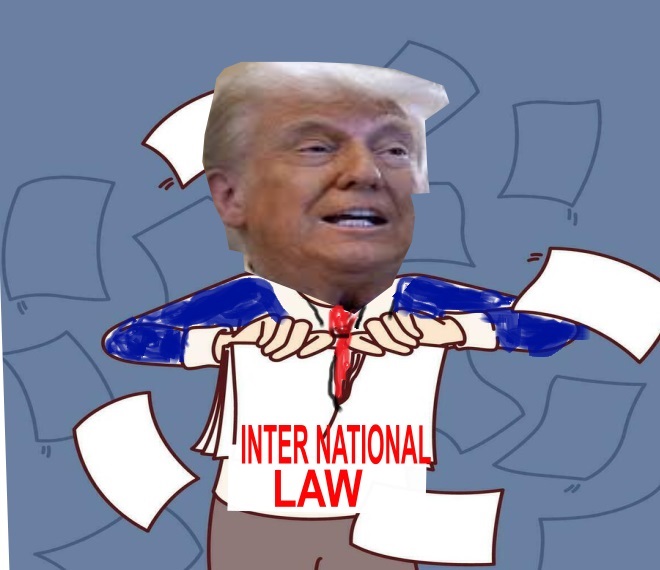
24 March 2026 AIMN Editorial, By Dr Dan Steinbock, https://theaimn.net/us-israel-war-against-international-law/
As the US/Israeli strikes against Iran violate the foundations of international law, the economic and human costs will soar.
After three weeks of effective war, the hostilities have caused severe regional spillovers, thousands of deaths, displacements of millions and a massive global energy crisis that continues to expand. If the implications are global, what’s the status of the US/Israeli strikes from the standpoint of international law?
The modern legal order is based on United Nations Charter (1945), Geneva Conventions, Rome Statute (1998) and Customary law from the Nuremberg Trials. The key rules include the prohibition of aggressive war, protection of civilians, individual criminal responsibility for war crimes, crimes against humanity and genocide. Force is allowed only in the case of self-defense and UN Security Council authorization.
The US/Israeli strikes have already violated most of these rules.
War of aggression
Article 2(4) of the UN Charter prohibits UN member states from threatening or using force against the territorial integrity or political independence of any state. It was violated on February 28, when US/Israel launched their joint strikes against Iran.
Typically, the war was launched precisely when and because the peace talks in Oman were advancing toward a successful conclusion.
In the absence of strategic objectives and exit strategy, the U.S. has framed the actions as a campaign to dismantle “the Iranian regime’s security apparatus.”
These efforts go back to the US/Israel 12-Day War against Iran in July 2025, when Masoud Pezeshkian, the new reform-minded Iran president, sought talks to end the conflict with the US and Israel. That was not in line with the “new Middle East” envisioned by PM Netanyahu and his Messianic far-right cabinet.
The UN Charter’s prohibition against force is not absolute, with key exceptions being self-defense (Article 51) and actions approved by the Security Council.
Yet, no such threat existed prior to the US/Israel strikes. And on March 17, 2026, Joe Kent, the Director of the US National Counterterrorism Center, resigned from his position in protest of the ongoing U.S.-led war in Iran. Kent said in no uncertain terms that “Iran posed no imminent threat to our nation.”
This is an illegal war of aggression, instigated by leaders who have been, like Prime Minister Netanyahu, (or should be) charged for war crimes and crimes against humanity.
Preemptive war doctrine
To legitimize the unjustifiable, Washington has resorted to preemptive justifications. In this regard, the US/Israel war against Iran is just the latest link in the 25-year-long effort to sanctify power politics with preventive wars.
Since the Bush Jr. 2002 security doctrine, US administrations have stressed preemption as a central strategic instrument. While Democratic leaders (Obama, Biden) have been more moderate in rhetoric, they have coopted the same ideas.
Relying on force to prevent future threats, preventive war doctrines are often cited as violating international law because they bypass the strict legal requirements for the use of force established in the UN Charter.
Unilateral preventive war is a threat to the principle of state sovereignty, as it allows one nation to judge the “intentions” of another, without objective proof of an upcoming attack. Setting a dangerous precedent, it incentivizes other nations to use similar pretexts for their “preventive” attacks, potentially leading to global instability.
International law allows for preemptive strikes in cases of “imminent” danger. But US strategy improperly expands this to include preventive wars against threats that are not yet fully formed or do not exist – as in the cases of the 2003 Iraq War and the 2025 and 2026 Iran Wars.
Targeted assassinations
The targeted assassination of Iranian leaders is a serious violation of international law, especially when conducted outside of an active, declared war zone. Targeted killings violate the prohibition on the use of force against another state’s territorial integrity and political independence.
Outside of active hostilities, international human rights law (IHRL) applies. Under IHRL, arbitrary deprivation of life is prohibited. Targeted killings are extrajudicial killings for which the acting state is responsible.
In the context of conflict, targeted killings can violate International Humanitarian Law (IHL) principles, including distinction (targeting civilians) and proportionality. Assassinations of state officials often violate the 1973 Convention on the Prevention and Punishment of Crimes Against Persons Under International Protection.
Precedents feature the killing of the famous Iranian general Qasem Soleimani, the right-hand man of the supreme leader of Iran, the late Ali Khamenei. Soleimani was assassinated in a targeted drone strike in Baghdad in January 2020, ordered by President Trump.
From the standpoint of international law, it was an unlawful attack, as was pointed out by Ben Ferencz, the US prosecutor in the Nuremberg trials and pioneer of international law. After Soleimani’s killing, the New York Times printed Ferencz’s letter denouncing the assassination, unnamed in the letter, as an “immoral action [and] a clear violation of national and international law.”
In their first joint strikes against Iran, US and Israel assassinated the 87-year-old Ali Khamenei, the supreme leader of Iran. Demonized in the West, Khamenei supported Iran’s nuclear program for civilian use. Already in the mid-1990s, he famously issuing a fatwa against the acquisition, development and use of nuclear weapons.
The assassination of Khamenei was still another blatant violation of international law. It was also part of the Israeli strategy to eliminate moderate leaders, whose absence is then used as an excuse for replacing peaceful diplomacy with brutal obliteration campaigns.
Crimes against humanity, forced displacement
These crimes are defined in Rome Statute Article 7, as widespread or systematic attack on civilians. Allegations are typical when strikes include targeting civilian infrastructure, economic strangulation, mass displacement, and siege conditions.
A continuity argument – “what we first see in Gaza is now spreading to Iran and, due to spillovers, into the region” – exists because similar patterns can be identified via blockade, disproportionate force, and collective punishment.
The stated efforts at regime change to undermine Iran and fragment the Shi’a state suggest that the boundary between cultural genocide targeting a broad ethnic-religious group and full destabilization is a line drawn in waters.
Allegations of ethnic cleansing, relying on deliberate forced displacement are likely over time. While ethnic cleansing is not a formal treaty crime, it is recognized in jurisprudence. It rests on forced population removal, which is the net effect of the strikes against Iran and a deliberate intention in Israel’s invasion of Lebanon.
Israel’s rapidly expanding buffer zone in southern Lebanon, extending roughly 3 to 14 kilometers north of the Blue Line demarcation, is premised on demographic engineering. In Iran, the objective to fragment the state, instigate inter-ethnic polarization and regional divides is also predicated on identity
At first sight, allegations of ethnic cleansing seemed to be more relevant to Gaza and the West Bank. But with shifting objectives, forced displacement is now an overwhelming reality. The US/Israel strikes have caused displacement of 3.5 million people in Iran and over 1 million in Lebanon, with up to 22,000 killed or wounded in the former and another 3,600 in the latter.
Collective punishment, economic warfare
Combined with illicit strikes, Washington’s decades-long sanctions against Iran, most of which are unilateral, and the underlying warfare is reminiscent of economic warfare premised at collective punishment.
Combinations of economic sanctions and military strikes, particularly when invalid from the standpoint of international law, raise serious issues under humanitarian law and human rights law. In Gaza and in Iran, unilateral sanctions have caused unwarranted mass suffering violating international law.
Ever since the early 1970s, when Beirut was still called the “Paris of the Middle East,” Israel’s wars against Palestinians have destabilized Lebanon’s fragile ethnic mosaic pushing the country to the edge of default. That’s the fate PM Netanyahu would like Iran to share.
In this regard, there is a clear continuity from the Gaza War, carried out by Israel with arms and financing by the US-led West, ICJ provisional measures and ICC arrest warrant debates, to the US/Israel strikes against Iran.
The common denominators feature an inflated self-defense doctrine, weak enforcement of humanitarian law, selective application of international law and ultimately the inevitable US veto in the Security Council.
The more these violations of international law are permitted, the greater will be the costs in economic terms, the more brutal the military destruction and the more lethal the human devastation.
That’s why multilateral cooperation – across all political differences – and the enforcement of international law is so desperately needed today, before it’s too late.
Dr Dan Steinbock is an internationally recognized strategist of the multipolar world and the founder of Difference Group. He has served at the India, China and America Institute (USA), Shanghai Institutes for International Studies (China) and the EU Center (Singapore). For more, see https://www.differencegroup.net
Trump White House plagiarized Iran war manifesto from Israel-aligned think tank
Wyatt Reed and Max Blumenthal.The Grayzone, March 20, 2026
The Trump White House plagiarized its justification for attacking Iran from the Foundation for the Defense of Democracies, the main DC outfit promoting war with Tehran. The think tank was originally founded to “enhance Israel’s image,” and partners closely with the Israeli government.
The Trump Administration appeared to plagiarize its official justification for its war on Iran, copying almost word-for-word a document originally produced by the Foundation for the Defense of Democracies (FDD), a pro-war think tank with close ties to Israeli intelligence which was originally founded to “enhance Israel’s image.”
The FDD document was authored by Tzvi Kahn, the former assistant director for policy and government affairs at the American Israel Public Affairs Committee (AIPAC).
A March 2, 2026 statement issued by the White House accusing Tehran of 44 instances of terrorism against American citizens is “virtually identical” to the list published by FDD in June 2025, analyst Stephen McIntyre noted Thursday.
While the White House did make superficial alterations to the text, they largely consisted of appending the label “Iran-backed” to every mention of groups like Hezbollah and Hamas. In the few instances where Trump administration officials bothered to make significant changes to the original FDD list, the edits were almost always made in service of “ratcheting up the underlying allegation,” McIntyre concluded.
Among the most egregious examples was a 1996 attack on the Khobar Towers in Saudi Arabia, which FDD originally said merely that Hezbollah al-Hejaz was “deemed responsible” for. In the White House version, however, the group’s responsibility was “asserted as factual,” explained McIntyre, noting that serious questions about the incident remain unanswered to this day. “Clinton’s Defense Secretary William Perry subsequently wondered (along with many others) whether Khobar Towers should have been attributed to Al Qaeda,” he wrote.
A 2009 investigation by journalist Gareth Porter based on interviews with over a dozen former CIA, FBI and Clinton administration officials demonstrated that the FBI’s inquiry into the Khobar Towers attack was precooked to blame Iran, when Al Qaeda was most likely the culprit. Porter found that Shia citizens of Saudi Arabia had been tortured into confessing to the crime by Saudi secret police.
While the White House declined to join FDD in blaming Iran for the Sept. 11, 2001 terror attacks, it echoed the Israel-oriented organization in blaming Tehran for 603 military deaths in Iraq, which both documents attributed to “Iran-backed militias.” But there are major discrepancies with the figure, which amounts to 60% of the total US combatant deaths attributed to Iran. As McIntyre noted, such a claim is “not made in the State Department annual reports on Global Terrorism.”
At least four of the Americans the Trump administration claims were killed by Iran had served in Israel’s military. These included a US citizen who died while invading Lebanon in 2006 and two Americans in the IDF’s Golani brigade who were killed while invading Gaza in 2014. The fourth American, who was born in Israel and had also served in the Golani brigade, was killed amid violent reprisals against settlers in the West Bank in 2015.
A number of the claims are undermined by the very sources they cite, including a December 2019 incident in which the Trump administration insisted “Iran-backed Kataib Hezbollah terrorists killed an American civilian contractor and wounded several U.S. service members in a rocket attack at K1 Air Base in Kirkuk, Iraq.” But the Reuters article cited by the White House as proof that Iran was responsible made no such claim, explicitly cautioning that “no group has claimed responsibility for the attack.” In reality, Reuters suggested the attack was the work of “Islamic State militants operating in the area [who] have turned to insurgency-style tactics.”…………………………………………………………………………………………………………………….https://thegrayzone.com/2026/03/20/trump-plagiarized-iran-israel-think-tank/
Israel’s primary role in Iran war scrubbed from mainstream media.

By Walt Zlotow , 25 Mar 26, https://theaimn.net/israels-primary-role-in-iran-war-scrubbed-from-mainstream-media/
No Israel, no Iran war. That fact is AWOL from any coverage of criminal US, Israeli war destroying Iran, US Gulf States bases and possibly the world economy.
Destroying Iran as a hegemonic rival preventing their Middle East expansion of Greater Israel has been Israel’s objective for decades. But the small country of Israel, without billions in US firepower and participation could never accomplish their cherished goal. What to do? Put tremendous carrot and stick pressure on Donald Trump to achieve Israel’s Middle East supremacy.
They came close to getting George W. Bush to take out Iran after Bush demolished Afghanistan and Iraq back in 2003. But Bush stopped his war-crazed Veep Dick Cheney from pulling the Iran war trigger.
Obama was a huge problem for Israel. Instead of attacking Iran he made peace with it… or tried to. His leadership in creating the 2015 Joint Comprehensive Plan of Action (JCPOA) put the end to any concern that Iran was developing nuclear weapons. Which they never were. It should have stopped Israel’s lust to destroy Iran. But it didn’t. Israeli Prime Minister Benjamin Netanyahu embarked on a relentless propaganda campaign to destroy the JCPOA.
His dream was realized when Trump succeeded Obama in 2017. A year later, Trump, likely following Netanyahu’s orders, withdrew from the JCPOA, putting Iran regime change back in play.
When Biden succeeded Trump in 2021, Netanyahu garnered another complacent ally in the White House. Biden did nothing to rejoin the JCPOA and normalize relations with Iran. But the Israeli genocide in Gaza, fully supported and funded by Biden, put Iran on the back burner.
Enter Donald Trump – back in power in 2025. Within 9 months he secured a ceasefire in Gaza. Palestinian genocide switched places with Iran on the forefront of destruction. Iran moved into Trump’s crosshairs to please his Israeli masters.
Had Harris succeeded Biden, likely no Iran war. Unlike Trump, Harris was neither as fully funded by the Israel lobby nor possibly subject to Israeli blackmail threatening to expose Trump’s peccadillos.
Russia summons Israeli envoy over missile strike on journalists in Lebanon- Zakharova: “Cannot be called accidental”
Russia has told Israeli envoy Oded Joseph that Moscow wanted an investigation into the attack in southern Lebanon wherein two Russian state TV journalists were injured.
Sharangee Dutta, India Today, Fri, 20 Mar 2026, https://www.sott.net/article/505250-Russia-summons-Israeli-envoy-over-missile-strike-on-journalists-in-Lebanon-Zakharova-Cannot-be-called-accidental
The Russian Foreign Ministry summoned Israeli envoy Oded Joseph on Friday to lodge a formal protest over an Israeli missile strike in southern Lebanon in which two Russian state TV journalists were injured, TASS reported. Moscow has told Joseph that they want an investigation into the attack, which happened on Thursday, and want assurances that such incidents would not be repeated.
A video of the strike, which landed barely 10 metres away from the filming location of RT correspondent Steve Sweeney and his cameraman Ali Rida, was captured on the latter’s camera. Sweeney ducked for cover just in time with the viral clip showing how the strike turned the site into a massive ball of fire.
Both of them survived the attack and received treatment at a local hospital. In one of the videos posted by Rida, doctors are seen removing shrapnel from Sweeney’s arm. The cameraman alleged that Israel intentionally struck the area despite their jackets displaying press credentials.
Russian Foreign Ministry spokesperson, Maria Zakharova, echoed Ali Rida, and condemned the strike. Taking to Telegram, she posted that the attack on the journalists wearing press jackets “cannot be called accidental” considering the killing of 200 correspondents in Gaza.
“Especially since the rocket did not hit a ‘significant strategic military facility’, but rather the location where the report was being filmed,” Zakharova wrote on the social media platform, adding that Moscow was waiting for a response from the international organisation.
Sweeney and Rida were filming near a local military base in southern Lebanon, close to the Al-Qasmiya Bridge. The site is a crucial crossing point over the River Litani, which has faced constant Israeli strikes over the past few days. Israel has claimed that the river crossings are being used by the Iran-supported group Hezbollah to move fighters and weapons amid the war.
In response, Israel said that it had repeatedly given warnings for civilians and residents to move out of the area and that the strike was launched after adequate time had passed. It also stressed that Tel Aviv does not target civilians or journalists and functions in accordance with international law.
Macron slams ‘unacceptable’ Israeli attacks on Lebanon
The French president stressed that the Jewish state’s military operation violates international law and will not enhance its security.
20 Mar, 2026, https://www.rt.com/news/635660-macron-condemns-israel-lebanon-attacks/
Israel’s ongoing military operation in Lebanon violates international law, French President Emmanuel Macron has said.
Speaking at a European Council press conference in Brussels on Thursday, Macron also criticized the attacks on Israel being carried out by Lebanese-based militant movement Hezbollah, which has vowed to avenge the US-Israeli killing of Iranian Supreme Leader Ali Khamenei.
Macron rejected the notion that a third party could resolve the conflict with the Iran-linked group through force, emphasizing that only Lebanese authorities have the legitimacy to address the issue.
“We don’t think that the fight against Hezbollah and the removal of its weapons can be carried out by a third power,” Macron told reporters. “We believe that Israel’s ground military operation and bombardments are inappropriate and even unacceptable in terms of international law and the interests of both the Lebanese and Israel’s long-term security.”
Macron also pointed out that Israel has conducted similar operations in Lebanon for years without ever producing the “expected results.”
The French leader’s comments come as Israel has expanded its military campaign against Hezbollah following the US-Israeli strikes on Iran that began late last month. The Israel Defense Forces announced “limited and targeted ground operations against key Hezbollah strongholds” earlier this week, escalating cross-border hostilities that have already claimed hundreds of lives.
Lebanese authorities report that Israeli strikes have killed over 880 people over the past two weeks, with more than 2,000 injured and over 1 million displaced. The strikes have targeted residential districts, a UN peacekeeping position, and a Russian cultural center in the southern city of Nabatieh.
On Thursday, RT correspondent Steve Sweeney and his cameraman Ali Rida Sbeity were also injured in what appeared to be a deliberate Israeli airstrike on their filming position, despite them wearing clearly labeled press uniforms.
Moscow has condemned Israel over the strike, with Russian Foreign Ministry spokeswoman Maria Zakharova stressing that the attack on journalists wearing press markings “cannot be called accidental given the killing of two hundred journalists in Gaza.”
Israel’s Manipulation of Trump on Iran

The public has noticed who is in charge. According to a soon-to-be-released poll from IMEU Policy Project and Demand Progress, conducted by Data for Progress, voters believe the war is being conducted for Israel’s benefit over America’s by a nearly 2-to-1 margin.
Today on TAP: The worse the Iran war goes, the more blame is likely to be directed at Israel, and by association the Jews.
by Robert KuttnerMarch 18, 2026, https://prospect.org/2026/03/18/iran-israel-joe-kent-trump-netanyahu-antisemitism/
On Tuesday, Joe Kent, director of the National Counterterrorism Center, became the first senior administration official to resign over the Iran war. He resigned not because the war is a debacle, but because of Israel’s role in triggering U.S. involvement.
“I cannot in good conscience support the ongoing war in Iran,” he wrote in a letter to President Trump. “Iran posed no imminent threat to our nation, and it is clear that we started this war due to pressure from Israel and its powerful American lobby.”
Kent has a history of association with far-right white nationalist and antisemitic groups, according to the Associated Press. At the time of his confirmation hearing last February, Rep. Seth Magaziner (D-RI) pointed out, “During his two failed campaigns for Congress, we learned that Kent has ties to white nationalists … [and] sought political support from a Holocaust denier.”
Administration officials and allies spent a frantic 24 hours trying to do damage control, stepping around the question of why a well-documented antisemite should have been given the sensitive post in the first place. The question is doubly awkward, given Trump’s supposed love for the Jews when that posture is convenient to assault universities.
Quite apart from Kent’s record and motives, the issue of Israeli Prime Minister Netanyahu’s manipulation of Trump should be taken seriously. Early in the war, on March 2, Secretary of State Marco Rubio said in a press briefing, “We knew that there was going to be an Israeli action. We knew that that would precipitate an attack against American forces, and we knew that if we didn’t preemptively go after them before they launched those attacks, we would suffer higher casualties.” That’s about right.
Rubio has repeatedly tried to walk that back, but he can’t unsay it. The Israeli attack of February 28, which assassinated top Iranian leaders and effectively set off the war, was reportedly aided by U.S. intelligence, but Netanyahu was determined to launch it whether or not Trump concurred.
Just to rub Washington’s nose in Israel’s habit of escalating war without asking Trump’s permission, on Tuesday of this week top Israeli officials made clear that Trump learned about Israel’s latest assassinations only after the fact. The Wall Street Journal reported, “Israel killed Iran’s security chief, Ali Larijani, in airstrikes Monday night, according to Israel’s defense minister. President Trump would be informed of Larijani’s death, Israel Katz said. ‘Prime Minister Benjamin Netanyahu and I directed the IDF to continue to hunt down the leadership of the terror and oppression regime in Iran and cut off the head of the octopus again and again and prevent it from regrowing,’ Katz said in a statement.”
Let me repeat that, in italics: President Trump would be informed of Larijani’s death, Israel Katz said. Not only was Trump not informed or asked to concur before the assassination. The Israeli defense minister, speaking for himself and Netanyahu, informed Trump via a statement to The Wall Street Journal. That’s even more contemptuous than announcing it on social media, Trump-style. The fact that it was in a deliberate prepared statement means that this was no accidental off-the-cuff blunder. Just yesterday, Israel continued targeting Iran’s leaders, killing the country’s intelligence minister, Esmail Khatib.
The public has noticed who is in charge. According to a soon-to-be-released poll from IMEU Policy Project and Demand Progress, conducted by Data for Progress, voters believe the war is being conducted for Israel’s benefit over America’s by a nearly 2-to-1 margin………..
As the odds increase against Trump finding some kind of exit with dignity, the risk is that he will widen and deepen the war. While Trump is ambivalent, Netanyahu has made it clear that he wants the war to continue, and he acts accordingly. He is just as reckless as Trump, but more strategic.
When a wider war turns into an even bigger crisis, more people who did not start out as antisemites will be inclined to blame history’s favorite all-purpose scapegoats, the Jews. Only in this case, Bibi has provided plenty of ammunition.
1 This Month
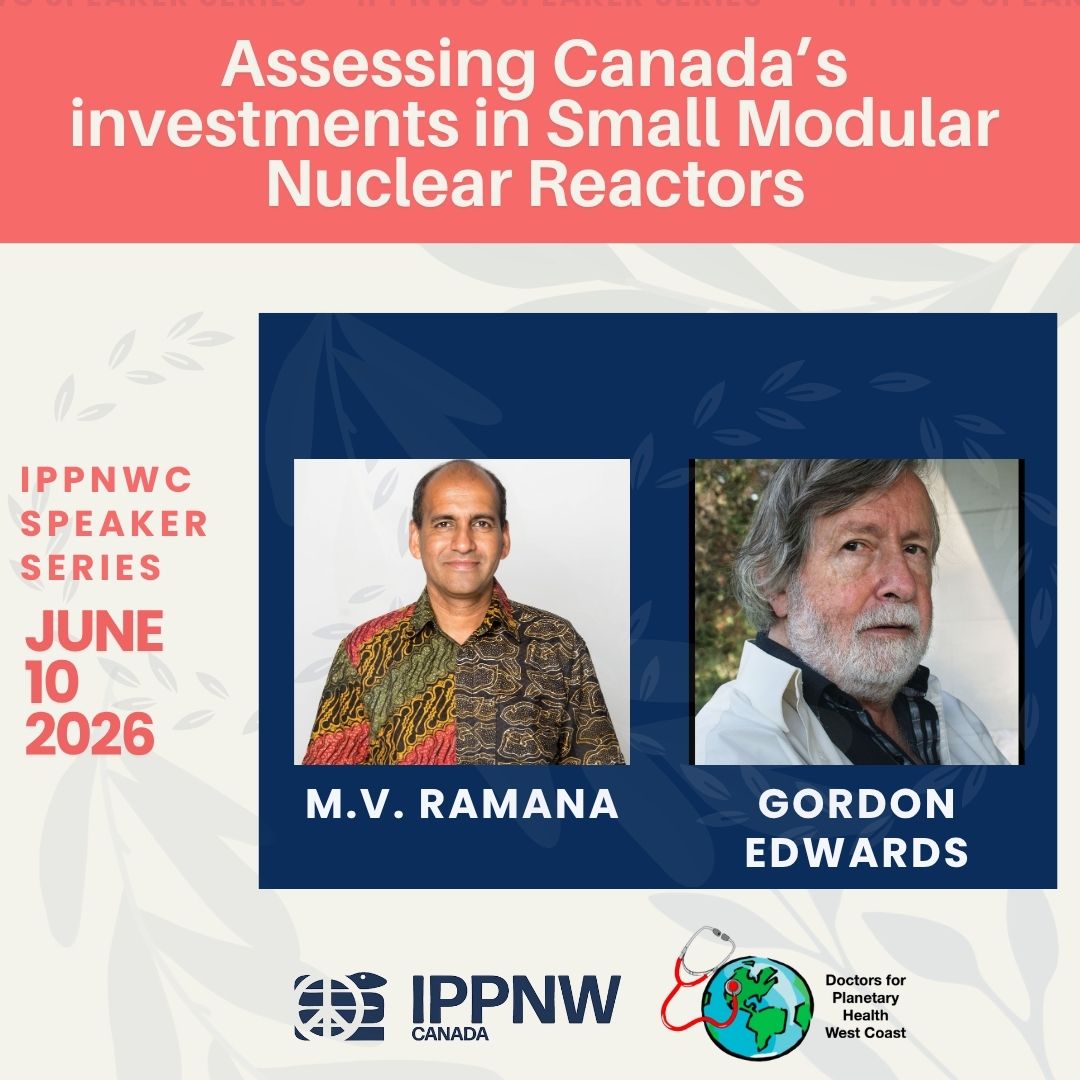
10 June – Assessing Canada’s Investments in Small Modular Nuclear Reactors – https://zoom.us/meeting/register/IiqHA5feRhaEBycOLNTJlA#/registration


Cuba Is Not a Failed State – It Is a Besieged State
PETITION: “Global Appeal to Endorse Palestinian Right of Return of Refugees”
To see nuclear-related stories in greater depth and intensity – go to https://nuclearinformation.wordpress.com
-
Archives
- June 2026 (89)
- May 2026 (306)
- April 2026 (356)
- March 2026 (251)
- February 2026 (268)
- January 2026 (308)
- December 2025 (358)
- November 2025 (359)
- October 2025 (376)
- September 2025 (257)
- August 2025 (319)
- July 2025 (230)
-
Categories
- 1
- 1 NUCLEAR ISSUES
- business and costs
- climate change
- culture and arts
- ENERGY
- environment
- health
- history
- indigenous issues
- Legal
- marketing of nuclear
- media
- opposition to nuclear
- PERSONAL STORIES
- politics
- politics international
- Religion and ethics
- safety
- secrets,lies and civil liberties
- spinbuster
- technology
- Uranium
- wastes
- weapons and war
- Women
- 2 WORLD
- ACTION
- AFRICA
- Atrocities
- AUSTRALIA
- Christina's notes
- Christina's themes
- culture and arts
- Events
- Fuk 2022
- Fuk 2023
- Fukushima 2017
- Fukushima 2018
- fukushima 2019
- Fukushima 2020
- Fukushima 2021
- general
- global warming
- Humour (God we need it)
- Nuclear
- RARE EARTHS
- Reference
- resources – print
- Resources -audiovicual
- Weekly Newsletter
- World
- World Nuclear
- YouTube
-
RSS
Entries RSS
Comments RSS
 nuclear-news