Accountability is optional
Hamza Yusuf | Declassified UK , May 8, 2026
| The Metropolitan Police has declined to investigate Britons accused of committing war crimes while serving with the Israeli military in Gaza.Last April, the Palestinian Centre for Human Rights (PCHR) and the Public Interest Law Centre (PILC) filed an extensive, 240-page dossier to the Met’s War Crimes Team. |
The report detailed the alleged involvement of the 10 British nationals, including dual citizens, in the “targeted killings of civilians and aid workers, indiscriminate attacks on civilian areas, attacks on hospitals and protected sites, and the forced transfer and displacement of civilians”.
Over 70 legal and human rights experts urged the Met’s War Crimes Team to investigate all suspected war crimes and crimes against humanity allegedly committed by Britons when the dossier was handed in.
In its recent decision letter, the Met Police accepted that international bodies have found that Israel’s actions in Gaza “could amount to war crimes” and identified at least four individuals of “particular interest.”
However, the War Crimes Team has refused to move beyond a scoping exercise, saying there was “no realistic prospect of conviction” and that an “effective investigation could not be conducted.”
Paul Heron, a solicitor at PILC, said: “We reject The Met’s conclusions”.
“By demanding evidence capable of securing a realistic prospect of conviction before even opening an investigation, the Police have applied the wrong legal test and set the bar far too high. British nationals and residents cannot be allowed to participate in atrocities abroad with impunity.”The PILC maintains that the referral provided credible material warranting a full investigation. We recently revealed that at least 2000 Britons served in Israel’s military during the Gaza genocide. Meanwhile, Britain’s recognition of a Palestinian state may also place British nationals serving in the Israeli army in breach of the 1870 Foreign Enlistment Act. The act prohibits citizens from fighting for a foreign state at war with another state at peace with the UK, but there is no sign of enforcement. |
And what is absent is equally telling: The Foreign, Commonwealth and Development Office (FCDO) travel advice for Ukraine explicitly warns British nationals that fighting there “may amount to offences under UK legislation”and that they “could be prosecuted on your return”.
No equivalent warning appears in FCDO advice for Israel or the Occupied Palestinian Territories.
This exposes a glaring and systemic accountability gap – one the Foreign Office recently deepened by quietly shutting down its unit tracking Israeli breaches of international law.
The Met’s refusal is the latest in a pattern of dereliction: British institutions, one by one, declining to act on Israel’s crimes.
Labour and SNP row over submarines at Rosyth Dockyard

THE SNP have been accused of “scaremongering” after warning that Rosyth
has become a bigger target for terrorists and “rogue nations”. Labour
councillor Patrick Browne took aim and said the request for a public
consultation, on the prospect of Trident submarines carrying nuclear
missiles being maintained at the dockyard, was pointless and never going to
be accepted. He said: “The SNP have been scaremongering for months about
the contingent dock proposal for Rosyth. “With their latest comments they
have reached new levels of doom-mongering.”
But SNP councillor Brian
Goodall, who stated that having subs with warheads on the Forth increased
the threat of attack on Rosyth, said that response and the criticism of his
actions showed “just how right wing many in the Labour Party have become”.
The dispute has arisen due the plan for a contingent dock at Rosyth by 2029
to temporarily house the UK’s next generation of nuclear subs until a
permanent home at Faslane on the Clyde is ready in the 2030s.
Dunfermline Press 6th May 2026, https://www.dunfermlinepress.com/news/26084331.labour-snp-row-submarines-rosyth-dockyard/
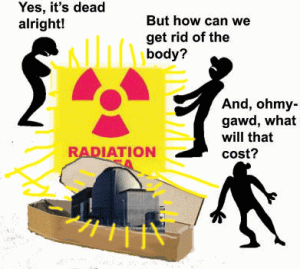
When will the new nuclear operators be required to put money aside for decommissioning?
4 May 26
https://www.newcivilengineer.com/ai-search/?q=When%20will%20the%20new%20nuclear%20operato
New nuclear operators are required by law to set aside funds for decommissioning and waste disposal from the very first day of a plant’s operation . Under the legal framework established by the government, energy firms must have a robust, funded decommissioning plan (FDP) in place and approved by the Secretary of State before they are even granted permission to begin construction on a new power station
Key Funding Requirements
The regulations are designed to ensure that the financial risk of cleaning up nuclear sites remains with the developers rather than the taxpayer. According to the government’s Funded Decommissioning Programme Guidance:
- Insolvency-Proof Funds: Operators must establish funds for clean-up that are administered independently of both the operator and the government to ensure they remain protected even if the company faces financial difficulties .
- Full Cost Responsibility: Operators are responsible for the full costs of decommissioning and their share of waste disposal. Energy Secretary Charles Hendry stated that requiring a credible funding plan “is the best way to protect taxpayers from having to pick up the bill” .
- Waste Transfer Pricing: To provide cost certainty for investors, the government proposed a cap on the waste transfer price for disposing of higher-activity waste in a Geological Disposal Facility (GDF). This cap was suggested to be set at a high level—roughly three times current cost estimates—with an additional risk fee charged to operators to compensate the government for accepting any residual risk .
Evolving Models: The Sizewell C Precedent
While the standard requirement involves operators building up independent funds, the government has introduced a new financial model for the Sizewell C project. As detailed in the written ministerial statement Sizewell C | Public on the hook for decommissioning costs of up to £12bn, this project utilises a Regulated Asset Base (RAB) model:
- Consumer Funding: Decommissioning for Sizewell C will be funded via the RAB, which can include additional costs on consumer electricity bills .
- Contingent Liabilities: While the RAB includes protections to minimise public risk, the government has acknowledged a potential exposure of up to £12bn in “remote circumstances” where a fund shortfall materialises .
- Timeline: For modern plants like Sizewell C, decommissioning is expected to be a long-term process, potentially beginning toward the end of the 21st century and continuing until 2160
The government continues to update these roadmaps to ensure they remain suitable for new technologies, such as Small Modular Reactors (SMRs), while protecting future generations from bearing legacy costs .
You may be interested in learning more about the estimated total cost of the UK’s nuclear cleanup mission, the progress of the Geological Disposal Facility, or how the Regulated Asset Base model impacts consumer energy bills.
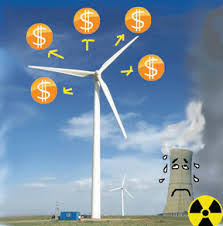
Scots are right to back renewables over nuclear energy.
By Dr Paul Dorfman, Bennett Institute, University of Sussex; Dr Keith
Baker FRSA, Glasgow Caledonian University; Professor Peter Strachan, Robert
Gordon University; Professor Steve Thomas, University of Greenwich; Dr
David Toke, University of Aberdeen.
POLLING released a couple of weeks ago
found that nuclear power has a “miserable” level of support in
Scotland, with more than half of those surveyed saying that the main focus
should be on renewables. According to the facts, this makes sense. Solar
and wind now dominate global electricity generation. Worldwide, solar and
wind power will both surpass nuclear in 2026.
This surge has halted the
fossil fuel power generation rise, with renewables overtaking coal,
supported by battery storage providing system flexibility at scale. All
this points to a shift in the dynamics of the power system. When renewable
energy generation exceeded the rise in global electricity demand last year,
an important threshold was crossed. In 2025, solar became the EU’s top
power source, with wind and solar now the bedrock of European energy
self-reliance. Power generation from renewables in Europe has reached a new
record of 384.9 Terrawatt-hours (TWh).
Meanwhile, Scottish wind power has
also set new records. More renewable energy is produced in the Scottish
Highlands per household than any other area of the UK. Annual renewable
generation across the Highlands is staggering. Renewable energy development
will be further supported by SSEN’s investment of £7 billion in Scotland
in 2026-31, creating 17,500 jobs. More than 100% of Scotland’s
electricity demand has been produced by renewables for the first time,
supporting more than 42,000 jobs and an economic output of more than
£10.1bn.
New UK nuclear plans would be yet another blow to electricity
bill-payers, when Scottish families are already paying what amounts to a
“nuclear tax” to fund the two most expensive nuclear power plants in
the world, England’s Hinkley Point C and Sizewell C.
Meanwhile, the
Norwegian Nuclear Committee has just said no to nuclear power in Norway.
Due to new nuclear construction timescales – up to 17 years according the
UK Government – and the vast cost over-runs, fissile fuel is a policy
dead end, diverting scarce resources away from realistic climate and energy
solutions.
Small modular reactors (SMRs) are another a costly distraction.
They are still in development and decades away from deployment at scale.
All this means that new nuclear is too late for the climate and energy
crises. What’s worse, every pound invested in nuclear is a pound not
invested in renewables, energy efficiency, storage and grid resilience –
investments that would provide a much bigger pay-off.
The National 6th May 2026,
https://www.thenational.scot/business/26081051.scots-right-back-renewables-nuclear-energy/
The UK Descends Into Confected Antisemitism Hysteria
Nate Bear, Do Not Panic May 05, 2026
The UK has descended into confected hysteria over antisemitism to protect Keir Starmer and Labour from being wiped out by the Greens in local elections this week.
The British establishment is well-practiced in manufacturing antisemitism hysteria, of course, having used it to destroy Jeremy Corbyn’s Labour Party when it got too close to power.
Now the UK’s political and media establishment is trying to pull the same trick, but this time on the Green Party and its Jewish leader, Zack Polanski.
This fresh round of hysteria really ramped up after a man with a history of mental illness (and of stabbings) stabbed two Jews in north London last week. Neither died and both will live. Omitted from almost all state-corporate media coverage was the fact that he also stabbed a third man, a Muslim. Also omitted was his history of stabbings (he previously stabbed his own dog, a Somali man, and two police officers), and his history of psychotic breaks.
Despite the circumstances clearly pointing to random attacks by a person suffering an acute mental episode, the police treated it not just as a planned antisemitic attack, but as terrorism.
The terrorism threat level in the UK was raised to severe.
I remember when terrorism used to mean car bombs, political goals, manifestos and scores of dead people, not a mentally disabled man with a butter knife scratching a few people.
But the attack was perfect fodder for the British media and political establishment, who blamed support for Palestine and opposition to genocide for enabling antisemitism, and instantly began demanding pro-Palestine protests were fully outlawed.
The environment of hysteria that ensued is hard to describe if you don’t follow British media or politics closely, but it has been extraordinary.
Keir Starmer gave a primetime televised address to the nation.
His speech was a complete misrepresentation of the facts of the case, completely omitting the Muslim victim, completely omitting the man’s history of illness and random stabbing attacks. But they were deliberate lies of omission critical to constructing an antisemitism narrative.
And it worked.
Every headline, every news broadcast for a week led with the story about ‘the antisemitism crisis in Britain.’
I remember when terrorism used to mean something. I also remember when antisemitism used to mean something. And implying all Jews support the actions of Israel used to be considered antisemitic.
But now that’s all anyone with political or media power does.
Starmer said that anti-genocide, pro-Palestine protests have created the environment for antisemitic attacks. The Green Party’s opposition to Israel’s genocide, the media said, has fuelled antisemitism. The Guardian had a story on the Green Party’s ‘struggle against antisemitism,’ a story which presumably included how just eight months ago the entire Green Party membership antisemitically elected a Jewish leader.
And when you deconstruct the logical conclusions behind the implication that Jews are being attacked because of what Israel has done, it will break your brain.
Firstly the implication that Jews are attacked because of Israel, not because of their religion, means Israel represents all Jewish sentiment……………………………….
We’ve reached the point where everything is antisemitism apart from the thing that is actually antisemitism.
And this is because the Zionists have lost the propaganda war. Genocide is not going back in the bottle. Everyone sees what Israel has done. Everyone can now see what Israel is: a genocidal settler-colony apartheid state run by ethno-supremacists.
The deliberate conflation of antisemitism and anti-Zionism then is intended to silence criticism of Israel, and erase the truth about what Israel is and has done.
It’s also intended to stop the Green Party inflicting a humiliating defeat on Keir Starmer and his Labour Party in local elections this week.
The establishment calculation is that if you can establish in the mind of progressives the idea that a vote for the Greens is actually a vote for hate, not a vote against genocide or apartheid, you can stop Labour bleeding leftist votes to the Greens.
If the Zionist establishment can reestablish that black is white, they think they have a chance.
But it goes even deeper than that.
The UK establishment aren’t just using the attack for rhetorical purposes, they are using it to actually get Green Party election candidates arrested.
Andrew Gilligan, a former adviser to Boris Johnson and Rishi Sunak, and now a right-wing journalist, wrote a story about two Green Party candidates Saiqa Ali and Sabine Mairey who he said had made ‘antisemitic’ posts. Last week, he gloated that following his stories, they’d both been arrested…………………………………………………
Three people are stabbed every day in London. Over one thousand people a year, of all religions and none.
None of these ever warrant a national prime ministerial TV address.
Twenty-seven mosques in the UK were attacked between July and October last year.
No extra security funding (Starmer has promised an extra £25 million for Jewish areas). No discourse about Islamophobia. Just tumbleweed.
But a random attack on two Jews gets the full national psychodrama treatment because it can be so usefully weaponised to serve the interests of Zionism.
Are people going to fall for this?
I don’t think so.
Is Zack Polanski going to fall for this after seeing what happened to Corbyn?
Hopefully not.
We have more than enough evidence by now to know that you can never appease Zionists.
There is no middle-ground, no strategy of accommodation.
Any concession is interpreted as a sign of weakness. As Corbyn showed us, once they’ve drawn blood, they’ll bleed you dry.
The only anti-Zionist strategy that makes any sense is one of full confrontation.
The only route to victory is their full defeat. https://www.donotpanic.news/p/the-uk-descends-into-confected-antisemitism
Nuclear Sector Must Step Up Cybersecurity

The nuclear industry is weak on cyber security, says a policy institute analysis. To respond, the sector has to take a more transparent and collaborative approach – and speed up action on improvement
Staff Writer NS ENERGY, 4th May 2026
THE ROYAL INSTITUTE OF INTERNATIONAL Affairs (a UK policy institute colloquially known as ‘Chatham House’) has described the nuclear industry’s status on cybersecurity as “playing catch-up”. It has warned that “the nature of licensing systems for nuclear operators means that long periods of risky working practices are often tolerated”. As an example, it highlighted the UK’s Sellafield fuel cycle site, which pleaded guilty in June 2024 to criminal charges that related to gaps in its cybersecurity between 2019 and 2023. The site had been repeatedly flagged in inspections by the UK Office for Nuclear Regulation (ONR), which warned it would apply ‘enhanced regulatory attention’ to cybersecurity practices.
The Royal Institute of International Affairs (RIIA) warning came in a report, ‘Cybersecurity of the civil nuclear sector’ that considered the threat landscape and the international legal framework for cybersecurity as it applies to the nuclear industry. The group examined the issue because it saw the civil nuclear industry expanding worldwide at the same time as cyber threats are evolving, and because cyber operations targeting civil nuclear systems have been reported worldwide…………………………………………………………………………
Playing catch-up
RIIA says that the nuclear sector lacks a comprehensive understanding of the threat landscape around cybersecurity and effective resilience strategies.
Vulnerabilities arise from technical and non-technical factors, including the use of older software, personnel being targeted and the lack of sufficient sector-wide awareness and collaboration. Cyber incidents can also occur accidentally as a result of existing vulnerabilities in commercial software. These vulnerabilities include: entry points such as inadequate IT infrastructure maintenance; missing patches and updates; unsafe working practices such as connection to unprotected networks; the use of portable storage devices; legacy systems; and inadequate data protection. The report says, “this range of potential threats makes it doubly essential to ensure fundamentally secure working practices, as it is very difficult to identify and protect against every individual vulnerability”.
The authors say “the nuclear industry was a comparatively late starter” on cybersecurity, compared with other industries associated with critical national infrastructure or sectors such as finance. They add that “the nuclear industry’s strong pre-existing physical security, and its use of bespoke or uncommon industrial control software, meant that there was a sense within the sector that all aspects of security were sufficiently covered.” That sense has gone: more systems in nuclear power plants have acquired digital elements, including commercial off-theshelf software solutions and more cyber vulnerabilities have been introduced as a result. This has increasingly left systems and facilities open to attack and, “in some respects, the civil nuclear industry is thus still playing catch-up”.
The group also says that another challenge to realising cyber security is that the nuclear industry is isolated from other sectors. It is therefore difficult to exchange experiences of best practice with other industries; instead the exchange is “ad hoc, often informal, and largely based on the personal drive and networks of individuals in cybersecurity roles”. The industry is not transparent about incidents, because it is concerned about revealing information about vulnerabilities and equally concerned about public perception if vulnerabilities are revealed. Regulators typically discuss cybersecurity gaps only with specific operators rather than sharing concerns more widely. The report says, “the nuclear industry’s preoccupation with perceptions can get in the way of transparency, even though stronger disclosures would help to bolster confidence in the safety of working practices”…………………………………………………………
………… SMRs may have more cyber vulnerabilities because they are less bespoke than traditional reactors, are connected to the internet and cannot have sterile ‘air gaps’ where there is no connection, because operators require remote access. They may be “more of a target for opportunistic cybercriminals”. In addition, SMRs will also be vulnerable through the construction supply chain, while using artificial intelligence (AI) could lower the entry barrier for cyberattack by making tools for cyber intrusions more accessible and affordable. Finally, if they are successful there will simply be more SMRs, in more places where cyber criminals can attack…………………………………………………………………………….. https://www.nsenergybusiness.com/analysis/playing-catch-upon-cyber-safety/
Starmer plan to relax nuclear regulation opposed by Holyrood

“The weakening of environmental protection is a slippery slope opening the way for increased radiation doses to members of the public and the workforce.” – Pete Roche, Scottish Campaign to Resist the Atomic Menace
UK Government plans which could “weaken” oversight of nuclear safety in Scotland have been rejected by the Scottish Government.
Rob Edwards, May 03 2026, https://www.theferret.scot/starmer-nuclear-regulation-holyrood/
The prime minister Sir Keir Starmer’s plans to reform the regulation of nuclear power and weapons to make new developments easier have provoked “serious concerns” within the Scottish Government, according to emails obtained by The Ferret.
The Scottish energy minister, Gillian Martin, wrote to the UK nuclear minister, Lord Vallance, in March, rejecting the suggestion that Scotland could “reap the benefits” of the reforms in helping to build new nuclear reactors.
She also expressed worries that proposals for a “lead regulator” system designed to simplify and speed up the handling of nuclear projects would threaten the independence of the Scottish Environment Protection Agency.
Campaigners warned that the “weakening” of nuclear safety regulation could lead to workers and the public being exposed to more radiation, which can cause cancer. They stressed that Scotland did not need nuclear power and its “toxic legacy”.
The UK Government said that Starmer would “like to see benefits delivered across the UK”. But it promised to work with the Scottish Government “in good faith without presuming an outcome”.
Nuclear power has become one of the most contentious issues in the run-up to the Scottish Parliament elections on 7 May.
Scottish Labour has repeatedly attacked the Scottish National Party (SNP) for “blocking” the building of new nuclear power stations, which it argued would bring jobs, investment and energy security.
The SNP has maintained the move would drive up electricity prices, create long-lived radioactive waste and undermine renewables, which offer Scotland a better energy future.
In February 2025, Starmer announced plans to “rip up rules to fire up nuclear power”, and set up a nuclear regulatory taskforce to “deliver new projects more quickly”. The Ferret reported in May 2025 that in doing so, he had ignored warnings from his nuclear safety watchdog that regulation was not to blame for delays.
The taskforce, headed by business expert John Fingleton, published its final report in November 2025. It recommended a “radical reset” introducing a “lead regulator” followed by a new regulatory commission to reduce “risk aversion” and “accelerate delivery”.
The report covered both nuclear power and nuclear weapons, and suggested that the civil safety watchdog, the Office for Nuclear Regulation, and the Ministry of Defence’s internal watchdog, the Defence Nuclear Safety Regulator, should be merged “to reduce duplication”.
Starmer published his full response to the taskforce in March 2026, accepting all its recommendations. The aim, he said, was to “build a Britain that reclaims its place as a leading nuclear nation”.
His response acknowledged that the taskforce had not made recommendations for the Scottish Government and other devolved administrations. But it promised to “work closely with them to ensure that they too can reap the benefits of these reforms”.
The UK Government was “committed to nuclear across the UK”, the response said. It highlighted government involvement in plans for a new fleet of so-called small modular reactors at Wylfa in Wales.
These statements were highlighted by Scottish minister Martin in an email on 13 March 2026 to UK minister Vallance, released in response to a freedom of information request from The Ferret.
Martin expressed “concerns” that the UK Government was making commitments to take forward the taskforce’s recommendations in Scotland, despite having promised not to. The Scottish Government was yet to be convinced that there was “any merit” in adopting Westminster’s proposals, she said.
“We need to ensure we are reaching our full renewables potential rather than ploughing billions of pounds into a nuclear industry that will leave a long and toxic legacy for future generations.” – Patrick Harvie, Scottish Greens.
Martin pointed out that Scottish ministers had “a longstanding position on new nuclear energy in Scotland and matters of environmental regulation remain devolved to Scottish ministers and the Scottish Parliament.”
She also said that the Scottish Environment Protection Agency (Sepa) had been invited to a meeting in London on 26 March 2026 to discuss the UK Government’s plans for a “lead regulator” for nuclear projects.
“We have serious concerns about a lead regulator model and the impact that would have on Sepa’s independence,” Martin warned. She sought clarification “on how the implementation of this will be done in a way which does not impact on areas of devolved competence.”
Another email released to The Ferret is from an unnamed Scottish Government official to the UK Department for Energy Security and Net Zero on 12 March. It complained that Starmer’s response to the taskforce “impinges on devolved issues without the agreement of Scottish ministers” and was “problematic”.
“Ministers will have to be robust on this with language and next steps,” the email said.
Other files disclosed that Martin had an online meeting with Vallance to discuss the nuclear regulatory taskforce on 25 February. According to Martin’s pre-meeting briefing from officials, there were “significant issues” with what the taskforce recommendations would mean for Sepa.
Another Scottish Government email to Westminster back in February 2025, when the nuclear regulatory taskforce was announced, said there had been “no engagement with, or agreement from, Scottish ministers”. It suggested that ministers “should not be part” of the taskforce’s work.
“The weakening of environmental protection is a slippery slope opening the way for increased radiation doses to members of the public and the workforce.” – Pete Roche, Scottish Campaign to Resist the Atomic Menace
Vallance responded to Martin’s email raising concerns on 18 March. Starmer would “like to see benefits delivered across the UK”, he said, but the “recommendations apply only to England”.
The UK Government’s intention was to work with the Scottish Government to “discuss what reforms they may wish to echo or engage with”, he added. “We want to do so in good faith and without presuming an outcome.”
Vallance pointed out that regulatory reform was not just about building new nuclear reactors, but also covered the dismantling of defunct reactors. Major nuclear decommissioning projects, expected to take decades, are under way at Hunterston in North Ayrshire and Dounreay in Caithness.
“We do not consider that it implies an intention for the development of new nuclear power in Scotland,” he stated. Vallance also insisted that he “respected” Sepa’s independence.
“None of the measures in the government’s response are intended to, or would, cut across Sepa’s statutory remit or independence of judgment,” he said.
The plan for a “lead regulator” did not give legal powers to that regulator, he maintained. “It simply seeks to facilitate collective, consensus-based decisions.”
The Scottish Campaign to Resist the Atomic Menace backed the Scottish Government’s concerns. The UK Government seemed to be following president Trump’s lead in relaxing nuclear safety regulation, warned the campaign’s spokesperson, Pete Roche.
Dissecting An “Antisemitism” Psyop
Caitlin Johnstone, May 03, 2026, https://www.caitlinjohnst.one/p/dissecting-an-antisemitism-psyop?utm_source=post-email-title&publication_id=82124&post_id=196309636&utm_campaign=email-post-title&isFreemail=true&r=1ise1&triedRedirect=true&utm_medium=email
I recently watched a Sky News segment on the need to ban pro-Palestine marches which nicely illustrates the way the mass media have been working to manipulate the public into believing these demonstrations are causing antisemitic attacks.
Reporting on British prime minister Keir Starmer’s recent assertion that the “repeat nature” and “cumulative effect” of pro-Palestine marches may necessitate a ban on some protests following the Golders Green stabbing, reporter Mollie Malone repeatedly told the audience of Sky News that the marches are happening in the “context” of antisemitic incidents and “against the backdrop” of attacks on Jewish people.
There is no evidence whatsoever for the claim that pro-Palestine marches have anything at all to do with antisemitic attacks. But watch how this Sky News propagandist marries the two in the minds of her viewers by repeatedly mentioning them in the same breath and connecting them with words like “context” and “backdrop”.
“The prime minister has gone somewhat further than he has previously in discussing and commenting on how to approach and manage these protests which we’ve seen for a long time now, but clearly they now come against the backdrop of increased attacks on our Jewish communities, most recently of course on Wednesday where two Jewish men were stabbed in Golders Green,” Malone said.
Malone made the obligatory appeal to emotion by talking about the feelings of British Jews by saying that antisemitic attacks are “adding to fears among Jewish people,” and then said “it’s in that context that these pro-Palestine marches are being discussed.”
I could make the exact same type of argument to suggest that the faint humming sound from my refrigerator is causing the pain in my ankle. I could say I’m experiencing ankle soreness and the soreness is making my feelings feel very upset, and it is in this context and against this backdrop that the buzzing from the refrigerator is happening. At no point am I actually presenting evidence that the soreness in my ankle has anything to do with the faint buzzing sound; I’m just using fallacious associations and appeals to emotion to get you to think of them as having a causal relationship.
Malone uncritically quoted the UK’s Independent Reviewer of Terrorism Legislation Jonathan Hall asserting on no basis whatsoever that pro-Palestine marches “incubate antisemitism,” then repeated the bogus hasbara talking point that the phrase “globalise the intifada” is “seen to incite violence towards Jewish people.”
“The context here is everything,” Malone concluded after a few moments of pro-Palestine activist rebuttals to provide the illusion of impartiality.
As the British political/media class have been doing for days when discussing the Golders Green stabbings, Malone neglects to mention that a third man who was not Jewish was also attacked in the same incident, and that the assailant had recently emerged from the care of a psychiatric hospital. You might think the perpetrator’s extensive history of mental health struggles combined with the fact that he did not solely target Jewish people would dissuade serious news reporters from framing this as an act motivated by hateful ideology, but British news media employees are not serious news reporters. They are propagandists.
This frenzied propaganda push to stomp out pro-Palestine protests across the western world has nothing to do with protecting Jewish people from antisemitic attacks. It’s about protecting the interests of Israel and the murderous western governments with whom it is aligned, and nothing else.
“We are waiting for Nuclear Waste Services to Come Up with Recommendations on Siting….”

Marianne Birkby, May 02, 2026, https://radiationfreelakeland.substack.com/p/we-are-waiting-for-nuclear-waste
“We are waiting for Nuclear Waste Services to Come Up with Recommendations on Siting….”
But meanwhile ‘we are already building new nuclear reactors which would produce even hotter nuclear wastes. Hot nuclear wastes are in the pipeline for which there is no “away” in blatant disregard of the Flowers Report: “There should be no commitment to a large programme of nuclear fission power until it has been demonstrated beyond reasonable doubt that a method exists to ensure the safe containment of long-lived highly radioactive waste for the indefinite future.”
Well it is safe to say that not only is there reasonable doubt that a method exists as no country has demonstrated beyond reasonable doubt that they can contain high level wastes indefinitely without repackaging – but there is also no where NO WHERE willing to be the ultimate nuclear guinea pig in the UK. Unless that is you count the four members of Copeland now Cumberland Council that said on behalf of the region, ‘hey yes let’s sacrifice the safety of Cumbria and her neighbours for nuclear £bungs’.
Good on Wera Hobhouse LibDem MP for Bath for asking the questions.. Click for video on facebook
‘Fish disco’ not enough to protect nature at nuclear plant, says green quango.
Natural England demands new salt marshes be created before Hinkley Point C can open
Matt Oliver, Industry Editor
The Hinkley Point C nuclear power station is facing fresh
delays as a green quango demands extra nature protections on top of a
controversial “fish disco”. Natural England has told developer EDF that
existing plans to stop aquatic life in the Severn Estuary from being sucked
into the Somerset plant’s cooling pipes will not be enough to satisfy
environmental rules.
The company had proposed using £700m of special
equipment to ward off fish, including a bespoke underwater loudspeaker
system which campaigners have called the “fish disco”. EDF provided new
research data to regulators in February following promising trials of the
technology, formally known as the acoustic fish deterrent, by university
scientists.
But in recent weeks, Natural England is understood to have
claimed that further protections are necessary, such as the creation of new
salt marshes to boost fish populations in the area. The quango is refusing
to sign off the plant until new plans are set out and approved.
It has prompted concern that Hinkley’s targeted 2030 opening date is now
effectively impossible to deliver, owing to the time it will take to win
approval for and build the new salt marshes. Sam Richards, the chief
executive of Britain Remade, a Right-leaning think tank, said: “Hinkley
Point C is already the most expensive nuclear power station ever built.
“It also has more fish protection measures than any reactor built
anywhere in the world. “For Natural England to now demand even more
mitigation – regardless of the wider impact on the project and for
minimal added benefit to nature – shows just how out of touch with
reality they really are. “This out of control quango has become a direct
threat to Britain’s energy security.”
Telegraph 2nd May 2026, https://www.telegraph.co.uk/business/2026/05/02/fish-disco-not-enough-to-protect-nature-at-nuclear-plant/
Rosyth councillor Brian Goodall wants public consultation.
29th April, By Ally McRoberts, Content Editor, https://www.dunfermlinepress.com/news/26063183.rosyth-councillor-brian-goodall-wants-public-consultation/
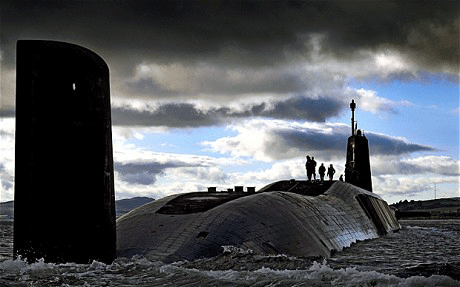
THE UK Government’s refusal to give local residents a say in Trident nuclear submarines coming to Rosyth has been slammed as “disgusting and undemocratic”.
Local SNP councillor Brian Goodall was fuming that a request for a public consultation on the move, which he said would require “radiation shelters” and iodine tablets for people who live in the town, has been sunk.
He said: “The UK Government are effectively saying we won’t ask the Scottish public if we should do this because we know they’d say no.”
Cllr Goodall added: “The MoD confirmed at a previous meeting of the area committee that these nuclear submarines may have nuclear missiles on board when they come into Rosyth.
“This not only presents massive additional health and safety concerns but also makes Rosyth even more of a target for rogue nations and international terrorist groups.”
The next generation of Trident nuclear submarines is the Dreadnought class and a contingent dock is to be in place at Rosyth Dockyard by 2029.
The vessels are to be maintained at Faslane but a temporary home is needed in Fife, and the UK Government have provided £340 million to help “bridge the gap”, as the site on the Clyde won’t be ready until the mid 2030s.
In December the MoD told local councillors they would not reveal if any of the subs that need repairs or maintenance at Rosyth will be carrying nuclear warheads.
In February, at the South and West Fife area committee, Cllr Goodall submitted a successful motion asking the convener to write to the Secretary of State of Defence, requesting that the public are consulted on plans to “potentially bring nuclear weapons” to the dockyard.
Opponents have argued that maintaining nuclear-powered subs and storing nuclear weapons are entirely separate – and that nuclear warheads are not kept onboard when a sub goes in for maintenance.
This week Cllr Goodall said: “The UK Government, through the MoD, have now responded to the request for them to hold a public consultation on their plans to bring nuclear fuelled, and possibly nuclear armed, submarines to Rosyth Dockyard, and their response is as predictable as it is disgusting and undemocratic.”
He said the letter from the Minister for Defence Readiness and Industry, Luke Pollard MP, “not only confirms their refusal to consult with local residents on their plans, it also admits that public safety, while a major concern, is not the main priority of the MoD”.
Cllr Goodall went on: “These submarines will still have their nuclear fuel onboard, unlike the decommissioned subs that are already at the dockyard, so there will need to be additional emergency plans put in place, including arrangements for radiation shelters for some local residents and to distribute potassium iodide tablets to the local population.
“The communities around the dockyard should be allowed to have their say on this and the campaign for a public consultation will go on.”
The work on the Dreadnought class would be in addition to the submarine dismantling project at the dockyard, which is cutting up an old nuclear sub, Swiftsure, and removing the radioactive waste left within it.
There are another six decommissioned subs laid up at Rosyth – and 15 at Devonport – and although no decision has been made, Babcock are recruiting for more people to work on the dismantling project.
Cllr Goodall has also expressed concern about the Swiftsure demonstrator scheme, arguing that work to remove the reactor should not go ahead as it’d be cheaper not to do so and there was nowhere safe to store the radioactive waste.
Charles III and Britain’s pathological obsession with Russia

British political class has had a pathological obsession with Russia for nearly two centuries, and has been scheming to wage wars against her at least since the Crimean War of 1853. In all cases, Britain is always eager to lead such wars from behind and incite other powers to do the actual fighting. One of the most blatant examples was their weaponizing of Hitler’s Germany in preparation for the largest ever invasion force in 1941, counting over 3.8 million troops. This was not really a “German invasion” as our historical curriculum suggests; it was a German-led invasion.
Yesterday, Charles III called for World War III, echoing the 1945 “Project Unthinkable” Britain’s obsession with waging war on Russia is now a mortal danger to all of us.
Alex Krainer, Apr 30, 2026, https://alexkrainer.substack.com/p/charles-iii-and-britains-pathological?utm_source=post-email-title&publication_id=1063805&post_id=195907312&utm_campaign=email-post-title&isFreemail=true&r=1ise1&triedRedirect=true&utm_medium=email
On Monday, 27 April, Britain’s king Charles III came to Washington for a four-day state visit to the United States hosted by President Donald Trump. His “majsesty,” is also known to his fans as late Jimmy Saville’s BFF and the brother of Jeffrey Epstein’s BFF Andrew, formerly known as prince.
Yesterday, Charles graced the joint session of U.S. Congress with an inspiring speech during which he found it appropriate to call on his American audience to get on with the business of World War III already. Thus spoke his majesty:
“In the immediate aftermath of 9/11 when NATO invoked Article 5 for the first time, and the United Nations Security Council was united in the face of terror, we answered the call together as our people have done so for more than a century, shoulder to shoulder through two world wars, the Cold War, Afghanistan, and moments that have defined our shared security. Today, Mr. Speaker, that same unyielding resolve is needed for the defence of Ukraine and her most courageous people.”
Glorifying wars of the past, particularly Afghanistan, and invoking NATO Article 5 which was “needed for the defence of Ukraine and her most courageous people,” was a naked call for the United States to commit to war against Russia: another great war on the European continent.
Given that the last two World Wars resulted in some 70 million casualties, one would think that the king’s warmongering would prompt U.S. elected representatives to tar and feather the British royal and run him out of town on a rail, but of course, one would be wrong. King’s call for World War III elicited an enthusiastic standing ovation from the politicians, otherwise passionately supportive of the ‘no kings’ protests in their country.
Britain’s incurable Russia derangement
British political class has had a pathological obsession with Russia for nearly two centuries, and has been scheming to wage wars against her at least since the Crimean War of 1853. In all cases, Britain is always eager to lead such wars from behind and incite other powers to do the actual fighting. One of the most blatant examples was their weaponizing of Hitler’s Germany in preparation for the largest ever invasion force in 1941, counting over 3.8 million troops. This was not really a “German invasion” as our historical curriculum suggests; it was a German-led invasion.
The 3.8 million strong invasion force (which grew to six million within its first year of fighting) was sourced from nearly all European countries. Soviet Union repelled that invasion at a cost of 27 million casualties. One in 9 Russians died and almost every Russian family lost someone in that war. When it became clear that the invasion had failed and that Hitler’s army would be defeated, British Joint Planning Staff thought up “Project Unthinkable”: a new&improved plan to attack Russia.
The document was submitted to Winston Churchill on 22 May 1945 (it is available at this link) proposing a surprise attack against Russia, planned for July 1, 1945 by the combined UK and the US forces, supported by the Polish and German troops. The project’s political objective was to submit Russia “to our will”:
“A quick success might induce the Russians to submit to our will at least for the time being; but it might not. … if they want total war, they are in the position to have it.”
The “elites” in London were dreaming up a new war against Russia even as World War 2 was still raging and the Soviet Union was finishing off Hitler’s Wehrmacht at the Eastern front. Britain was ostensibly allied with the USSR at that time, but the king and the cabal, as Winston Churchill named it, were secretly rooting for Hitler.
A total war is necessary
Britain’s Joint Planning Staff advanced two hypotheses: (1) that “a total war is necessary,” and (2) that “a quick success would suffice to gain our political objective.” However, the quick victory in a surprise attack might only yield a temporary result. A lasting one would require victory in a total war:
“The only way we can achieve our object with certainty and lasting results is by victory in a total war.”
However, this “total war,” as they well understood, would have to be a very long term project:
To achieve the decisive defeat of Russia in a total war would require, in particular, the mobilisation of manpower to counteract their present enormous manpower resources. This is a very long term project and would involve: the deployment in Europe of a large proportion of the vast resources of the United States; and the re-equipment and reorganization of German manpower and of all the Western allies.
It would be interesting to know what made the Joint Planning Staff believe that they could reorganize German manpower together with the “vast resources of the United States?” Whatever it was that they knew, they concluded that, “the only thing certain is that to win it would take us a very long time.”
Exactly how long was unclear, but perhaps it was the time needed to organize some form of a North Atlantic Treaty Alliance, to dismember the USSR and to weaponize at least one of its former republics, like Ukraine, as a battering ram to wield against Russia.
High cabal… has made us what we are
Two years after formulating “Project Unthinkable,” the British government drafted the “Fundamentals of Our Defence Policy,” reaffirming that, “The most likely and most formidable threat to our interests comes from Russia,” and that, “Ensuring that we have the active and early support of the United States of America and of the Western European States” was essential.
Well, as the war in Ukraine is now clearly headed for the same result as Hitler’s “Operation Barbarossa,” active support of the United States of America is now quite urgent, and this is why king Chuck was busy charming his American audience to revive Project Unthinkable.
The king’s speech and his kingdom’s foreign policy over decades suggest that their obsession with waging a total war against Russia remains all consuming for the British political class. This poses a mortal danger to the whole world by now, and we can be sure their obsession won’t stop with a speech: furious lobbying and influence campaigns will be unleashed, perhaps only requiring a well-orchestrated false flag attack attributed to Russia.
If they are successful in their endeavor, we can expect a nuclear war. Recall, last year we learned that the UK was/is willing and ready to help Ukraine build a nuclear weapon. The criminal insanity of it is truly hard to fathom, calling to mind Winston Churchill’s cryptic quip upon learning about the allies’ brutal bombardment of Rotterdam: “Unrestricted submarine warfare. Unrestricted air bombings – this is total war… Time and ocean and some guiding star and high cabal have made us what we are.”
Dangerous and expensive, nuclear power is a dead end for Scotland

I’ve been through every argument that the nuclear industry
makes promoting new nuclear power stations – but scratch the surface and
they just melt through the floor. New nuclear is fundamentally not needed –
numerous studies, including by Stanford University and renowned energy
modellers at LUT show that the UK, and indeed most, if not all, other
countries can meet their energy needs with 100% renewables.
Politicians’ fears about the wind and sun and the rain and the waves and tides being
unable to meet all our needs are misplaced. Renewables, energy storage,
energy efficiency and flexible power with a modern upgraded grid can do it
all – cheaper, quicker, safer and a hell of a lot cleaner, and create many
more thousands of jobs.
The cost of nuclear power is eye-watering. Look at
Hinkley Point C and Sizewell C – nearly £100bn to build them both with
massive delays and cost -over-runs. That is enough to install a 5kWh
battery in every one of the 28 million homes in Britain, and leave £44bn
for other things. Combine that with solar and every home becomes a power
station with its own ‘baseload’.
Alternatively, £100bn could fund planned
upgrades to the grid needed to facilitate large and small renewables, twice
over. The Coire Glas pumped hydro storage project in the Highlands could be
built 50 times over. £100bn spent on a nuclear-free transition could be
revolutionary.
What a renewables-based system needs is flexible power,
energy storage and a smart, modern grid. Surplus renewable electricity
could also be used to generate ”green hydrogen” to generate electricity
on calm, dull days. It could also be used to power heavy transport and
industry.
Battery systems, including compressed air and pumped storage
hydro, alongside vehicle-to-grid technology, can all be parts of the
bedrock of energy security and an energy system that would be cooking with
green power 24/7.
Nuclear does nothing to help any of this. Indeed, it is
worse, it directly causes wind and solar plants to be switched off when
green power is plentiful, because nuclear is so inflexible. Not only does
nuclear cost an arm and a leg, it adds cost to the consumer for renewables
We only have to look at the recent history of nuclear power to see how
dangerous and polluting it is. Fukushima remains a slow motion disaster for
Japan as they scramble to deal with millions of gallons of radioactive
water and melted reactor cores. Chernobyl’s 40-year anniversary this week
is another timely reminder, that when things go wrong, they can go very
wrong.
At least when a wind turbine breaks down you don’t need an exclusion
zone for decades and mass public health measures – you just get some
engineers with a crane and some spanners to go fix it.
And despite what the
‘nuke, baby, nuke’ lobby says, there is no solution for the waste yet,
other than to store and guard the most highly radioactive cores for
hundreds of years to cool down out of the way somewhere. That’s the
solution!
The hype about Small Modular Reactors is just that, hype. In
fact, the only two operational SMRs are in China and Russia, and both have
been beset by delays and cost increases. The economies of scale are lost,
and studies have shown that they produce more highly radioactive waste for
the same generating capacity than their slightly larger cousins.
These projects are pure spin, a clever wheeze by industry lobbyists intended to
promote nuclear acceptability – small, click and collect, a kind of
middle-aisle at LIDL feel to it. In the words of energy expert Amory Lovins
on SMRs: “This illusion neatly fits the industry’s business-model shift
from selling products to harvesting subsidies.”
The Rolls Royce SMR –
chosen by Great British Energy-Nuclear to be built at Wylfa in North Wales
– is a 470MW reactor, not much smaller than the two Torness reactors, which
are about 600MW each. And then there is the fuel – uranium ore is needed
and we don’t have any, (and the mining of it is handily missed out in
nuclear promotional graphics comparing its land use to renewables, which
also fail to point out that the land around solar arrays and turbines can
still be used for traditional purposes).
Mind you, there is some
recoverable uranium ore on the Orkney mainland – and when it was proposed
to dig it up to use it at Dounreay last century, all hell broke loose and
Orcadians stopped it by popular protest. So we would have to rely on
imports of this global commodity – a market that is dominated by Russia and
associates.
Pete Roche of SCRAM put this well when commenting on a recent
poll indicating only 14% of Scots thought we should focus on uranium
fuelled nuclear reactors for our long term energy security needs:
“Relying on a uranium-fuelled nuclear future is like jumping out of the
oil and gas frying pan and into a nuclear fire – it makes no sense and
Scots seem to get that.”
We should just get on with building a country
that is a renewable energy powerhouse so that future generations can look
back and thank us for choosing a green, clean and sustainable energy route.
Nuclear is NOT a natural partner with renewables, indeed, it is a delaying
tactic, holding back rapid decarbonisation, and adds extra and unnecessary
cost to a renewables-based energy system.
Herald 29th April 2026, https://www.heraldscotland.com/politics/viewpoint/26064131.dangerous-expensive-nuclear-power-dead-end-scotland/
Starmer’s Talking Points: King Charles III Visits Washington
29 April 2026 Dr Binoy Kampmark https://theaimn.net/starmers-talking-points-king-charles-iii-visits-washington/
He can hardly be blamed for being given the brief by his Prime Minister. King Charles III is in the United States on a repair job, playing diplomatic handyman and mender for Sir Keir Starmer and the US-UK alliance so long regarded as special. On the occasion of the 250th anniversary of American independence, it was easy to forget that the British, despite losing its American colonies, gained some vengeance through the exploits of Major General Robert Ross, who, on August 14, 1814, burned down the White House, the Capitol building, and an assortment of other government facilities.
The US President Donald Trump has made it clear that alliances are only special if they serve his bullying and selfish needs, transient and fickle as they are. Otherwise, the whole notion of an alliance can be allowed to go by the wayside or stung into decay by venomous statements on social media. The UK’s ambassador to Washington, Christian Turner, who replaced the disastrously appointed Peter Mandelson in February, has even gone so far to suggest that the term “special relationship” be scrapped as dated and musty. The phrase, he unguardedly told a group of British students visiting that month, was “quite nostalgic” and “quite backwards-looking,” encumbered with “baggage.” Instead of leaving it at that, Turner proceeded to offer the only exemplar in the US diplomatic inventory that might count, whatever the baggage. “I think there is probably one country that has a special relationship with the United States – and that is probably Israel.”
Any ruffles arising from that leaked audio has been seemingly contained. On the occasion of this state visit Trump was cordial, even sprightly. “The Americans have had no closer friends than the British,” he declared on April 28. The same language was spoken, the same values shared, the “warriors” of the two nations having “defended the same extraordinary civilization under the twin banners of red, white, and blue.”
Before a joint sitting of Congress, Charles delivered a speech filled with the usual solecisms on the US political system, not to mention a few on his own. The US Congress is hardly a “citadel of democracy created to represent the voice of all American people, to advance sacred rights and freedoms,” being the republican vision of slave owning plantation owners who were nervous about the mob and ever keen to keep them at bay with a dampening system of checks and balances. The “revolutionary” notions of “life, liberty, and the pursuit of happiness” were to be kept on a firm leash. And while the United Kingdom has democratic pretensions, it exercises power through that mysterious political and legal construction known as the Crown. In a short note for the Spectator in October 1959, the conservative, at times reactionary novelist Evelyn Waugh made an abundantly clear point: “Great Britain is not a democracy. All authority emanates from the Crown.” All figures of note from judges and bishops to the Poet Laureate “exist by the royal will.” Elections are, rather, “a very hazardous process” to select ill-chosen advisors.
Starmer, as advisor-in-chief, clearly fed the monarch a rather odd assortment of dishes to temper and placate the businessman tyrant trainee. Lay it heavy with the friendship issue, talking of that “bond of kinship and identity” that is “priceless and eternal.” Accept that disagreements can happen between close allies (“no taxation without representation”, for instance, stirring the anger of the American colonists). “Ours is a partnership born out of dispute, but no less strong for it.” When the countries found ways to agree “what great change is brought about – not just for the benefit of our peoples, but of all peoples.”
A fig leaf of soothing assurance was offered to US lawmakers and the Trump administration. The UK, recognising “that the threats we face demand a transformation in British defence,” was swelling the defence budget, “the biggest sustained increase in defence spending since the Cold War.” The defence of Ukraine, not high on Trump’s list but very much top of the Starmer summit, also warranted a mention.
Damnably foolish things can be said about defence, that area of spending scandalously exempt from the usual, fiscal scrutiny reserved for welfare budgets and services. And Charles was not spared the Starmer talking points about joint efforts to build F-35 fighter jets and pursuing “the most ambitious submarine program in history, AUKUS.” AUKUS was being pursued “in partnership with Australia, a country of which I am also immensely proud to serve as sovereign.”
AUKUS continues to warp the imagination of its executors, distort military planning, and, importantly, make the most telling demands on Australia, the junior yet, in some ways, most essential partner in the relationship. For one thing, it remains the most duped and witless of the three, having made staggering concessions to both the US and UK in terms of military real estate and investment. Despite turning Australia into a garrison state invigilating over the rise of China in the Indo-Pacific, the agreement makes no guarantee that the Royal Australian Navy will ever receive Virginia-class nuclear-powered submarines it does not need, let alone any assurance that it will exercise control over their use and command.
The US Congressional Research Service (CRS) report, published on January 26, does much to scupper suggestions that Australian sovereignty would ever be a serious consideration, given an analysis of the “benefits, costs, and risks compare[d] with those of an alternative of procuring up to eight additional Virginia-class SSNs that would be retained in US Navy service and operated out of Australia along with the US and UK SSNs that are already planned to be operated under Pillar 1.” Even as these doubts are being expressed, the Australian taxpayer continues to invest in the US submarine industrial base.
Obsessed by the deterrent value of such boats against China, the nail-biting worry in the Pentagon and Congress is that any transfer from a navy that remains tardy in meeting the set target of 2 SSNs a year will blunt potency. “Selling three to five Virginia-class SSNs to Australia would thus convert those SSNs from boats that would be available for use in a US-China crisis or conflict into boats that might not be available for use in a US-China crisis or conflict.” Such considerations would have been unlikely to feature in Starmer’s mind when mulling over the details of the King’s speech. The British PM has shown himself to be stunningly short on political judgment and incapable in making sound decisions. However polished the performance by Charles in Washington, it may not be enough to save his prime ministership.
UK parliament’s AUKUS inquiry report questions if Britain can keep nuclear submarine promises.

By Riley Stuart and Europe correspondent Elias Clure in London, Tue 28 Apr, 26, https://www.abc.net.au/news/2026-04-28/aukus-report-released-by-house-of-commons-defence-committee/106613750
In short:
The House of Commons Defence Committee has released its report on the AUKUS defence pact after launching an inquiry last year.
While the report was broadly supportive of AUKUS, it also “laid bare the scale of the endeavour that will be required to deliver it”.
What’s next?
There have been calls to hold a public inquiry into AUKUS in Australia too, although right now one has not been announced.
British politicians have cast doubt on their country’s ability to develop and deliver nuclear submarines promised as part of the AUKUS defence pact.
The House of Commons Defence Committee on Tuesday released the findings of its year-long review into the trilateral partnership.
While the report was broadly supportive of AUKUS, it also “laid bare the scale of the endeavour that will be required to deliver it”.
As part of the deal, the United Kingdom and Australia are working together to design and build a new class of nuclear-powered attack submarine, known as SSN-AUKUS, scheduled to enter service in the late 2030s and the early 2040s.
“For the UK, delivering SSN-AUKUS will be a lengthy and complex undertaking requiring a sustained financial commitment from government across several electoral cycles,” the report noted.
“It is deeply concerning that there are signs that the investment pipeline that underpins that commitment has already faltered.”
The report urged the UK government to devote more money to the partnership.
“Shortfalls or delays in funding risk a failure to deliver SSN-AUKUS on time, with potentially severe consequences for UK and wider Euro-Atlantic security, and our standing with our trilateral partners,” it read.
While the White House has reiterated its commitment to the partnership, and Australia has already given the United States $US500 million ($798 million) to try to reinvigorate the country’s shipbuilding industry, critics contend the AUKUS deal’s fine print means nothing is guaranteed.
Australia is expected to invest a total of $US3 billion in US submarine manufacturing capabilities as part of the deal.
It has been estimated AUKUS could cost Australia about $368 billion by the mid-2050s.
“For Australia, AUKUS is an unprecedented undertaking to be delivered to ambitious timescales,” the House of Commons report noted.
“The UK will need to work closely with Australia at both industry and government level to share expertise and support Australia in meeting its own milestones.”
Trump ‘an unreliable ally’, submission says
US President Donald Trump has expressed his support for the trilateral pact, but the House of Commons inquiry received submissions saying the president’s “America First” approach to foreign policy, Russia’s full-scale invasion of Ukraine, and other geopolitical factors “had undermined the case for AUKUS and its chances of successful delivery”.
The Australian Peace and Security Forum — a not-for-profit that has been calling for a public inquiry into AUKUS to be held in Australia — gave a written submission to the inquiry in which it contended the US under Mr Trump was “an unreliable ally”.
The group also claimed that “geopolitical circumstances have changed for both the UK and Australia since AUKUS was conceived in 2021”.
“Strategic priorities for both countries do not align,” the submission read, adding “the UK should not proceed with AUKUS if it cannot guarantee delivery of its commitments on time and on budget”.
But the inquiry also heard from the UK’s minister for defence readiness, Luke Pollard, who said the changing geopolitical context and increasing threats meant “the importance of making sure that AUKUS delivers is even more prominent than it was when the original initiative was launched all those years ago”.
The House of Commons report highlighted difficulties in staff movement between the AUKUS partner countries due to the security clearances required to work in the defence sector.
A consultancy company involved in AUKUS told the inquiry that moving employees between its UK and Australian businesses was a “time-consuming and administratively burdensome” process.
While AUKUS enjoys significant support from both major political parties in Australia, the deal has also attracted criticism, notably from former prime ministers Malcolm Turnbull and Paul Keating.
Tan Dhesi, the Labour MP for Slough and chair of the House of Commons Defence Committee, told the ABC the inquiry was designed to review the UK government’s progress with regard to AUKUS.
“Many of us had concerns that things were perhaps not progressing at the pace they should be, but we wanted to gain expert advice as well as evidence,” he said.
Mr Dhesi said as part of the inquiry, representatives of the defence committee visited locations in the UK, US and Australia.
“Our key recommendation is that the UK government needs to do much more and it needs to do it faster in order to reap the full benefits of this once-in-a-generation, long-term strategic partnership with Australia and the US,” he said.
Links to Full Report –
https://committees.parliament.uk/work/9068/aukus/publications/ and https://committees.parliament.uk/publications/52831/documents/294641/default/
1 This Month
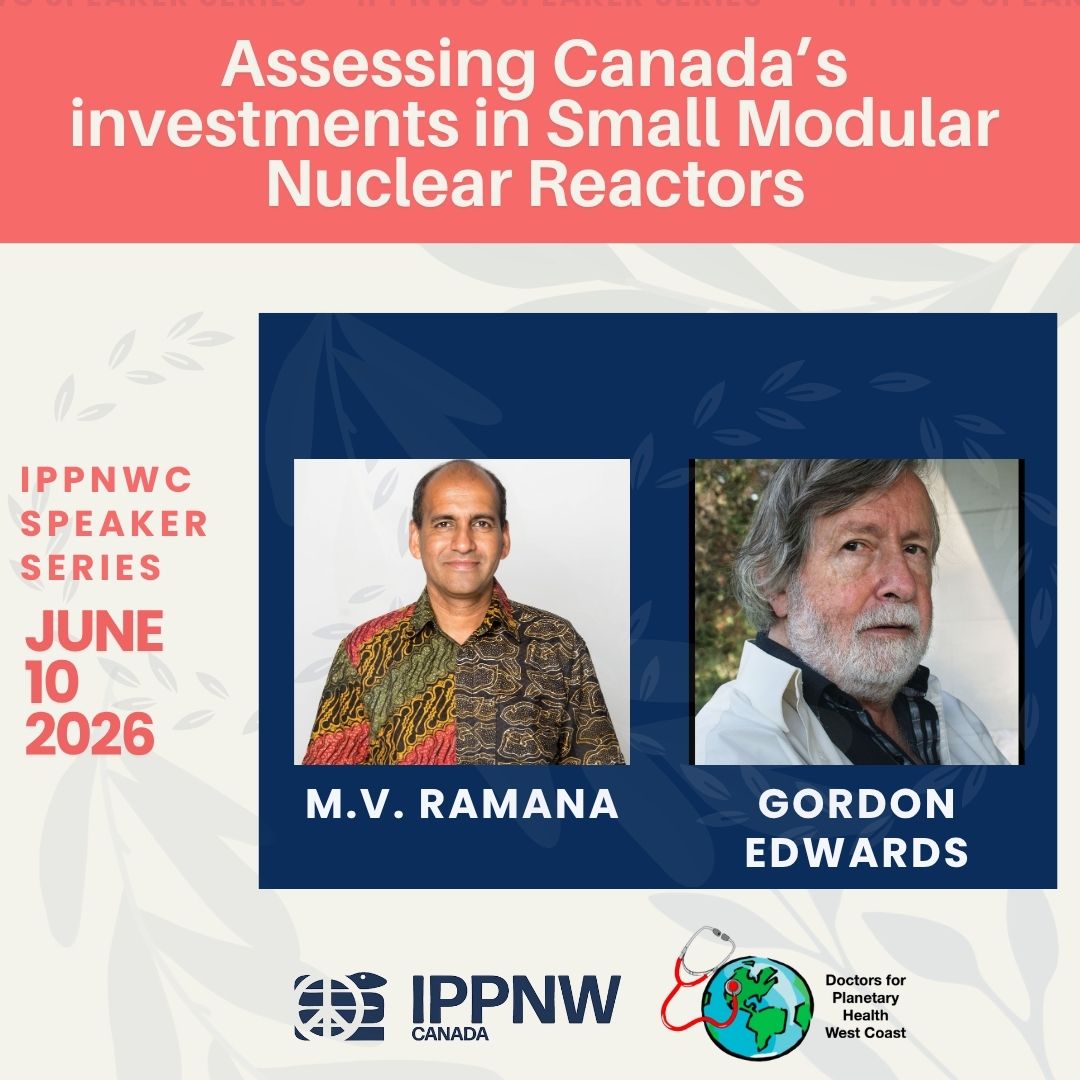
10 June – Assessing Canada’s Investments in Small Modular Nuclear Reactors – https://zoom.us/meeting/register/IiqHA5feRhaEBycOLNTJlA#/registration


Cuba Is Not a Failed State – It Is a Besieged State
PETITION: “Global Appeal to Endorse Palestinian Right of Return of Refugees”
To see nuclear-related stories in greater depth and intensity – go to https://nuclearinformation.wordpress.com
-
Archives
- June 2026 (89)
- May 2026 (306)
- April 2026 (356)
- March 2026 (251)
- February 2026 (268)
- January 2026 (308)
- December 2025 (358)
- November 2025 (359)
- October 2025 (376)
- September 2025 (257)
- August 2025 (319)
- July 2025 (230)
-
Categories
- 1
- 1 NUCLEAR ISSUES
- business and costs
- climate change
- culture and arts
- ENERGY
- environment
- health
- history
- indigenous issues
- Legal
- marketing of nuclear
- media
- opposition to nuclear
- PERSONAL STORIES
- politics
- politics international
- Religion and ethics
- safety
- secrets,lies and civil liberties
- spinbuster
- technology
- Uranium
- wastes
- weapons and war
- Women
- 2 WORLD
- ACTION
- AFRICA
- Atrocities
- AUSTRALIA
- Christina's notes
- Christina's themes
- culture and arts
- Events
- Fuk 2022
- Fuk 2023
- Fukushima 2017
- Fukushima 2018
- fukushima 2019
- Fukushima 2020
- Fukushima 2021
- general
- global warming
- Humour (God we need it)
- Nuclear
- RARE EARTHS
- Reference
- resources – print
- Resources -audiovicual
- Weekly Newsletter
- World
- World Nuclear
- YouTube
-
RSS
Entries RSS
Comments RSS
 nuclear-news