Servicemen exposed to radioactive fallout in cold war weapons testing are using newly declassified documents to fight for a fair compensation scheme
In November 1957, thousands of servicemen on Christmas Island in the South Pacific watched the testing of Britain’s first megaton thermonuclear bomb. Witnesses compared it to seeing the end of the world.
Many viewed the explosion on the island while wearing shorts and short-sleeved shirts, with sunglasses handed out to protect their eyes. Veterans claim they were exposed to needless risk and were the victims of gross negligence. Large numbers later suffered blood disorders and cancers, which they believed were caused by exposure to radioactive fallout. Most were denied war pensions because of ill-health.
By contrast, those involved in the US nuclear testing programme, including the Manhattan Project led by J Robert Oppenheimer, benefited from a $2.6bn no-fault compensation fund. France agreed in 2008 that it would pay compensation to nuclear test veterans who suffered illness linked to radiation exposure.
British veterans now hope the release of thousands of previously classified documents from the Merlin files into the National Archives will help support their near-70-year battle for justice. Some of these newly released documents analysed by The Observer detail risks of radioactive fallout, health monitoring of military personnel and orders for blood samples to be taken from servicemen that could be used for evidence in any subsequent claims for damages.
risks surrounding the project “could easily turn Sizewell C into a financial disaster” while the funding model meant its investors were “the only ones who can’t lose”.
National Audit Office says potential benefits are ‘considerable but uncertain’ while risks are ‘immediate and substantial’
The cost of the government’s £38bn nuclear plant in Suffolk is subject to “significant uncertainty” and may outweigh the benefits for UK households until at least 2064, according to the government’s spending watchdog.
The National Audit Office (NAO) has warned that although the potential benefits of the Sizewell C nuclear plant are considerable, they remain uncertain. The risks, however, are “immediate, substantial and borne by the public”.
The government claims the nuclear reactor, expected to generate the equivalent of enough low-carbon electricity to power 6m homes when it begins operations in the late 2030s, could save £2bn a year from the electricity system compared with using other low-carbon technologies.
However, for households the overall savings could be outstripped by the cost of supporting its construction until almost halfway through its 60-year operational life. The project could take even longer to “break even” if there are cost overruns or delays, the NAO warned.
“Sizewell C is a project of exceptional scale, complexity and significance for taxpayers,” said Sir Geoffrey Clifton-Brown, the chair of the public accounts committee, which oversees the work of the NAO. “Experience from comparable nuclear projects in the UK and overseas highlights their vulnerability to delays and cost overruns.”
Sizewell C is being developed by French state nuclear company EDF as a successor project to the Hinkley Point C reactor in Somerset, the first nuclear plant to be built in the UK in a decade. It has invested £1.1bn to take a 12.5% stake in the project alongside the UK government, which has invested £14.2bn as the majority stakeholder.
British Gas’s parent company, Centrica, owns 15% of Sizewell C while the Canadian pension fund La Caisse and the investment fund Amber Infrastructure own 20% and 7.6%, respectively……………………………………………….
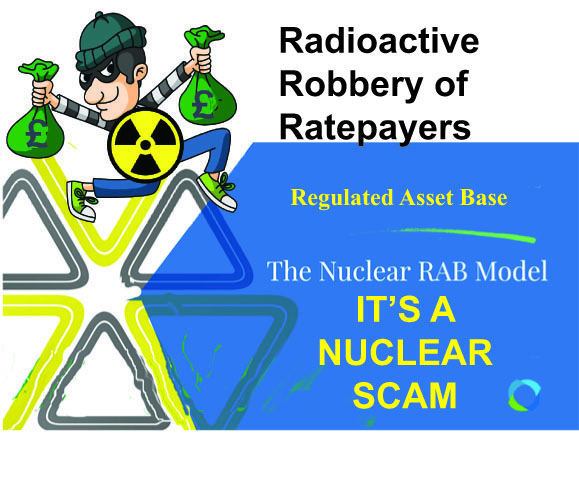
Households began paying for the Sizewell C project via home energy bills at the start of the year to help fund construction. This financial framework, known as a regulated asset base model, is a marked change from the Hinkley Point deal, which will begin to earn a guaranteed stream of revenues from home energy bills only once it begins generating in the early 2030s.
Critics of the regulated asset base model, including the campaign group Stop Sizewell C, have warned that any construction delays could mean that bill payers support Sizewell without receiving power for longer than expected, while the government would be on the hook for the project’s financial risk.
Stop Sizewell C said the risks surrounding the project “could easily turn Sizewell C into a financial disaster” while the funding model meant its investors were “the only ones who can’t lose”.
Any aliens who have been monitoring radio and television transmissions streaming outwards into space from Planet Earth over the past few decades will likely be intrigued, bemused or simply horrified at humanity’s headlong drive towards climate catastrophe. No matter the urgent warnings from climate scientists, the power of billionaires, financial speculators and corporations maintains a death-like grip on governments around the world. Amid the occasional flurry of big business greenwashing and government rhetoric about ‘climate protection’ and ‘eco-friendly’ initiatives, billions of people are being held hostage by the forces that are dragging everyone to the edge of the climate abyss.
New warnings about climate change do, of course, occasionally appear in the press. But rarely, if ever, are there prominent and sustained front-page headlines and news-leading television coverage. Rarer still are impassioned editorials, high-profile presenters and commentators demanding the substantive, radical changes that are needed to avoid the most damaging predicted impacts of business as usual.
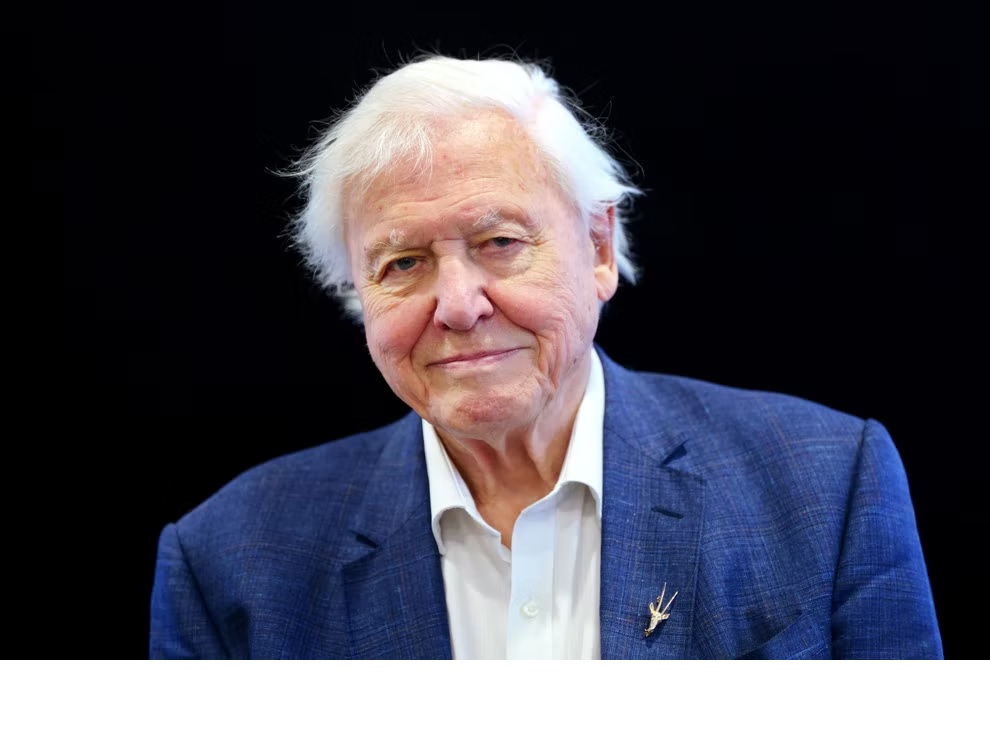
Earlier this month, the Royal Albert Hall hosted a 100th birthday party for naturalist David Attenborough, Britain’s most beloved broadcaster. Celebrities showered him with love and praise: Leonardo DiCaprio, Judi Dench, Olivia Colman, Emily Eavis, Chris Martin, Ben Fogle, Raye, Kate Winslet. And Paddington Bear. Attenborough sat in the royal box, alongside Prince William. King Charles delivered a handwritten message from Balmoral Castle via a ‘cavalcade of creature couriers’, including eagles, a red squirrel, a hedgehog, otters, ducks, a fox and deer, thanks to the wonders of CGI. All very nice; all very Disneyfied.
For many years now, Attenborough has been warning about the dangers of mass consumption, pollution, worldwide species loss and global warming. These subjects are clearly of great concern to him, although he started ringing the alarm bell very late.
But the evening gave a wide berth to such uncomfortable topics. ‘Life on Earth’? The climate crisis must be happening on a different planet entirely.
As Jonathan Liew, a Guardian sports journalist and columnist, pointed out:
‘This is, of course, the Attenborough with which our public discourse is most comfortable: depoliticised, universally adored, a man-sized Paddington Bear fit only for our veneration. Who teaches us about tree frogs and seal cubs and stick insects and asks for nothing in return.’
Of course, what Liew called ‘public discourse’ is the tightly constrained media space permitted by state and corporate power.
Liew continued:
‘And perhaps there are more difficult questions to negotiate here: the extent to which he has been a force for the meaningful and revolutionary change he seeks, and the extent to which his broad, inoffensive appeal has been more hindrance than help, allowing the powerful to feign concern for the planet while shirking the tough and bloody compromises required to secure it.’
To his credit, Attenborough has been eloquent and impassioned in recent years about the climate crisis. He addressed the COP26 climate summit in Glasgow in 2021, saying that:
‘We are already in trouble. The stability we all depend on is breaking. This story is one of inequality, as well as instability. Today, those who’ve done the least to cause this problem, are being the hardest hit. Ultimately, all of us will feel the impact, some of which are now unavoidable.’
But, even five years on, as the climate crisis worsens, the topic was deemed unmentionable by the organisers of Attenborough’s 100th birthday party.
‘Hothouse Earth’ And Collapsing Currents
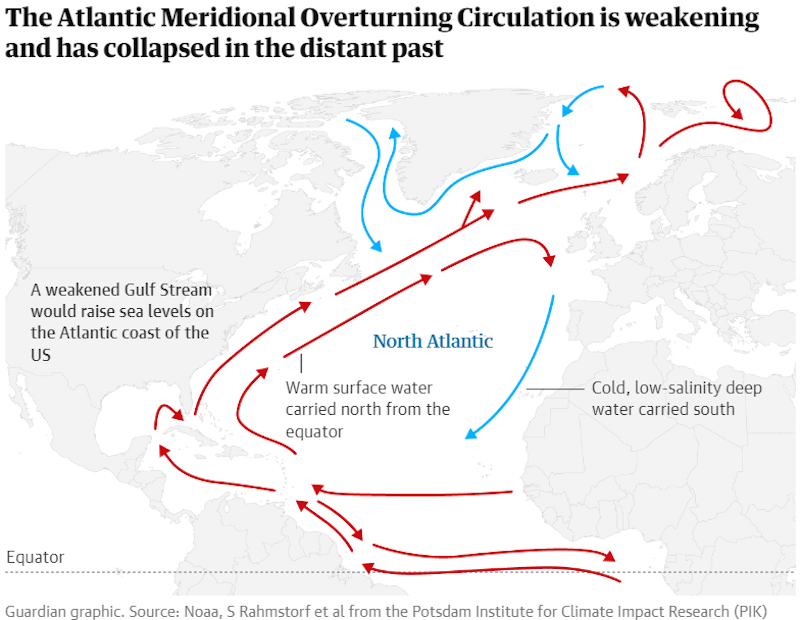
In February, a new scientific report warned that runaway global warming is closer than had previously been thought. We are heading for the ‘point of no return’ after which we would be locked into a hellish ‘hothouse Earth’. Climate ‘tipping points’ would be triggered, producing rapid heating, which would lead to a domino effect of yet more tipping points and feedback loops. These include the melting of the Greenland and Antarctic ice sheets, drastic dieback of the Amazon rainforest and the weakening, and possible shutdown, of the Atlantic ocean conveyor belt known as the Atlantic Meridional Overturning Circulation (AMOC).The scientists stated that:
‘Earth’s climate is now departing from the stable conditions that supported human civilization for millennia.’
The world has already experienced a global average temperature rise of over 1.3C since pre-industrial times and is likely to surpass the Paris Agreement ‘limit’ of long-term average heating of 1.5C in the next few years. Current government and business policies are pushing us towards 2-3C of global warming, if not more, by 2100.
But, if trigger points are breached and runaway global warming occurs, we are talking about much higher temperature rises, perhaps 10C or more. This would mean almost unimaginable catastrophic effects on the climate system, global agriculture and societal infrastructure; not to mention the extinction of humans. Scientists have warned that even a rise of 3-4C means that ‘the economy and society will cease to function as we know it’.
Bill McGuire, Professor Emeritus of Geophysical and Climate Hazards at University College London, put things in grim perspective via X:
‘We are already locked-in to a return to Pliocene [around 2.6 to 5.3 million years ago] conditions (3C hotter and (eventually) ~ 20m sea-level rise)
‘Keep going as we are, and hotter Miocene [5.3 to 23 million years ago] conditions will result
‘Beyond this a return to early Eocene [around 48 to 56 million years ago] hothouse beckons – and potential oblivion’
During the Eocene, the global average temperature was well over 10C higher than present. Oblivion would hit humanity long before such a temperature rise occurred.
Earlier this month, yet another deeply disturbing scientific studyrevealed that the risk of AMOC reaching a tipping point by 2100, after which its shutdown would be inevitable, is as high as 50 per cent. Previously, this was considered ‘a low likelihood event’ of around five per cent. But even this should be held in perspective. How many of us would board a plane knowing that there was a five per cent chance that it would crash?
AMOC, of which the Gulf Stream is the best-known component, is a vital carrier of warm water from the tropics to high latitudes in the North Atlantic, returning cold water southwards. It is a primary source of heat for western and northern Europe, leading to the temperate climate here. AMOC connects with other ocean current systems in a global network that transports heat, water, nutrients and carbon around the planet. Any disturbance to AMOC, far less its collapse, would have devastating global consequences for climate, agriculture, infrastructure and even for the habitability of Earth.
Professor Stefan Rahmstorf of the Potsdam Institute for Climate Impact Research in Germany, who has studied AMOC for 35 years, said:
‘This is an important and very concerning result. It shows that the “pessimistic” models, which show a strong weakening of the AMOC by 2100, are, unfortunately, the realistic ones, in that they agree better with observational data.’
He added:
‘I now am increasingly worried that we may well pass that AMOC shutdown tipping point, where it becomes inevitable, in the middle of this century, which is quite close.’
To emphasise: the tipping point may be much earlier than 2100; it could happen by 2050, or even sooner. The vital point here is that scientists increasingly agree that the ‘safe window’ to stabilise the current by halting emissions is closing far faster than previously thought. And the public likely does not even realise it.
Rahmstorf had previously said that a collapse must be avoided ‘at all costs’. Now he added:
‘I argued this when we thought the chance of an AMOC shutdown was maybe 5%, and even then we were saying that risk is too high, given the massive impacts. Now it looks like it’s more than 50%. The most dramatic and drastic climate changes we see in the last 100,000 years of Earth history have been when the AMOC switched to a different state.’
In an English-language video for the German DW news channel, Rahmstorf explained the importance of AMOC for European and global climate, and the significance of the latest alarming results. He warned that we should expect more climate extremes in heat, cold, drought, floods and storms.
If and when the AMOC collapses, the impact on agriculture in the northern hemisphere will be devastating. The drop in harvest yields for key crops could be as high as 50 per cent. Mass starvation is a very real possibility.
Climate Shocks
……………………………………………………………………………………………………. The fact that deeply disturbing findings about a likely collapse of a vital component of the climate system were not given wider, extensive and sustained coverage is a devastating indictment of ‘mainstream’ journalism.
……………………….Scientists are warning, as loudly as they possibly can, that the present economic system of rampant capitalism is destroying the very life-support systems that made Planet Earth a habitable environment for humans to evolve and flourish.
……………………………………………………………………………………………………………………………………………….. Look at the daily, hour-by-hour obsessing over the endless maneuvering within the Labour government; every single statement from ministers and their allies scrutinised by the Westminster bubble of political correspondents.
Imagine that, instead of focusing on short-term melodramas, leading news organisations rigorously probed politicians, day in and day out, about the climate crisis.
Imagine that news editors and journalists relentlessly challenged the government about current policies that are bringing us closer to the brink of climate chaos.
Imagine that reporters investigated and exposed the deep reluctance and state-corporate obstacles, including the establishment media, that are blocking alternatives to climate Armageddon.
The financing of Sizewell C has been scrutinised by the National Audit Office (NAO), which found it “places more risks on taxpayers and consumers than other electricity projects” and that benefits to consumers will only outweigh costs after 2060.
In July 2022, the Department for Energy Security and Net Zero (DESNZ) announced it had secured the final investment decision (FID) for the project on the Suffolk coast, which is expected to produce 3.2GW of electricity.
Achieving the FID meant that investors and the government had agreed the terms on which investment would be put into the project, how returns on investment would work, and what this meant for consumers.
The government confirmed that the project would cost “around £38bn”, nearly double the original £20bn estimate stated by EDF in 2020.
Today’s [20 May] NAO report, simply titled Sizewell C, assessed “the implications of the deal for taxpayers, electricity consumers, and investors, and provides a baseline against which progress can be measured.”
A statement from the NAO, announcing the report, said DESNZ’s “delivery model for Sizewell C places more risks on taxpayers and consumers than other electricity projects, but the Department believes this model has reduced finance costs and will allow the project to be delivered on time and to budget.”
It added that the “novel approach has costs and relies on big assumptions
Once construction at the plant has been completed, the government’s modelling “predicts that the net benefits for consumers could be up to £18bn, primarily delivered through energy bill savings and reduced electricity costs compared to other ways of reaching net zero,” the NAO said.
“However, as a large infrastructure project, DESNZ’s modelling of these benefits shows they will not outweigh the costs to consumers until after 2060.”
The report also assessed the claims by Sizewell C that it will be easier to build because it is largely copying the designs of Hinkley Point C.
The NAO pointed out that Hinkley Point C “is currently expected to cost double its initial projected cost, with a seven-year delay”, and that this “has sparked concerns that these problems may be mirrored in Sizewell C”.
The spending watchdog said DESNZ hoped to avoid repetition of mistakes by “applying the lessons and final designs from Hinkley Point C”, and, as such, “Sizewell C’s plans are already at a much more advanced stage than Hinkley’s were at the equivalent point”.
NAO head Gareth Davies said: “Sizewell C forms a significant part of the government’s plan for a secure and affordable clean energy supply. There has been a concerted attempt to learn from the problems of previous nuclear power construction projects and other large infrastructure schemes.
“This has resulted in a novel financing structure and DESNZ will need to monitor the risks to taxpayers and billpayers closely.”
Public Accounts Committee chair Geoffrey Clifton-Brown commented on the report, raising concerns about the “substantial” risks of Sizewell C, which are being borne by the public.
“Sizewell C is a project of exceptional scale, complexity and significance for taxpayers. Costs are estimated to be £38.2bn, largely financed by government”, he said.
“While the potential benefits are considerable, they remain uncertain; by contrast, the risks are immediate, substantial and borne by the public. Consumers are already contributing through their electricity bills, and the government has assumed most of the project’s financial risk.”
He added: “Experience from comparable nuclear projects in the UK and overseas highlights their vulnerability to delays and cost overruns.
“Although the government has introduced a new delivery and financing model to mitigate these risks, it must now ensure it works in practice through close monitoring, greater transparency to Parliament, and by securing value for money from the significant public and private investment.”
Reaction to the report..…………………………………………………………………………………………………………….
University of Greenwich emeritus professor of energy policy Steve Thomas gave NCE his reaction to the NAO report, asking, “Is this the best NAO can do after a year of effort?”
He pointed to a line from the NAO press release about the report, which said: “Sharing risk between the investors and taxpayers and consumers appears to have reduced the cost of financing Sizewell C, but the rewards for investors still appear high.”
He said the statement that financing costs had been reduced was “rubbish on two grounds”.
“First, the finance costs are being paid by consumers in the construction period under the RAB (Regulated Asset Base) surcharge. Getting someone else to pay does not reduce them, it just shifts them.
“Second, the finance is being provided by the government National Wealth Fund and the interest rate will be whatever the government tells it to charge, so if finance charges are lower because the interest rate is reduced, that is because the government has imposed the interest rate.”
The press release also said: “Investor financial returns will cost consumers over £4bn but will be justified if they help the project to cut construction costs and speed up delivery times.” Thomas described this as “unclear”.
He said: “If it refers to the 4.8% of the 10.8% real rate of return investors will be given, that will be a gift from consumers to investors, it is an underestimate. Centrica says that of its £3bn equity contribution, only £1.3bn will come from itself, the rest will come from this 4.8% which investors are required to use as equity contribution.
“Centrica euphemistically describes this as ‘RAB Growth’.”
The NAO statement adds that DESNZ assumes “the involvement of private investors is justified, as their expertise will reduce construction costs and speed up delivery.”
In response, University of Greenwich academic Thomas asks: “What expertise does La Caisse, Centrica, NLF have on building nuclear projects? EDF has expertise but that didn’t stop Hinkley, Flamanville, and even Taishan going horribly wrong.”
He also questions the government’s use of £38.2bn as a baseline cost for Sizewell C, describing it as “wrong”, because the lower regulatory threshold cost is £40.5bn, which the government is using as its central estimate.
“£38.2bn is clearly the lower end of the range. A very basic element of project appraisal is to use central estimates, not bottom of the range ones,” he added.
A Stop Sizewell C spokesperson told NCE that the campaign group shares a lot of the NAO’s concerns, and asked for the government to commit to a public, “realistic” completion date for the project.
“The NAO’s report confirms what we already suspected – that ‘big assumptions’ and the ‘significant uncertainty’ of factors underpinning DESNZ’s claimed benefits could easily turn Sizewell C into a financial disaster, with its investors – thanks to RAB – being the only ones who can’t lose,” the spokesperson said.
“As the NAO confirms, households are relying on those investors to produce significant savings and reduce Sizewell C’s construction time to justify the nuclear tax on our energy bills, but we share the NAO’s questions about whether investors can or have the incentives to do this.”
They added: “We had asked the NAO to look at Sizewell C before it reached Final Investment Decision and are dismayed it did not do so, but at least some critical information withheld by the government is now in the public domain.
“We agree with the NAO that DESNZ must provide transparency of forecast cost and schedule for Sizewell C. We call for the government’s promised Sizewell C Strategy and Delivery plan, containing a public, realistic completion date, to be laid before parliament immediately.”
TASC spokesperson Chris Wilson told NCE: “The NAO report regarding the Sizewell C project confirms that this government’s ideological pursuit of nuclear power is based on hope and belief rather than objective judgement.
“Ignoring all the warnings and project risks, the usual optimism bias regularly expounded by the nuclear industry is there in spades, at the same time negative assumptions are made about the cost of renewables
“That DESNZ went ahead with the Sizewell C investment decision on the basis that consumers would not benefit until 2064 beggars belief.
“The NAO report highlights a stark imbalance in DESNZ’s Sizewell C funding model: the investors are shielded from risk while reaping massive profits, leaving the public purse and electricity consumers to shoulder an unfair and excessive financial burden.”
Wilson added: “A major concern highlighted by the NAO is the lack of incentive for EDF to complete Sizewell C on time and budget – they will get paid to develop and supply major components while receiving a guaranteed return on their investment.
“EDF have been involved in every previous EPR reactor project and all of them have gone woefully over time and budget – they now have the added distraction and priority of building the new EPR2 reactor programme in France. What could possibly go wrong?”
The police force tasked with stopping terrorist attacks at UK nuclear sites dealt with dozens of internal security breaches last year – including a classified laptop going missing, contractors working without proper background checks, and armed officers losing ID cards.
Three breaches involved classified material being lost or stolen outside the Civil Nuclear Constabulary’s (CNC) premises – including two police warrant cards, used to identify officers, which were supposed to arrive via courier.
A further nine cases involved the loss of identity passes, including those belonging to armed officers, and two contractors were found to be working without “appropriate” vetting.
Other breaches included confidential material being left inside body armour sent for destruction, a staff member accessing information they were no longer authorised to see, and compromised personal data. There were 35 breaches in total, the CNC reported.
The CNC is the armed police force that protects civilian nuclear facilities across the UK, including Torness and Dounreay in Scotland. The force also escorts nuclear material when it is being transported and guards other “critical national infrastructure” such as gas terminals.
Our findings come after we submitted a freedom of information request to the force. You can read full details of the breaches here.
Opponents of nuclear energy said the UK “cannot afford to be sloppy when it comes to nuclear security” and claimed “very little appears to have been done” to tackle breaches in recent years.
The CNC described the security incidents last year as “minor” and a spokesperson told The Ferret the force “takes action on all incidents and seeks to learn lessons” from them.
National Audit Office report says consumers will pay higher amount for energy from Suffolk project compared to its Somerset counterpart. Electricity from the Sizewell C nuclear project is set to be more expensive than power from Hinkley Point, even though the Suffolk plant is cheaper to build, Britain’s public spending watchdog has said.
Sizewell C is on course to cost about 22 per cent less than Hinkley Point C, which is being built in Somerset. But the latter has agreed to sell its electricity at a fixed price, limiting the cost to end users because developer EDF has to absorb any cost overruns.
A National Audit Office report published on Wednesday estimates that if construction costs are in line with forecasts of £38bn-£48bn, electricity from Sizewell C will cost between £131-£155 per megawatt hour in 2024-2025 prices. This compares to £129 per MWh for electricity from Hinkley Point C.
The government and a consortium of developers had regularly highlighted that Sizewell C would be cheaper to build than Hinkley amid concerns about the cost of the project. But the NAO report says: “Although Sizewell C should cost less to build than Hinkley Point C, it is likely that consumers will pay more for energy . . . because the price of Hinkley’s electricity was set before its cost over-ran (which has been borne by EDF), and the cost of borrowing has also increased since then.”
The nuclear industry will become “more dangerous” and regulation of the sector has been captured by “vested interests,” campaigners and experts have told the Canary, after the Nuclear Regulation Bill was put forward in the 2026 King’s Speech.
The Labour Government had already said in March 2026 that it was committed to implementing the recommendations of the Nuclear Regulatory Review, which was led by John Fingleton – sometimes referred to as the Fingleton Review.
Announcing the findings of the review in March 2026, the government said:
overly complex regulation in the UK has contributed to the ‘relative decline’ in the UK’s global leadership position in nuclear.
It also set out 47 recommendations to:
to speed up building new nuclear projects.
King’s speech 2026
The King announced the Bill in his King’s Speech, saying:
My Ministers will also take forward recommendations of the Nuclear Regulatory Review and encourage a new era of British nuclear energy generation.
In briefing notes published by the government, which explain their plans in more detail, the government referenced the Fingleton Review, which it characterized as calling for “a radical refresh” of the nuclear regulatory regime.
It went on to say that the Nuclear Regulation Bill is:
modernising the way that new nuclear projects are regulated so we can deliver safe, secure and affordable nuclear power and infrastructure sooner, while maintaining strong environmental protections.
The briefing notes tried to placate fears that the recommendations in the Fingleton Review could erode environmental protections.
They added:
To speed up the delivery of new nuclear and reduce costs, the Government is overhauling planning and regulation in a boost to the UK’s energy sovereignty and the nuclear deterrent.
This Bill will support quicker delivery of nuclear projects in a way that produces a win-win for building critical infrastructure while protecting nature and the environment, and high standards of nuclear safety.
‘Industry falsehoods’ used to justify risk nuclear projects pose to nature – conservationist
The Wildlife Trusts‘ head of public affairs Matthew Browne told the Canary:
This Government was elected to govern on the basis of a manifesto that promised to restore the natural world. We are a long way from this promise being delivered. Today’s King’s Speech is silent on nature recovery, and includes measures that will actively harm wildlife.
Whilst early proposals for the ripping up of nature protections have thankfully been dropped, the Nuclear Regulation Bill is justified on the grounds of industry falsehoods which minimise the risk projects can pose to nature. The Regulating for Growth Bill gives environmental regulators an inappropriate focus on growth, bending their work away from vital nature recovery objectives.
With ongoing nature loss impacting our ability to grow food, to protect communities from flooding and our ability to stay healthy, this failure to respond to a growing national security crisis risks fundamental dereliction of duty. The Government needs to change course, and face up to environmental reality, before it comes an economic and social disaster.
Bill will make ‘inherently dangerous’ nuclear power ‘more dangerous’ – anti-nuclear campaigner
When you think of nuclear accidents like at Windscale in 1957, Chernobyl in 1986, or Fukushima in 2011, it’s easy to see that Britain’s current nuclear regulatory procedures and rules are in place for a simple reason – that nuclear power is inherently dangerous.
Rather than acknowledge these risks or legacy issues – like tackling the toxic waste generated by nuclear power – the government’s plan to cut regulations essentially means this industry will be more dangerous.
This is disturbingly similar to what Donald Trump did earlier this year when he gutted the US Nuclear Regulatory Commission and the US Environmental Protection Agency.
These proposed regulatory changes are also for the benefit of Britain’s deadly and costly nuclear weapons programme, which already accounts for almost a quarter of Britain’s military budget. Rather than strengthening our security, these proposals will instead weaken it and put us all at even greater risks from the nuclear industry.
Government should pursue renewables instead of nuclear – SNP
Scottish National Party (SNP) Alex Kerr MSP told the Canary:
Under Keir Starmer’s watch, energy bills have spiralled out of control, 1,000 jobs are being lost every month in the North Sea and Scotland’s only refinery at Grangemouth has closed – the Labour party has zero credibility when it comes to energy.
Now Labour is ripping up regulations to pursue its dangerous obsession with nuclear power.
Scotland has an abundance of clean energy sources – we don’t need new nuclear power stations, which are ludicrously expensive, take years to build, and leave us with dangerous waste.
Another energy superpower, Norway, has just ruled out using nuclear energy. With the fresh start of independence, Scotland can do the same and use our vast energy wealth to lower bills, enhance our energy security, and build a wealthier country.
Pursuit of nuclear instead of renewables unjustifiable – academic
University of Sussex emeritus professor Andy Stirling told the Canary that the evidence shows renewables should be pursued instead of nuclear, and the only reason that the government wants a civil nuclear sector is to enable the UK’s nuclear weapons programme.
He said:
Detailed plans for deregulating nuclear power set out in the King’s speech further underscore how deeply policy making in this field has been captured by vested interests.
Despite huge official noise around this issue, no UK Government document has systematically compared nuclear with alternative options to deliver affordable, safe, secure, domestic low carbon power. This situation in itself seriously undermines both sound policy making and wider democracy.
If any such analysis were to have been undertaken, the overwhelming independent evidence is, that it would have had to conclude that nuclear is verging on obsolescent as a means to deliver these objectives. Even existing mature forms of nuclear power costs many times more than comparable means to deliver firm-equivalent electricity and are far slower and problematic in other ways. So consumer bills are raised and climate action delayed.
That the Government does not even try to make arguments against this, shows the real reason for supporting high price, slow, troublesome nuclear power, is to underpin equally problematic and ineffective nuclear weapons ambitions.
Bill sets government on ‘collision course with communities’ – anti-Sizewell C campaigner
Stop Sizewell C executive director Alison Downes told the Canary:
The government is on a collision course with communities over its plans for a Nuclear Regulation Bill, for example in response to the Nuclear Regulatory Task Force it included the concerning promise to ‘go further’ in creating a new pathway to allow semi-urban nuclear power stations.
Ironically, rigorous public consultations are promised, but the Prime Minister’s inflammatory rhetoric directed at those who express concern about new nuclear plants in no way builds public confidence. We need assurances of strong, independent regulators and affected communities to be allowed to actively engage, not be insulted.
On April 15th, Declassified UK published a bombshell investigation exposing how in the mid-1990s, senior British political and military officials were well-aware NATO expansion into Central and Eastern Europe “would provoke [the] Russians,” and likely trigger all-out war. Hitherto unreported Ministry of Defence files reveal London knew Moscow’s “sensitivities” over a “hostile military alliance” enlarging up to its borders were profound, and based on very “real” concerns. Yet, NATO’s dangerous crusade to absorb Central and Eastern Europe continued apace, ultimately producing the Ukraine proxy conflict.
Since the so-called Special Military Operation’s February 2022 eruption, British officials have relentlessly reiterated the mantra the proxy war was “unprovoked”. However, a declassified March 1995 Foreign Office memo noted “there was a widespread psychological and intellectual perception in Moscow that NATO was a real threat.” In May that year, then-Prime Minister John Major succinctly articulated Russian anxieties to his Irish counterpart John Bruton, as a “fundamental fear…of encirclement.” Concerns about EU membership were comparatively muted:
“For the Russians, NATO had a much more threatening symbolism and political resonance…The Baltics were particularly difficult, with extreme sensitivity for Russia. It would be very hard to have a NATO border directly against Russia.”
Still, in 1997 NATO invited Czechia, Hungary, and Poland to join, which they did two years later. In 2004, Estonia, Latvia and Lithuania simultaneously joined the military alliance. So too did ex-Warsaw Pact members Bulgaria, Romania, Slovakia, and former Yugoslav republic Slovenia. Declassified UK shows how back in August 1996, British Defence Intelligence prepared a NATO enlargement study specifically forecasting that these countries joining could trigger war, and an alliance military operation launched via Article 5 of the NATO treaty in response.
This refers to collective self-defence, under which NATO members are obligated to come to each other’s defence if attacked. In the scenario, Defence Intelligence assumed “Russia has vehemently opposed NATO membership for the Baltic states and has threatened retaliation to preserve her own security against a perceived hostile military alliance on her borders.” In the real world, Boris Yeltsin made at-times irate public statements about NATO enlargement into the Baltics at the time, while lobbying US President Bill Clinton on the issue behind closed doors.
NATO expansion continued regardless. In December 1996, Declassified UK reports then-Russian premier Viktor Chernomyrdin privately warned Major: “Russia could not stop NATO enlarging, but this would create a fragile situation which could explode.” Otherdeclassified files from this time show senior apparatchiks in London were acutely aware of Moscow’s “concern,” “fears,” “hostility,” “negative attitudes,” and “resentment” over alliance enlargement. Both Major and his successor Tony Blair explicitly pledged in person to Kremlin officials that NATO wouldn’t “move up to Russia’s borders.”
However, a secretSeptember 1996policy paper made clear Britain was committed “to enlarge NATO to the East,” even if “Russian acquiescence is not possible.” In February 1997, Russia’s deputy foreign minister Nikolai Afanasievsky angrily branded public discussions in Western capitals of admitting former Soviet republics to the alliance a “blatant provocation” in a meeting with Jeremy Greenstock, Britain’s ambassador to Moscow. Greenstock reassured his Russian opposite number NATO had “no intention” of admitting former Soviet states “at this stage” – which, technically, was true.
‘Russian Problem’
A March 1997 Foreign Office memo forecast rapid NATO enlargement would “antagonise,” and ultimately “provoke,” Russia into a belligerent counter-response. Yeltsin’s “anxiety” about the “possible accession of Ukraine, the Baltic states and other states of the former Soviet Union” was considered the “most difficult issue” affecting Western relations with Moscow. A more staggered approach was thus required. That month, John Major met with NATO secretary general Javier Solana, who spoke of “Russians fears about NATO troops and equipment moving eastwards.”…………………………………………………………………………………………………………………………………………………………………………………………………………………………..https://www.kitklarenberg.com/p/declassified-uk-knew-nato-expansion
A long-term project we have had here at Bella, that is charting the toxic legacy of the British State. Our map, Scotland the Dump, produced by the wonderful Magnificent Octopus Illustration is being prepared for shipping right now. The map details the weapons ranges, munitions dumps, biological and chemical weapons dumps and nuclear waste scattered around Scotland.
The programme, designed to expose officer misconduct, was due to expire last month. The Nerve has established that it was extended to today, May 15, with no indication what happens next. Officers fear they will be under long-term surveillance, while it’s also emerged the project could be rolled out to more staff. Report by Max Colbert and Lucia Osborne-Crowley
Multiple officers have expressed fears to the Nerve about the tool’s infringement of their privacy, and concerns about the lack of consultation or negotiation around its implementation. The Police Federation has previously said that the “use of AI to spy on our officers is not proportionate, just or proper”.
The original contract for a pilot project, published on the Government’s Contracts Finder website under the title “Unified Data Platform Phase 1”, originally ran from 1 February to 30 April this year.
Palantir’s tool had been used as part of a plan to surveil police and combine “internal data we already hold from multiple standalone systems into a form which can be used without delay as part of our professional standards work”.
The Met said that the tool had found evidence of serious misconduct and criminality from a small amount of officers, and that three had been arrested for offences including abuse of authority for sexual purposes, fraud, sexual assault, misconduct in public office and misuse of police systems.
The force has refused to state whether, as the extension concludes, the contract will be renewed further, and some Met officers are increasingly worried that their devices might be placed under permanent surveillance using Palantir software.
Other concerns raised among members of the force who have spoken to the Nerve include the accuracy of the programme’s ability to catch rogue officers, the lack of proper consultation with staff, and a glaring absence of clarity on the cost of the extension.
The £489,999 payment awarded for the original work avoided hitting the £500,000 threshold for scrutiny from the Mayor’s Office for Policing and Crime, but London’s mayor, Sadiq Khan, has stated that he may oppose future deals using Palantir’s software because of “concerns about using public money to support firms who act contrary to London’s values”.
Talks about the force signing another, multimillion-pound, contract for automating intelligence analysis for criminal investigations are ongoing.
This continuous 24/7 geolocation tracking is highly intrusive and risks monitoring officers when they are off duty, on rest days, or at home
Matt Cane, general secretary of the Metropolitan Police Federation
The Met press office refused to clarify whether more money had changed hands as part of the contract extension, saying the matter was “commercially sensitive”. They said the pilot “was time-limited with this short extension as outlined”.
A key issue for the serving police officers who have spoken to the Nerve on the condition of anonymity, has been the lack of proper communication regarding how Palantir’s tech will be used to monitor them. In a public statement, the Metropolitan Police Federation – the staff association representing officers – said it “was not informed that the force would be using Palantir’s artificial intelligence to analyse the movements of cops in the capital”.
One officer said that what was sent out to them was an internal intranet message, which they said was “very harshly written”. They read it in the expectation that “we’d be reassured about not being spied on, but it wasn’t like that – it was quite aggressive, and people weren’t happy about it”.
They also said the force was apparently in talks with an unspecified union about installing Palantir software on non-officer staff devices. The Public and Commercial Services union (PCS), confirmed that it had been informally advised by the Met that they intend to start monitoring its staff, but that they had not been given specifics on the software system that would be used. They also said that they had received no formal consultation from the Met about the process.
Another long-serving officer criticised the intrusiveness of Palantir’s work, describing it as “very Big Brother”. They said the Met “signed up to a contract, essentially without telling us or warning us they’ve signed a contract, and they’ve got this tool that scans all electronic information that the Met have on its staff”.
They added that because of a lack of clarity given to police on how Palantir’s tech will be implemented, “we don’t know what information they’re using, but it includes our work mobile phones and laptops, which we’re obligated to use – you can get disciplined for not logging in enough. So we’ve all been wandering around with our work phones and laptops and they can track where we are, where we’ve been … everyone’s very angry about it.”
The second source told the Nerve that “they want us to change [ie replace] our laptops”, and that they were “sceptical” as to why the police would need to use such intrusive measures on their own officers, especially when staff were taking their devices home with them. They said: “If I was to get one of these new laptops, I’d probably put it in one of those Faraday bags and keep it in the garage. I do not want their devices in my house because of fear of invasion of privacy”.
The Metropolitan Police Federation’s general secretary, Matt Cane, said that the “use of AI to spy on our officers is not proportionate, just or proper. It’s an outrageous and unforgivable invasion of privacy … This continuous 24/7 geolocation tracking is highly intrusive and risks monitoring officers when they are off duty, on rest days, or at home.” As a result, the federation has urged officers to be cautious about using work devices when off duty.
‘Palantir’s business model is fundamentally parasitic”
Jim Killock, executive director of the Open Rights Group
The Met claimed last month that 98 officers were being assessed for misconduct relating to “abuse of the IT system that rosters shifts by police officers for personal or financial gain”, and that 500 more had received prevention notices relating to the same offence.
One source described being one of the 500 officers that received a warning for changing one of their days at work on the system. In their case, one of the days they received a warning for was for cancelling an annual leave day on their birthday in order to sit a work-related exam. Had a basic investigation been carried out, they said, this would have been established quickly. They suggested that there was a real possibility of “good cops” being caught up in an unfair process without proper oversight.
While the police have not confirmed whether or not Palantir’s software will be used on officers on a longer-term basis, or if talks are currently going on with regard to further internal monitoring, this seems likely, according to the Nerve’s sources.
This would also follow a frequent pattern in which Palantir takes on work on a trial basis, for a low nominal fee or even free of charge, that transforms into an official, longer-term contract later, often at a greatly inflated cost.
In 2023, the UK’s chief commercial officer wrote to Palantir expressing concern about its “practice of offering services to public sector customers for a zero or nominal cost to gain a commercial foothold, contrary to the principles of public procurement which usually require open competition”, after the company signed a six-month agreement – free of charge – to create a system running the Homes for Ukraine scheme for the Department of Levelling Up, Housing and Communities (DLUHC). The company then went on to receive multiple contract extensions worth tens of millions of pounds.
Similarly, Palantir’s first contract with the NHS, a Covid “datastore” deal awarded without competition during the pandemic for just £1, and originally sold to the public as a short-term emergency response, later resulted in the company being deployed across the health service, eventually securing the lead role in the £330m pound deal to run the Federated Data Platform (FDP), among a host of other awards from both the NHS and DHSC.
Jim Killock, executive director of the Open Rights Group, said that “offering cheap services as loss leaders is a well known tactic of tech vendors and consultants – their aim is dependency, and once dependency is created, prices go up.
“That’s what Palantir mean when they say they want to be the ‘operating system for government’. They mean ‘we want to become so embedded that it will be really painful to remove us’. Palantir’s business model is fundamentally parasitic.”
Other UK police forces, apart from the Met, have already begun deploying Palantir software. Forces in Leicestershire and Bedfordshire have both confirmed working with the company on projects that involve processing data from more than a dozen UK police forces, which – as reported by Liberty Investigates – could serve as a pilot for a national rollout of Palantir technology, giving the company access to swathes of data.
Martin Wrigley, a Liberal Democrat MP who is a member of the Commons science and technology select committee, echoed the concerns of others that the pilot deal could be a way for Palantir to embed itself within policing infrastructure on a permanent basis.
“Once again, we’ve got the early-days experimentation, just like the £1 NHS system, bringing them into spaces where they don’t have prior expertise, and putting them in as the only potential candidate, so once again we predict that they will have a contract without competition, and that’s just not on,” Wrigley said.
The UK government’s 2025 Nuclear Regulatory Taskforce, established to cut “red tape” blocking nuclear expansion, is fundamentally misconceived. Historical evidence shows that failed nuclear projects collapsed due to financial risk, not regulatory failure. The Taskforce lacked expertise in radiation science, environment, and economics, its recommendations threaten regulator independence, and its reforms will consume government resources without delivering new capacity before the mid-2040s.
1. Introduction
In February 2025 Prime Minister Starmer announced the setting up of a Nuclear Regulatory Taskforce with a press release1 headed “Government rips up rules to fire-up nuclear power” and sub-headed “More nuclear power plants will be approved across England and Wales as the Prime Minister slashes red tape to get Britain building.” This set the tone for future announcements with emotive language and little substance but designed to generate headlines.
The narrative was clear. The planning and regulatory system had failed: “The industry pioneered in Britain has been suffocated by regulations and this saw investment collapse, leaving only one nuclear power plant – Hinkley Point C – under construction.” Any opposition to nuclear projects was trivial and should be ignored – “saying no to the NIMBYs” and “saying no to the blockers who have strangled our chances of cheaper energy, growth and jobs for far too long.”
In April 2025 the leader of the taskforce, John Fingleton, was announced2. In May, the other four members were revealed and the terms of reference3 announced (see Annex 1). An interim report was published in August 20254 with the Final Report published on 24th November, 2025.5 Within two days of its publication, the government had accepted all its recommendations, promising a detailed response in February 2026 and full implementation within two years.6 It is not clear whether government had advance notice of the findings or whether it accepted them without detailed consideration.
The barrage of headline grabbing rhetoric continued throughout, for example, at the publication of the Interim Report, Fingleton described the regulatory system as “not fit for purpose”7. The Final Report said: “We are looking to recommend fundamental once-in-a-generation change in the regulatory system to enable the UK’s nuclear sector to thrive and take full advantage of the global resurgence of nuclear technology.”8
2. Terms of reference
The Review’s terms of reference reflected the clear signals that this was not an open investigation to determine whether delivery of the UK’s nuclear ambitions could be accomplished. The conclusions the government required were signposted and reflected in the terms of reference, which are reproduced in full in Annex 1. In brief, they directed the Taskforce to: gain quick wins by accelerating existing work on international harmonisation, regulatory justification and ALARP; assess whether current practices remain fit for purpose; identify beneficial legislative amendments; reduce regulatory complexity and address resource constraints; refresh expected regulatory outcomes; evaluate regulatory culture and proportionality across the sector; determine how well current arrangements support new and novel nuclear technologies; and explore options for simpler exchange of technologies and companies with advanced nuclear states with aligned priorities.
Most of these are too non-specific to have any analytical value. The one that deserves comment is the first. Its title ‘quick wins’ is strange as what follows does not appear to lead to quick wins.
The specific mention of the application of the concept of keeping risk As Low as Reasonably Practicable (ALARP) is significant. It came in the same month as President Trump instructed the US Nuclear Regulatory Commission to effectively ignore the assumption every credible national and international regulatory and expert body makes, that there is no safe dose of radiation and that the risk increases in a ‘linear’ way with increased exposure: the Linear No Threshold (LNT) assumption. Trump said9:
“Adopt science-based radiation limits. In particular, the NRC shall reconsider reliance on the linear no-threshold (LNT) model for radiation exposure and the “as low as reasonably achievable” [ALARA] standard, which is predicated on LNT. Those models are flawed, as discussed in section 1 of this order.”
This is an extraordinary claim by a US President asserting that the assumption made by every credible regulatory body, LNT, was not science-based. There are detailed differences in emphasis between ALARA and ALARP (ALARP is used more in the UK) but for these purposes they are very similar. Starmer was not as explicit as Trump in questioning LNT but mention of ALARP made it clear that was precisely what he was doing. Making such an instruction calls into question a fundamental principle that should be behind every nuclear safety regulator, that it should be independent of the government.
At first glance, the final reference point, international harmonisation, seems common sense. However, given the record of regulatory bodies not anticipating any of the major accidents or safety challenges – Three Mile Island (1978), Chornobyl (1986), the 9/11 Terror Attack on New York (2001), Fukushima (2011) and now the risk to Zaporizhia from Russia’s invasion of Ukraine – the plurality of separate regulatory bodies coming to their own conclusions, albeit with reference to the work of other regulators, would seem to be a strength worth retaining.
In practical terms, the new reactor designs under review by the UK – the Holtec, GE Vernova, and Rolls Royce Small Modular Reactors (SMRs) – were first reviewed in detail by the UK and are not yet under detailed review by France or the USA. The GE Vernova design only started review in Canada less than a year ago, well behind the UK. So, the demand for international harmonisation is a strawman.
3. Did the Taskforce have the required skills?
The Taskforce comprised five members:
John Fingleton, Taskforce Lead. He is an economist with much of his career spent in government competition authorities and with a strong record of advocating for the increase in reliance on competitive mechanisms.
Andrew Sherry. Professor of Materials and Structure at Manchester University with a history of working with UK government-owned bodies such as the National Nuclear Laboratory.
Mark Bassett. A career in national and international regulatory bodies such as the International Atomic Energy Agency and the Office of Nuclear Regulation.
Sue Ion. Nuclear engineer with a career primarily in government owned nuclear bodies such as British Nuclear Fuels and a vocal advocate for nuclear power.
Mustafa Latif-Aramaesh. Planning lawyer with a history of drafting UK laws.
The skills offered by the Taskforce only make some sense if the Terms of Reference are an accurate representation of the issues that have impeded various UK government’s nuclear ambitions. There is no mention of economics or competition in the terms of reference, so it appears the Taskforce Lead did not bring any specific skills to the team. There are references to changes to laws so if it is the legal structure that is holding back nuclear deployment, Latif-Aramesh’s appointment has some logic. Otherwise, the strong impression is of a team comprising members with no record of bringing a critical perspective to the nuclear industry.
Only one member of the Taskforce appears to have specific experience of regulation, and none has any experience of building or operating nuclear plants. The first of the Terms of Reference, so-called ‘quick wins’, relies on a judgement on the Linear No Threshold assumption, yet there is nobody in the Taskforce with the fundamental scientific credentials to make such judgements. There is also considerable discussion of modifying environmental requirements, yet the Taskforce has no expertise in environmental issues. Only Latifah-Aramesh has experience in planning and as a lawyer.
4. What is the evidence and where is the Taskforce’s analysis of it?
The government has been pushing a narrative that the UK is uniquely bad at building nuclear power plants, and that inefficiencies in the planning and regulatory system are to blame. We are told that the UK was a world leader in nuclear technology in the 1960s and reforms to planning and regulation would allow us to reclaim that position in a ‘globally resurgent nuclear industry’ and launch a ‘Golden Age’ for nuclear. What is the evidence for this diagnosis?
In Annex 4 we look at the first two decades of nuclear power in the UK, up to the mid-70s, portrayed as the period when the UK was a world-leader with nuclear power. The analysis shows after the two first Magnox stations, it was a period of decline from, at best, mediocrity. In 1977, Henderson an economist with experience at the UK Treasury stated10 that the AGR and Concorde programmes were “two of the three worst civil investment decisions in the history of mankind.”
When the lobby group Britain Remade, proclaimed support for nuclear power in Scotland last year, they declined to disclose that 89% of their own poll supported home-grown energy within our own borders – that desire for self-sufficiency kills nuclear stone dead. Scotland has no uranium mines.
When the lobby group Britain Remade, proclaimed support for nuclear power in Scotland last year, they declined to disclose that 89% of their own poll supported home-grown energy within our own borders – that desire for self-sufficiency kills nuclear stone dead. Scotland has no uranium mines.
What the country needs is the flexible, affordable power delivered by renewables, writes George Baxter
Editor’s note: With the sweeping victory in last week’s Scottish elections by the pro-independence Scottish National Party, the country’s moratorium against new nuclear power plants, that the SNP leads and supports, remains secure. The London-headquartered UK Labour Government has been pushing Scotland to lift the ban, an approach rightly viewed in Scotland as yet another example of Westminster treating Scotland as a vassal state.
I’ve been through every argument that the nuclear industry makes promoting new nuclear power stations – but scratch the surface and they just melt through the floor.
New nuclear is fundamentally not needed – numerous studies, including by Stanford University and renowned energy modellers at LUT show that the UK, and indeed most, if not all, other countries can meet their energy needs with 100% renewables. Politicians’ fears about the wind and sun and the rain and the waves and tides being unable to meet all our needs are misplaced. Renewables, energy storage, energy efficiency and flexible power with a modern upgraded grid can do it all – cheaper, quicker, safer and a hell of a lot cleaner, and create many more thousands of jobs.
The cost of nuclear power is eye-watering. Look at Hinkley Point C and Sizewell C – nearly £100bn to build them both with massive delays and cost -over-runs. That is enough to install a 5kWh battery in every one of the 28 million homes in Britain, and leave £44bn for other things. Combine that with solar and every home becomes a power station with its own ‘baseload’. Alternatively, £100bn could fund planned upgrades to the grid needed to facilitate large and small renewables, twice over. The Coire Glas pumped hydro storage project in the Highlands could be built 50 times over. £100bn spent on a nuclear-free transition could be revolutionary.
What a renewable based system needs is flexible power, energy storage and a smart, modern grid. Surplus renewable electricity could also be used to generate ”green hydrogen” to generate electricity on calm, dull days. It could also be used to power heavy transport and industry.
Battery systems, including compressed air and pumped storage hydro, alongside vehicle to grid technology, can all be parts of the bedrock of energy security and an energy system that would be cooking with green power 24/7.
Nuclear does nothing to help any of this. Indeed, it is worse, it directly causes wind and solar plants to be switched off when green power is plentiful, because nuclear is so inflexible. Not only does nuclear cost an arm and a leg, it adds cost to the consumer for renewables.
We only have to look at the recent history of nuclear power to see how dangerous and polluting it is. Fukushima remains a slow motion disaster for the region as they scramble to deal with millions of gallons of radioactive water and melted reactor cores. Chornobyl’s 40 year anniversary is another timely reminder, that when things go wrong, they can go very wrong. At least when a wind turbine breaks down – you don’t need an exclusion zone for decades and mass public health measures – you just get some engineers with a crane and some spanners to go fix it. And despite what the ‘nuke, baby, nuke’ lobby says, there is no solution for the waste yet, other than to store and guard the most highly radioactive cores for hundreds of years to cool down out of the way somewhere. That’s the solution!
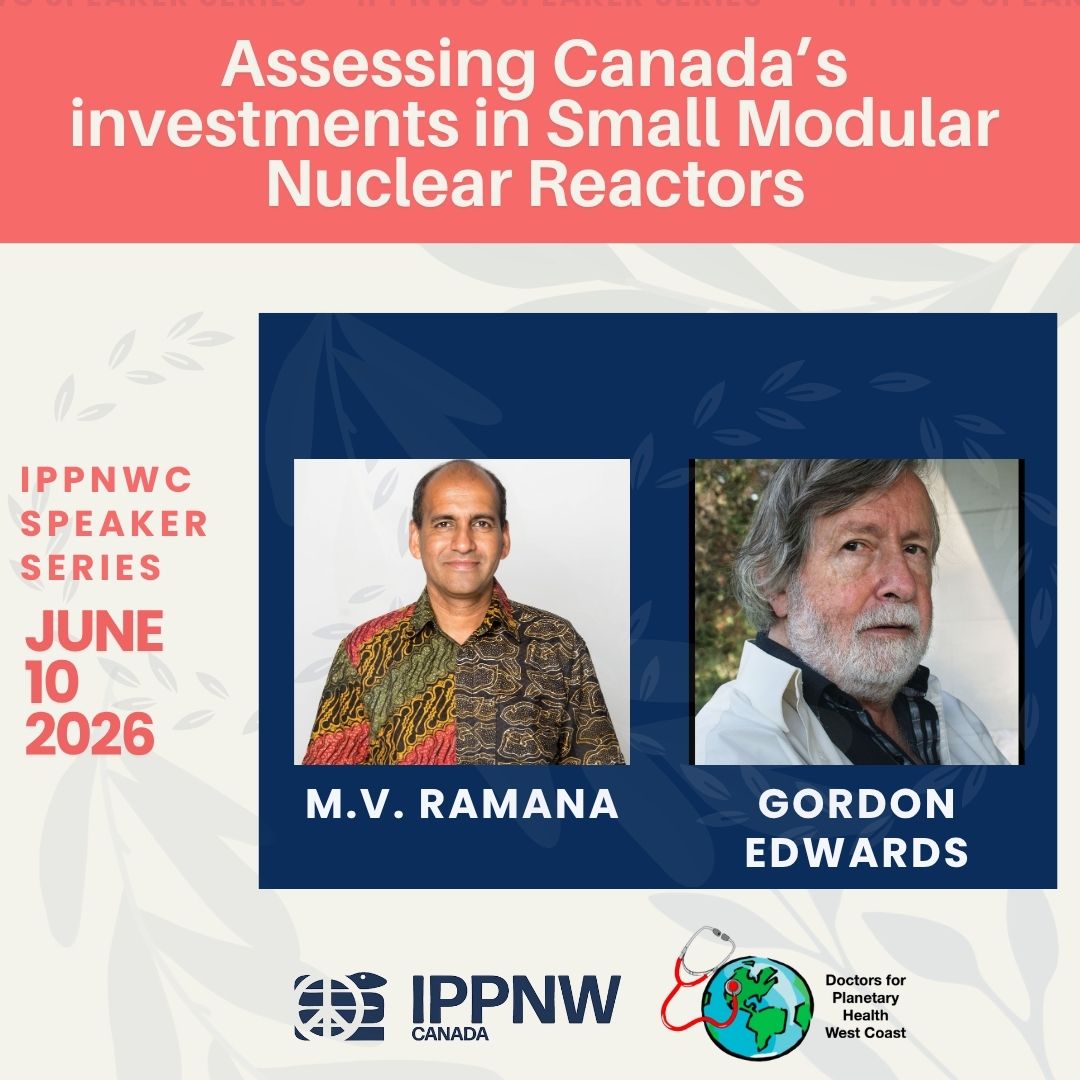
The hype about Small Modular Reactors is just that, hype. In fact, the only two operational SMRs are in China and Russia, and both have been beset by delays and cost increases. The economies of scale are lost, and studies have shown that they produce more highly radioactive waste for the same generating capacity than their slightly larger cousins.
These projects are pure spin, a clever wheeze by industry lobbyists intended to promote nuclear acceptability- small, click and collect, a kind of middle-aisle at LIDL feel to it. In the words of energy expert Amory Lovins on SMRs: “This illusion neatly fits the industry’s business-model shift from selling products to harvesting subsidies.”
The Rolls Royce SMR – chosen by Great British Energy–Nuclear to be built at Wylfa in North Wales – is a 470MW reactor, not much smaller than the two Torness reactors, which are about 600MW each.
And then there is the fuel – uranium ore is needed and we don’t have any, (and the mining of it is handily missed out in nuclear promotional graphics comparing its land use to renewables, which also fail to point out that the land around solar arrays and turbines can still be used for traditional purposes).
Mind you, there is some recoverable uranium ore on the Orkney mainland – and when it was proposed to dig it up to use it at Dounreay last century, all hell broke loose and Orcadians stopped it by popular protest. So we would have to rely on imports of this global commodity – a market that is dominated by Russia and associates. Pete Roche of SCRAM put this well when commenting on a recent poll indicating only 14% of Scots thought we should focus on uranium fuelled nuclear reactors for our long term energy security needs: “Relying on a uranium-fuelled nuclear future is like jumping out of the oil and gas frying pan and into a nuclear fire – it makes no sense and Scots seem to get that.”
That Survation poll, surveyed 2000 Scots in the middle of the current election campaign, and found an overwhelming public preference to focus on a renewable energy future that would lower energy bills and tackle climate change more effectively. Only 12% of those polled thought the nuclear industry was the most trustworthy about its products, costs, pollutants and safety record.
When the lobby group Britain Remade, proclaimed support for nuclear power in Scotland last year, they declined to disclose that 89% of their own poll supported home-grown energy within our own borders – that desire for self-sufficiency kills nuclear stone dead. Scotland has no uranium mines.
We should just get on with building a country that is a renewable energy powerhouse so that future generations can look back and thank us for choosing a green, clean and sustainable energy route. Nuclear is NOT a natural partner with renewables, indeed, it is a delaying tactic, holding back rapid decarbonisation, and adds extra and unnecessary cost to a renewables-based energy system.
George Baxter is the director of Green Power. He leads Green Power’s team delivering greenfield wind and solar developments both in the UK and Ireland.
A multibillion-pound nuclear submarine maintenance contract is at risk of being awarded to a foreign shipyard, despite safeguards that normally dictate that high-security work must be performed at secure sites in the UK. The Ministry of Defence is preparing to kick off a tender for the Royal Navy’s Additional Fleet Time Docking Capability (AFTDC) programme to build floating dry docks that are pivotal to national security. The scheme would double the availability of nuclear submarine docks at HM Naval Base Clyde. The new docks would allow concurrent dry-dock maintenance of two submarines at the base, also known as Faslane.
Yesterday elections were held in parts of England to elect local councillors, and in Scotland and Wales to elect their devolved parliaments.
Fearing a challenge from the left, Starmer’s ruling Labour party spent the campaigning period, in coordination with Britain’s legacy media, confecting antisemitism slurs about Green party candidates.
The final effort, on the morning of the elections, was to turn a comment by the Green leader, Zack Polanski, that Israel nor any other country has an inherent right to exist, into one final psychodrama about antisemitism.
It hasn’t worked.
According to early results, the Greens are on course to beat pre-election forecasts for how many seats they’d win. Labour has suffered a heavy defeat.
The (very) dark, although not unsurprising lining to the cloud, is that the far-right Reform party is on course to win a large number of seats. Unsurprising because neither Labour nor the UK’s state-corporate media went after Reform with the rabid, ferocious intensity they went after the Greens.
Why?
Because Reform’s imperialist, hyper-capitalist, bigoted policies aren’t a threat to the establishment.
Reform’s promises to mass deport brown people, build private prison camps, privatise what’s left to privatise of public services, plough money into the war machine, support Israel, and cut taxes for oligarchs, are supported by a right-wing establishment.
What the establishment fears are threats to their power and wealth. What they fear are those who will redistribute wealth, expand the social welfare state and tax millionaires to do it. And with Zionism so deeply ingrained within western institutions of power, they fear anti-Zionists.
As absurd and morally depraved as it is, the establishment fear those who oppose genocide.
Which is why the media and political establishment made ‘antisemitism’ (actually anti-Zionism of course) into a central election issue. But when it was becoming clear it wasn’t working, when it was obvious that genocide, not fake claims of antisemitism, was a more salient issue for people of conscience, Labour MPs took desperately to social media to tell people not to think about Gaza when voting.
Despite this, despite the full weight of the British establishment being arrayed against the Greens, they have fought back, and fought back successfully.
The full results won’t be known until tomorrow, but a significant win saw a Green mayor elected in the London borough of Hackney, the first time the Greens have won a mayoralty election, and the first time the area has had anything other than a Labour mayor since it was formed.
More significant was that two days before her victory, Zoe Garbett had refused to praise the police for the violent arrest of the mentally ill man whose attacks on three people were mischaracterised as antisemitism (and weaponised against the Greens).
The bottom line is that genocide for many people is still, rightly, one of the primary, if not the primary political test. A test of character, ethics, morality and judgement.
The argument that local elections have nothing to do with Gaza appears logical on one level, but is an evasion.
Politics is (or at least should be) about all these things. About values.
And if you can’t oppose genocide, if you can’t stand up to genociders, why should anyone trust you to stand up for justice, or for anything decently progressive?
But for so many in Britain’s Labour party, as for those in the Democratic party in the US, and most liberal parties across the west, it’s worse than that. It’s not just that they don’t oppose genocide, it’s that they provide active support for genocide and a genocidal state.
The Labour party has effectively criminalised support for Palestine. An anti-genocide and community activist in the UK is facing fourteen years in prison having been charged under terrorism laws for social media posts. For tweets! And an NHS GP, Dr Rahmeh Aladwan, has been arrested numerous times for tweets opposing Israel and genocide and is facing years in prison. Meanwhile, another NHS GP, a Jewish Zionist who served in the IDF and claimed he didn’t kill enough babies, has faced no consequences and is still a practicing doctor.
And of course the Labour government provided funding, support and arms to Israel during the genocide, which included daily spy flights feeding back info to the Israeli army, helping fuel their genocidal assault. An assault that continues to this day, with the majority of Gaza now living in tents among rats and disease atop the wasteland of their former homes.
It’s a disgrace. More than a disgrace. Gaza is a moral collapse, and should be at the centre of all of our politics.
Gaza and genocide should very obviously be the test.
If you provide material and rhetorical support for genocide and genociders, if you have revealed genocide and apartheid as one of your core values, you should have no place in decent society, let alone be anywhere close to political power.
Which is why earlier this week I revealed that a Labour councillor in the London borough of Waltham Forest is a genocide supporter who at the height of Israel’s campaign of mass slaughter visited the country on an atrocity propaganda tour.
The final count isn’t in, so whether Lewis has lost the seat, and whether Labour lost the council to the Greens, we don’t yet know.
But what we do know is that the pro-Israel, pro-genocide, Zionist ideology Lewis wears proudly is rife within Labour.
And while Labour’s moral collapse has spurred the rise of the Greens, the overall environment being created in the UK is aiding the rise of the far-right Reform party.
Because in a country where being anti-genocide is lampooned and criminalised, and where being pro-genocide is considered the sensible and protected position, the emergence of fascism is hardly surprising. The rise of fascism is downstream, as they say, of pro-genocide sentiment. Which makes perfect sense, given genocide is the peak expression of fascism.
The UK is the perfect incubator for the emergence of hyper reactionary politics.
But these elections at least show us that Zionism may, slowly but surely, be losing its grip on western politics.
They also demonstrate that the power of legacy media to kill popular leftist politics with lies and slurs is waning, if not yet dead.







 nuclear-news