Russia’s upgraded nuclear-powered missile cruisers to get advanced torpedo defense systems
Tass, May 13 2019 Both Project 22350 new frigates and Project 20380 corvettes under construction and Project 11442 cruisers undergoing upgrade will be furnished with the Paket-NK system. MOSCOW, May 13. /TASS/. The advanced Paket-NK torpedo defense system developed by the Research and Production Enterprise ‘Region’ (part of Tactical Missiles Corporation) will be mounted on Project 11442 cruisers during their upgrade, Enterprise CEO Igor Krylov told TASS on Monday……..
The false hope of “Small Modular Nuclear Reactors” being pushed in Wales

of Everlasting Nuclear Destruction. It is also the Welsh word for fox.
talked about as a possible location for a new, small modular reactor (SMR).
Trawsfynydd reactors are decommissioning now, but very slowly. On
Wikipedia, the page proclaims that the decommissioning is expected to take
“almost 100 years.”
beyond Trawsfynydd. Being described as “small” and “modular” tends
to mask the reality that it is expensive, of little use for climate change,
and likely still far in the future.
false hope, of course, because the likelihood of SMRs coming to fruition is
slim and would provide only a handful of jobs.
https://beyondnuclearinternational.org/2019/05/12/the-fox-we-need-to-guard-this-henhouse/
Majority of UK voters want to slash greenhouse gases to nearly zero by 2050
Independent 12th May 2019 A majority of voters would support radical action to slash greenhouse gases
to nearly zero by 2050 at a cost of tens of billions of pounds, a new poll
has found. The public has thrown its weight overwhelmingly behind calls by
the government’s independent climate change advisers to make a legally
binding commitment to achieving net zero carbon emissions by the middle of
the century. The exclusive survey by BMG Research found 59 per cent of
voters would support such action, with only 8 per cent opposing it and 34
per cent who had no view.
UK’s Committee on Climate Change urged to consider a carbon tax
FT 13th May 2019 Nick Butler: There is a very simple measure the UK’s Committee on Climate
Change could have flagged. We need a carbon tax to change consumer
behaviour. Introduced at a level designed to alter behaviour (perhaps £50
a tonne), a carbon tax would encourage consumers of all kinds – from
manufacturers to domestic customers – to switch to lower-carbon energy
supplies and encourage the development of technology to make that possible.
Charged at this level a tax would be far more effective than the current
EU-based measures and would allow energy users to identify low-cost
alternatives, or where necessary develop them. In the process, it would
demonstrate whether the most expensive options, such as carbon capture and
the reconstruction of the way we heat buildings, are really necessary.
https://www.ft.com/content/2c5f19d6-7245-11e9-bf5c-6eeb837566c5
Chernobyl nuclear accident: how it happened, and the aftermath
In the immediate aftermath of Chernobyl, a total of 31 firemen and plant workers died. Some of their bodies were so radioactive, they had to be buried in lead coffins. A report by the World Health Organization estimated that 600,000 people within the Soviet Union were exposed to high levels of radiation, and of those, 4,000 would die. Those who lived near the Chernobyl site have reported increased instances of thyroid cancer, and they have an increased risk of developing leukemia.
700 Million Years
The Chernobyl accident is one of only two nuclear energy accidents that is classified as a “Level 7 Event,” the highest classification. The other is 2011’s Fukushima disaster in Japan. At the lowest level of Reactor 4 lies the famous “elephant’s foot”, a several-meter wide mass of corium that is still giving off lethal amounts of radiation. The half-life of radioactive elements is defined as the amount of time it takes for the radioactivity to fall to half its original value. The half life of U-235 is 700 million years.

|
Chernobyl – A Timeline of The Worst Nuclear Accident in History [the original of this article gives details on how the accident happened. ] 33 years ago, a series of missteps caused the worst nuclear accident in history, and its effects are still being felt to this day. Interesting Engineering, 11 May By Marcia WendorfLocated 65 miles north of Kiev, Ukraine, the V.I. Lenin Nuclear Power Station at Chernobyl was a model of Soviet engineering. Its four RBMK nuclear reactors produced enough electricity for 30 million homes and businesses.The RBMK reactor is a class of graphite-moderated nuclear power reactor that was designed and built by the Soviet Union. Certain aspects of the design contributed to the Chernobyl disaster, and there were calls for the reactors to be decommissioned. However, the reactors were redesigned, and as of 2019, ten are still in operation. 1,600 Radioactive U-235 Fuel RodsIn 1986, Chernobyl had four working reactors, with two new ones under construction. The newest of the four, Reactor No. 4, contained 1,600 radioactive uranium-235 fuel rods. Because U-235 is unstable, its atoms spontaneously release neutrons, which hit other U-235 nuclei, causing them to release neutrons. This is what is called a chain reaction. ……… This night involved the continuation of a test that was begun twelve hours earlier. ……..“The odds of a meltdown are one in 10,000 years.” — Vitali Sklyarov, Minister of Power and Electrification of Ukraine Continue reading |
UK to become the first major economy to embrace a legally-binding net zero emissions goal
Business Green 10th May 2019 The UK government is preparing to announce that it will broadly embrace therecommendations of the Committee on Climate Change and introduce a new target to cut emissions to net zero by 2050, according to reports from news agency Bloomberg. Citing officials familiar with the plan, the agency
reported the new target is likely to be announced within two months. Such a fast tracked timetable could potentially allow for amendments to theClimate Change Act to be passed before Parliament’s summer recess,
especially given the limited nature of the government’s legislative agenda in the wake of the delay to Brexit.
Since the CCC’s wide-ranging report was released last week, leading Ministers have repeatedly hinted they want to
see the government adopt the target as quickly as possible and ensure the UK becomes the first major economy to embrace a legally-binding net zero emissions goal.
https://www.businessgreen.com/bg/news/3075426/reports-uk-prepares-to-fast-track-new-net-zero-target
UK to become the first major economy to embrace a legally-binding net zero emissions goal
Business Green 10th May 2019 The UK government is preparing to announce that it will broadly embrace the recommendations of the Committee on Climate Change and introduce a new target to cut emissions to net zero by 2050, according to reports from news agency Bloomberg. Citing officials familiar with the plan, the agency
reported the new target is likely to be announced within two months. Such a fast tracked timetable could potentially allow for amendments to theClimate Change Act to be passed before Parliament’s summer recess,especially given the limited nature of the government’s legislative agenda in the wake of the delay to Brexit.
Since the CCC’s wide-ranging report was released last week, leading Ministers have repeatedly hinted they want to see the government adopt the target as quickly as possible and ensure the UK becomes the first major economy to embrace a legally-binding net zero emissions goal.
https://www.businessgreen.com/bg/news/3075426/reports-uk-prepares-to-fast-track-new-net-zero-target
UK’s Conservative govt increases tax on domestic solar, despite its goal to fight climate change
 The UK can’t fight the climate emergency when the Tories are entirely opposed to
renewables like solar. The party’s decision to increase tax on domestic
solar power shows that its head is still firmly in the sand.
power? The real reason for this tax hike is that domestic solar has proved
too popular. The cost of solar panels have plummeted and people
increasingly see them as desirable improvements to their homes.
largely centralised energy grid. It also butts up against seemingly
ideological opposition to renewable energy in the current Conservative
Party. The decision to increase tax on domestic solar power needs to be
considered alongside its support of fracking for gas, billions of pounds of
subsidies to continue to pump fossil fuels out of the North Sea, and
resistance to onshore wind turbines.
UK’s Committee on Climate Change sinks nuclear power in the UK in favour of renewables.
|
Dave Toke’s Blog 10th May 2019 Committee on Climate Change sinks nuclear power in the UK in favour of renewables. Few people seem to have noticed how the Committee on Climate
Change, in their ‘Net Zero’ report (net zero carbon emissions for 2050 for the UK), have effectively junked nuclear power in favour of renewable energy. Indeed a careful reading of the evidence produced by the CCC
completely upends the former received wisdom that renewable energy could not, on its own, achieve the UK’s long term carbon emission reduction targets. The late David McKay’s argument (see ‘Sustainable Energy without
hot air’) that large quantities of nuclear power were necessary have been quietly sidelined by the CCC. Rather, the evidence presented by the CCC says that not only can renewables do the whole job (on the supply side, having taken account of demand reduction measures), but renewables can do things much more cheaply than either nuclear power or carbon capture and storage. The CCC argues that investment in renewable energy will save
consumers money, whilst investment in nuclear power and carbon capture and storage will cost a lot of money (eg see Table 2.3 page 43). http://realfeed-intariffs.blogspot.com/2019/05/committee-on-climate-change-sinks.html |
|
AS Wylfa nuclear project suspended, MPs have called on the UK and Welsh governments to consider a range of low-carbon energy projects
|
Planner 10th May 2019 MPs have called on the UK and Welsh governments to consider a
range of low-carbon energy projects in north-west Wales following the suspension ofwork on the Wylfa Newydd nuclear power station. That call comes in a report from the UK Parliament’s Welsh Affairs Committee, which has been looking at the economic impact of the decision by Japanese industrial giant Hitachi to halt work on its proposed new nuclear plant, earmarked for an existing nuclear site on the island of Anglesey.https://www.theplanner.co.uk/news/mps-urge-action-after-nuclear-hiatus-blights-north-wales-growth-deal-prospects |
|
The International Atomic Energy Agency itself predicted 4,000 cancer deaths from the Chernobyl nuclear accident
While most people know the general story — that due to human error, the nuclear reactor exploded and unleashed radioactive material across Europe — few know the nitty-gritty details. Here are five weird facts you probably didn’t know about Chernobyl. [Images: Chernobyl, Frozen in Time]
1. Similar to Hiroshima
About 30,000 people were near Chernobyl’s reactor when it exploded on April 26, 1986. Those exposed to the radiation are thought to have received about 45 rem (rem is a unit of radiation dosage), on average, which is similar to the average dose received by survivors after the atomic bomb was dropped on Hiroshima in 1945, according to the book “Physics for Future Presidents: The Science Behind the Headlines” (W. W. Norton & Company, 2008) by Richard Muller, a professor emeritus of physics at the University of California, Berkeley.
While 45 rem is not enough to cause radiation sickness (which usually occurs at about 200 rem), it still increases the risk of cancer by 1.8%, Muller wrote. “That risk should lead to about 500 cancer deaths in addition to the 6,000 normal cancers from natural causes.”
 However, a 2006 estimate from the International Atomic Energy Agency (IAEA), which is associated with the United Nations, calculated much higher cancer fatalities. The IAEA looked at the total distribution of the radiation, which reached across Europe and even to the United States, and estimated that the cumulative radiation dose from Chernobyl was about 10 million rem, which would have led to an additional 4,000 cancer deaths from the accident, Muller wrote…… https://www.livescience.com/65450-weird-chernobyl-facts.html
Rosatom keenly pursuing international nuclear sales, especially nuclear-weapons related
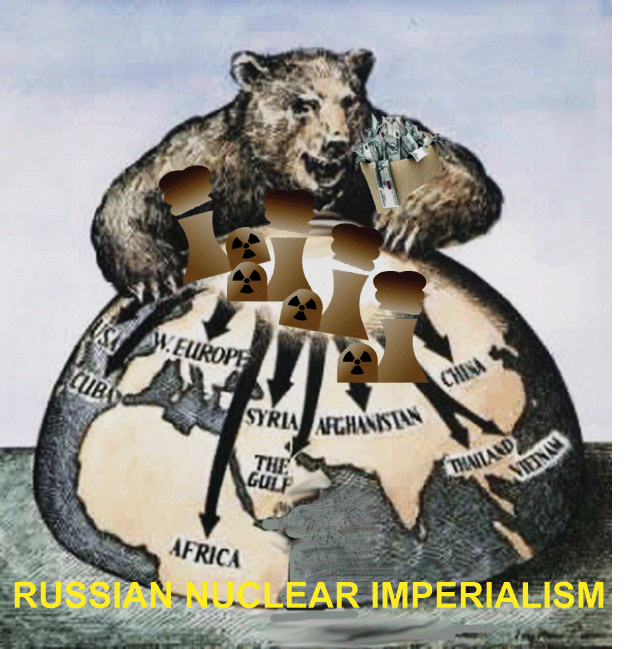
Rosatom expects foreign business income to double by 2024, WNN,10 May 2019 Rosatom expects to double revenue from its overseas business, from USD6.6 billion last year to USD15 billion by 2024, its director general, Alexey Likhachov, has told Russian Prime Minister Dmitry Medvedev. In their meeting, on 6 May, Likhachov said foreign projects were the “key theme” of the state nuclear corporation’s future growth.
Russia using nuclear power loans and sales to have political influence – nuclear colonialism
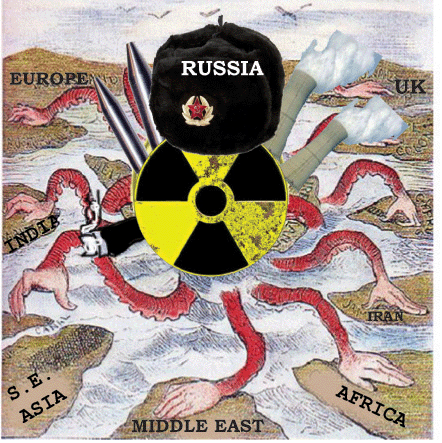 Russia’s Nuclear Power Exports are Booming, Moscow Times, 10 May 19,
Rosatom has been using nuclear power plants as a way of cementing ties with its fellow emerging markets.Russia’s state-owned agency Rosatom is on a tear. The company operates 35 nuclear power stations in Russia that produce 28 gigawatts (GW) of power, and it is actively exporting its nuclear technology to countries around the world.
Russia has been using nuclear power plants as a way of cementing ties with its fellow emerging markets with no nuclear power tradition and the BRICS countries, a group that started as a marketing tool for Goldman Sachs to sell equity but has increasingly turned into a real geopolitical alliance amongst the leading emerging market governments.
In recent years Rosatom has completed the construction of six nuclear power reactors in India, Iran and China and it has another nine reactors under construction in Turkey, Belarus, India, Bangladesh and China. Rosatom confirmed to bne IntelliNews that it has a total of 19 more “firmly planned” projects and an additional 14 “proposed” projects, almost all in emerging markets around the world.
Rosatom has become the world’s largest nuclear reactor builder as the financial problems of the two big Western firms Westinghouse Areva have crimped their ability to develop nuclear plants abroad . as the financial problems of the two big Western firms Westinghouse Areva have crimped their ability to develop nuclear plants abroad. Westinghouse and Areva, now owned by EDF, have for years negotiated deals to build reactors in India but have made little progress, partly because Indian nuclear liability legislation gives reactor manufacturers less protection against claims for damages in case of accidents.
The sales drive was organised by former Prime Minister Sergei Kiriyenko, who presided over Russia during the 1998 financial crisis but was given the job of running Rosatom after leaving office and tasked with selling 40 nuclear power plants internationally.
…… Part of Rosatom’s appeal is not only Russia’s lower prices and state-of-the-art technology, but the fact that company usually provides most of the financing for the typically $10 billion price tag.
Last year the Russian firm said it had an order book worth $134 billion and contracts to build 22 nuclear reactors in nine countries over the next decade, including Belarus, Bangladesh, China, India, Turkey, Finland, Hungary, Egypt and Iran. The size of the order book puts nuclear power station exports on a par with Russia’s booming arms export business.
But underpinning the business is politics. Russia has long used energy as the sweetener when offering a package of trade deal to its international partners. Like gas pipelines, nuclear power stations are a way of binding countries to Russia, as nuclear power stations come with 60-year long maintenance deals and uranium supply contracts.
……. Iran Bushehr
One of the most controversial nuclear power stations built by Moscow was Iran’s Bushehr that was completed in 2013 over strong U.S. objections.
…….Russia has been producing new parts for the second nuclear power plant to be built at Bushehr on the Persian Gulf and now Russia is preparing to push ahead with the construction of the second unit. ……
India Kudankulam…..
Hungary Paks……
Belarus Grodno……
Turkey Akkuyu……
Egypt El Dabaa…… https://www.themoscowtimes.com/2019/05/09/russias-nuclear-power-exports-are-booming-a65533
Another nail in the coffin of the ‘integral fast nuclear reactors’ championed by nuclear lobby shills
Jim Green.Nuclear Fuel Cycle Watch South Australia https://www.facebook.com/groups/1021186047913052/– 9 May 19
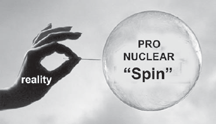 Another nail in the coffin of the ‘integral fast reactors’
  championed by Ben Heard, Barry Brook et al.
A decision on the fate of UK’s Plutonium stockpile remains years away. http://corecumbria.co.uk/briefings/a-decision-on-the-fate-of-uks-plutonium-stockpile-remains-years-away/?fbclid=IwAR2yPVluaq70YaoxikF_paOTbJ9BwleBhtGQb6kF0vI2sT4Ae-0M7HIItrE, 6th May 2019 The much delayed update from the Nuclear Decommissioning Authority (NDA) on its plans for dealing with Sellafield’s burgeoning plutonium stockpile was quietly published at the end March 2019 under the title ‘Progress on plutonium consolidation, storage and disposition’. The lack of fanfare for its publication may be attributable to the absence of any major breakthrough in progress since the NDA’s 2014 Position Paper and the subsequent warning given to a Sellafield Stakeholder Group in 2016. Continue reading
Unease at China’s grip on Britain’s nuclear future.
 Times 8th May 2019 Unease at China’s grip on Britain’s nuclear future. China is still investing in big British infrastructure projects despite concerns over the Huawei deal and fears among the UK’s intelligence partners of exposure to foreign influence.
 controversy around security implications of involving Huawei, yet plans for China General Nuclear Power Corporation to build nuclear reactors on UK soil are progressing almost unnoticed.
https://www.thetimes.co.uk/article/4f281efe-710a-11e9-a116-49ac88679a93

1 This Month
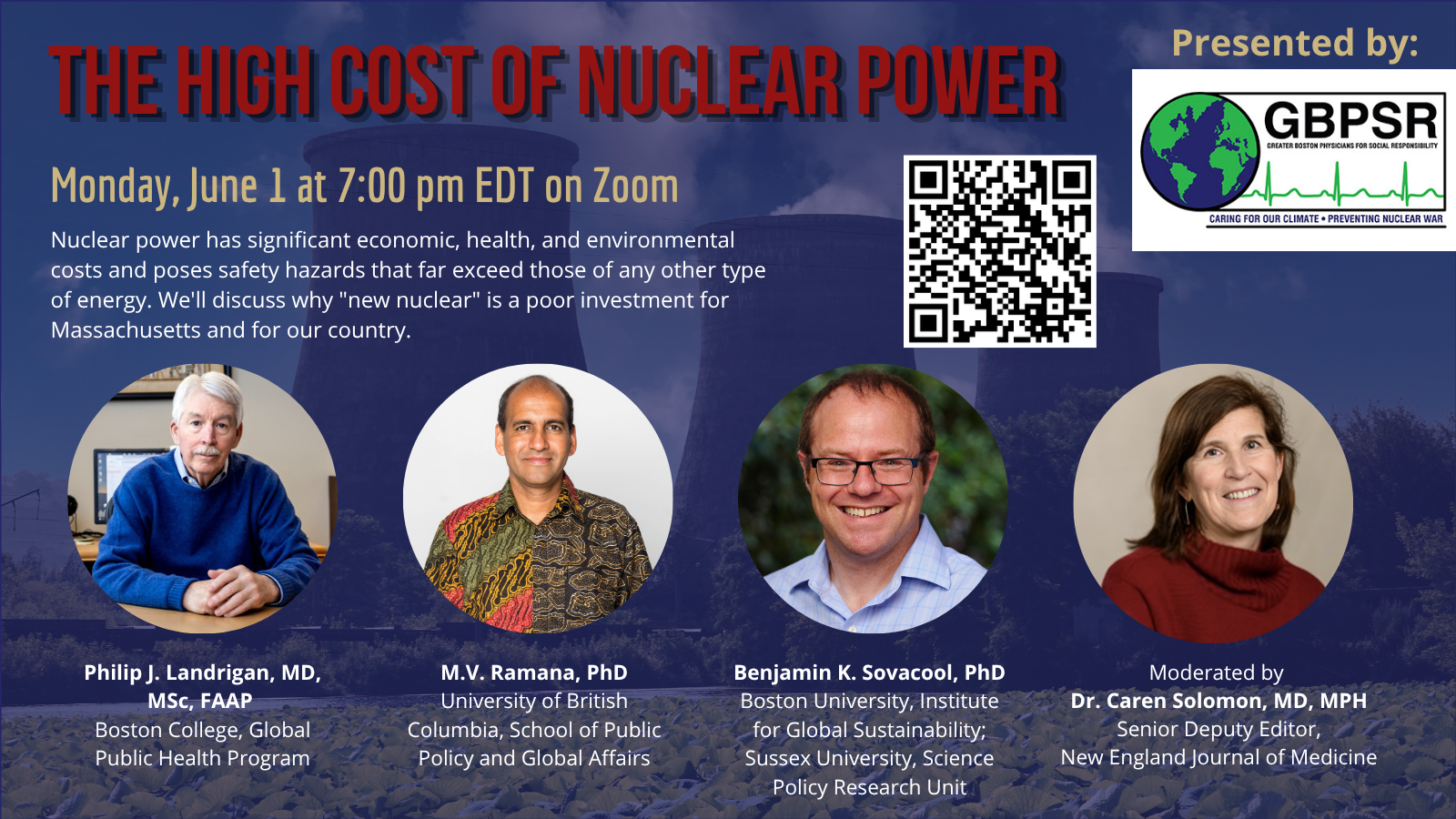
1 June Webinar – The High Cost of Nuclear Power – Register


of the week– Nuclear Reactor Information Task Force
To see nuclear-related stories in greater depth and intensity – go to https://nuclearinformation.wordpress.com
-
Archives
- May 2026 (255)
- April 2026 (356)
- March 2026 (251)
- February 2026 (268)
- January 2026 (308)
- December 2025 (358)
- November 2025 (359)
- October 2025 (376)
- September 2025 (257)
- August 2025 (319)
- July 2025 (230)
- June 2025 (348)
-
Categories
- 1
- 1 NUCLEAR ISSUES
- business and costs
- climate change
- culture and arts
- ENERGY
- environment
- health
- history
- indigenous issues
- Legal
- marketing of nuclear
- media
- opposition to nuclear
- PERSONAL STORIES
- politics
- politics international
- Religion and ethics
- safety
- secrets,lies and civil liberties
- spinbuster
- technology
- Uranium
- wastes
- weapons and war
- Women
- 2 WORLD
- ACTION
- AFRICA
- Atrocities
- AUSTRALIA
- Christina's notes
- Christina's themes
- culture and arts
- Events
- Fuk 2022
- Fuk 2023
- Fukushima 2017
- Fukushima 2018
- fukushima 2019
- Fukushima 2020
- Fukushima 2021
- general
- global warming
- Humour (God we need it)
- Nuclear
- RARE EARTHS
- Reference
- resources – print
- Resources -audiovicual
- Weekly Newsletter
- World
- World Nuclear
- YouTube
-
RSS
Entries RSS
Comments RSS
 nuclear-news