nuclear-news

The News That Matters about the Nuclear Industry Fukushima Chernobyl Mayak Three Mile Island Atomic Testing Radiation Isotope

  • Home
  • 1 This Month
  • ACTION !
  • Disclaimer
  • Links
  • PAGES on NUCLEAR ISSUES

Sweden Requests Detention of Assange as WikiLeaks Accuses U.S. of Illegally Seizing His Property 

Sweden Requests Detention of Assange as WikiLeaks Accuses U.S. of Illegally Seizing His Property   https://www.democracynow.org/2019/5/20/headlines/sweden_requests_detention_of_assange_as_wikileaks_accuses_us_of_illegally_seizing_his_property

MAY 20, 2019  Swedish authorities issued a request Monday for the detention in absentia of WikiLeaks founder Julian Assange, who is facing rape charges in Sweden and is currently serving jail time in Britain for skipping bail in 2012. Last week, Swedish prosecutors reopened a sexual assault investigation into Assange which was dropped in 2017 because they said the case could not proceed while Assange was holed up at the Ecuadorean Embassy in London, where he lived for seven years before being forcefully removed by British police last month.

Assange has denied the accusation, and his lawyer representing him in Sweden said he has not been able to get hold of his client to discuss the detention order.

WikiLeaks’ Editor-in-Chief Kristinn Hrafnsson has previously said of Sweden’s case, “Since Julian Assange was arrested on 11 April 2019 there has been considerable political pressure on Sweden to reopen their investigation, but there has always been political pressure surrounding this case. Its reopening will give Julian a chance to clear his name. This case has been mishandled throughout.” Assange must reportedly serve 25 weeks of his British prison sentence before he can be released. Assange now faces possible extradition to both Sweden and the United States, where he is wanted for the publication of leaked documents by Army whistleblower Chelsea Manning which showed evidence of U.S. war crimes in Iraq.

In related news, WikiLeaks is reporting that Ecuador will allow U.S. prosecutors to go through and take possession of Assange’s belongings left in their London embassy. Assange reportedly has two manuscripts at his former living quarters; his lawyers have called it an illegal seizure of property.


May 21, 2019 Posted by Christina Macpherson | civil liberties, UK | Leave a comment

Climate change action is a top priority for UK’s moderate Conservatives

Guardian 19th May 2019 , Moderate Conservatives including Nicky Morgan and Amber Rudd are urging contenders for their party’s leadership to put the battle against the climate emergency at the forefront of the contest.

The 60-strong One Nation group of senior Tories, created as a bulwark against what they perceive as their party’s lurch to the right, is calling for the environment to form a central part of the leadership debate. The heat is on over the climate crisis. Only radical measures will work.

https://www.theguardian.com/politics/2019/may/19/tories-urge-leadership-contenders-to-prioritise-climate-emergency

May 21, 2019 Posted by Christina Macpherson | climate change, politics, UK | Leave a comment

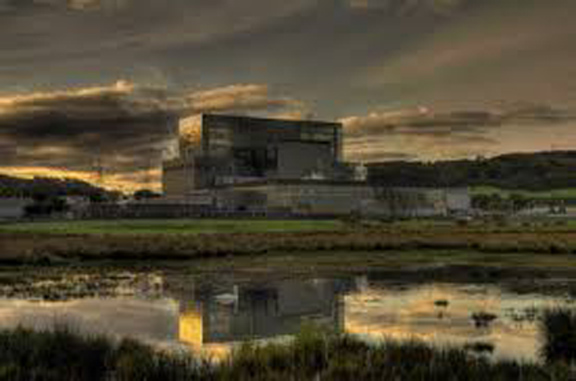
Outages extended at EDF’s Hunterston nuclear plant 

EDF Energy extends outages at Hunterston nuclear plant    https://www.euronews.com/2019/05/20/edf-energy-extends-outages-at-hunterston-nuclear-plant

By Reuters• last updated: 20/05/2019  LONDON (Reuters) – EDF Energy, owned by France’s EDF, has extended outages at the two reactors at its Hunterston plant in Scotland, regulatory data on the company’s website showed.

The reactors have been offline since last year after routine inspections found cracks in its graphite core and have suffered several restart delays.

The Hunterston B7 reactor is now scheduled to return to service on July 31 from the previous date of June 30.

The Hunterston B8 reactor is scheduled to return on June 24 from a previous date of May 30.

(Reporting by Susanna Twidale; Editing by David Goodman)

May 21, 2019 Posted by Christina Macpherson | safety, UK | Leave a comment

France’s Citizens’ Convention for the Climate

Times 20th May 2019 , France will enter new democratic territory next month when 150 randomly selected citizens will be asked to overhaul the country’s environmental policies, President Macron’s government announced yesterday.
The group will draw up plans on issues ranging from global warming to biodiversity which Mr Macron has pledged to implement, to put to a referendum or to turn into legislation that will go before parliament. The Citizens’ Convention
for the Climate is being organised in an attempt to meet yellow-vest protesters’ demands for MPs to be bypassed in a move towards direct democracy.

Yet the initiative is fraught with dangers for Mr Macron, who risks losing control of the political agenda. Some of his supporters fear that far from appeasing the campaigners, the process could inflame their  anger by reintroducing the fuel duty rises that ignited the protest movement in November.

May 21, 2019 Posted by Christina Macpherson | climate change, France, politics | Leave a comment

Ukraine’s present nuclear reactors – “time bombs” – at risk of another Chernobyl

Chernobyl (2019) S01 | Episode 01 | 1:23:45 | Opening Scene Suicide

One of the main risks stems from the use of ill-fitting US-made fuel rods. Some Ukrainian power plants are fueled by fuel rods produced by the US nuclear contractor Westinghouse. They are shaped differently than those produced in Russia, and incompatibilities have caused problems before.

“Westinghouse fuel was first used in Ukrainian nuclear power plants in 2012, and even before the first fuel cycle was over it became evident they were not compatible, and the fuel assemblies had to be extracted,”

As Chernobyl nuclear disaster feeds TV drama, is Ukraine looking at a real-life re-run? Rt.com 19 May, 2019 This month, HBO has launched its new historical drama ‘Chernobyl’, looking back at one of the worst nuclear disasters in history – but for Ukrainians, it’s also a chilling reminder that history could repeat itself.

US cable giant HBO is reviving the 33-year-old memory of one of the worst – and the most infamous – nuclear incidents in the world. It overlays history with personal drama and intrigue in its fresh mini-series – but what the general viewer might not realize is that it’s too early for Ukraine to consign nuclear problems to history and fiction. The name ‘Chernobyl’ is being brought up again in reference to the woes plaguing Ukrainian atomic energy today.

Ukrainian nuclear power plants have become a “time bomb,” Rada member Sergey Shakhov recently said. Reactors – some of them near densely populated cities – are aging without proper oversight or funding, contracts with Russia are broken, and homegrown nuclear experts are fleeing to find better opportunities abroad.

Emergencies have plagued at least two major Ukrainian nuclear power plants, causing a series of stoppages in operations in the past three years. Some reactors at the Khmelnitsky power plant (located in a city with almost 40,000 inhabitants) had to be halted at least three times since July 2016. A main pump malfunction at the Zaporozhye power plant (close to the regional center and its 750,000+ inhabitants) forced one of its six reactors to stop in September 2018, triggering a local panic. Soon after that, two more reactors were consecutively stopped for planned repairs. They still remain halted, though one of them was supposed to be restarted early in 2019.

Those are just the instances which received attention in the media, revealed either by MPs or by nuclear plant operators.

The situation is an ecological disaster in the making, Shakhov warned in an interview to the TV channel NewsOne. Ukrainian nuclear power plants, he says, have become a “mini-Chernobyl.”

But how did a country that relies on nuclear power for 60 percent of its electricity allow its power plants to degrade so far?

Russia could help, but Kiev doesn’t want it

Ukrainian nuclear facilities were built in the Soviet Union, and for the past decades were maintained in collaboration with Russia. But after the 2014 coup, new Kiev authorities have made every effort to break up links with Moscow, including severing the nuclear cooperation agreement in 2017.

That deprived Ukraine of Russian expertise, something the aging reactors desperately need, says Stanislav Mitrakhovich, an expert on energy policy in the National Energy Security Fund (NESF) and in the Financial University under the government of the Russian Federation.

“Many power blocks are already quite old, their resources were already prolonged according to a special procedure, but this extension cannot be done infinitely. And it is not too easy to do without the help of the Russian specialist who were previously responsible for these tasks.”

Ukraine could come have up with a solution by itself, but “it should have started 10 years ago,” says Ukrainian political scientist Mikhail Pogrebinsky, the director of the Kiev Center of Political Research and Conflict Studies.

“Of course Kiev doesn’t have the money to repair and upgrade the reactors, but there are still ways to solve this. One of the most efficient ones lies in Moscow, in the Kurchatov nuclear research institute. But considering the relations, Ukraine won’t go there for help.”

The problem has fallen victim to Kiev’s politics. “Ukrainian authorities have been doing everything with political gain in mind, and that is one of the reasons things have been malfunctioning and additional risks were created for the reactors… Equipment has to be checked and maintained, and that, again, means cooperating with Russia,” says another Ukrainian political scientist, Aleksandr Dudchak.

The immediate danger

Despite the apocalyptic buzz, predicting a new Chernobyl is taking things too far, Ukrainian experts believe. The danger is no less real, however, even if it’s less dramatic in scale. The reactors might not be about to melt down and send a massive radioactive cloud billowing into the atmosphere, like Chernobyl did – instead, they will simply stop working, plunging large parts of Ukraine into a blackout.

The immediate danger

Despite the apocalyptic buzz, predicting a new Chernobyl is taking things too far, Ukrainian experts believe. The danger is no less real, however, even if it’s less dramatic in scale. The reactors might not be about to melt down and send a massive radioactive cloud billowing into the atmosphere, like Chernobyl did – instead, they will simply stop working, plunging large parts of Ukraine into a blackout.

“There is no money, there are no contracts, the contract with [Russian nuclear energy giant] Rosatom has been broken – this is a dead-end situation that Ukrainian authorities will have to solve, and solve without delay, because under certain conditions we could have energy shortages, within five to seven to 10 years.”

International financial institutions have been supporting Ukraine with funds, but amid the more pressing day-to-day needs and the rampant corruption of the Poroshenko presidency, their effect on the restoration of dilapidated power plants is yet to be seen.

Basic incompatibilities

One of the main risks stems from the use of ill-fitting US-made fuel rods. Some Ukrainian power plants are fueled by fuel rods produced by the US nuclear contractor Westinghouse. They are shaped differently than those produced in Russia, and incompatibilities have caused problems before.

“Westinghouse fuel was first used in Ukrainian nuclear power plants in 2012, and even before the first fuel cycle was over it became evident they were not compatible, and the fuel assemblies had to be extracted,” Boris Martsinkevich, editor-in-chief of the Geoenergetics magazine, told RT.

Westinghouse fuel deliveries were restarted in 2015, and it’s unclear whether it’s been made more compatible with the Soviet-built equipment. If they were not, the fuel is “fully capable of halting the work of the nuclear power plants,” even though it won’t cause any mass hazardous incident.

Ukraine’s ailing economy, apart from directly depriving power plants of necessary maintenance and upgrade funds, has caused a ‘brain drain’ as collateral damage.

“Experts working at Ukrainian nuclear power plants are leaving. The situation in the country is unstable, and it’s been getting worse for five years… a lot of experts have moved out of the country, including to Russia and China, as well as other countries. Soon there’ll be no-one left to maintain the power plants,” Dudchak warns.

Irresponsible waste storage

Back when Ukraine was cooperating with Russia, Rosatom was contracted to take back and recycle spent fuel rods. Westinghouse doesn’t do that, so Kiev partnered with another US-based company – Holtec International – to build a shelter for the waste in the Chernobyl exclusion zone, effectively turning it into a radioactive dump……Westinghouse fuel deliveries were restarted in 2015, and it’s unclear whether it’s been made more compatible with the Soviet-built equipment. If they were not, the fuel is “fully capable of halting the work of the nuclear power plants,” even though it won’t cause any mass hazardous incident.

Ukraine’s ailing economy, apart from directly depriving power plants of necessary maintenance and upgrade funds, has caused a ‘brain drain’ as collateral damage.

“Experts working at Ukrainian nuclear power plants are leaving. The situation in the country is unstable, and it’s been getting worse for five years… a lot of experts have moved out of the country, including to Russia and China, as well as other countries. Soon there’ll be no-one left to maintain the power plants,” Dudchak warns……… https://www.rt.com/news/459661-ukraine-chernobyl-nuclear-blackout/

May 20, 2019 Posted by Christina Macpherson | safety, Ukraine | Leave a comment

Advertising industry is urged to use its power for good

Extinction Rebellion urges ad industry to use its power for good, Guardian, Seth Jacobson, 19 May 2019   Letter to senior figures urges them to use their power to influence public opinion on climate change   Environmental activists Extinction Rebellion have turned their fire on the advertising industry in a public letter, encouraging it to use its expertise in manipulating public opinion for good or risk mass public protests against it.

Speaking to the Guardian, one of the authors of the letter, which was written by Extinction Rebellion members with decades of experience of the advertising industry, said the group was not “singling out advertising, as we previously disrupted fashion week and are systematically challenging all industries who have the platform, influence and skills to tackle this epoch-defining crisis but are failing to do so in any meaningful way”.

“Though our letter is addressed to the boardroom, we ask everyone within the industry to ‘Tell the Truth’ about the climate and ecological emergency,” he continued. “This is the first of Extinction Rebellion’s demands, to business and governments; the vital step required to wake everyone up and drive action to deal with this crisis……. https://www.theguardian.com/environment/2019/may/19/extinction-rebellion-urges-ad-industry-to-use-its-power-for-good

May 20, 2019 Posted by Christina Macpherson | business and costs, climate change, UK | Leave a comment

UK’s Committee on Climate Change makes an urgent call for action

Sussex Energy Group 17th May 2019 , Another climate report and another urgent call for action, along with a dizzying array of graphs and figures. The Committee on Climate Change (CCC), who advise the UK government on policies and planning for a low  carbon economy, have produced their analysis and recommendations on how to stop UK’s contribution to global warming by 2050.

This follows the “Paris Agreement” signed in December 2015 where the UK, along with 196 other countries, agreed to reduce their nation’s greenhouse gas emissions in efforts to limit global warming to 1.5°C above pre-industrial levels.

The CCC’s excellent and thorough report makes for some tough reading; not for its 277 pages and plethora of statistics and figures, but for the scale of collective effort required. The benign-sounding estimate of costs – 1-2% of GDP – disguises the extent of system change and efforts required, not only of government and businesses, but households as well.   http://blogs.sussex.ac.uk/sussexenergygroup/2019/05/17/net-zero/

May 20, 2019 Posted by Christina Macpherson | climate change, UK | Leave a comment

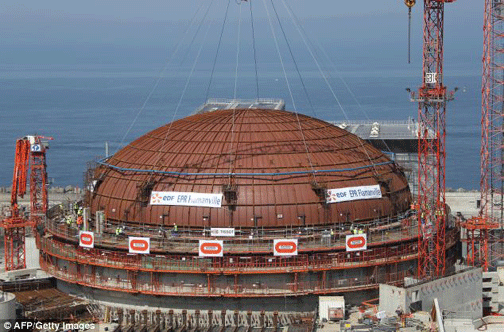
Flamanville nuclear reactor – EDF must repair welds or reinforce new reactor – ASN.


Montel News 17th May 2019 EDF must repair welds or reinforce new reactor – ASN. French utility EDF
must repair faulty welds on its new generation European pressurised reactor
(EPR) Flamanville or reinforce the under construction plant, the ASN
nuclear safety authority said.
These were the “two options currently on
the table”, said ASN president Bernard Doroszczuk during a presentation
of the watchdog’s annual safety report to parliamentarians on Thursday.
The ASN would announce a final decision on which course to take next month,
he added, with Montel having reported earlier this week that this would
happen once its group of experts had met on 6 June.
While repairing the
welds was “quite feasible”, reinforcing the 1.6 GW plant could be a
“complex operation” for which the unit was not necessarily conceived,
said Doroszczuk. However, the “French nuclear industry is currently
facing a skills shortage”, which could complicate things, he added.
Repairing the welds could push back the planned start-up of the reactor
early next year by two years to 2022, sources told Montel last month. Last
July, EDF delayed the 1.6 GW EPR launch by yet another year due to the
defective welds. It also raised the total estimated cost of construction by
EUR 400m to EUR 10.9bn.

May 20, 2019 Posted by Christina Macpherson | France, safety | 1 Comment

UK Labour’s bold energy policy on nationalising the grid

Ecologist 16th May 2019 The national grid would be nationalised under a Labour government so that
£13 billion would no longer be paid to shareholders each year and more
investment would be targeted at decarbonisation, the Shadow Business
Secretary, Rebecca Long Bailey, announced today. Heat and electricity would
be made a “human right for all” under the radical new policy which has the
personal support of Jeremy Corbyn, the Labour party leader. A Labour party
spokesperson said: “Privatisation of the UK’s energy grid is ripping off
customers. 25 percent of energy bills is paid out to network companies.
This is used to line the pockets of shareholders, with over £13 billion
paid out in dividends over the last five years.”

https://theecologist.org/2019/may/16/labours-green-industrial-revolution

May 20, 2019 Posted by Christina Macpherson | ENERGY, UK | Leave a comment

Scotland increasing its commitment to act on Climate Emergency

Business Green 17th May 2019 Scotland stepped up its response to the ‘climate emergency’ earlier this
week as Glasgow and Edinburgh adopted zero-carbon targets in swift
succession and the Scottish Parliament provided further details on how it
plans to meet its new target of building a net zero emission economy by
2045.

ScottishPower pledged on Monday to help make Glasgow the first UK
city to reach net-zero carbon emissions, setting a target for meeting the
goal of 2045. In related news, SSE announced this week that the last of 84
offshore wind turbines was commissioned this week at Beatrice, Scotland’s
largest offshore wind farm. The company said the project – which is a joint venture development led by SSE Renewables, Copenhagen InfrastructurePartners and Red Rock Power Limited – has been completed on time and under
budget after three years of construction. The final 7MW Siemens Gamesa
turbine was installed in the Outer Moray Firth, around 13km off the coast
of Caithness, bringing the site’s total installed capacity to 588MW –
enough to provide clean, low carbon energy to over 450,000 homes.

May 20, 2019 Posted by Christina Macpherson | climate change, UK | 2 Comments

The escalating danger and unpredictability of nuclear weapons

Nuclear Weapons Are Getting Less Predictable, and More Dangerous  Defense One,  BY PATRICK TUCKER, TECHNOLOGY EDITOR MAY 16, 2019   Facing steerable ICBMs and smaller warheads, the Pentagon seeks better tracking as the White House pursues an unlikely arms-control treaty.

On Tuesday, U.S. Secretary of State Mike Pompeo met his counterpart, Russian Foreign Minister Sergey Lavrov, to discuss, among many things, the prospect of a new, comprehensive nuclear-weapons treaty with Russia and China. At the same time, the Pentagon is developing a new generation of nuclear weapons to keep up with cutting-edge missiles and warheads coming out of Moscow. If the administration fails in its ambitious renegotiation, the world is headed toward a new era of heightened nuclear tension not seen in decades.

That’s because these new weapons are eroding the idea of nuclear predictability.

Since the dawn of the nuclear era, the concept of the nuclear triad — bombers, submarines, and intercontinental ballistic missiles — created a shared set of expectations around what the start of a nuclear war would look like. If you were in NORAD’s Cheyenne Mountain Complex in Colorado and you saw ICBMs headed toward the United States, you knew that a nuclear first strike was underway. The Soviets had a similar set of expectations, and this shared understanding created the delicate balance of deterrence — a balance that is becoming unsettled.

Start with Russia’s plans for new, more-maneuverable ICBMs. Such weapons have loosely been dubbed “hypersonic weapons” — something of a misnomer because all intercontinental ballistic missiles travel at hypersonic speeds of five or more times the speed of sound — and they create new problems for America’s defenders. …….

The United States is starting to build a new generation of smaller nukes of its own. The reasoning was laid out in the 2018 Nuclear Posture Review, and the weapons have been rolling off the assembly line since January……

But Selva also noted that low-yield weapons present the same sort of ambiguity as hypersonic weapons.

“We don’t know what they launched at us until it explodes,” he said.

The U.S. military has responded to Russian weapons development with several other key moves: building a next-generation air-launched cruise missile, hiring Northrop Grumman to build a new penetrating bomber, lowering the nuclear yield on some sub-launched ballistic missiles, and exploring bringing back a sea-launched cruise missile, or SLCM, that could have a nuclear tip……

Lynn Rusten, vice president of the Global Nuclear Policy Program at the Nuclear Threat Initiative, said that the ambiguity problem would apply to the SLCMs effort as well. “We use conventional SLCMs a lot in our normal warfare. If you start having nuclear SLCMs deployed as well, there will be a real discrimination in terms of when one of those things is launched, what is that thing coming at you? Where is it going?”……..

Many arms control experts say the first and most important step that the U.S. could take in navigating this far more unpredictable future is to extend New START. Even Selva, who declined to offer a public recommendation about such an extension, said that the United States benefits in multiple ways from the treaty’s mechanisms for keeping track of the parties’ strategic arsenals. ……

A collapse of New START might also cause China to embrace a more aggressive nuclear stance to hedge against rising unpredictability…….

As uncertainty increases, misperceptions become more dangerous. And there is reason to believe the United States is already looking at the situation through various imperfect lenses. One is the belief that China has any interest in trilateral arms control. Another is “escalate to de-escalate.” Some Russia experts, such as Olga Oliker, the Europe and Central Asia director at the International Crisis Group, call it a fiction dreamed up in the West after a misreading of a Russia’s 2017 Naval Doctrine.

“Moscow continues to believe, and Russian generals in private conversations emphasize, that any conventional conflict with NATO risks rapid escalation without ‘de-escalation’ — into all-destroying nuclear war. It must therefore be avoided at all costs,” she wrote in February.

“If anything, U.S. emphasis on new lower-yield capabilities — effectively an ‘escalate to de-escalate’ strategy of the sort many attribute to Russia — would undermine the deterrent balance, potentially triggering the very sorts of crises low-yield proponents hope to avert.”

Michael Kofman, a senior research scientist at CNA, says the “escalate to de-escalate” debate obscures a more fundamental truth about Russian strategic doctrine. “Russia has never accepted the proposition that a war with the United States could be conventional only. Hence, Russian nuclear strategy has a firm place for scalable employment of nuclear weapons, for demonstration, escalation management, warfighting, and war termination if need be,” he told Defense One. “The gist of the problem is that the Pentagon believes that nuclear weapons are some kind of gimmick that can be deterred in conventional war, but actually the prospect for conventional-only war with Russia is somewhat limited from the outset.”

Bottom line: the U.S., Russia, and China, may be entering into a high-stakes discussion on nuclear arms with each suffering from severe misconceptions about the others’ intent. The price of failure of the new negotiation effort, if New START is not re-affirmed, would be a new period of heightened nuclear tensions and less predictability.

Rusten believes the arms race has already begun.

“We don’t want to be where that trajectory will take us five years from now,” she said.https://www.defenseone.com/technology/2019/05/everyones-nuclear-weapons-are-getting-less-predictable-and-more-dangerous/157052/

May 18, 2019 Posted by Christina Macpherson | politics international, Russia, USA, weapons and war | Leave a comment

UK covering up the records on nuclear bomb testing in Australia and the Pacific. Why?

Unusual secrecy around 1950s nuclear testing , The Saturday Paper,    Martin McKenzie-Murray  18 May 19  Between 1952 and 1957, Britain tested 12 nuclear weapons in Australia – on the Montebello Islands off the Pilbara coast, and at Maralinga and Emu Fields in the South Australian outback. The tests were hurried, incautious and showed extraordinary disregard for Australian assistance and the local Indigenous people who had been forcibly but imperfectly evacuated from their land.

It was a clusterfuck,” says Elizabeth Tynan, an Australian historian, and the award-winning author of Atomic Thunder: The Maralinga Story. “The disregard was partly driven by the fact they were in a rush. They cut corners. They did it on the cheap – and it showed. They had very little regard for safety. Cavalier. They knew about the risks. There were international protocols. Many were disregarded. I met one man, he was a technician with the British effort in Australia, and he said of Indigenous Australians that they were ‘nothing to do with us – it was the Australian government’s responsibility’.”
For Susanne Roff growing up in Melbourne in the 1950s was uneventful. But later, living in Scotland with her husband, William Roff, an eminent historian, she developed a dogged, almost obsessive interest in this chapter of British history that remains cloaked in secrecy.

Once a month, Roff takes the train south from her home in a Scottish fishing village – to archives in London, Birmingham and Cambridge. She’s still looking for answers. “Why was the purportedly Australia-controlled Atomic Weapons Tests Safety Committee so ineffective?” she asks. “Why was the UK able to continue testing at Maralinga until barely six weeks before opening of the 1956 Olympics despite the known hazards to east coast populations? Why didn’t [Sir Mark] Oliphant ever speak out against the tests and contamination, including when he was governor of South Australia?”

Late last year, Roff had another question: Why, more than 60 years after the last nuclear test in Australia, had the British government suddenly vanished previously declassified documents about the tests from its national archives? Roff wasn’t alone in her surprise. The Campaign for Freedom of Information, a British not-for-profit organisation, described it as worrying.

All that was certain was that the files had been removed on the order of the Nuclear Decommissioning Authority.

“WE CAN BUT WONDER WHY THE WORLD’S THIRD ATOMIC AND THERMONUCLEAR POWER HAS SUDDENLY BECOME SO NERVOUS ABOUT EVENTS THAT HAPPENED DECADES AGO.”“The secrecy is arguably even worse today,” Tynan tells me. She is working on a second book about the British tests. “British service personnel have run into brick walls at every turn [in seeking compensation and acknowledgement]. One of the clues to the attitude of the British government is that it has not really ever properly acknowledged what they did. They were nuclear colonialists and they buggered up a part of our country. One former British personnel I met burst into tears when he thought about how Britain had never said sorry. The secrecy … seems incomprehensible. They continue to be secretive.”

But not all documents are closeted. Susanne Roff has some, which she shared with me – British intelligence files on Dr Eric Burhop, an Australian physicist who had worked on the Manhattan Project, which ran from 1939 to 1946.   …….

Robert Menzies agreed to the testing immediately, without bothering to consult cabinet. For a time, only three people in the country knew of the agreement: the prime minister, treasurer and defence minister. He asked few questions of the British. “But it wasn’t pure patriotic sycophancy,” Tynan says of Menzies’ decision. “The pragmatic response was: vast reserves of uranium in Australia. It’s central to weaponry and power. It was completely valueless until the Manhattan Project. Then it became a valuable commodity. Australia had a lot of it. That was a very significant part of his reasoning. The other thing that would’ve informed Menzies’ thinking was that he was anxious to ensure Britain and America would protect Australia.”

They were also without the counsel of the Australians who had worked on the American tests – notably, Mark Oliphant and Eric Burhop. Both Susanne Roff and Elizabeth Tynan agree Oliphant would have been a strong head of the safety authority, which was otherwise feckless.

Both men were long suspected of being Communist spies, and may have been excluded to mollify US doubts about British security. The files on Burhop that I’ve seen are voluminous. The FBI, MI5 and ASIO all had records on him. In England and America, he was aggressively surveilled. His phone was tapped. Even Joseph Rotblat had his doubts about his former colleague. The British intelligence historian Andrew Brown has written: “Rotblat remained convinced that Burhop and other left-wing scientists … opposed the [proposed nuclear] moratorium not for their stated reasons but because it would perpetuate the USA’s monopoly and place the USSR at a dangerous disadvantage.”……

In 1984, Australia held a royal commission into the British tests. It found a litany of negligence and cover-ups. “Britain had to be dragged, kicking and screaming, to it,” Elizabeth Tynan says. Today, their attitude is much the same. In 2015, Fiji – frustrated by Britain’s refusal to compensate its people who suffered radiation poisoning during the Pacific tests – declared it would compensate citizens itself. “We are bringing justice to a brave and proud group of Fijians to whom a great injustice was done,” Fiji’s prime minister said. “Fiji is not prepared to wait for Britain to do the right thing.”

Meanwhile, in Britain’s national archives, the nuclear files are still gone. “The UK government has always [downplayed] risks to the servicemen who took part in the tests, the Aboriginal community in the immediate vicinity of them, and the general population downwind … as well as possible genetic effects on subsequent generations,” Susanne Roff says. “We see similar responses in relation to Fukushima in Japan. All the operational and scientific documents relating to the Australian tests that have been on open access in the National Archives have suddenly gone walkabout. We can but wonder why the world’s third atomic and thermonuclear power has suddenly become so nervous about events that happened decades ago.”  https://www.thesaturdaypaper.com.au/news/law-crime/2019/05/18/unusual-secrecy-around-1950s-nuclear-testing/15581016008158

May 18, 2019 Posted by Christina Macpherson | AUSTRALIA, history, OCEANIA, politics international, secrets,lies and civil liberties, UK, weapons and war | Leave a comment

UK Labour Party’s plan for a Green Industrial Revolution

Solar Power Portal 16th May 2019 The Labour Party has announced plans to install solar one 1.75 million homes as part of a huge energy sector shake-up. The plans would see solar
installed on 1 million social homes in a bid to tackle fuel poverty, while
a series of interest free loans, grants and regulatory changes will help
enable an additional 750,000 domestic installs. Full details of the plans
are to be announced by Labour Party leader Jeremy Corbyn later today. The
party said the policies stood to create nearly 17,000 jobs, while raising
as much as £66 million for local authorities through the export of surplus
generation. Corbyn said that the party’s self-styled Green Industrial
Revolution would benefit homeowners and revive parts of the country through
the creation of new industries.

https://www.solarpowerportal.co.uk/news/labour_party_unveils_new_solar_commitment_in_push_to_install_pv_on_1.75_mil

May 18, 2019 Posted by Christina Macpherson | renewable, UK | Leave a comment

European Union countries face deadline to save nuclear deal with Iran

Nuclear options, EU countries face a deadline to save a deal with Tehran that neither party wants to lose,  https://www.ft.com/content/1de937ae-7526-11e9-bbad-7c18c0ea0201    Michael Peel , 13 May 19  Iran’s threat to ramp up its nuclear programme sent a shudder through European capitals last week. Now EU countries face a deadline to save a landmark atomic deal with Tehran that neither party wants to lose.

The accord is likely to be raised when the bloc’s foreign ministers gather for a regular meeting in Brussels on Monday. On the table will be Iranian President Hassan Rouhani’s ultimatum issued on May 8, the anniversary of the US withdrawal from the agreement. He warned that the Islamic republic would revive atomic activities restricted under the accord, unless EU countries and fellow agreement-backers China and Russia compensate it for economic benefits lost when Washington unilaterally reimposed sanctions. The conundrum for EU states is that they have very little leeway or leverage to do more.
 Efforts to sustain EU-Iran commercial dealings have been hobbled because most big companies have turned away from Tehran for fear of possible US retaliation. The pressure is growing for the Europeans to launch operations of a new company known as Instex, which is backed by France, Germany and the UK to facilitate trade with Iran.
  Another idea from Tehran watchers is for European countries to lobby the US to restore waivers that allow countries including China to continue importing Iranian oil. That seems a long shot, given the failure of personal overtures by EU leaders to persuade the Trump administration to stay in the nuclear deal in the first place.
 So much for the bad news. EU diplomats looking for positives say they at least have a bit of time, as escalation of the crisis seems not to be in the interests of either Iran or the EU for now. Mr Rouhani and his ministers have tempered their ultimatum with calibration, flagging that it will be at least two months and possibly several more before a possible breach of the deal’s limits.
Another perhaps surprising source of European hope is President Donald Trump. While his lieutenants John Bolton, national security adviser, and Mike Pompeo, secretary of state, back the US “maximum pressure” campaign on Tehran and have shown little interest in negotiations, the president has at least paid lip service to the possibility of dialogue. Last week he spoke repeatedly of his hope that Iran would make contact for talks. ]Such a call seems highly unlikely. But it is another sign that there is still room in this turmoil for diplomacy, rather than an inevitable slide to nuclear deal disintegration — and potentially even destructive conflict.

May 14, 2019 Posted by Christina Macpherson | EUROPE, Iran, politics international | Leave a comment

Fraud and falsification regarding nuclear safety in France’s EDF reactors?

French watchdog investigates potential nuclear safety fraud   https://www.reuters.com/article/france-nuclear-fraud/update-1-french-watchdog-investigates-potential-nuclear-safety-fraud-idUSL5N22P2X6 (Adds detail on falsification of identities)PARIS, May 13 (Reuters) – French nuclear regulator ASN said it had launched an investigation into elements of fraud and falsification regarding nuclear safety, after receiving several warnings from whistleblowers.

Last November, the ASN launched a website where the public can highlight irregularities regarding nuclear safety, which followed a 2016 scandal over falsified manufacturing documents at former nuclear reactor maker Areva and a string of problems with weldings and components at EDF nuclear reactors. Areva is now part of state-owned utility EDF and renamed Framatome.

The ASN said in a statement on Monday that since then it had received 22 warnings and had launched an investigation into a small number of these as they had the characteristics of potential fraud cases.

It also said it had already referred four cases to the criminal court. It declined to give more details about them.

The regulator did not identify any companies involved in the investigation.

EDF – which operates the 58 nuclear reactors that generate some three quarters of French electricity – said it could not immediately comment on ASN’s statement.

The ASN said that initial investigations had revealed several problems, such as the use of inappropriate materials, certain activities, such as welding, carried out by people who did not have the necessary skills, and safety controls that were either missing or executed by internal staff only.

The regulator said this could have a number of implications, such as modification of test results, falsification of the identity of staff having and the non-execution of certain operations such as the replacement of components. (Reporting by Geert De Clercq; Editing by Sudip Kar-Gupta and Jane Merriman)

May 14, 2019 Posted by Christina Macpherson | France, secrets,lies and civil liberties | Leave a comment

« Previous Entries     Next Entries »

1 This Month

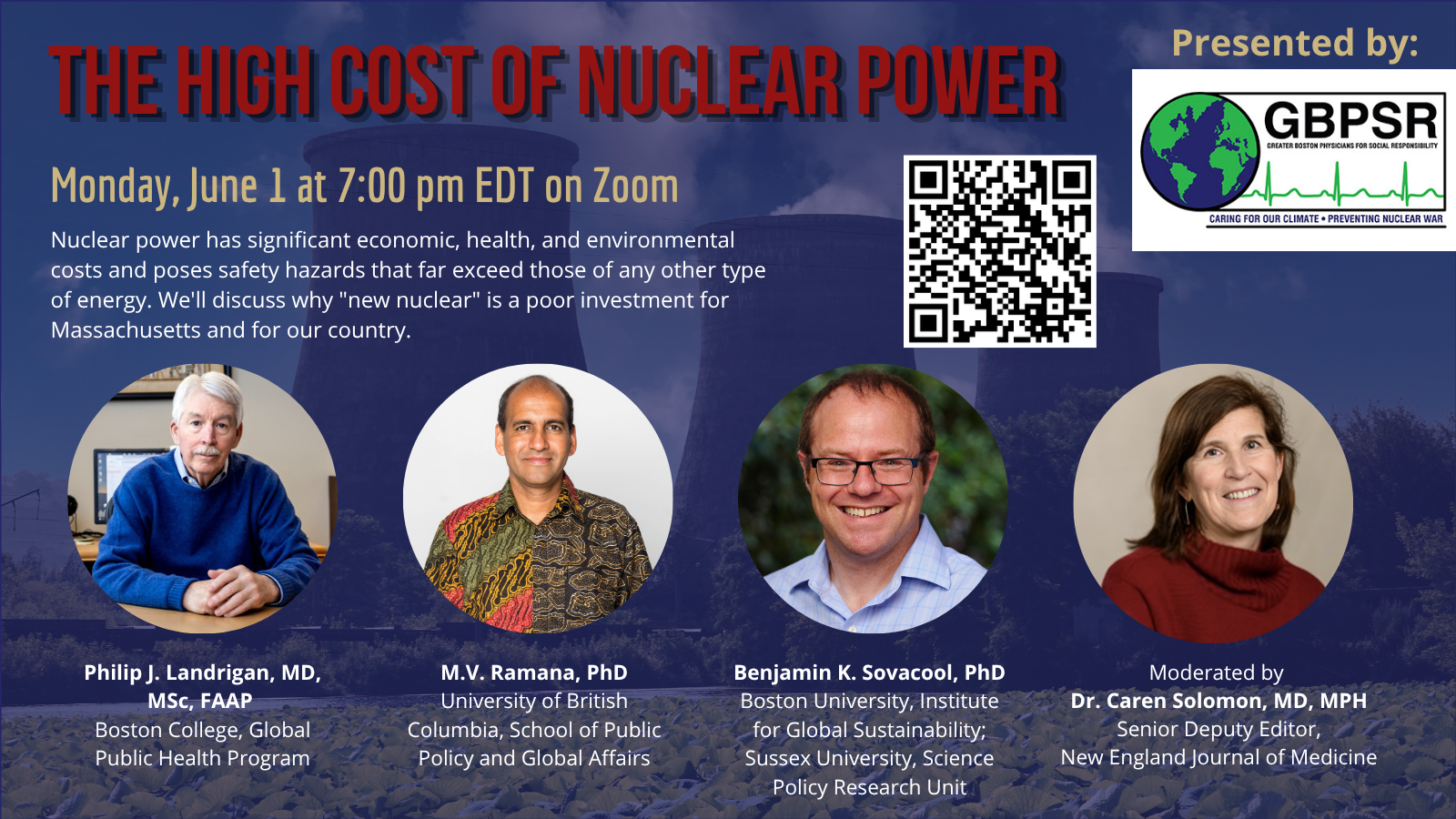
1 June Webinar – The High Cost of Nuclear Power –   Register

of the week– Nuclear Reactor Information Task Force

​To see nuclear-related stories in greater depth and intensity – go to https://nuclearinformation.wordpress.com

  • Categories

    • 1
      • Arclight's Vision
    • 1 NUCLEAR ISSUES
      • business and costs
        • employment
        • marketing
      • climate change
      • culture and arts
      • ENERGY
        • renewable
          • decentralised
          • energy storage
      • environment
        • oceans
        • water
      • health
        • children
        • psychology – mental health
        • radiation
        • social effects
        • women
      • history
      • indigenous issues
      • Legal
        • deaths by radiation
        • legal
      • marketing of nuclear
      • media
        • investigative journalism
        • Wikileaks
      • opposition to nuclear
      • PERSONAL STORIES
      • politics
        • psychology and culture
          • Trump – personality
        • public opinion
        • USA election 2024
        • USA elections 2016
      • politics international
      • Religion and ethics
      • safety
        • incidents
      • secrets,lies and civil liberties
        • civil liberties
      • spinbuster
        • Education
      • technology
        • reprocessing
        • Small Modular Nuclear Reactors
        • space travel
      • Uranium
      • wastes
        • – plutonium
        • decommission reactor
      • weapons and war
        • Atrocities
        • depleted uranium
      • Women
    • 2 WORLD
      • ANTARCTICA
      • ARCTIC
      • ASIA
        • Burma
        • China
        • India
        • Indonesia
        • Japan
          • – Fukushima 2011
          • Fukushima 2012
          • Fukushima 2013
          • Fukushima 2014
          • Fukushima 2015
          • Fukushima 2016
          • Fukushima continuing
        • Malaysia
        • Mongolia
        • North Korea
        • Pakistan
        • South Korea
        • Taiwan
        • Turkey
        • Vietnam
      • EUROPE
        • Belarus
        • Bulgaria
        • Denmark
        • Finland
        • France
        • Germany
        • Greece
        • Ireland
        • Italy
        • Kazakhstan
        • Kyrgyzstan
        • Russia
        • Spain
        • Sweden
        • Switzerland
        • UK
        • Ukraine
      • MIDDLE EAST
        • Afghanistan
        • Egypt
        • Gaza
        • Iran
        • Iraq
        • Israel
        • Jordan
        • Libya
        • Saudi Arabia
        • Syria
        • Turkey
        • United Arab Emirates
      • NORTH AMERICA
        • Canada
        • USA
          • election USA 2020
      • OCEANIA
        • New Zealand
        • Philippines
      • SOUTH AMERICA
        • Brazil
    • ACTION
    • AFRICA
      • Kenya
      • Malawi
      • Mali
      • Namibia
      • Niger
      • Nigeria
      • Somalia
      • South Africa
    • Atrocities
    • AUSTRALIA
    • Christina's notes
    • Christina's themes
    • culture and arts
    • Events
    • Fuk 2022
    • Fuk 2023
    • Fukushima 2017
    • Fukushima 2018
    • fukushima 2019
    • Fukushima 2020
    • Fukushima 2021
    • general
    • global warming
    • Humour (God we need it)
    • Nuclear
    • RARE EARTHS
      • thorium
    • Reference
      • Reference archives
    • resources – print
    • Resources -audiovicual
    • Weekly Newsletter
    • World
    • World Nuclear
    • YouTube
  • Pages

    • 1 This Month
    • ACTION !
    • Disclaimer
    • Links
    • PAGES on NUCLEAR ISSUES
      • audio-visual news
      • Anti Nuclear, Clean Energy Movement
        • Anti Nuclear movement – a success story
          • – 2013 – the struggle for a nuclear-free, liveable world
          • – 2013: the battle to expose nuclear lies about ionising radiation
            • Speakers at Fukushima Symposium March 2013
            • Symposium 2013 Ian Fairlie
      • Civil Liberties
        • – Civil liberties – China and USA
      • Climate change
      • Climate Change
      • Economics
        • – Employment
        • – Marketing nuclear power
        • – Marketing Nuclear Power Internationally
        • nuclear ‘renaissance’?
        • Nuclear energy – the sick man of the corporate world
      • Energy
        • – Solar energy
      • Environment
        • – Nuclear Power and the Tragedy of the Commons
        • – Water
      • Health
        • Birth Defects in the Chernobyl Radiation Affected Region.
      • History
        • Nuclear History – the forgotten disasters
      • Indigenous issues
      • Ionising radiation
        • – Ionising radiation – medical
        • Fukushima FACT SHEET
      • Media
        • Nuclear Power and Media 2012
      • Nuclear Power and the Consumer Society – theme for December 2012
      • Peace and nuclear disarmament
        • Peace on a Nuclear Free Earth
      • Politics
        • – Politics USA
      • Public opinion
      • Religion and ethics
        • -Ethics of nuclear power
      • Resources – print
      • Safety
      • Secrets and lies
        • – NUCLEAR LIES – theme for January 2012
        • – Nuclear Secrets and Lies
      • Spinbuster
        • 2013 nuclear spin – all about FEAR -theme for June
        • Spinbuster 1
      • Technology
        • TECHNOLOGY Challenges
      • Wastes
        • NUCLEAR WASTES – theme for October 2012
        • – Plutonium
      • Weapons and war
      • Women
  • Archives

    • May 2026 (255)
    • April 2026 (356)
    • March 2026 (251)
    • February 2026 (268)
    • January 2026 (308)
    • December 2025 (358)
    • November 2025 (359)
    • October 2025 (376)
    • September 2025 (257)
    • August 2025 (319)
    • July 2025 (230)
    • June 2025 (348)
  • Categories

    • 1
      • Arclight's Vision
    • 1 NUCLEAR ISSUES
      • business and costs
        • employment
        • marketing
      • climate change
      • culture and arts
      • ENERGY
        • renewable
          • decentralised
          • energy storage
      • environment
        • oceans
        • water
      • health
        • children
        • psychology – mental health
        • radiation
        • social effects
        • women
      • history
      • indigenous issues
      • Legal
        • deaths by radiation
        • legal
      • marketing of nuclear
      • media
        • investigative journalism
        • Wikileaks
      • opposition to nuclear
      • PERSONAL STORIES
      • politics
        • psychology and culture
          • Trump – personality
        • public opinion
        • USA election 2024
        • USA elections 2016
      • politics international
      • Religion and ethics
      • safety
        • incidents
      • secrets,lies and civil liberties
        • civil liberties
      • spinbuster
        • Education
      • technology
        • reprocessing
        • Small Modular Nuclear Reactors
        • space travel
      • Uranium
      • wastes
        • – plutonium
        • decommission reactor
      • weapons and war
        • Atrocities
        • depleted uranium
      • Women
    • 2 WORLD
      • ANTARCTICA
      • ARCTIC
      • ASIA
        • Burma
        • China
        • India
        • Indonesia
        • Japan
          • – Fukushima 2011
          • Fukushima 2012
          • Fukushima 2013
          • Fukushima 2014
          • Fukushima 2015
          • Fukushima 2016
          • Fukushima continuing
        • Malaysia
        • Mongolia
        • North Korea
        • Pakistan
        • South Korea
        • Taiwan
        • Turkey
        • Vietnam
      • EUROPE
        • Belarus
        • Bulgaria
        • Denmark
        • Finland
        • France
        • Germany
        • Greece
        • Ireland
        • Italy
        • Kazakhstan
        • Kyrgyzstan
        • Russia
        • Spain
        • Sweden
        • Switzerland
        • UK
        • Ukraine
      • MIDDLE EAST
        • Afghanistan
        • Egypt
        • Gaza
        • Iran
        • Iraq
        • Israel
        • Jordan
        • Libya
        • Saudi Arabia
        • Syria
        • Turkey
        • United Arab Emirates
      • NORTH AMERICA
        • Canada
        • USA
          • election USA 2020
      • OCEANIA
        • New Zealand
        • Philippines
      • SOUTH AMERICA
        • Brazil
    • ACTION
    • AFRICA
      • Kenya
      • Malawi
      • Mali
      • Namibia
      • Niger
      • Nigeria
      • Somalia
      • South Africa
    • Atrocities
    • AUSTRALIA
    • Christina's notes
    • Christina's themes
    • culture and arts
    • Events
    • Fuk 2022
    • Fuk 2023
    • Fukushima 2017
    • Fukushima 2018
    • fukushima 2019
    • Fukushima 2020
    • Fukushima 2021
    • general
    • global warming
    • Humour (God we need it)
    • Nuclear
    • RARE EARTHS
      • thorium
    • Reference
      • Reference archives
    • resources – print
    • Resources -audiovicual
    • Weekly Newsletter
    • World
    • World Nuclear
    • YouTube
  • RSS

    Entries RSS
    Comments RSS

Site info

nuclear-news
Create a free website or blog at WordPress.com.
Privacy & Cookies: This site uses cookies. By continuing to use this website, you agree to their use.
To find out more, including how to control cookies, see here: Cookie Policy
  • Subscribe Subscribed
    • nuclear-news
    • Join 2,102 other subscribers
    • Already have a WordPress.com account? Log in now.
    • nuclear-news
    • Subscribe Subscribed
    • Sign up
    • Log in
    • Report this content
    • View site in Reader
    • Manage subscriptions
    • Collapse this bar

Loading Comments...