Times 29th May 2019 Robot boats with drones guided by artificial intelligence will take to
Britain’s seas to repair offshore wind farms within two years, a coalition
of arms makers, space scientists and green energy experts said yesterday. A
£4 million project funded by the government will develop an autonomous
mothership that will transport a fleet of self-piloting drones, which will
carry a swarm of six-legged, insect-like robots known as Bladebugs. These
will use suction pads to cling to the blades of wind turbines and assess
them for wear and tear. They should also be able to carry out basic repairs
such as sanding and repainting damaged areas. The system will also make use
of artificial intelligence techniques pioneered by Nasa to run unmanned
space missions. It will be tested at Levenmouth in Fife using a wind
turbine owned by a renewable energy research facility funded by the
government.
The city in the shadow of an aging nuclear reactor
This model Soviet city, or atomograd, was purpose-built in the 1970s to entice skilled workers to work in the nuclear power plant… BBC, By Daryl Mersom, 27 May 2019
Metsamor has been described as one of the world’s most dangerous nuclear power plants because of its location in an earthquake zone.
It sits just 35km (22 miles) from Armenia’s bustling capital, Yerevan, with distant views of snowy Mount Ararat across the border in Turkey.
The plant was constructed around the same time as Chernobyl in the 1970s. At the time the Metsamor reactor provided energy for the growing needs of a vast Soviet Union, which once had ambitious plans to generate 60% of its electricity from nuclear power by 2000.
But in 1988 everything changed; the 6.8 magnitude Spitak earthquake devastated Armenia, killing around 25,000 people. The nuclear power plant was swiftly closed down because of safety concerns over an unreliable electricity supply to power the plant’s systems. Many of the plant’s workers returned home to Poland, Ukraine and Russia.
Climate change protests held worldwide to call for government action
A fight for the future as climate change school strikes grow for fourth month running An estimated 4,000 teenagers and young people turn out in Manchester – and another 1.5m around the world – to demand they inherit a planet that is not dying, The Independent, 27 May 19, Colin Drury, Manchester@colin__drury I t is a hot, sunny day in Manchester and 14-year-old Carmen King is dressed in full black funeral garb, complete with veil and thick white face paint.
“It’s pretty warm,” she says of her outfit. “But then, if adults don’t get it sorted, it’s only going to get hotter anyway.”
The year nine student was one of some 4,000 children, teenagers and young people who flooded into the city centre on Friday to protest against climate change.
They themselves were among an estimated 1.5 million-plus youngsters doing the same in hundreds of towns and cities across the world: in London, Paris and Berlin, of course, but, crucially, in the provinces too, in places – like Manchester – where the battles for hearts and minds are often truly won.
They went on strike from school classes and university lectures, as they have done one Friday a month since February, to demand adults do just one thing: save the planet and their futures…….
Nationally the strikes have been coordinated by the UK Student Climate Networkand come partially in response to a UN report in October, which stated the world’s carbon emissions needed to be halved within 12 years to prevent some of the severest effects of global warming – flooding, droughts, mass displacement – becoming inevitable.
But, because this month’s protest coincided with exam season, there were some expectations that numbers may be down. They decidedly were not……
The Federal Court rejected an appeal by SECO which had refused to transfer detailed information to a journalist from the WOZ newspaper on companies that had filed arms exports requests in 2014.
In a decision published on Wednesdayexternal link, the court backed an earlier ruling by the Federal Administrative Court on behalf of the WOZ journalist, who had filed a freedom of information request.
Last March, the Federal Administrative Court had ruled in favour of the journalist, stating that it was public interest to ensure greater transparency and information on arms exports and that the media played an important role in holding the authorities to account in this regard.
SECO had argued that, in accordance with the law on war materiel, only the parliamentary oversight committee should be sent the details on Swiss arms exports. It said that publishing details on arms exports could also displease importing countries.
However, the Federal Court said publishing such information was not a threat for Switzerland’s interests. If there is no business secret involved, SECO must publish the firms’ names.
Hot topic
Rules governing arms exports and calls for greater transparency remain a hot topic in Switzerland. In 2008 the government tightened rules on arms exports; in 2014 it relaxed them on behalf of parliament.
In October 2018 the government abandoned plans to ease Swiss weapons exports following a public outcry.
In December 2018 campaigners started collecting signatures for a people’s initiative to prevent the Swiss government from relaxing rules for exporting arms to conflict-ridden states.
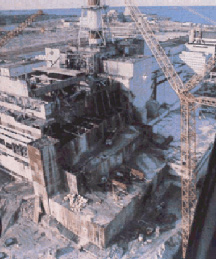
A travel article on a wildlife trip to the Chernobyl disaster zone failed to highlight the continuing radiation threat to people, animals and plants, write David Lowry and Ian Fairlie
Tom Allan’s report of his holiday inside the Chernobyl exclusion zone (Nuclear reaction, Travel, 25 May) was both misleading and dangerous in its assertions. He gives the impression that the radiation dangers are minimal: “less radiation risk than on a single transatlantic flight”, according to his ornithologist Belarusian guide, Valery Yurko.
The problem around Chernobyl is not average radiation exposure but the millions of highly radioactive hotspots of radioactive particles spewed from inside the destroyed Chernobyl reactor core. The entire exclusion zone area has suffered from serious forest fires in the 33 years since the catastrophe, re-suspending these hot particles into the atmosphere and spreading them around.
Mr Allan also inaccurately asserts “so far, the effect of radiation on the animal populations has not been visible”. I suggest he consult the extensive academic research of Professor Tim Mousseau of the department of biological sciences at the University of South Carolina, and his international colleagues, where he will find extensively set out the crippling effect of the radioactive contamination on both flora and fauna. Dr David Lowry Senior international research fellow, Institute for Resource and Security Studies, Cambridge, Massachusetts, USA
• Tom Allan is poorly informed about the risks of radiation. The external radiation he received may be low, but what about the radioactivity he inhaled? Internal radiation is far more serious than external radiation, as his lungs are likely still being irradiated from the radioisotopes he breathed in during his short visit. Dr Ian Fairlie Consultant on radiation in the environment, London
France acknowledges Polynesian islands ‘strong-armed’ into dangerous nuclear tests, Telegraph UK Henry Samuel, Paris, 24 MAY 2019 France has officially acknowledged for the first time that French Polynesians were effectively forced into accepting almost 200 nuclear tests conducted over a 30-year period, and that it is responsible for compensating them for the illnesses caused by the fallout.
The French parliament issued the much-awaited admission in a bill reforming the status of the collectivity of 118 islands in the South Pacific, with MPs saying the change should make it easier for the local population to request compensation for cancer and other illnesses linked to radioactivity.
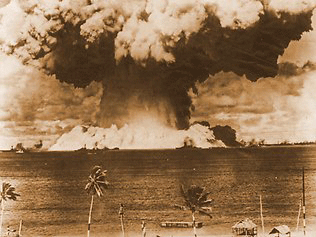
From 1966 to 1996, France carried out 193 nuclear tests around the paradise islands, including Bora Bora and Tahiti, immortalised by Paul Gauguin. Images of a mushroom cloud over the Moruroa atoll, one of two used as test sites along with Fangataufa, provoked international protests.
Charles De Gaulle and subsequent presidents had thanked French Polynesians for their role in assuring the grandeur of France by allowing it to conduct the tests.
But in the parliamentary bill, France acknowledges that the islands were “called upon” – effectively strong-armed – into accepting the tests for the purposes of “building (its) nuclear deterrent and national defence”.
It also stipulates that the French state will “ensure the maintenance and surveillance of the sites concerned” and “support the economic and structural reconversion of French Polynesia following the cessation of nuclear tests”.
Patrice Bouveret of the Observatoire des armements (Armaments Observatory), an independent organisation that has been assessing the impacts of French nuclear testing in Polynesia since 1984, welcomed the reform.
“It recognises the fact that local people’s health could have been affected and thus the French state’s responsibility in compensating them for such damage. Until now, the entire French discourse was that the tests were ‘clean’ – that was the actual word used – and that they had taken all due precautions for staff and locals.”
Councillors to get briefing from nuclear panel https://www.newsandstar.co.uk/news/17663707.councillors-to-get-briefing-from-nuclear-panel/ By John Connell @JConnell35 Reporter 24 May 19, NEW councillors appointed to Copeland council’s nuclear panel will receive their first briefing early next month.The Strategic Nuclear Energy team is one of the authority’s most important committees, working with the Government and companies including Sellafield.
The first meeting since borough council elections will be held on Tuesday June 4 and will see members given an overview of the roles and responsibilities of the committee.
Members will be discussing some huge issues in the coming months including the Government’s search for a host community for a nuclear waste store.
Anyone with a reasonably-sized patch of land can volunteer it as a contender for the multi-million Geological Disposal Facility (GDF), effectively kick-starting the process.
West Cumbria has also been rocked in recent months by the collapse of the Moorside nuclear investment deal, while Sellafield is moving into the decommissioning phase.
Coun David Moore, Portfolio holder for Nuclear and Corporate Services, said the briefing would be an opportunity for councillors who have not worked on the panel before or were completely new to local politics to get to grip with the scope of the committee’s important work.
He added: “Some of the councillors who will be there are first-time councillors, just about to dip a toe in the water. This meeting them will give them an overview and it will be a learning curve for them.
“We are key players in nuclear consultations. Not many councils have an equivalent of our committee. I have no equivalent to my role as nuclear portfolio-holder.”
Chernobyl vs. Fukushima: Which Nuclear Meltdown Was the Bigger Disaster? Live Science By Mindy Weisberger, Senior Writer | May 24, 2019 The new HBO series “Chernobyl” dramatizes the accident and horrific aftermath of a nuclear meltdown that rocked the Ukraine in 1986. Twenty-five years later, another nuclear catastrophe would unfold in Japan, after the magnitude 9.0 Tohoku earthquake and subsequent tsunami triggered a disastrous system failure at Fukushima Daiichi Nuclear Power Plant.Both of these accidents released radiation; their impacts were far-reaching and long-lasting.
Only one reactor exploded at Chernobyl, while three reactors experienced meltdowns at Fukushima. Yet the accident at Chernobyl was far more dangerous, as damage to the reactor core unspooled very rapidly and violently, said Edwin Lyman, a senior scientist and acting director for the Union of Concerned Scientists Nuclear Safety Project.
“As a result, more fission products were released from the single Chernobyl core,” Lyman told Live Science. “At Fukushima the cores overheated and melted but did not experience violent dispersal, so a much smaller amount of plutonium was released.”
In both accidents, radioactive iodine-131 posed the most immediate threat, but with a half-life of eight days, meaning half of the radioactive material decayed within that time, its effects soon dissipated. In both meltdowns, the long-term hazards arose primarily from strontium-90 and cesium-137, radioactive isotopes with half-lives of 30 years.
And Chernobyl released far more cesium-137 than Fukushima did, according to Lyman.
“About 25 petabecquerels (PBq) of cesium-137 was released to the environment from the three damaged Fukushima reactors, compared to an estimate of 85 PBq for Chernobyl,” he said (PBq is a unit for measuring radioactivity that shows the decay of nuclei per second).
What’s more, Chernobyl’s raging inferno created a towering plume of radioactivity that dispersed more widely than the radioactivity released by Fukushima, Lyman added.
Sickness, cancer and death
At Chernobyl, two plant workers were killed by the initial explosion and 29 more workers died from radiation poisoning over the next three months, Time reported in 2018. Many of those who died had knowingly exposed themselves to deadly radiation as they worked to secure the plant and prevent further leaks. Government officials relocated an estimated 200,000 people from the region, according to the International Atomic Energy Agency.
In the years that followed, cancers in children skyrocketed in the Ukraine, up by more than 90%, according to Time. A report issued by United Nations agencies in 2005 approximated that 4,000 people could eventually die of radiation exposure from Chernobyl. Greenpeace International estimated, in 2006, that the number of fatalities in the Ukraine, Russia and Belarus could be as high as 93,000 people, with 270,000 people in those countries developing cancers who otherwise would not have done so……..
The extent of Fukushima’s environmental impact is still unknown, though there is already some evidence that genetic mutations are on the rise in butterflies from the Fukushima area, producing deformations in their wings, legs and eyes. [See Photos of Fukushima’s Deformed Butterflies] …….
radiation levels around Chernobyl can vary widely. Aerial drone surveys revealed in May that radiation in Ukraine’s Red Forest was concentrated in previously unknown “hotspots,” which scientists outlined in the region’s most accurate radiation maps to date.
The Fukushima nuclear power plant is still open and active (though the reactors that exploded remain closed); nonetheless, ongoing concerns about safety linger. The Tokyo Electric Power Company (TEPCO) recently announced that it would not hire foreign workers coming to Japan under newly relaxed immigration rules……. https://www.livescience.com/65554-chernobyl-vs-fukushima.html
Russia’s High-Tech Nuclear Submarine Delayed By Design Flaws
The auxiliary systems onboard the Yasen-M class submarine “Kazan” do not meet the Defense Ministry’s requirements. Moscow Times, 24 May 19, By The Barents Observer
The delivery of Russia’s most expensive and technically advanced nuclear submarine to the Russian Navy is being delayed by design flaws, Russian media have reported.
“Kazan” (K-561) is the first modernized multipurpose submarine of the Yasen-M class after “Severodvinsk” was handed over to the Northern Fleet in 2013. There are considerable changes in the auxiliary systems on “Kazan” compared with “Severodvinsk.” While construction on “Severodvinsk” started just after the breakup of the U.S.S.R. in 1993, “Kazan” was laid down 16 years later, in 2009.
Serious technical challenges will need to be fixed before the Sevmash yard in Arkhangelsk region can hand the submarine over for active duty, several Russian media have reported.
“According to the results of mooring tests, as well as the test sailings during the winter, it was concluded that a number of auxiliary parts and assemblies of the vessel do not meet the tactical and technical requirements set by the Defense Ministry,” a source in the defense industry was quoted by the state-run TASS news agency as saying……..
When completed, the Yasen-M class submarines will be able to carry the advanced sea versions of the Kalibr and Onyz cruise missiles, in addition to mines and torpedoes. Some of these weapons can be armed with nuclear warheads. ….
Dave Toke’s Blog 24th May 2019 Academics tell Labour that their renewable energy plans don’t leave any room for nuclear power. Published below is a memorandum from the ‘Red Lion
Group’ of 12 academics, to the Labour Party Shadow Energy Secretary, which
sets out how Labour’s plans for renewable energy do not leave any room for
any new nuclear power (not even Hinkley C).
This means that Labour’s plans to give many £billions of state support for new nuclear power will merely replace cheaper renewable energy. The analysis was based on projections for
energy demand used by the Committee on Climate Change. Review of the CCC’s
projections of energy supply and demand. Letter to Shadow Energy Secretary
from 12 academics and policy analysts.
The Hunterston B7 reactor is now scheduled to return to service on July 31
and B8 reactor, the least cracked at the site, on June 24. Centrica has a
20-per-cent interest in eight nuclear plants, mostly built in the 1960s and
1970s, which are controlled by EDF. Centrica said it was selling its stake
in February last year.
But since then, Hunterston and Dungeness B in Kent
have been put out of action. EDF, which is also looking to sell some of its
interest in the nuclear hubs, said Dungeness B would “continue to produce
low-carbon electricity safely and reliably for many years to come”.
The reactor in Kent on the southern English coast was shut down late last
summer for regular inspections, which identified the need for repairs on
steam pipes. EDF said it was carrying out “additional inspections and
repairs [to] put the plant in a state to deliver best-ever performance
later this year”. The restart of the twin reactors was due for September
and October, according to the French firm.
22 May 2019 Tami Freeman Researchers in the UK have developed a new method for evaluating plutonium workers’ historical internal radiation exposure. They focused their study on workers employed at the start of plutonium operations at the Sellafield (formerly Windscale) nuclear reprocessing facility (J. Radiol. Prot. 10.1088/1361-6498/ab1168).
Internal exposure to plutonium, which decays via alpha particle emission, is a recognised health hazard. But with little specific information available, potential risks from plutonium exposure have largely been assessed through knowledge of radiation exposure risks in general, much of which comes from external exposure to photon radiation such as gamma and X-rays. However, due to its high linear energy transfer rate, alpha particle radiation exhibits significantly enhanced biological effects at the cellular level, creating a specific need to investigate the associated exposure risks.
To obtain more direct estimates of potential internal exposure risks, epidemiological studies of plutonium workers need to be conducted,” explains lead author Tony Riddell, from Public Health England’s Centre for Radiation, Chemical and Environmental Hazards. “These studies require individual plutonium exposure estimates that are as accurate and unbiased as possible.”
The Sellafield workforce includes one of the world’s largest cohorts of plutonium workers. Through the support of the workforce, this group has been comprehensively monitored for internal exposure to plutonium, primarily through inhalation.
However, for 630 workers employed there at the start of plutonium operations, from 1952 to 1963, the historical urinalysis results available do not provide sufficiently accurate and unbiased exposure assessments. These results were based on a threshold level of urinary plutonium excretion, which was suitable for operational protection purposes at the time, but tended to overestimate exposure, leading to underestimation of any risks if used in epidemiological analyses.
“This means these early workers are excluded from epidemiological studies of exposure risks, which significantly reduces the power of these studies,” says Riddell. “Early workers are important for assessing potential exposure risks because they usually received some of the highest plutonium exposures and, due to the passage of time, health outcomes for these workers will now be largely known.”
To solve this problem, Riddell and colleagues employed an approach called a job-exposure matrix (JEM). The JEM approach uses exposure data from other sources to estimate the average exposure that a typical worker (in the same work group) would have received in a given period. Substituting the missing data with these JEM estimates allowed the researchers to build a more reliable picture of the early workers’ radiation exposure.
“To overcome the problem of missing or deficient exposure data, we used more reliable data from other relevant workers (‘exposure analogues’) along with statistical, mathematical and empirical analyses to estimate the average exposures for a typical worker at Windscale/Sellafield for all combinations of specific occupation and year required to build the JEM,” explains principal investigator Frank De Vocht from the University of Bristol.
The authors note that the exposure analogues approach developed in this study provides a generic methodological advance that is potentially transferable to other internally exposed workers, and which may permit other epidemiological cohorts to include significant groups of workers who otherwise might have been excluded due to the lack of reliable exposure information.
“It’s likely that replacing the missing or unreliable exposure data with JEM-derived values in future epidemiological studies could have considerable impact on the risk estimates which can be produced,” adds De Vocht.
What a Swiss nuclear disaster could do to Europe, Swissinfo.ch , BySusan Misicka, MAY 21, 2019– If there were to be a serious accident at one of Switzerland’s nuclear reactors, many of the radiation victims would be residents of other countries.
A Swiss-led study has calculated the potential effect of nuclear meltdowns on the health of people living nearby. Its focus is on how meteorology and geography would influence the movement of a radioactive cloud.
For example, this clip [on original] illustrates how the weather conditions on January 19, 2017 would have shaped the aftermath of an accident at the Gösgen reactor between Bern and Zurich.
The study was led by Frédéric-Paul Piguet at Institut Biosphèreexternal link, an interdisciplinary research institute in Geneva. Piguet and his team examined the accident risk at Switzerland’s five nuclear power plants, which fall between Fukushima and Chernobyl in terms of size. This includes 50-year-old Beznau I in northern Switzerland, the oldest nuclear reactor in the world.
The research team used the weather conditions throughout 2017 to calculate the fallout of disasters at the Swiss reactors and concluded that 16-24 million Europeans would be affected by a nuclear meltdown in Switzerland, which itself has a population of 8.5 million. They reckoned that 12,500-31,100 people would die on account of cancer and heart problems caused by the radiation. On top of that, there would be additional health problems, including genetic maladies and sterility.
Final trials begin on a facility to store Chernobyl’s spent nuclear fuel The Chemical Engineer Amanda Jasi 2 May 19, ON 6 May the final system-wide trials of a new dry storage facility at Chernobyl began. ISF2, located at the site of the Chernobyl nuclear power plant, will process and store spent nuclear fuel to allow for decommissioning of the plant……..
“Dismembering more than 21,000 RBMK spent fuel assemblies in a special purpose “hot cell” [shielded nuclear radiation containment chamber], packaging those fuel assemblies in double walled canisters, and transferring them from (open) water-cooled pools into hermetically sealed rugged helium-filled storage systems inside ventilated modules will mark a huge safety milestone for Ukraine,” said Holtec International, the diversified energy company responsible for the project. RBMK is a nuclear reactor type developed by the Soviet Union.
Units 1, 2, and 3 of the Chernobyl plant were important for Ukraine’s electricity needs and continued to operate for some years before shutting down in 1996, 1991, and 2000 respectively, reported World Nuclear News (WNN). The last damaged spent fuel assembly from units 1-3 was removed from the cooling pool of unit 1in 2016 and transferred to an interim wet storage facility, ISF1, says WNN. 1SF2 is to accept used fuel from ISF1 and store it on site for 100 years, the news service added. According to Holtec, transfer will be expedited.
Holtec said it would complete “stem-to-stern” functional demonstrations of spent fuel handling and storage processes over the next two months. Following the demonstrations, the facility will be handed over to Ukraine’s state-owned enterprise Chernobyl Nuclear Power Plant (ChNPP), which will initiate commissioning.
WNN reported that the Chenobyl nuclear power plant entered decommissioning last year after gaining approval from Ukraine’s State Nuclear Regulatory Inspectorate. According to the news service, the first stage of decommissioning – the so-called final shutdown and preservation stage – is expected to take ten years.
The ISF2 project began in the 1990s but stalled for nearly a decade when the previous contractors’ technology proved to be “inadequate to meet the facility’s functional and regulatory requirements”. Holtec was awarded the project contract in 2011.
Principal contactors on the ISF2 project are UTEM, BNG, and Maloni, reports WNN. It is funded by a group of Western countries and Japan, and administered by the European Bank for Reconstruction and Development (EBRD). …..
In partnership with Energoatom, Holtec is also constructing the Central Spent Fuel Storage Facility (CSFSF), which will receive and store spent nuclear fuel assemblies from Ukraine’s pressurised water reactors (VVERs). The facility will mean Ukraine will no longer have to spend US$200m/y to store nuclear fuel in Russia, says WNN. Full operation is expected in 2020. https://www.thechemicalengineer.com/news/final-trials-begin-on-a-facility-to-store-chernobyl-s-spent-nuclear-fuel/
A Tiny Hole at Sweden’s Oldest Atomic Plant Upends Nuclear Revival
Industry and lawmakers in Sweden want Vattenfall to reverse a decision to close two aging reactors. Bloomberg, By Jesper Starn, May 20, 2019
A hole just a few millimeters deep at Sweden’s oldest nuclear plant is upending the debate about whether to revive the technology to ensure that the Nordic region’s biggest economy has enough power.
Regulators assume such a small gap exists at the Ringhals-2 plant on the nation’s west coast because repairs to similar cavities were made earlier in the decade on about half of an area covering 700 square meters (7,535 square feet). The owner Vattenfall AB won’t carry out more costly repairs and its permit expires at the end of the year.
While the state-controlled power company doubts that further faults exist, it would rather scrap the plant than uproot the meter-thick slab of concrete surrounding the massive steel plates that make up the reactor containment……..
For the moment, Vattenfall isn’t budging on the decision it made in 2015 to wind down operations at the plant, which includes two reactors that began operations in 1975 and 1976. Those reactors lack the independent core cooling systems required by the regulator for all nuclear plants to operate after 2020. Vattenfall invested 900 million kronor ($93 million) to upgrade two younger reactors at the site.
“I regard it as completely ruled out, both technically and financially,” to reverse the decision to close the Ringhals reactors, Torbjorn Wahlborg, the company’s head of generation, said in an interview. “It would require such a big investment and long halts.”
At its peak, nuclear energy accounted for about half of the nation’s power. Hydroelectric plants covered the rest. Now it’s 40% and wind parks being built in the north of the country are seen as a major future source. The problem is that the growth of wind has not been able to match the decline in capacity at reactors and fossil-fuel plants and Sweden is already depending on imports to meet demand on cold winter days.
A Sifo poll from March show that two thirds of Swedes want to keep or build more reactors.
In 2016, five political parties formed a long-term energy agreement that lowered nuclear taxes enough to allow life-span extensions of six reactors built in the 1980s until the 2040s, while four older reactors would be shut. But the largest opposition party, the Moderates, is now threatening to abandon that agreement unless it’s renegotiated to be more supportive of nuclear power. It has the support of the Christian Democrats, which is also part of the accord.
The Liberals, which were not part of the deal, has also proposed to extend the lifespan of Ringhals 1 and 2, and may get support from the nationalist Sweden Democrats, which also wants to invest in nuclear. The Moderates and the Christian Democrats have called for a review to be made into the possibility to stop the closure of the two reactors.
Still, it would be an uphill battle to garner enough support for any new energy plan, as the remaining parties in the agreement together with the Left Party have a majority in parliament. It all hinges on the governing Social Democrats. It wants nuclear power to be gradually phased out, but is under pressure from Swedish industry to change its stance.
As Vattenfall is fully state-owned, the government could adjust its directive to extend the life-span of the reactors. Lobby groups for the forest, metals, chemical and mining industry are calling for an investigation to see if this is possible. This would however be against the spirit of the original agreement, where market-based decisions was a key-part to get parties with opposing views to compromise on energy, according to the Swedish government. …… https://www.bloomberg.com/news/articles/2019-05-20/swedish-nuclear-plant-s-tiny-hole-nobody-has-seen-halts-revival








 nuclear-news