3 Royal Navy sailors serving on nuclear missile ship were caught taking cocaine
Evening Standard 2nd June 2019 Three sailors serving on a submarine which carries 16 nuclear missiles have
been caught taking cocaine, the Ministry of Defence has confirmed. The
Royal Navy submariners failed a Compulsory Drugs Test shortly after HMS
Vengeance visited a US naval facility in Florida.
EDF CEO Jean-Bernard Lévy makes some schoolboy errors in his fatuous defence of nuclear power

|
Together Against Sizewell C accuse EDF Boss of Schoolboy Errors in his Defence of Nuclear Power, http://www.tasizewellc.org.uk/index.php/news/271-together-against-sizewell-c-accuse-edf-boss-of-schoolboy-errors-in-his-defence-of-nuclear-power 30th May 2019
Together Against Sizewell C chairman, Pete Wilkinson, claims that EDF CEO Jean-Bernard Lévy makes some schoolboy errors in his fatuous defence of nuclear power in his IEA February 25th speech, this having been recently reported by World Nuclear News, 20 May 2019. Pete Wilkinson says “M. Lévy is careful to use the word ‘direct’ when claiming that nuclear power produces electricity without emissions; by this, he presumably means that the only part of the nuclear fuel cycle that can even come close to being ‘low carbon’ is that which ‘burns’ uranium in the reactor. Of course, he knows, as do we all, that across the entire fuel cycle, nuclear requires an acceptance of a carbon footprint from uranium mining, milling, enrichment, fuel production, transport, nuclear plant construction, storage and the still-unknown CO2 burdens created by final spent fuel and waste management conundrums. To claim otherwise is disingenuous, especially from someone in such a position of responsibility. It is true that the fight against climate change is challenging, but to conclude that nuclear power is essential to winning that fight is wrong and designed to defend a technology which is antiquated, costly, polluting and presents us with a wealth of unresolved health issues related to childhood leukaemia. Sixty studies, including the seminal German government-sponsored KiKK Report indicate elevated rates of leukaemia and other cancers as a result of exposure to ionising radiation. The Oxford Research Group produced a report some years ago which clearly demonstrated that, given the global nature of the problem of climate change, it would require the building of at least 3000 nuclear plants to have a noticeable impact on the problem – that’s one new plant a week for 60 years. Impossible, yes, but wholly undesirable as well since the nuclear waste legacy that scale of programme would create is unthinkable: we can’t even deal with the 500,000 cubic metres of legacy waste in the UK after 60 years of merrily creating it without a thought about how to manage it safely. Even after ten years of the Nuclear Decommissioning Authority, the UK is still no closer to a universally safe and secure means of dealing with the legacy waste, let alone the hotter and more radioactive waste which M. Levy’s reactors will leave us over the next few decades in return for huge amounts of UK tax payers’ cash should the plant at Hinkley ever be finished and should Sizewell become more than an EdF aspiration. A further reason why nuclear power cannot hope to have more than a minor role to play in the fight against the climate emergency, is the fact that the plants take so long to build. The ‘nuclear renaissance’ in the UK was mooted on the back of energy security and low carbon. The lights in the UK were, at the time of Blair’s announcement in 2005, predicted to go out in 2017. It is now 2019, the lights didn’t go out and no new nuclear is contributing electricity to the national grid in the UK and is unlikely to be doing so for at least another six or seven years – probably longer, given the historic over-runs of time and budget which accompany nuclear plant. Nuclear is an option for the future, not an imperative: that much has been shown time and again with analyses from highly reputable and responsible green and academic groups. Nuclear just can’t contribute fast enough and even if and when it does, its contribution will be only marginal at best, negative at worst. By definition, renewables are potentially endless. They rely on the Sun, the wind, the tides and ambient energy. Moreover, the source of the energy arrives free-of-charge, without mining for rare, unstable and potentially lethal metals or digging for fossil fuels to burn, releasing their carbon back into the atmosphere. Combined with efficiency measures, decentralised electricity generation, smart grids and conservation measures which have already seen electricity demand fall in the UK by some 16% in the last decade, we can meet all our climate change, cost and demand targets without nuclear. This has been demonstrated time and time again: nuclear is an option, not an imperative, and it is an option we should refuse.
|
|

Australian Julian Assange the victim of psychological torture: Australian government no help
UN rapporteur on torture: Julian Assange subjected to psychological torture
May 31, 2019 London: Julian Assange has been subjected to intense psychological torture comparable to some of the gravest cases from “interrogation prisons” around the world, a United Nations expert says.He accuses the UK, US and Sweden of a “consistent failure” to protect Assange’s human rights – and Australia of a “glaring absence” where it should be helping one of its citizens…..Nils Melzer, a Geneva-based former Red Cross lawyer and human rights expert who is now the UN special rapporteur on torture, spent four hours with Assange in Belmarsh in early May, assessing his psychological and mental state along with two medical specialists.
In a currently confidential report submitted to the British government on Monday, along with letters to the US, Swedish and Ecuadorian governments, Melzer concluded Assange “shows all the symptoms of someone exposed to prolonged psychological ill-treatment”.
“The evidence is overwhelming and clear,” Melzer said. “Mr Assange has been deliberately exposed, for a period of several years, to progressively severe forms of cruel, inhuman or degrading treatment or punishment, the cumulative effects of which can only be described as psychological torture.
“I condemn, in the strongest terms, the deliberate, concerted and sustained nature of the abuse inflicted on Mr Assange and seriously deplore the consistent failure of all involved governments to take measures for the protection of his most fundamental human rights and dignity.”
Melzer said the ill treatment was a combination of the way Assange was confined, isolated and persecuted while inside the Ecuadorean embassy, especially in his last year there, along with death threats and public accusations, the prosecutions pursued against him and the public statements made by US government officials as to how he should be dealt with.
Torture did not just include active efforts, but also covers a situation where a State is “aware your behaviour will have these consequences and not doing anything about it”, Melzer said.
“In 20 years of work with victims of war, violence and political persecution I have never seen a group of democratic States ganging up to deliberately isolate, demonise and abuse a single individual for such a long time and with so little regard for human dignity and the rule of law.”
Melzer told The Sydney Morning Herald and The Age that in his work with the UN and before in the field with the Red Cross he had seen people in rendition for interrogation after 9/11, and prisoners of war who had been ill-treated on a daily basis.
“But [Assange] is really something I’ve never seen in 20 years,” Melzer said. “I’ve seen atrocities in war areas that were physically more horrible but I’ve never seen a single person pursued so relentlessly and with so little foundation.
He said Assange’s treatment was “very close to the intentional, purposeful infliction of coercive measures to try to break him”.
Melzer said his visit on May 9 involved a three-hour psychological and physical assessment based on the “Istanbul Protocol”, a standard manual for assessing torture victims around the world.
The assessment took place before WikiLeaks revealed, on Wednesday, that Assange had been moved to a prison hospital having “dramatically lost weight” and in such a state that “it was not possible to conduct a normal conversation with him”…….
Assange, unlike other prisoners, was exposed to multiple major pending legal proceedings with “so much political commotion”, and was not being given enough time to talk to his lawyers and get updates on his case. ……
Melzer said he had seen no sign of Australian assistance for Assange.
“Australia is a glaring absence in this case. They’re just not around, as if Assange was not an Australian citizen. That is not the correct way of dealing with that.”…..
After it was reported Assange had been taken to the hospital prison this week, the Australian government again got in contact with the prison to check on him.
“We are confident that Mr Assange is being treated appropriately in Belmarsh Prison. Mr Assange has advised us that he is being treated the same as other prisoners in Belmarsh,” the spokesperson said. “We will continue to visit Mr Assange in prison, monitor and advocate for his health, welfare and equitable treatment, and closely follow his legal proceedings.” https://www.theage.com.au/world/europe/assange-a-victim-of-torture-and-australia-shares-blame-says-un-expert-20190531-p51t1v.html
The health and environmental effects of the Chernobyl nuclear accident horror
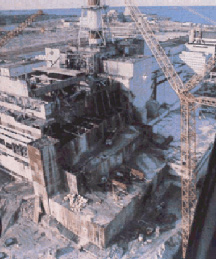 It’s one of the hottest TV shows in the world but what is the real story of Chernobyl and is it actually safe to visit the site now? https://www.news.com.au/entertainment/tv/the-real-story-of-the-chernobyl-nuclear-disaster/news-story/c3a2487f9392eb79717ae2f6b8c1a8cc
31 May 19, “…. The five-part Sky and HBO co-production, which is based on real-life events around the world’s worst nuclear disaster, has gripped the UK and is also now available in Australia via One Demand on Fox Showcase.
The horrifying events of April 26, 1986 when the Chernobyl nuclear power station went into meltdown have been brought to life in the new drama, and the show is now the highest rated program on IMDb.
Here’s a rundown of what we know about the real life events.
WHAT WAS THE CHERNOBYL NUCLEAR DISASTER?
An alarm bellowed out at the nuclear plant on April 26, 1986, as workers looked on in horror at the control panels signalling a major meltdown in the number four reactor.
The safety switches had been switched off in the early hours to test the turbine but the reactor overheated and generated a blast the equivalent of 500 nuclear bombs.
The reactor’s roof was blown off and a plume of radioactive material was blasted into the atmosphere.
As air was sucked into the shattered reactor, it ignited flammable carbon monoxide gas causing a fire which burned for nine days.
The catastrophe released at least 100 times more radiation than the atom bombs dropped on Nagasaki and Hiroshima.
Soviet authorities waited 24 hours before evacuating the nearby town of Pripyat — giving the 50,000 residents just three hours to leave their homes.
After the accident traces of radioactive deposits were found in Belarus where poisonous rain damaged plants and caused animal mutations.
But the devastating impact was also felt in Scandinavia, Switzerland, Greece, Italy, France and the UK.
An 18-mile radius known as the “Exclusion Zone” was set up around the reactor following the disaster.
HOW MANY PEOPLE DIED IN CHERNOBYL?
At least 31 people died in the accident — including two who were killed at the scene and more who passed away a few months later from Acute Radiation Syndrome.
The actual death toll is hard to predict as mortality rates have been hidden by propaganda and reports were lost when the Soviet Union broke up.
In 2005, the World Health Organisation revealed a total of 4000 people could eventually die of radiation exposure.
About 4000 cases of thyroid cancer have been seen since the disaster — mainly in people who were children or teenagers at the time.
DID THE CHERNOBYL RADIATION CAUSE ANIMAL MUTATIONS?
Farmers noticed an increase in genetic abnormalities in farm animals immediately after the disaster.
This spiked again in 1990 when around 400 deformed animals were born — possibly as a result of radiation released from the sarcophagus intended to isolate the nuclear core.
Some animals were born with extra limbs, abnormal colouring and a smaller size.
Animals that remained in the exclusion zone became radioactive — including as many as 400 wolves, which is the highest density wolf population on the entire planet.
The Eurasian lynx — once believed to have disappeared from Europe — thrived in Chernobyl as there were no humans to run them out.
Birds were also affected by radiation, with barn swallows having deformed beaks, albinism and even smaller brains.
The radioactive animals all live in the “Red Forest”, which got its name after the trees turned crimson in the fallout.
IS IT SAFE TO GO THERE NOW?
The site and Pripyat has been safe for tourists to visit since 2010.
There are around 160 villages in the Exclusion Zone but the basement of the hospital in Pripyat remains one of the more chilling stories.
The firemen were taken to the hospital for treatment and their clothes, which had been stripped off were discarded.
Later radiation readings at the site reached 7000 millisieverts — the risk of haemorrhage starts at 1000 while death begins at 4000.
The ghost town also includes a school that features in the video game Call of Duty, an abandoned Ferris wheel and homes frantically deserted when evacuation began.
Tourists have to be screened before they enter the Exclusion Zone and are told not to touch anything within the cordon.
Holiday companies offer packages that give an official tour of the Exclusion Zone.
Reading between World Nuclear News lines, did Russia’s Leningrad nuclear power plant have some safety issues?

Christina Macpherson’s websites & blogs
I know that this will read as just fine and dandy – because Russia never lets on about any problems in its nuclear infrastructure, but I think it;s just a hint of that.
IAEA notes improved safety at Leningrad plant, WNN, 30 May 2019 Rosenergoatom, the operator of Russia’s Leningrad nuclear power plant, has strengthened operational safety in response to the findings of an International Atomic Energy Agency (IAEA) review in 2017, a follow-up mission has concluded. The team encouraged the operator to pursue continuous improvement.
….. In November 2017, the IAEA completed a 17-day mission to Leningrad unit 4, which was connected to the grid in 1981 and is one of four light water-cooled graphite-moderated reactors (RBMK-1000) located at the site in Sosnovy Bor, 70 km west of St Petersburg. Plant operator Rosenergoatom is a subsidiary of Russian state nuclear corporation Rosatom.That mission made suggestions for improving operational safety at the plant, including: the use of leading indicators to further improve its performance; strengthening the radiation protection programme; and regular reviews of chemistry surveillance and control programme to ensure its continuous improvement……
The follow-up mission found improvements to control of movable items in some sensitive areas in the plant; the use of human performance tools; and the plant chemistry surveillance and control programme.
However, the team noted that more time is required to demonstrate that improvements are fully effective and sustained in the use of forward-looking and proactive performance indicators at the plant, and in the radiation contamination control programme.
The OSART team provided a draft of its report to the plant’s management and will submit the final report to the Russian government within three months……
Located on the coast of the Gulf of Finland, Leningrad NPP is Russia’s biggest nuclear power plant in terms of its installed capacity, which is 4200 MWe. It is also the only plant in the country comprising two types of reactor: Phase I of the plant comprises four RBMK-1000 units, while Phase II will have four VVER-1200 units. Leningrad unit 1 was shut down for decommissioning on 21 December last year. http://world-nuclear-news.org/Articles/IAEA-notes-improved-safety-at-Leningrad-plant
Laundry in UK permitted to take radioactive materials from Sellafield!!
|
A Quick & Dirty Look At Energy Coast Laundry’s Radioactive Materials Permit (Starting With Caesium 137 Discharges to Air) https://mariannewildart.wordpress.com/2019/05/30/a-quick-dirty-look-at-energy-coast-laundrys-radioactive-materials-permit-starting-with-caesium-137-discharges-to-air/ |
|
Proposals to transport nuclear waste through Bridgwater, Somerset
Somerset Live 29th May 2019 , Bridgwater residents only have a few days to have their say on proposals to
transport nuclear waste through their town. Magnox Ltd currently operates
the Hinkley Point A site near Stogursey, which includes a small area where
nuclear waste is stored before being moved elsewhere for processing. The
company has applied to Somerset County Council for permission to store
waste from other nuclear power stations at the Hinkley site – which would
involve moving it through Bridgwater on agreed routes.
It is staging four drop-in sessions in June where residents of Bridgwater and the surrounding
villages can have their say on the plans before county councillors make a
final decision. Magnox’s proposals relate to “intermediate-level waste”,
which includes cladding around nuclear fuel and materials which have become
contaminated in the process of decommissioning a nuclear reactor.
https://www.somersetlive.co.uk/news/somerset-news/bridgwater-residents-only-few-days-2921627
Swedish court rejects effort to delay Assange hearing
https://www.theage.com.au/world/europe/swedish-court-rejects-effort-to-delay-assange-hearing-20190529-p51s61.html 29 May 19. Stockholm: A Swedish court has rejected efforts to postpone a hearing relating to Julian Assange, a lawyer for the WikiLeaks founder says.
A Swedish prosecutor this month filed a request for Assange to be detained for a June 3 hearing about a rape allegation.
Defence lawyer Per Samuelson told Reuters he visited Assange in British custody on Friday before seeking to postpone the hearing.
“One of the reasons is that Assange’s health situation on Friday was such that it was not possible to conduct a normal conversation with him,” Samuelson said.
“I meant that it should be postponed until I had time to meet again and go through the issues in peace and quiet. I suggested no specific date and meant it should be postponed until everything was ready, but the district court has now decided that this won’t happen .
he Uppsala district court, where the hearing is due to take place, was not immediately available for comment. A prosecutors’ office spokesman declined to comment.
Sweden reopened the investigation into alleged rape, which Assange denies, in early May. It was begun in 2010 but dropped in 2017 while Assange was in refuge in Ecuador’s London embassy.
Assange was arrested in London last month after spending nearly seven years inside the embassy.
US authorities are separately seeking to extradite Assange on charges relating to the public release by WikiLeaks of a cache of secret documents, and last week unveiled 17 new criminal charges against him, including espionage.
The British courts will have to rule on the two extradition requests, with the home secretary having the final say on which one takes precedence.
France’s many nuclear waste locations revealed in an interactive map

Nuclear waste map of France published by Greenpeace, https://www.connexionfrance.com/French-news/Nuclear-waste-map-of-France-published-by-environmental-activists-Greenpeace-on-issue 29 May, 19, Nuclear waste is becoming a hot topic of discussion, as Greenpeace publishes a map of waste across France
A new interactive map showing the locations of nuclear waste across France has been published by environmental group Greenpeace, as part of its forthcoming campaign on the issue.
The map was published online this week, with the NGO aiming to “compile in a single place” all of the information it has on the location of radioactive material, to let people know how close they may be living to the waste.
The map categories include storage centres (at which the waste will be stored for 300 years minimum); nuclear centres that generate all forms of nuclear waste; more than 200 old uranium mines, operational up to 2001; factories and other plants; and radioactive waste from more than 70 military sites.
The data was collected from records of radioactive waste agency l’Agence Nationale pour la Gestion des Déchets Radioactifs (Andra).
The map does not include waste from medical use or research.
The map allows you to search by post code (Greenpeace.fr / Screenshot)Greenpeace is hoping to raise awareness and prompt debate over the extent of nuclear waste, and ask questions on the potential impact it may have. This also includes the impact of transporting nuclear waste by road or rail.
The group is also seeking to gather signatures and support for its national campaign on the issue, which it will later address to French ecology minister François de Rugy.
The map features a button saying “Agir! (Act!)”, allowing members of the public to add their support.
A public debate is set to be held on September 25 on this exact question – the issue of nuclear waste in France. It will be held on a platform via which the public will be able to ask for further information and have their say.
Nuclear waste disposal is also expected to be on the agenda at the G20 summit being held in Japan next month.
Breathtaking series on Chernobyl nuclear catastrophe
(Foxtel Showcase 12 June 8.30 pm and 10.30 pm)
Chernobyl: horrifying, masterly television that sears on to your brain. This breathtaking series throws us right into the hellish chaos of the nuclear disaster – and its terrors are unflinching and unforgettable, Guardian, Rebecca Nicholson, 29 May 2019 After three of its five episodes aired, the miniseries Chernobyl found its way to the top of IMDB’s top 250 TV shows in history list. While the fan-voted chart might seem hyperbolic, given that the drama had only just crossed the halfway point, it is not undeserving of the honour. Chernobyl is masterful television, as stunning as it is gripping, and it is relentless in its awful tension, refusing to let go even for a second. That old ‘don’t spoil the ending’ joke about Titanic will inevitably be rebooted here, but it is confident enough to withstand any familiarity with the story.
Chernobyl’s “liquidators” suffered acute, and long-term health effects
|
How Did Radiation Affect the ‘Liquidators’ of the Chernobyl Nuclear Meltdown? https://www.livescience.com/65563-chernobyl-radiation-effects-body.html These liquidators, who worked between 1987 and 1990, were exposed to high levels of radiation, on average around 120 millisievert (mSv), according to the World Health Organization. That’s over a thousand times more powerful than a typical chest X-ray, which delivers 0.1 mSv of radiation. And some of the very first responders were exposed to levels astronomically higher than that. So, what happens to the human body when exposed to such high levels of radiation? [5 Weird Things You Didn’t Know About Chernobyl] It’s like walking into a giant, powerful X-ray machine shooting radiation everywhere, said Dr. Lewis Nelson, chairman of emergency medicine at Rutgers New Jersey Medical School. Except, in this case, most of the radiation consisted of an even more damaging type of radiation than X-rays, called gamma-rays. This radiation, as it passes through the body, is ionizing. This means that it removes electrons from atoms in the body’s molecules, breaking chemical bonds and damaging tissues. Very high levels of ionizing radiation cause “radiation sickness.” At Chernobyl, 134 liquidators quickly developed radiation sickness, and 28 of them died from it. These people were exposed to radiation levels as high as 8,000 to 16,000 mSv, or the equivalent of 80,000 to 160,000 chest X-rays, according to the World Health Organization. Radiation sickness mostly manifests in the gastrointestinal tract and the bone marrow, Nelson said. Those areas have rapidly dividing cells, which means that instead of being tightly coiled and a little more protected, the DNA is unraveled so that it can be copied. That makes it more susceptible to the radiation (this is also why radiation therapy works to target cancer cells, which also rapidly divide). Within a couple of hours of the exposure, people with radiation sickness develop symptoms such as diarrhea and vomiting, Nelson said. When cells cannot properly divide, the mucosa or tissue lining of the GI tract also break downs, releasing cells and the bacteria that live in the gut (including in the stool) into the bloodstream. This would make even a healthy person sick, Nelson said. But because the radiation is also stopping the bone marrow from producing infection-fighting white blood cells, the body can’t fight those infections. People who have radiation sickness therefore have a weakened immune systemand frequently die of blood poisoning, or sepsis, within a couple of days, he said. High levels of radiation can also cause burns and blisters on the skin, which show up minutes to a few hours after the exposure and look just like a sunburn, Nelson said. While the GI-tract symptoms and burns happen almost immediately to a couple of hours after exposure to the radiation, the bone marrow survives for a couple of days. This means there is a latency period, when the person might even seem to improve, before showing symptoms of sepsis. The people who survived radiation sickness from Chernobyl took years to recover, and many of them developed cataracts because the radiation damaged the eye lenses, according to the World Health Organization. Lower exposuresBut much of the health focus around Chernobyl survivors has focused on the long-term consequences of the radiation exposure in these areas. The main consequence, for them, is an elevated risk of cancer. “But remember, the cancer risk is something you see 10 years down the road, so you have to live for 10 more years in order to see [that],” Nelson said. So the cancer risk is generally more of a concern for those who survived Chernobyl but were exposed to lower levels of radiation. The data on this risk is murky, with very approximate numbers, but it is estimated that 270,000 people in the Ukraine, Russia and Belarus who wouldn’t have otherwise developed cancers did develop these illnesses. This mainly manifested as thyroid cancer, directly caused by radioactive particles of iodine-131 released by the explosion. The thyroid needs iodine in order to produce hormones that regulate our metabolism. But if it doesn’t have enough of the healthy, nonradioactive iodine found in many foods, it absorbs the radioactive iodine, and this can eventually lead to thyroid cancer. This is why in the HBO series “Chernobyl,” people take iodine pills; filling those stores of iodine in the thyroid prevents it from absorbing the radioactive iodine. These radioactive particles, which also include others such as cesium-137 enter the body through contact with the skin or through the mouth and nose. In Chernobyl, these particles were thrown into the air, carried by winds and later fell back down in surrounding areas, contaminated crops and water, and the people who ate them. |
|
U.S, official claims that Russia is ‘probably’ conducting banned nuclear tests
|
Russia ‘probably’ conducting banned nuclear tests, US official says, https://www.bbc.com/news/world-us-canada-48454680 29 May 19, Russia may be violating a ban on the testing of low-yield nuclear weapons capabilities at a site in the Arctic, a top US intelligence official said.Lt Gen Robert Ashley, the director of the US Defense Intelligence Agency, said Moscow was “probably not adhering to” the rules of a recognised treaty.
He was referring to the Comprehensive Test Ban Treaty (CTBT), a multilateral agreement prohibiting nuclear testing. Russia, which ratified the treaty in 2008, says it complies with the CTBT. The US has signed but has not yet ratified the treaty. Our understanding of nuclear weapon development leads us to believe that Russia’s testing activities would help it improve its nuclear weapons capabilities,” Lt Gen Ashley said on Wednesday. He added that the US expected Russia, which he said was likely testing weapons in the Novaya Zemlya islands, to increase its nuclear arsenal “significantly” over the next decade. But analysts received the statement with scepticism. The Comprehensive Nuclear Test Ban Treaty Organization (CTBTO) said in a statement that it had not detected any unusual activity. “The CTBTO has full confidence in the ability of the IMS [its monitoring system] to detect nuclear test explosions,”, the organisation said in a statement. The CTBT, which bans nuclear weapons testing anywhere in the world, was adopted by the UN General Assembly in 1996. It sets out nuclear disarmament as a principle but diplomatically avoids the politics of the issue. |
|
The long-lasting impact on North Wales agriculture, from Chernobyl nuclear disaster
following the Chernobyl disaster. The most significant way this impacted on
the region was the effect it had on livestock, primarily in north western
areas.
1986 catastrophe reached upland farms of over 53,000 hectares – with the
impact lasting for more than 20 years. Just days after the Ukrainian
disaster, the UK Government announced a ban on the sale of sheep across
parts of the region as well as in Cumbria and Scotland – as the enormity of
the problem for farmers became apparent. The protocol was motivated by
heavy rain following the explosion, which washed radioactive decay – mostly
caesium 137 – out of clouds and on to fields all across the continent.
were absorbed by plants – rather than being locked up in the soil itself.
Local sheep grazing on the land then became contaminated by eating the
radioactive grass, with restrictions affecting 180,000 sheep. The
restrictions in Snowdonia and beyond – which remained in some areas until
2012 – were imposed on more than 300 Welsh farms following concern for the
caesium in soil and vegetation in upland areas.
https://www.dailypost.co.uk/news/north-wales-news/chernobyl-disaster-how-north-wales-16340587
Young voters supported Europe’s Greens – big winners in European elections
 Guardian 28th May 2019 Europe’s Greens, big winners in Sunday’s European elections, will use
their newfound leverage in a fractured parliament to push an agenda of urgent climate action, social justice and civil liberties, the movement’s leaders say. “This was a great outcome for us – but we now also have a great responsibility, because voters have given us their trust,” Bas Eickhout, a Dutch MEP and the Greens’ co-lead candidate for commission president, told the Guardian.
concerned about the climate crisis, and they are pro-European – but they feel the EU is not delivering. They want us to change the course of Europe.”https://www.theguardian.com/environment/2019/may/28/greens-eu-election-mandate-leverage-climate-policy
Scotland the first country to set legally binding annual emission reduction targets
Scotsman 29th May 2019 , Scotland is leading way by being first country to set legally binding annual emission reduction targets, writes Jamie Livingstone, head of Oxfam Scotland. Earlier this month, Environment Secretary Roseanna Cunningham reaffirmed in the Scottish Parliament the First Minister’s declaration that we are facing a “climate emergency”.
It’s a phrase that’s suddenly in vogue among political leaders from Edinburgh to Cardiff, London, Dublin and
beyond. It’s not hard to see why. Politicians are feeling the climate heat after schoolchildren went on strike and campaigners brought prominent locations, including in Edinburgh, to a standstill.
A recent poll by Stop Climate Chaos Scotland shows 70 per cent of people in Scotland support further action on climate change. It follows dire warnings by climate scientists that we have until 2030 to avert a climate catastrophe.
Political language is, it seems, catching up with reality. And not before time. When I hear the words “climate emergency”, I picture Jenipher, a young woman from the Mulanje district of southern Malawi. When I met her in 2016, Malawi was suffering from the worst drought the country had experienced in over 30 years, one made worse by climate change. Jenipher’s crops had withered; her family was starving; her life depended on the rain
coming next season.
1 This Month
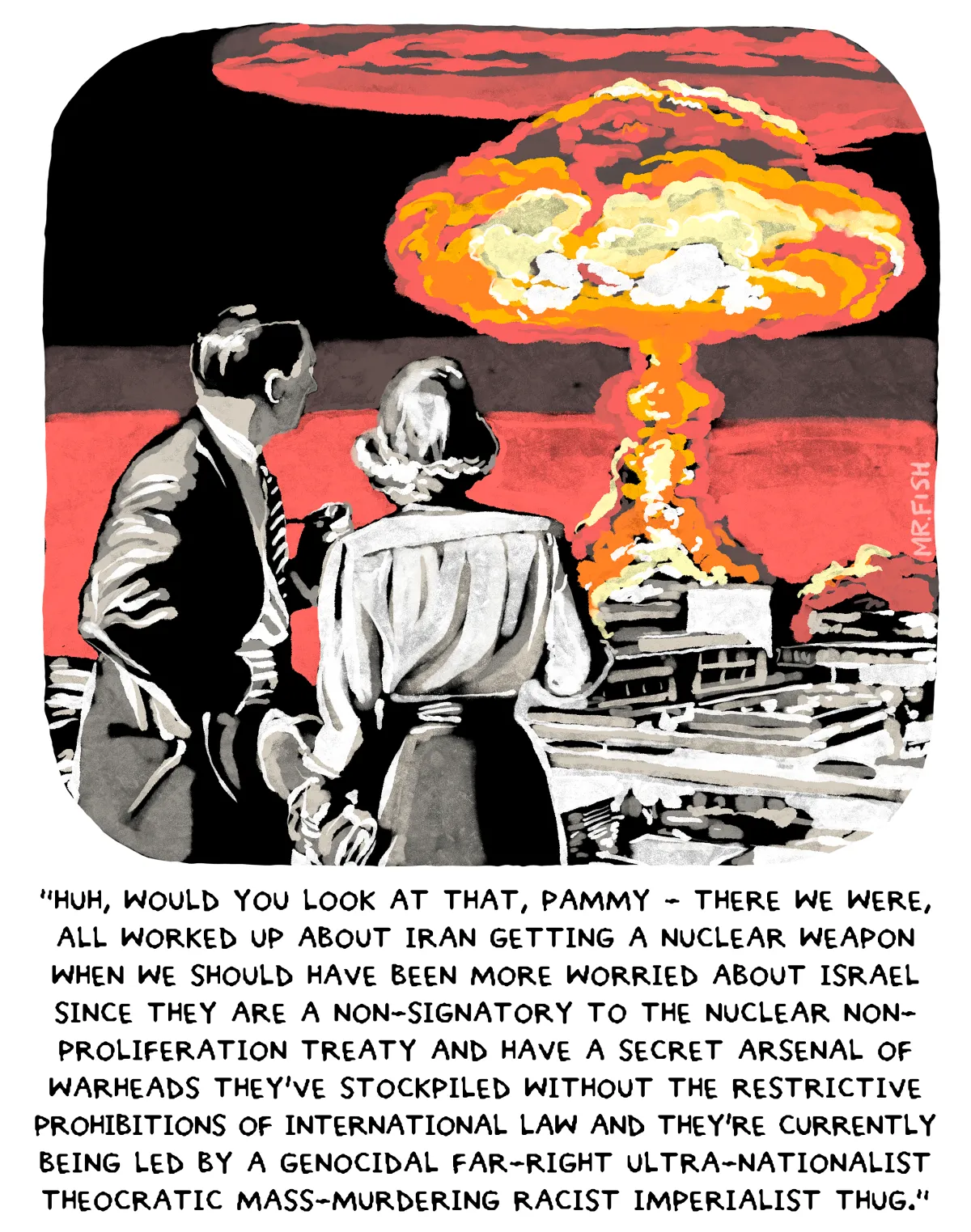
1 June Webinar – The High Cost of Nuclear Power – Register


of the week– Nuclear Reactor Information Task Force
To see nuclear-related stories in greater depth and intensity – go to https://nuclearinformation.wordpress.com
-
Archives
- May 2026 (255)
- April 2026 (356)
- March 2026 (251)
- February 2026 (268)
- January 2026 (308)
- December 2025 (358)
- November 2025 (359)
- October 2025 (376)
- September 2025 (257)
- August 2025 (319)
- July 2025 (230)
- June 2025 (348)
-
Categories
- 1
- 1 NUCLEAR ISSUES
- business and costs
- climate change
- culture and arts
- ENERGY
- environment
- health
- history
- indigenous issues
- Legal
- marketing of nuclear
- media
- opposition to nuclear
- PERSONAL STORIES
- politics
- politics international
- Religion and ethics
- safety
- secrets,lies and civil liberties
- spinbuster
- technology
- Uranium
- wastes
- weapons and war
- Women
- 2 WORLD
- ACTION
- AFRICA
- Atrocities
- AUSTRALIA
- Christina's notes
- Christina's themes
- culture and arts
- Events
- Fuk 2022
- Fuk 2023
- Fukushima 2017
- Fukushima 2018
- fukushima 2019
- Fukushima 2020
- Fukushima 2021
- general
- global warming
- Humour (God we need it)
- Nuclear
- RARE EARTHS
- Reference
- resources – print
- Resources -audiovicual
- Weekly Newsletter
- World
- World Nuclear
- YouTube
-
RSS
Entries RSS
Comments RSS
 nuclear-news